My trip westward through Kochi Prefecture continues! If you haven’t seen part one of this trip report, feel free check that out (though personally I’m never one to shun reading non-linearly!) The second half of my Golden Week 2025 travels are highlighted here:
First, though, a quick interjection about recent 2026 things. I took a surprise trip up to southern Hokkaido early last month to snag some commemorative nimoca IC cards at a Hakodate-specific burger chain,1Which, by the way, has the most incredible English website ever. which ended up delaying the writing of this post… sort of a worn-out excuse at this point, but it’s true! I don’t think that trip will get a post of its own, but for the return journey home, I took the 40-hour Taiheiyo Ferry from Tomakomai back to Nagoya, the longest ferry route in Japan. The vessel was amusingly 199.9 meters long. After never having been on an overnight ferry in my life before, in the first half of 2026 I’ve managed to take two of these, the first being the Orange Ferry in February after biking the Shimanami Kaido with a friend. As it was my first real visit to the city, I also stopped by the Seikan Ferry Mashumaru Memorial Museum (and posted some photos to Reddit here) on a friend’s recommendation – which was superb.
Another piece of present day, present time news: Also around a month ago, Asatetsu (Asa Kaigan Railway) unfortunately discovered defects in their last usable DMV, those weird bus-train hybrids I rode in southern Tokushima Prefecture at the end of part one. Now that all three of their vehicles are out of service and undergoing maintenance, operations on the line are fully suspended until further notice. A really sad situation, and I hope restoration will be possible, but it makes me so glad I was able to ride them when I did. It also serves as a good reminder to go ride all those weird, unprofitable rail lines before they’re gone!!!
Oh, and the last bit of real-world info (wow, there’s a lot going on in Shikoku) is that automatic ticket gates began operation in Tokushima Station last month as well, the last of Japan’s 47 prefectures to get them. No IC card tapping, of course, but they support inserting and returning magnetic paper tickets, along with scanning JR Shikoku’s app-based QR code tickets, in lieu of fully manual checks and stamping and hole punching. Between this and other stuff I’ll get to later, it feels like so much has changed since my mid-2025 trip!
OK, now on with the real story, jumping back in time to the Shikoku of a year ago. To spell out the agenda for this part two post, the brief overview of the rest of my trip was as follows: Go west to Kochi City and ride the tram system around, hang out with a friend from my IC card server who lives there and eat more katsuo no tataki, keep heading southwest by train & bus toward the Ashizuri Peninsula to see a wildly unique aquarium, head over to Uwajima on a fun fun [sic] train, and then finally take the L E G E N D A R Y Iyonada Monogatari sightseeing train up along the coast to Matsuyama.
Let’s go!
Wednesday, April 30, 2025
Today’s transit:
9:50 Nahari / TKT Gomen-Nahari (Asa) Line → 10:10 Aki
11:18 Aki / 〃 → 11:42 Yasu
12:37 Yasu / 〃 (thru to JR Dosan Line) → 13:03 Gomen
🚊 13:30 Gomenmachi / Tosaden Traffic Gomen Line → 14:07 Harimayabashi
Starting out from Nahari in far eastern Kochi, I hopped on the first of third-sector operator Tosa Kuroshio Railway’s three lines, the Gomen-Nahari Line. Considering its name you can probably guess the other terminus: Gomen! Quite the funny name for a station considering it’s also the Japanese word for “sorry”, same kanji and everything. And yes, they joke about this a lot. The station and nearby tram stop are named after the former Gomen Town, today part of Nankoku City following a 1959 merger.
What most prominently characterizes this railway line is that every single station has its own unique mascot character – and they’re everywhere, huge statues on the platforms or outside the station buildings, adorning the train livery, on signs around town, and so on. The characters were designed by local hero Takashi Yanase, the creator of Anpanman, who hailed from the area. Kochi loves him more than anything – probably even more than how much Sendai loves Date Masamune or how much Philadelphia loves that bell. Yanase-san also wrote the beloved, unbelievably beloved 1960s song Te no Hira o Taiyou ni (meaning, roughly, “with your palms to the sun”) about how you, me, and even sparrows and water striders are all alive, are all friends, that living is what lets lets us feel sadness yet joy – and how we can see our bright red blood flowing through us as we hold our hands up toward the sky as a testament to life. It notably (or notably to me, at least) features at the very end of Ping Pong The Animation.2Which is, for those unaware, the best piece of animated media of all time. It’s a story of Buddhist enlightenment told through the lens of sport and play, and is one of the few pieces of media that’s changed my life. Everyone should watch it (ideally with the subtitles I spent years making for it). :) The railway company also has a train named after it, which you even can take and ride to see Kochi’s atmospheric phenomenon known as Daruma Sunrise/Sunset. A great man, a great railway, and my first steps into a great prefecture and city.
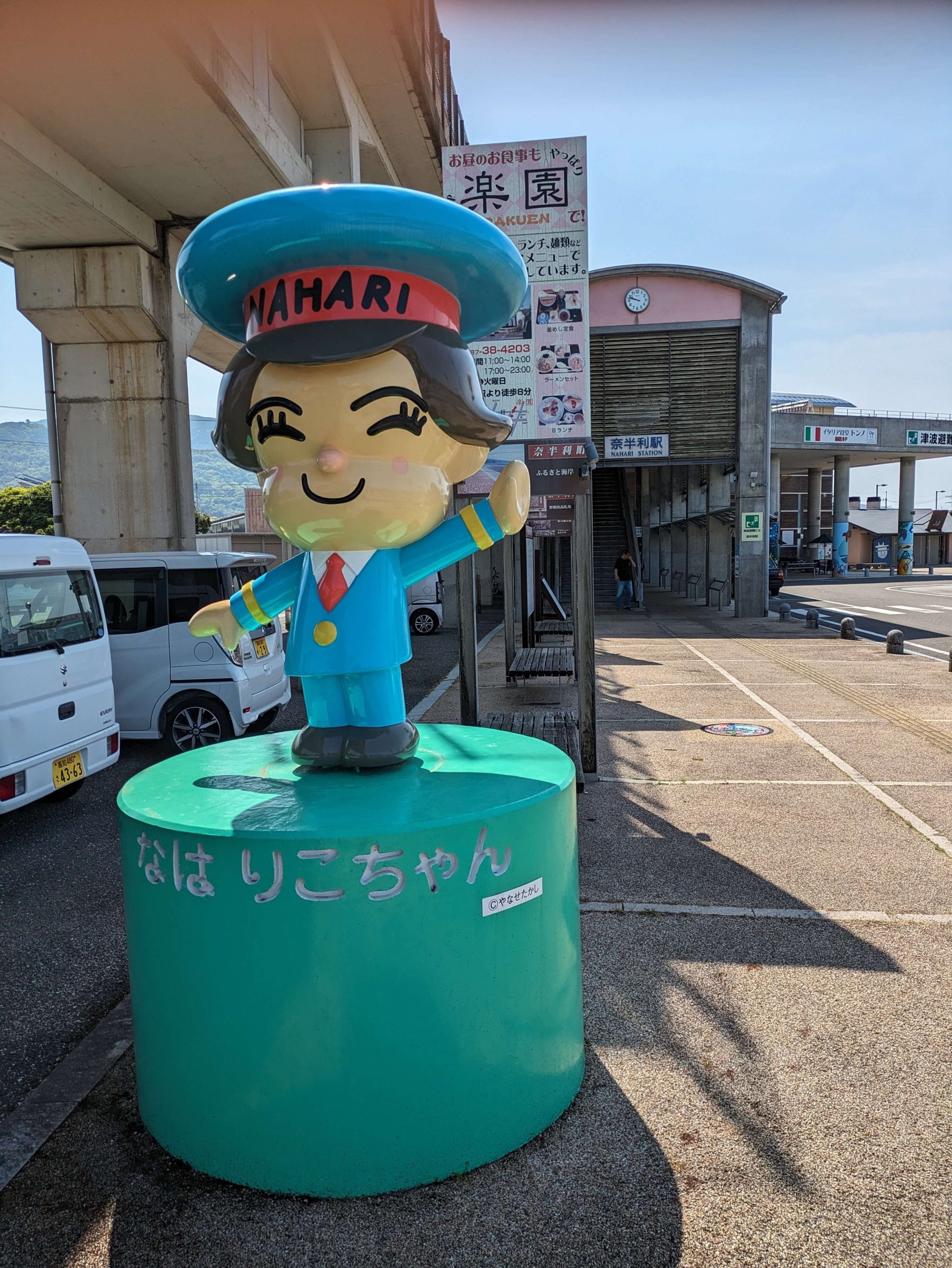
The Nahari Station mascot greeted me as I approached!
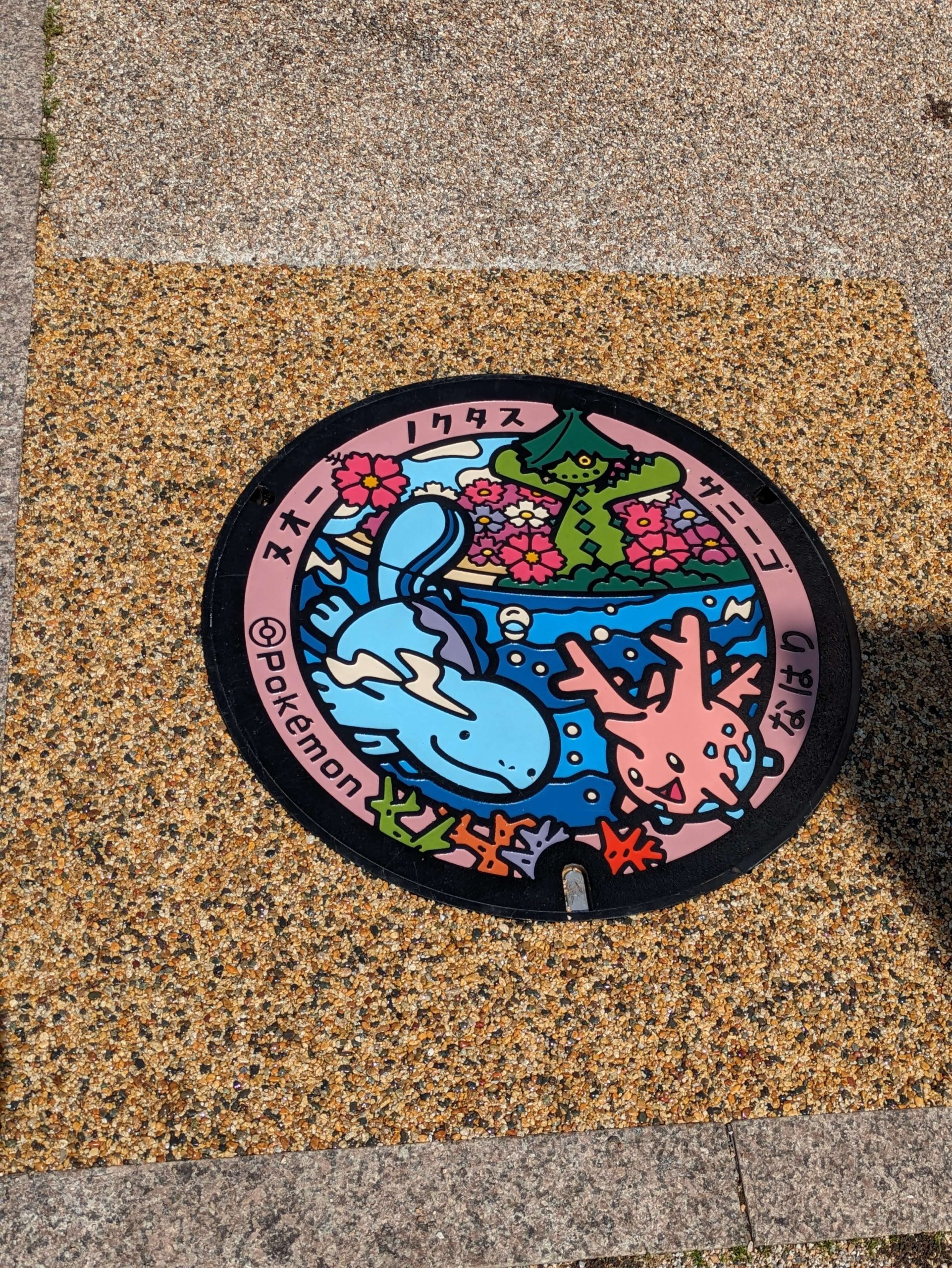
A Poké Lid was outside the station too, featuring Corsola (Sunnygo), Quagsire (Nuoh), and Cacturne (Noctus)! Quagsire is Kochi Prefecture’s newly appointed “Support Pokémon” as of 2024.
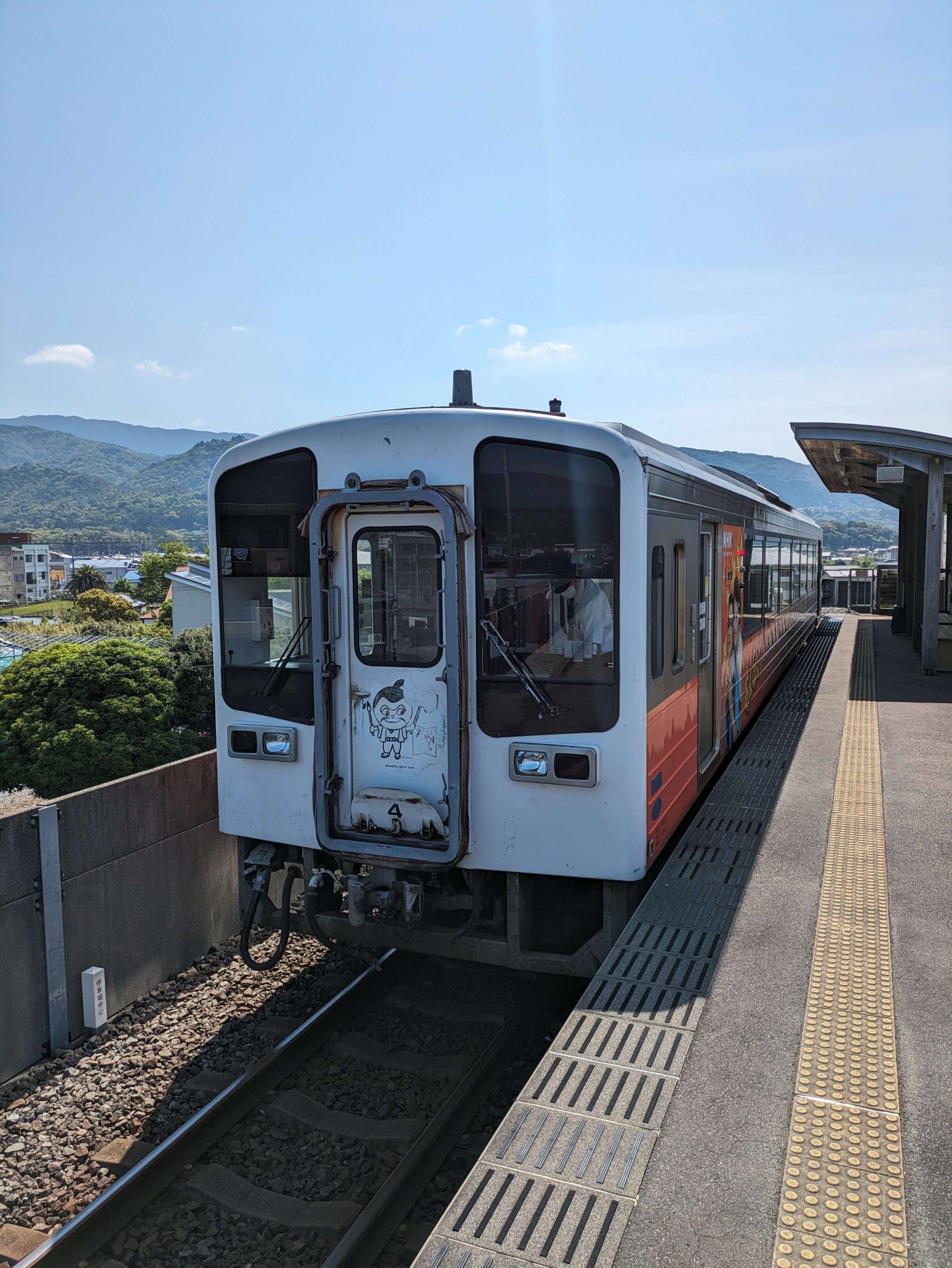
My cute single-car train.
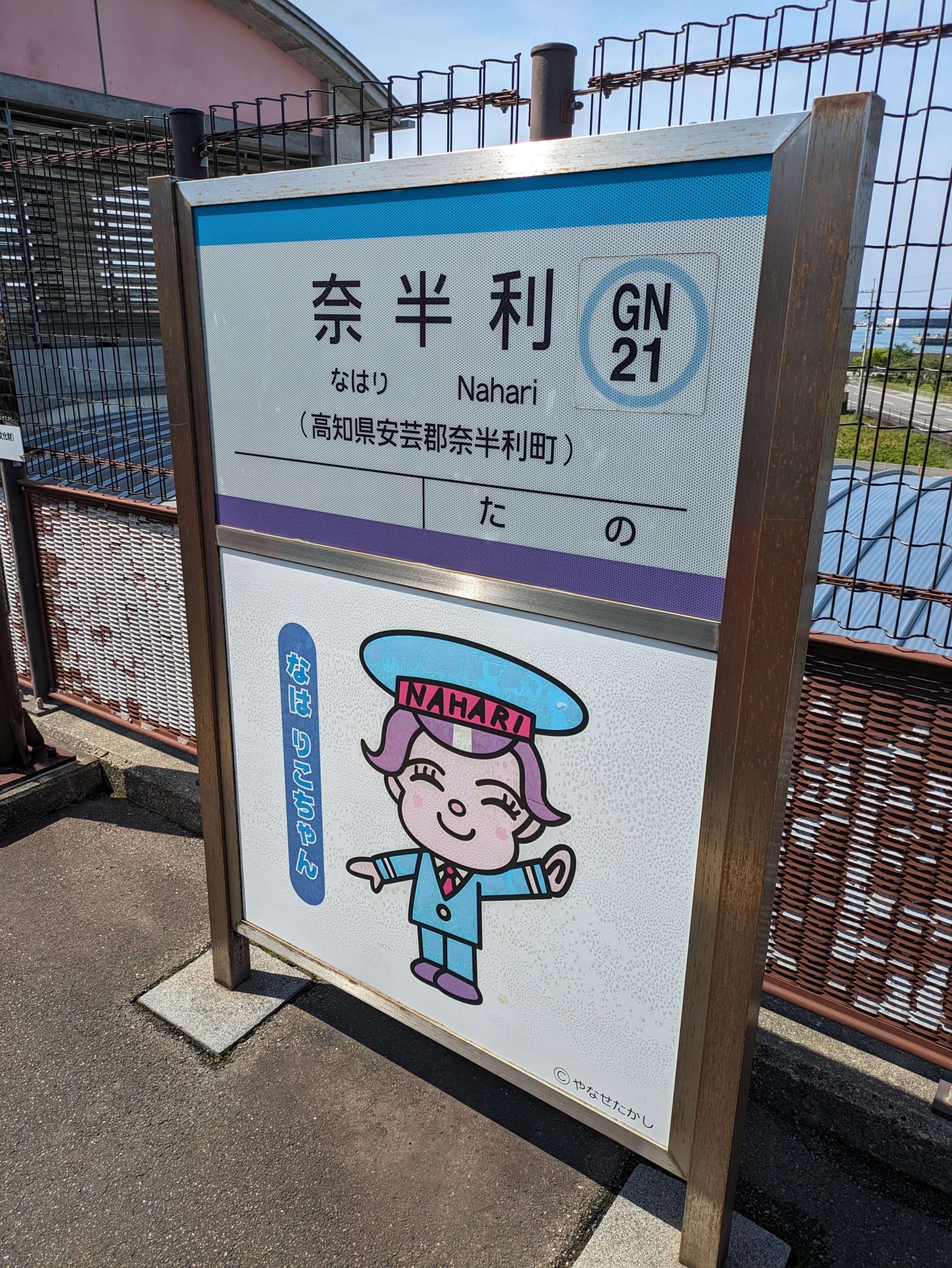
Nahariko-chan in 2D on the station sign.
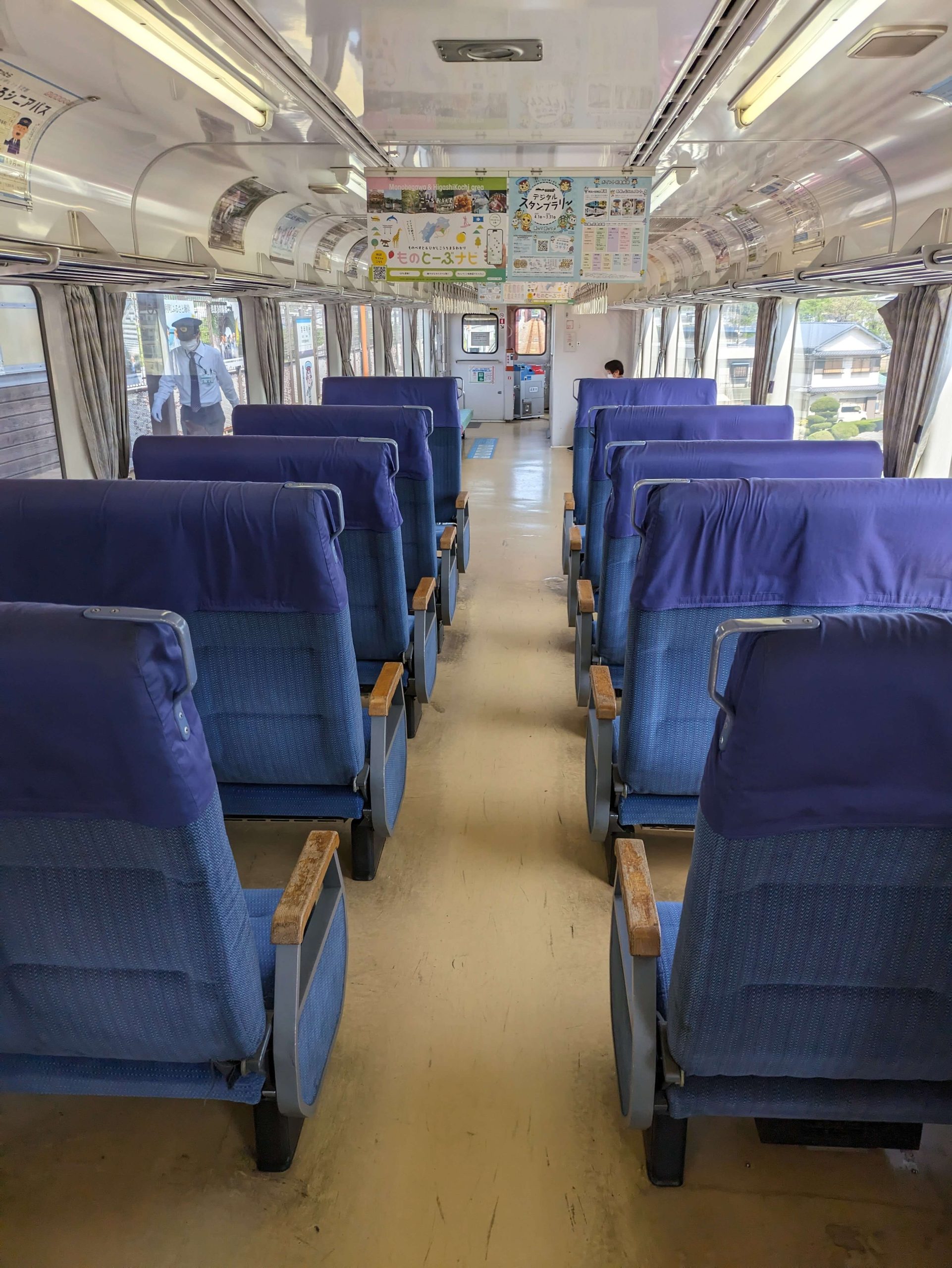
The inside was kinda lackluster, honestly, or it somehow felt a bit dated. Barely anyone riding!
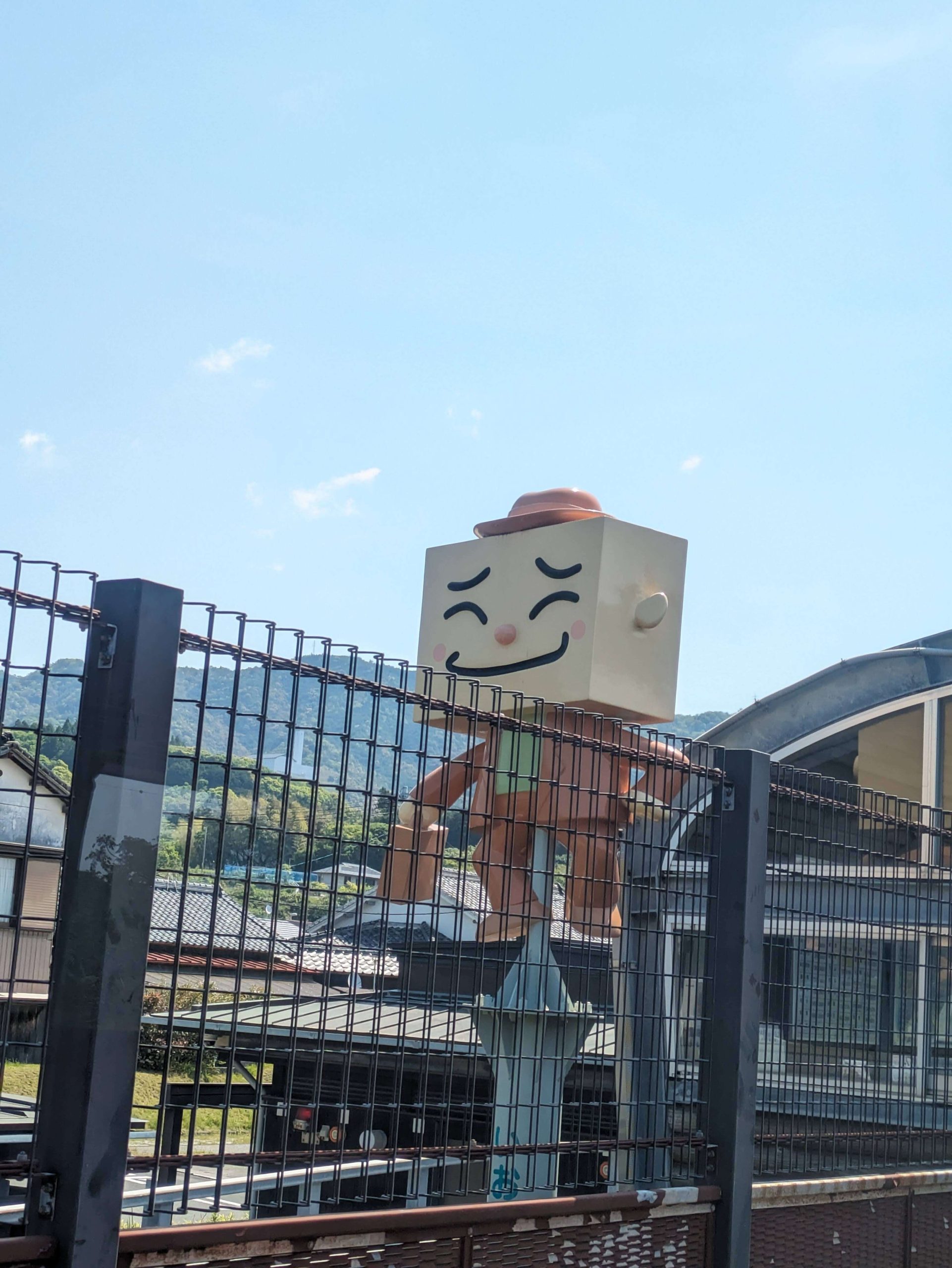
I liked this blocky guy, haha – Ioki Torao-kun at Ioki Station. He’s based on the famous Tora-san from Otoko wa Tsurai yo, arguably Japan’s most famous movie franchise (49 films released between 1969 and 1997!)
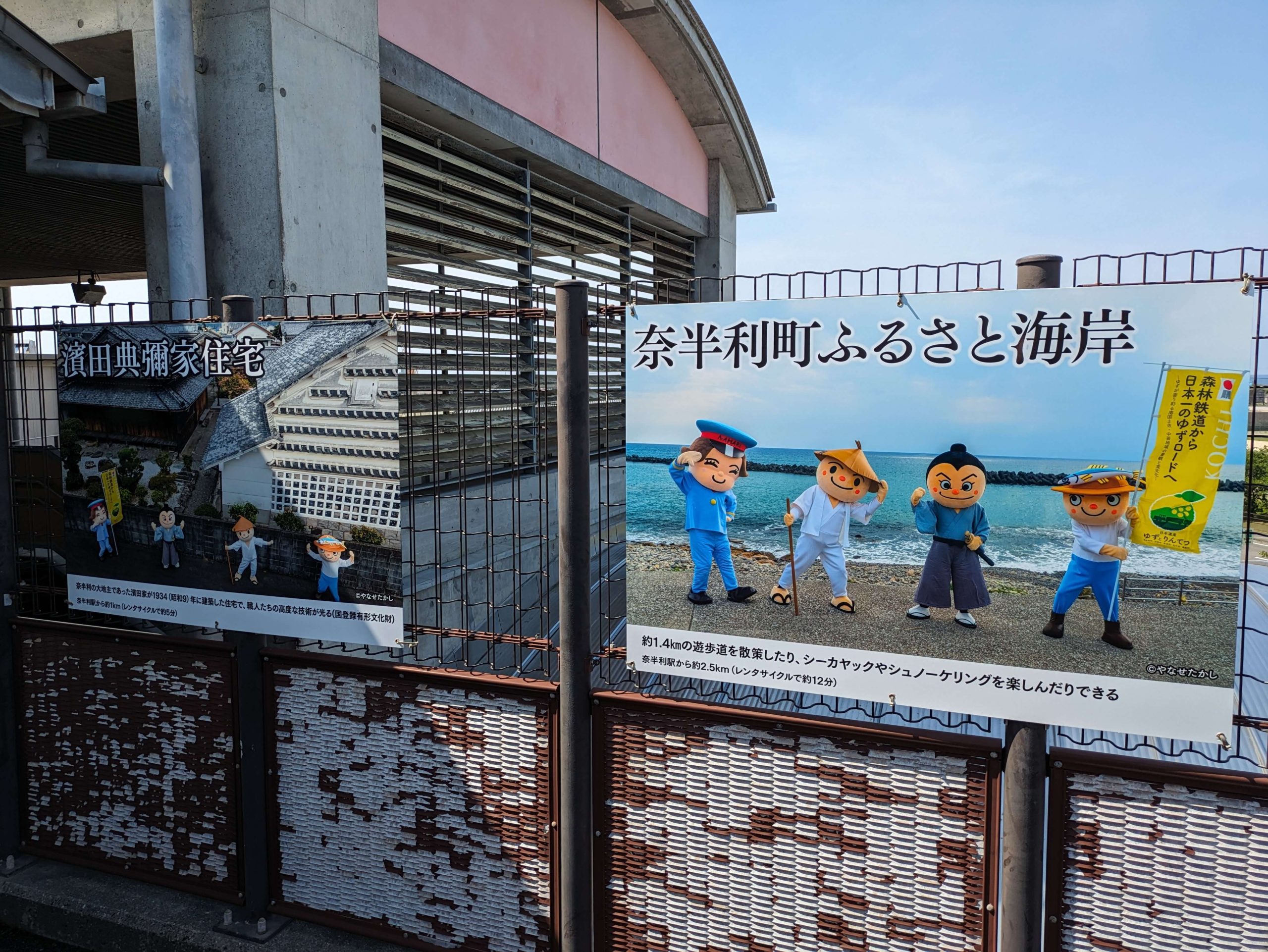
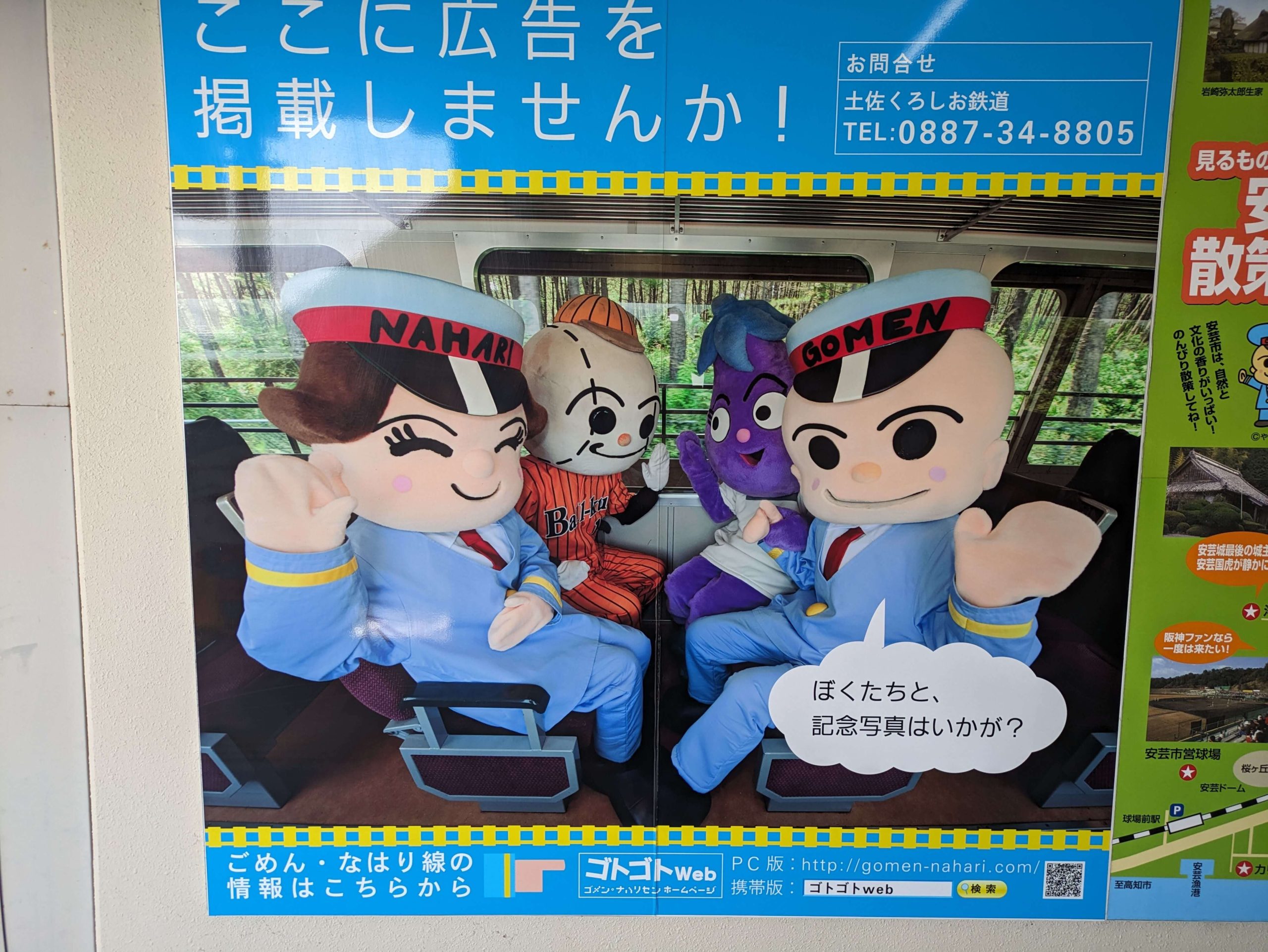
There’s physical mascot costumes for every single one of the characters too, created by a group of local residents along the line in 2004, shown here on this poster.
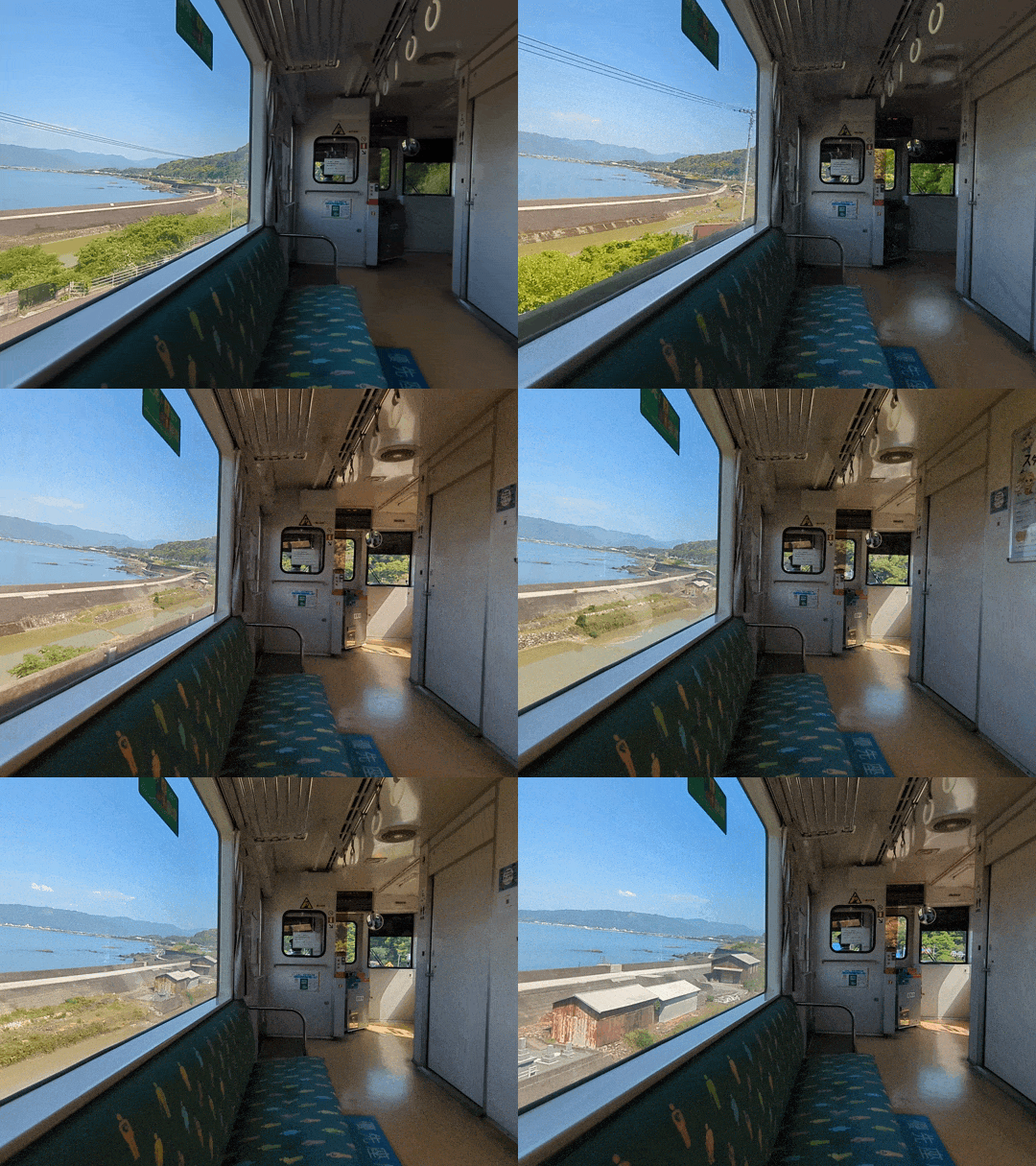
It was nice riding by the seaside. Enjoy this GIF I made for some reason.
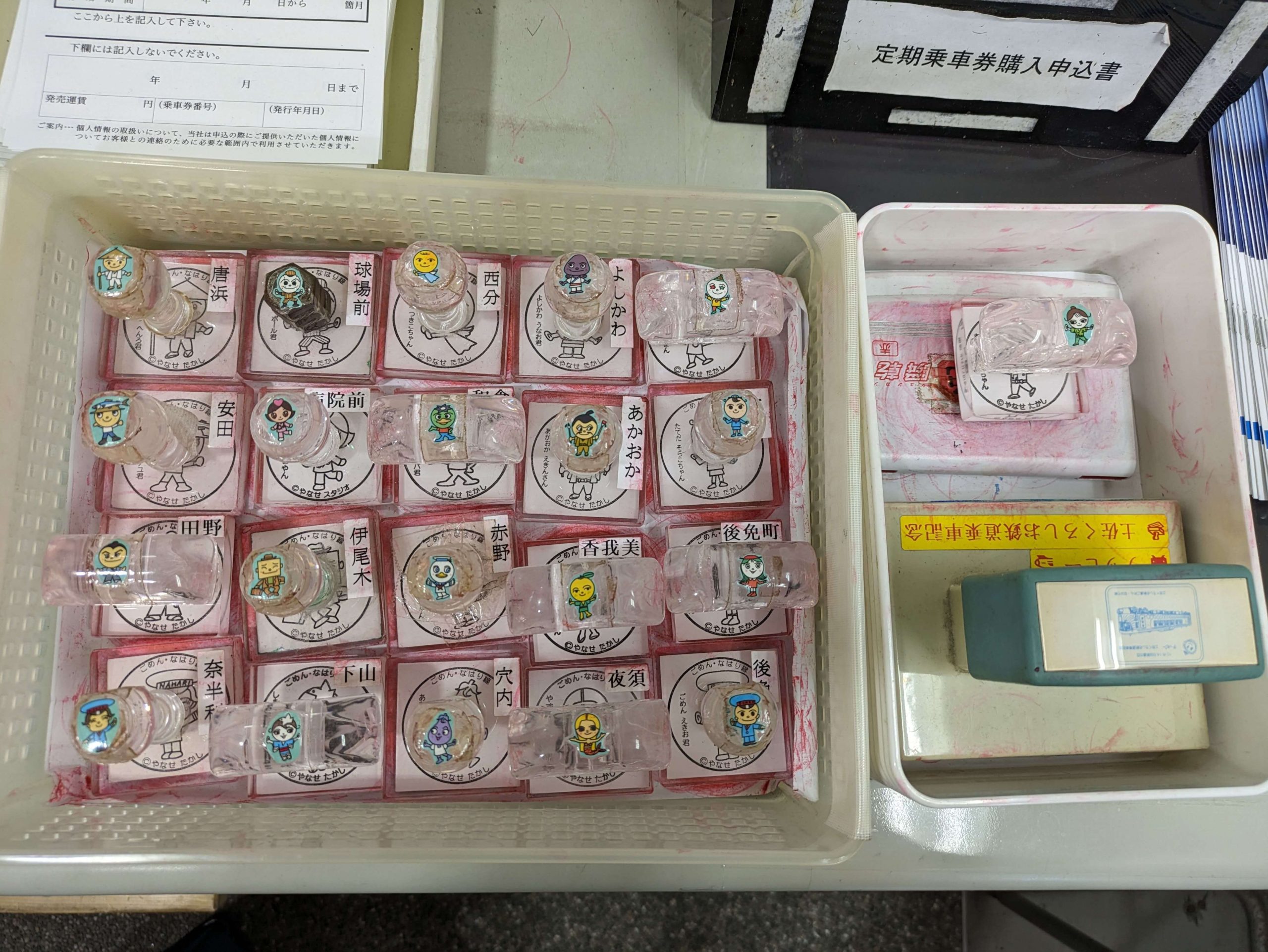
I got off at Aki, one of the larger staffed stations, to get eki-stamps of EVERY SINGLE CHARACTER. With 22 stamps, this station became my new #1 for having the most stamps out of any station (of at least a thousand) I’ve been to in Japan. Runner-ups are 21 at Ueda Station in Nagano (counting all of them from multiple different companies) and 13 at Yukarigaoka Station in Chiba.
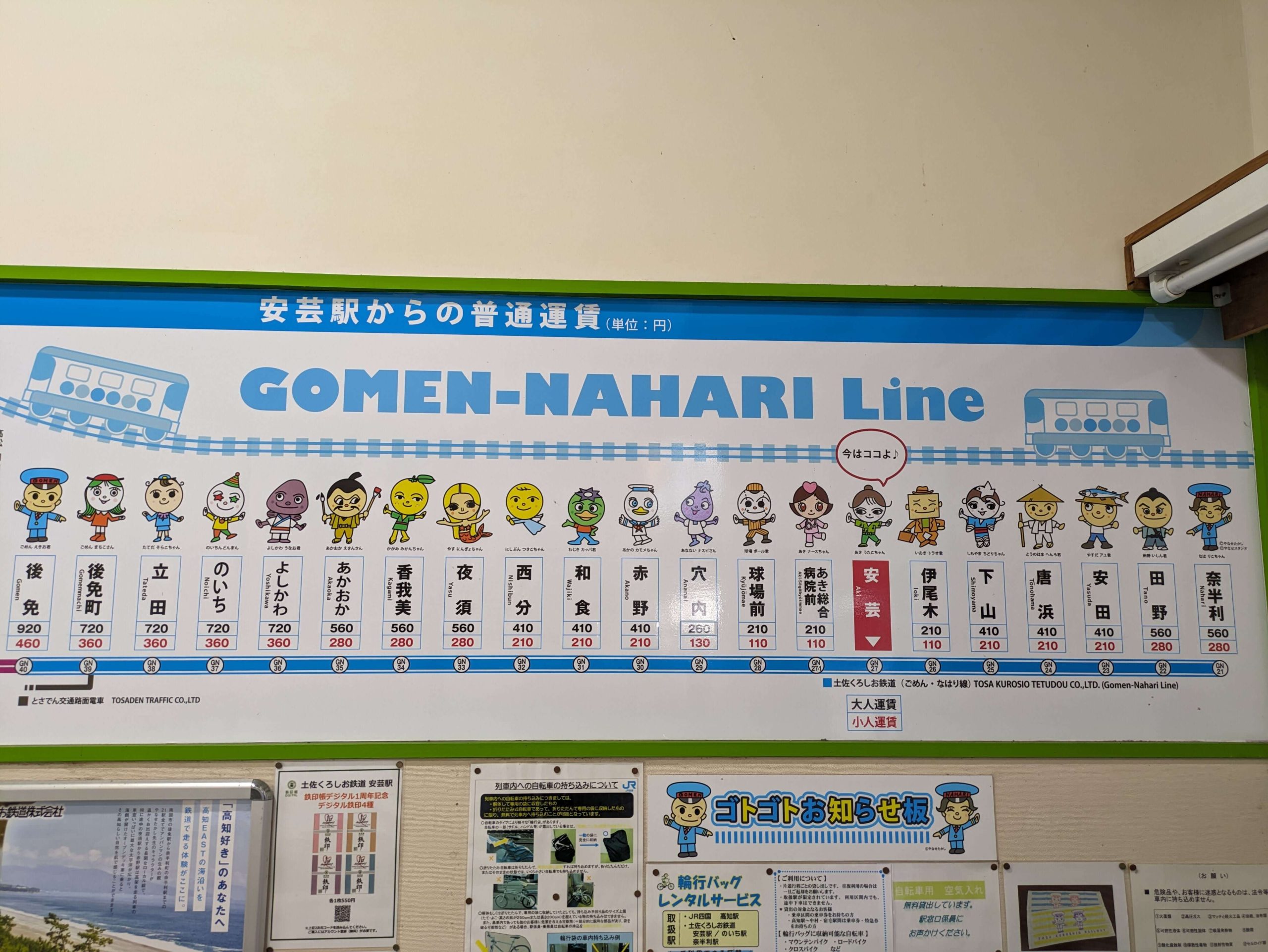
All the characters on a map of the line. “Gomen-Nahari Line” is the common (and official) nickname, and you pretty much exclusively hear it referred to as that, but legally its name is the Asa Line.
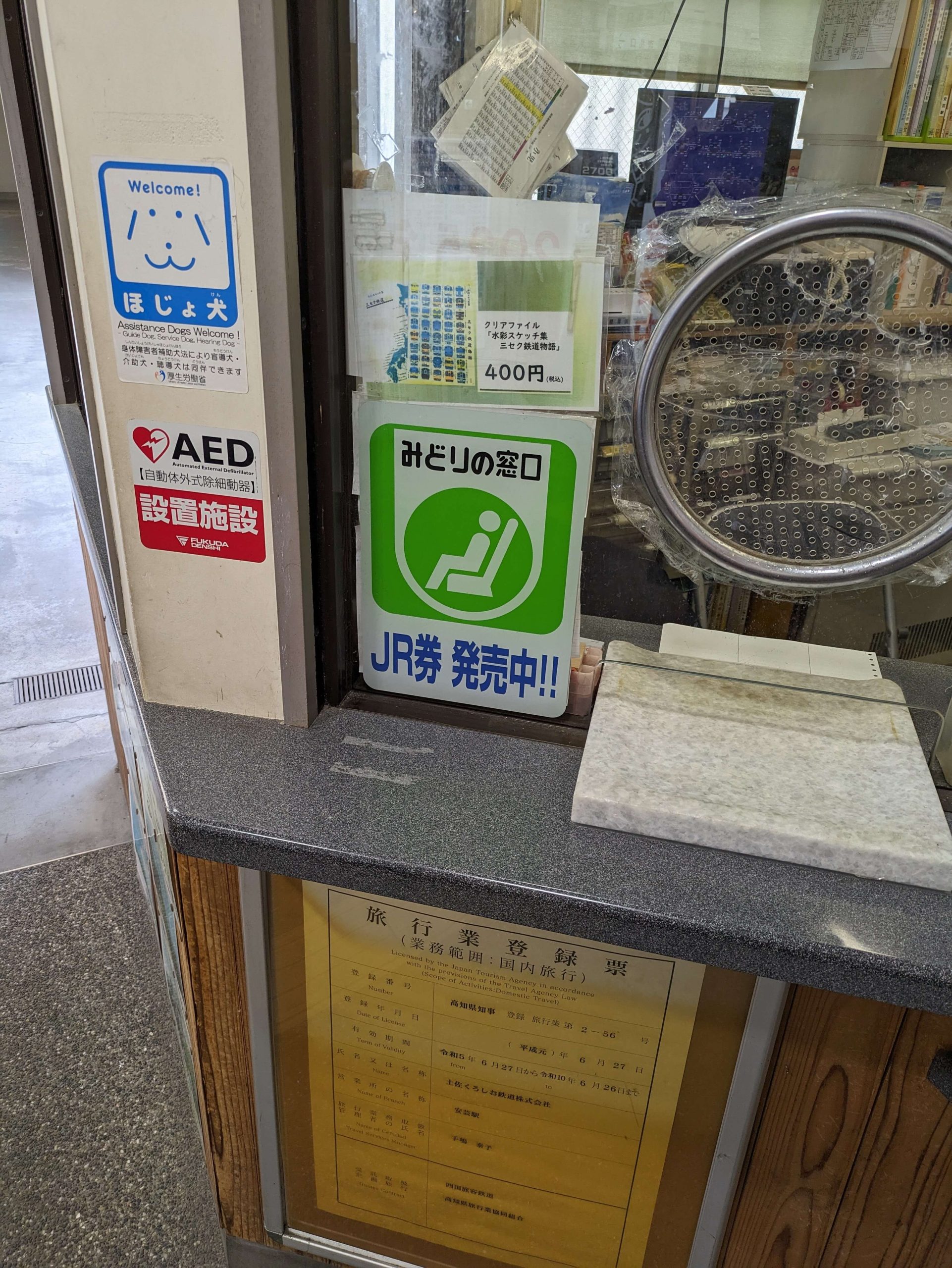
Aki Station boasted its Midori-no-madoguchi status. “We’re not a JR station but we can still sell you JR tickets‼️”
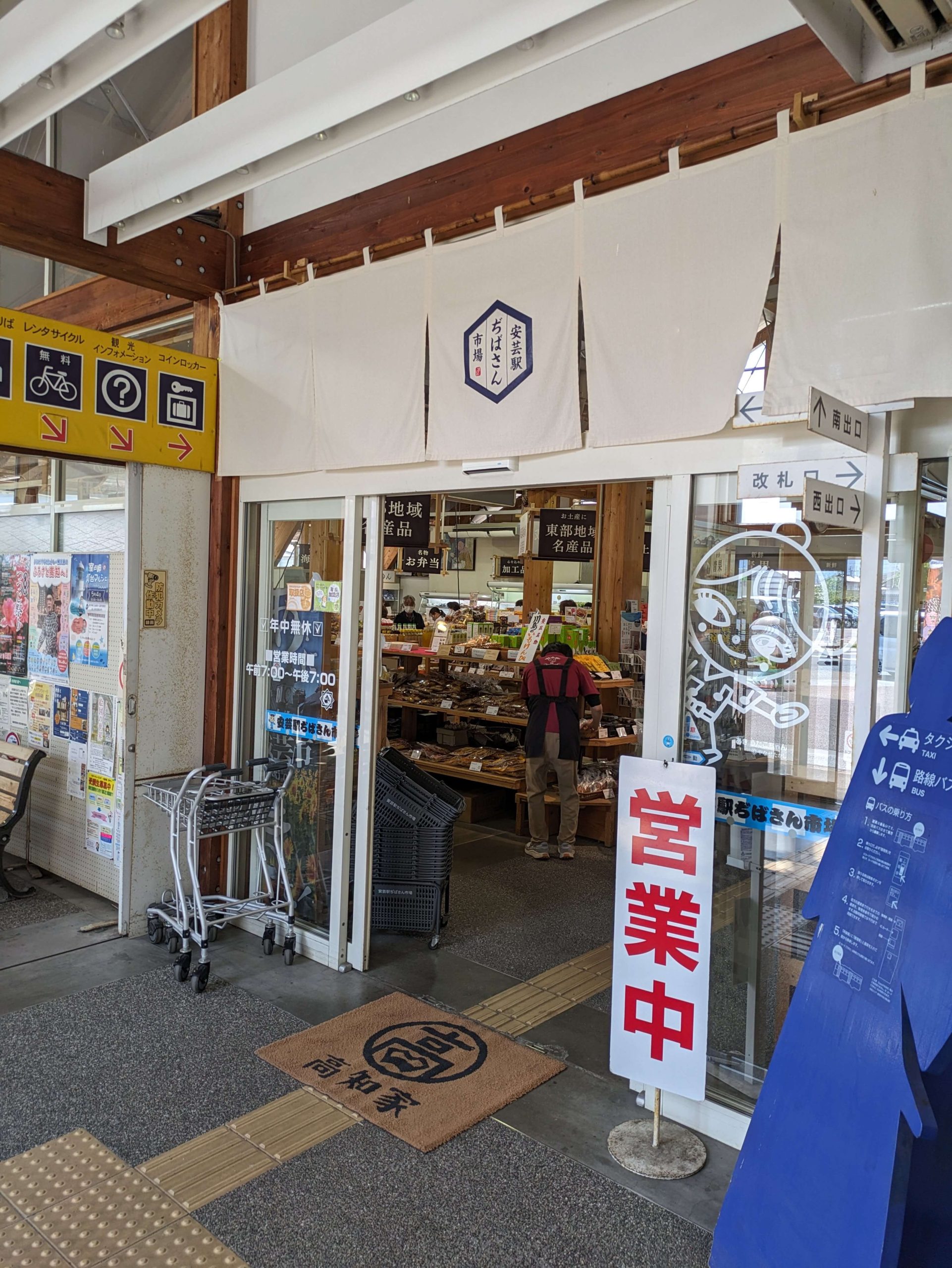
There was a grocery store with a ton of local goods attached to the station!
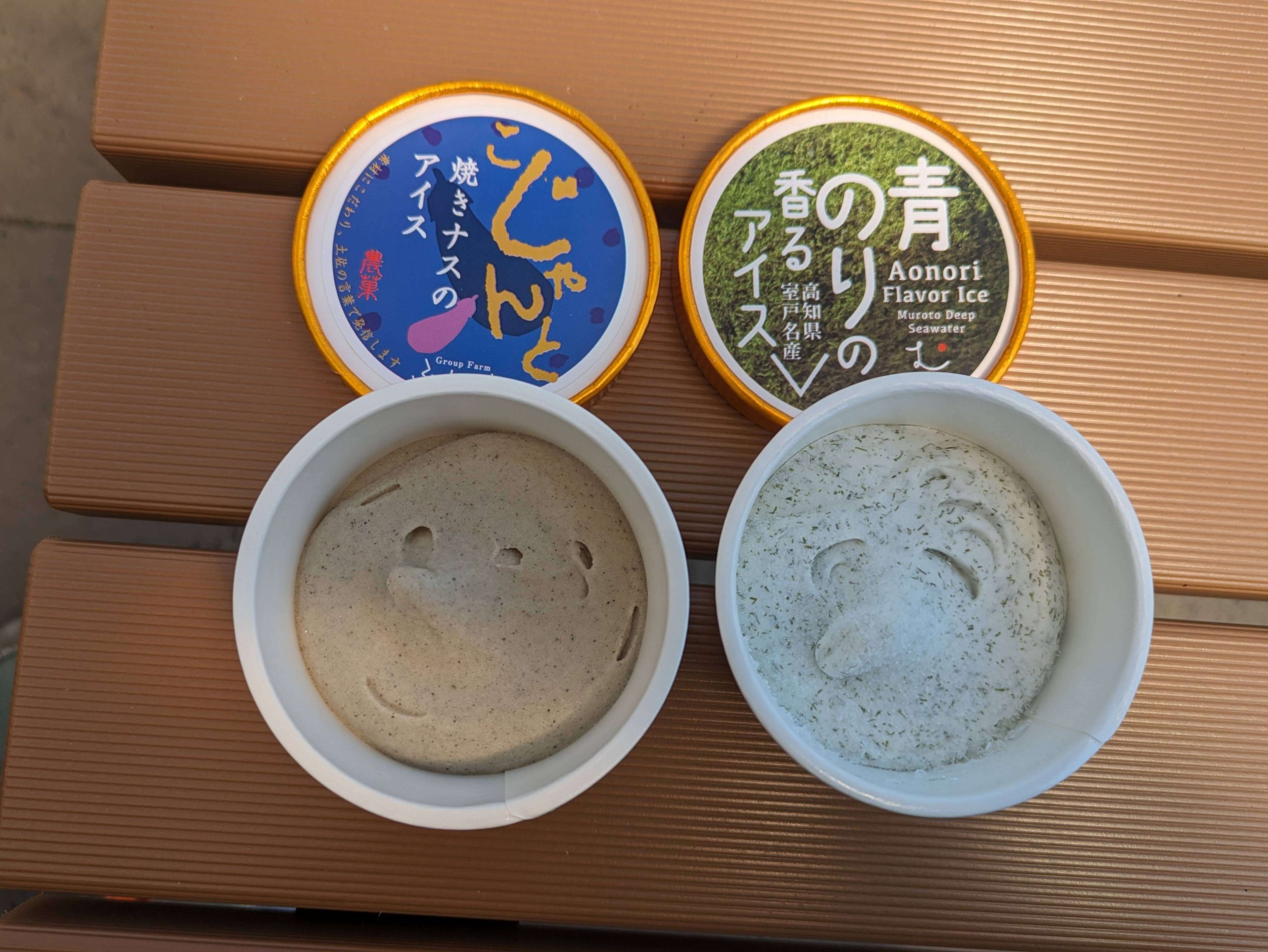
I bought two flavors of ice cream: roasted eggplant and green laver seaweed (aonori). Both were pretty great.
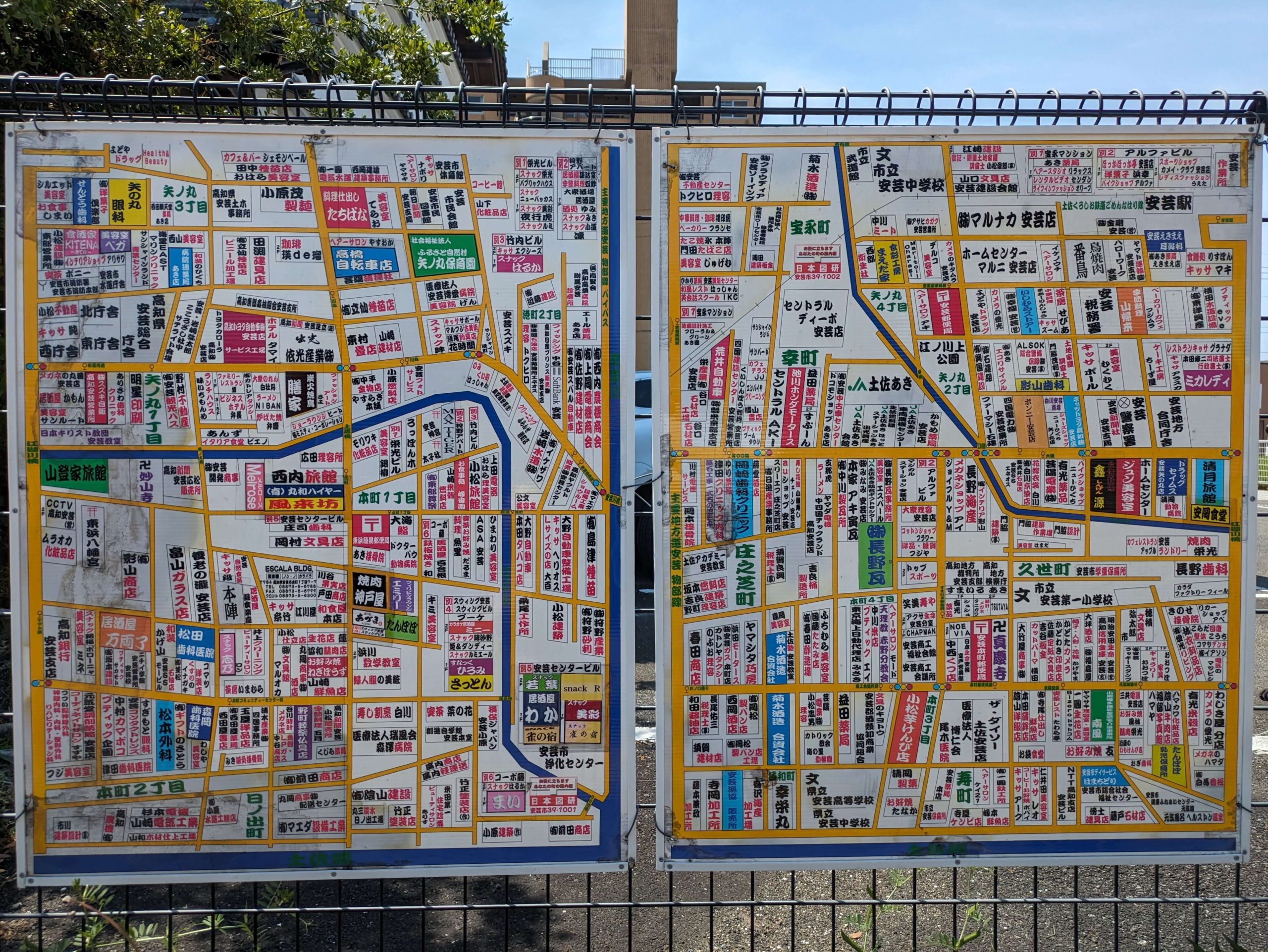
In rural places I always tend to run into these INSANELY dense maps of the local area, complex “graphics design is my passion” style layouts of where every single business and building in the area is. I haven’t yet looked into what these are called, or their history, but I take photos of them whenever I see them!
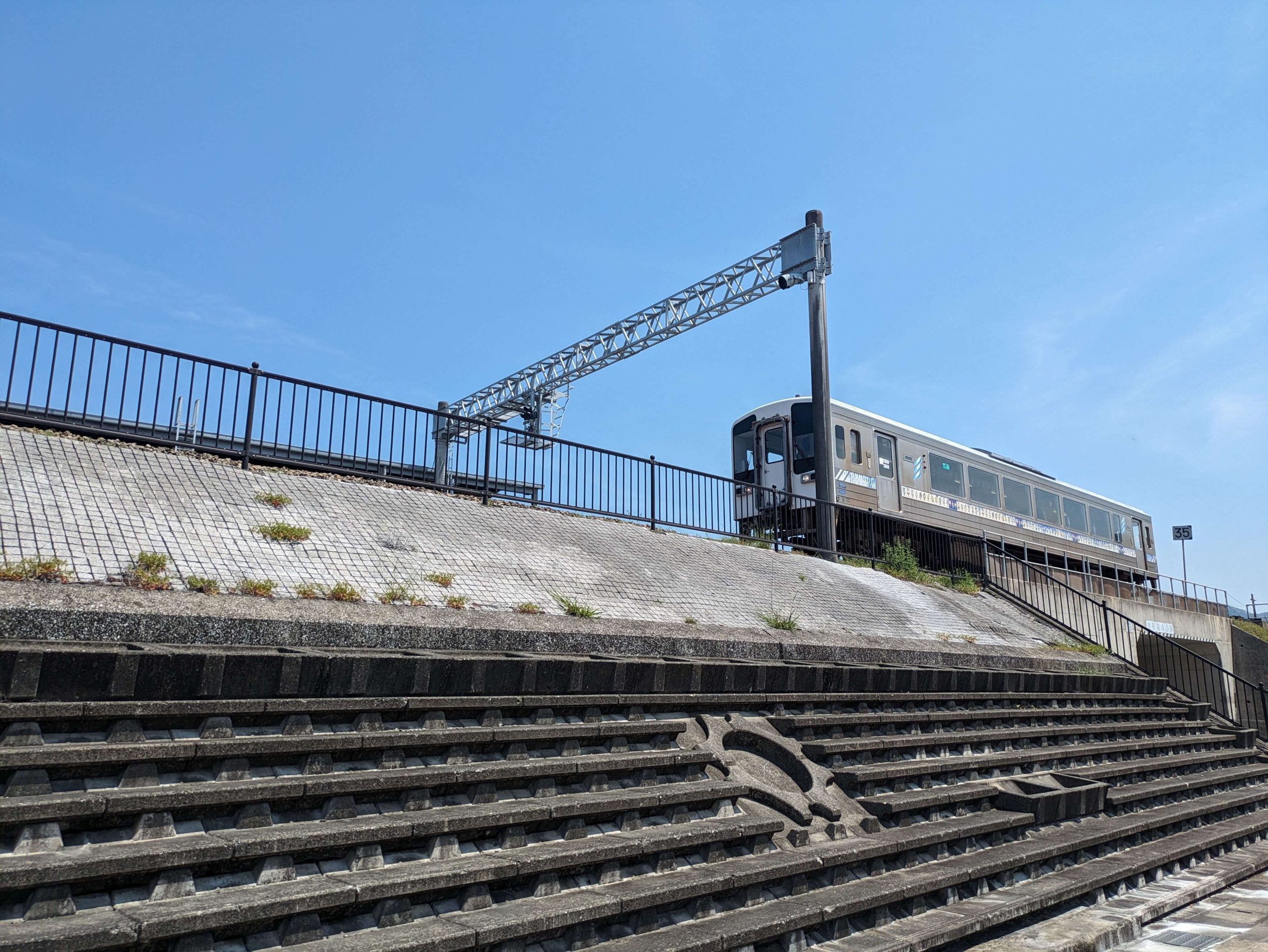
Watching my next train pull into the station’s elevated tracks from the plaza below.
This is me trying to squeeze into train seats in Japan sometimes.
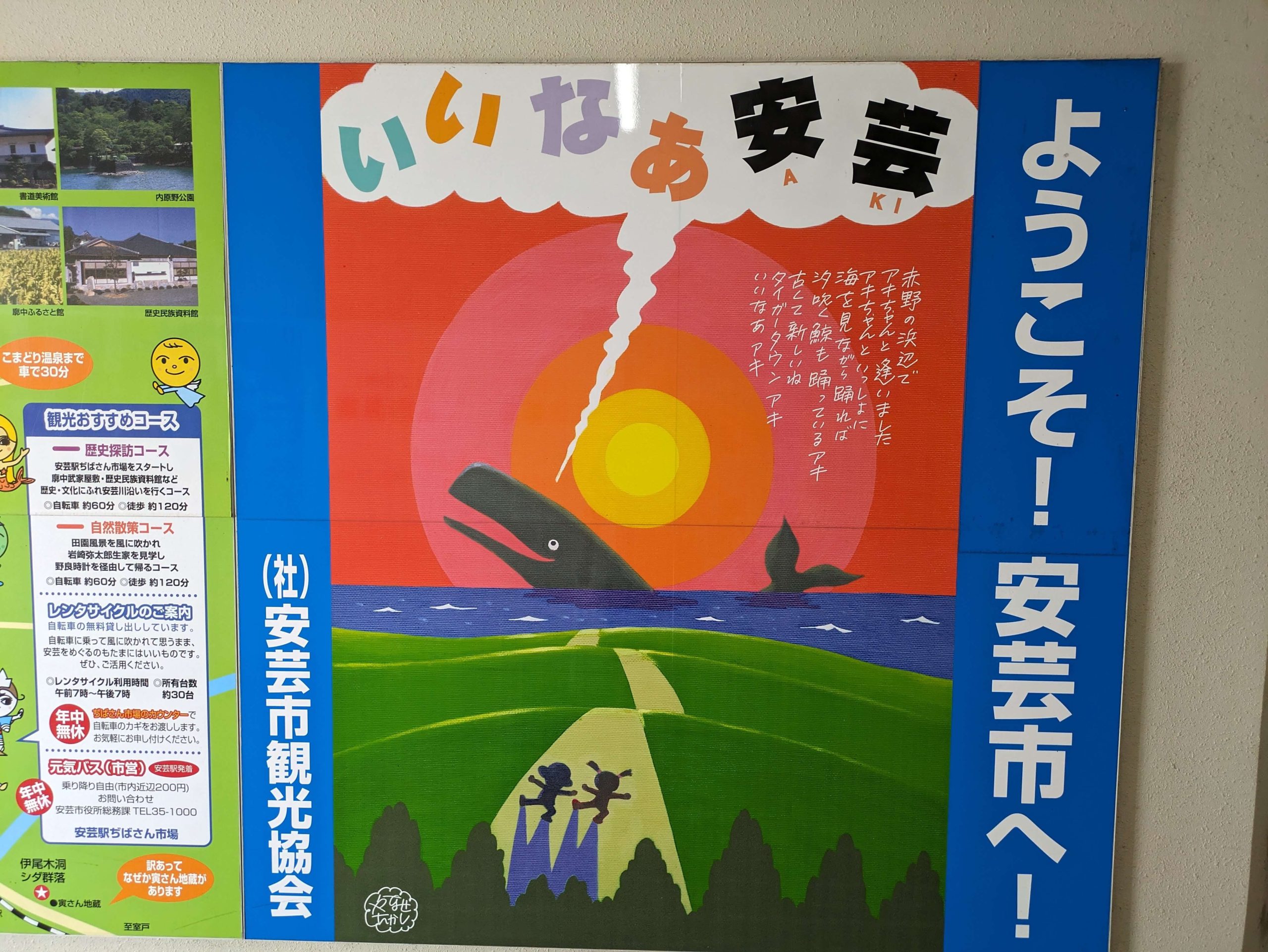
I LOVE THIS WHALE. And the kids leaping for joy with their long shadows. “Welcome! To Aki City!” it reads along the side.
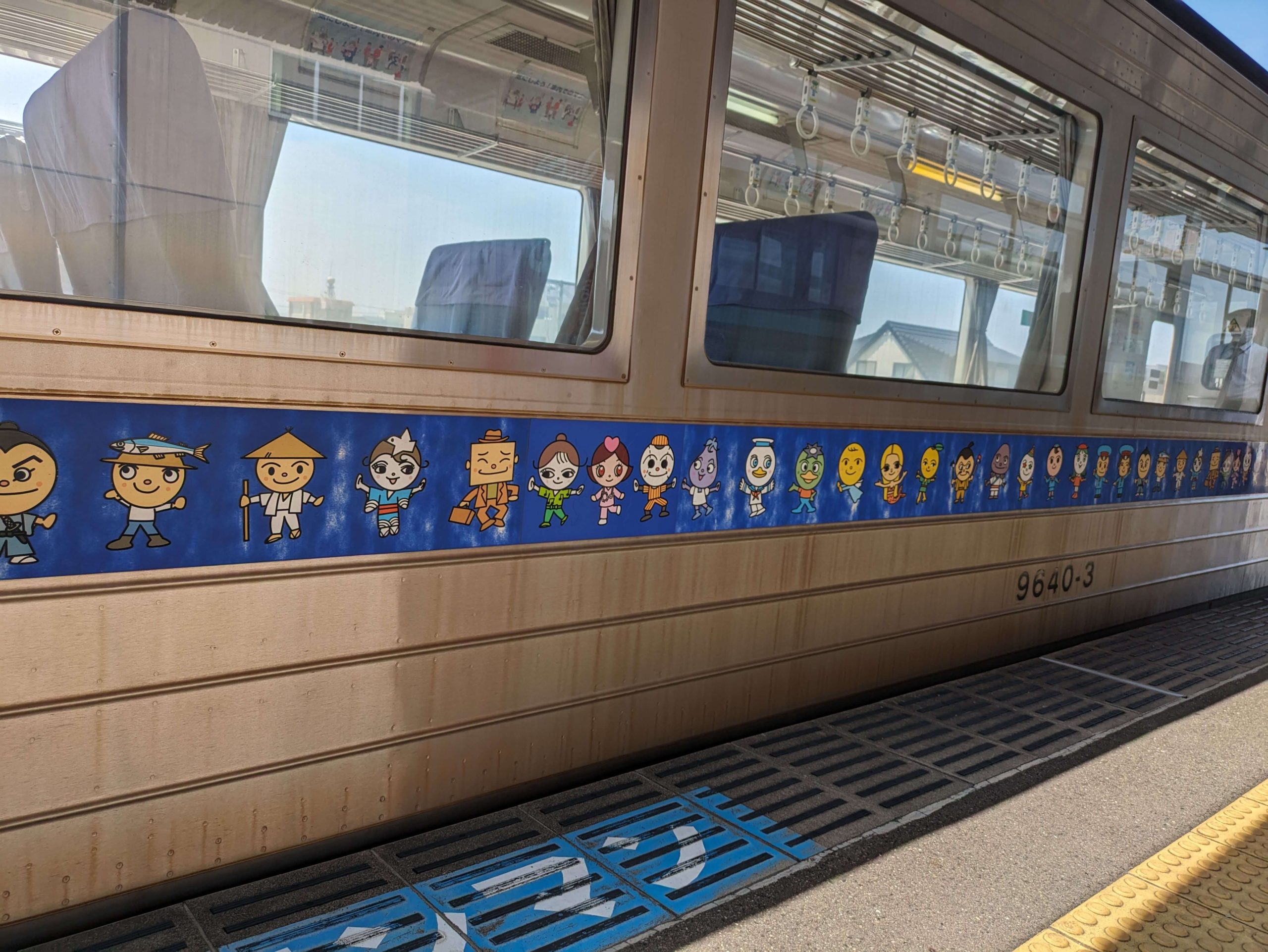
The characters who you’ve seen a million times by now adorned the side of my next train.
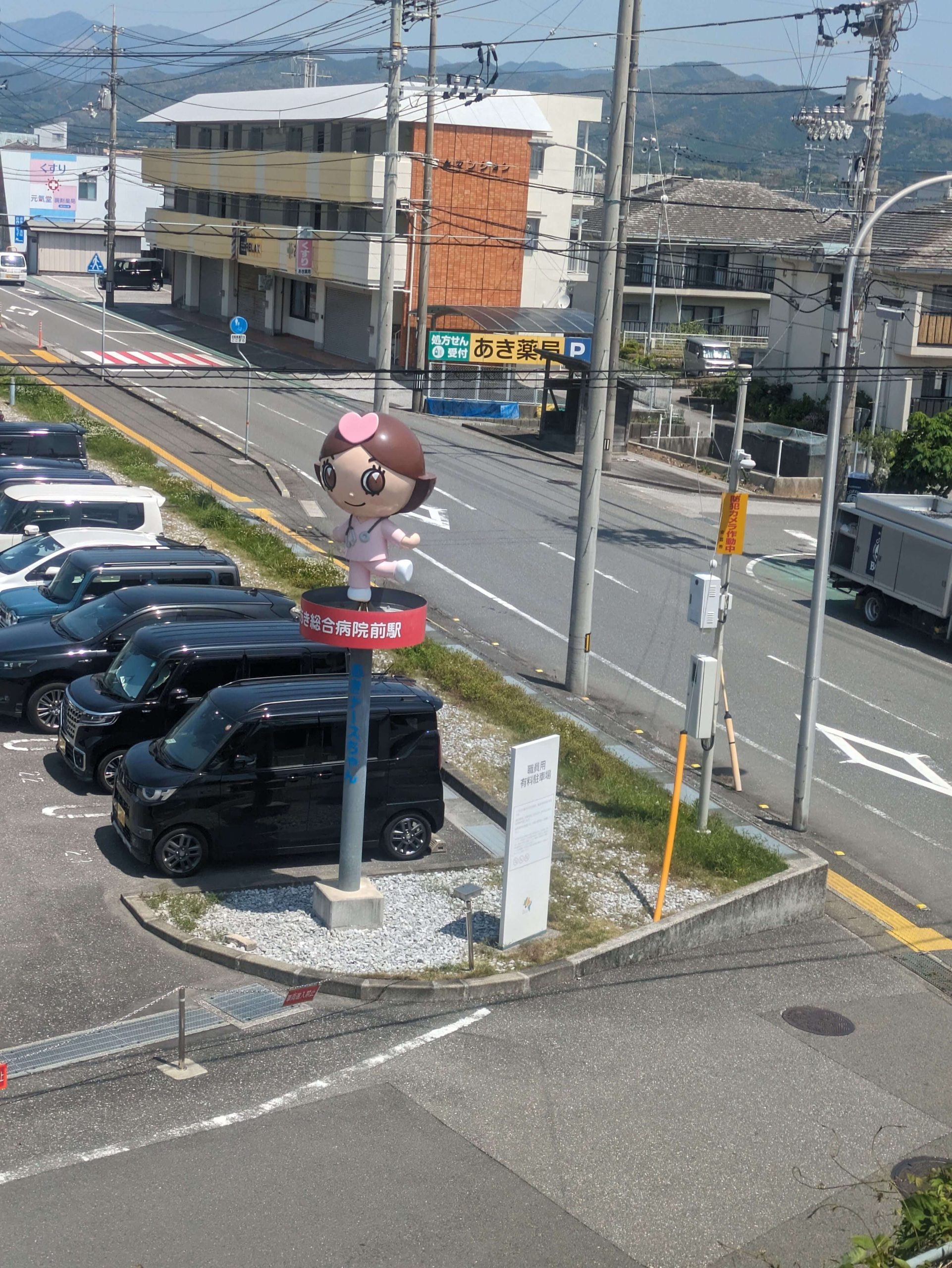
The newest station on the line, opened in 2021, is located in front of Aki General Hospital. Its character is the only one that wasn’t designed by Yanase-san himself (who died in 2013). Instead, she’s a creation of Yanase Studio, a company run by his former secretary that was created to manage his characters and licenses.
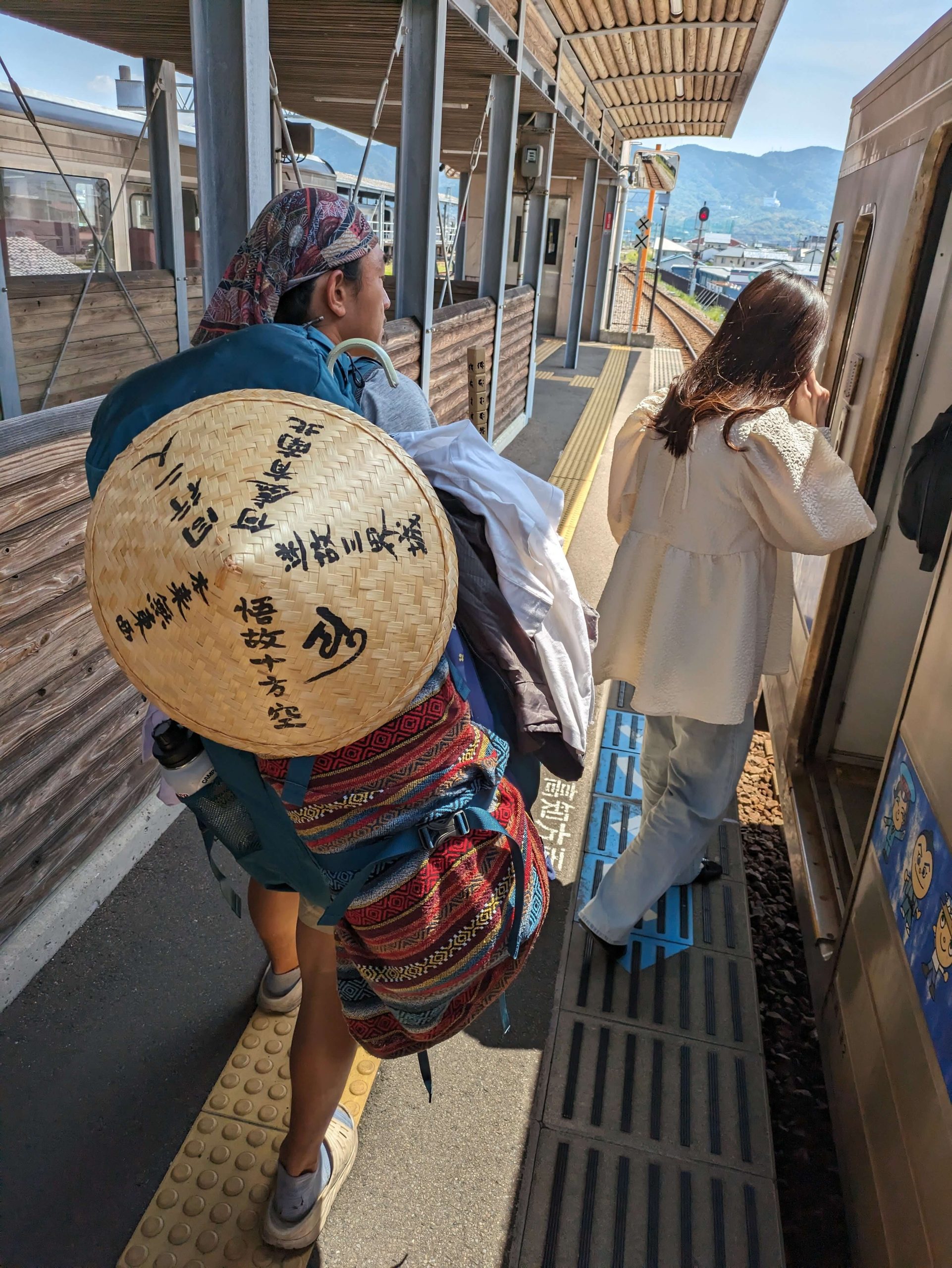
As I stepped off of my train, two henro got on, one old and one young. A good reminder I’m still in Shikoku!
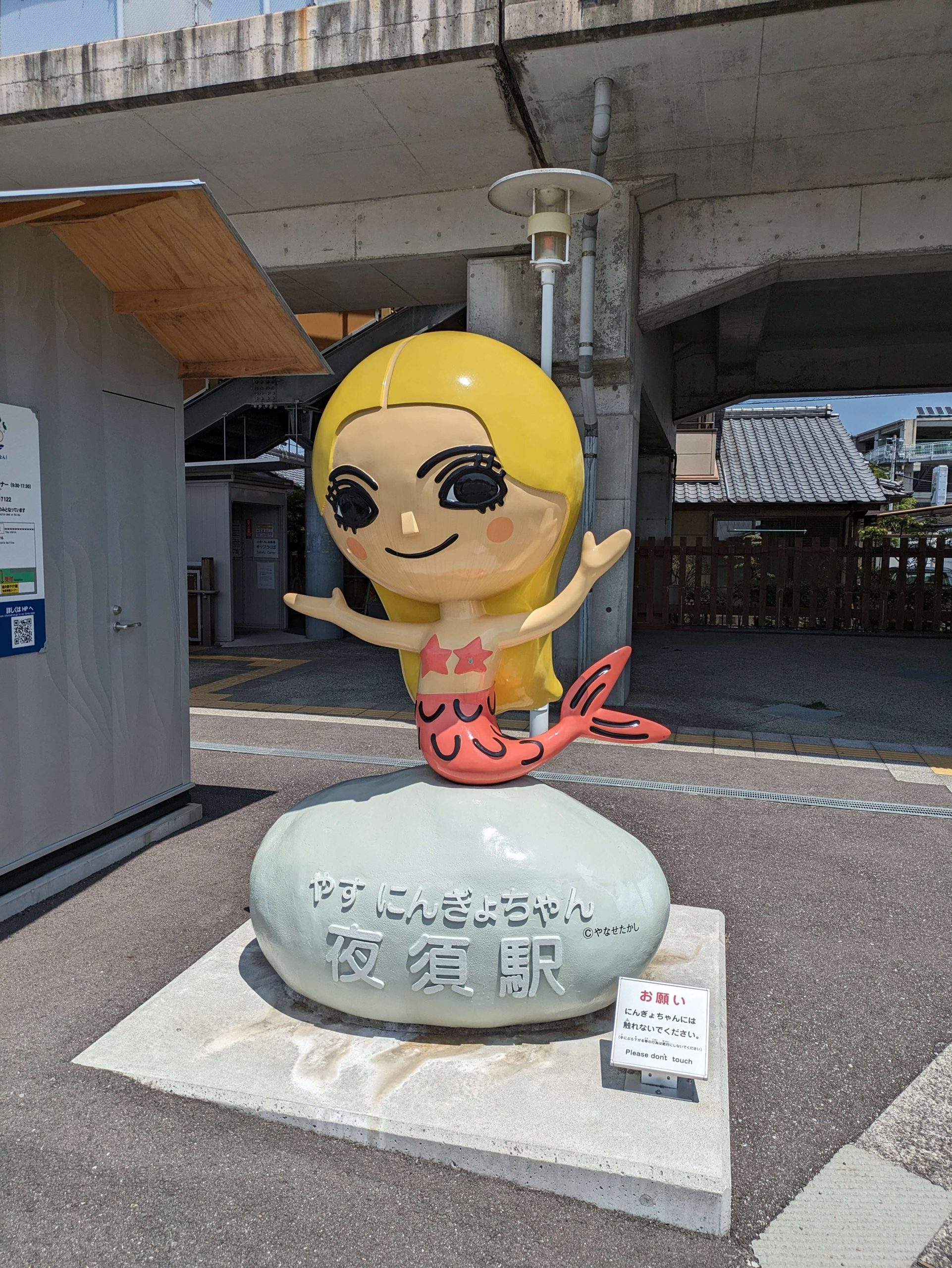
I alighted at Yasu Station (located right near a seaside park with annual mermaid & merman beauty/physique contests and hula, hence the mascot) for a very particular, peculiar reason.
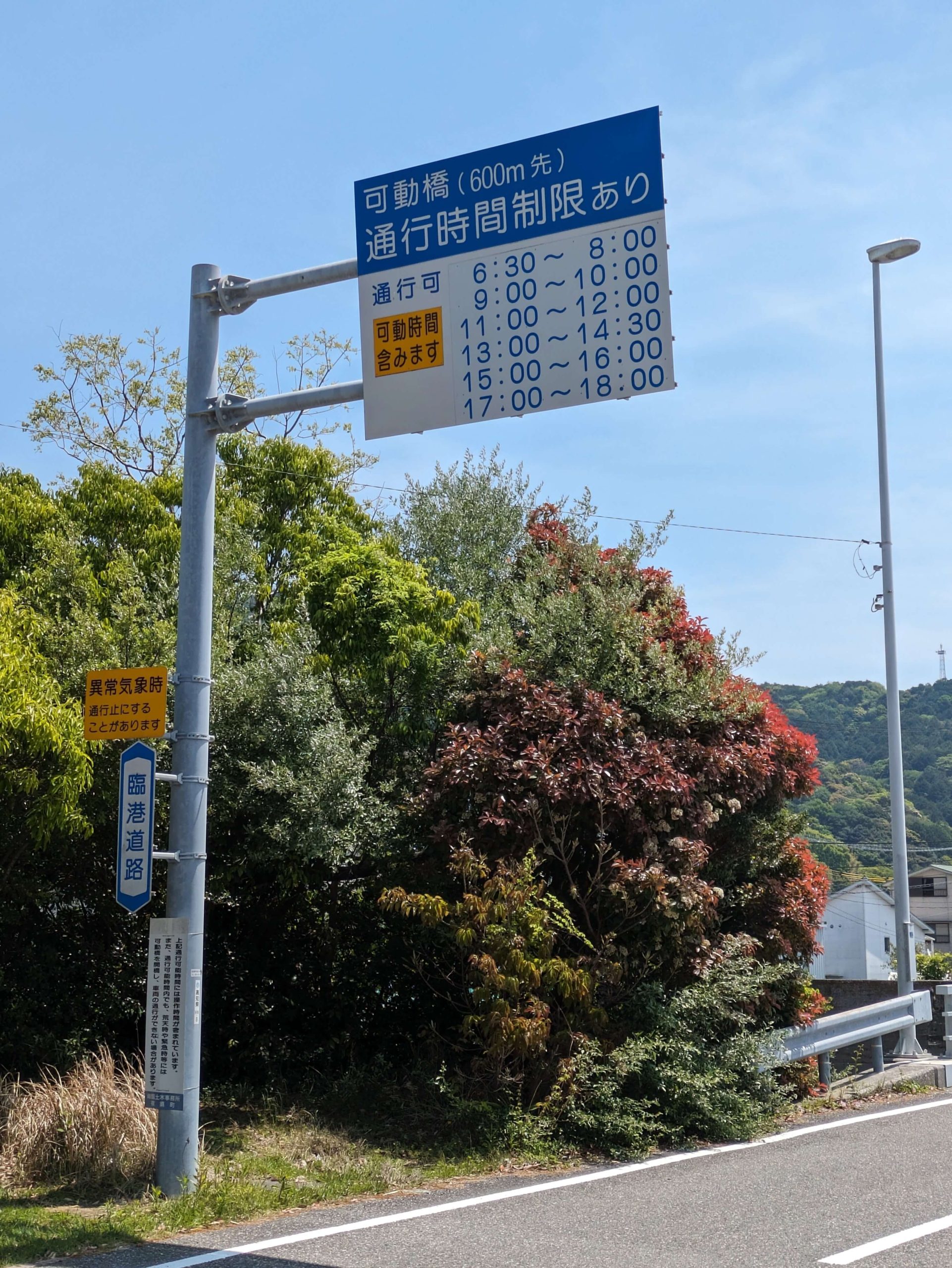
I made sure to arrive on time, just baaaarely within one of these specific timeframes. (If you can read Japanese, don’t look at the text above the numbers or you’ll get spoiled…)
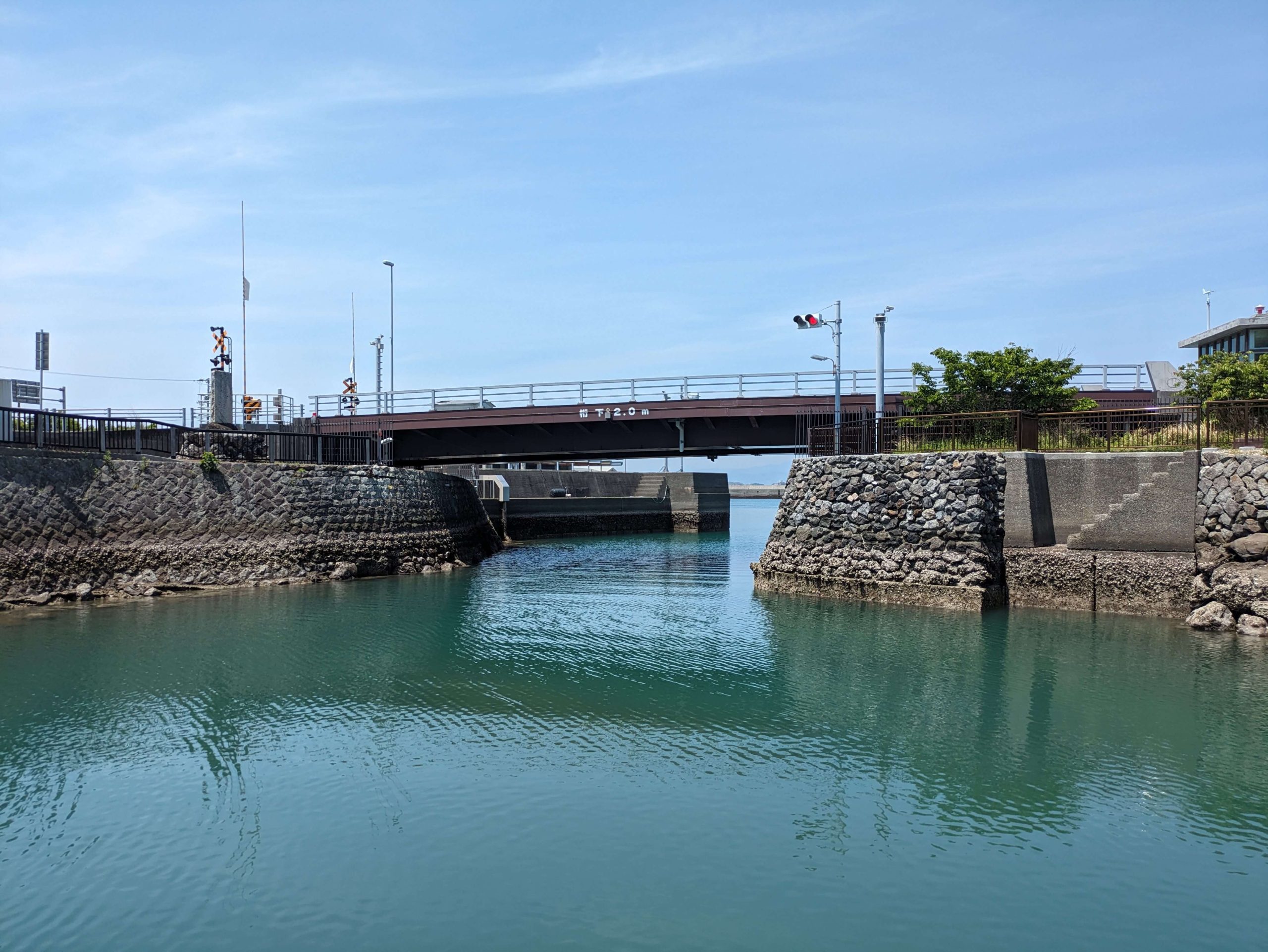
There’s one other person down here watching this bridge along with me. But why???
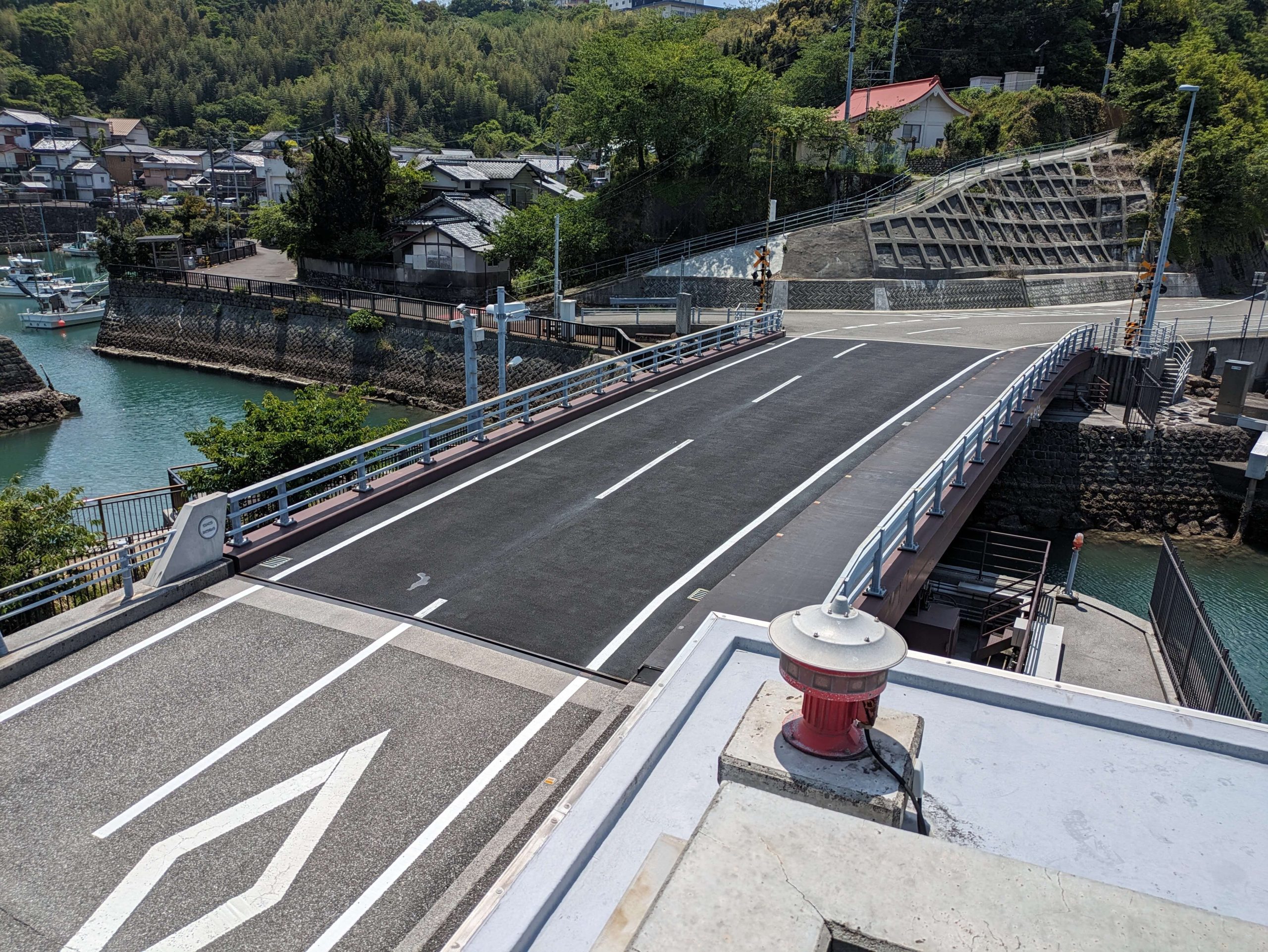
Looks like just a normal, ordinary bridge…??
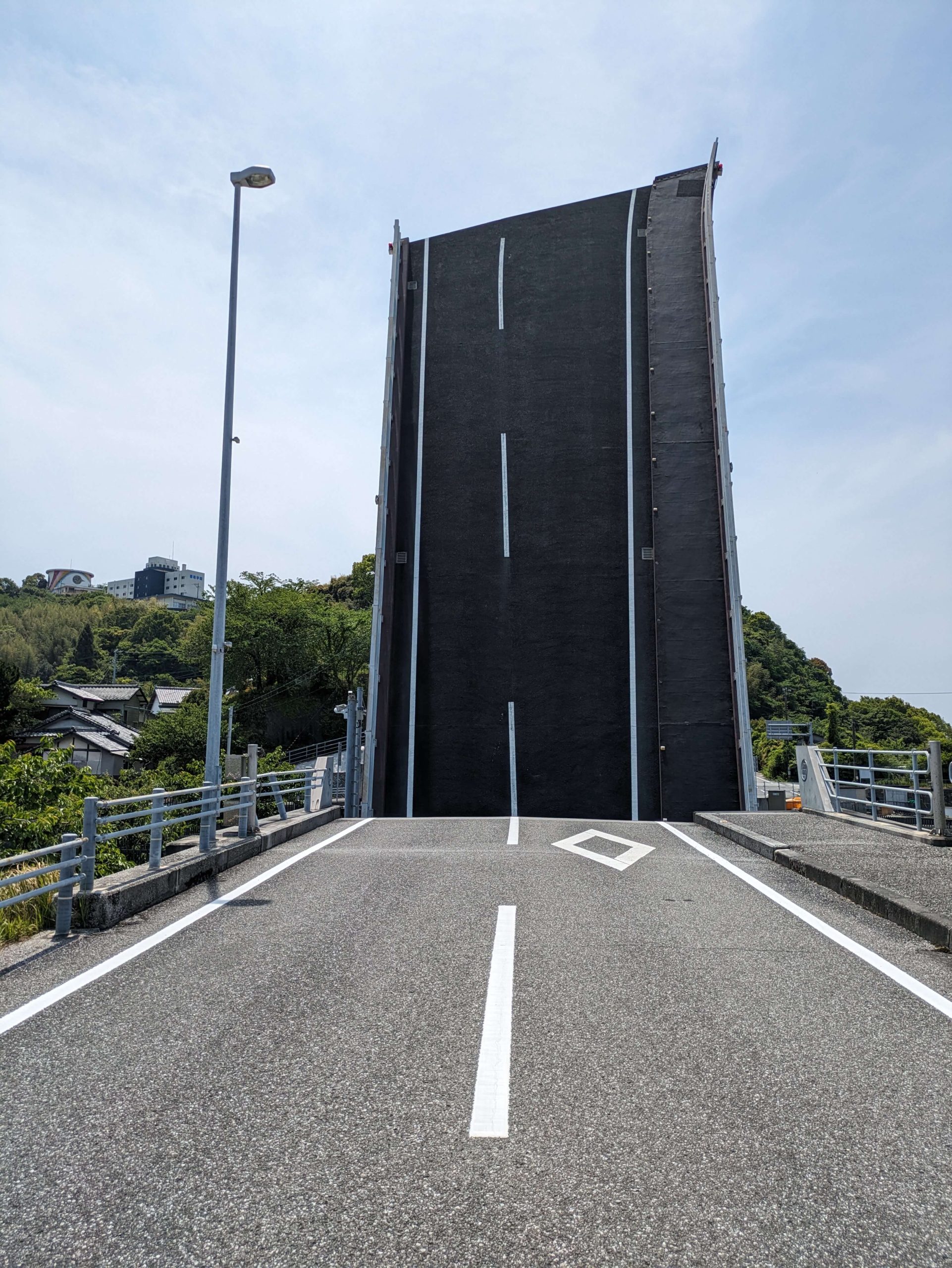
!!!!!!!!!!!!!!!!!!!!!!!!!!!!!!!!!!!!!
This is why I’m so bad at giving travel recommendations to people. The tourism I engage in is going to see strange and funny signs and weird infrastructure that I stumble across on niche corners of the internet. Like, why not just head to Kochi for sightseeing? What made me stop and walk to the Yasu Town district of tiny Konan City? To see the bizarre Tei Port Movable Bridge, naturally.
(FYI, before any trip, I like looking at Atlas Obscura to see if any places I’m venturing have pins on their map… they’re quite English-speaking-world-focused, though, so for Japan I also check this great map compiled by the one-man photozine/doujinshi publisher Hitoritabikenkyu and see if I’m happening to pass by anywhere he’s flagged as interesting.)
I arrived just before the bridge was slated to open at 11:00 a.m. and watched from the harbor – in fact, according to the Asahi Shimbun, Japan’s oldest excavated harbor – as it took six minutes to slooowly raise up to its 70° angle, jutting out into the sky to a greater and greater degree. Straight on, it looked as if the road had fractured and buckled in on itself. The most amusing part is that outside of the seven hours a day (across a total of six windows of time) when it’s down for cars, drivers can simply… just take a one to two minute detour and drive on the road that goes right around the perimeter of the port instead?!?!
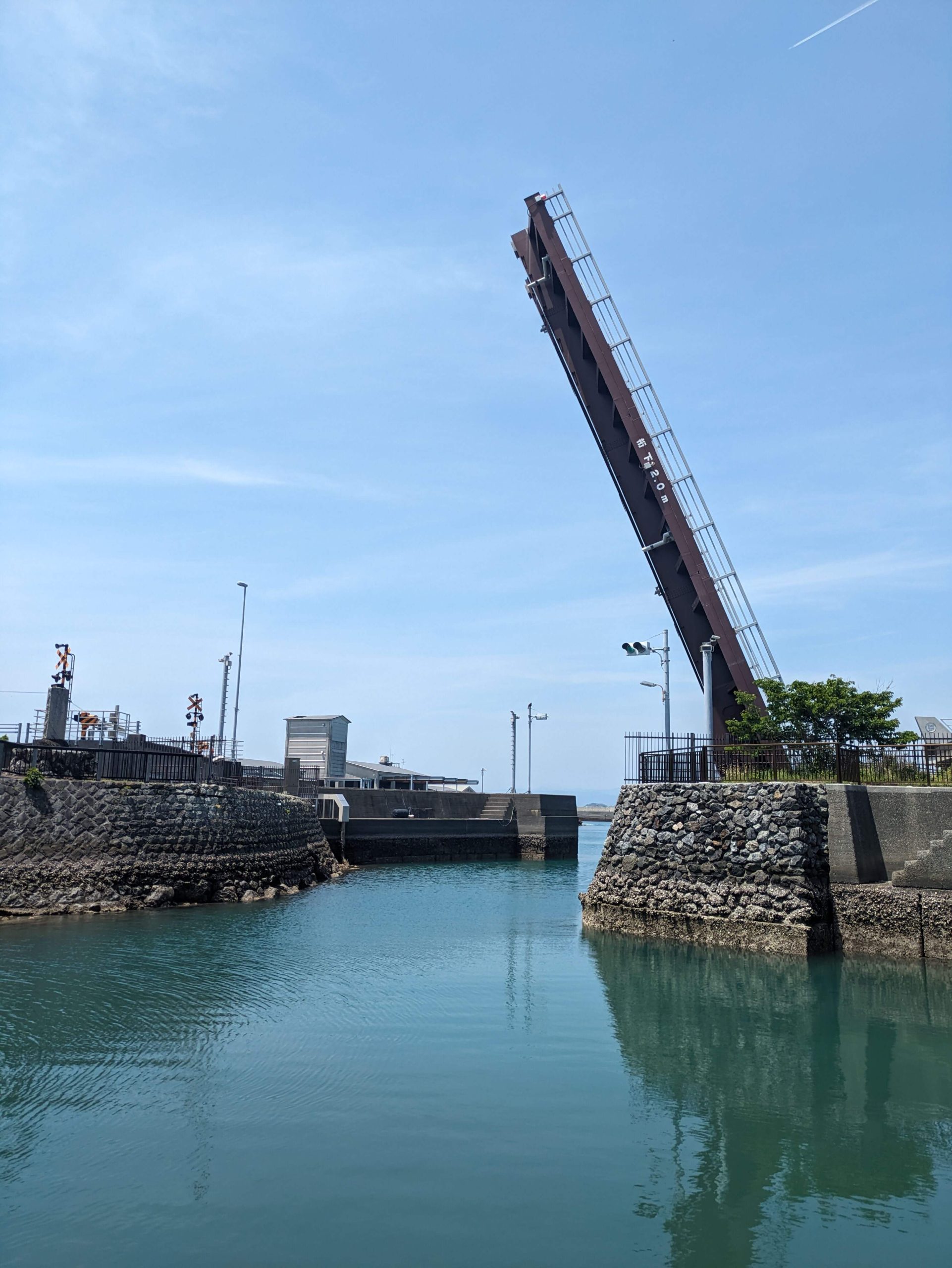
A couple more pictures of this crazy bridge. Side view from the harbor after it was fully raised.
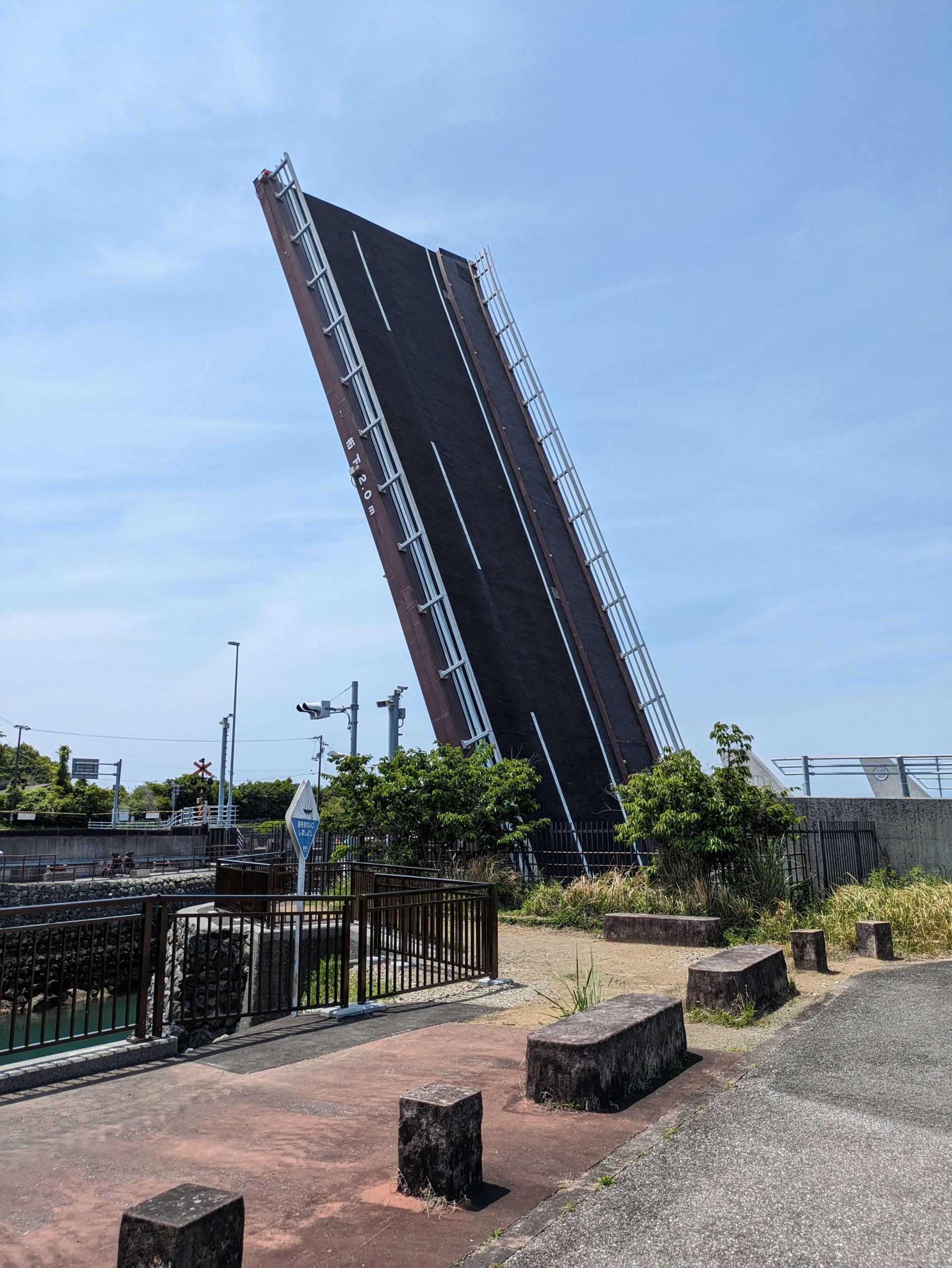
And one from the plaza while beginning to walk back to the station.
Desire path spotted!
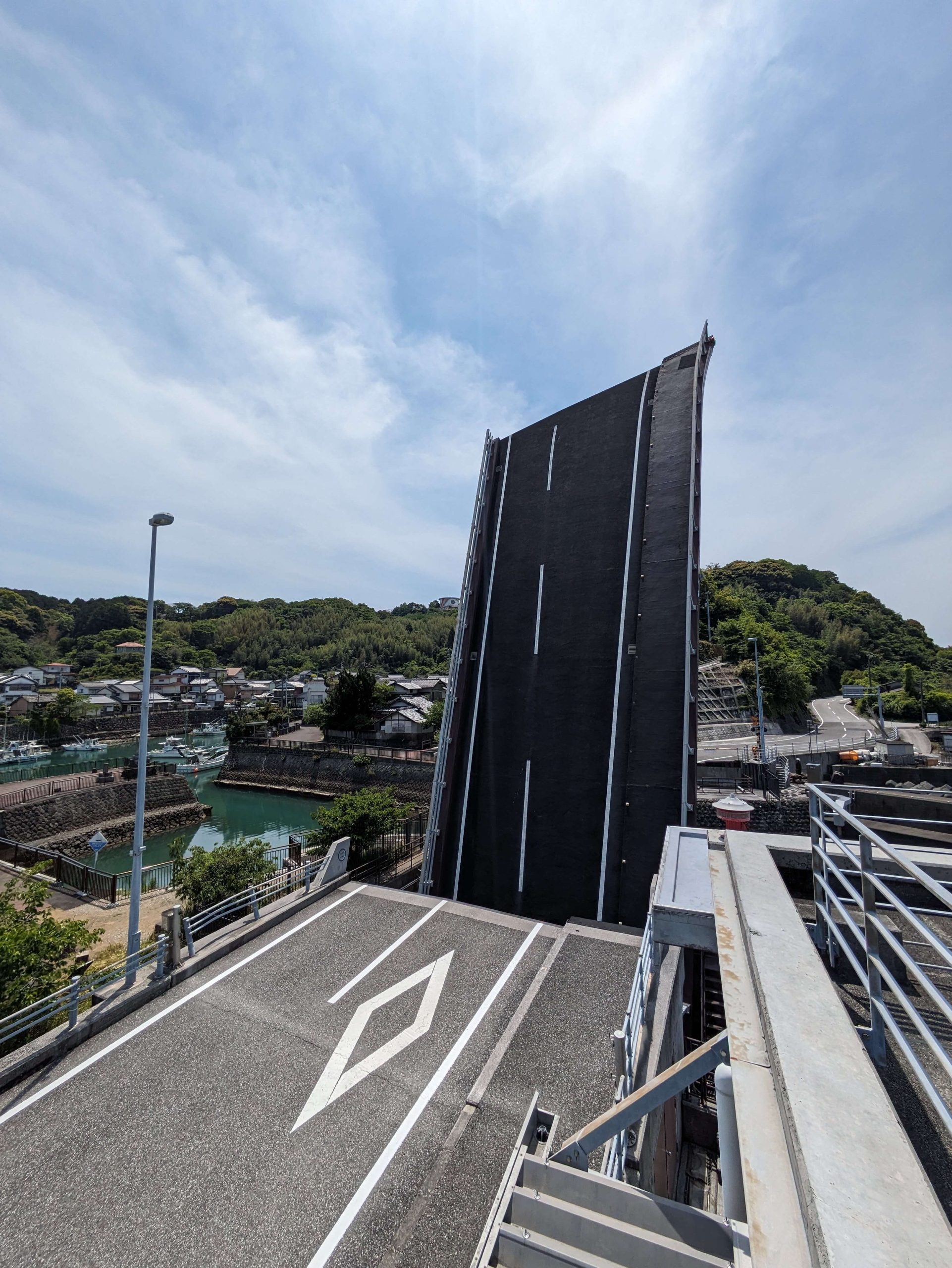
One last angle, from the other direction, atop the small “observation deck” accessible from a staircase leading up from the sidewalk to the roof of the operations building.
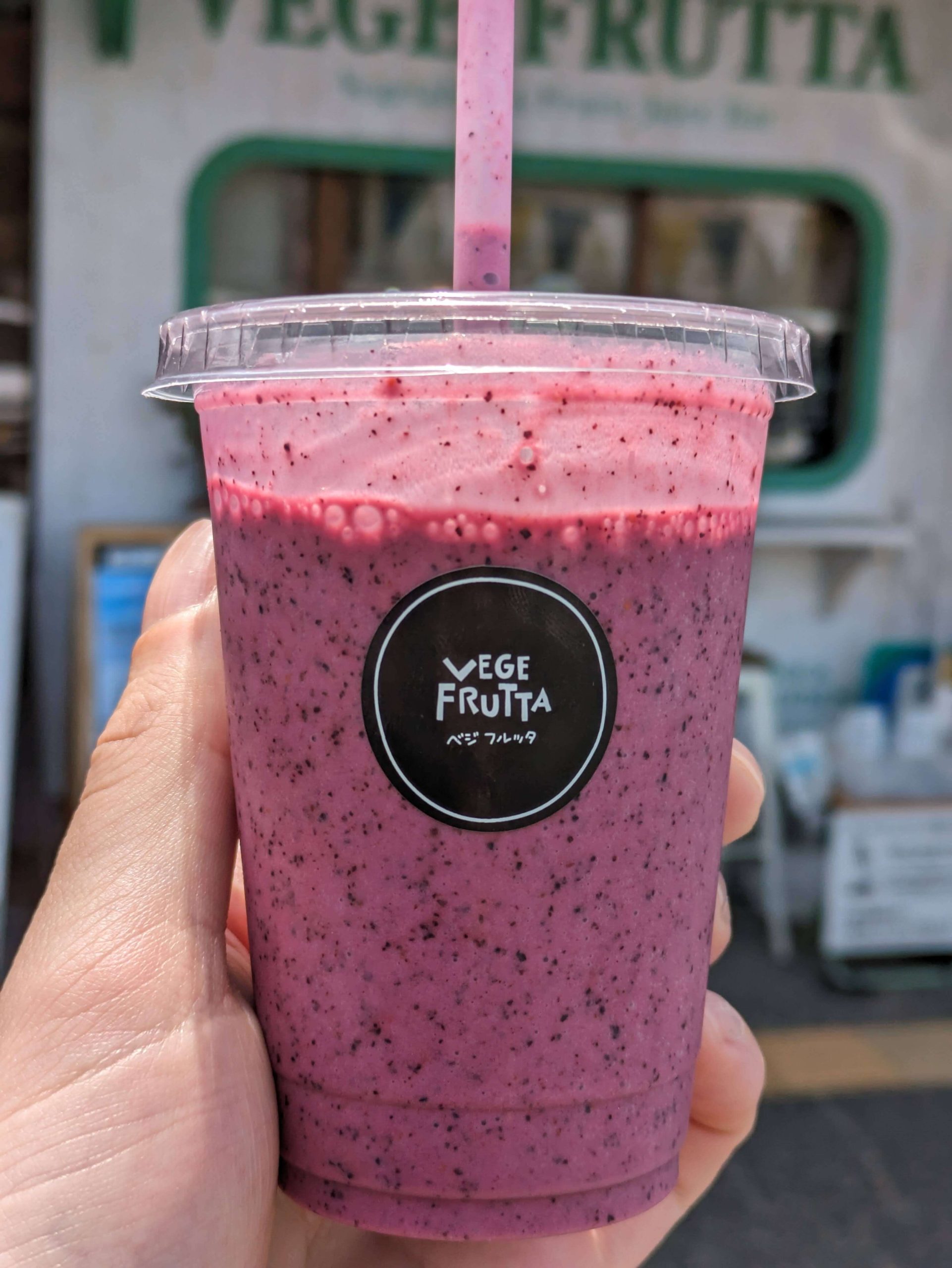
I got a smoothie made for me in record speed by a shop called “VEGE FRUTTA” (lol) outside the station as my next train pulled in.
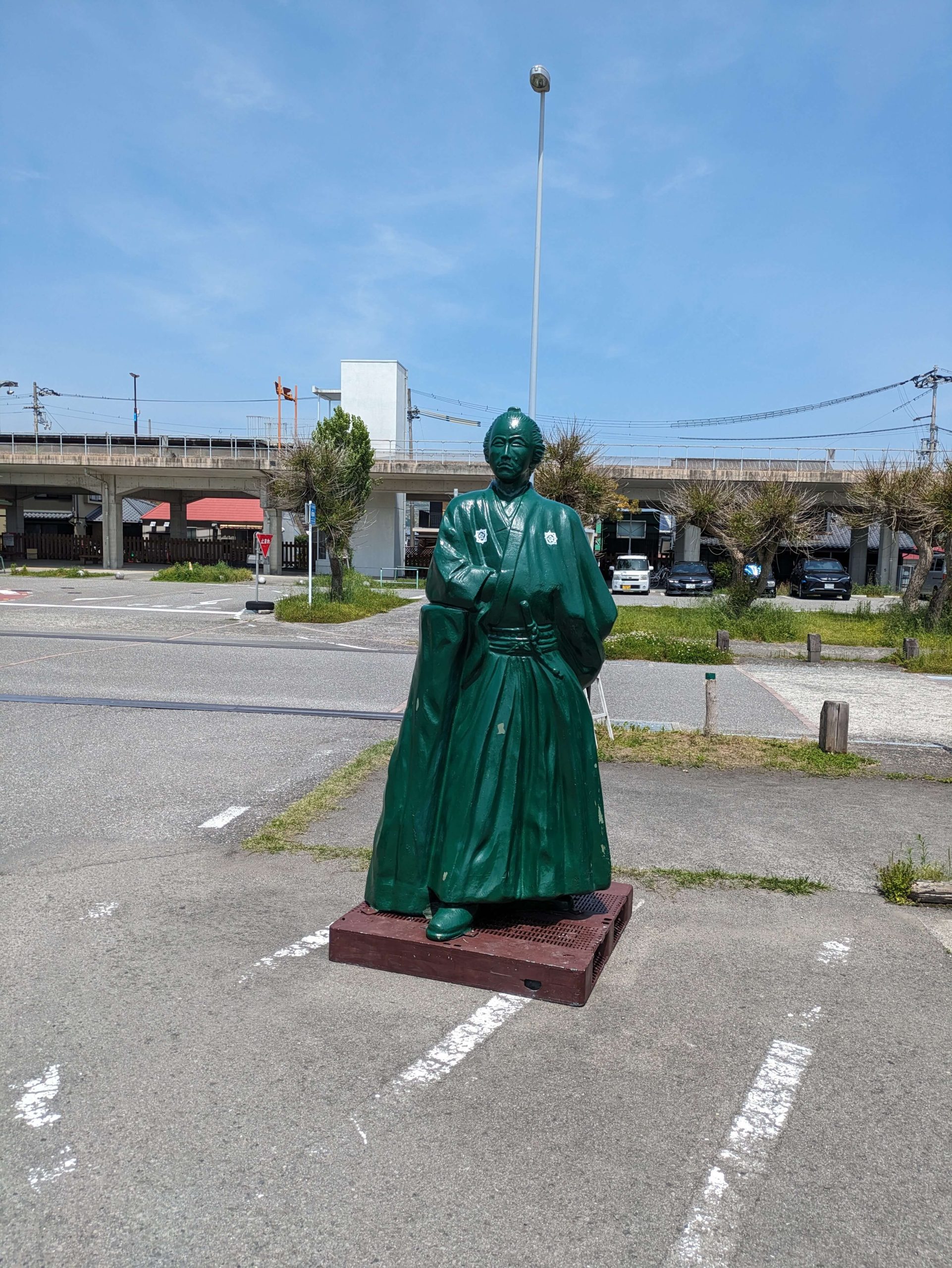
In the parking lot was a statue of Sakamoto Ryoma, a samurai from Kochi who was known for opposing the Tokugawa Shogunate and promoting modernism over feudalism.
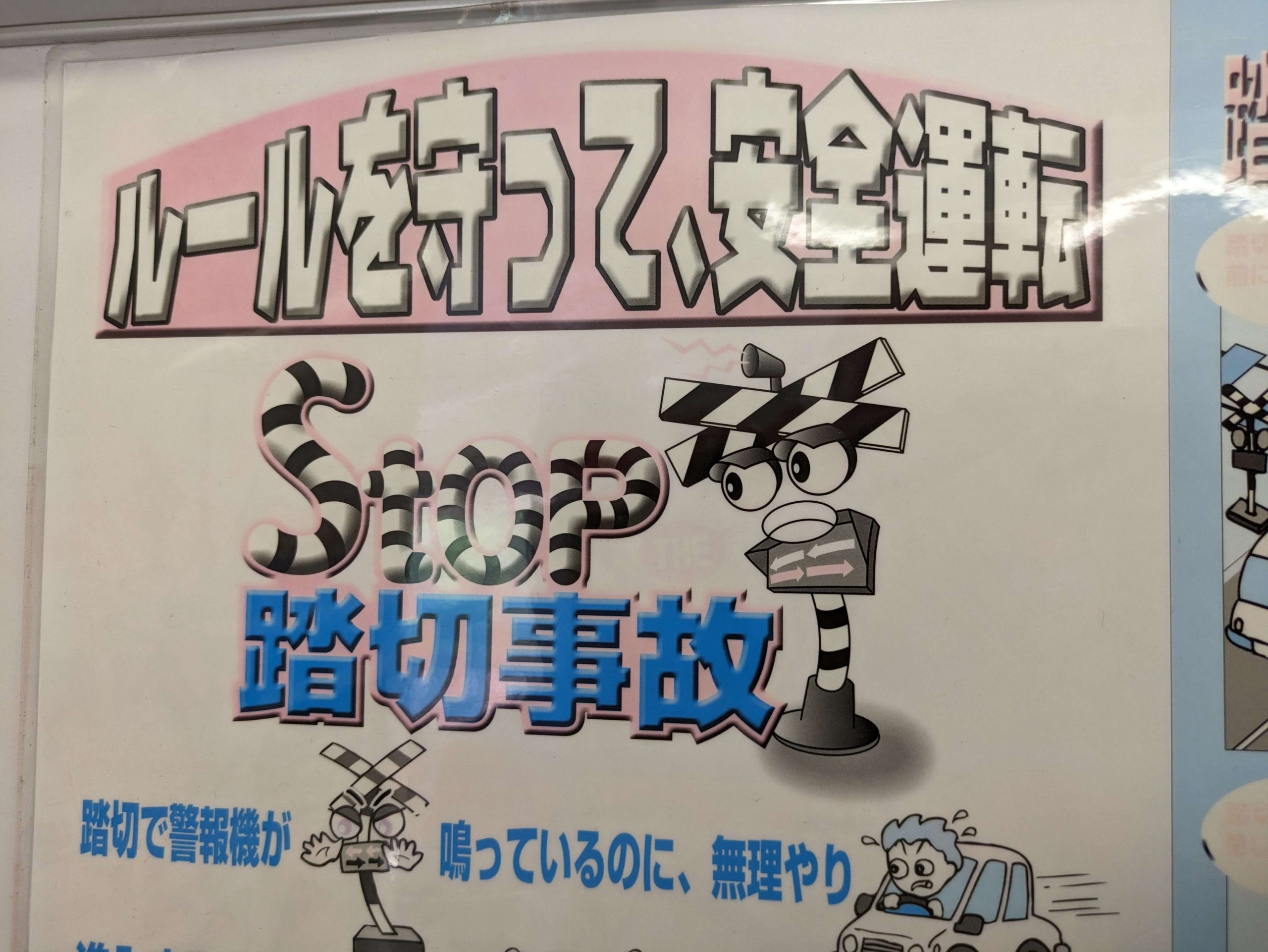
Horrifying.
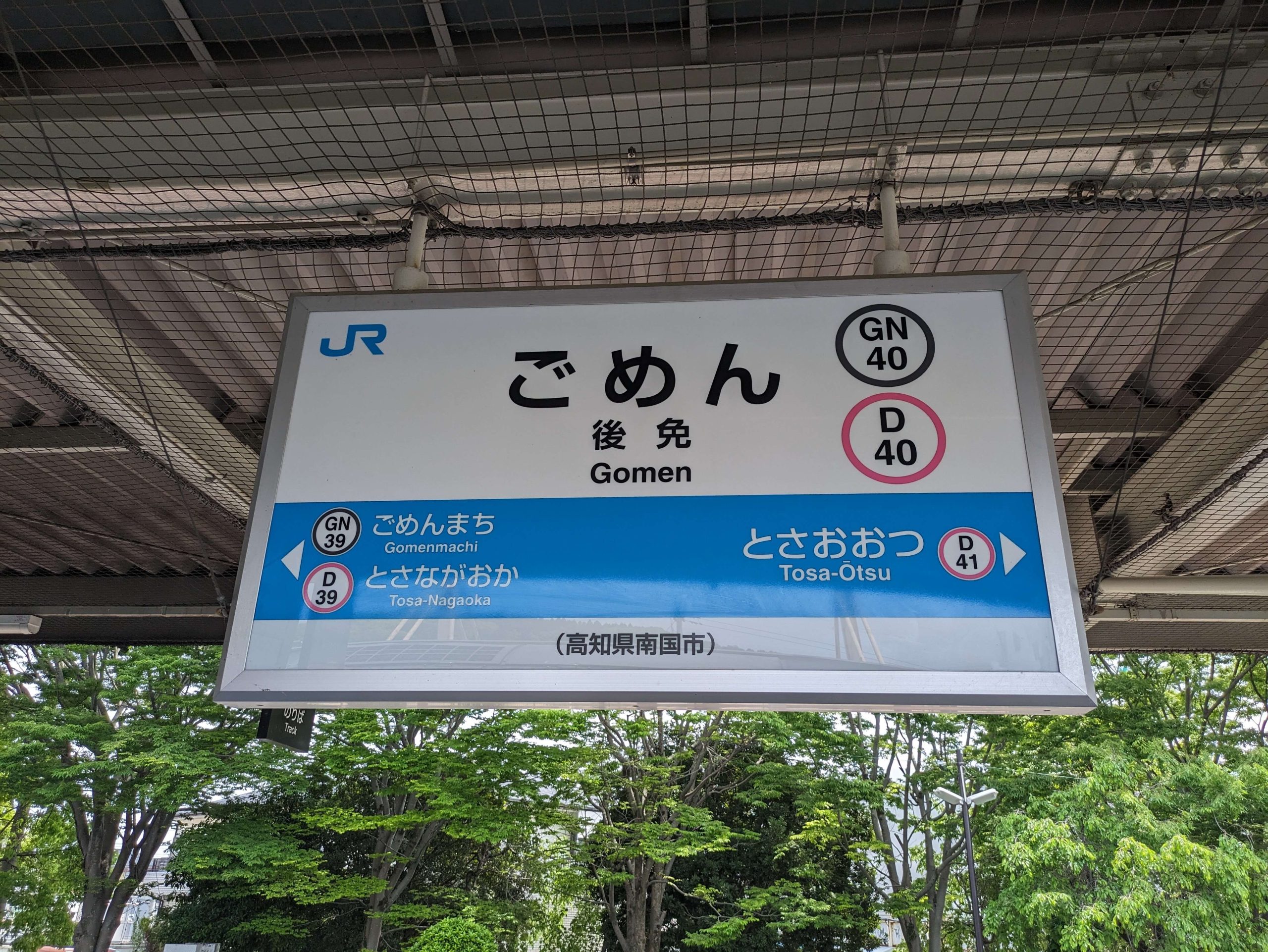
Sorry!!!
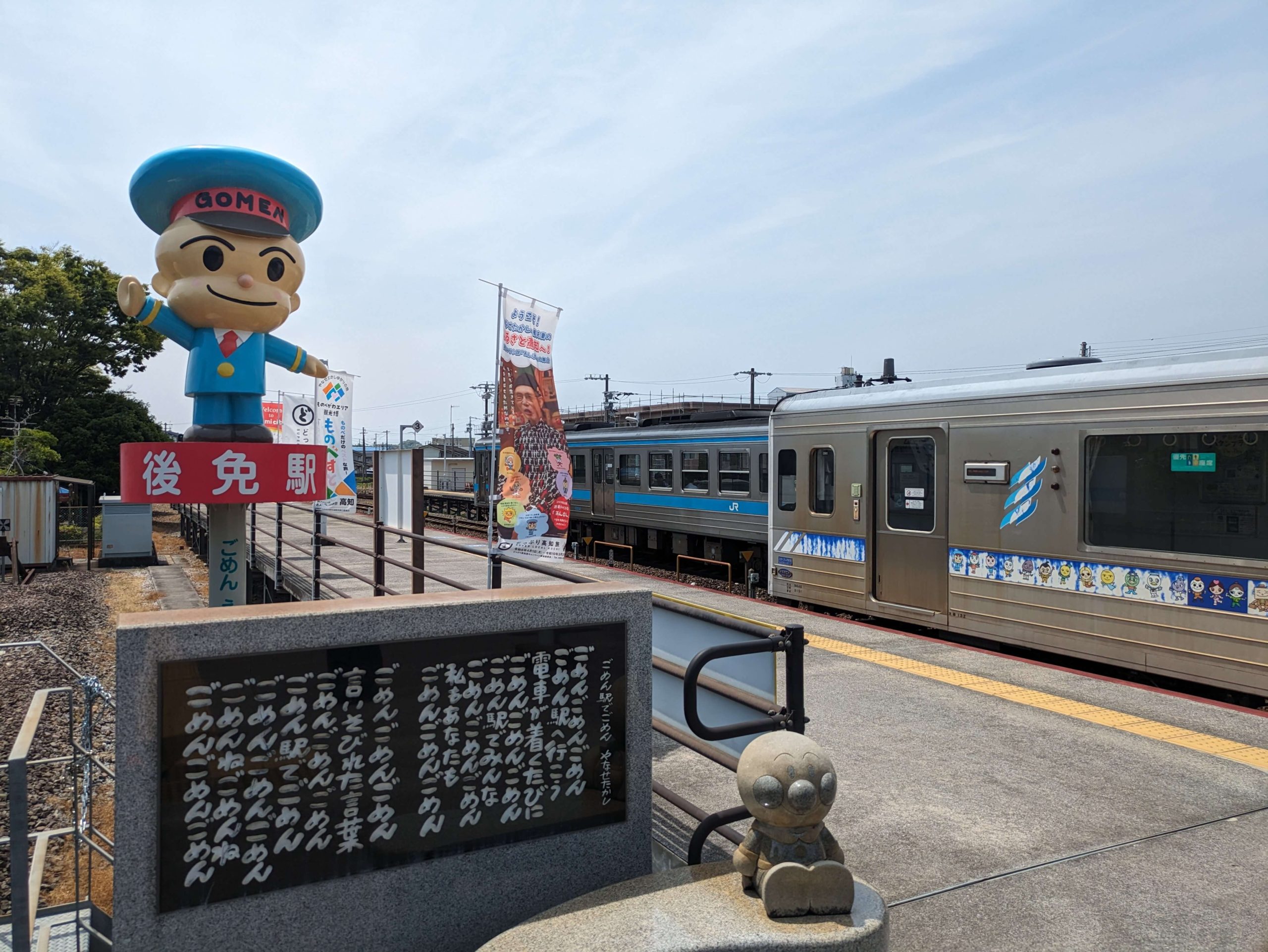
The last stop on TKT‘s Gomen-Nahari Line. Gomen Station is also served by JR Shikoku’s Dosan Line, and some trains have through service. There’s a short, very-repetitive song engraved into the slab here written by Yanase-san about saying sorry at the station.
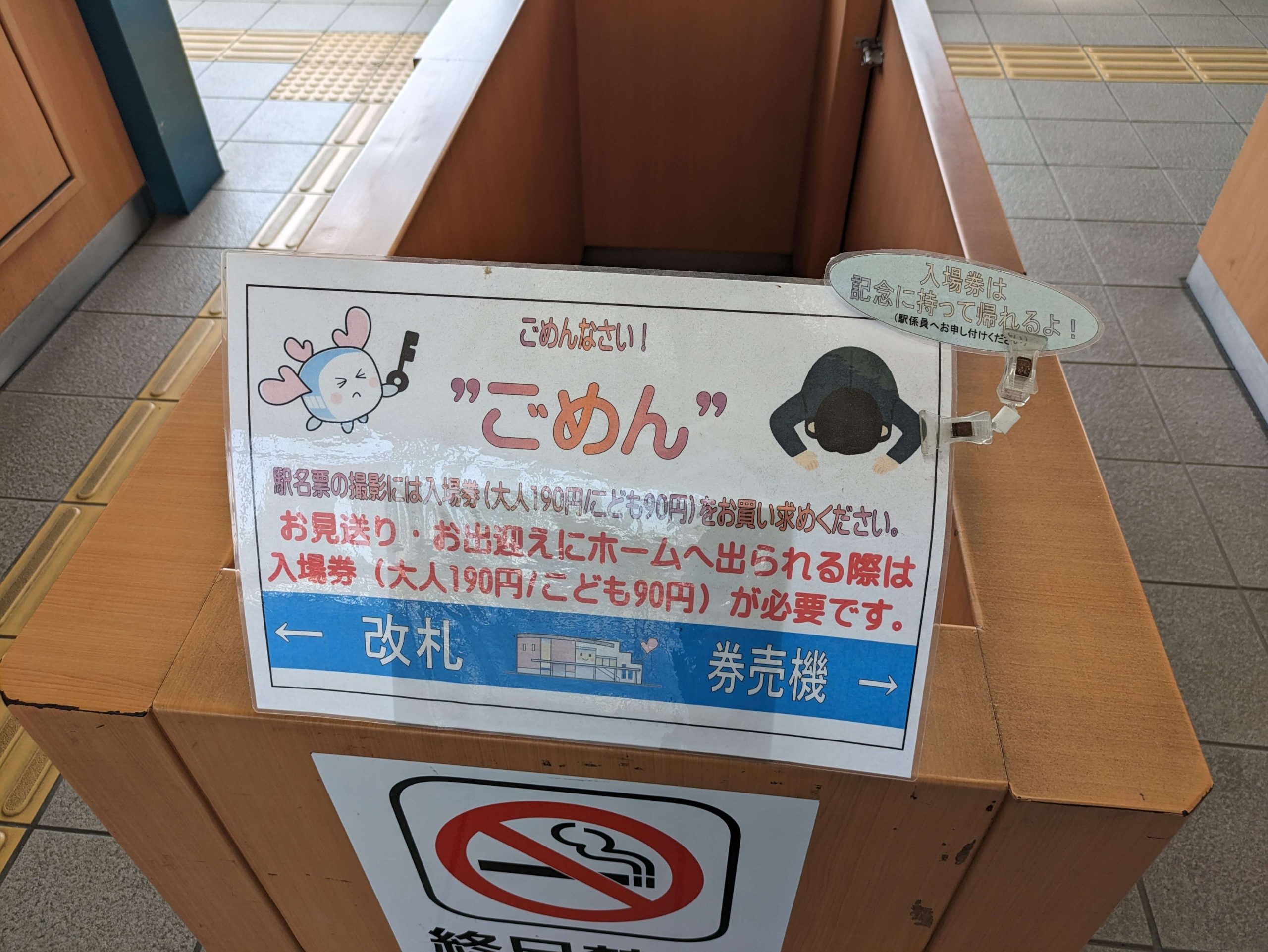
JR Shikoku is apologizing too. If you want to go into the station to take a photo of the station sign, you have to buy a ¥190 platform ticket.
After reaching Gomen Station, I walked fifteen minutes through the streets of Nankoku to Gomenmachi Station, the tram stop that would take me into Kochi City proper. (JR trains also serve the city, but I can’t pass up a tram!) Kochi’s overall tram network is the second largest in Japan – after Hiroden in Hiroshima – and is operated by Tosaden Kotsu, or as they’ve registered their official name in English, “Tosaden Traffic”… one of many instances of Japan not realizing the English words “traffic” and “transit/transport” are separate, and not interchangeable; in Japanese they’re just a single word, 交通 kōtsū. (It’s always quite funny when you go to a rail company’s website and have to click on “traffic info”. Congestion on the roads caused by cars is, like, the opposite of what trains get you!)
Tosaden’s trams have various claims to fame, too. The first is that, with through service between their co-linear lines running east–west, the ride from Gomenmachi to Ino stretches over 22 km and takes almost 1.5 hours, the longest single-ride streetcar journey in Japan. The second is that it’s the oldest still-running tram system in the country, dating to 1904. Finally, Tosaden’s Gomen Line (which I’m just about to board here) features the shortest distance between two stations in Japan: only 48.3 meters between Ichijobashi and Seiwa Gakuen-mae, on each side of a short bridge.3The story is that the local school moved to its current location in 1985 so they opened a new tram stop directly in front of it, with the intention to close the other nearby one, but local residents requested they keep it open… so they did! Check it out on Google Maps!
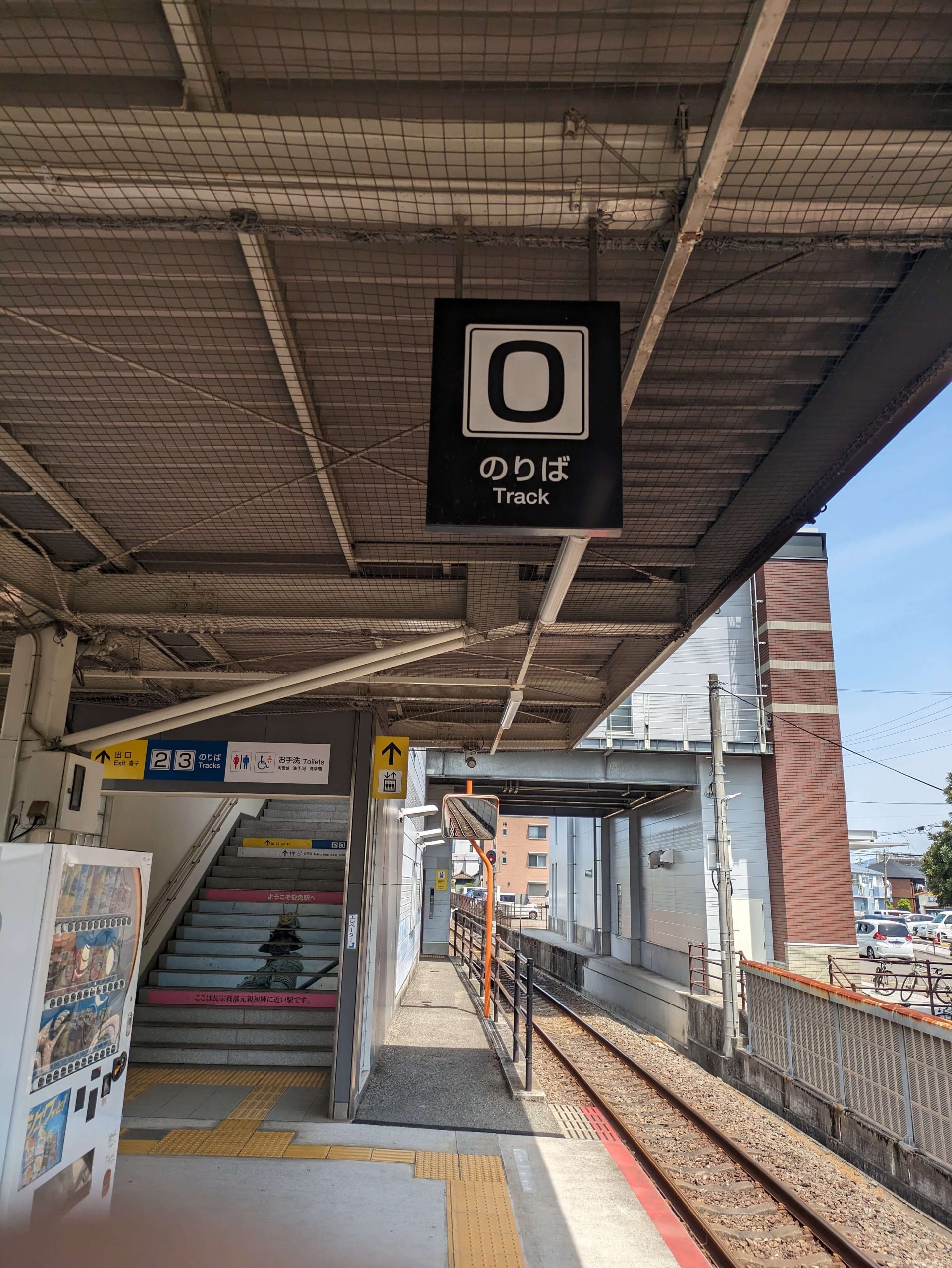
Platform 0!!! Proof that Gomen is a great station.
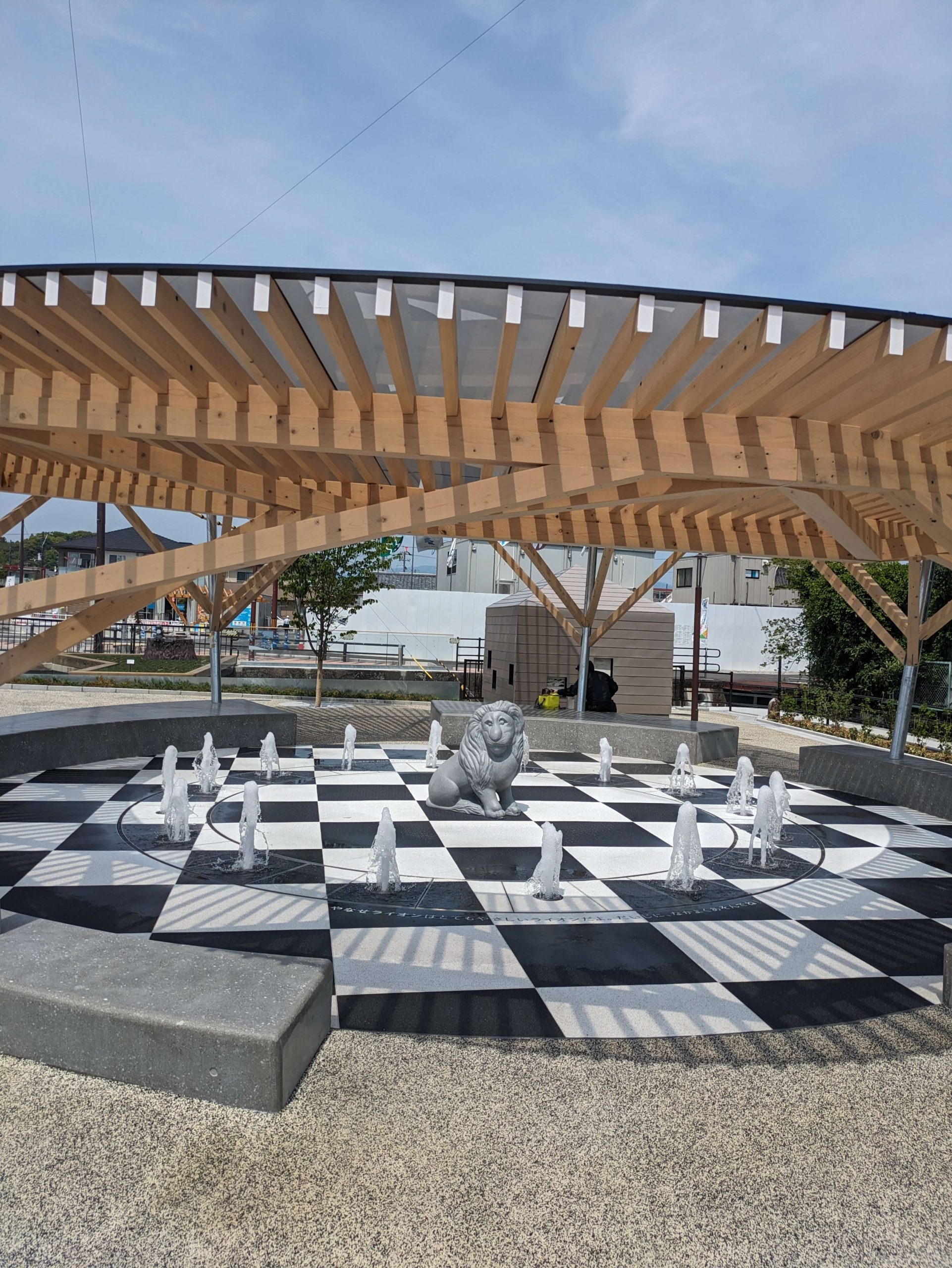
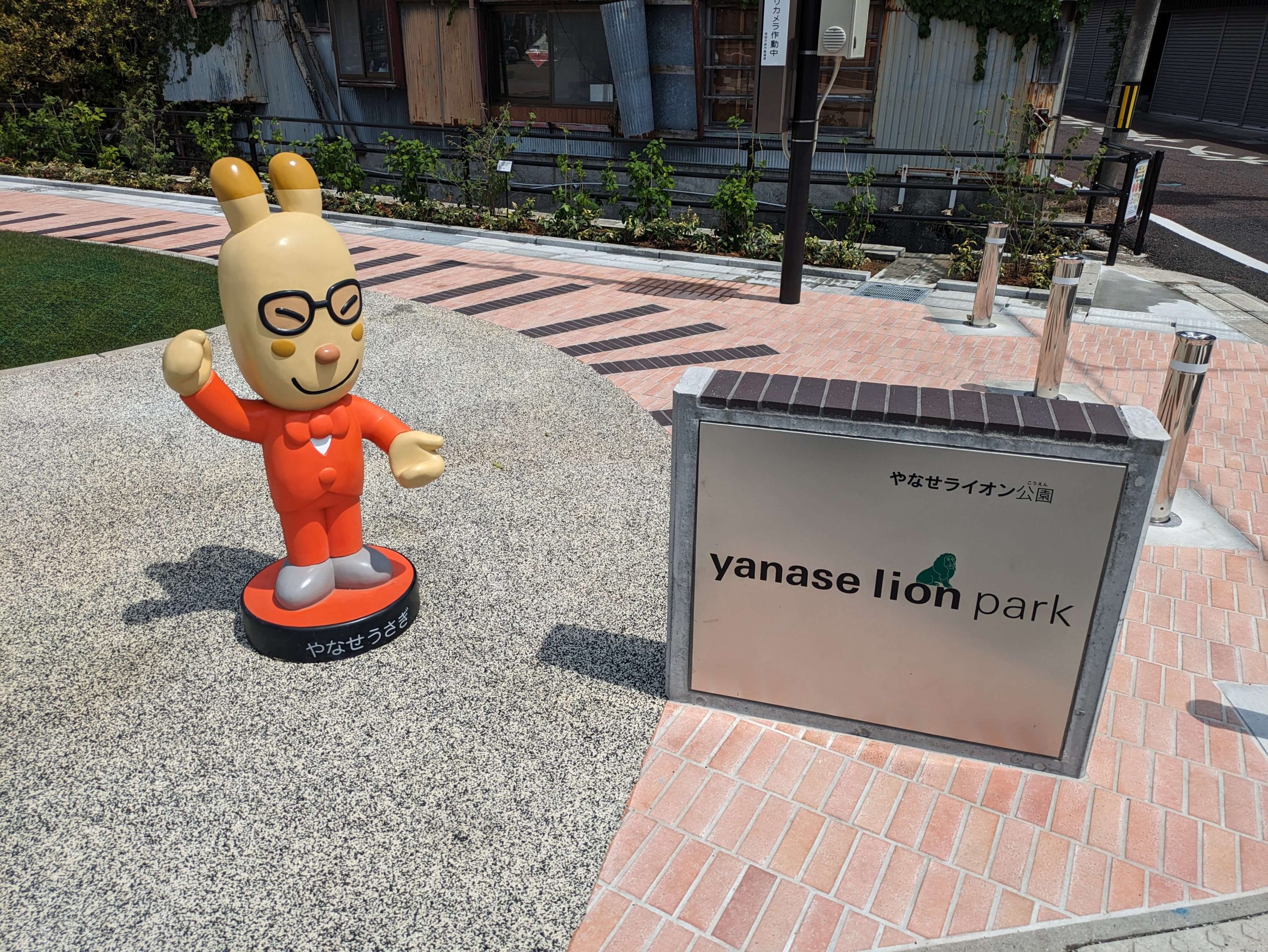
Yanase Lion Park (with a statue of “Yanase Rabbit”, said to be Yanase-san’s alter ego) is located down the road from the station. It’s a brand a new space that just opened the month prior, in March 2025! The park is named after one of his acclaimed books, The Kindly Lion. (The book also got an animated short film adaptation in 1970 produced by Osamu Tezuka.)
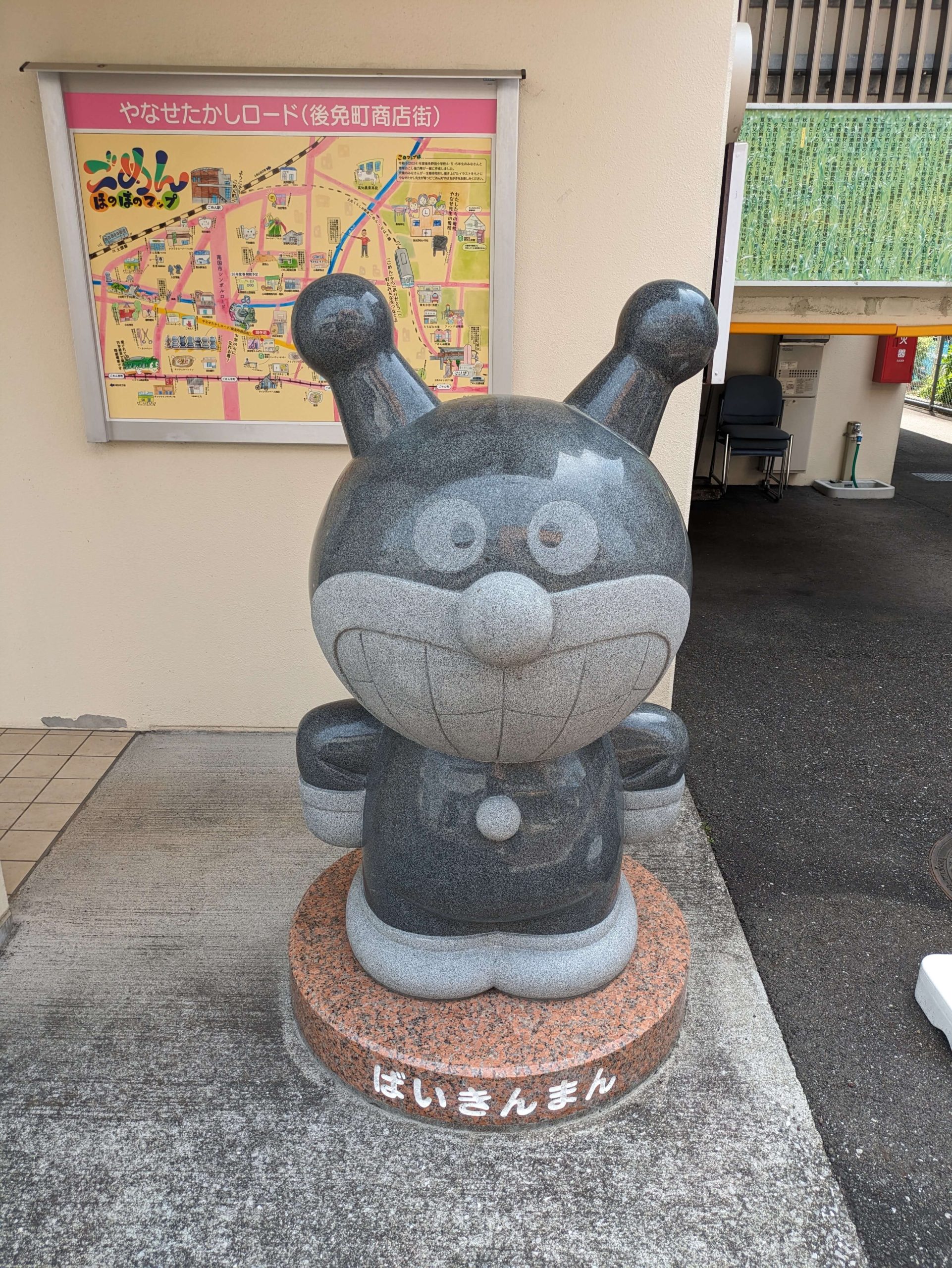
Just around the corner was Yanase Takashi Road, filled with stone statues of his many characters. I walked along it toward the last tram stop, where I’d be boarding.
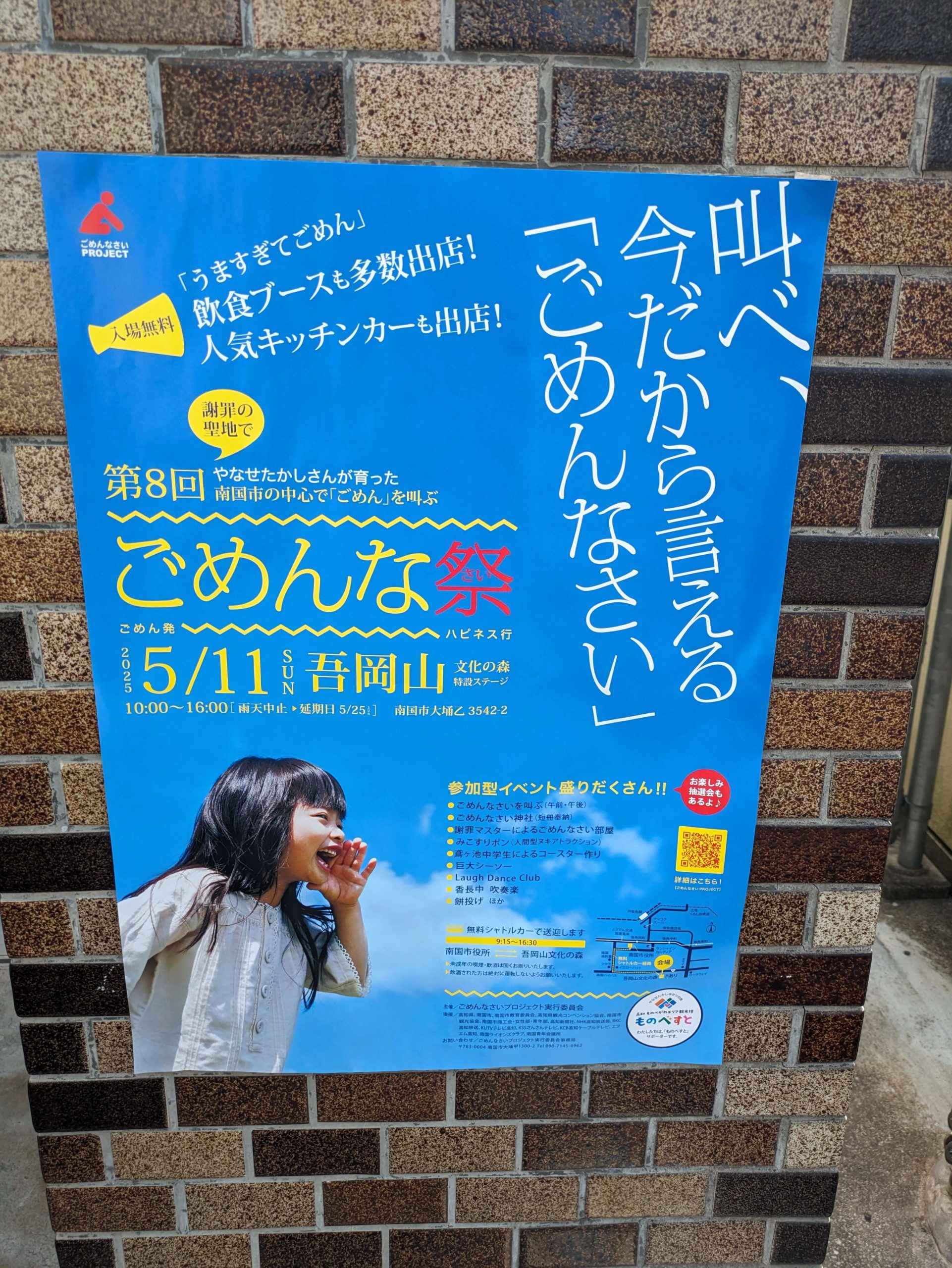
And a poster on the street: the eighth annual Gomenna-sai! (This is a play on words – “gomennasai” is the polite phrase for “I’m sorry” and “sai” is another reading of the character for matsuri, or festival.) The city hosts a one-day event where you can get on stage and shout sorry for whatever you want. It’s kinda cute… but sort of weird, too, basking in the “pride” Japan has for self-flagellation, from the news stories I was reading about what kids shouted at it… 😥
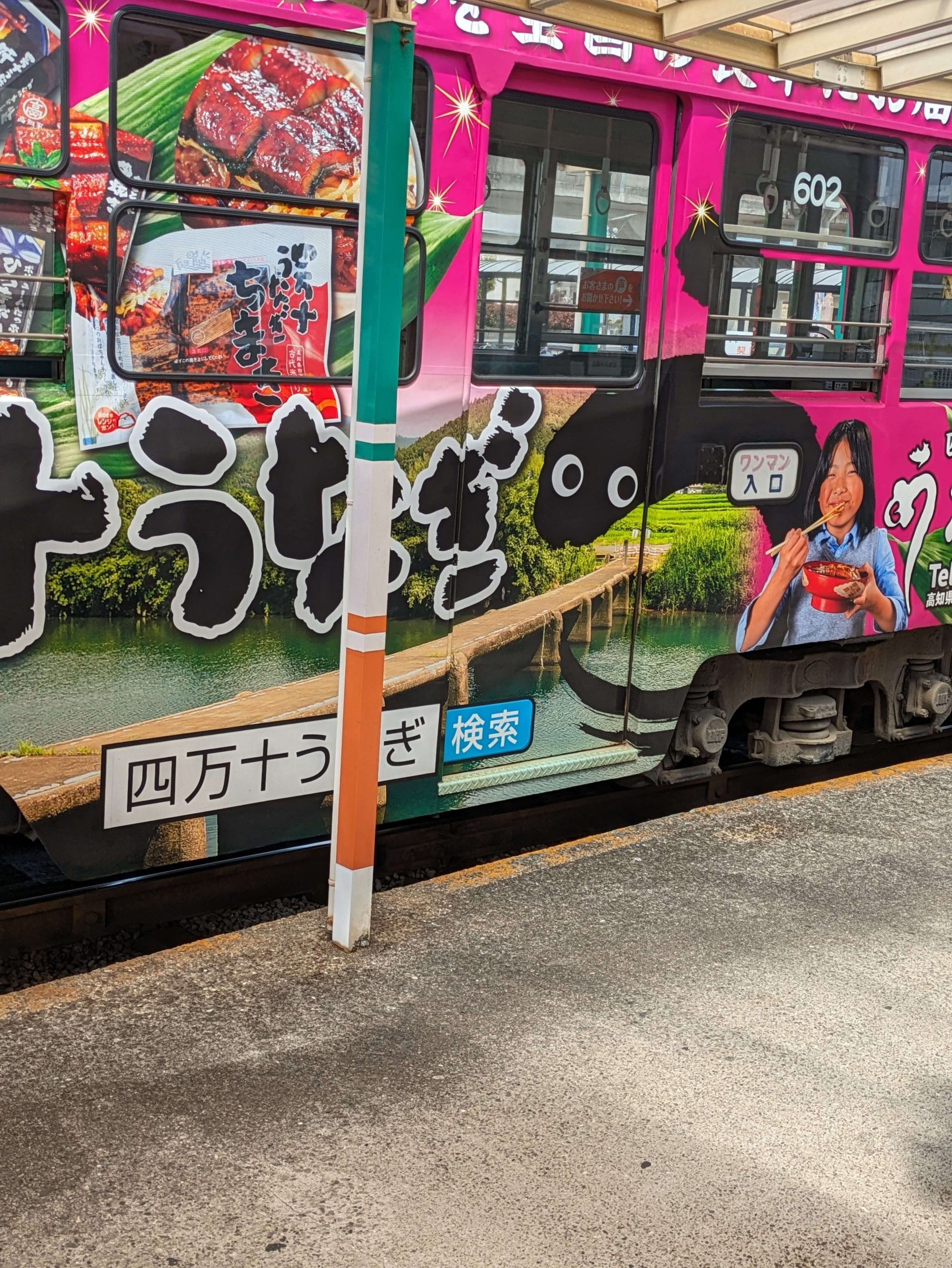
My tram had this adorable eel on it!!!!!!!!!! 👀 I mean, I know it was an ad for a restaurant where you can eat eeel, but still, aww, c’mon, lookit ‘im…
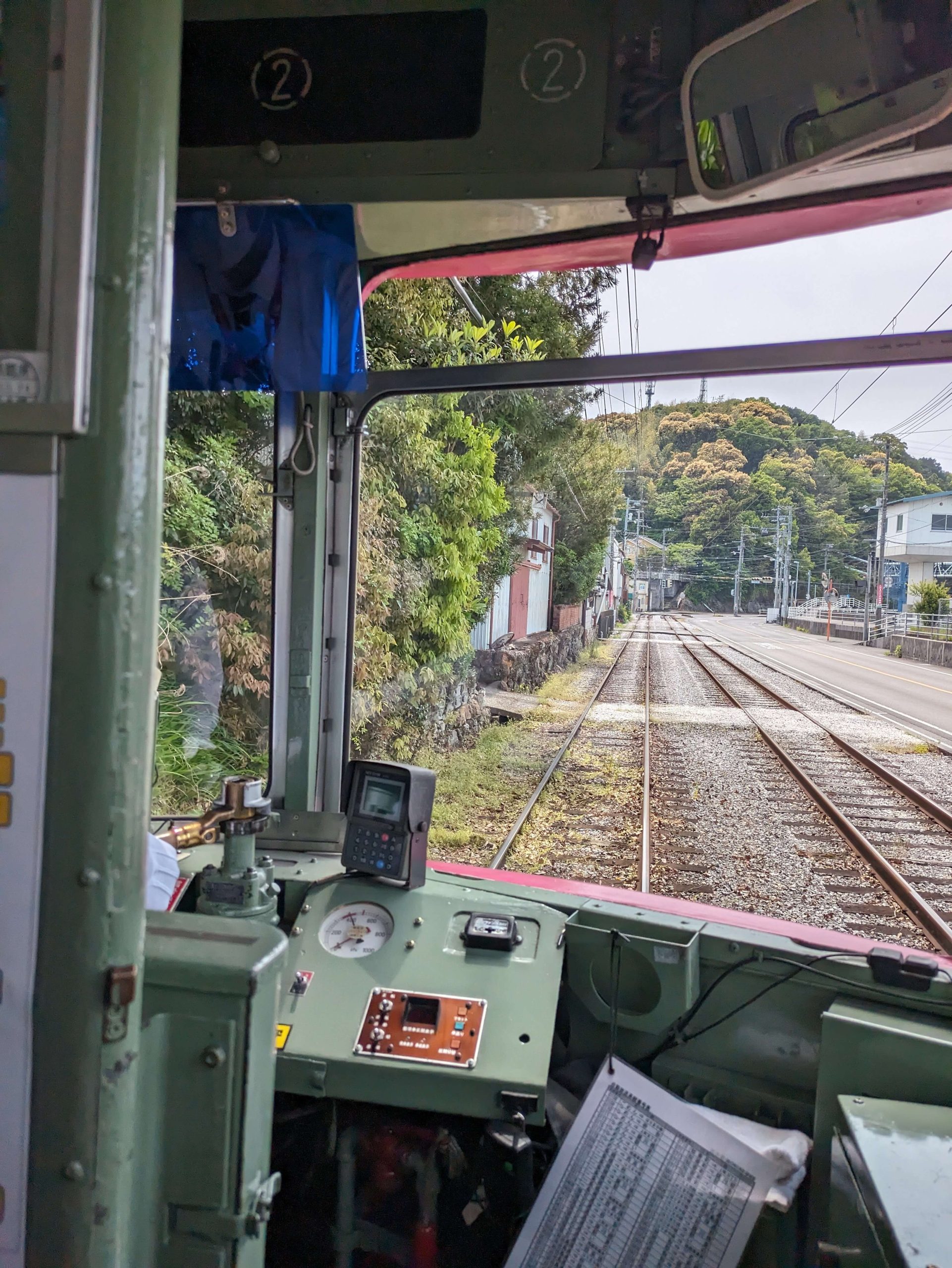
A nice ride into Kochi City on my favorite form of transit. Pretty empty at the terminus, but there were maybe a dozen of us riding by the time it reached downtown.
Harimayabashi Bridge, a well-known regional landmark. It was also the basis for a 2009 American film called “The Harimaya Bridge” that was filmed in Kochi??
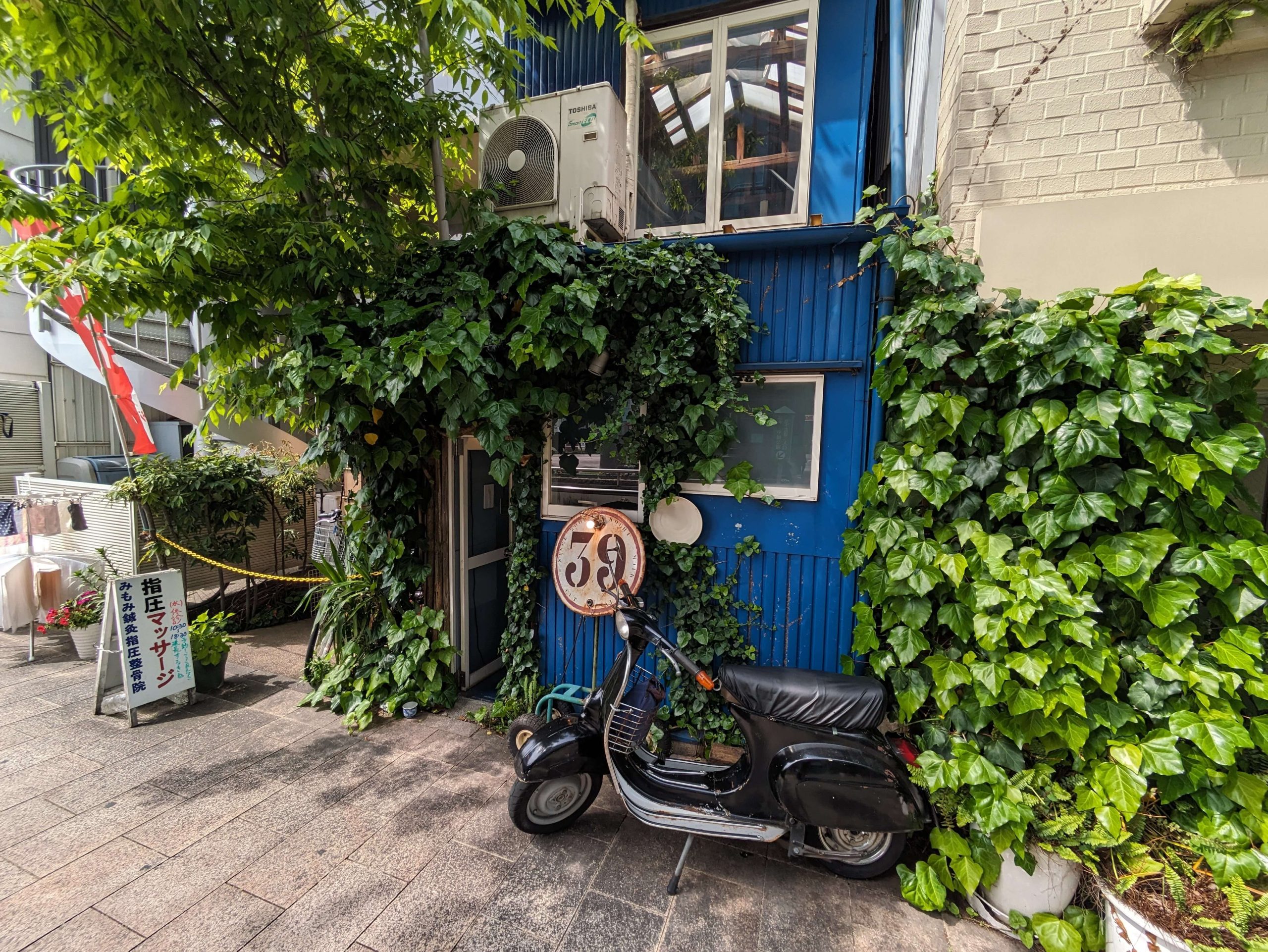
There were some small, picturesque shops nearby. This place was at the head of quite a peaceful walking path with a manmade stream and a lot of shade (for Japan’s standards). I’ll stroll around more tomorrow. For now…
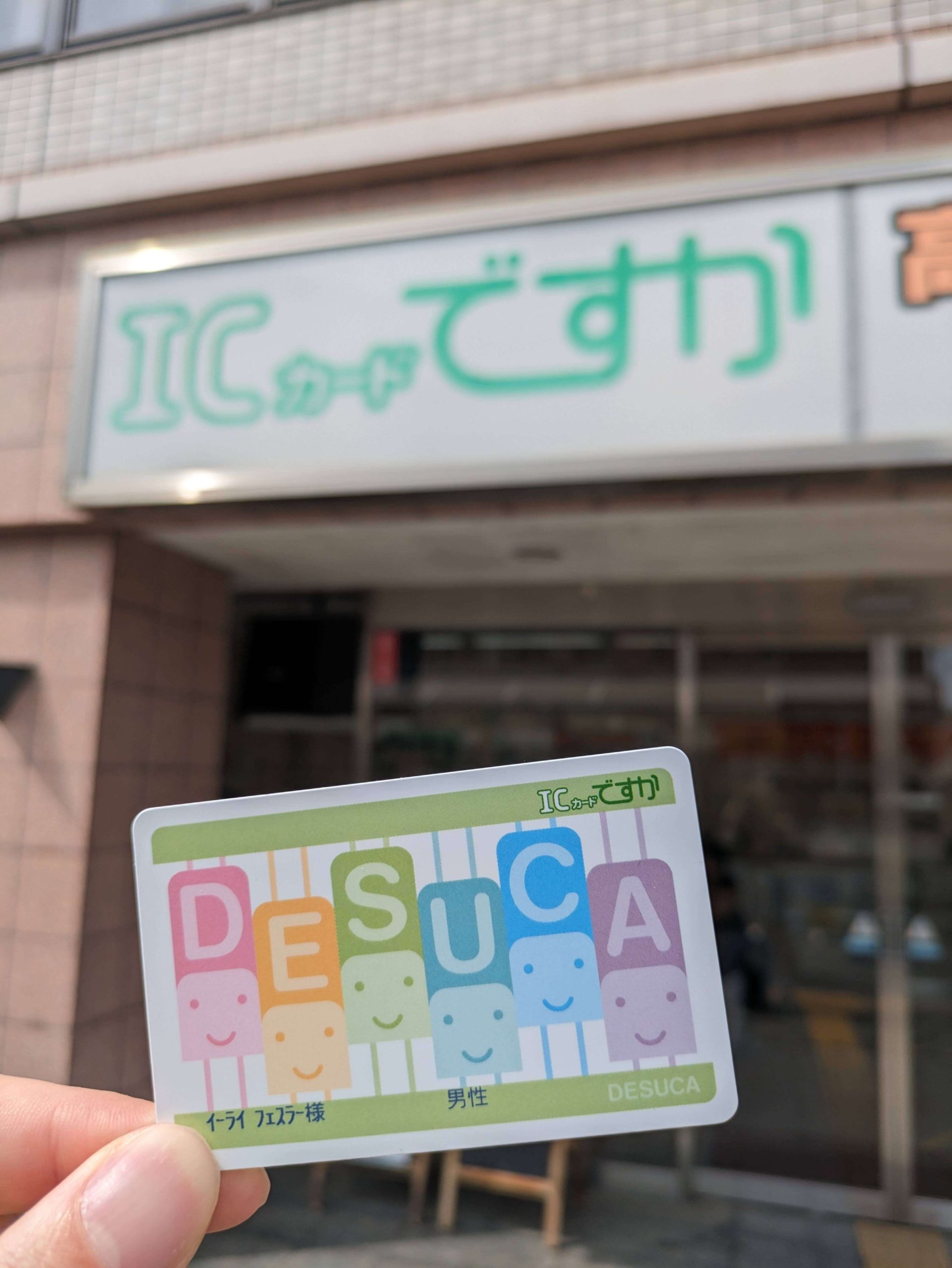
DESUCA OBTAINED!!! (The new version with the new address on the back.) My nationwide IC card collection is finally fully complete!!
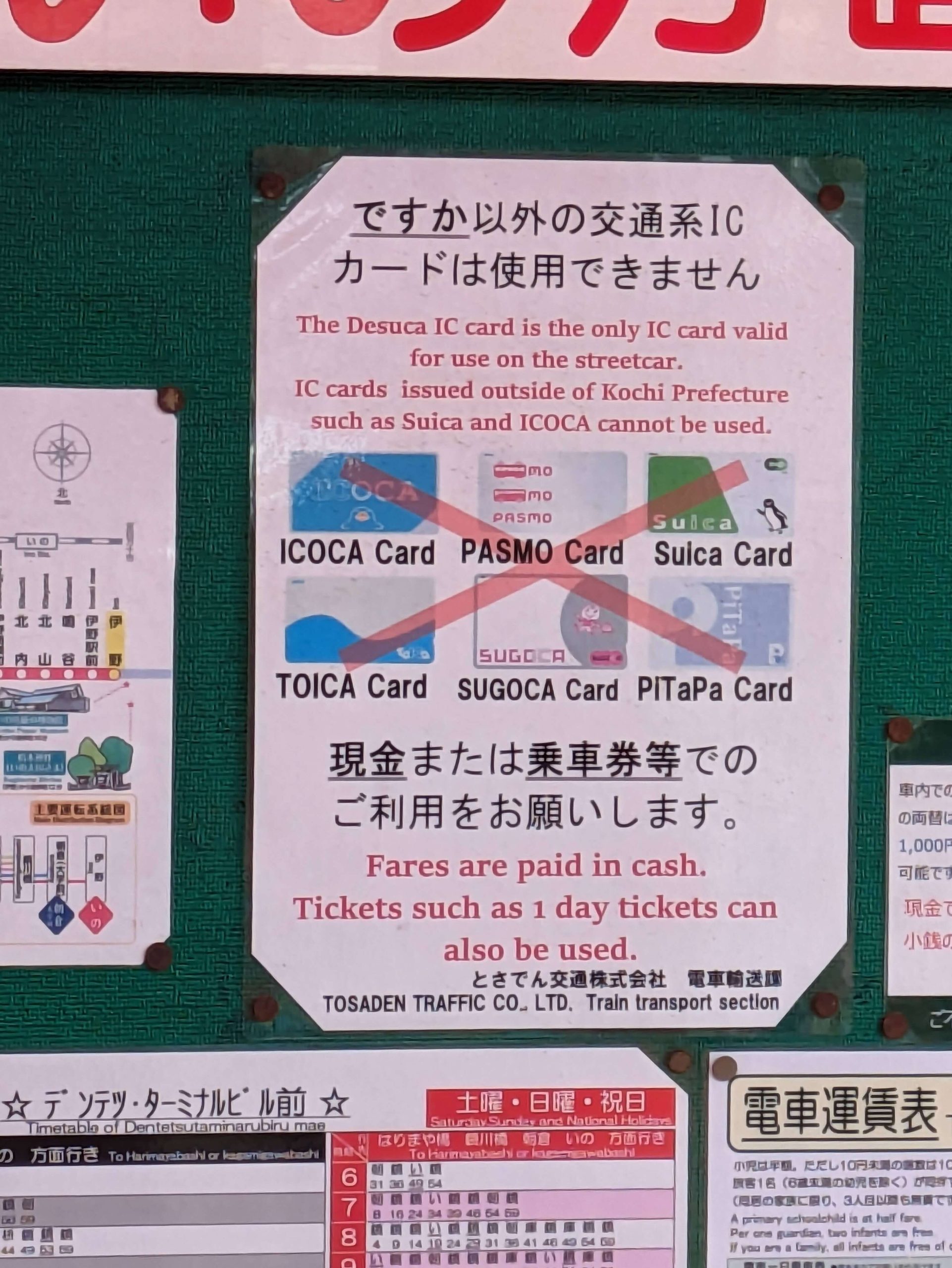
The trams here don’t take any Mutual Use IC cards, only DESUCA. My favorite part of this photo, however, is the timetable in the lower left, where they’ve spelled out the stop name “Dentetsu Terminal Building-mae” in wāpuro rōmaji with the insane orthography “Dentetsu-taminaru-biru-mae” (hyphens mine, just to make it a *little* more parseable…)
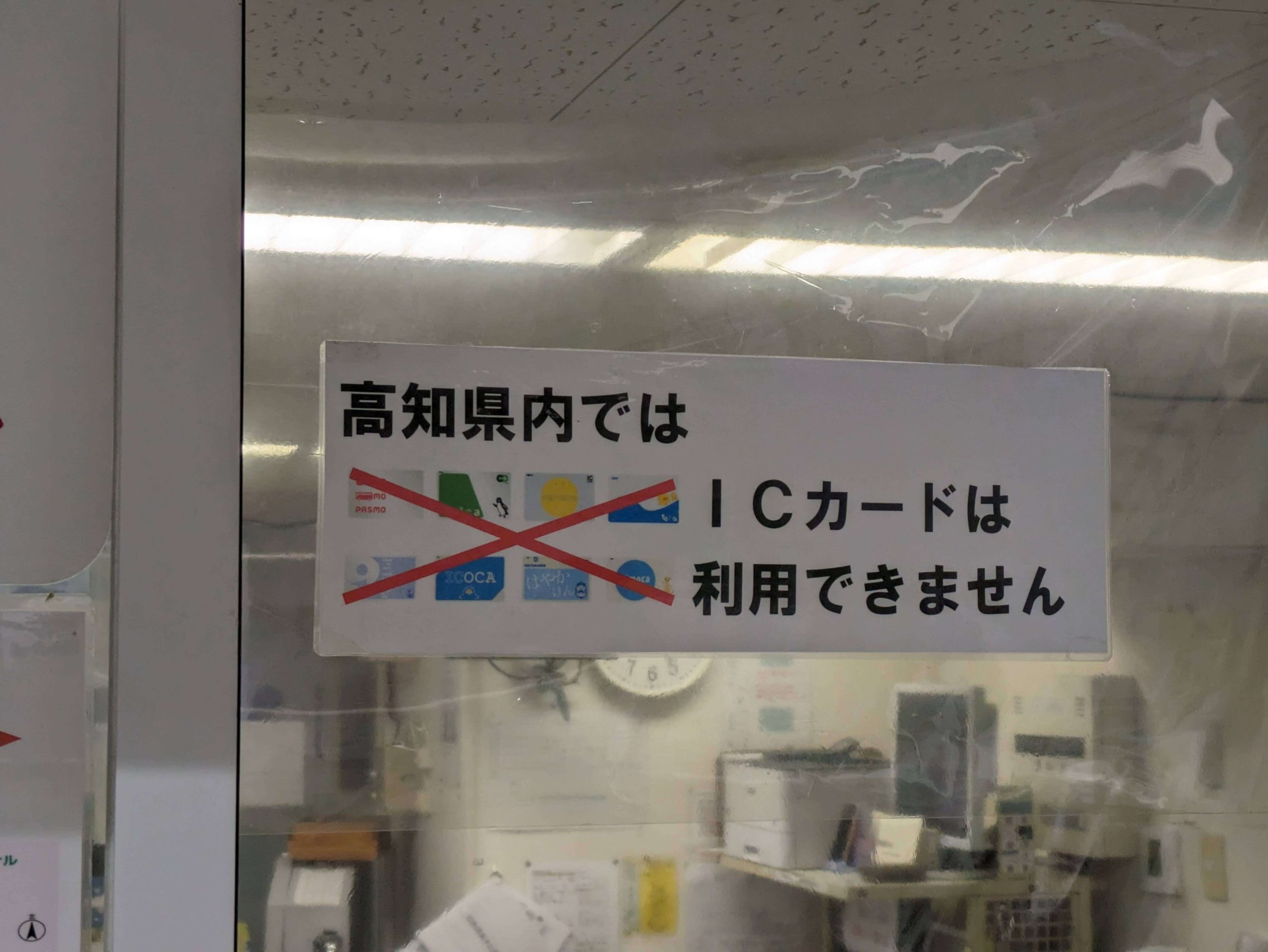
Guess who else doesn’t take IC cards? All the train lines in the entire prefecture! :D
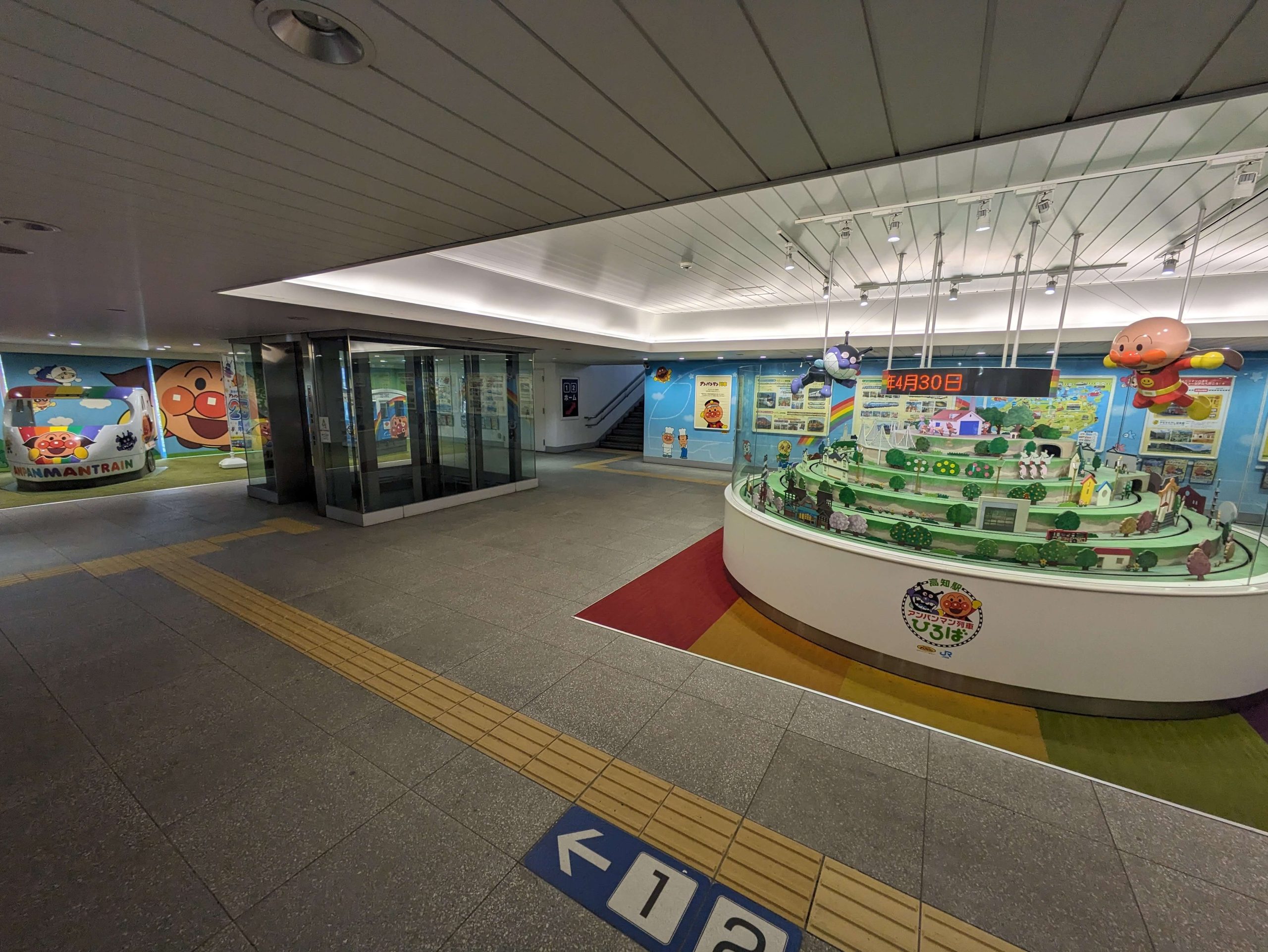
The inside of the JR station is, unshockingly, themed around Anpanman, with lots of displays and even a couple play spaces for kids.
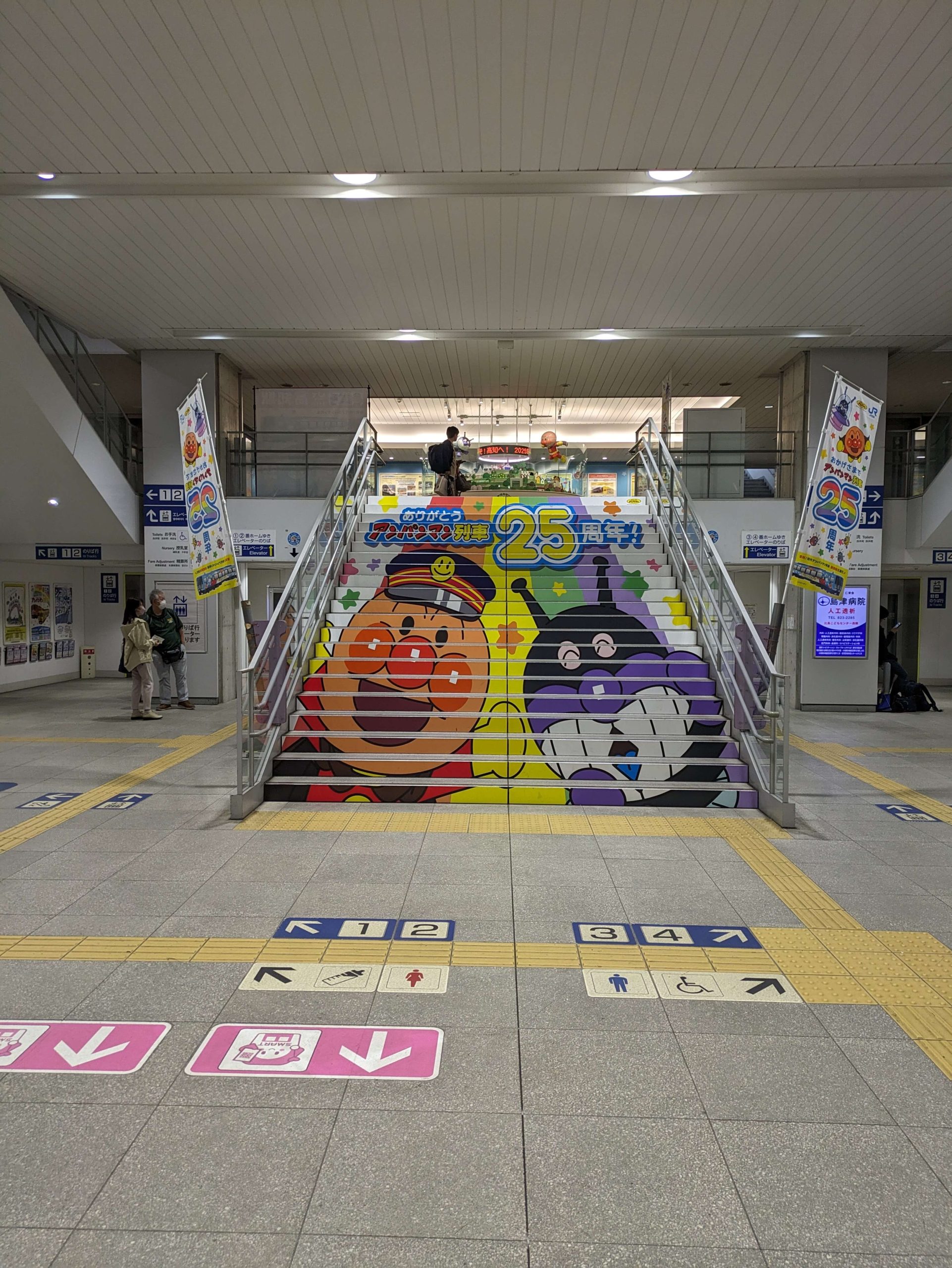
Main staircase leading up to the mezzanine (seen in the previous photo) and, beyond that, the platforms.
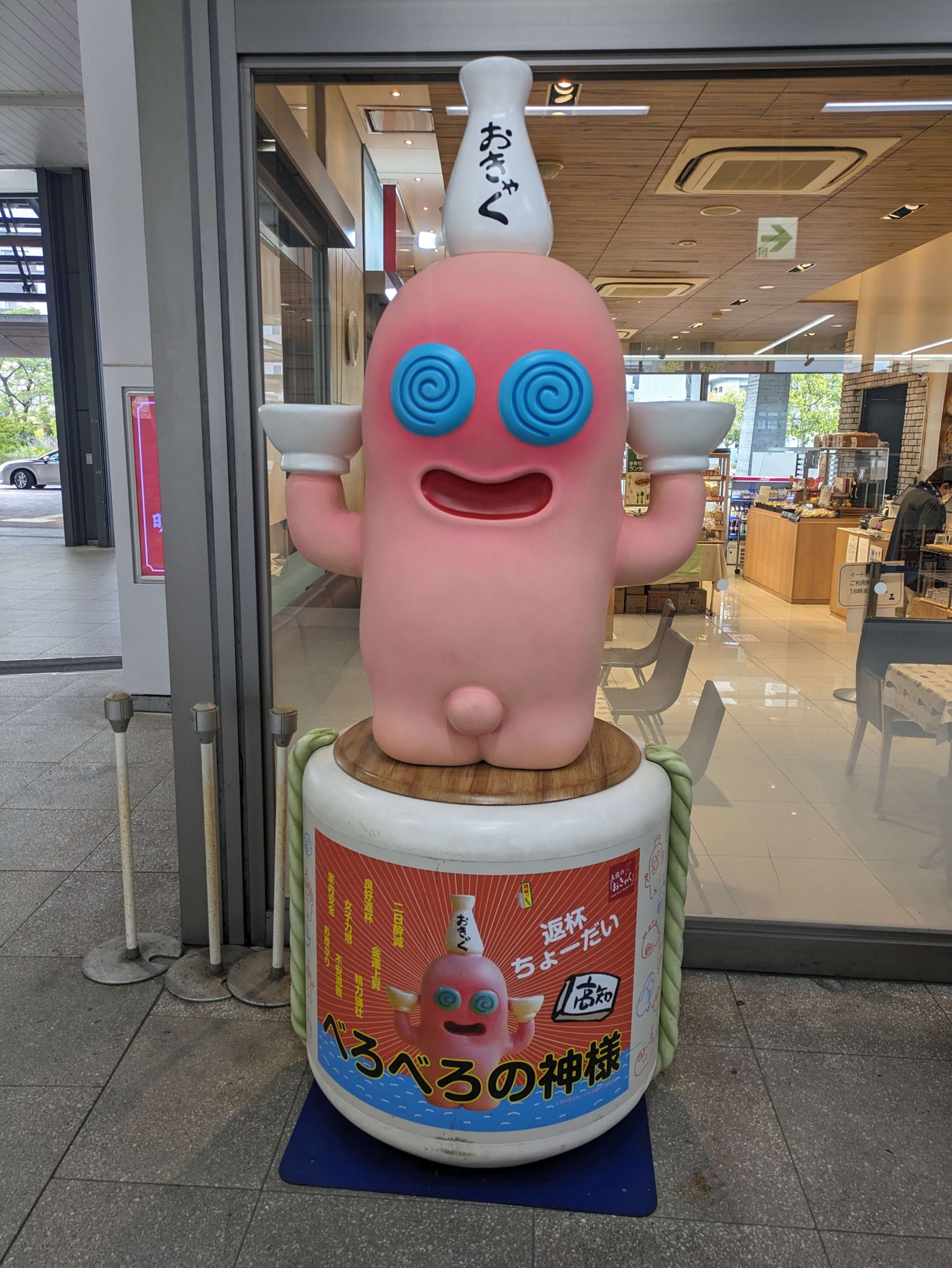
Also in the station is this statue of Berobero no Kamisama, representing Kochi’s love for sake. This guy actually has an Atlas Obscura entry! And they describe him pretty much the only way you can: “This extremely naked God of Drunkards welcomes visitors to Kochi Station.”
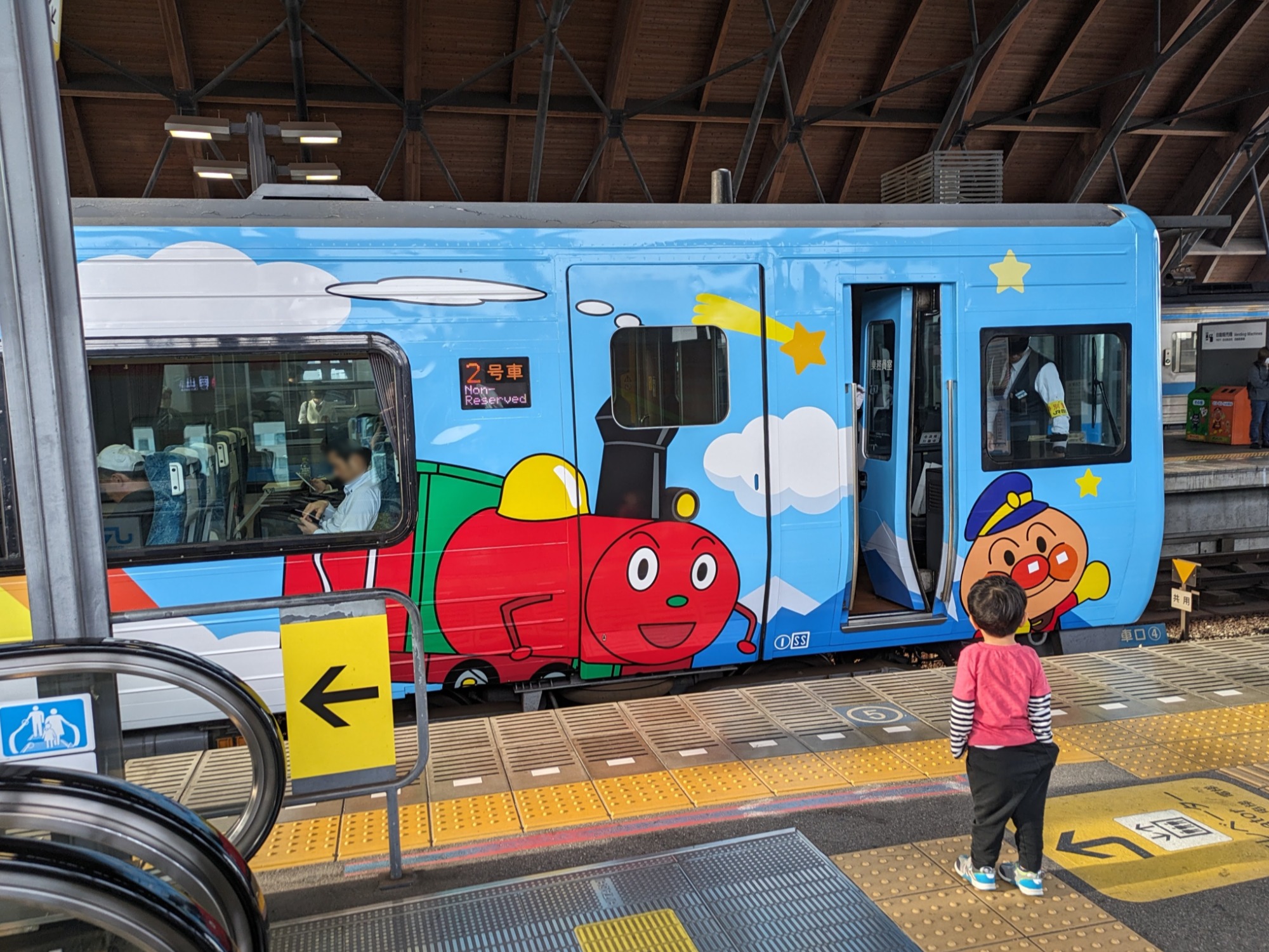
Little boy enamored with the Anpanman Train which happened to be stopped at Kochi Station.
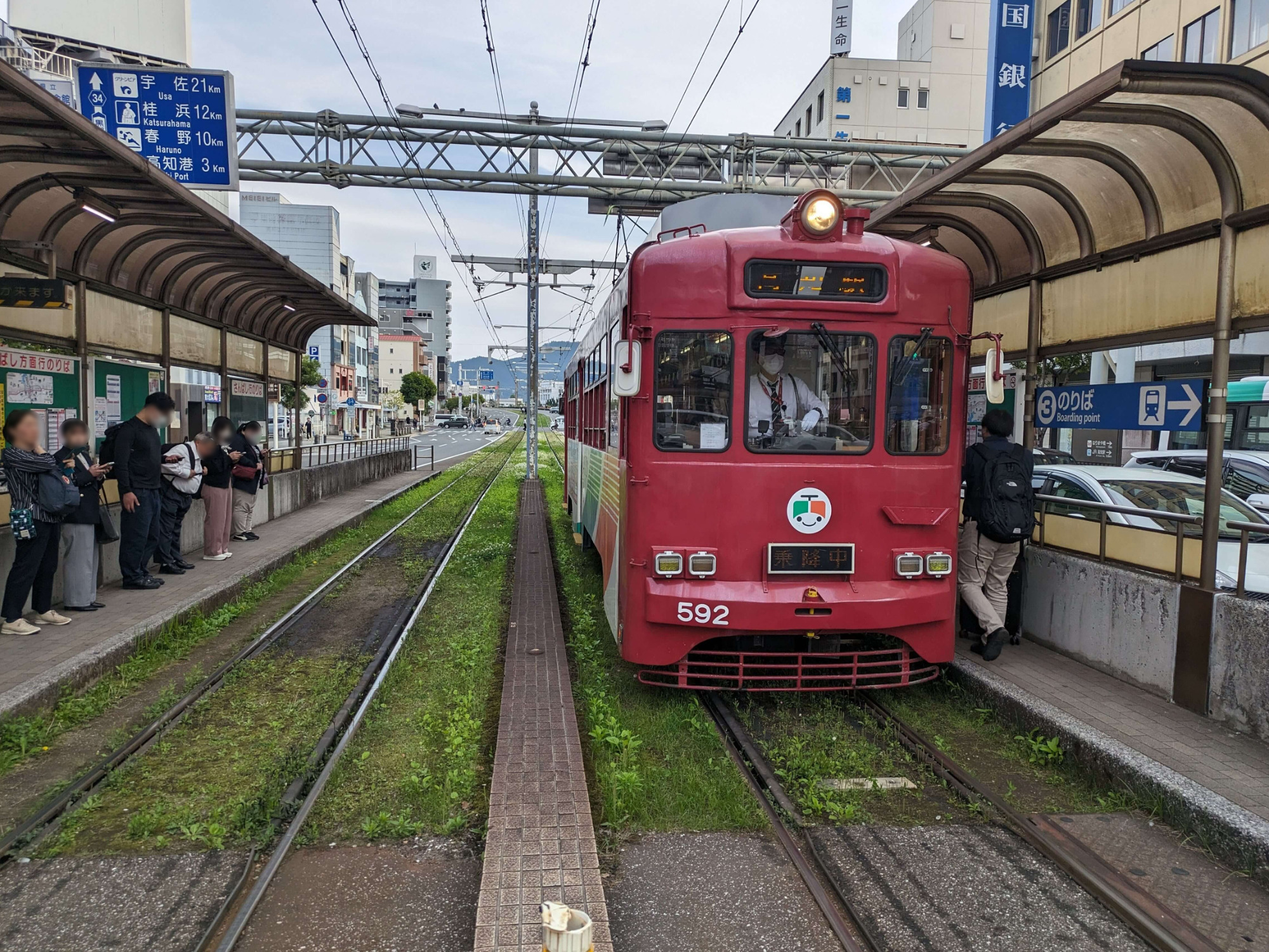
Meanwhile, this boy right here was enamored with the grassy tram tracks. Not too common in Japan but always love seeing them!
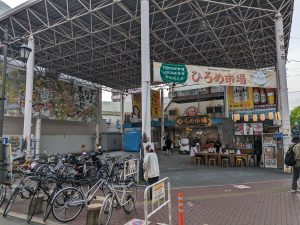
After checking into my hotel (which was… split between two separate buildings, one entirely for smoking rooms and one called the “non-smoking tower”?) I met up with a friend from my IC card collecting Discord server who lives in Kochi. We went to the famous Hirome Market which had good (not great) katsuo no tataki and a very complicated ordering system, but it was still lively and fun.
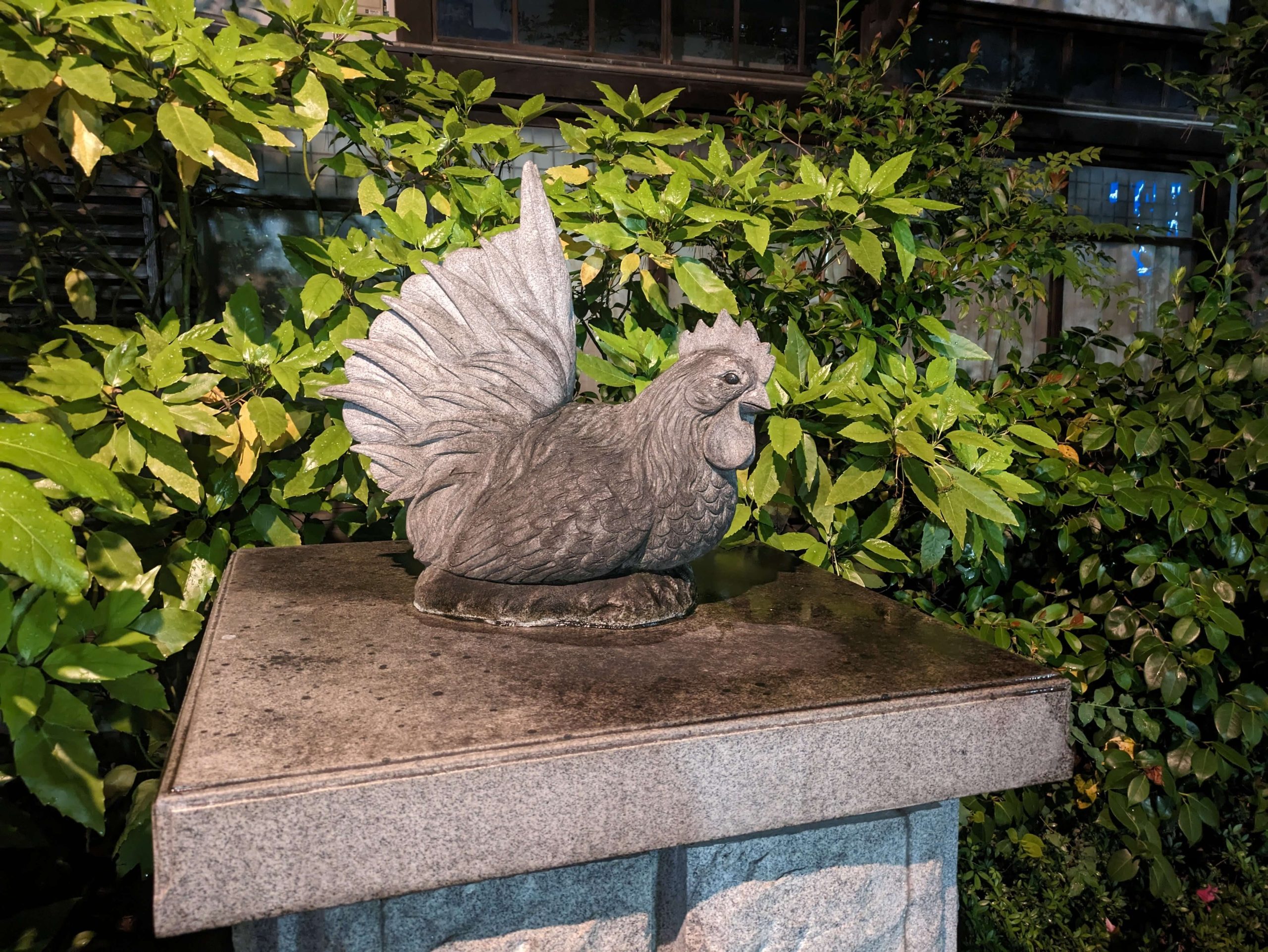
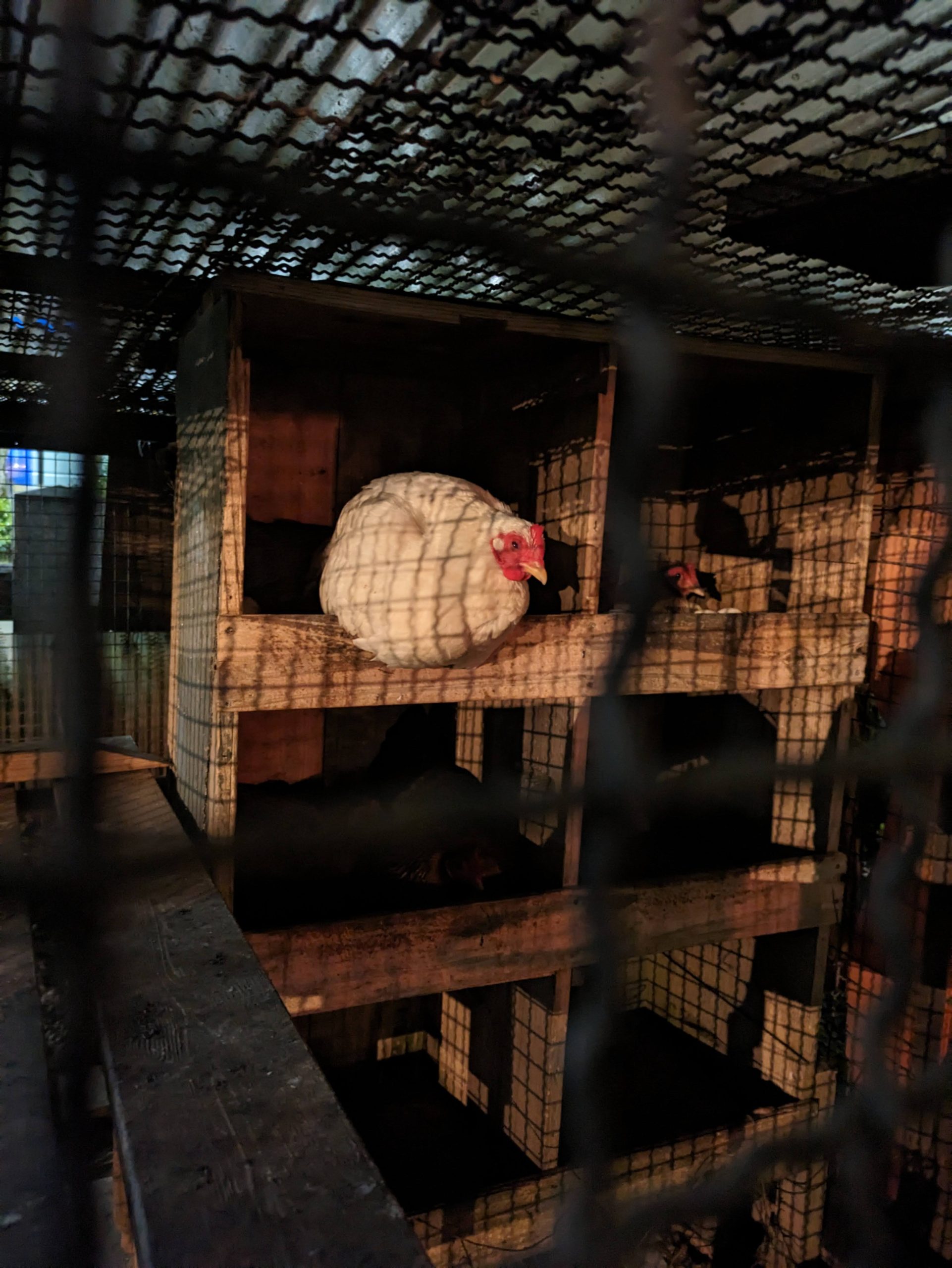
After dinner, we stopped by a local shrine which, instead of the usual guardian lion-dogs (komainu) or foxes, this one had… guardian chickens! There were even some real chickens in a coop within the grounds.
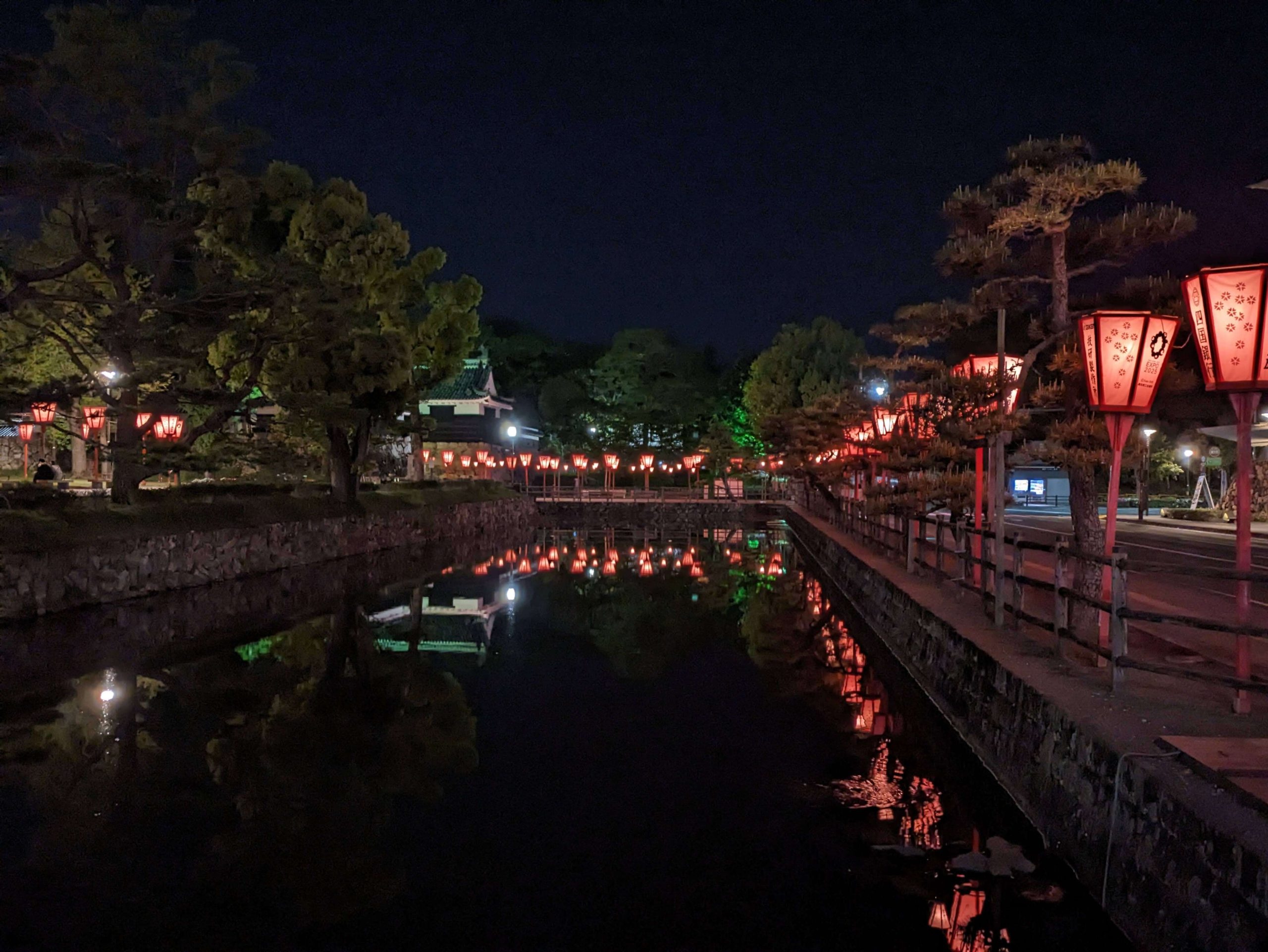
Walking back along the moat near Kochi Castle and park, lit up with lanterns at night. (I see Myaku-Myaku on one!) Time for some sleep.
Thursday, May 1, 2025
Today’s transit:
🚊 Riding the remaining Tosaden tram lines! (I didn’t record times, today was a chill day)
15:45 Kochi / JR Dosan Line → 16:20 Tosa-Yamada
⤾ 16:30 Tosa-Yamada / Dosan Line → 16:59 Kochi
To celebrate May Day/International Workers’ Day today, I did even less labor than I normally do on vacation and mostly just wandered around Kochi. I finished riding the tram system’s two remaining lines with the ¥1000 one-day pass, and also headed to and back from JR Tosa-Yamada Station, northeast of the city (where I had done a turn-around from the other direction after Oboke, in part one). Eight stations away, it only took an hour-ish round trip, and made it so that I wouldn’t have any unridden sections of the Dosan Line once I continued making my way west.
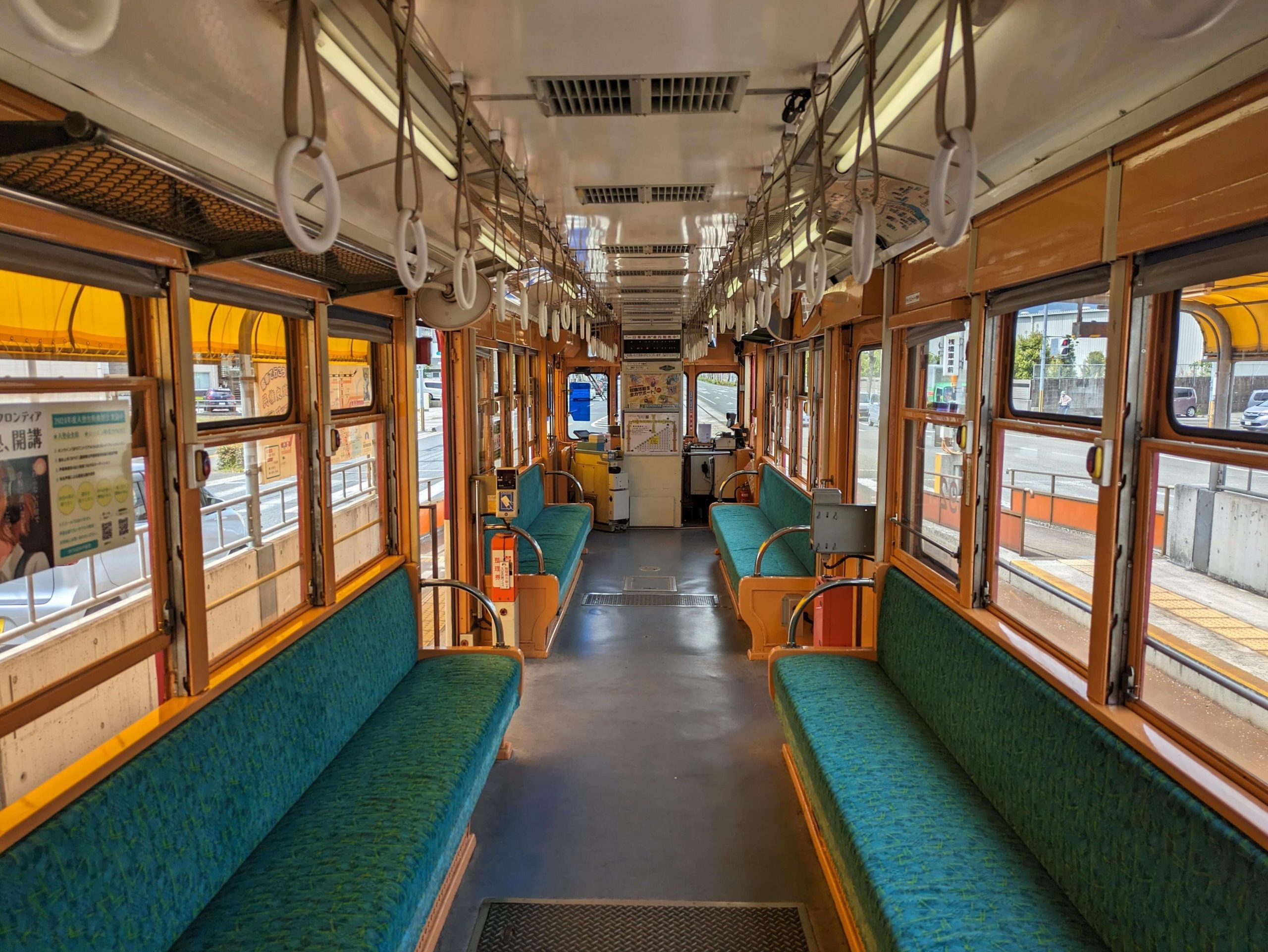
Tosaden has such beautiful streetcars!
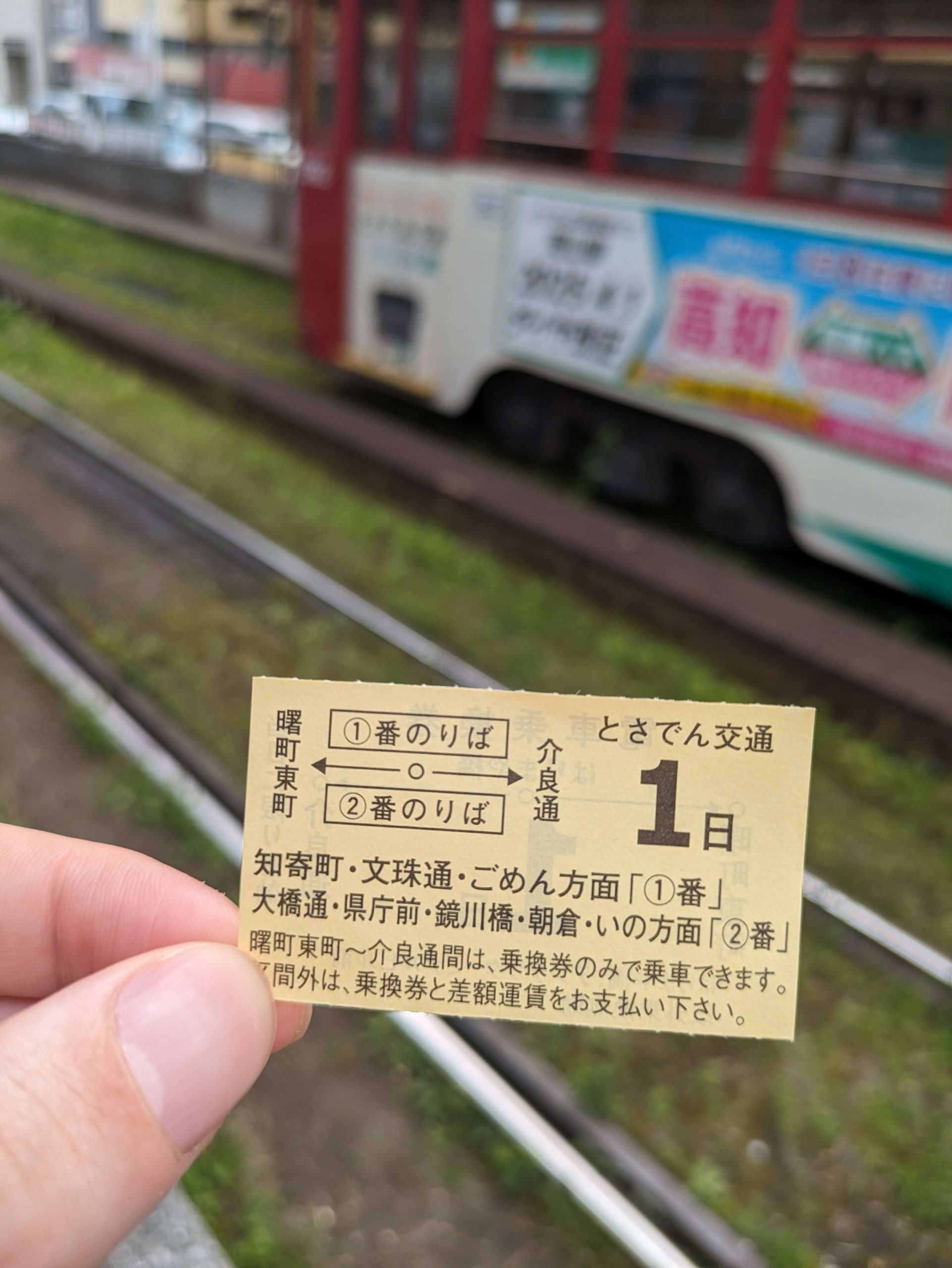
The tram network in Kochi forms a “+” shape, with Harimayabashi at the middle. You can do a free transfer there from one of the lines to another using this paper ticket a driver will give you if you ask.
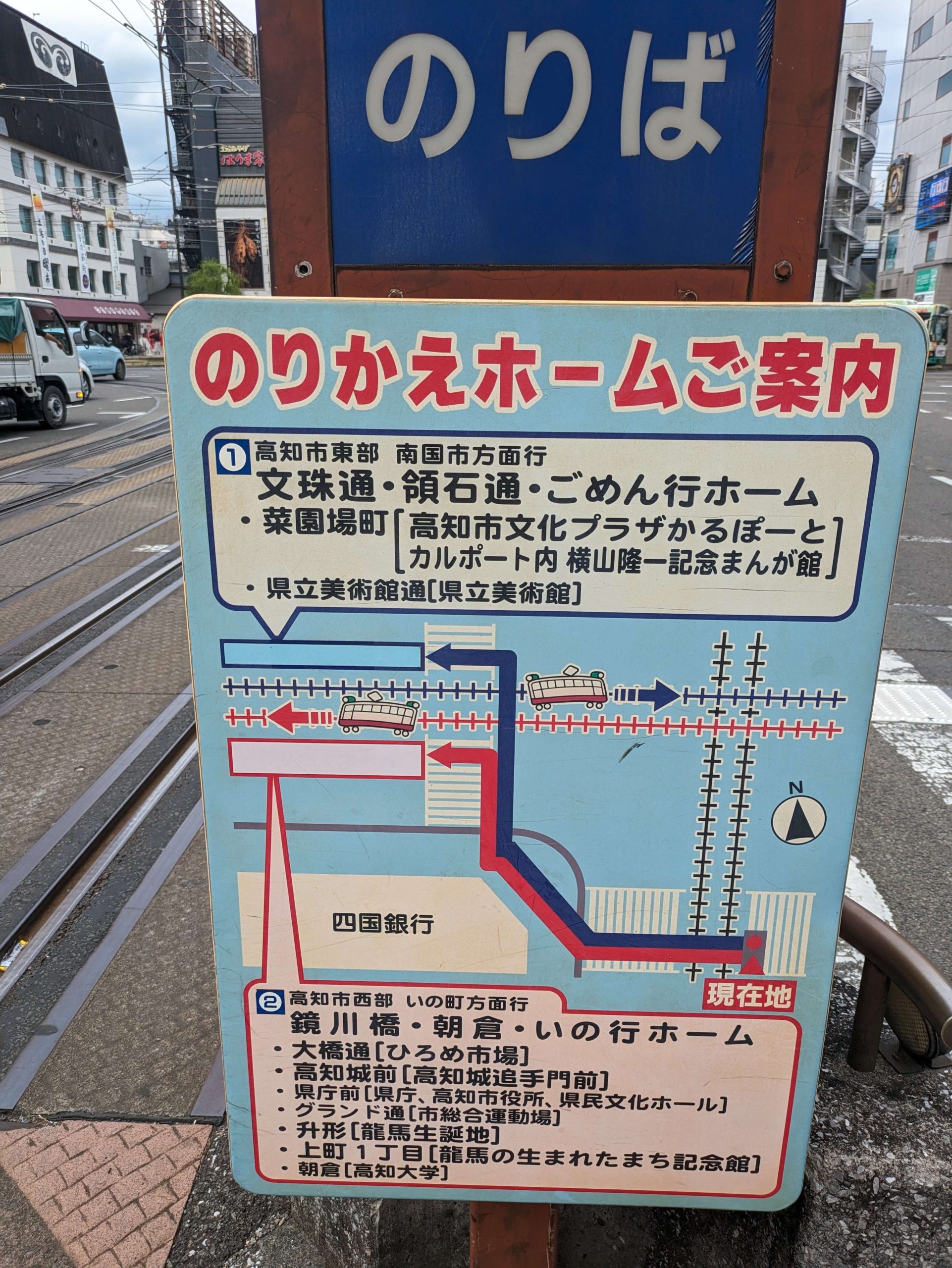
As for where to actually go to transfer between the horizontal and vertical lines, uh… it can probably be a little confusing to some.
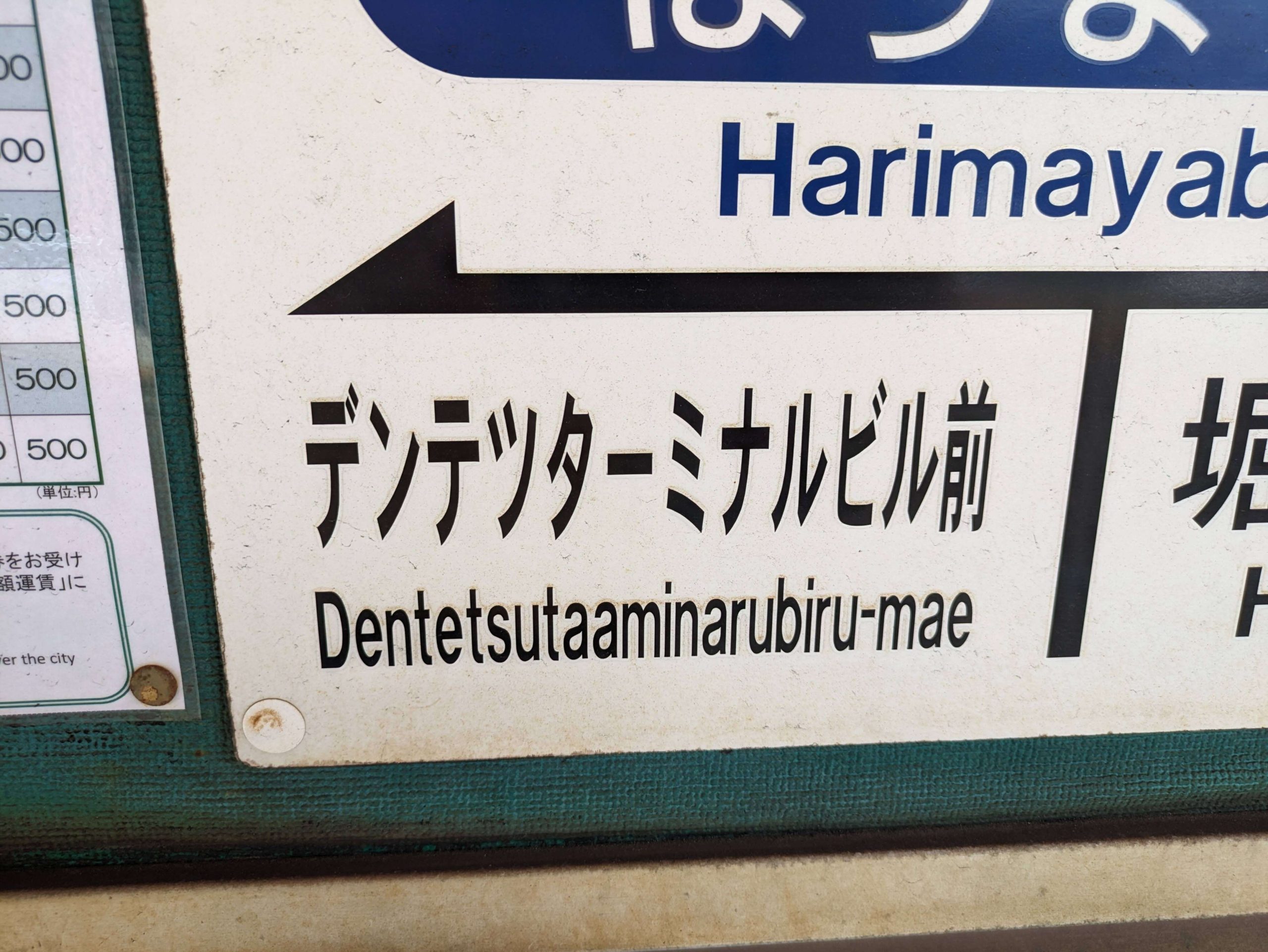
There it is again, my favorite totally-not-gibberish station name, Dentetsutaaminarubiru-mae.
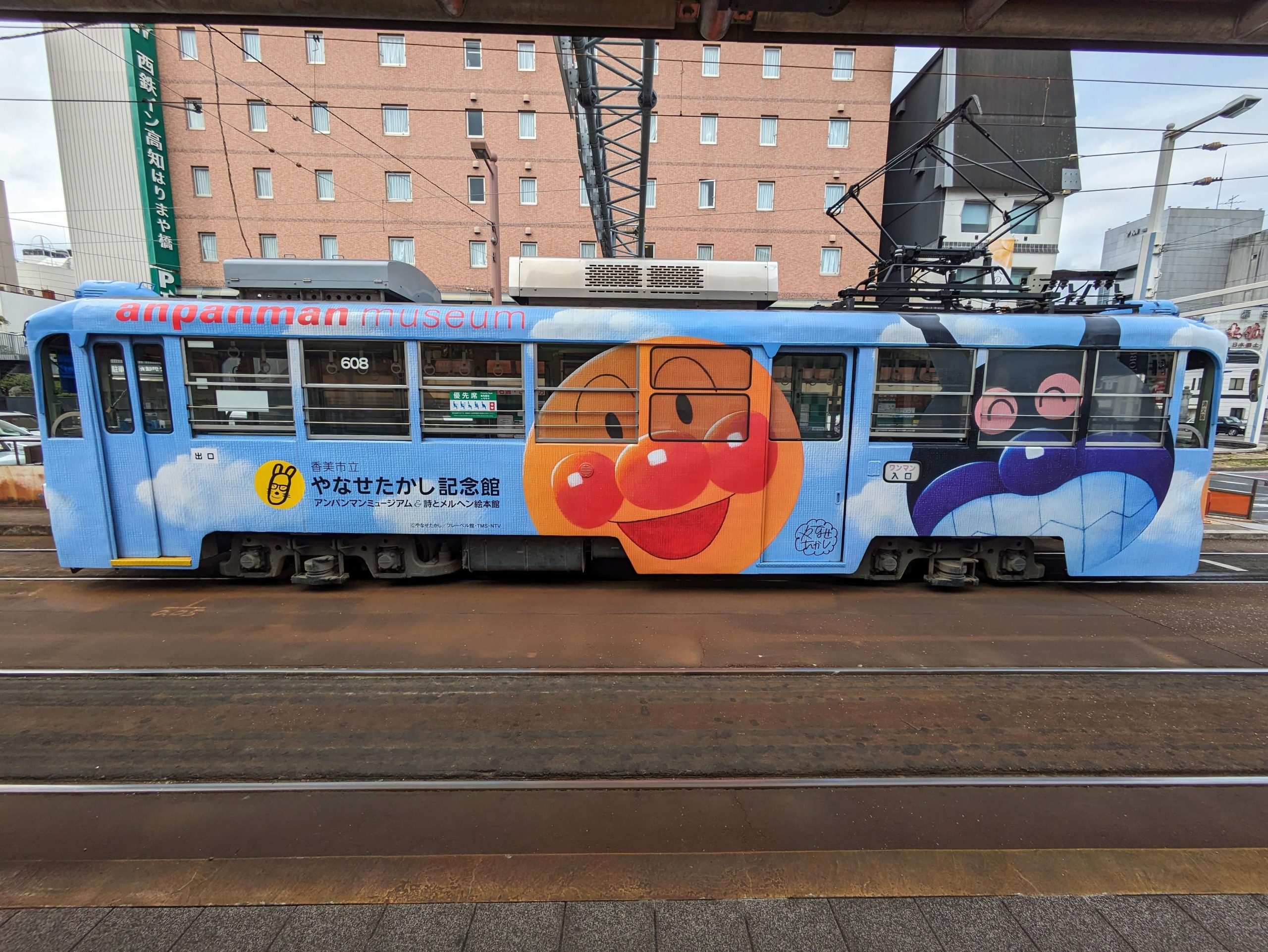
Anpanman tram. (Try saying that three times fast.)
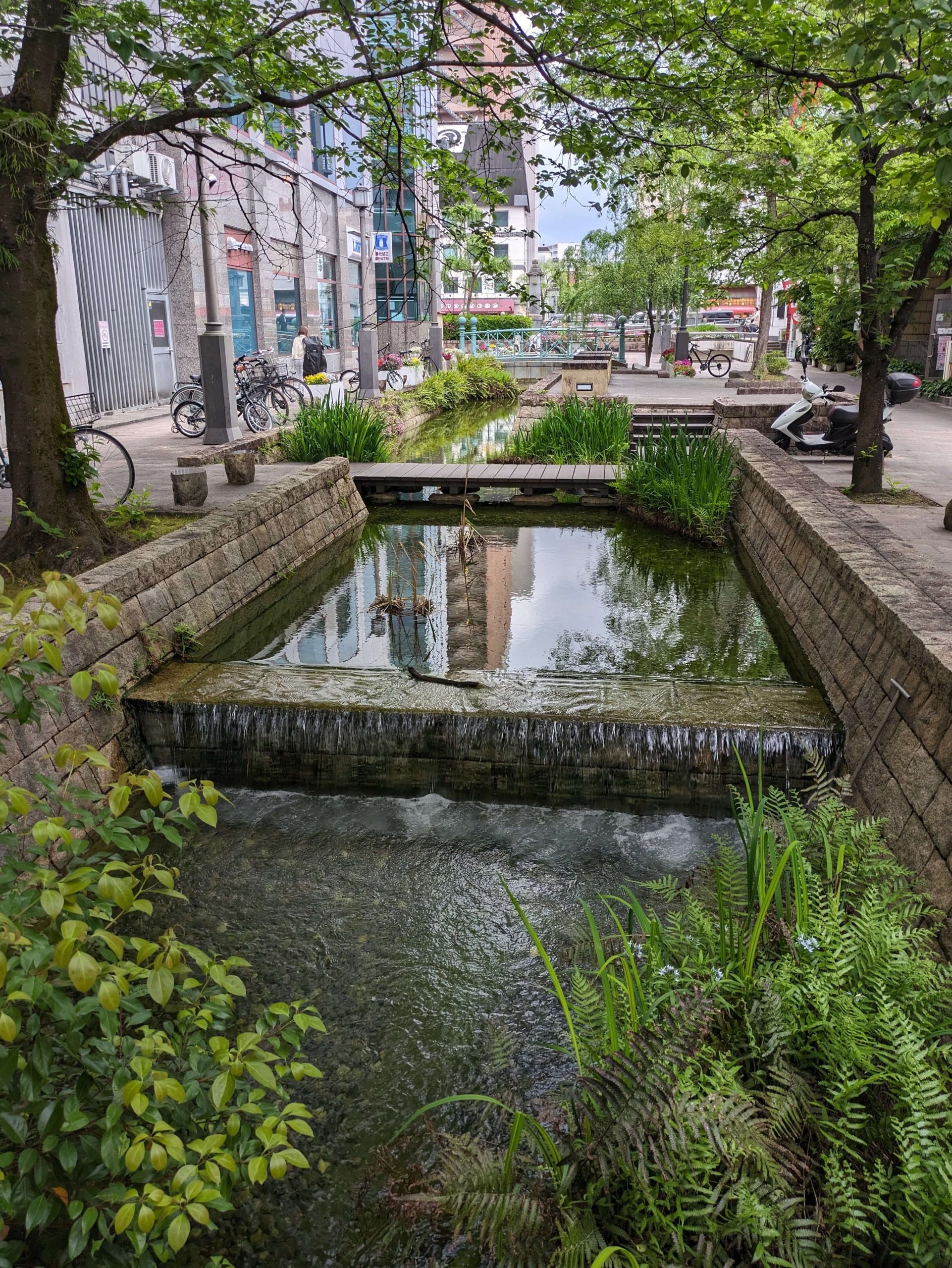
Here was that nice shady pedestrian path that I walked past yesterday. Only a few blocks long but very peaceful.
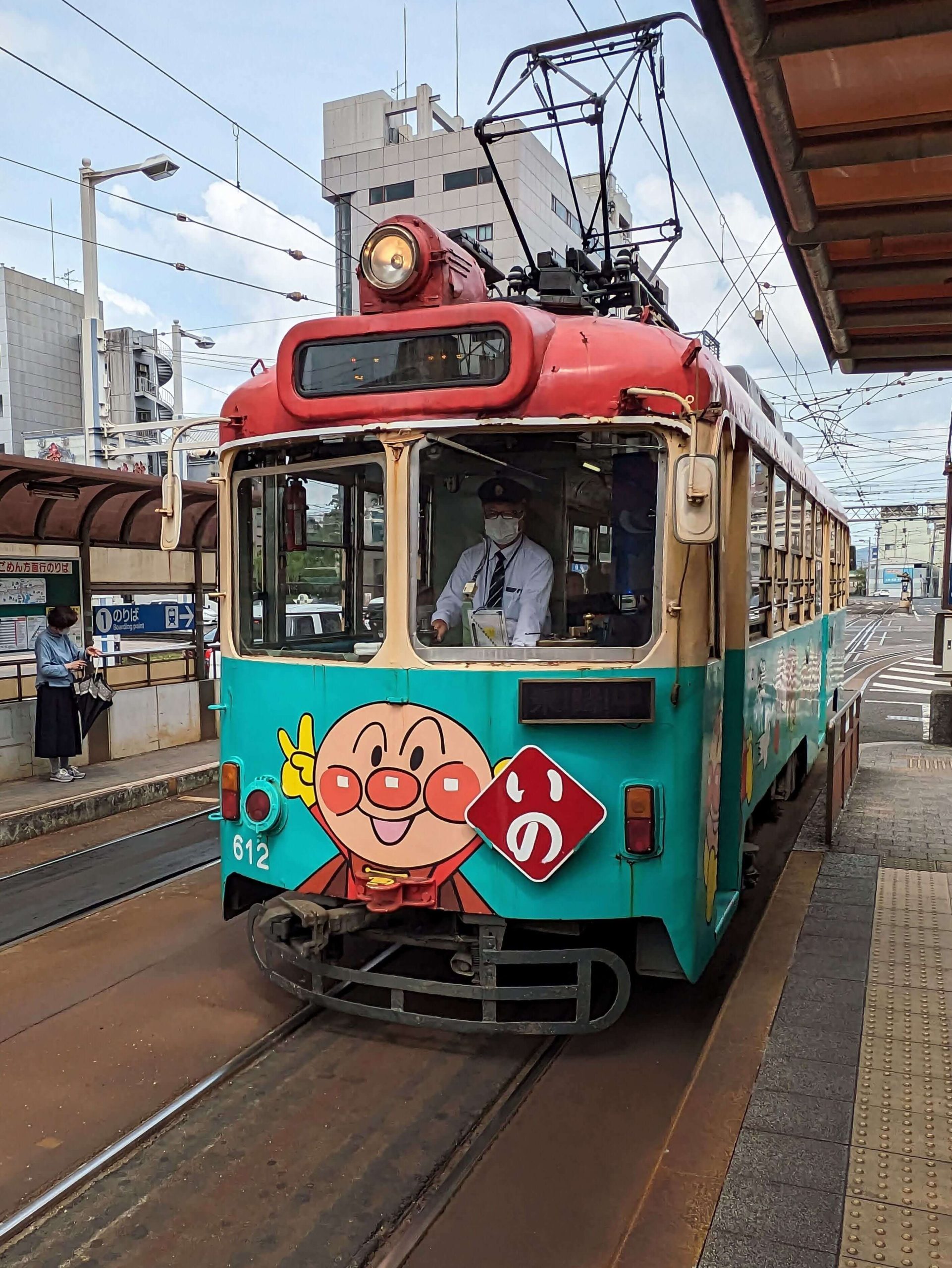
Took the tram (another Anpanman-themed one) out to Ino, the western terminus of the tram network. I loved the manual hand-painted “Ino” destination sign on the front! The driver flips this over and slots it in place when beginning the route.
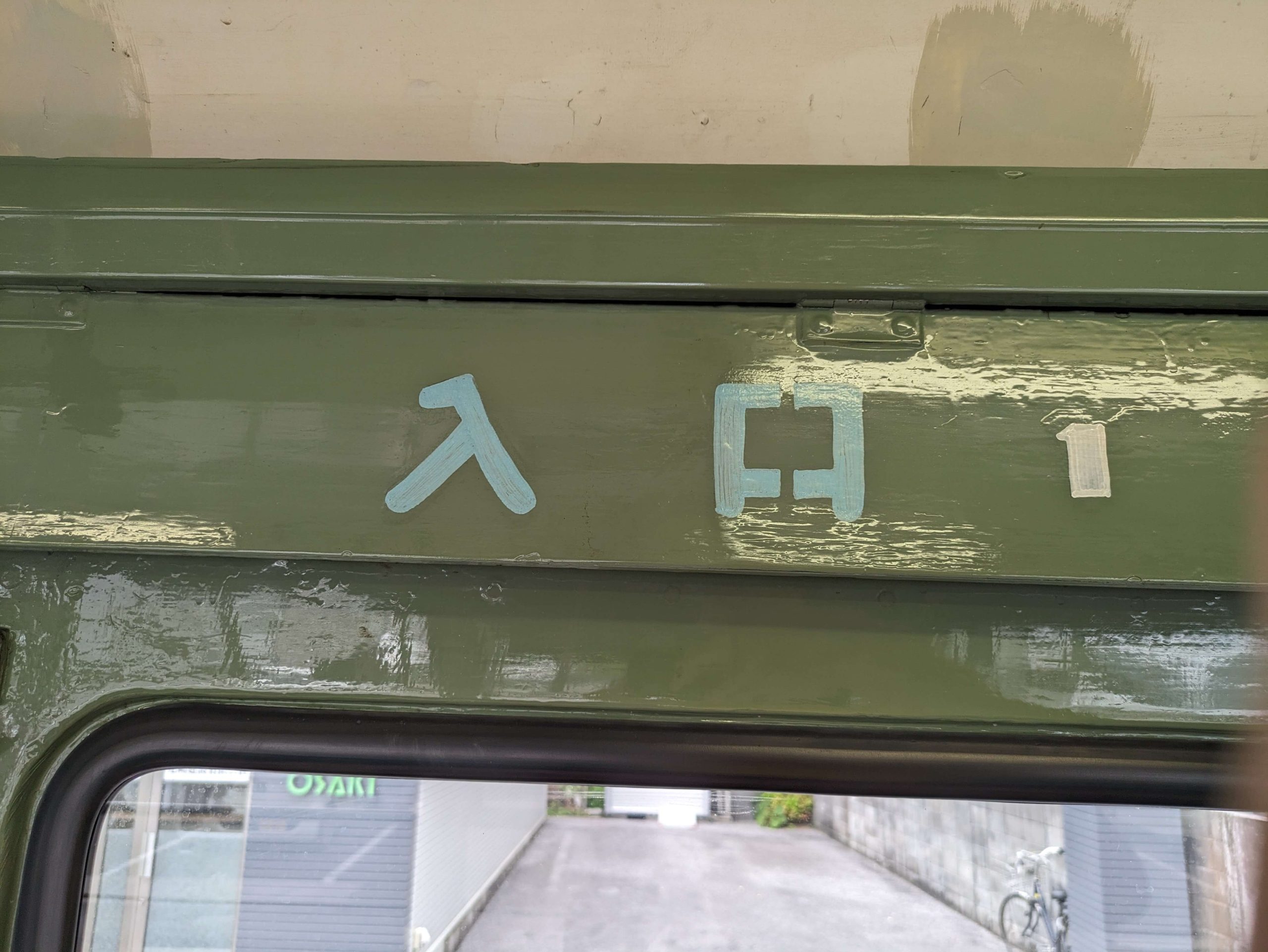
Hand-painted “entrance” sign above the door inside the tram. I’m not sure why it has that vertical gap in the 口, though? Maybe they used a stencil to make it look somewhat nicer & more consistent than doing it totally freehand…?
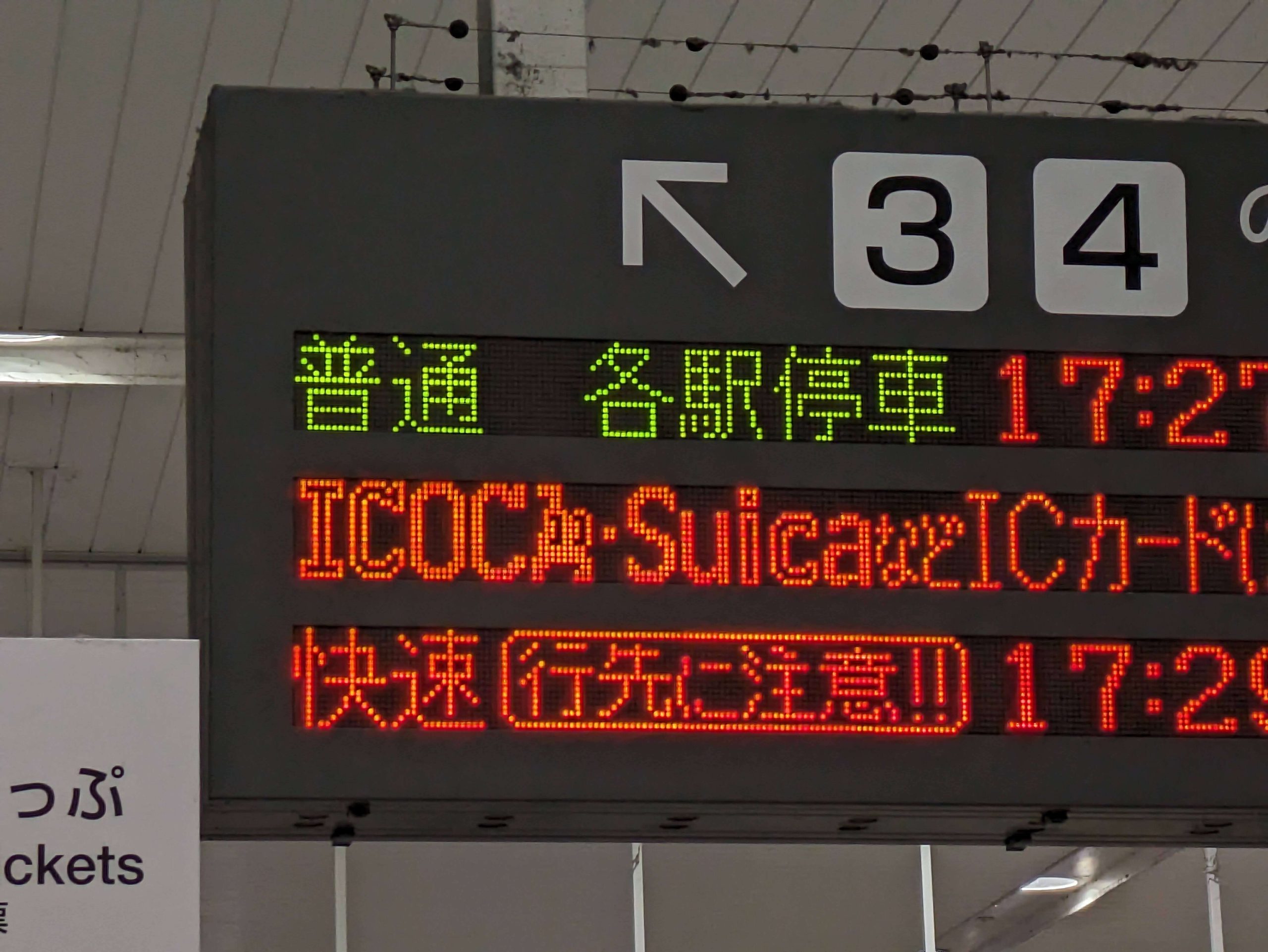
Destination sign in the JR station saying that ICOCA, Suica, and other IC cards can’t be used. But I loved how they actually LED-ized the actual logos, including the 👀 eyes in the A of “ICOCA” and making the “IC” hollow instead of solid and everything.
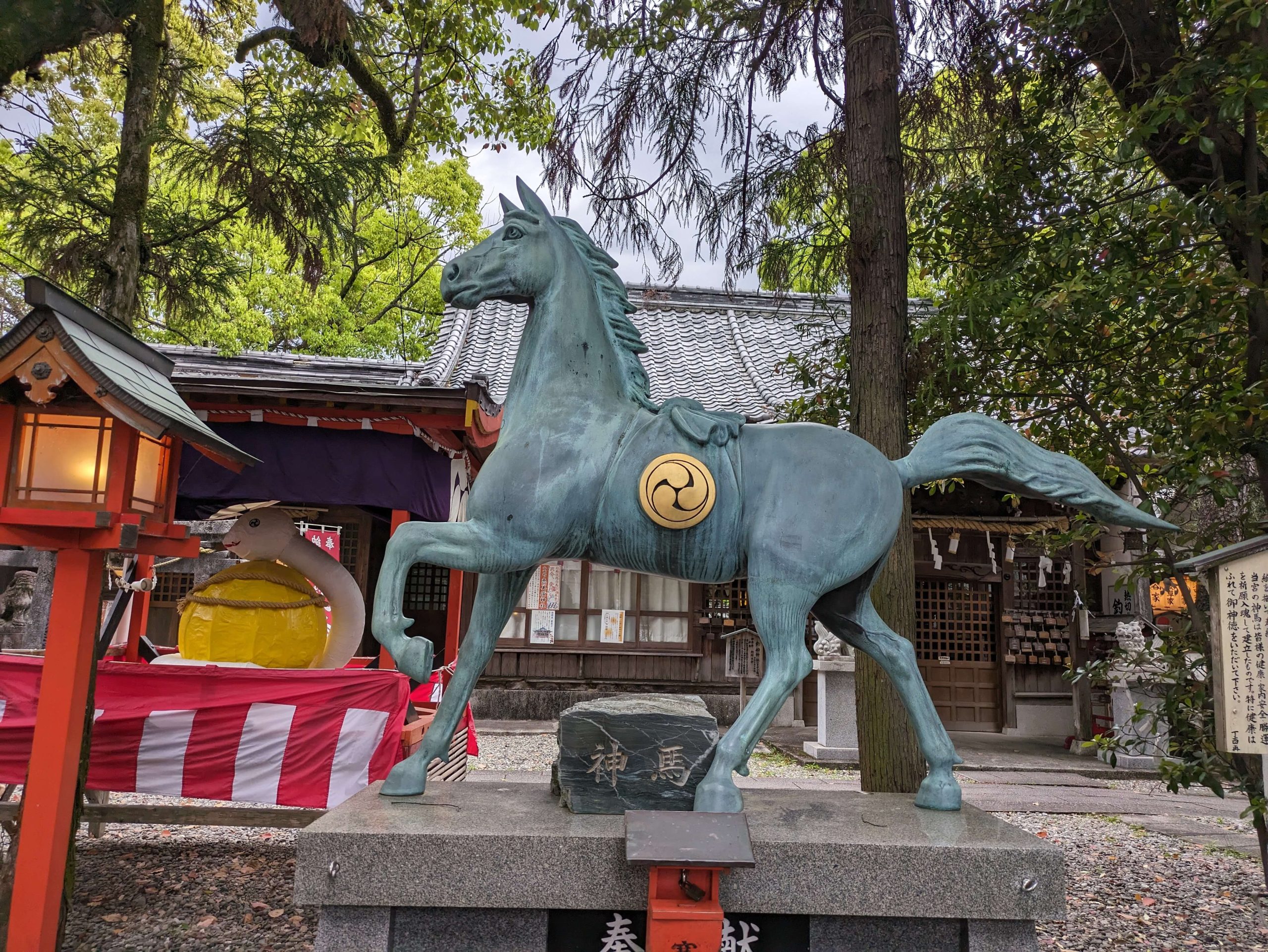
On my way back down from the station, which is north of the city center, I wandered through a concentration of shrines and checked out their statues.
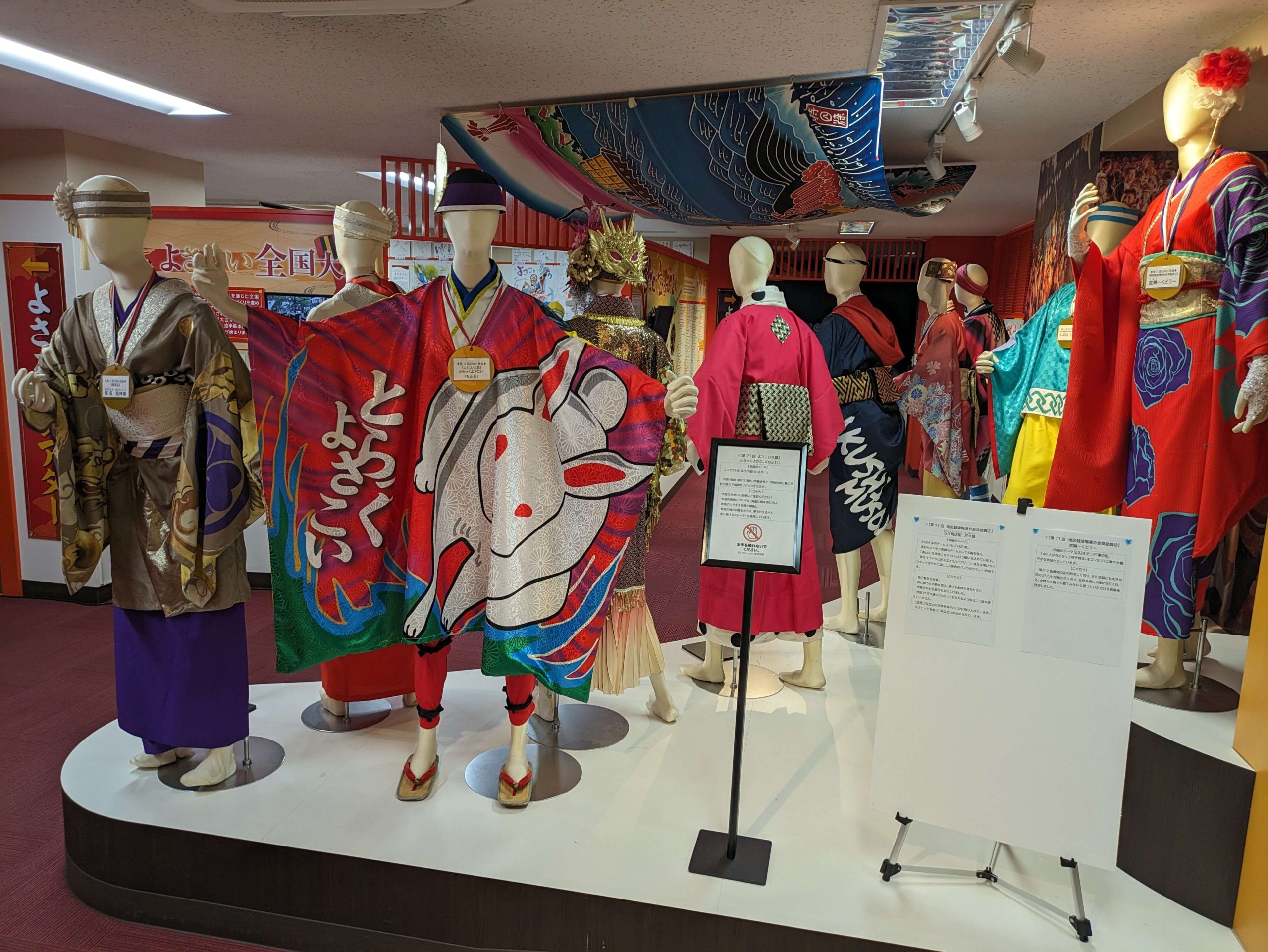
I then stopped by the free “Kochi Yosakoi Information Exchange Center”, a small local history museum about yosakoi dancing and festivals, which originated in Koch in 1954 and are now held all over the country and even world.
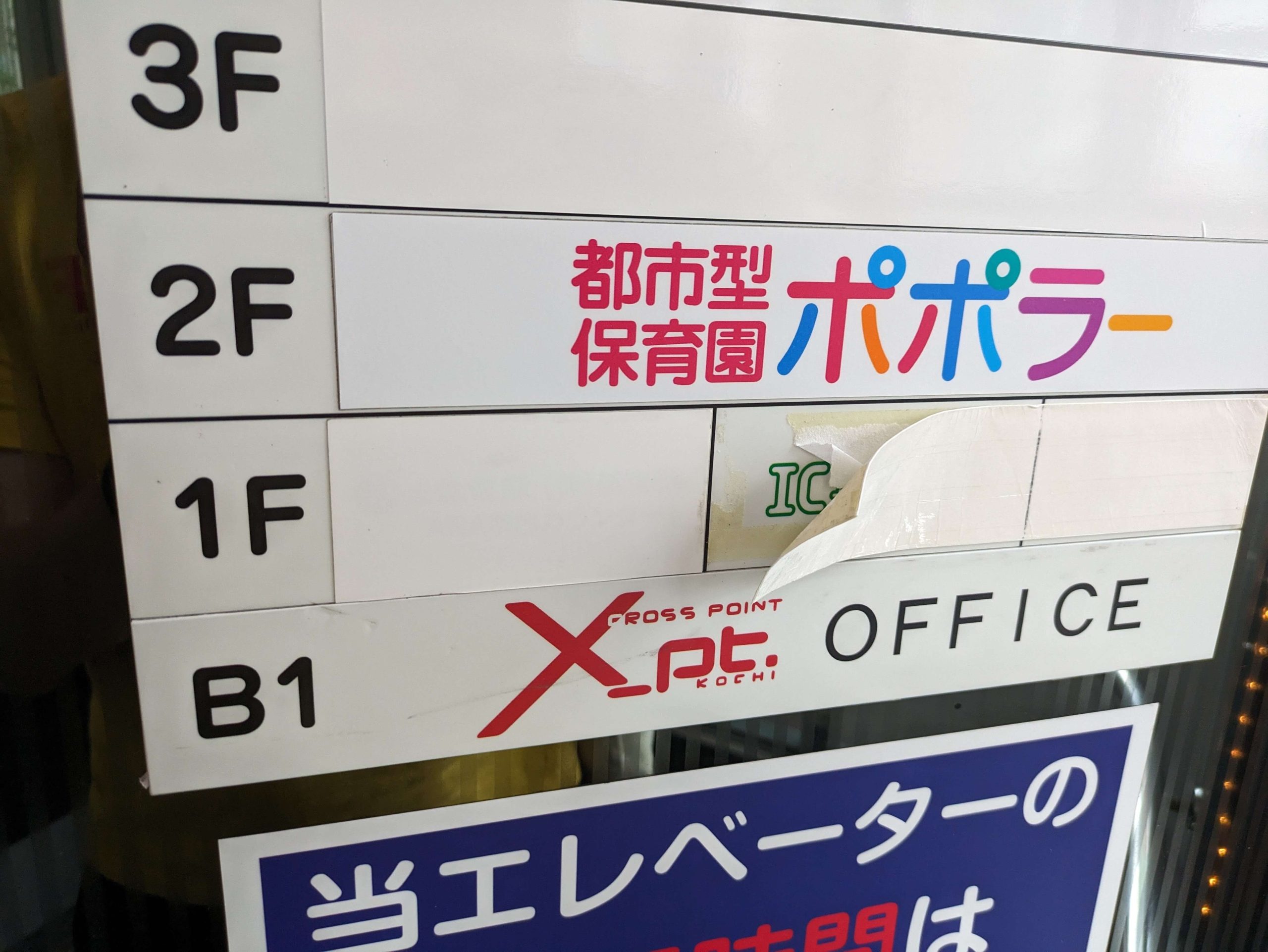
And explored the building where the DESUCA card office used to be, before they moved to their new location (hence the two different cards with different back sides), a history revealed by this peeling off sign…
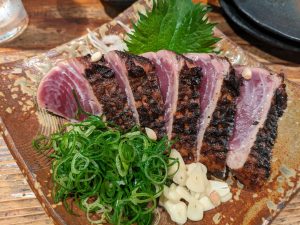
For dinner, I ate some more DEEEELICIOUSSSS katsuo no tataki at an izakaya called Daikokudo. This dish is seriously sublime. I don’t think anything can beat what I ate in Nahari, but this was a solid 8.5 or 9 out of 10.
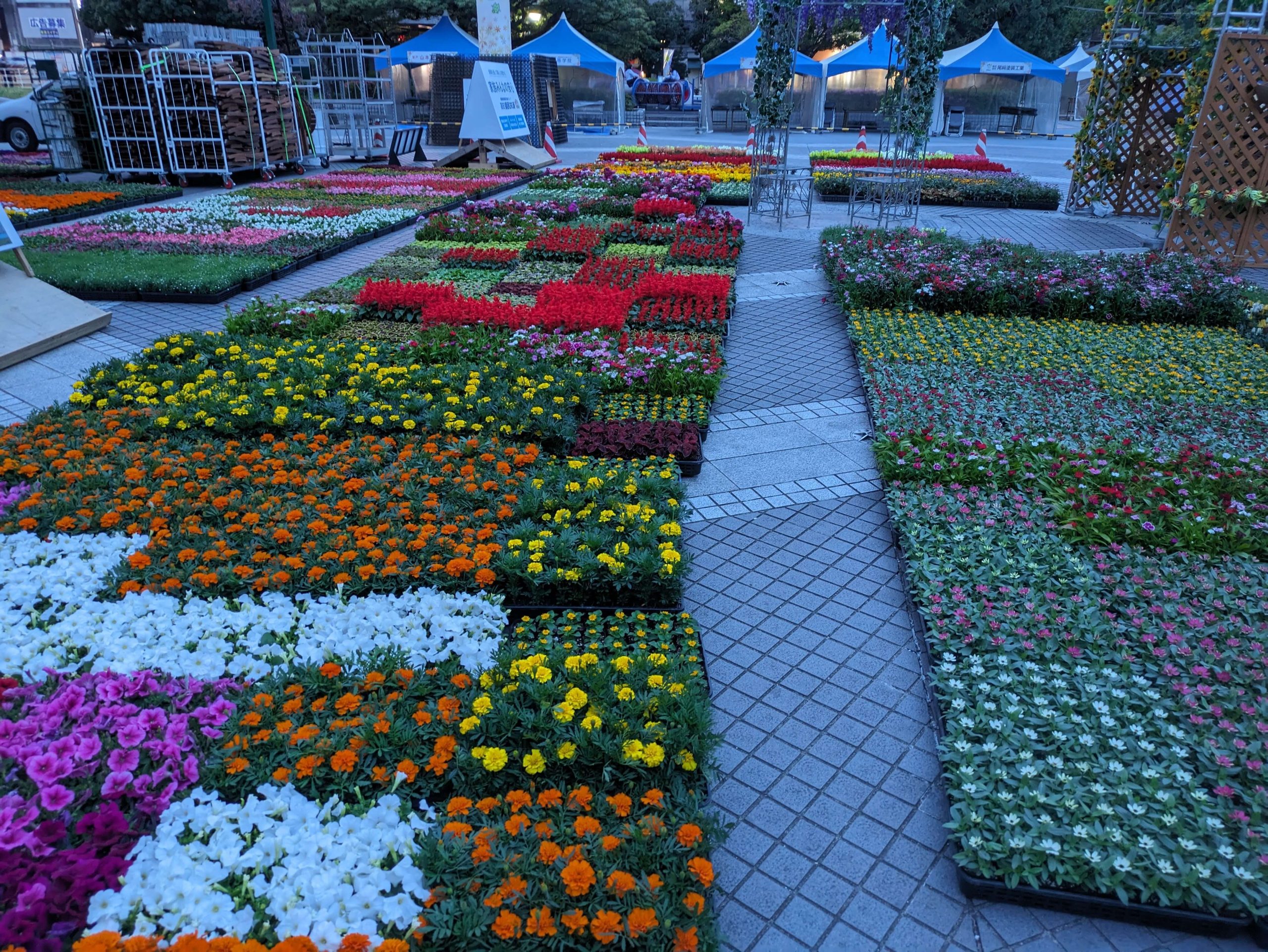
They were setting up for a flower festival in Toyo Denka Central Park. I looked up info online and it was starting on the weekend, unfortunately one day too late for me.
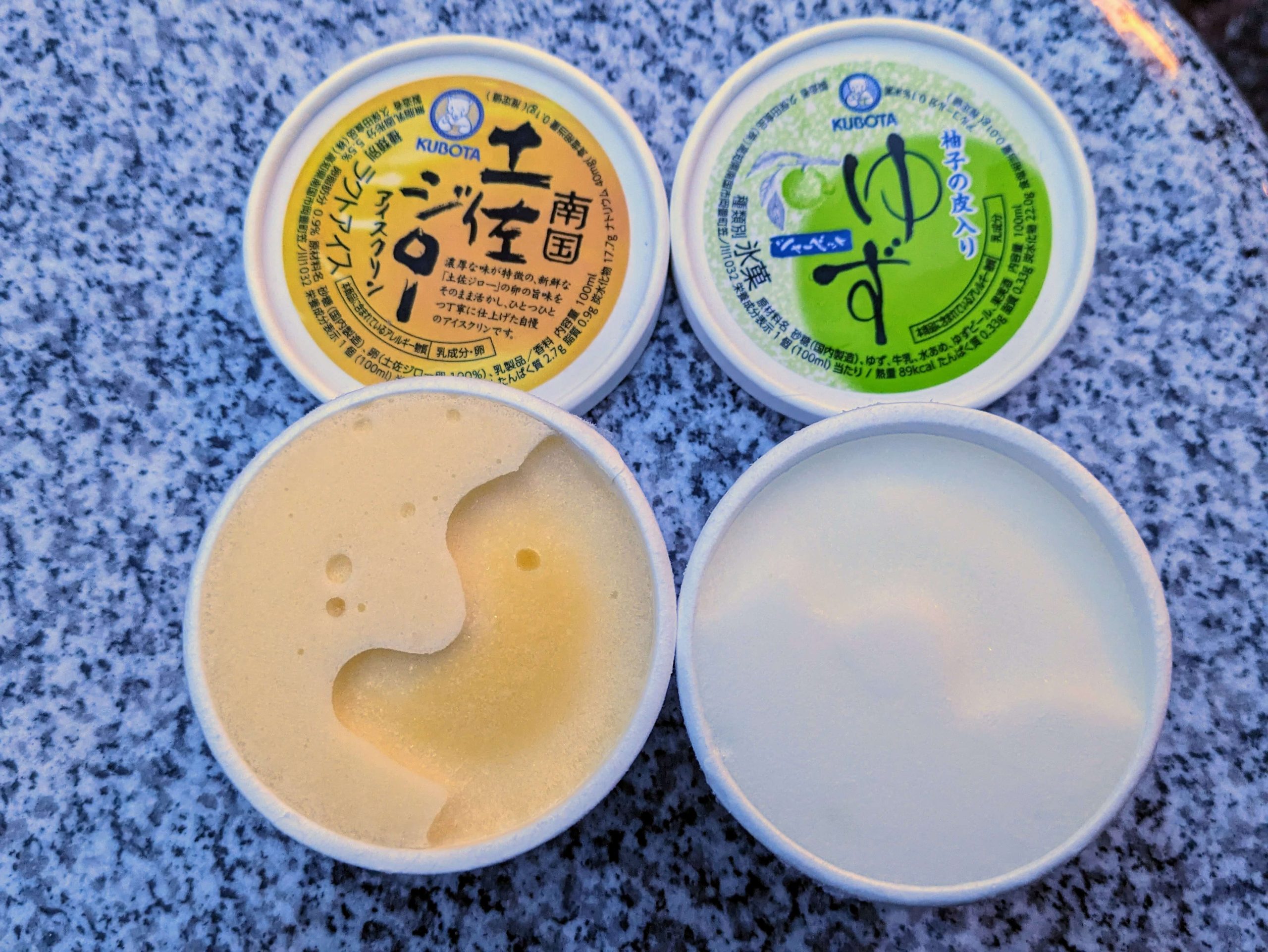
More double ice cream. On the right is yuzu, and the flavor on the left is egg – from local Kochi-raised Tosa-jiro chickens. Apparently they’re a cross-breed between the older Japanese Tosa-Jidori and an American Rhode Island Red.
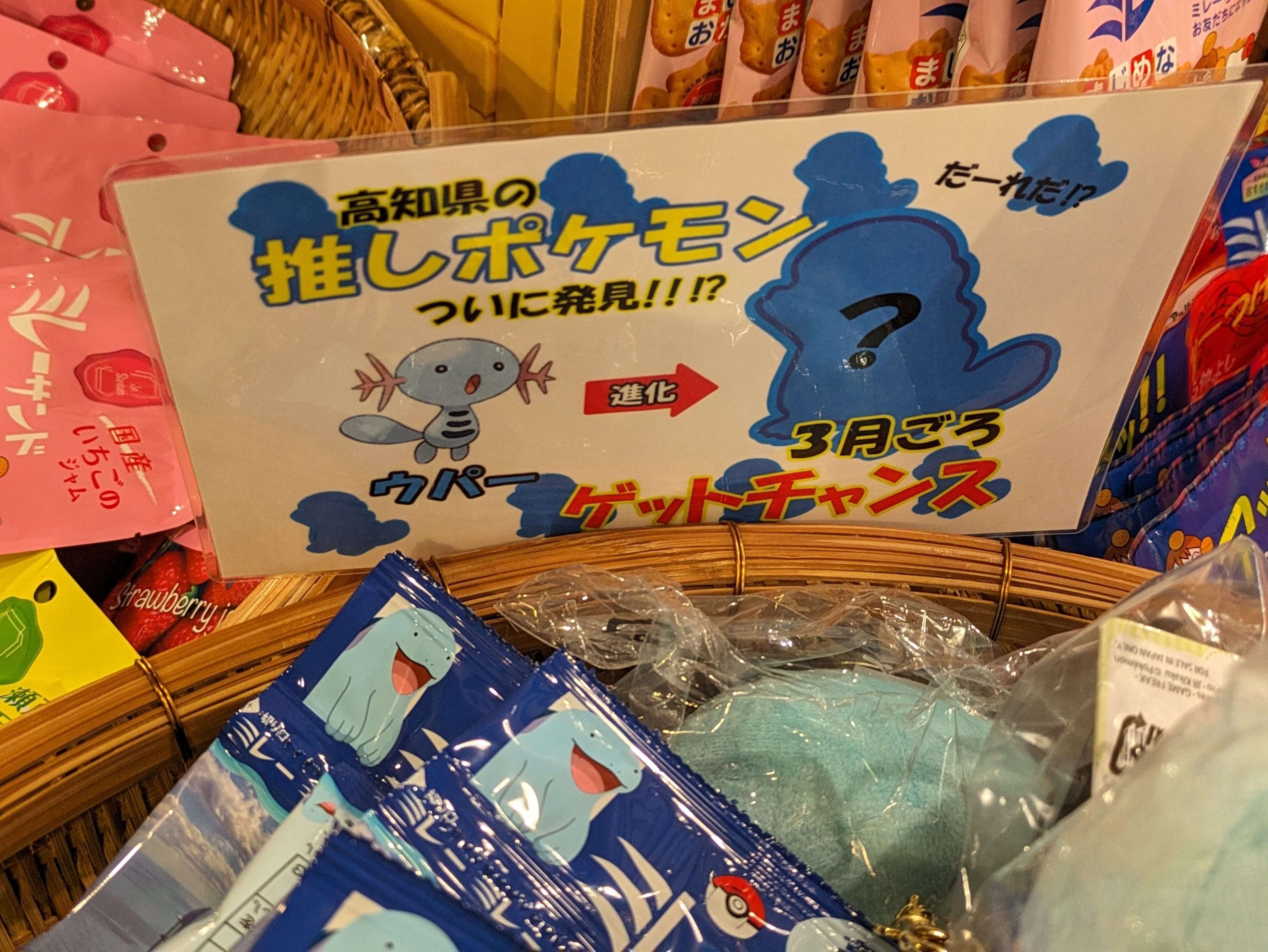
Ambassadorial Pokémon merch spotted at a souvenir store which had all sorts of local products from Kochi.
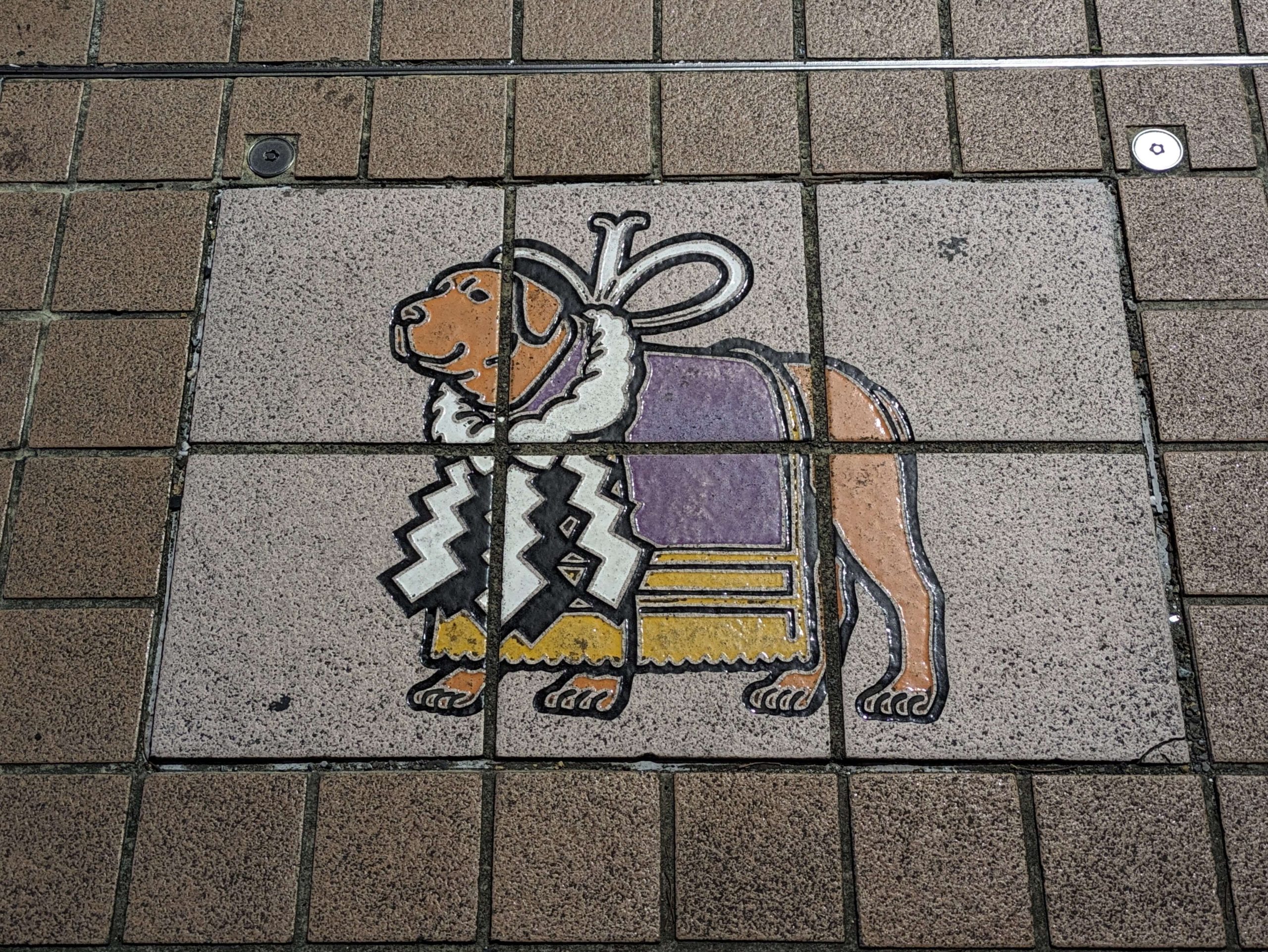
Good boy.
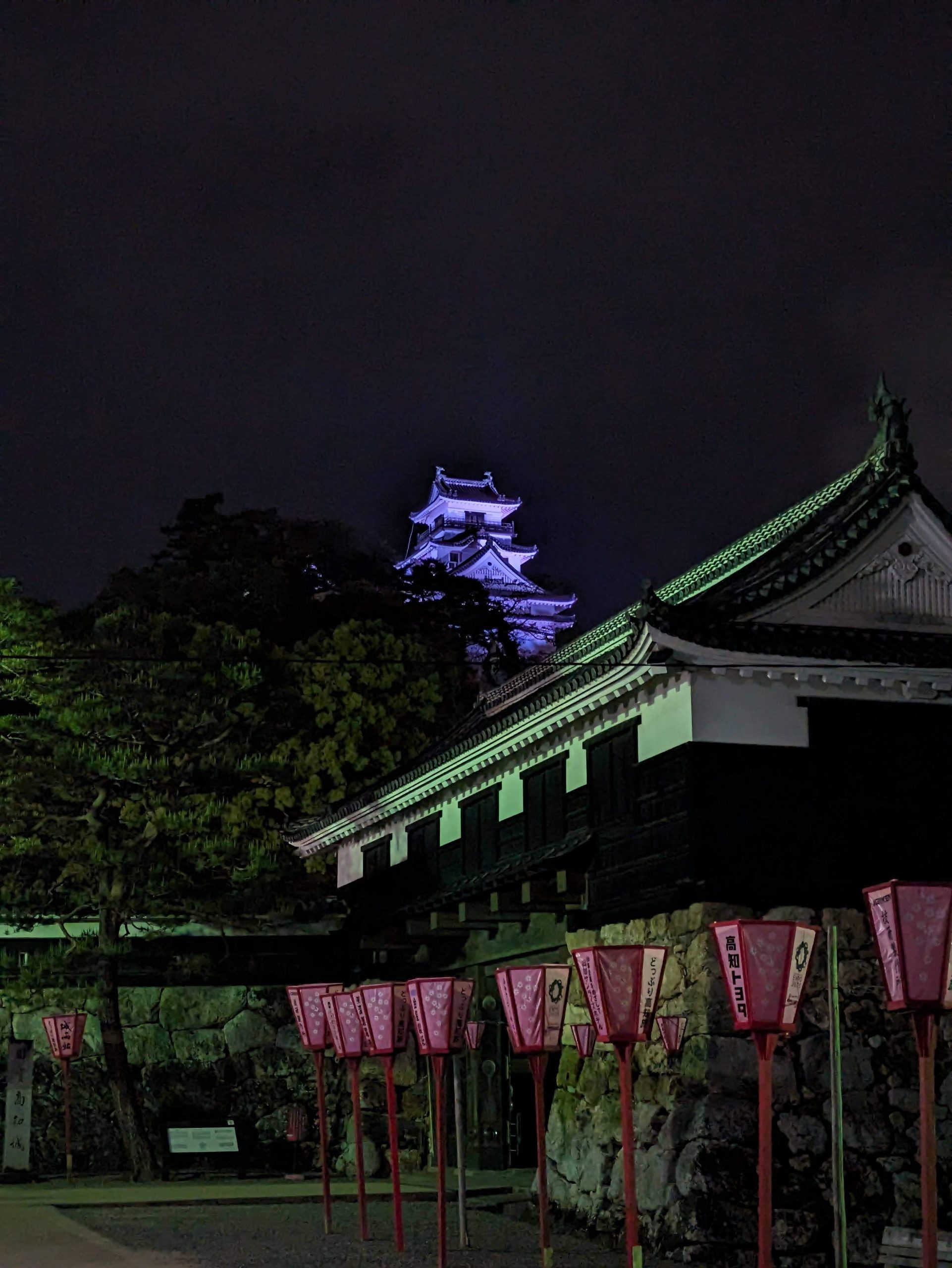
Kochi’s castle lit up at night.
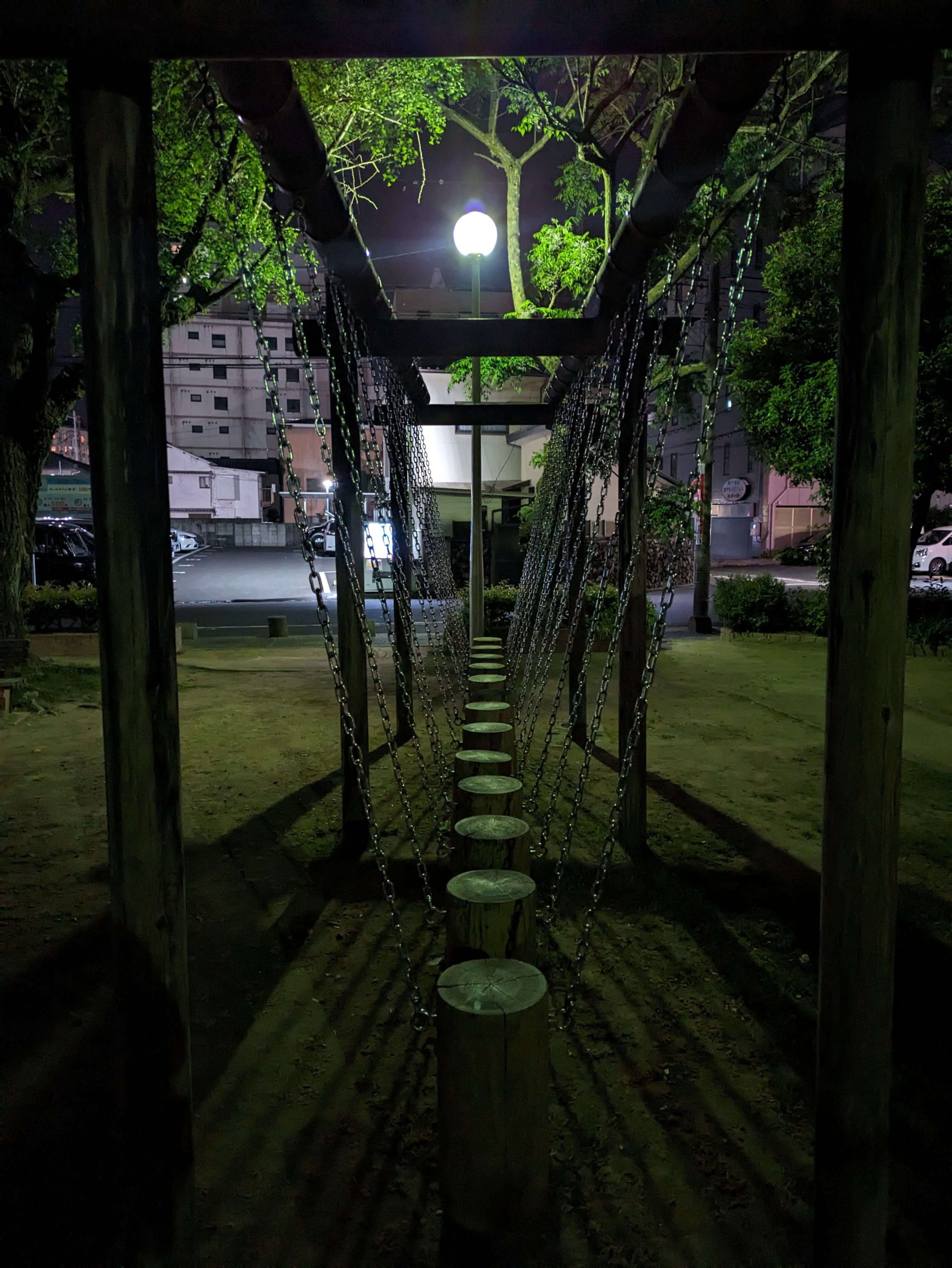
Detoured through a park on the way back to my hotel and this terrain element was legitimately challenging to navigate (maybe easier if you’re a lightweight kid?!)
Friday, May 2, 2025
Today’s transit:
Nothing!
Wow, a day of no trains at all. Rare form. I was planning to meet up with my friend again a bit later in the day, so spent the late morning exploring a few more close-by places until then.
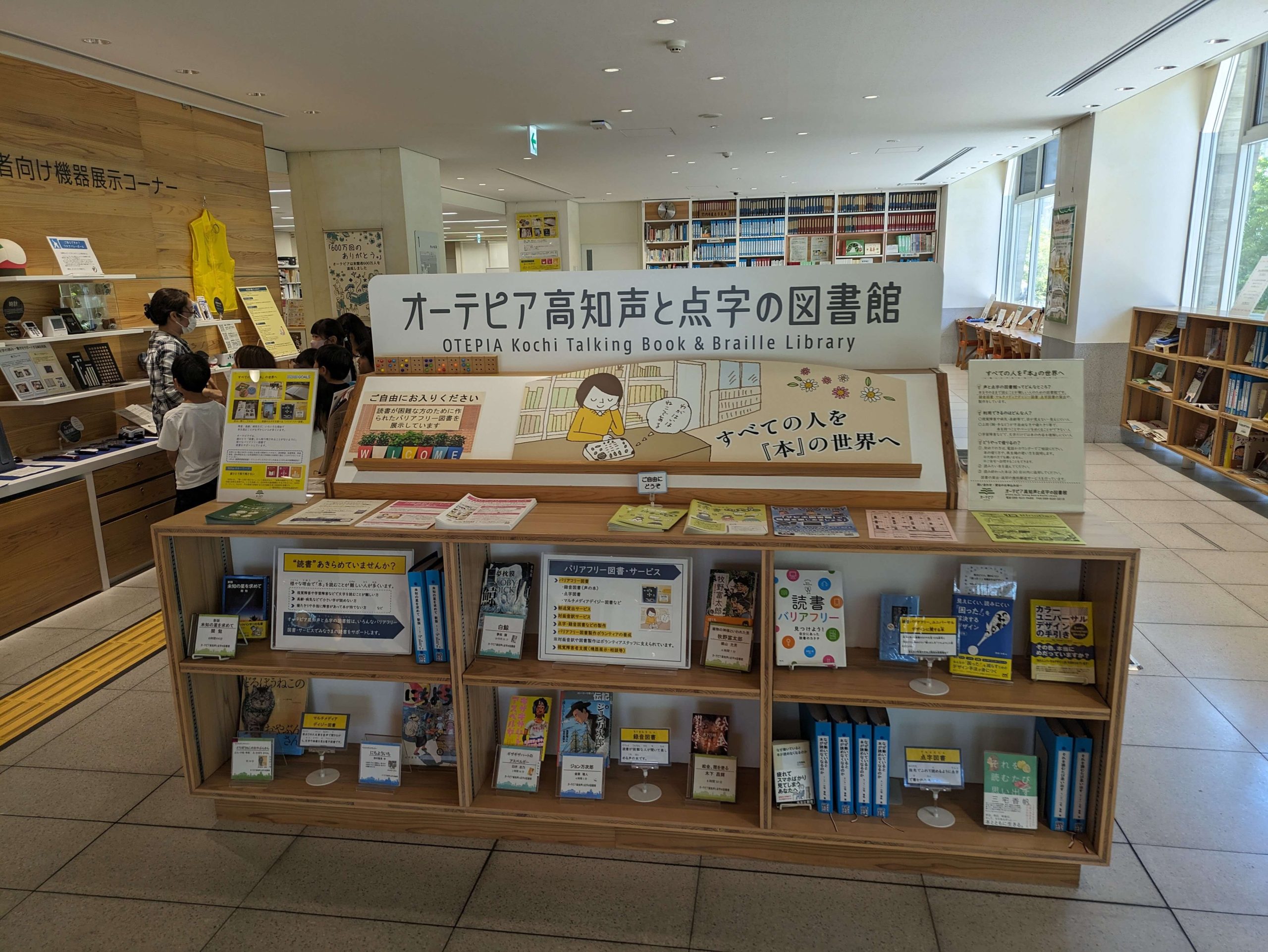
As an avid enjoyer of civic services, I often like popping into public libraries while traveling to see what they’re like. This one had a braille and talking book section which was cool to see…
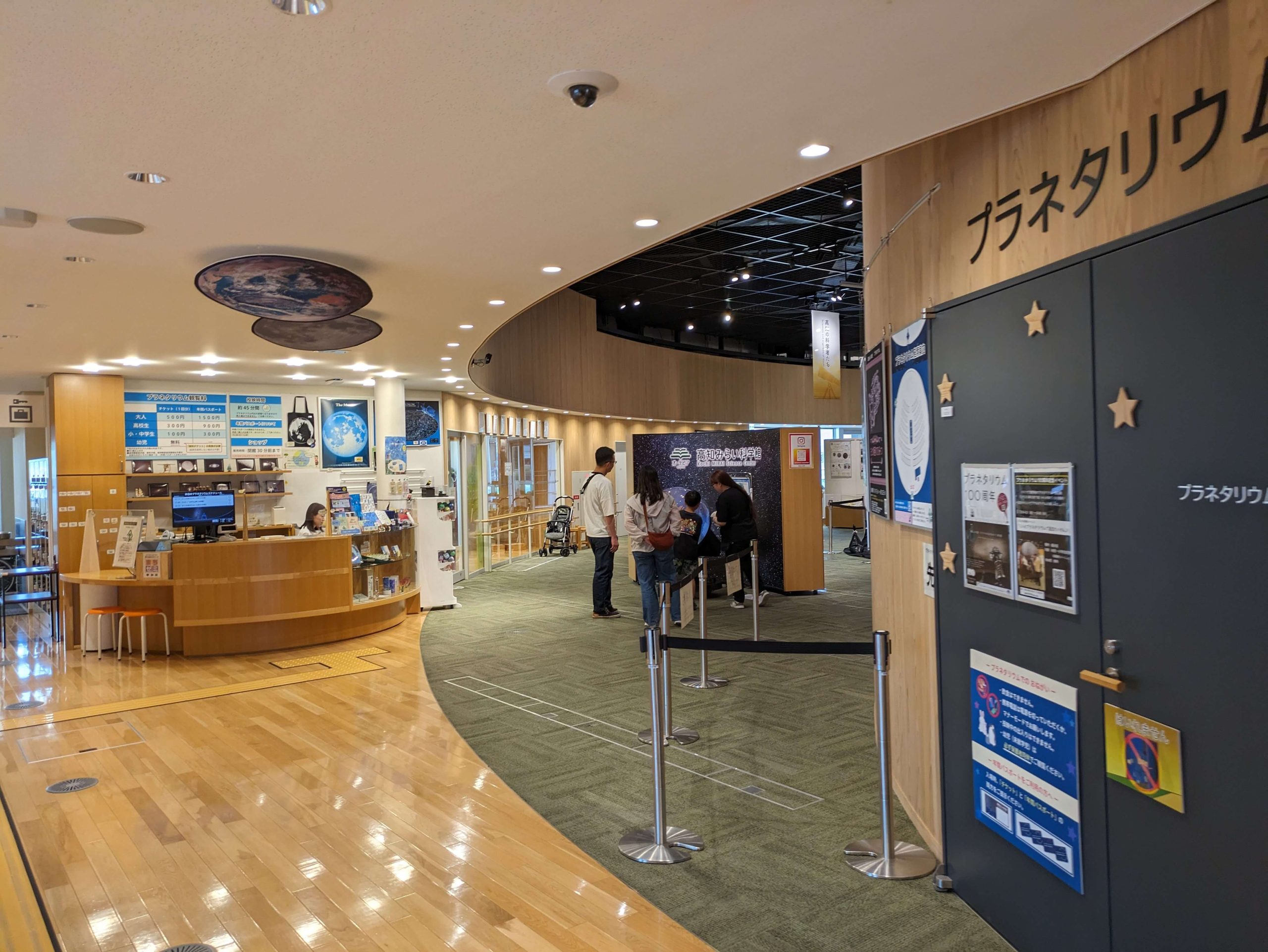
…and also, aside from a lot of exhibits on science, a fully fledged planetarium?! A show was in-progress when I walked by so I couldn’t see inside.
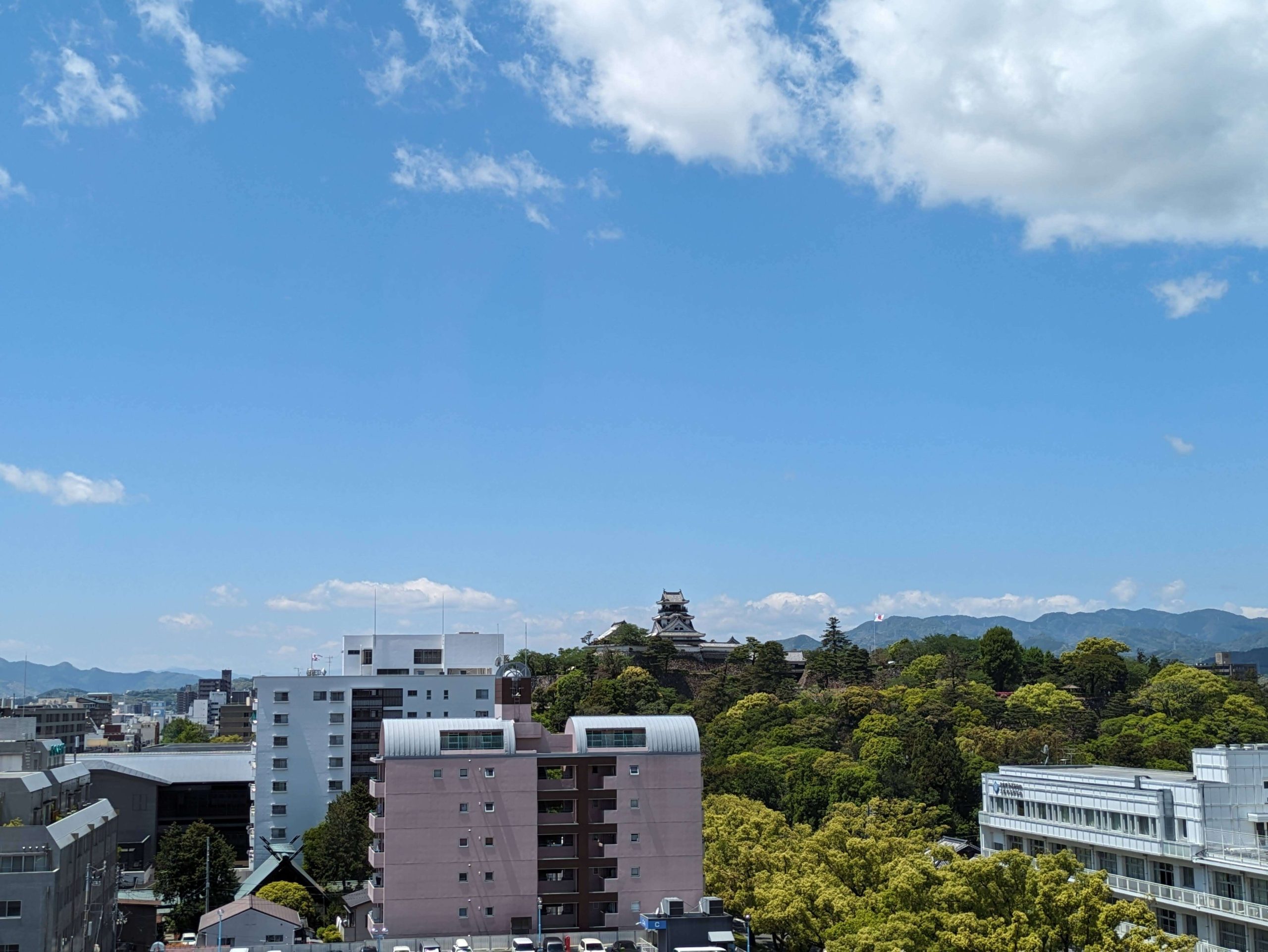
View of Kochi Castle from one of the upper floors of the library.
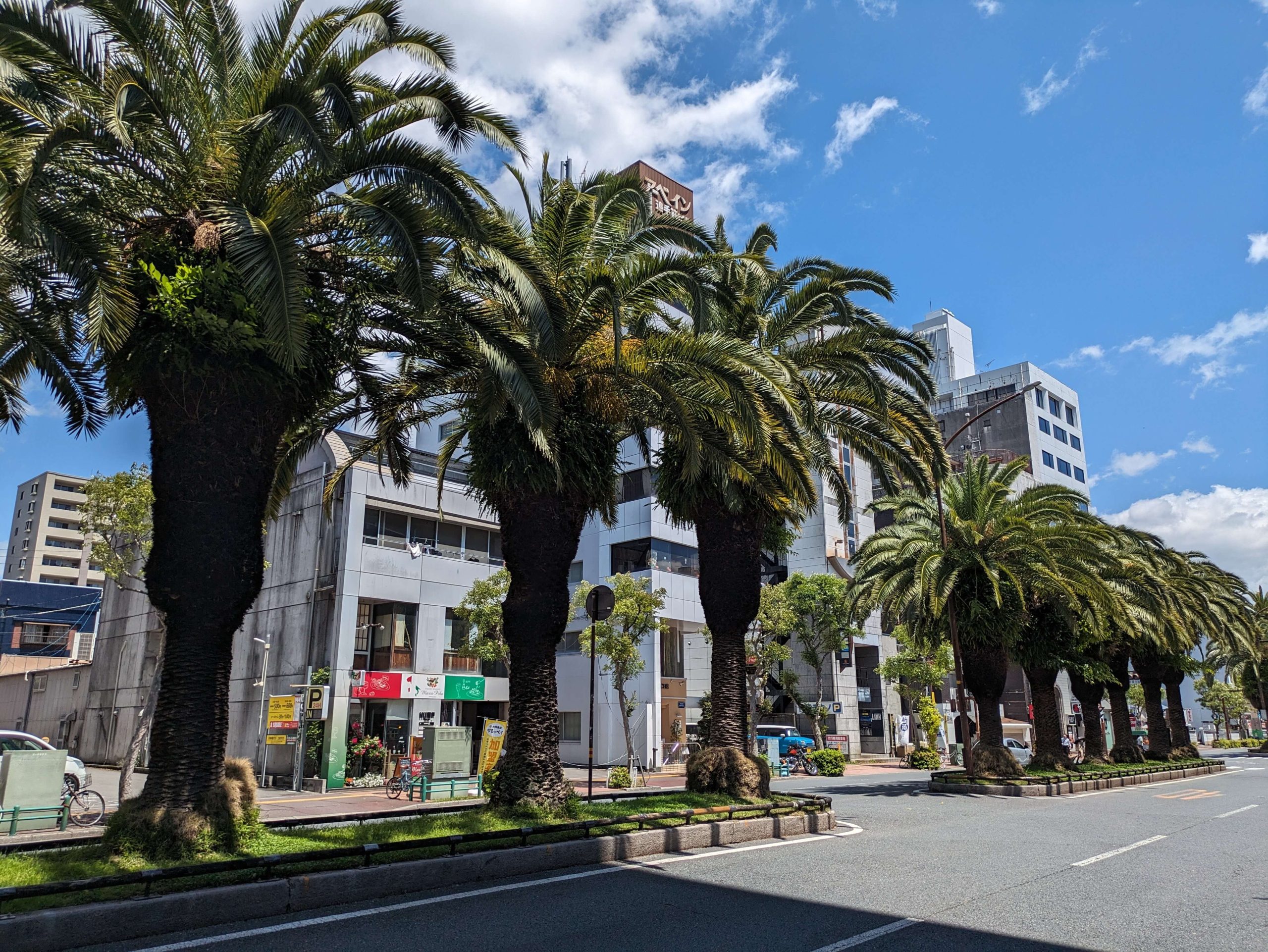
This street (or at least the trees) were quite Hawaiʻi-coded.
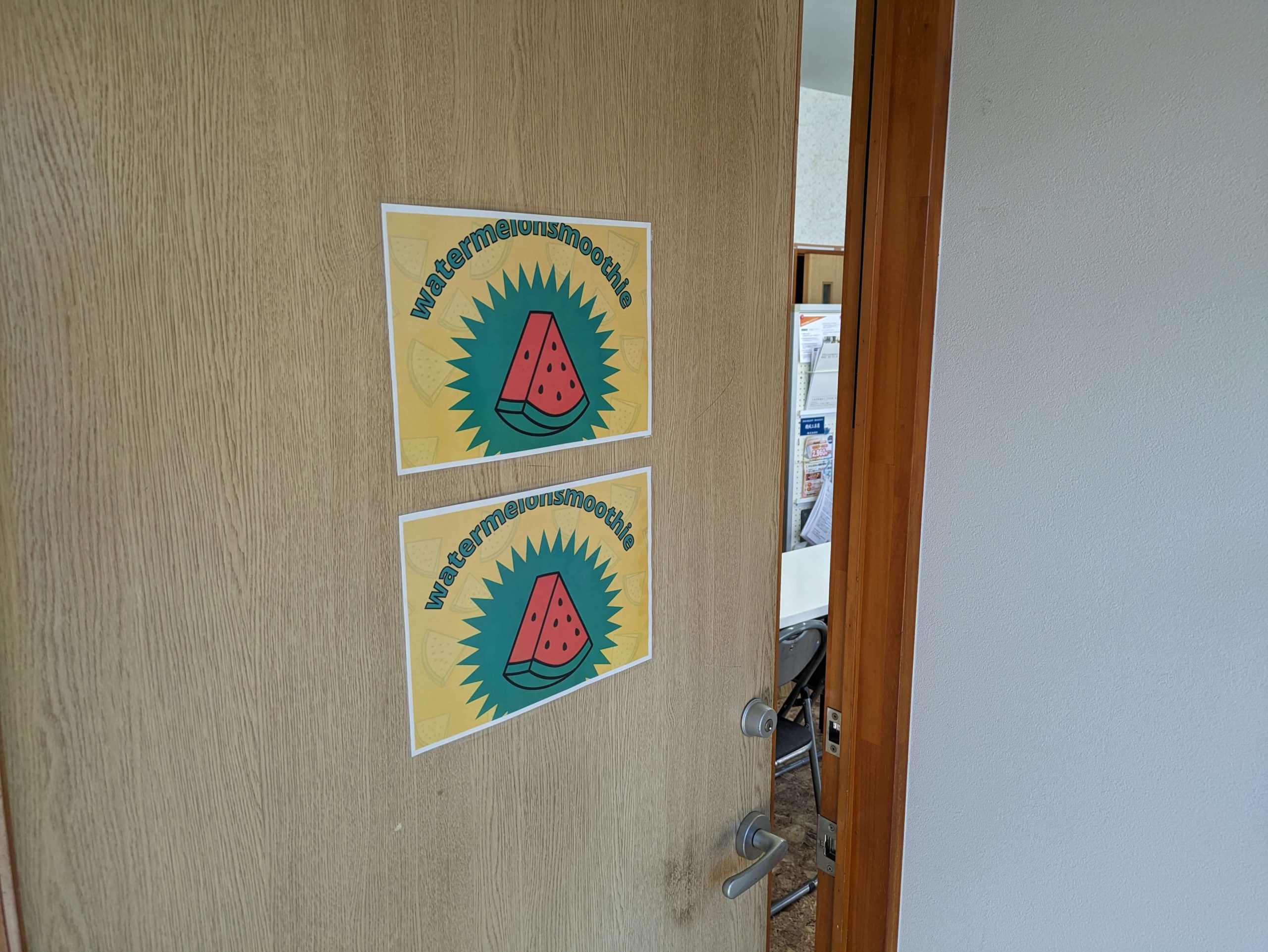
I was walking toward the JR station and suddenly saw a door with a sign that said “watermelon smoothie”. I opened it, and inside there was a hallway, and another door with this same sign. I opened it and… there was a desk, a bunch of filing cabinets, and a woman working on her computer? I asked if they had watermelon smoothies? And she looked like at me like I was crazy and said no???????????
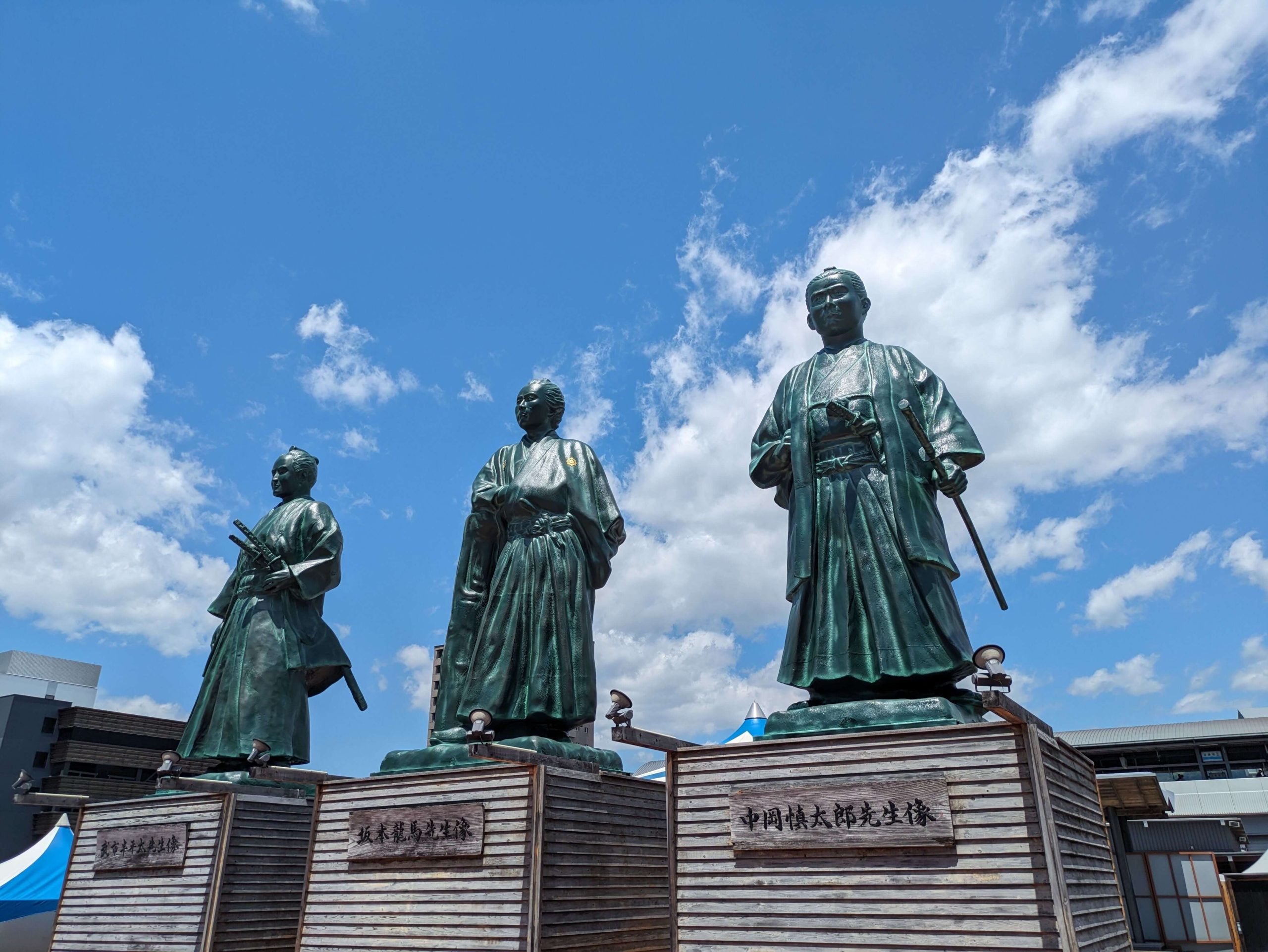
The three heroes of Kochi: Sakamoto Ryoma, Takechi Hanpeita, and Nakaoka Shintaro. You can read about them here.
My friend met me at the station, and together we drove around to check out some fun, interesting spots in the prefecture!
Our first stop – entirely at her suggestion, such a spot-on recommendation – was Sawada Mansion, an insane DIY apartment complex that was the life work of self-taught amateur architect Kano Sawada. He built the maze-like structure without blueprints between 1971 and 1985, and even though he passed away in 2003, small ad-hoc additions are still ongoing today. It has around 100 residents in its approximately 68 rooms, some of which double as art galleries, cafes, barbershops, clothing stores, miniature farms, and whatever else you can think of. Along with a lot of ramps and haphazard inclines to get to the upper floors, the building even has a self-built crane on the fifth-floor roof and an elevator shaft to hoist things up to the top.
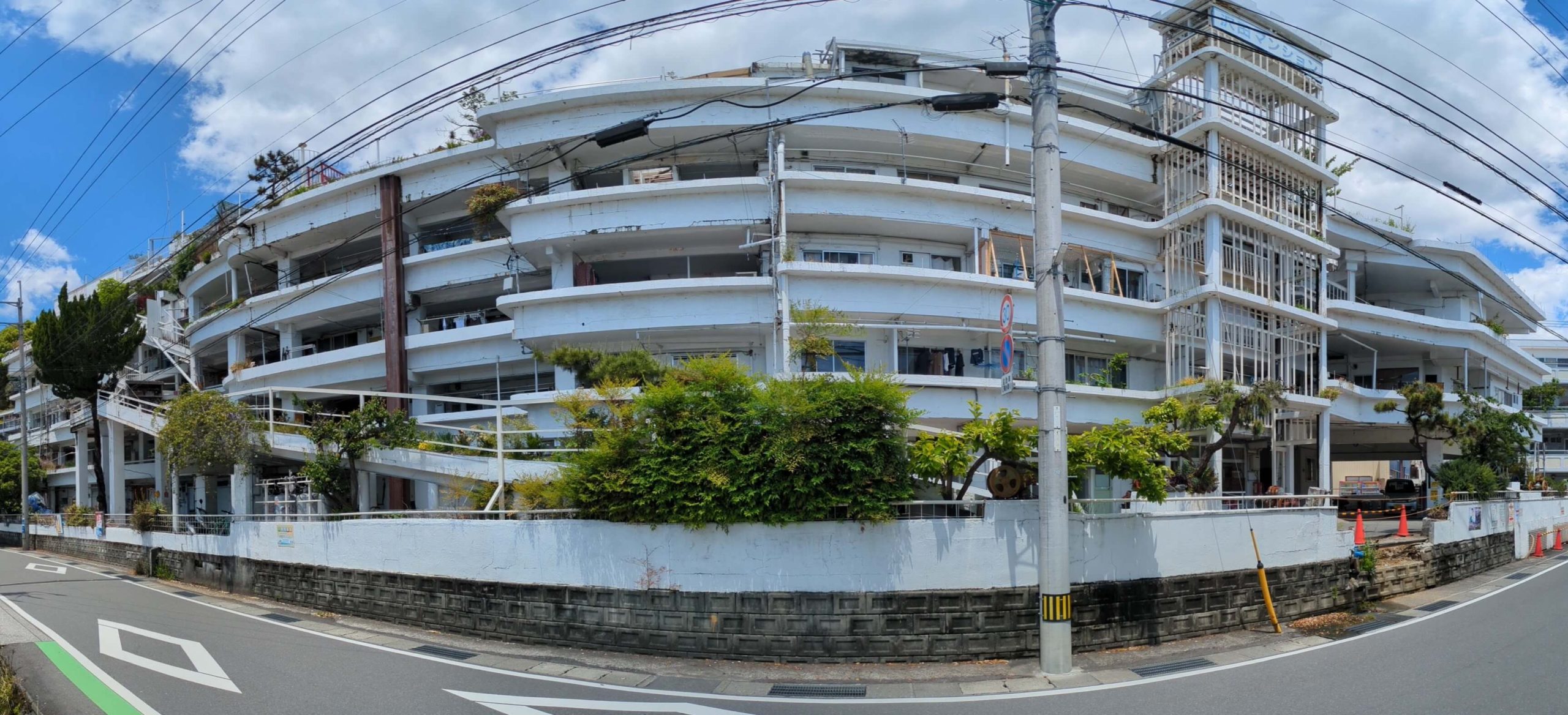
Panorama of the entire south side of the building. “Mansion” as a loanword into Japanese actually means ‘condominium’ or ‘apartment building’, so “Sawada Mansion” is perhaps a bit wasei-eigo-ey of a translation… but in this case it arguably is like an actual mansion due to its scale!
The guy behind it was pretty scummy (local residents describe him as abusive, also while in his thirties he de facto married a 13-year-old girl who still lives there with her daughters and manages the place today), and when reading more about him I learned that he apparently refused to read books, categorically, lol? Feels quite in-character for someone behind this type of “free-spirited” (see: borderline schizophrenic) construction. A student at Tokyo University of Science even wrote their Master’s thesis on the building in 2002. It’s all obviously unauthorized – and not earthquake-safe – but all attempts to demolish it have failed thus far. For those curious, it has its own out-of-date website, a Japanese Wikipedia article, and an Atlas Obscura page where you can find more info.
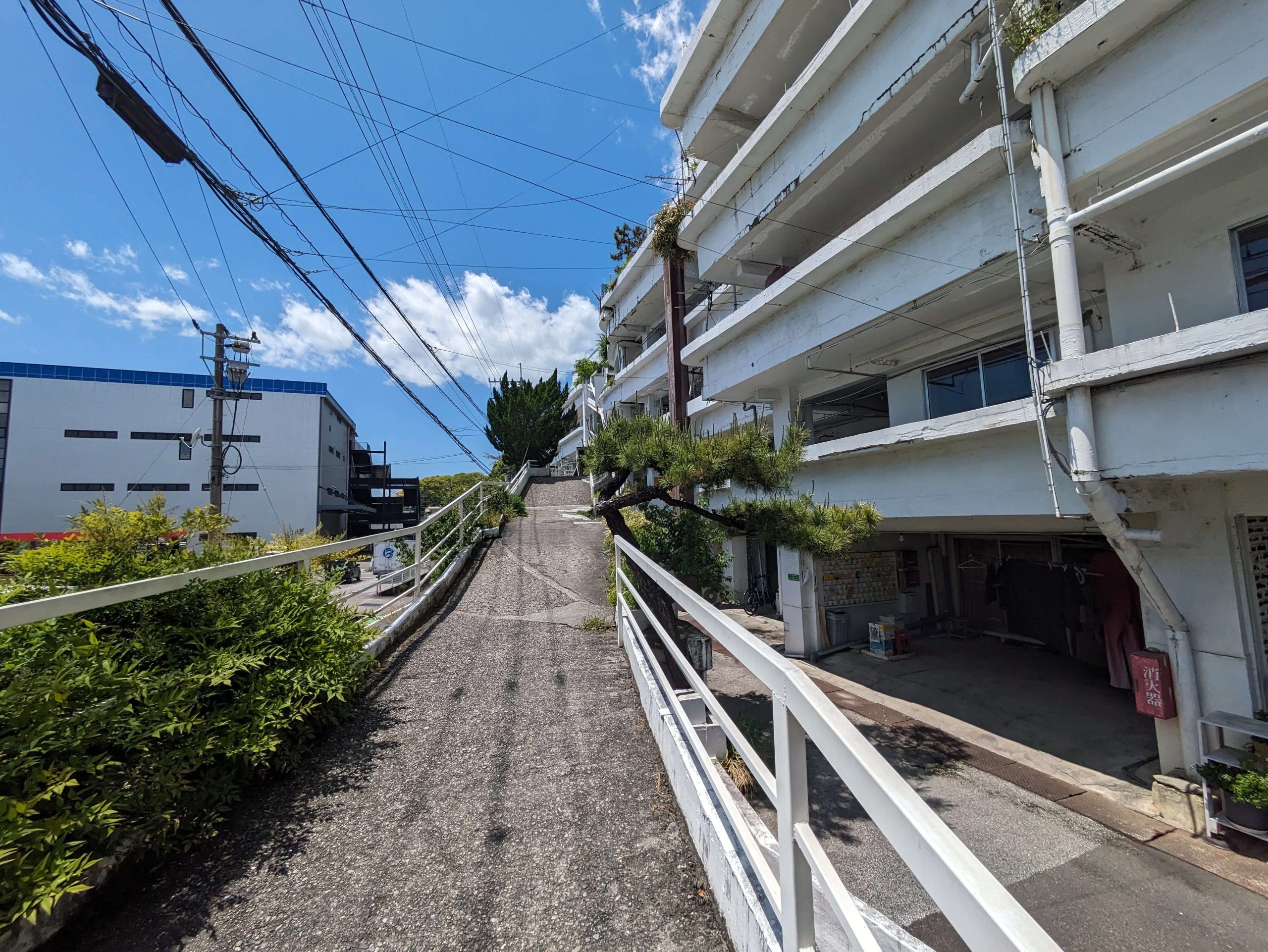
Going up or down requires snaking through the front and back of the building. This ramp connecting floors 1 and 3 is the “main street”.
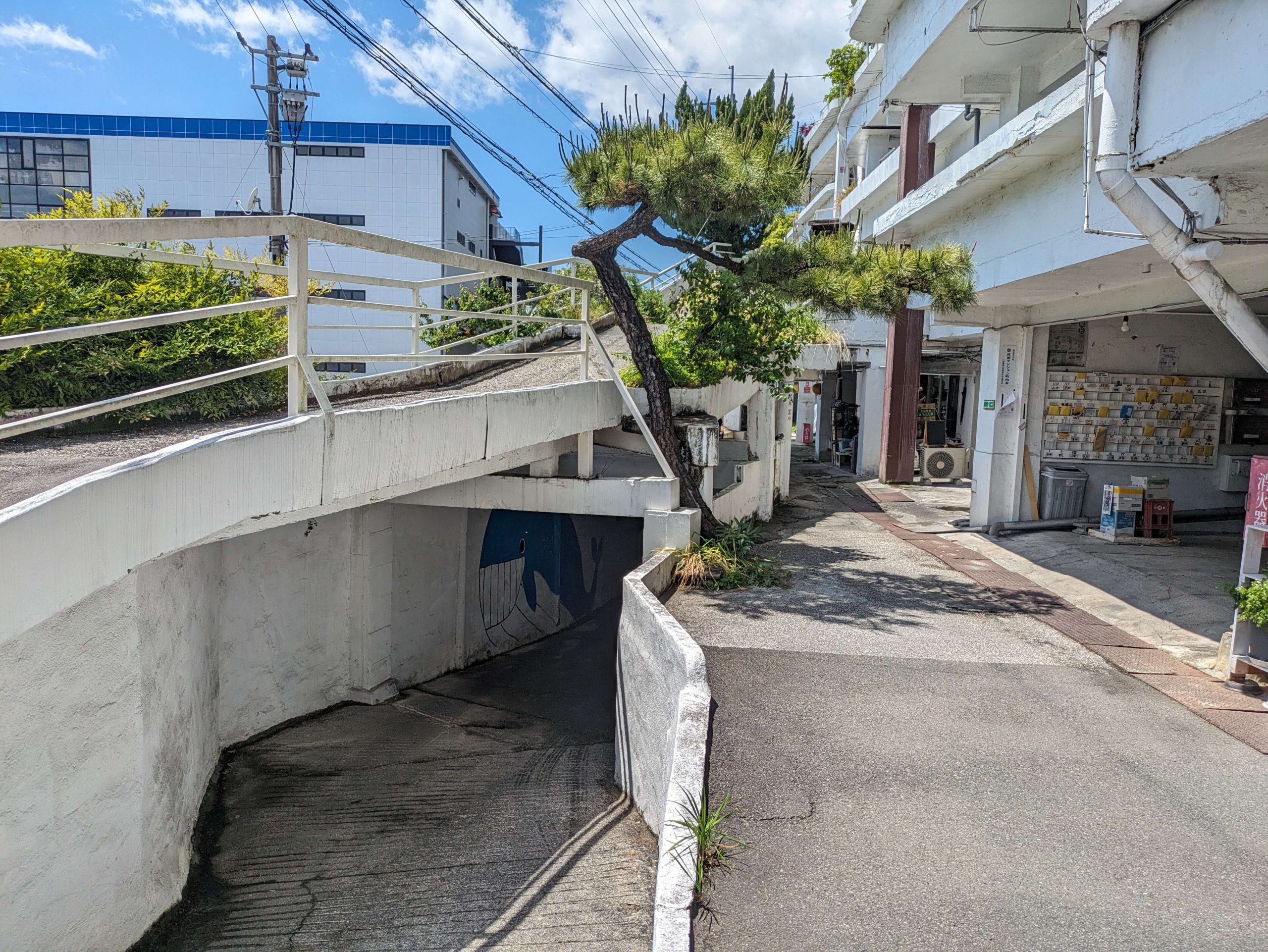
There’s a garage underneath, too.
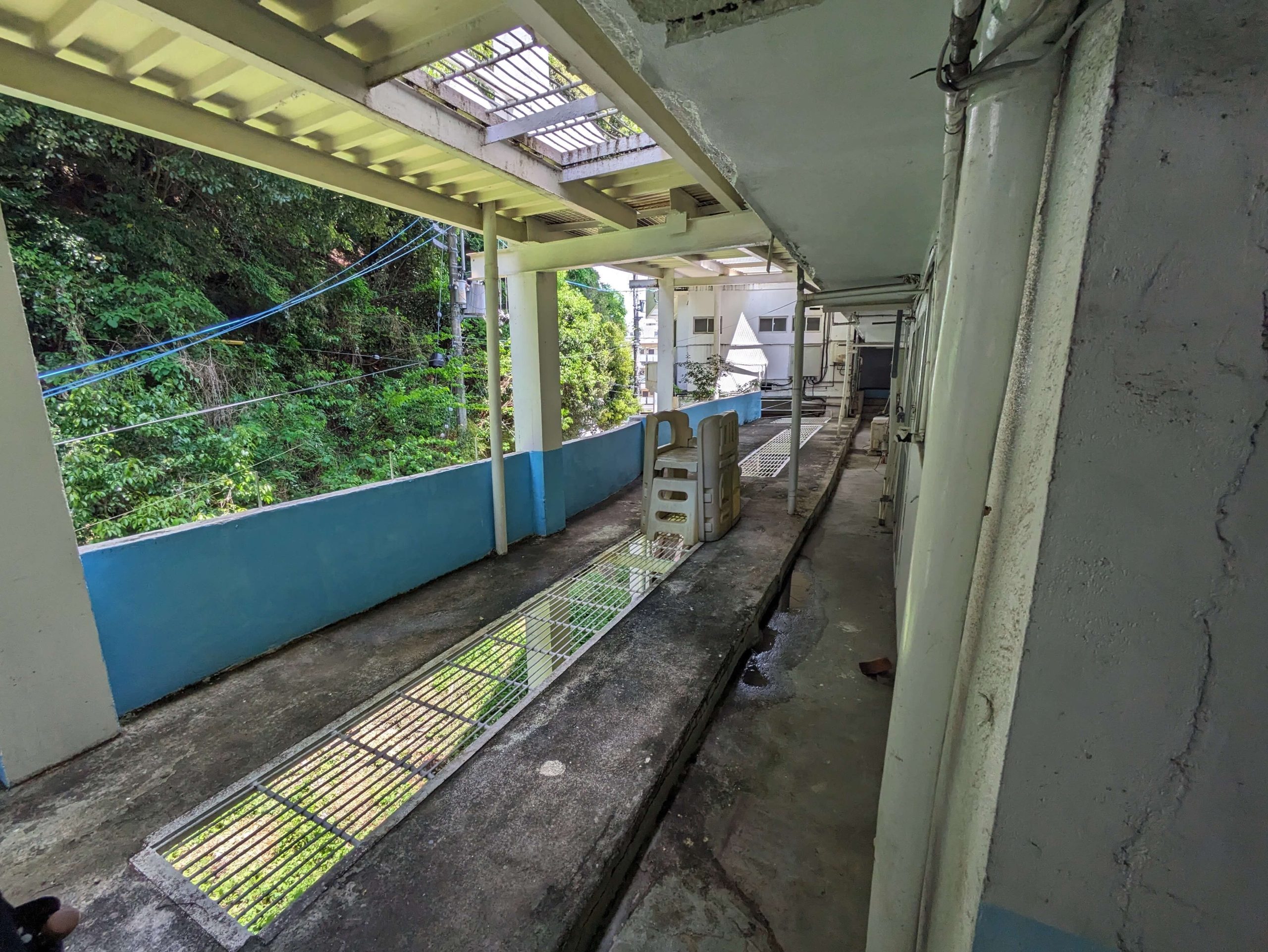
Back alley on floor… three, was it? Going straight takes you to another curved ramp toward the roof.
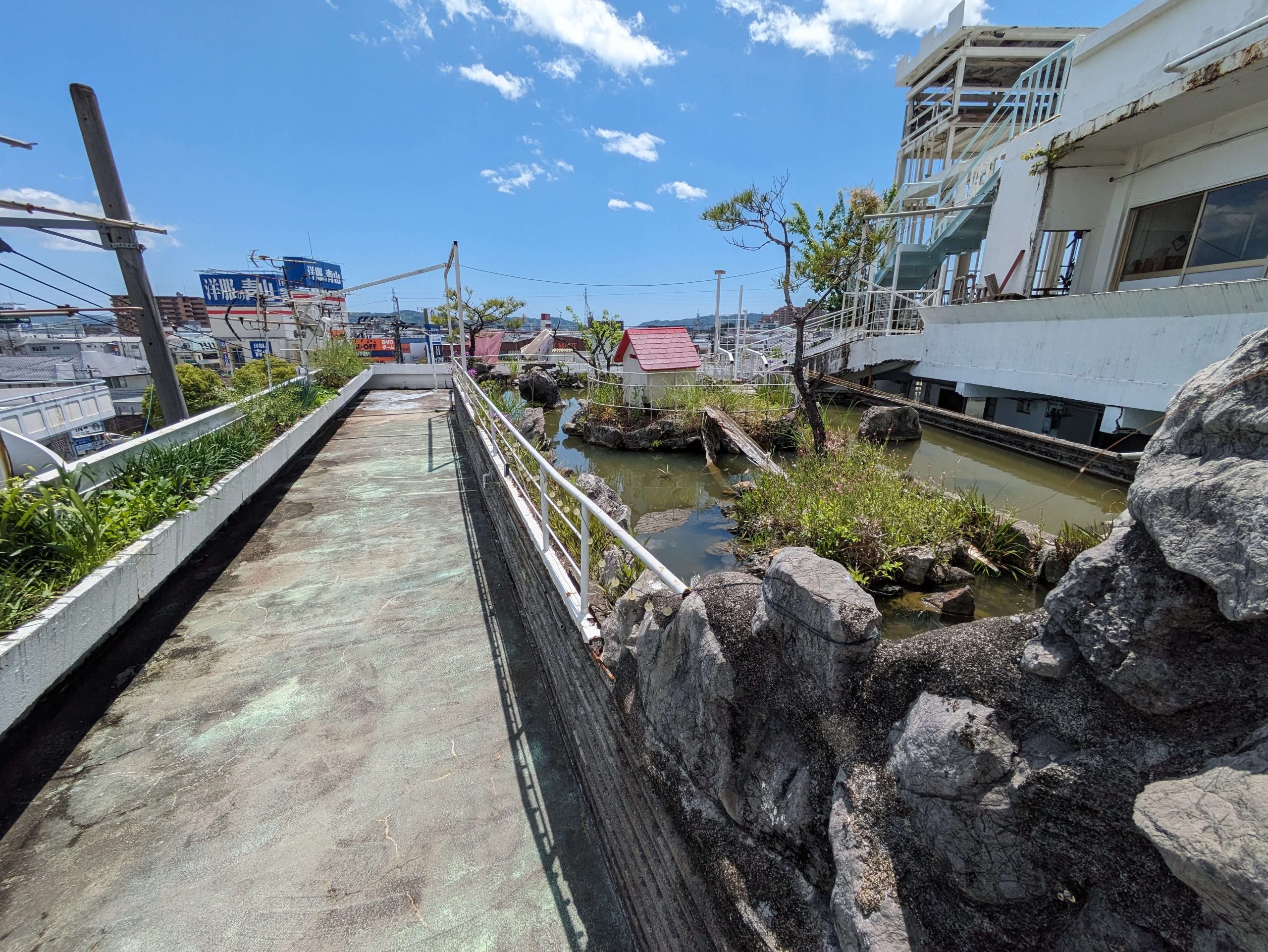
The polygonal rooftop garden. There apparently used to be a farm here with a pig.
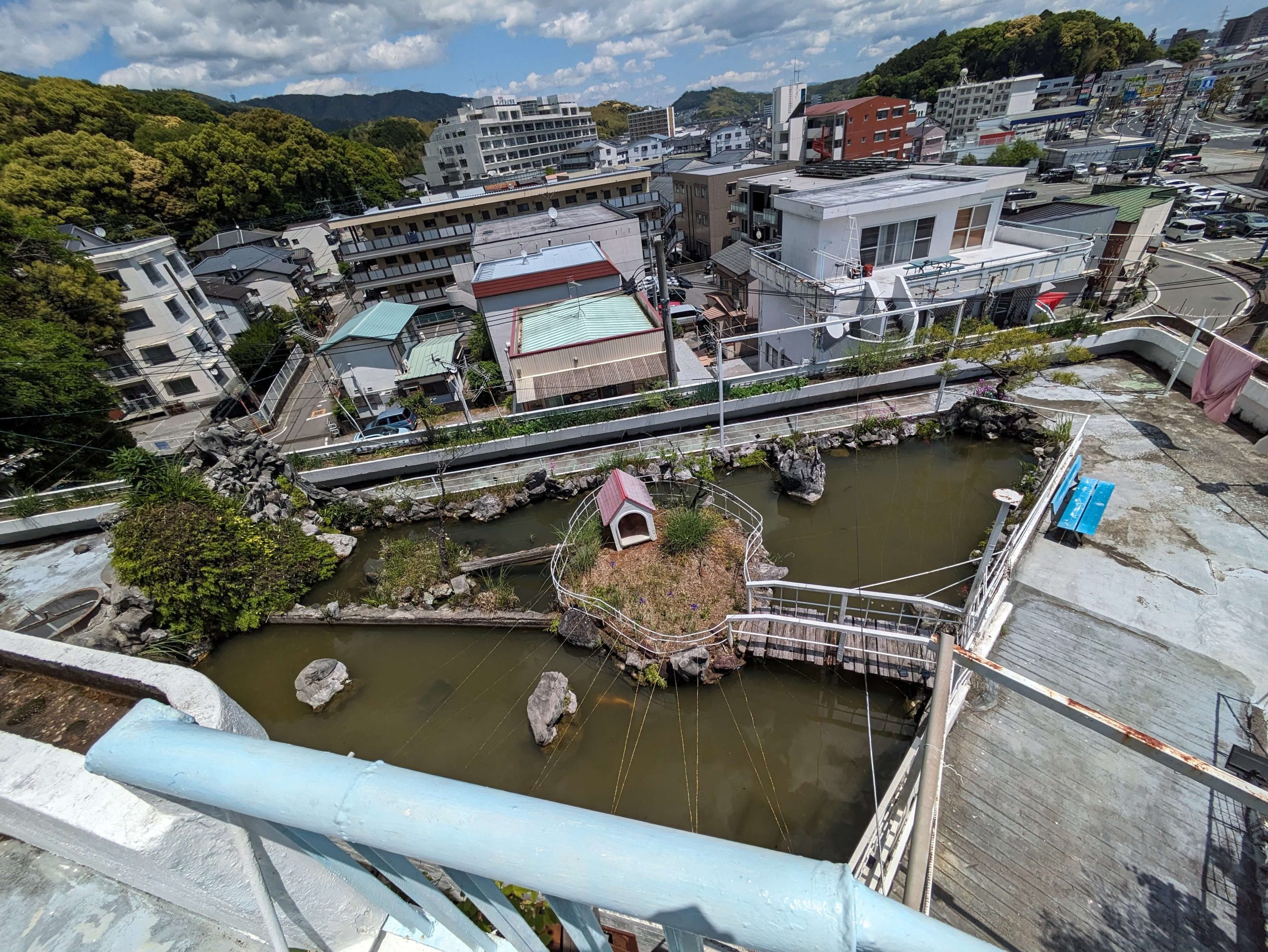
The pond on the roof, viewed from… the second higher-up roof.
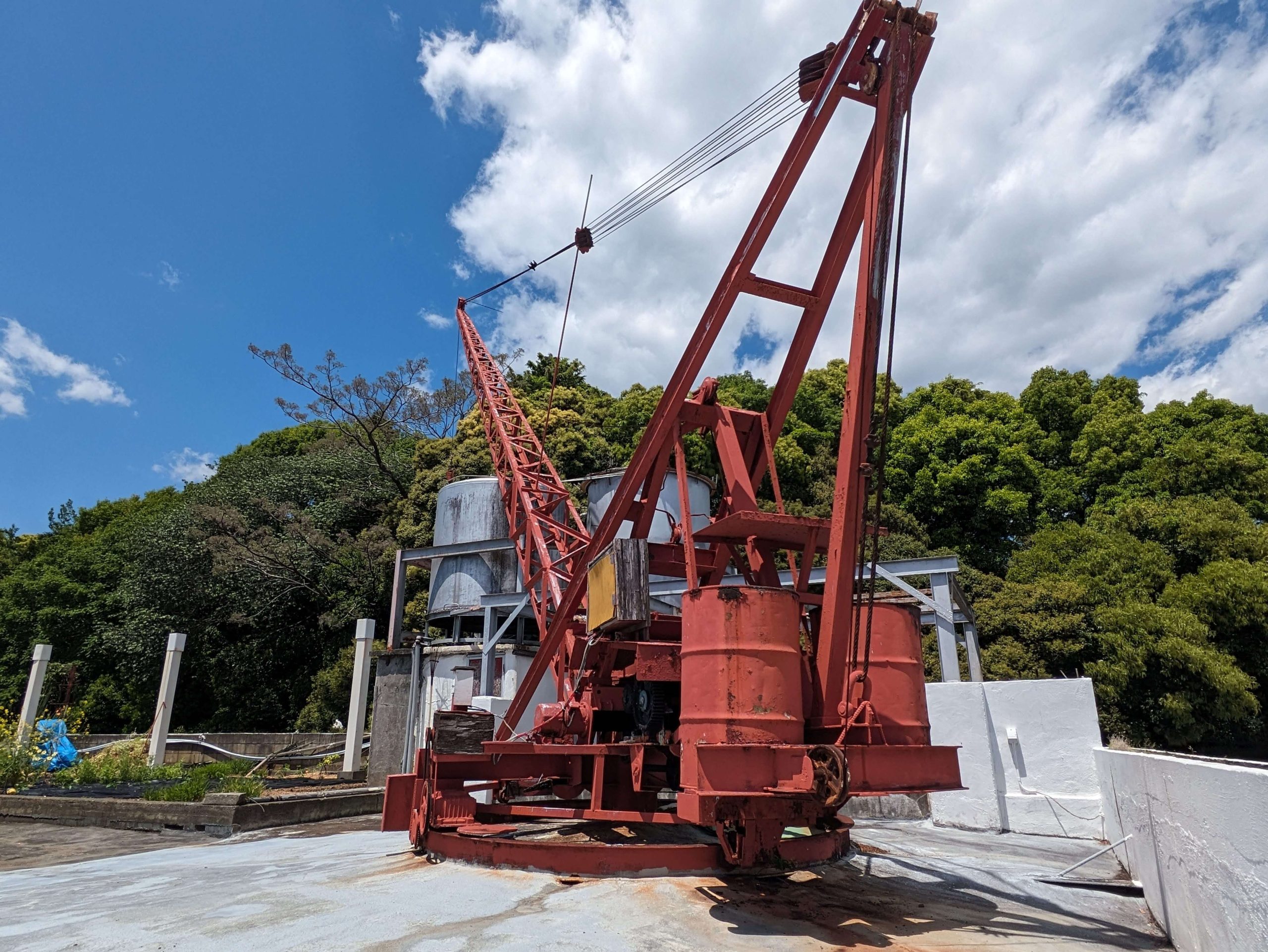
The DIY crane.
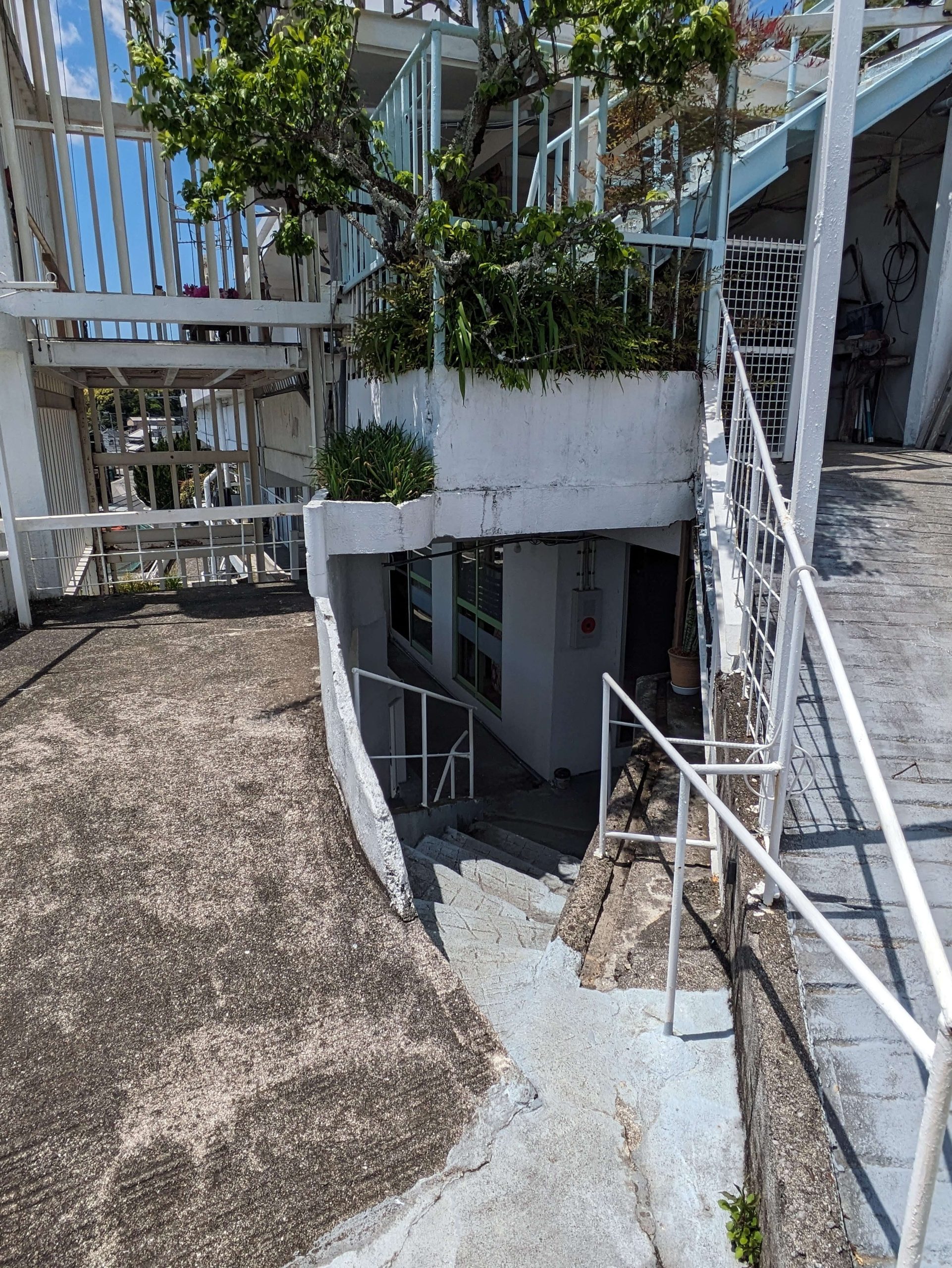
It’s like a mini Onomichi in a building.
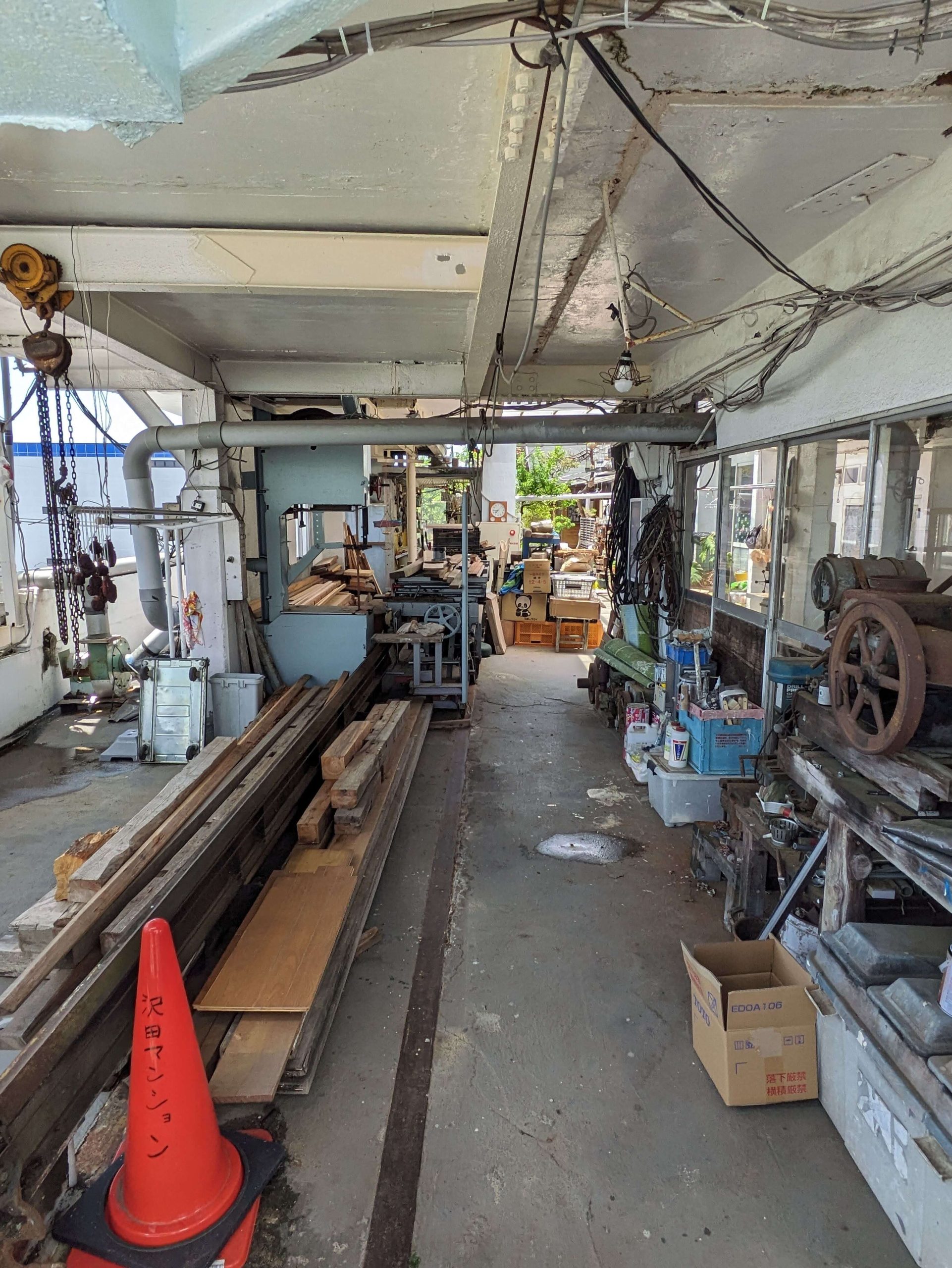
Bless this mess.
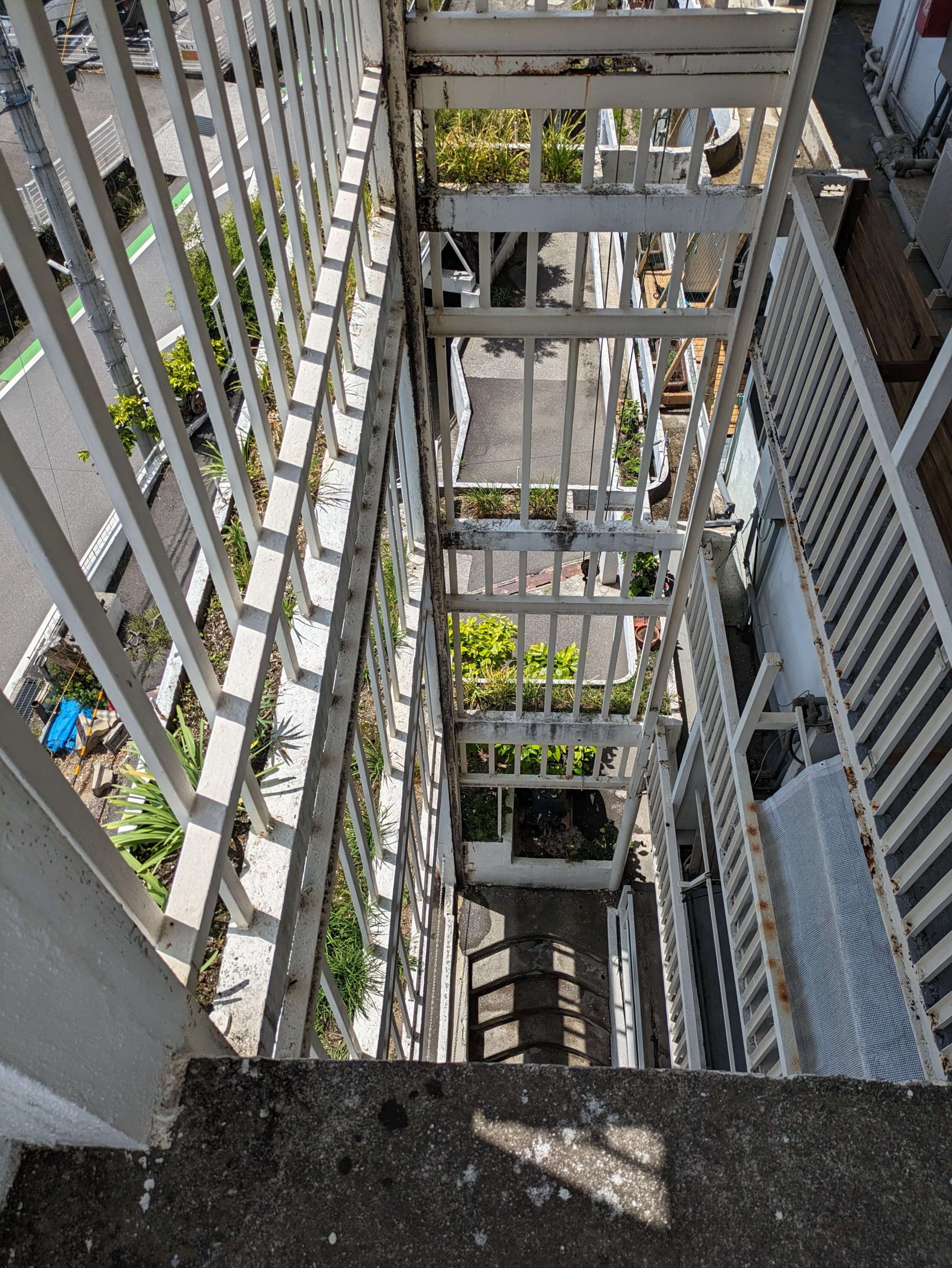
The elevator shaft. It goes straight from the ground floor to the fifth without stopping in between.
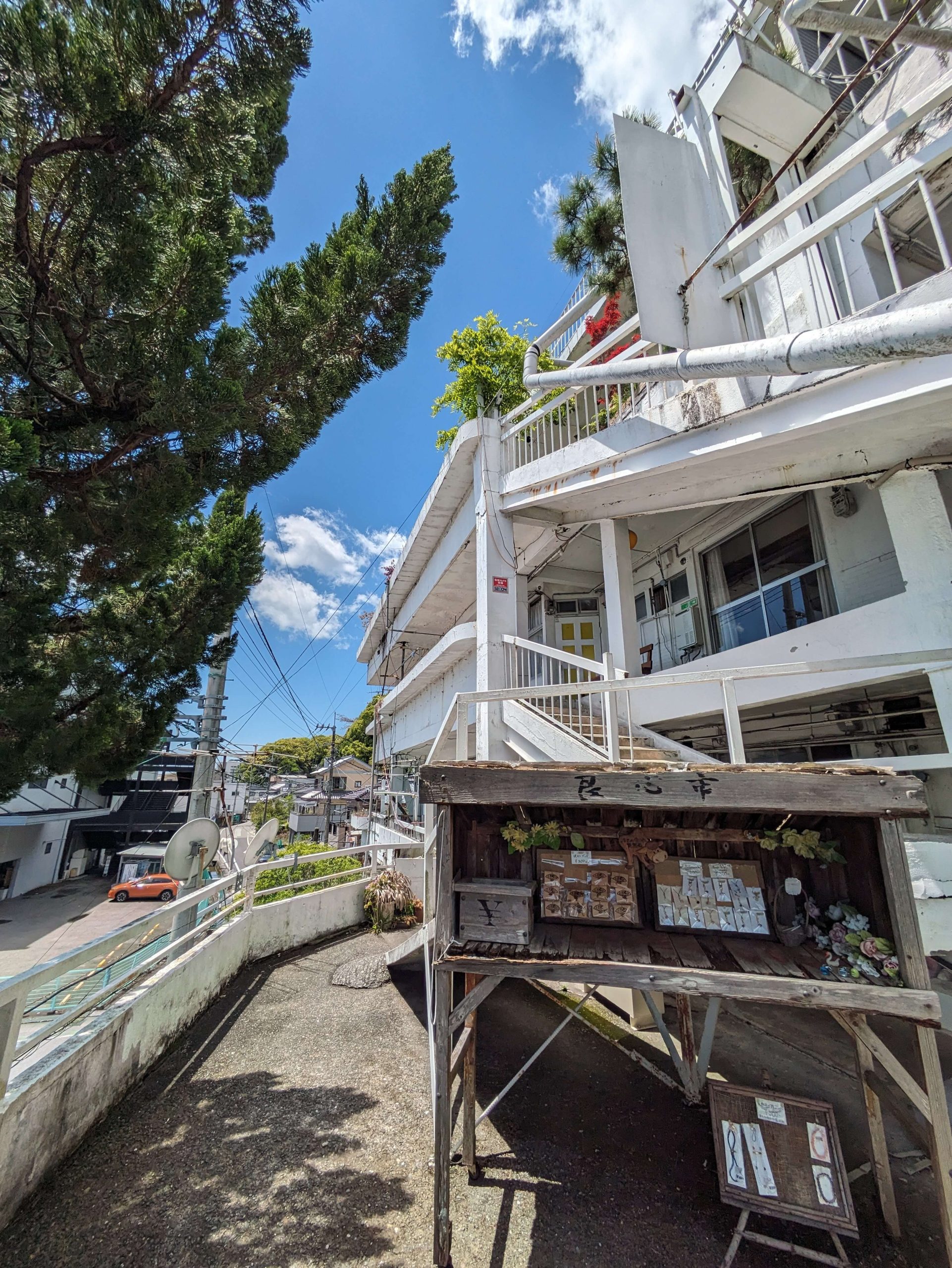
Jewelry and trinkets for sale. Honor system.
Stop #2 was Thai food! There were a bunch of old ladies there who were childhood friends. Maybe it’s just because she was with me or something, but they were surprised that my friend was Japanese, and kept exclaiming “we thought you were foreign! or only half-Japanese, at least!” and she was like “uhh, no? not at all…? I’ve never been told this before?” Very strange lol. Lunch was then followed by a drive through some narrow roads on the way to our next location.
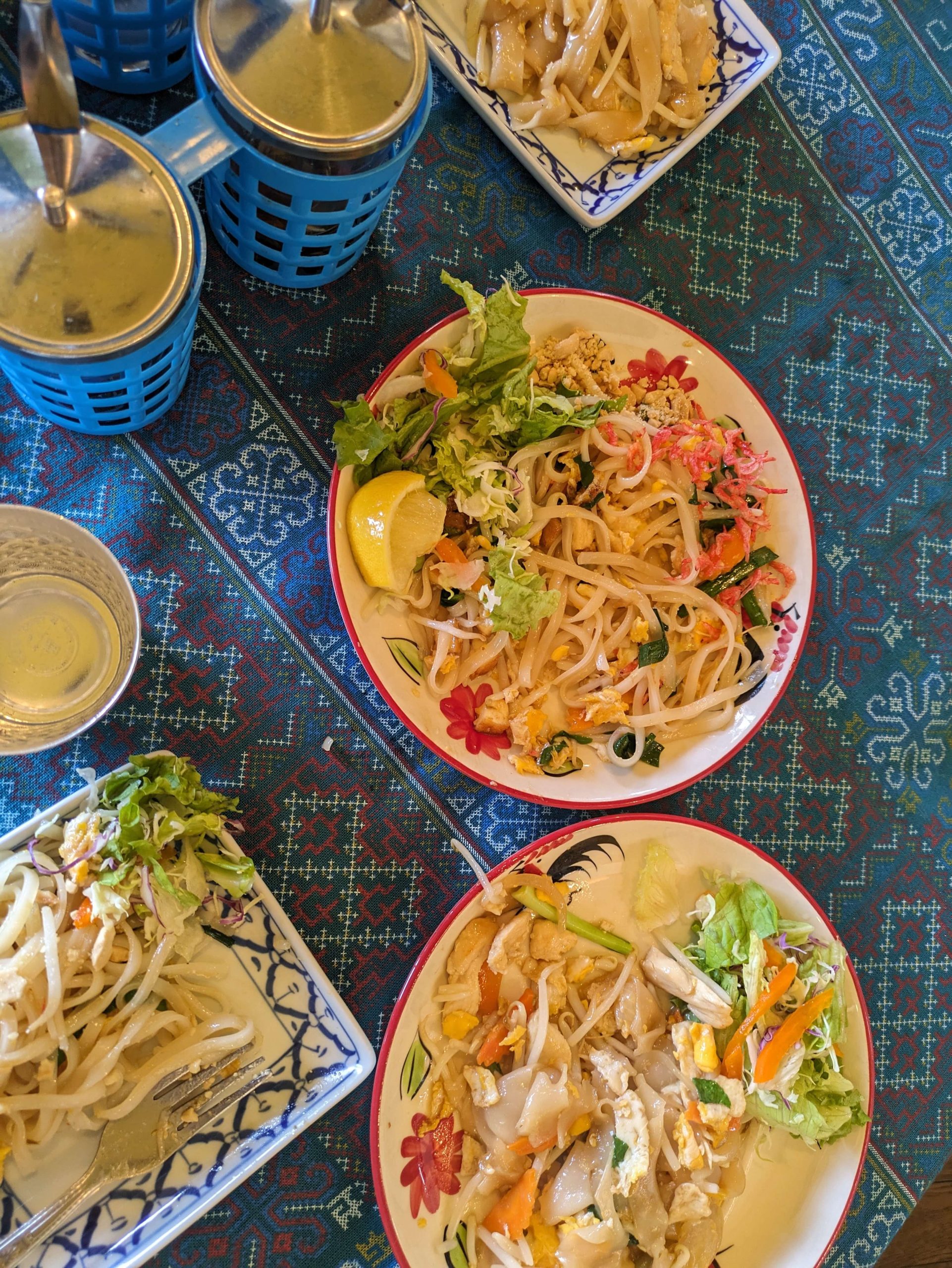
The Thai place was called Baan Puan. It was good!
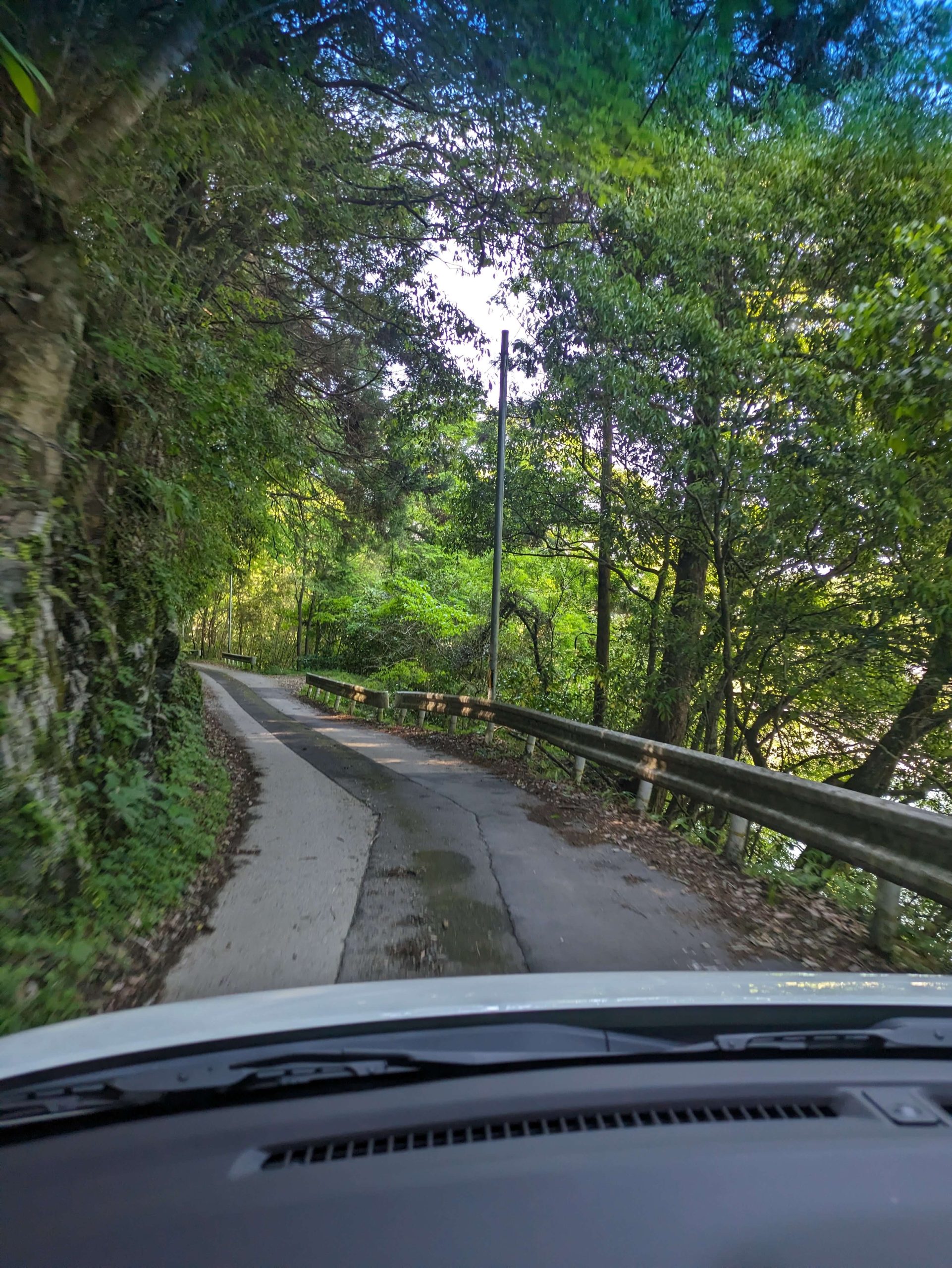
Green, winding roads on the way to our next point of interest.
Our third stop: the Nagoya Submersible Bridge! Yes, like Nagoya where I live! …ok, well not quite, one of the three kanji is different when written in Japanese (bridge 名越屋 vs. city 名古屋), but still. This is a low-lying bridge without railings built over the Niyodo River, meant to withstand being submerged when flooding occurs. Submersible bridges, or 沈下橋 chinkabashi, are well-known in Kochi and especially over this river. It was built in 1971 to link the tiny village of Hidaka (population 4404), located south of the river, with the town of Ino (population 19,408) on the north. Infrastructure tourism, woo!
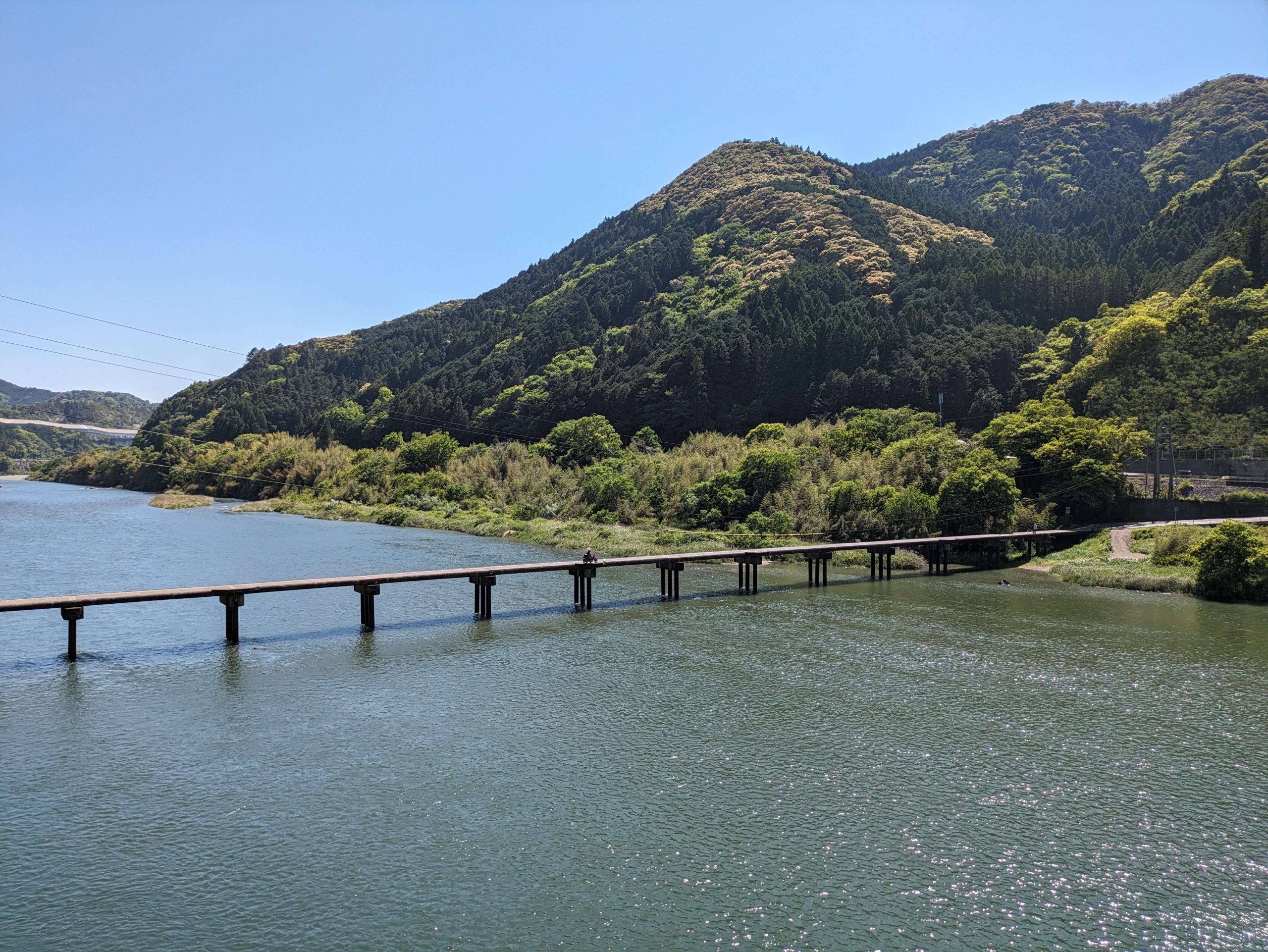
Approaching the bridge, from a curbside lookout on the road there.
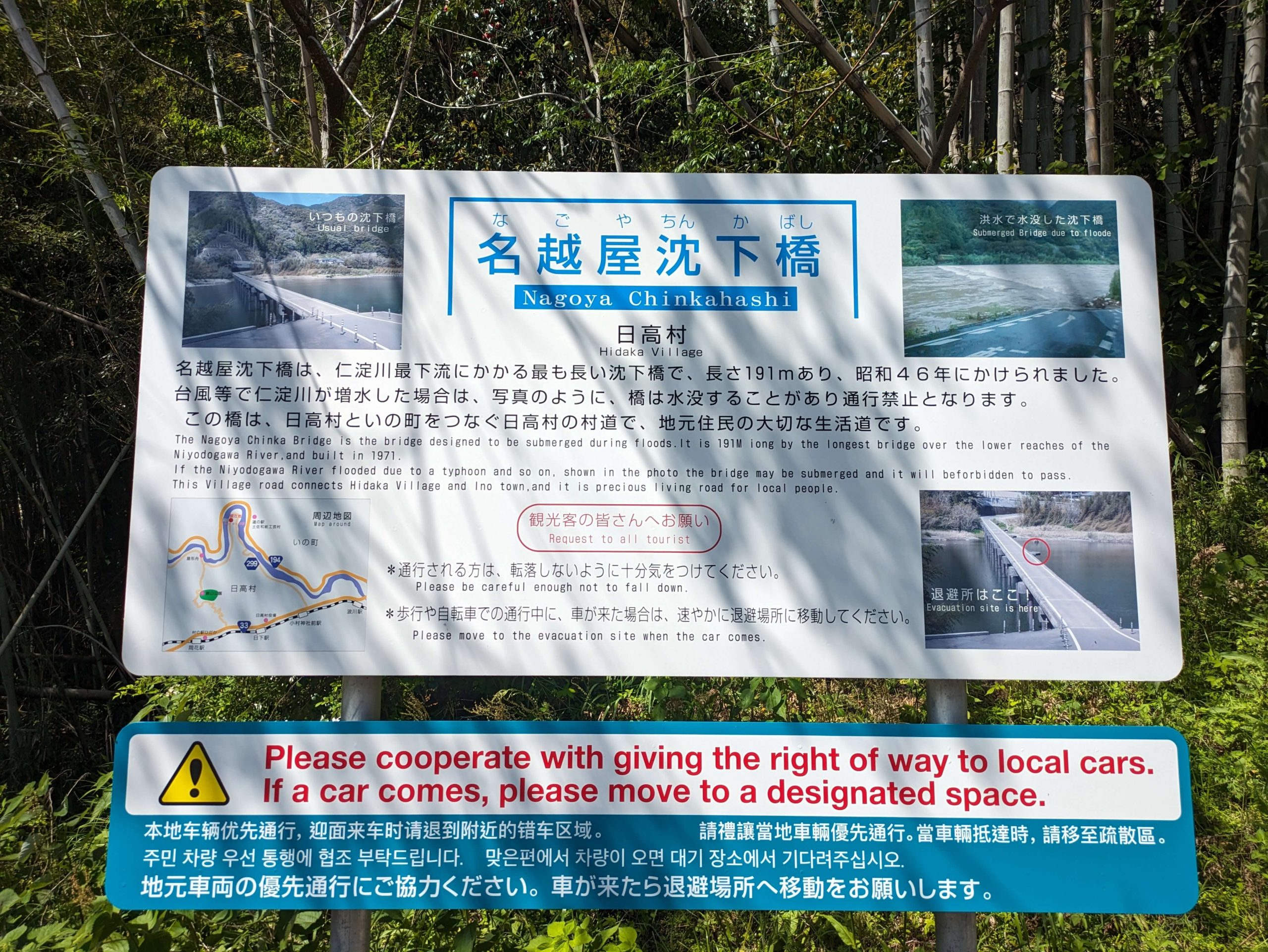
Informational plaque. It shows what the bridge looks like when flooded in the top right. I’m a big fan of the “It is 191M iong” and “Submerged Bridge due to floode” typos.
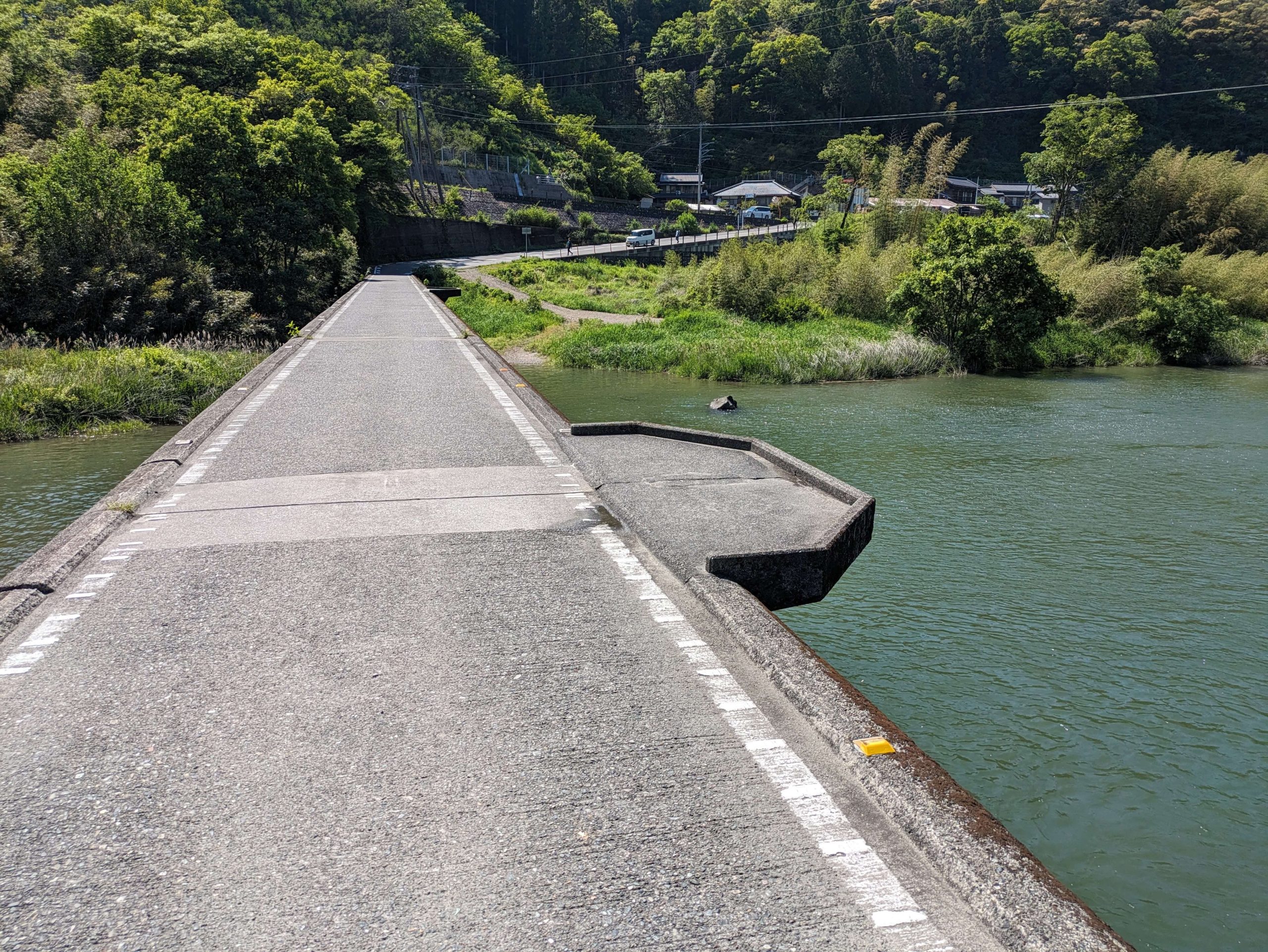
One of the so-called “evacuation areas”. You’re supposed to step here if you need to let a car pass.
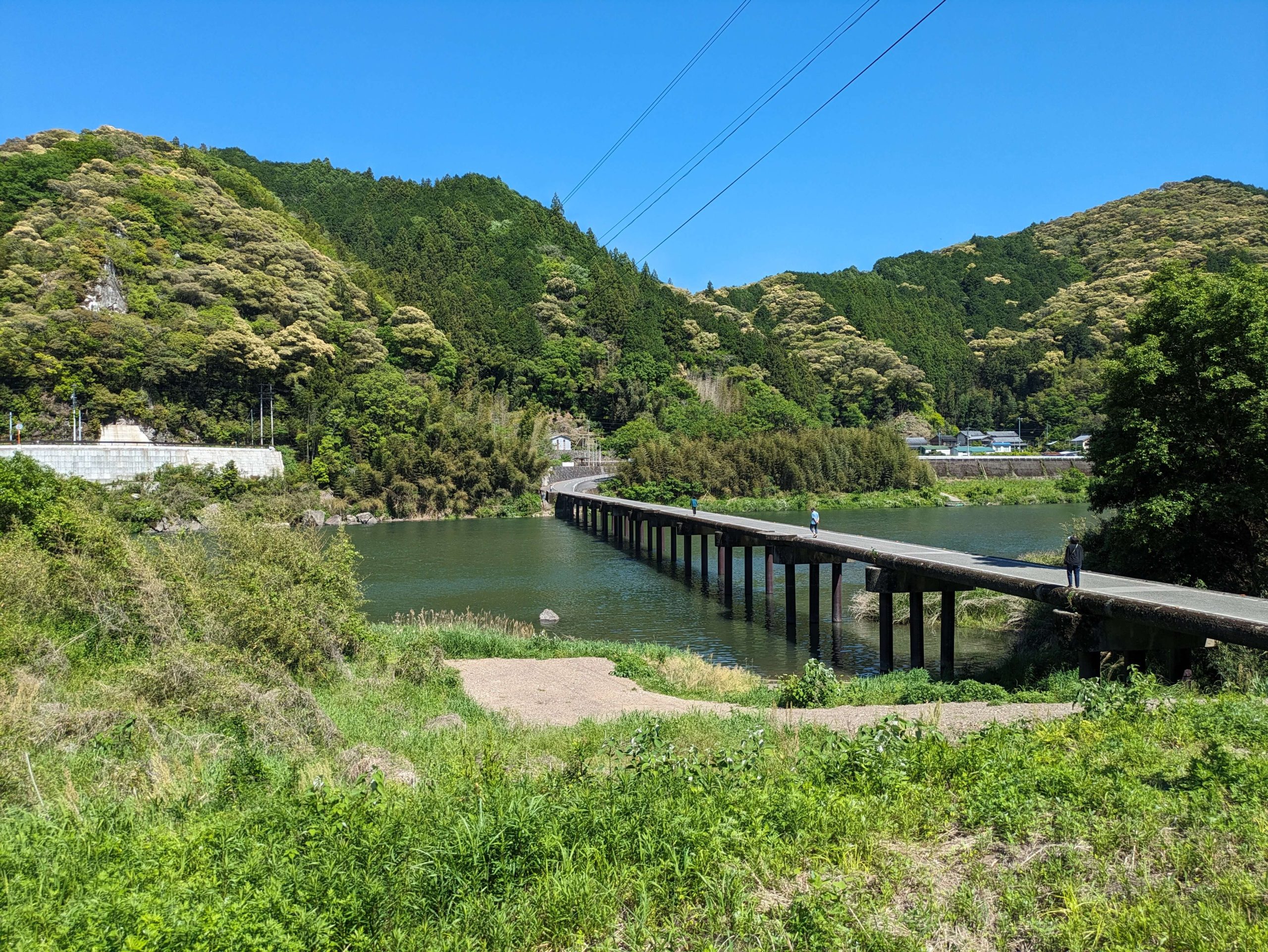
View from the other side.
Around half an hour away was stop #4, Sakawa Town, which had another cool library, along with a unique road sign featuring a cartoon cat telling drivers to watch for animals. Nearby was Nishi-Sakawa Station, which also houses the Niyodo Blue Tourism Council office, where I got couple of eki-stamps. The Niyodo River is famous for its clear, azure blue color, and the station has been featured twice on the Seishun 18 Kippu posters throughout the years. Given the sheer number of JR stations (4500+) in Japan, being featured once, let alone more than once, is quite the honor! (And it actually works to bring in people to the area!)
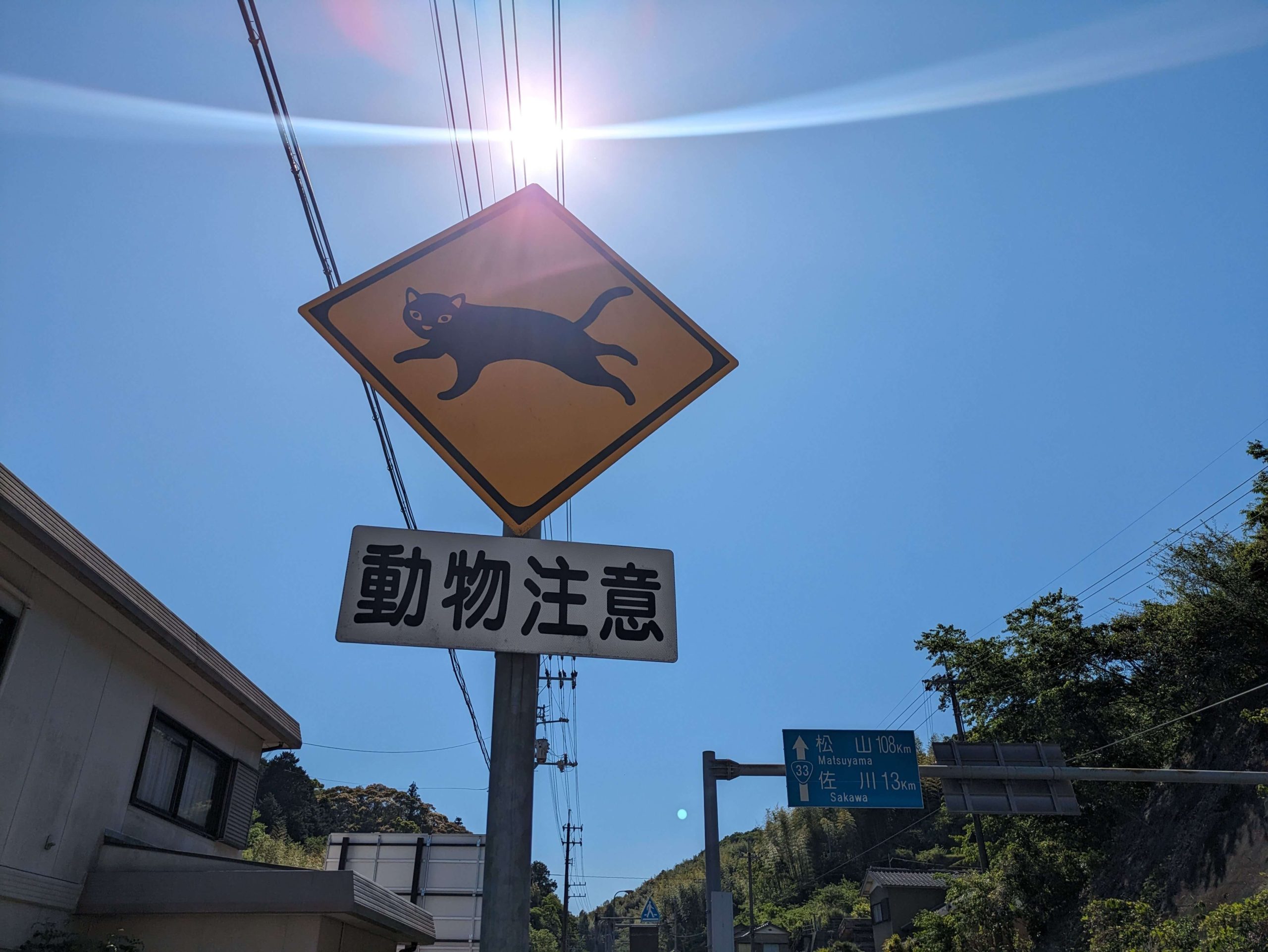
Watch out for cats (and the blinding sun).
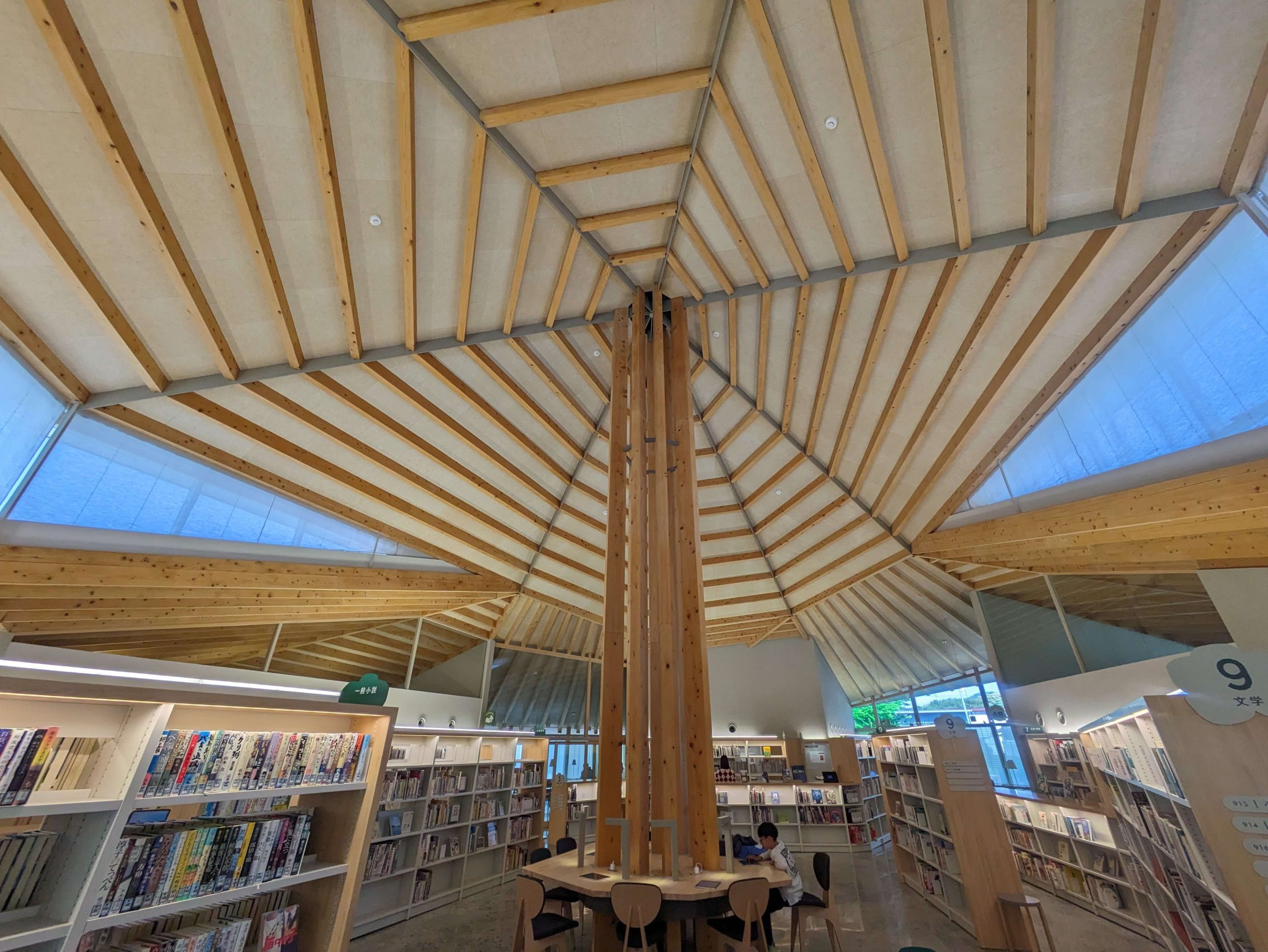
Parasol-like wooden roof over a small reading room in the town library.
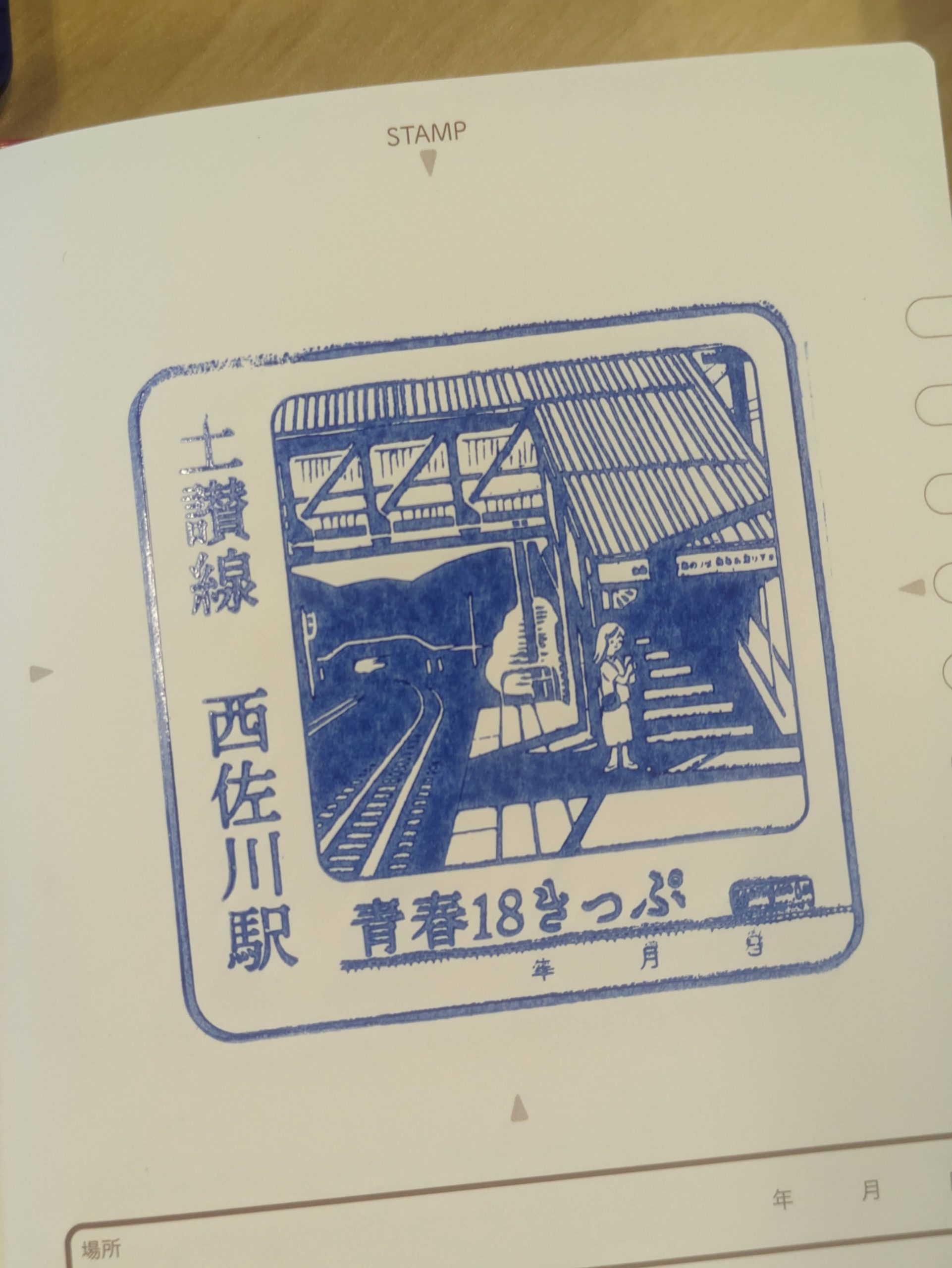
One of the two stamps I got at the station, showcasing their claim to fame: that they’ve been featured in JR’s advertisements for the Seishun 18 Kippu.
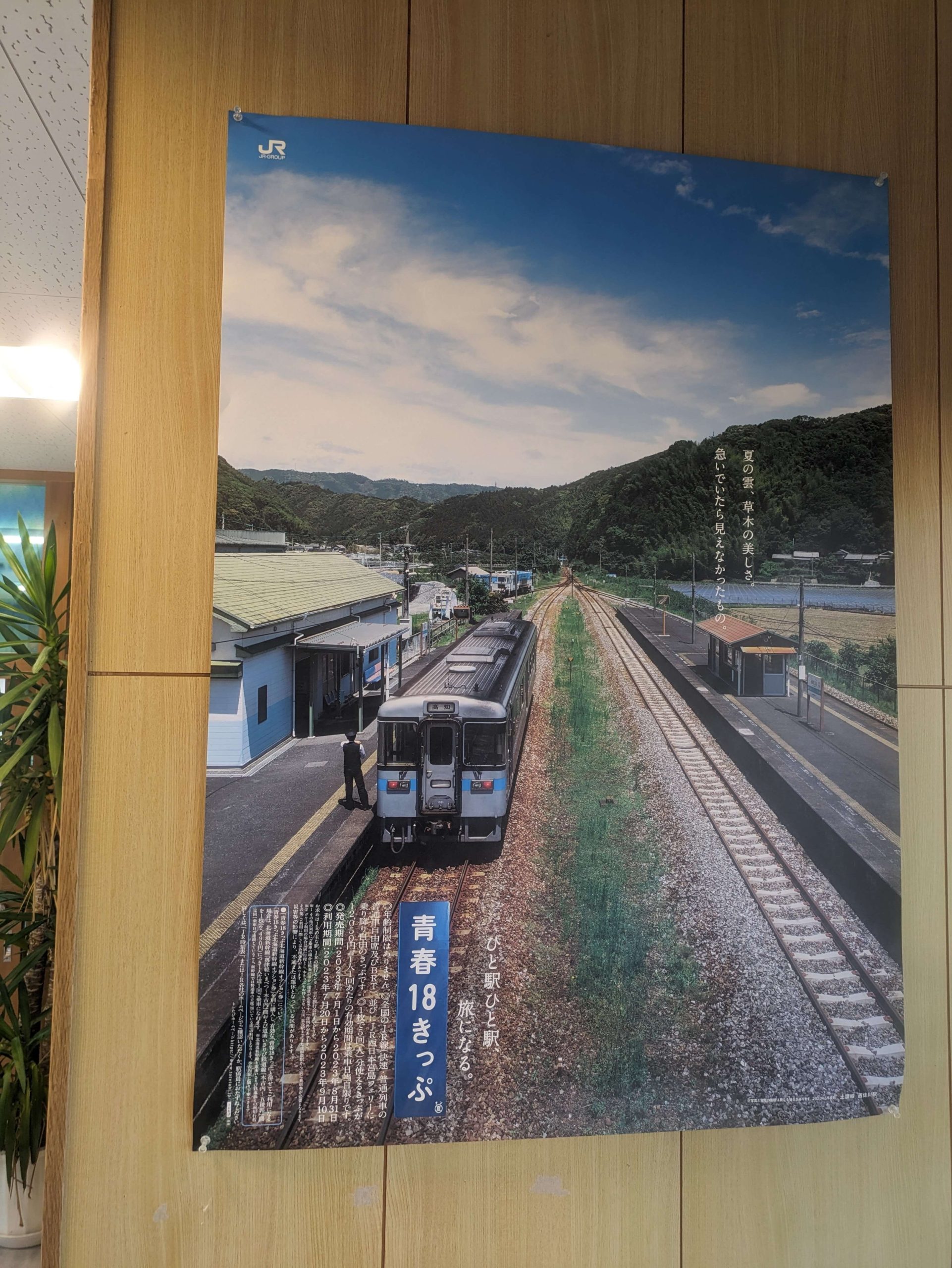
Seishun 18 Kippu poster from Summer 2023. The previous time the station was featured was Winter 1997.
The final stop of the day was Susaki City! Susaki is famous – infamous? – for being the city that birthed Chiitan☆, everyone’s favorite 0-year-old fairy baby otter who posted so many Jackass-style stunts on social media that the city disowned it and demanded it stopped calling itself an ambassador. Then they tried to sue those who were responsible for (they argued) desecrating the city’s image and violating the copyright of their other original mascot, Shinjo-kun, despite the fact both are by the same designer. Seriously, if you don’t know about Chiitan☆ and the history, just go read the Wikipedia article, please.
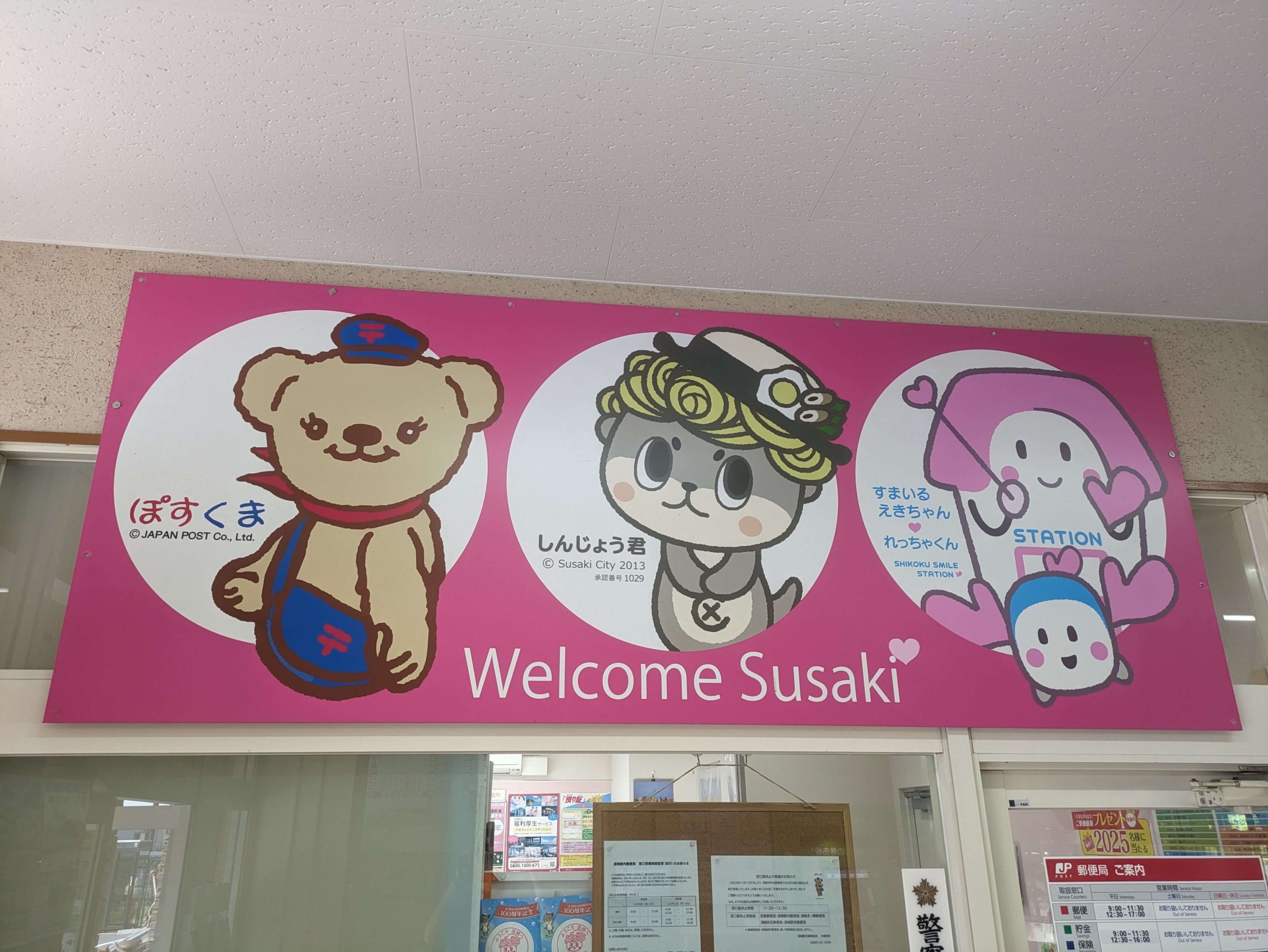
Shinjo-kun and friends, Japan Post’s Posukuma and JR Shikoku’s Smile Eki-chan and Reccha-kun! I’m not sure what it says about me that I knew the names of all of these characters already.
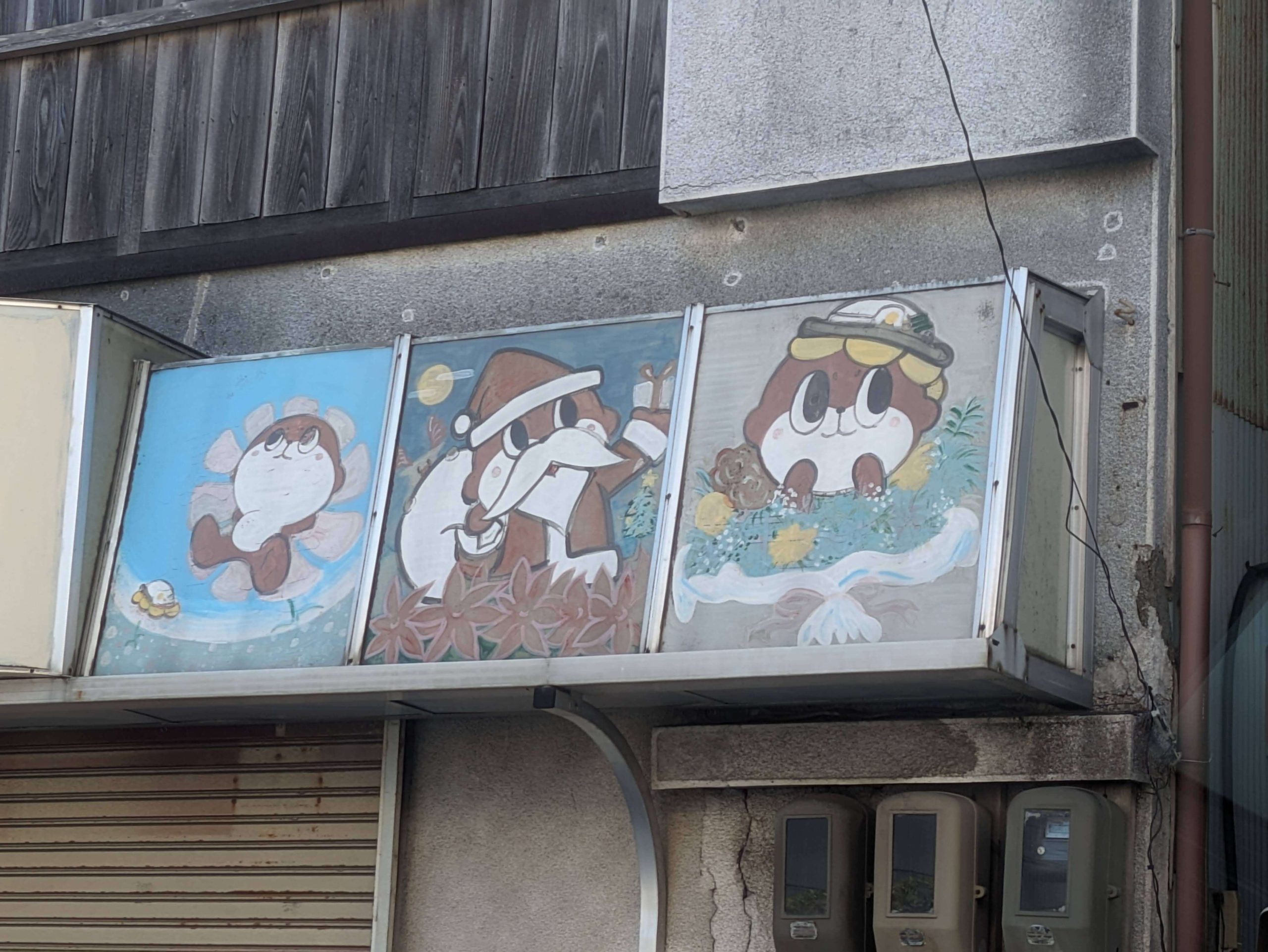
Sooo much Shinjo-kun art throughout the streets. The mascot is named after the Shinjo River, which runs through the city, and which was the last official sighting of a now-extinct Japanese river otter.
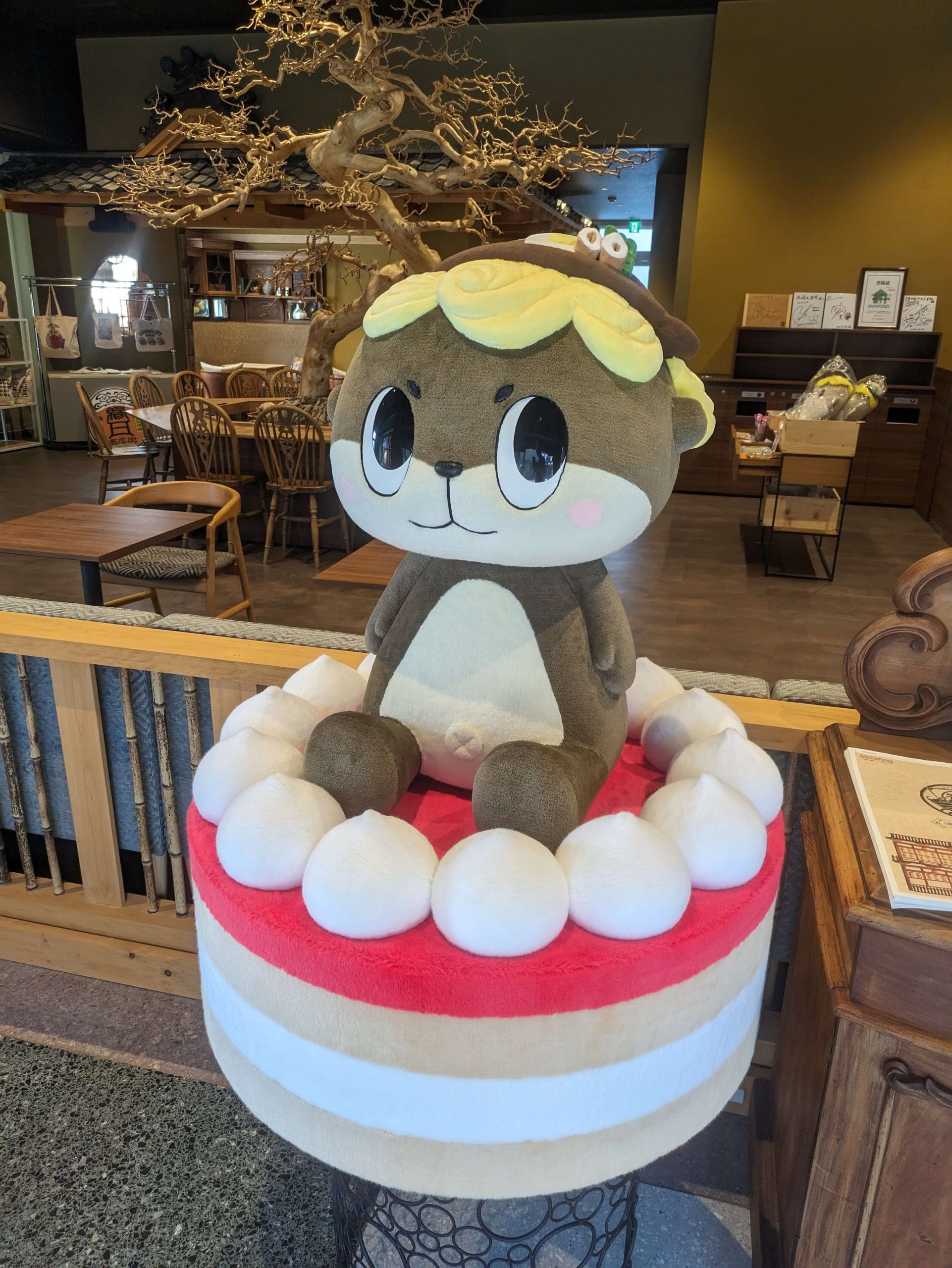
Big Shinjo-kun plushie (sitting on a cake?)
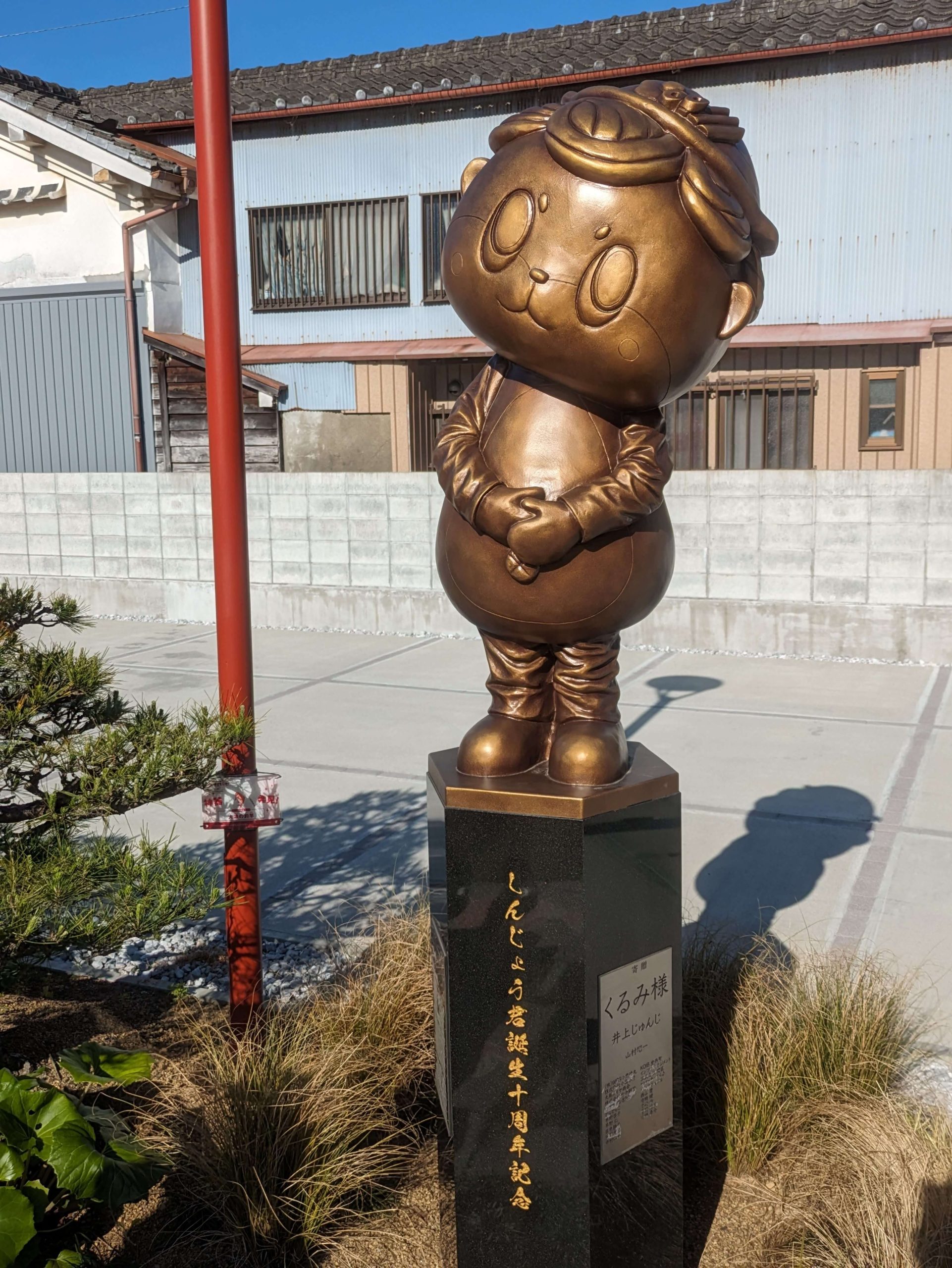
Bronze statue!!! It’s a pretty new piece of art, just erected in 2023.
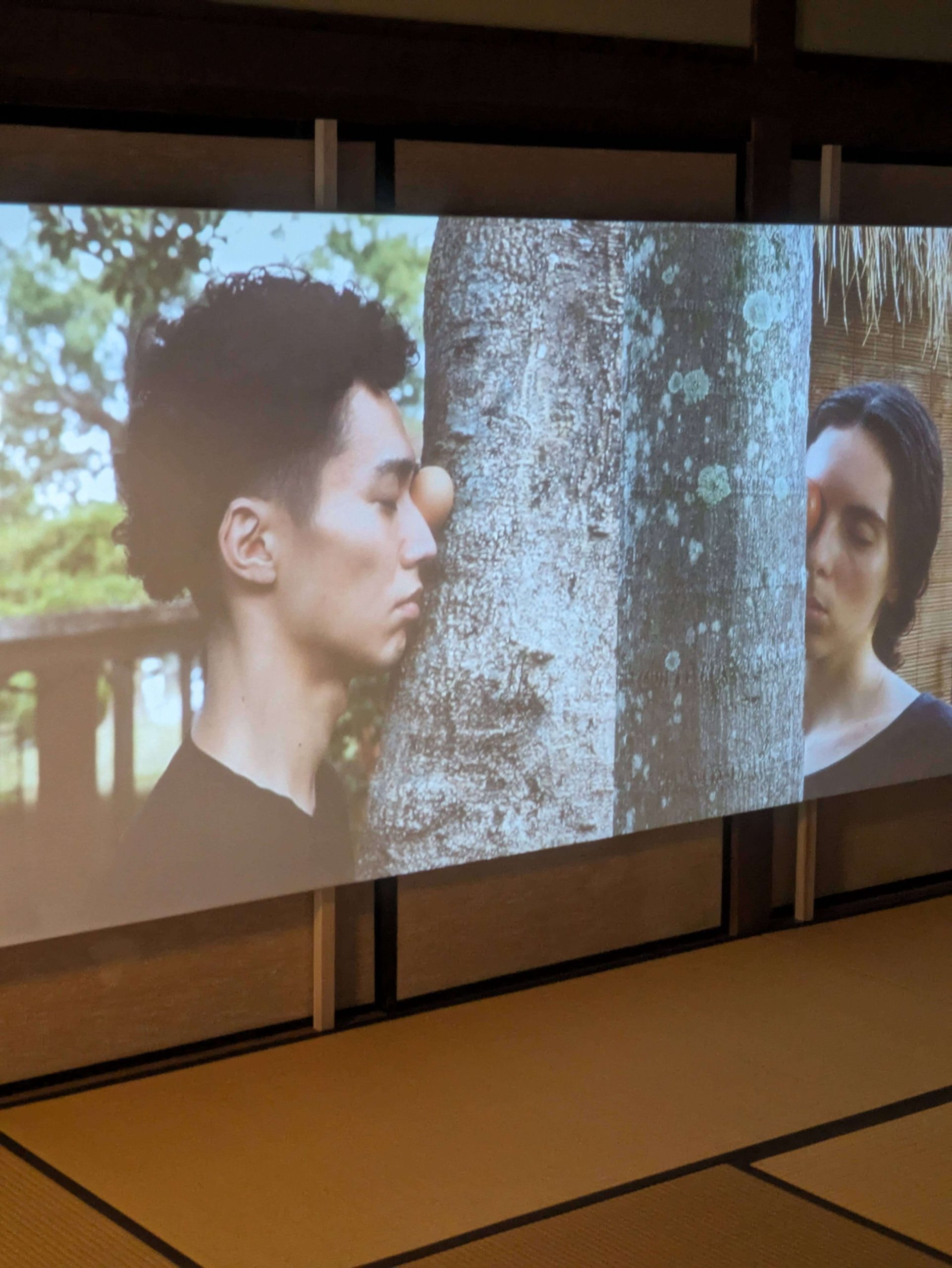
Speaking of art, my friend wanted to go to a street corner art gallery – a renovated former merchant house – in order to get the city’s manhole card, which is distributed by the employees there. There was some very, ahem, interesting creative work showcased in the space. For example, this video of people rotating around a tree while not dropping the eggs that were sandwiched between the bark and their eye sockets…
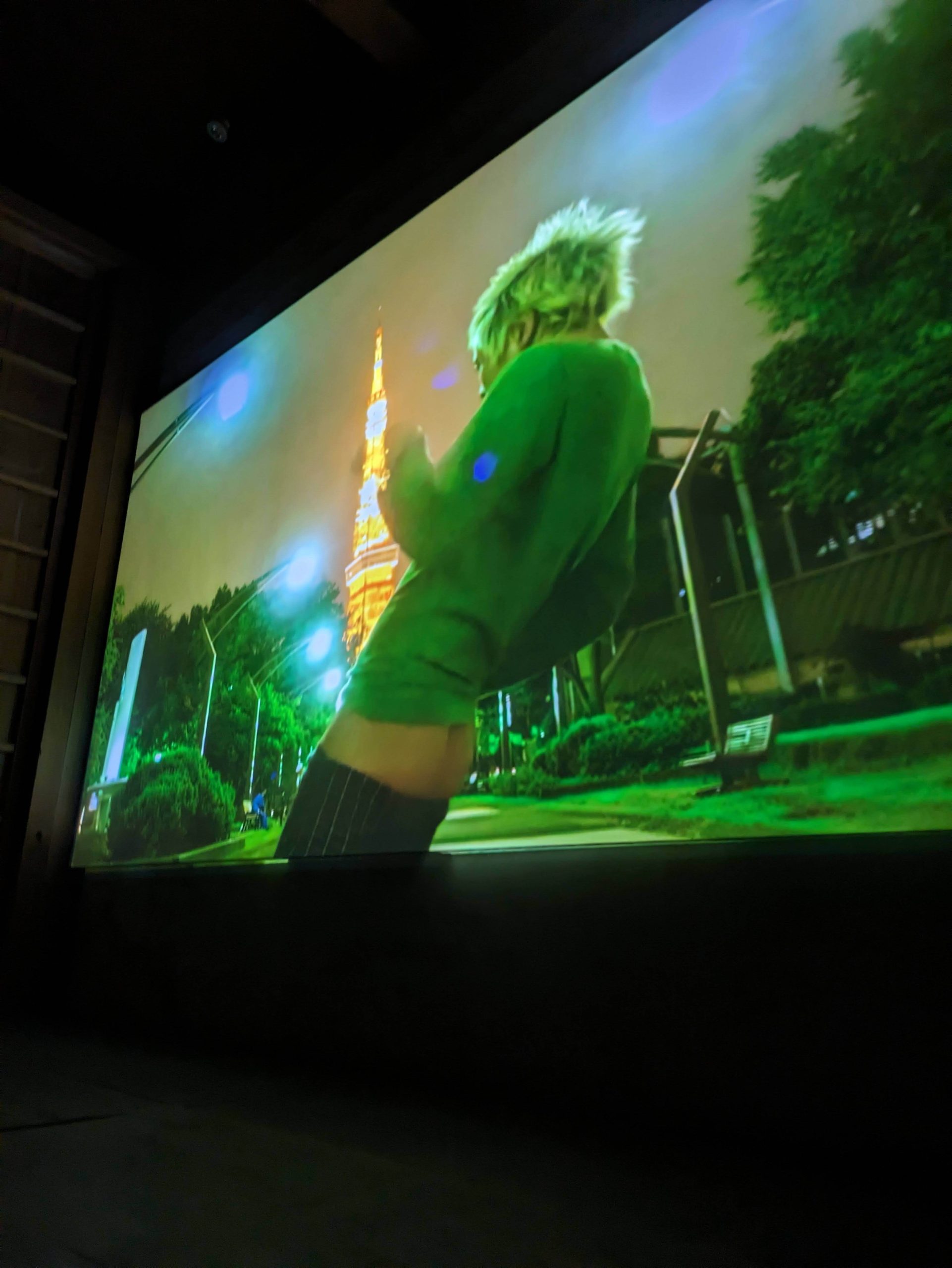
I poked my head up into the second floor of the building via a ladder staircase and came across a dark room with nothing except a video projection on the wall of this man with his pants down jacking off his very phallic Tokyo Tower. Ooooookkkkk…….. (Not gonna lie, I love weird art like this. This one was just so unexpected, ridiculous, and made me laugh so much. What the hell, Japan.) But seriously, between this and the Chiitan feud and everything, someone please tell me why/how Susaki is so fucking weird.
We drove back to Kochi City after this and we parted ways. We had both wanted to, abstractly, go to Shikoku Karst, but agreed it was way too far away and there wasn’t that much time in the day remaining. I’m very lucky to have had a friend who wanted to show off her prefecture to me, and who came up with an inventive tour full of things that were right up my alley!
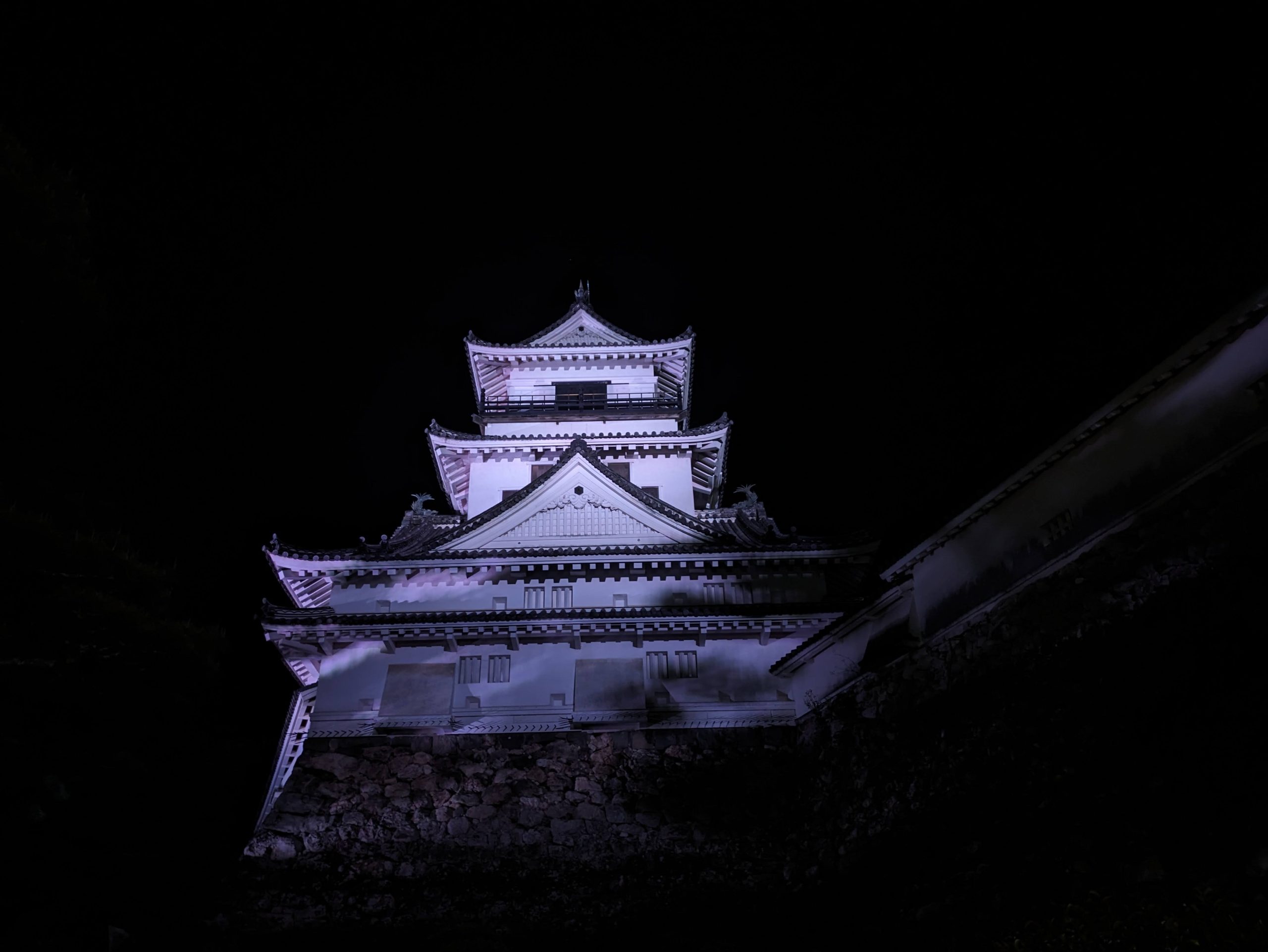
That night, I made the short trek up the hill to see Kochi Castle up close. I had planned to go the previous night but the lights turned off for the night right as I was walking through the castle grounds toward it!
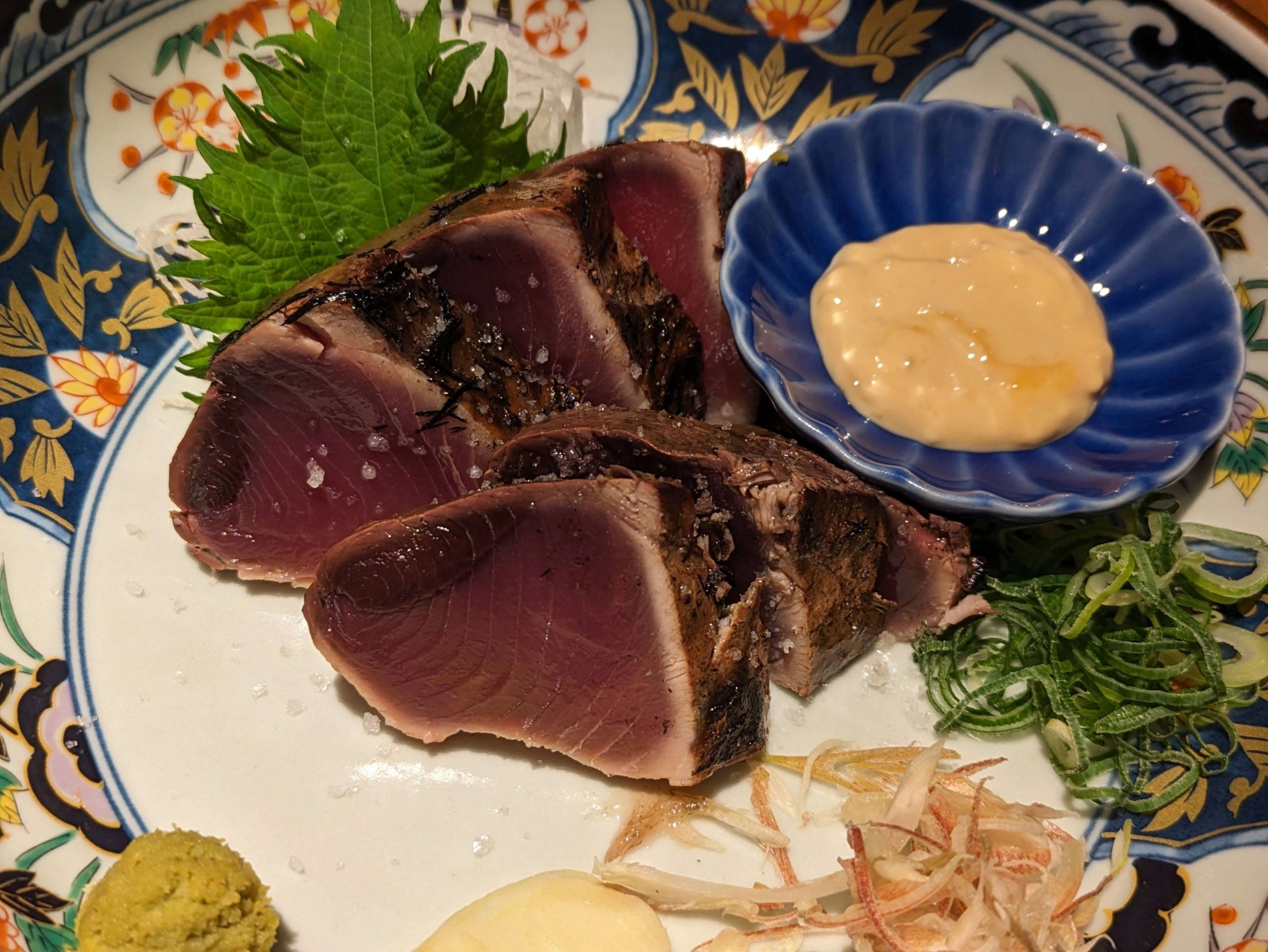
And yes, I did get katsuo no tataki AGAIN, one final time. This time was at Myojinmaru, a chain that’s in Shikoku and a few other prefectures on Honshu. It was good, not great, but was the only spot close to me that had it and which was open at 10:30 p.m. I have tried the dish at a different chain in Matsuyama, though, and will say that the quality was not that good. If you want proper katsuo no tataki, go to Kochi, end of story.
Saturday, May 3, 2025
Today’s transit:
8:20 Kochi / Shimanto 1 (JR Dosan Line + TKT Nakamura Line) → 10:04 Nakamura
🚌 10:14 Nakamura / KSK Ashizuri Line Bus → 11:10 Plaza Pal-mae
🚌 11:15 Plaza Pal-mae / KSK Shimizu-Sukumo Line Bus → 11:36 SATOUMI-mae
🚌 13:10 SATOUMI-mae / 〃 → 14:11 Sukumo
14:37 Sukumo / TKT Sukumo Line → 15:08 Nakamura
15:36 Nakamura / TKT Nakamura Line → 16:33 Kubokawa
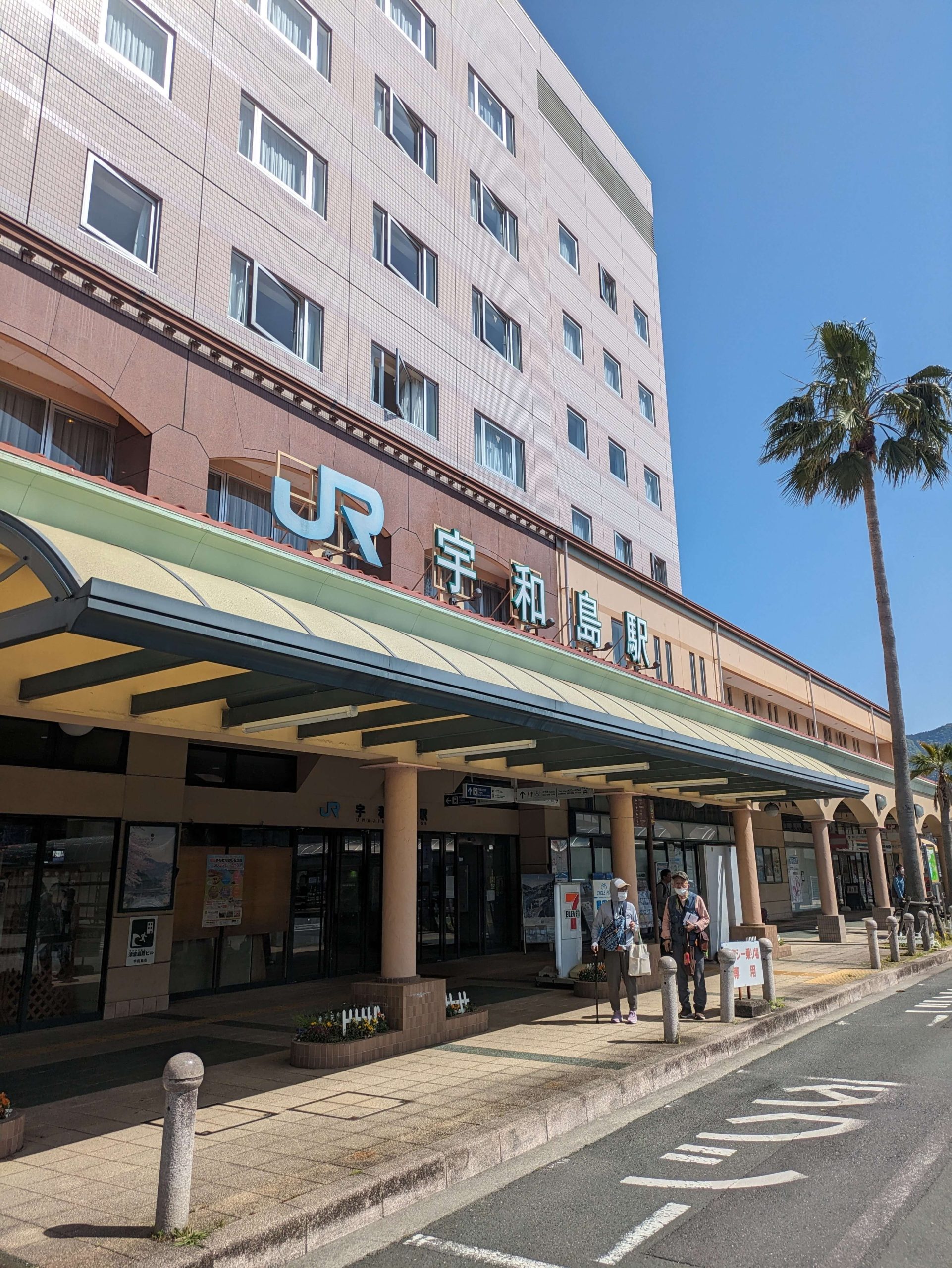
17:41 Kubokawa / JR Yodo Line (thru to Yosan Line) → 20:07 20:09 Uwajima
Two points of business on the agenda for today: 1) Go to an extremely-out-of-the-way aquarium that I’d wanted to visit ever since I read a wonderful indie manga named after it in 2018, and 2) finish riding the two remaining Tosa Kuroshio Tetsudo lines, and then take the JR line over to Uwajima, namesake of everyone in Seattle’s favorite Asian grocery store Uwajimaya.
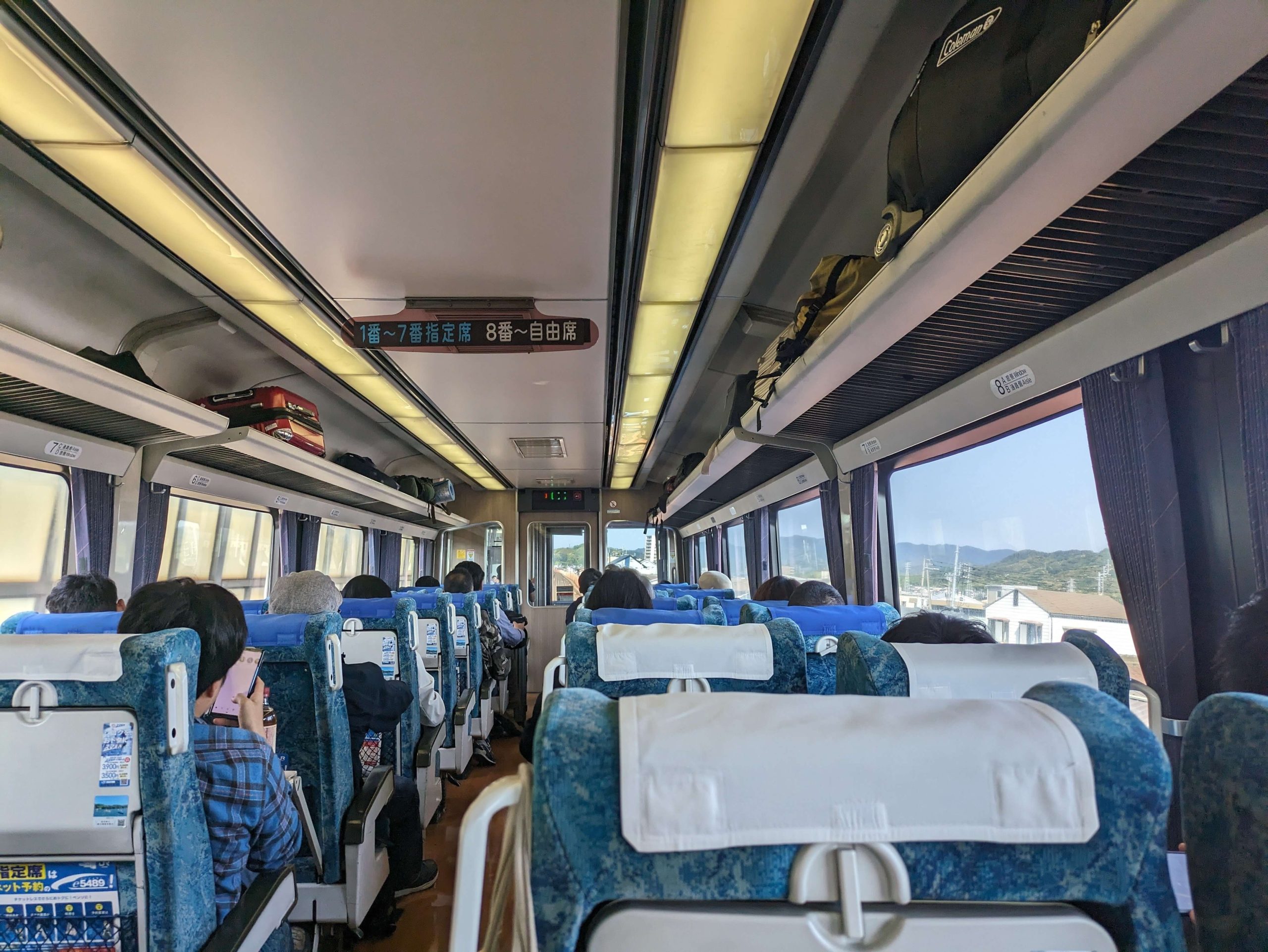
I took a limited express train bright and early this morning out of necessity, in order have time to squeeze everything in today. This setup of “only the front half of this car is reserved seating”, as the hanging sign shows, is pretty common on JR Shikoku.
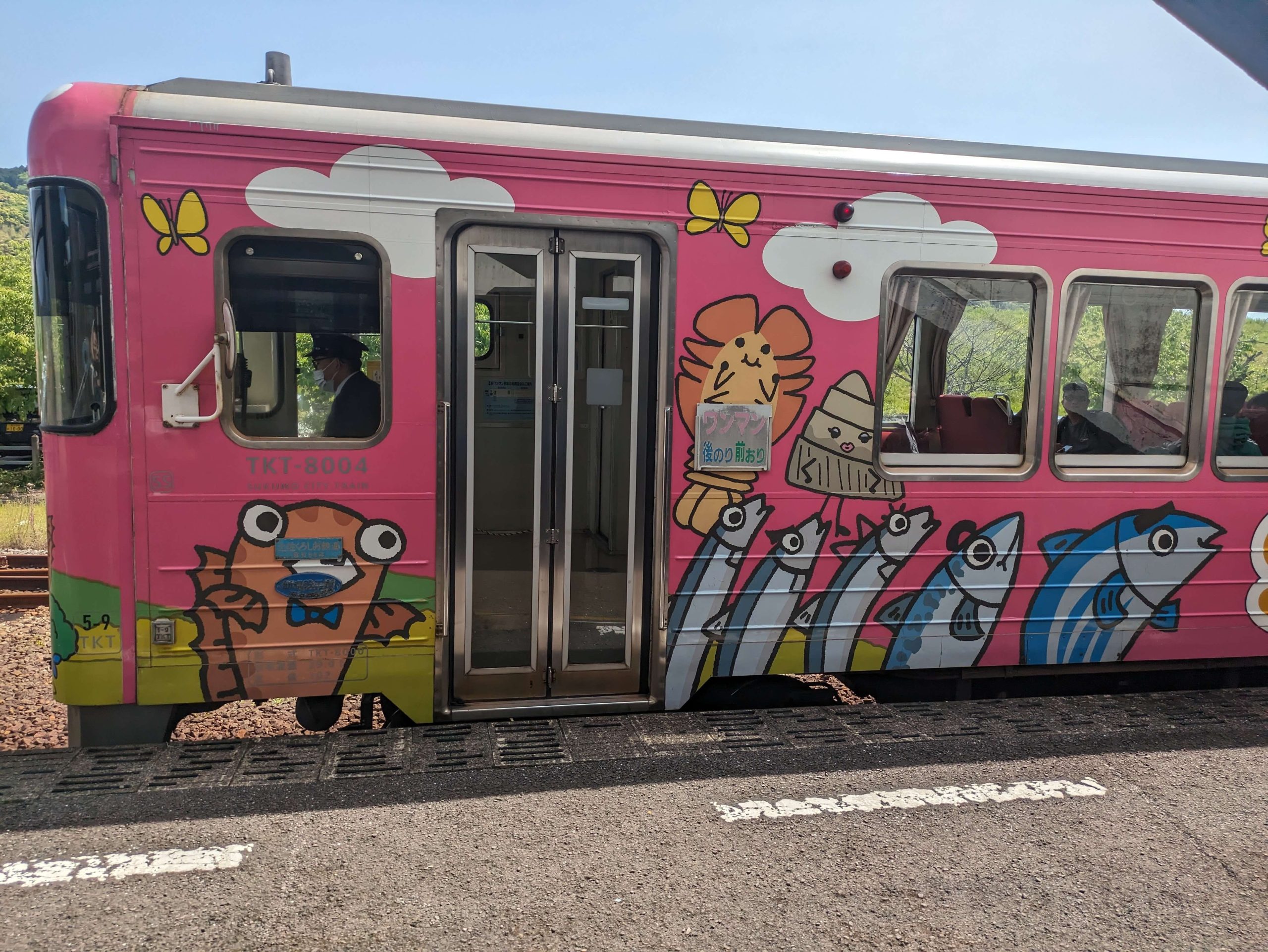
My train ran on the JR line up until Kubokawa Station, then continued onto the tracks of one of Tosa Kuroshio Railway’s lines to Nakamura. We passed this cute local train headed the other direction! I’ll be riding it later today.
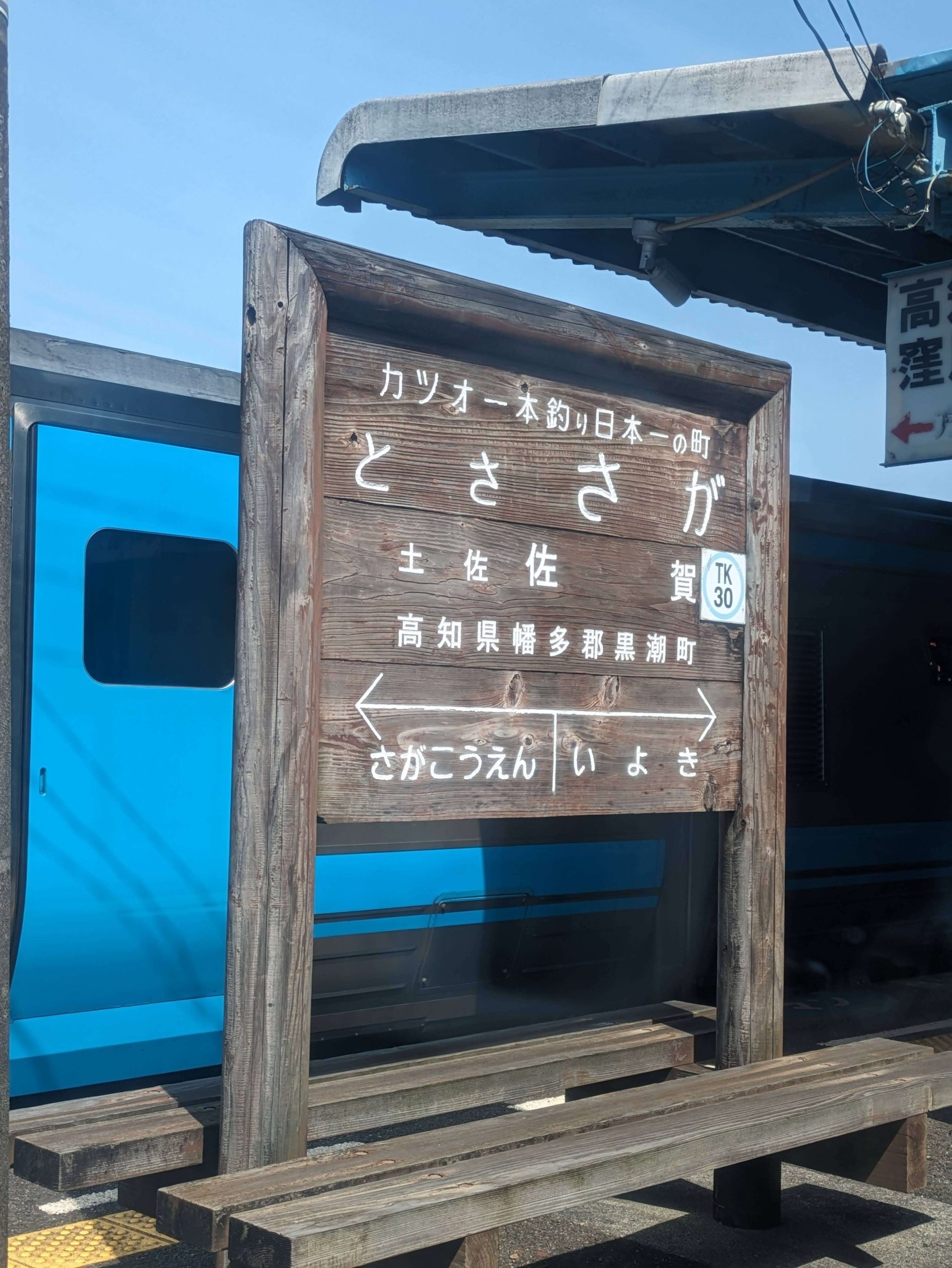
Passing Tosa-Saga Station. Nice old-school wooden signs! The old provincial name “Tosa” is added to distinguish it from Saga Saga Station in Kyushu (and is written in comparatively smaller kana, as it’s a prefix).
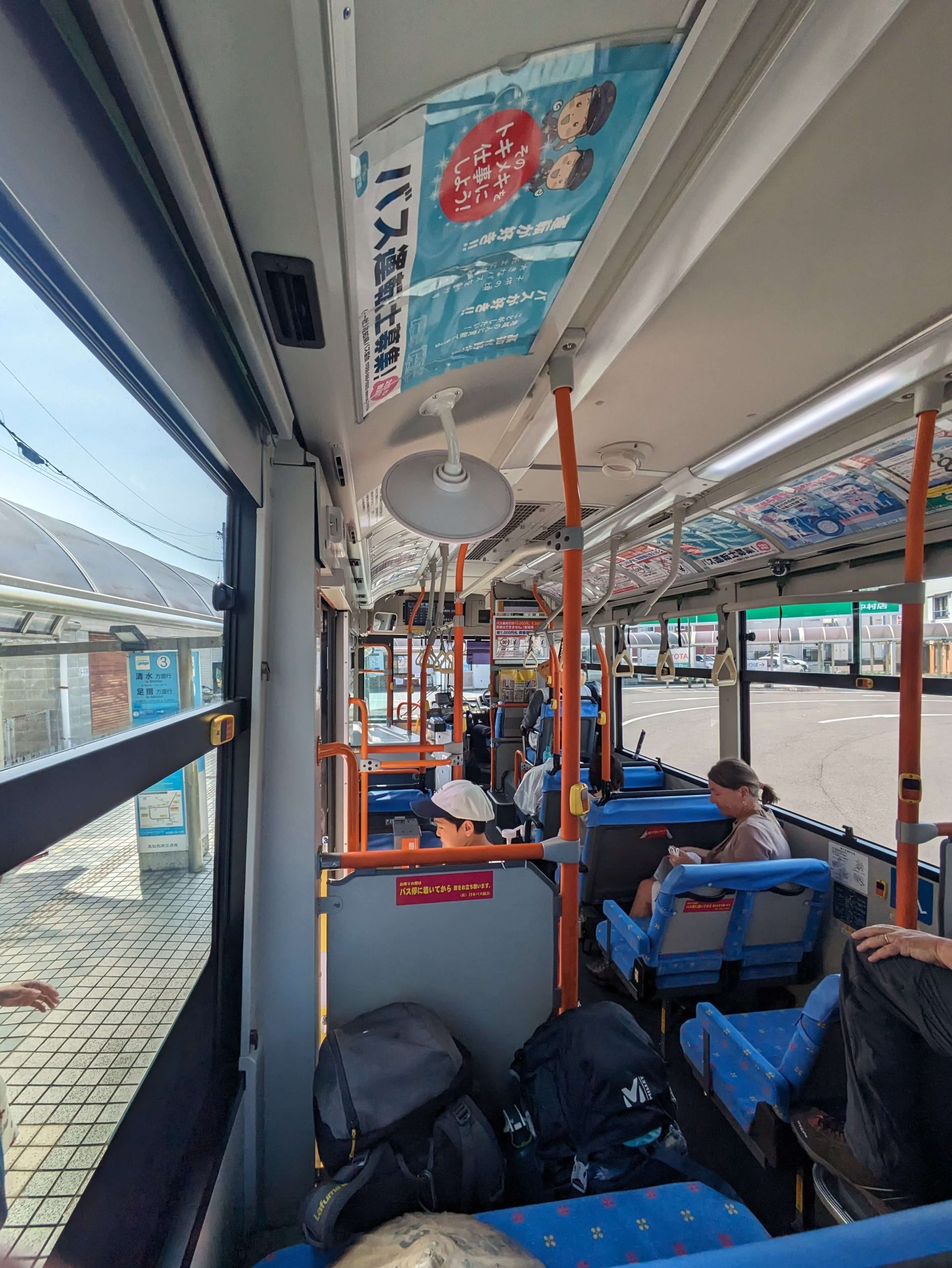
After this, I boarded the first of a few buses today, quite the tight fit.
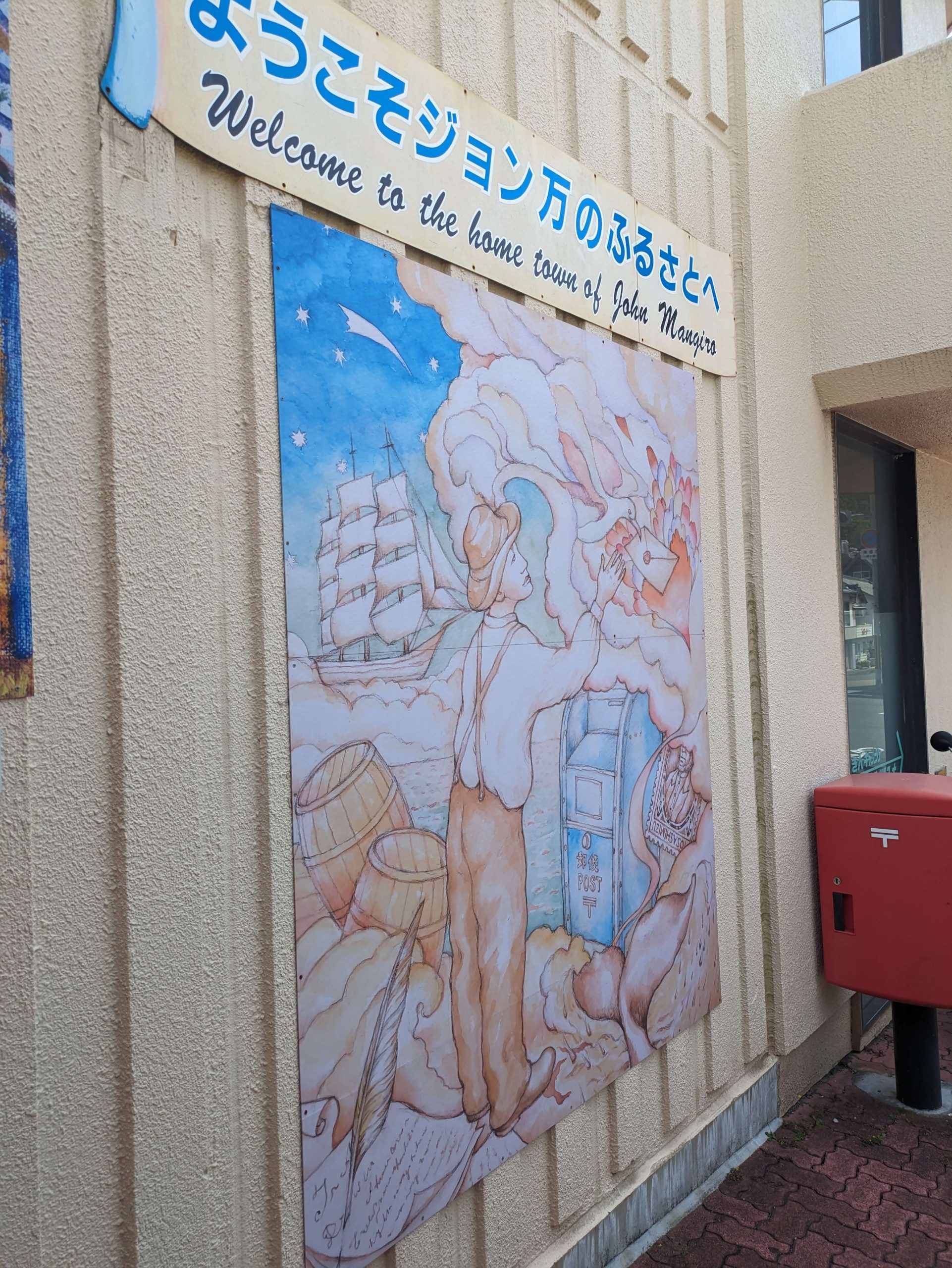
I changed from bus #1 to bus #2 in front of a shopping center called “PLAZA PAL” in Tosashimizu City. It’s the birthplace of Nakahama Manjiro, aka John Manjiro, one of the first Japanese people to visit the US. When he returned to Japan, he was made a hatamoto and served as an important translator during the opening of Japan. btw very relevant because i’m watching shogun as i write this blogpost lol
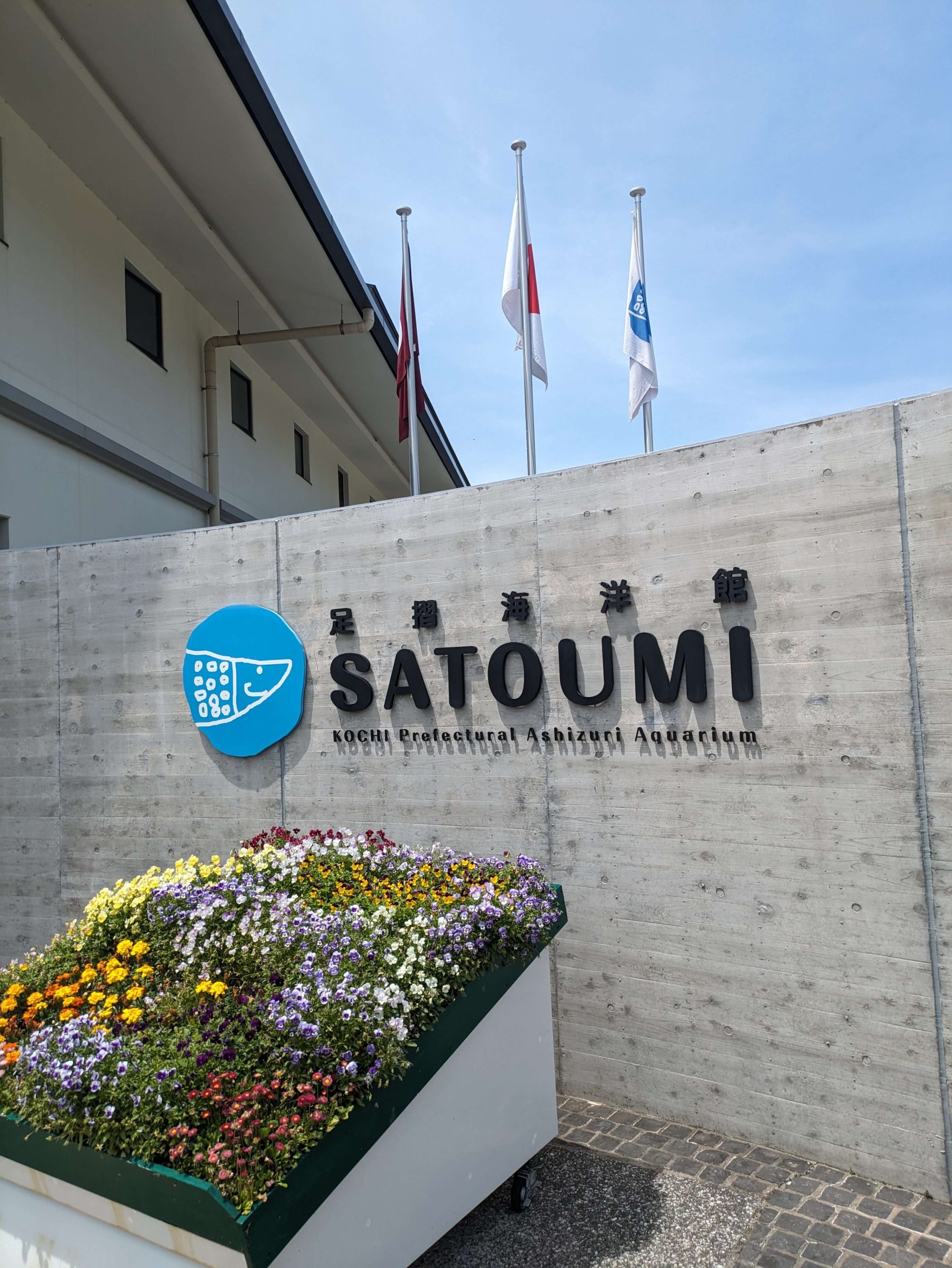
Made it to the aquarium! Well, it’s not actually this aquarium I’m here for…
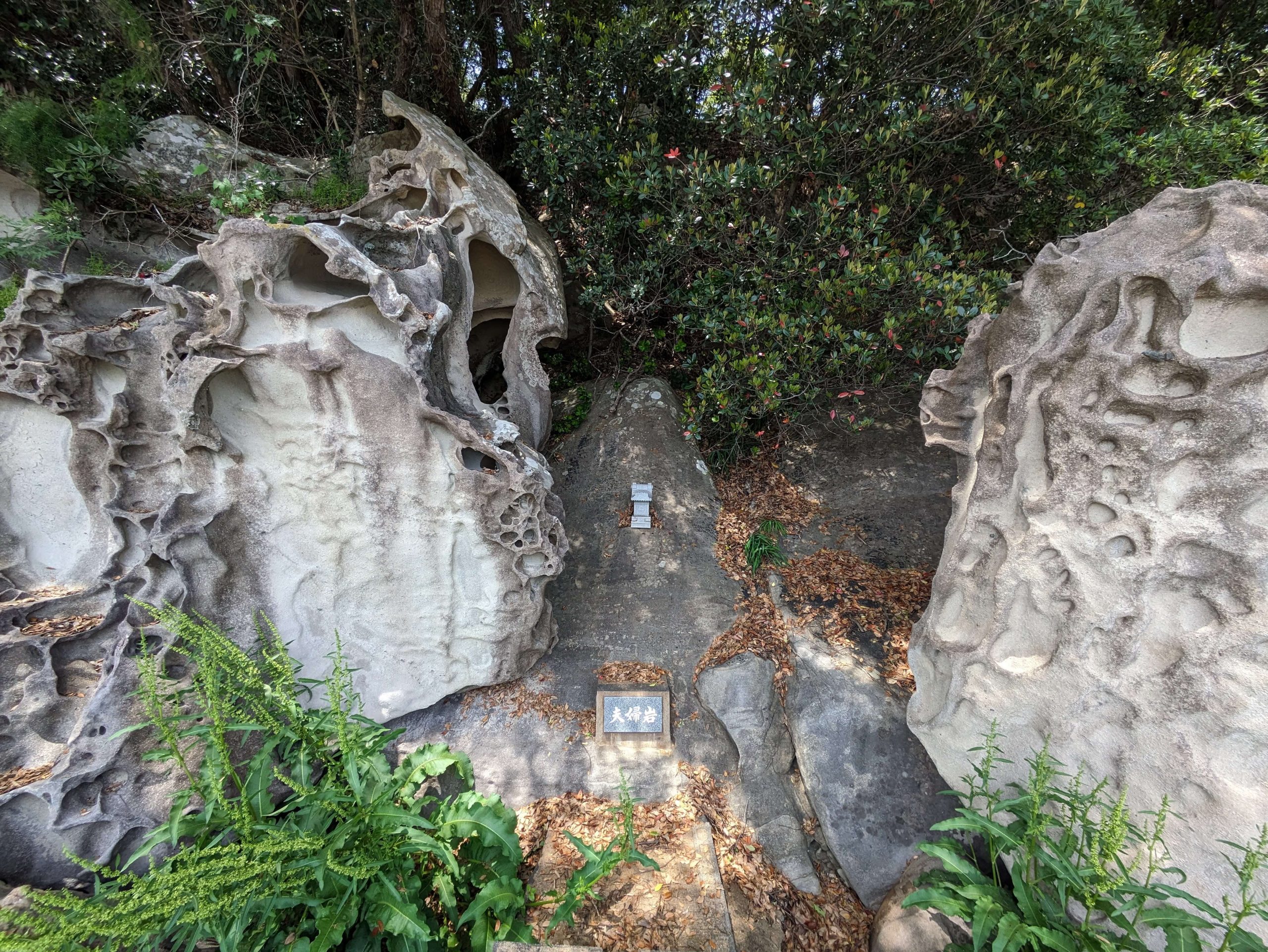
Started walking to the shore and there were some very cool rocks. I always like cool rocks. (And am so happy to have a geologist friend who tells me about them when I send her pictures.)
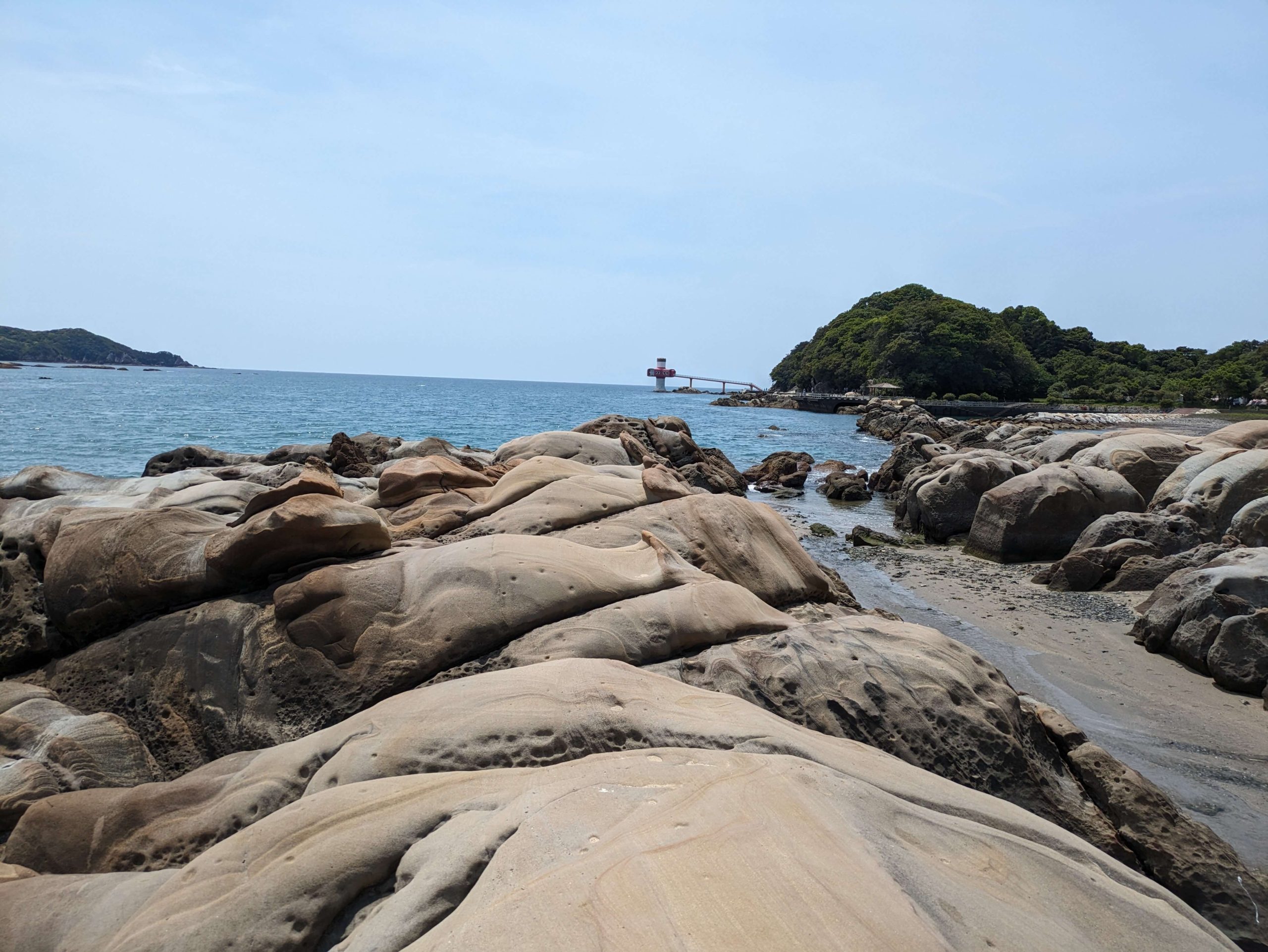
More cool rocks with something interesting off in the distance…!
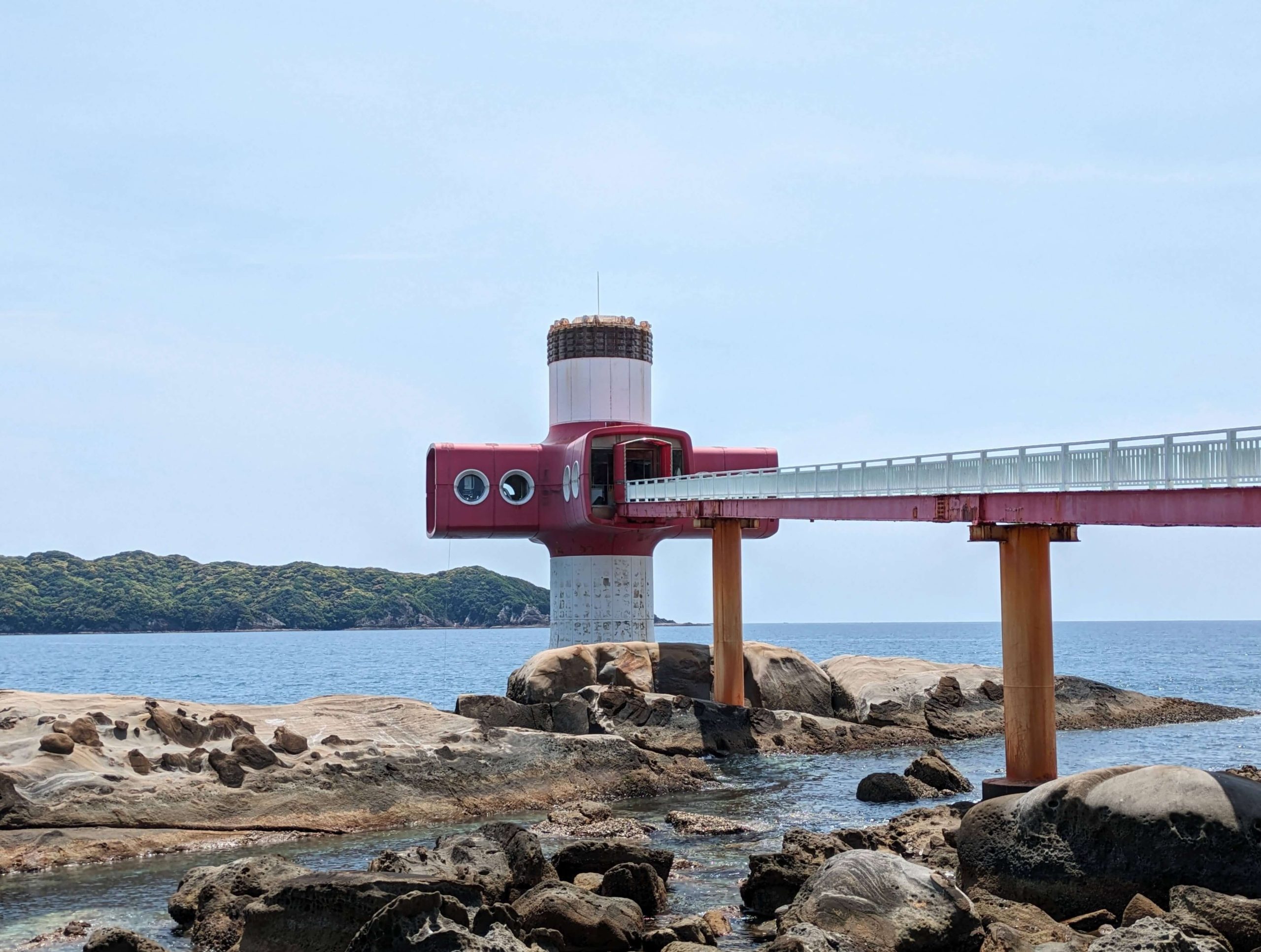
My destination was another crazy piece of architecture: the Ashizuri Underwater Aquarium (Kaiteikan).
Background story cutaway time. Ashizuri Suizokukan (“Ashizuri Aquarium”) is the name of a slice-of-life one-shot indie manga from 2013 by pseudonymous artist panpanya, featuring a loose story comprised of small, surrealist vignettes. It’s also the name of three of the chapters contained therein, one of which features the author – or perhaps author surrogate, or even the vaguely defined blob of pencil lines that make up the character whose wanderings we’re invited to follow… – recounting visiting this aquarium and neighboring observatory on a trip to Kochi, mostly in prose along with some dithered old photos. panpanya writes:4Translation credit goes to laika, a fellow fan of this type of manga, who’s now become a friend and whom I’m hanging out with on a trip later this year! :)
“The Ashizuri Seafloor Aquarium is, in my personal opinion, what I believe to be the coolest building in all of Japan. Rather than calling it a cross shaped lighthouse coming out from the surface of the sea, perhaps it would be better described as something that makes you think of a spaceship or some sort of base, a tower with a shape that seems like some out of this world joke, sticking out from the water. It’s a truly groundbreaking system they have. From the entrance that is located in the upper part of it, you descend a staircase to the ocean floor where you’re able to observe the sea in its natural state through a glass. As an educational establishment it’s incredibly interesting and it has a bit of a different charm than an aquarium.”
I first came across panpanya’s work in late 2017, read Ashizuri Suizokukan (thanks to a wonderful scanlation) as my introduction, and had been wanting to visit the namesake of the book ever since. I remember looking it up on Google Maps at the time, thinking, “wow, this place is so far away from easily accessible public transit, on the far tip of remote Japan…” and feeling a bit discouraged, or unsure if I’d ever really make it. But, today, I did.
The manga isn’t licensed in English, but two of panpanya’s later works are, thanks to DENPA, who’ve been translating and publishing underground & independent manga since 2018; panpanya’s An Invitation from a Crab (a spiritual successor/follow-up to Ashizuri Suizokukan) was part of the small lineup of titles they announced along with their founding. I had planned to bring a copy of Ashizuri Suizokukan with me to the aquarium itself and take a commemorative photo… until a couple days before my trip when I was packing and realized, oh my god, I didn’t actually own a physical copy of the book. I’d just read it digitally. Dumb eli. So alas, instead I brought along another book of theirs, Guyabano Holiday, which I did own but hadn’t yet read in English. Lots of time on trains is a good time for books, after all.
If you’re looking for a quick escape from this blogpost, read this one chapter from Ashizuri Suizokukan: “Creatures of the Machine Age”. It’s about vending machines, sort of. It’s pretty phenomenal and has stuck with me for many years.
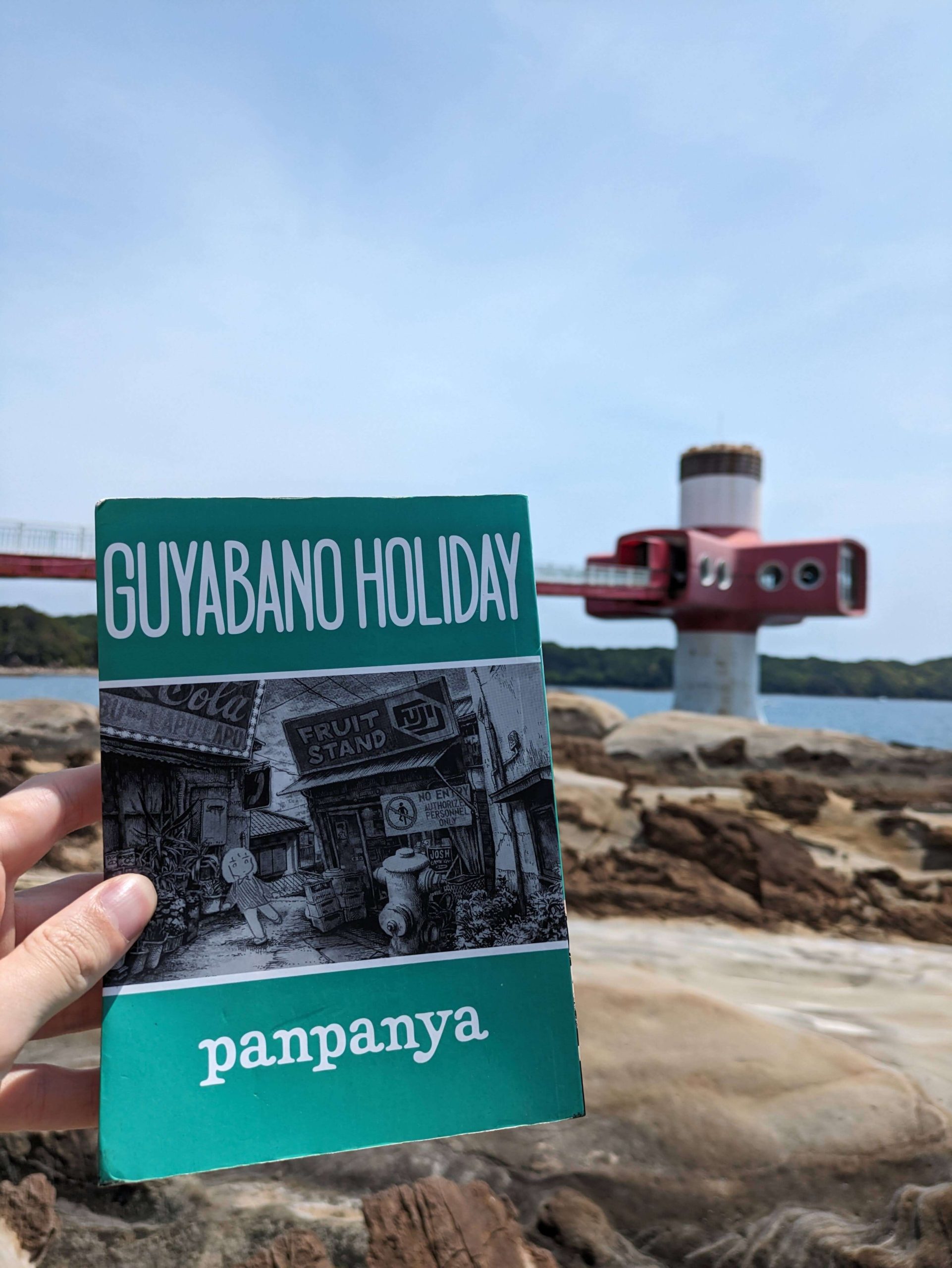
Hey, it’s still a panpanya book! Close enough, right?!
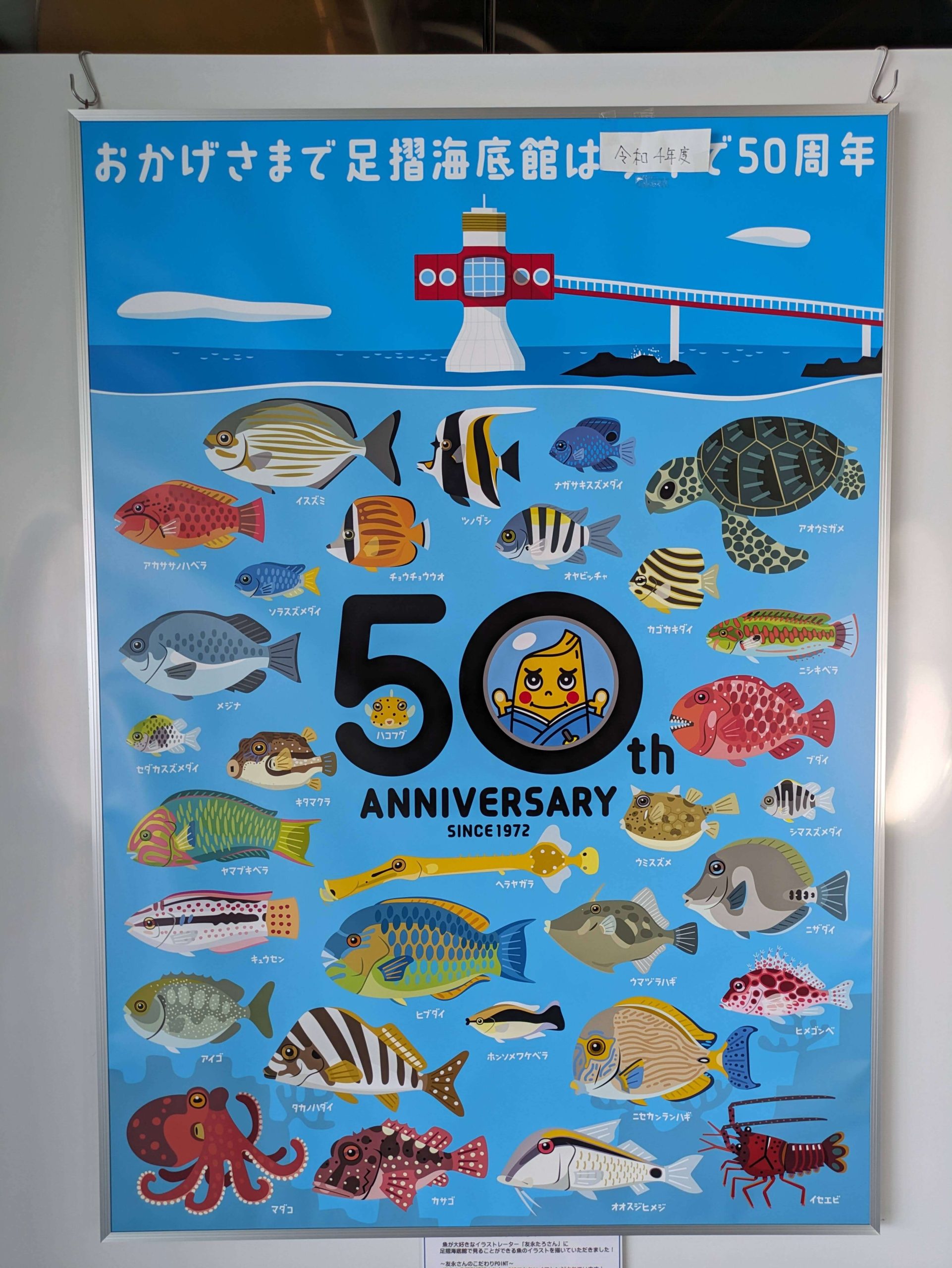
The small aquarium was still displaying poster for its 50th anniversary in 2022, showing a bunch of types of fish that you can see in the surrounding area.
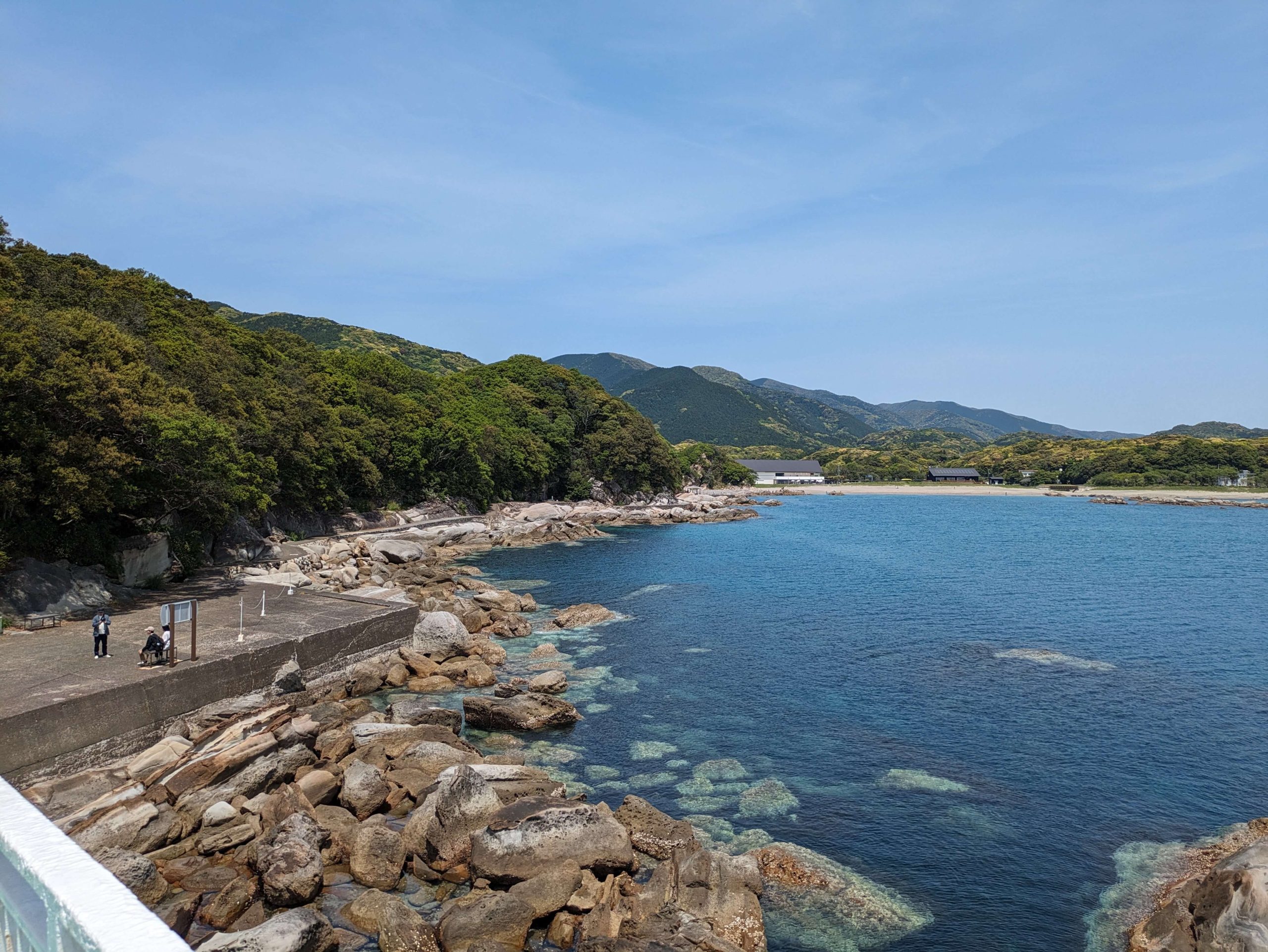
View from the apparently-not-structurally-sound connecting bridge (more on this later), looking back toward the direction of the other aquarium.
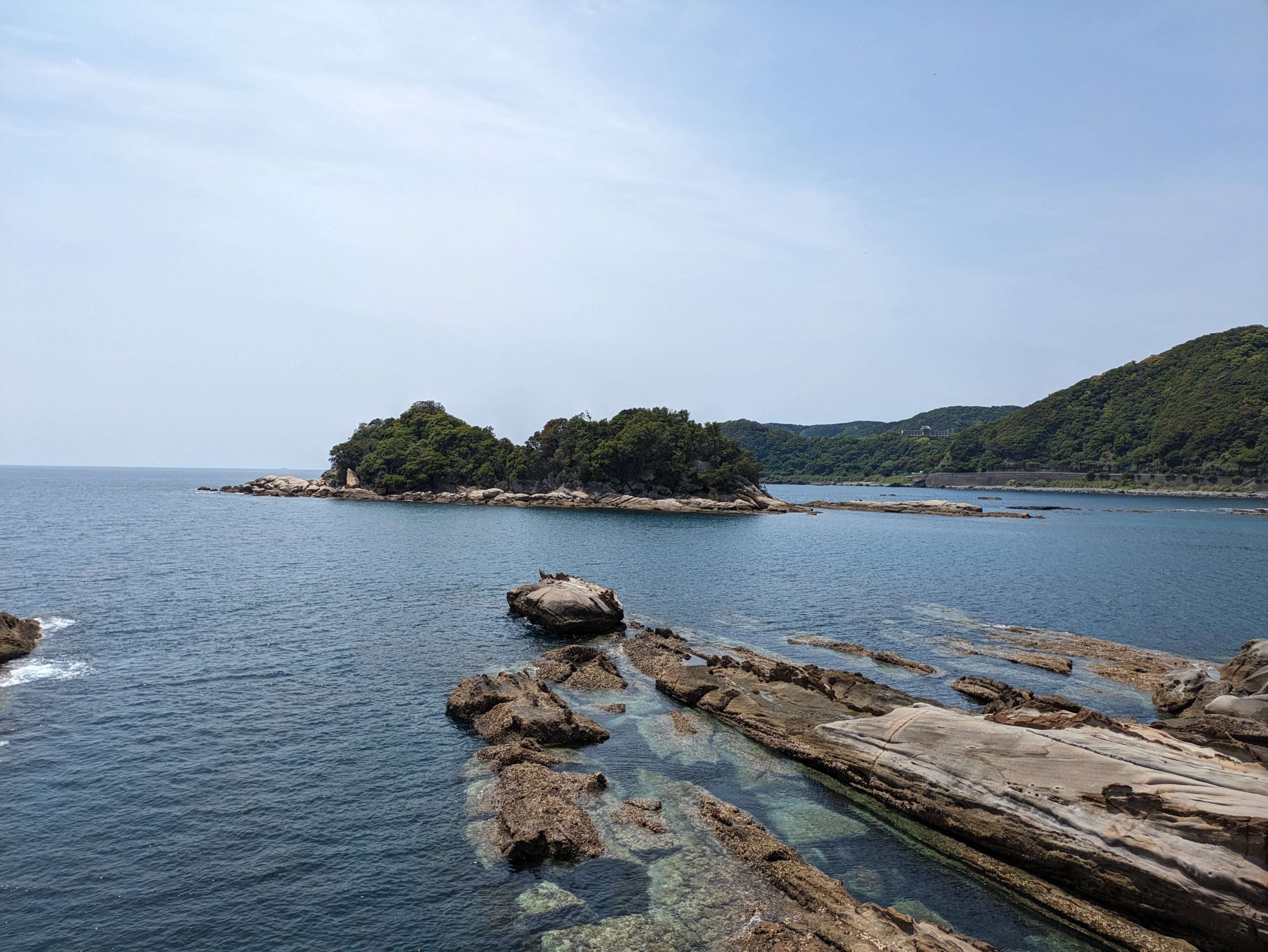
The eastward view out into the sea, along Coast Ashizuri. “Ashizuri”, by the way, literally means “feet-scraping”. You can see why!
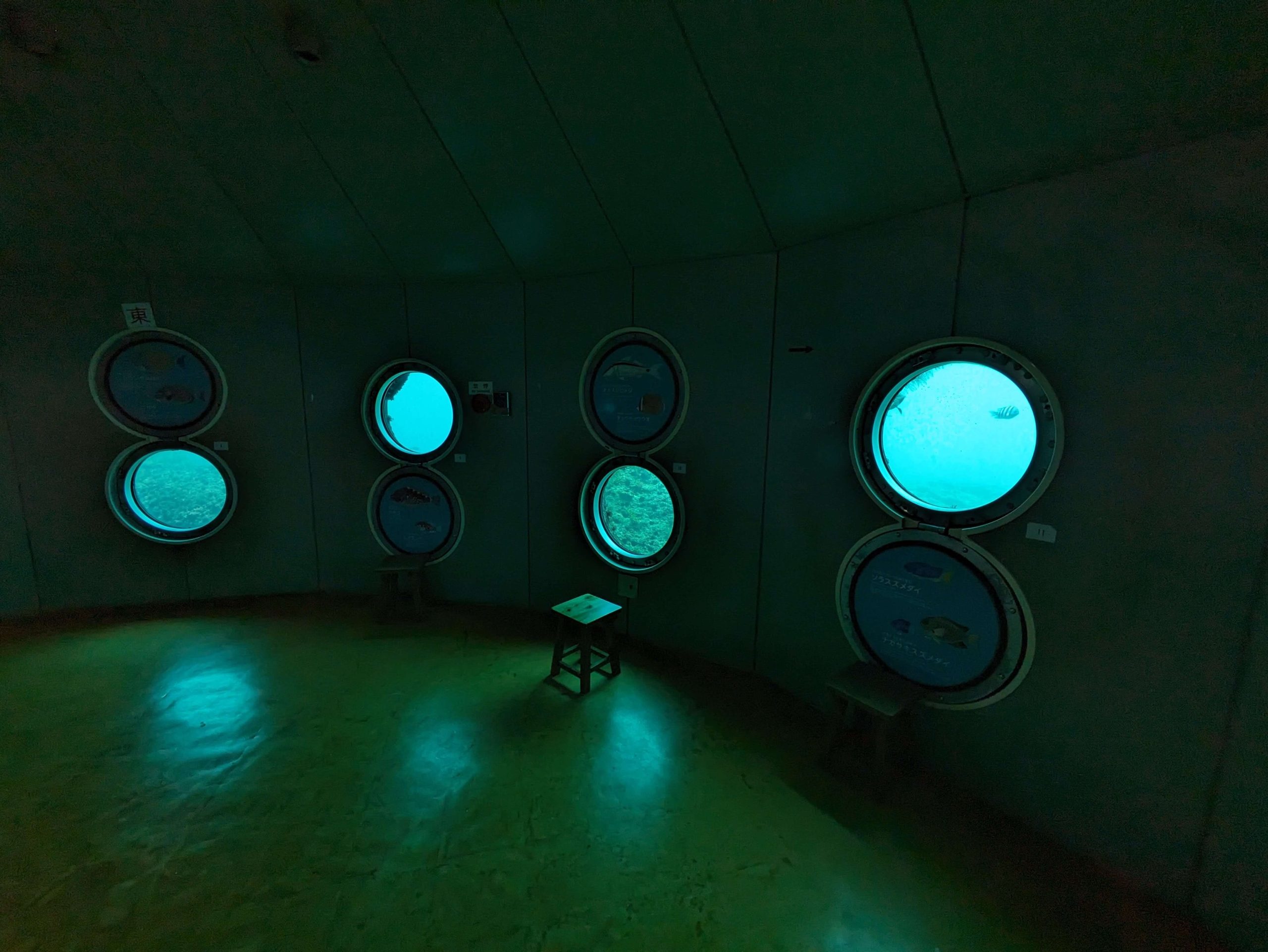
At the bottom of the 64-step double-helix staircase lies a single, dark, undersea room lit by the blue glow of the ocean. Such a cool place.
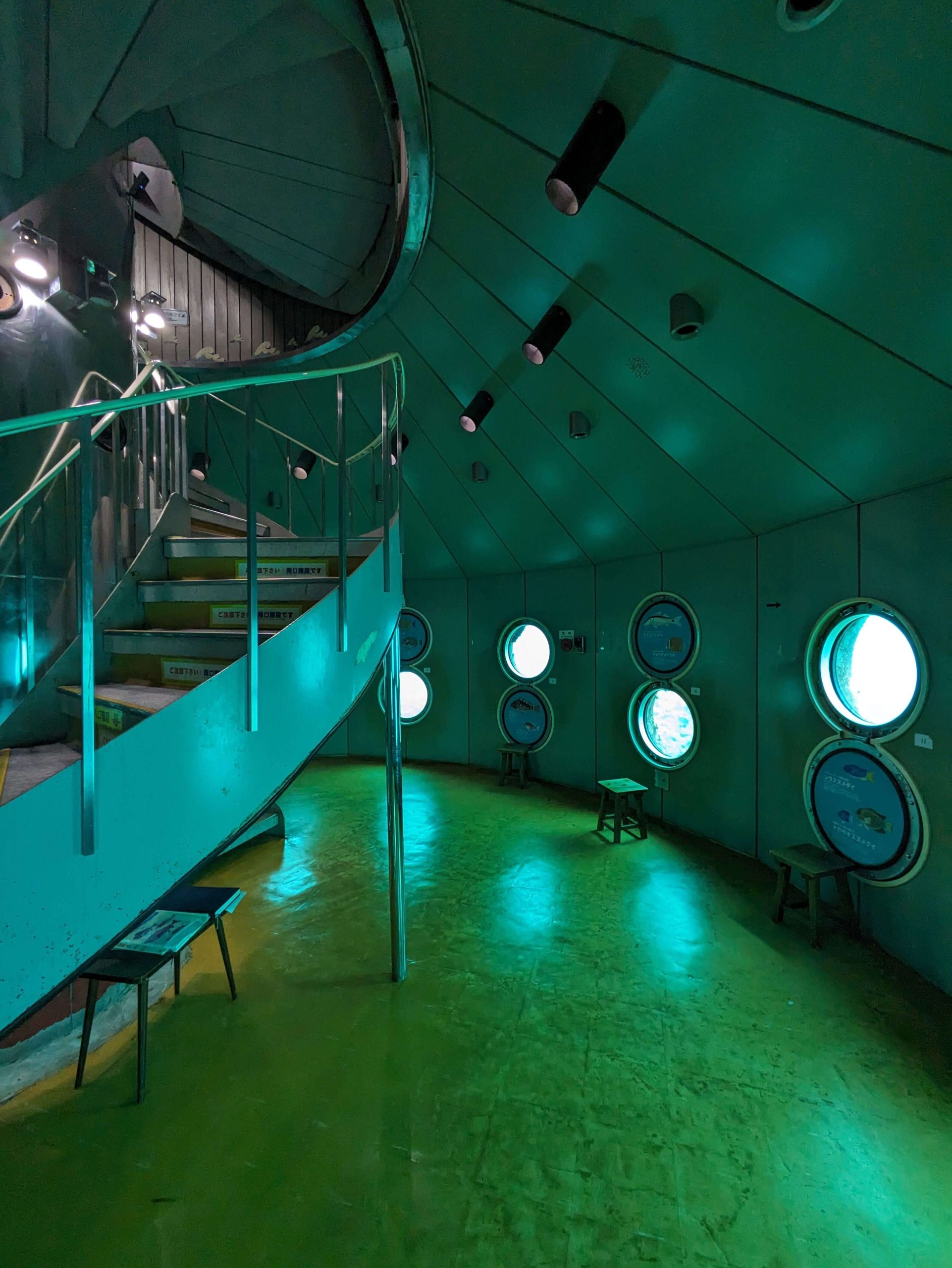
Another view of the room with the long spiral staircase leading back to the surface.
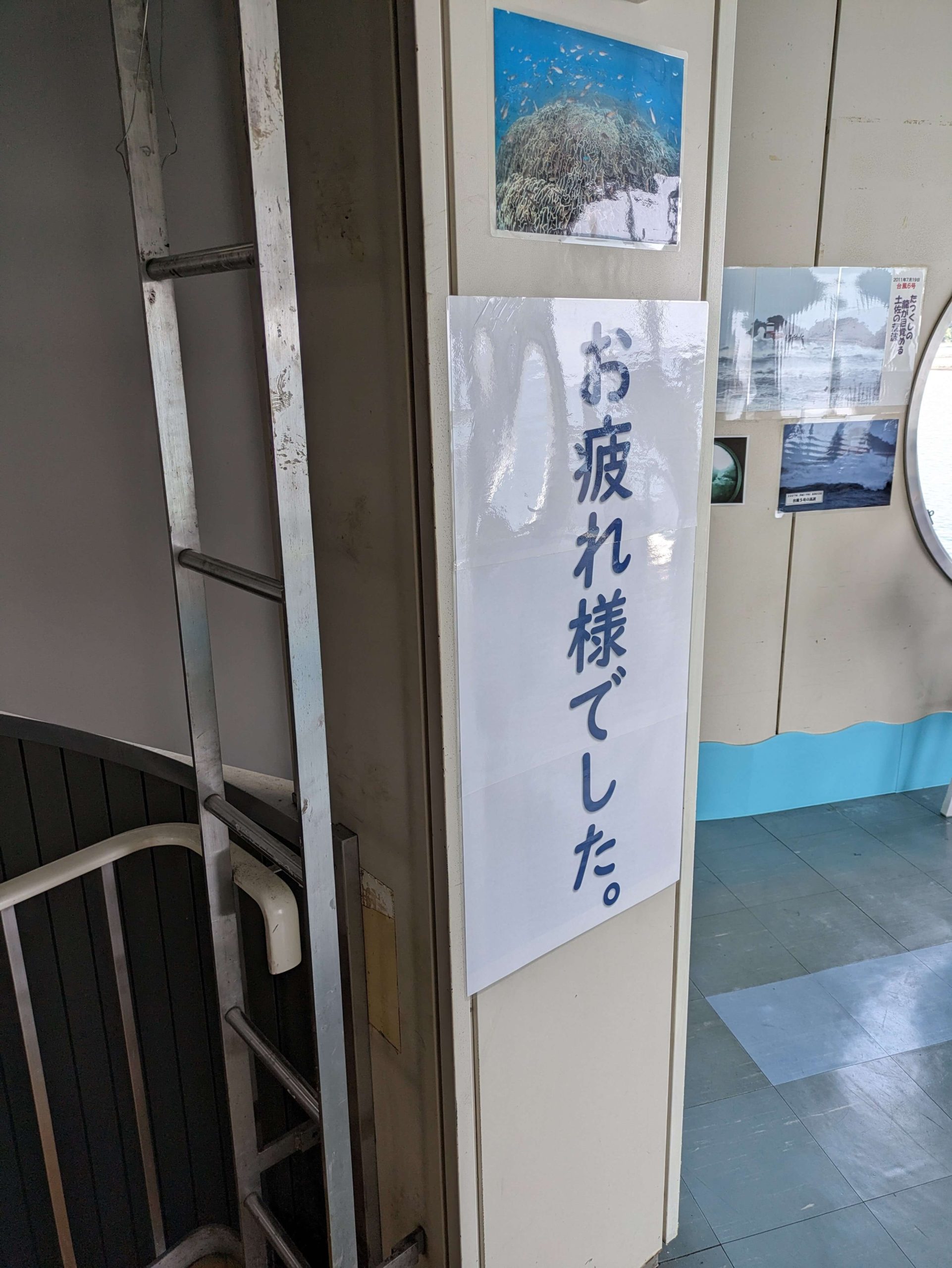
Otsukaresama deshita – a job well done, thanks for your hard work, or literally “you must be tired” – the sign says to you after you ascend from the depths.
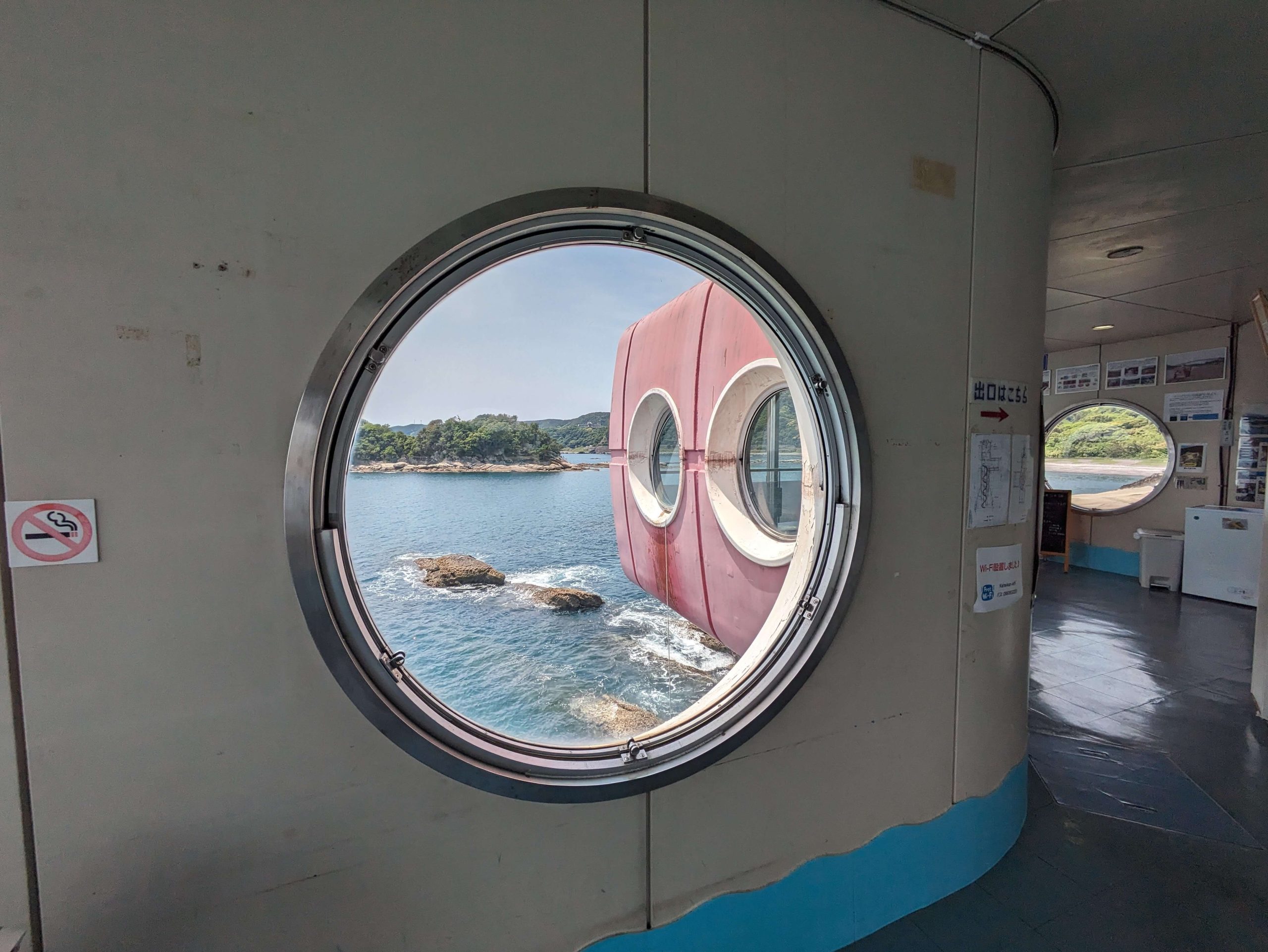
Now again at the surface, the windows of the plus-shaped structure’s three massive arms provided views of the surrounding ocean. One arm was blocked off for staff use, another had chairs and tables set up in it, and the last one had some historical photos and merch for sale.
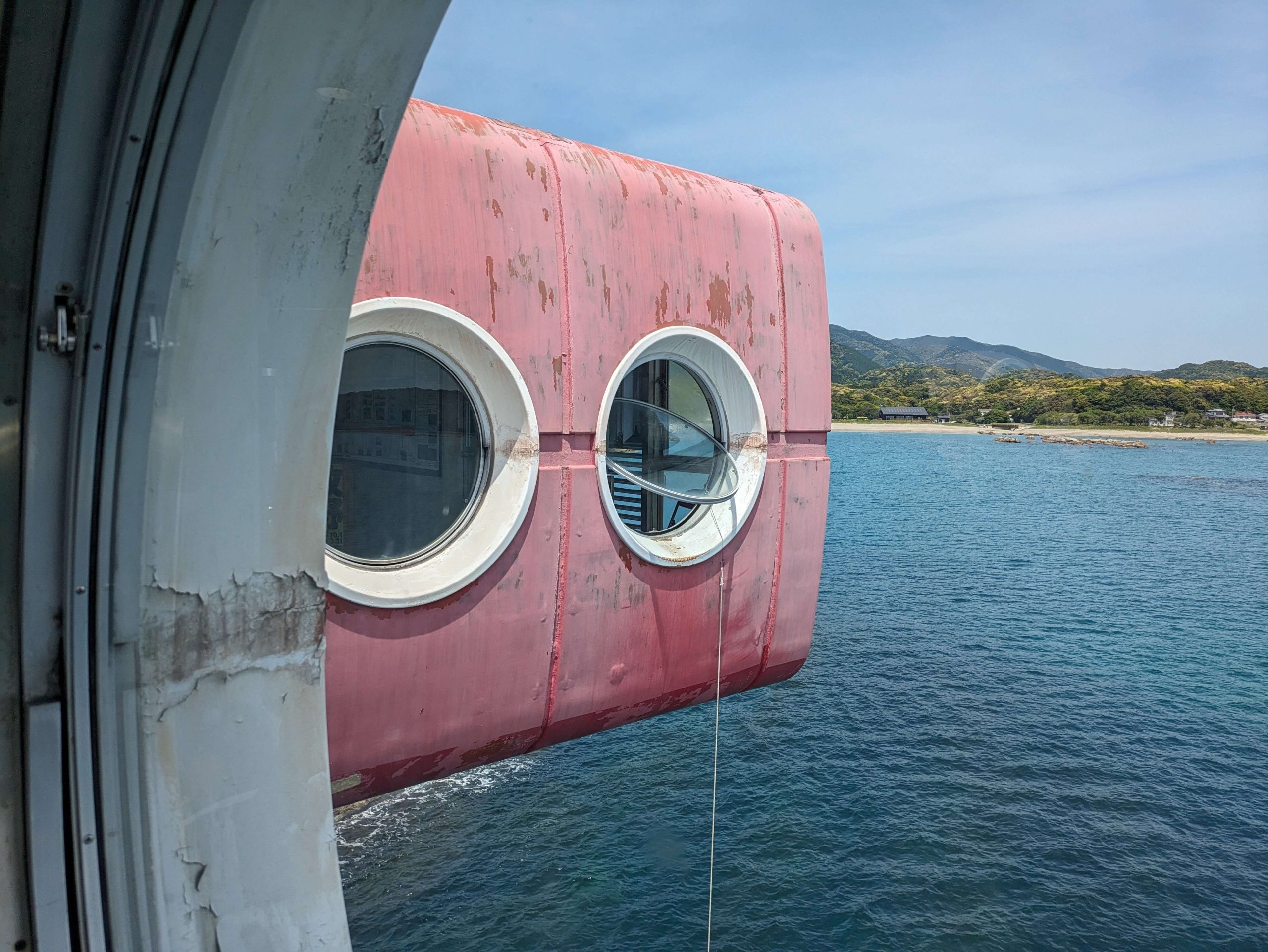
Another view out the thick glass windows. As I watched, one of the circles in the arm across from me opened up, rotating along its horizontal axis, and a basket on a string was lowered into the ocean to feed some of the fish, courtesy of an employee.
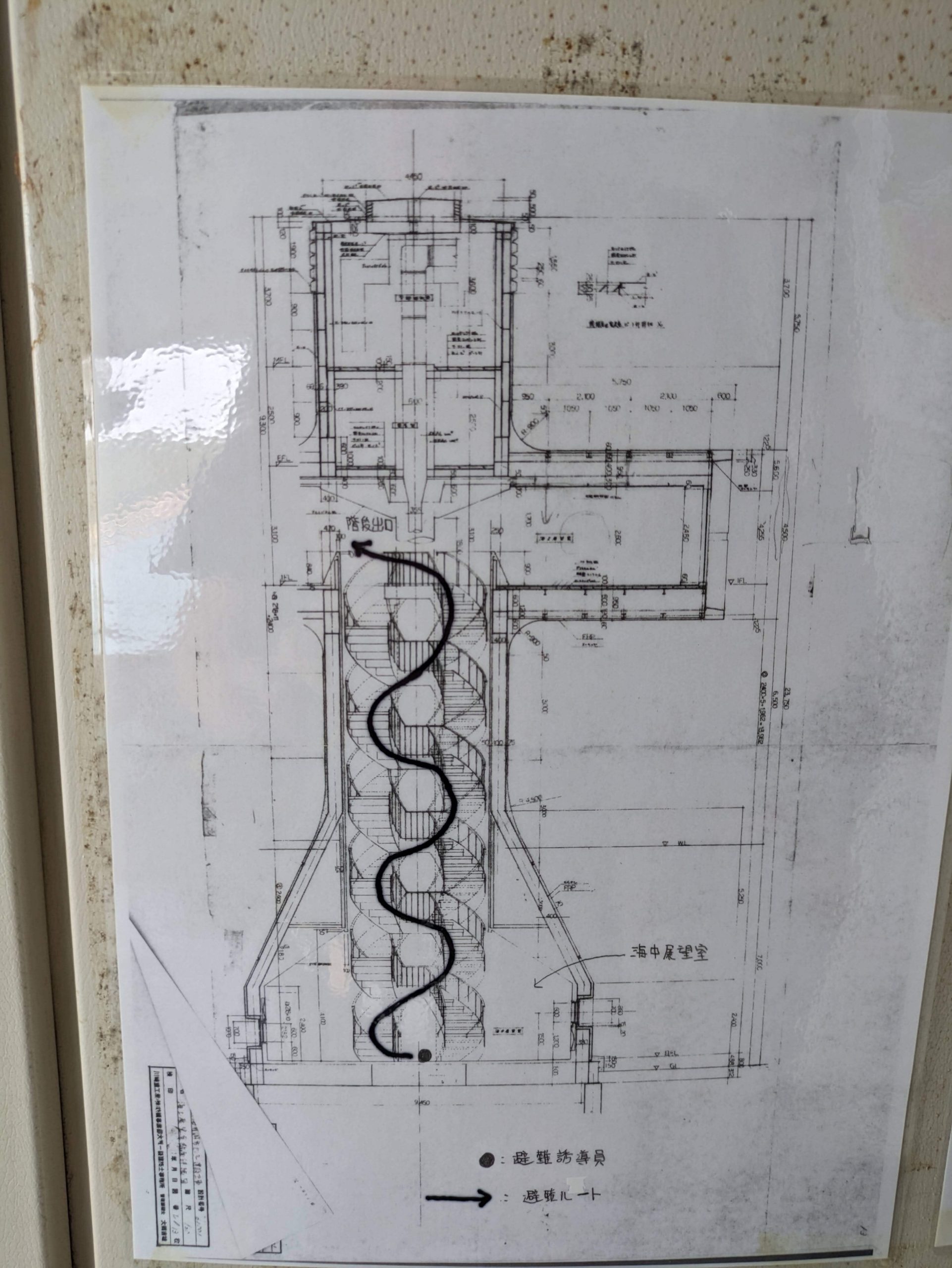
This diagram showing an emergency evacuation route gave a nice architectural overview of the structure.
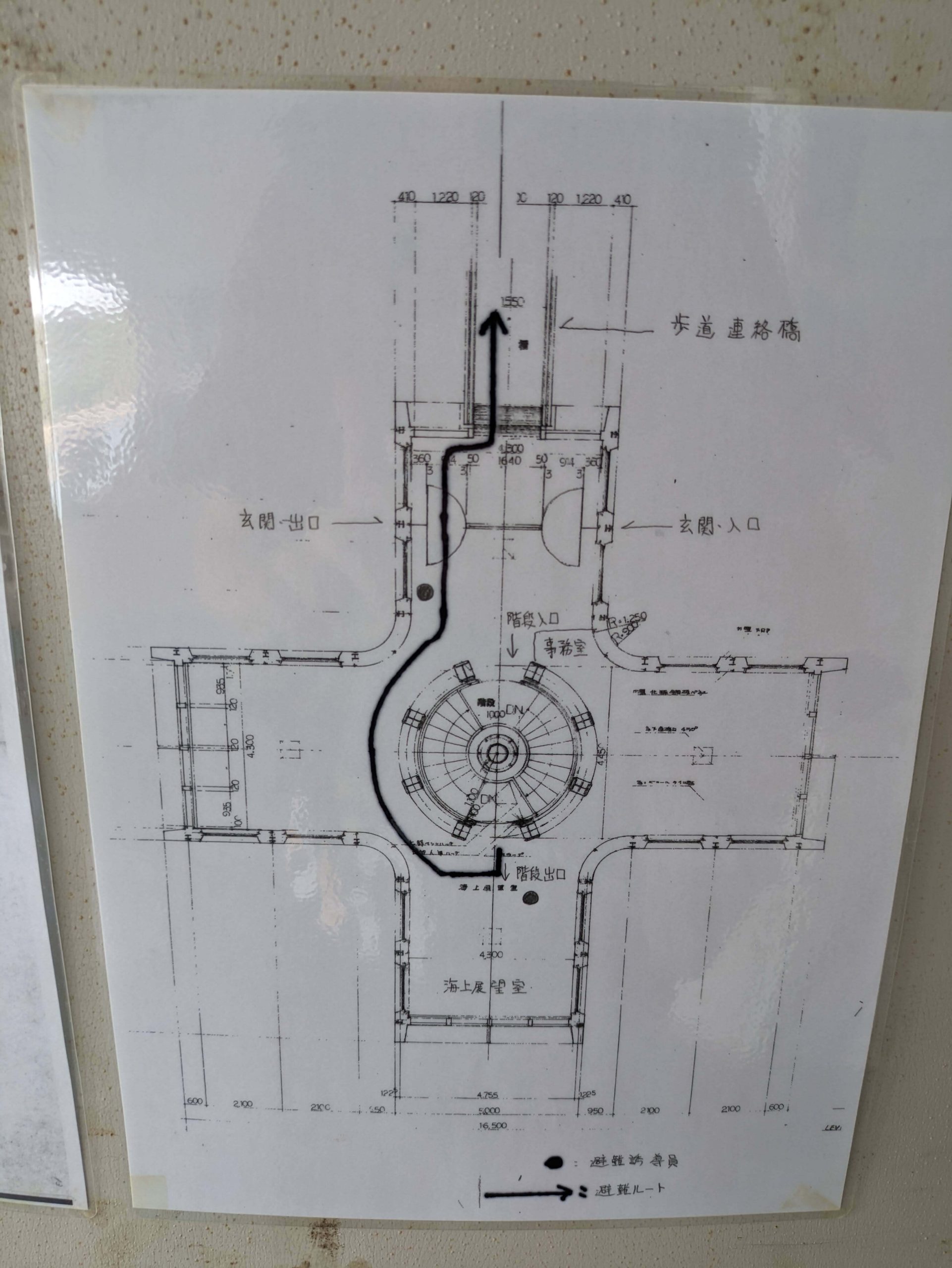
And the top view, for good measure.
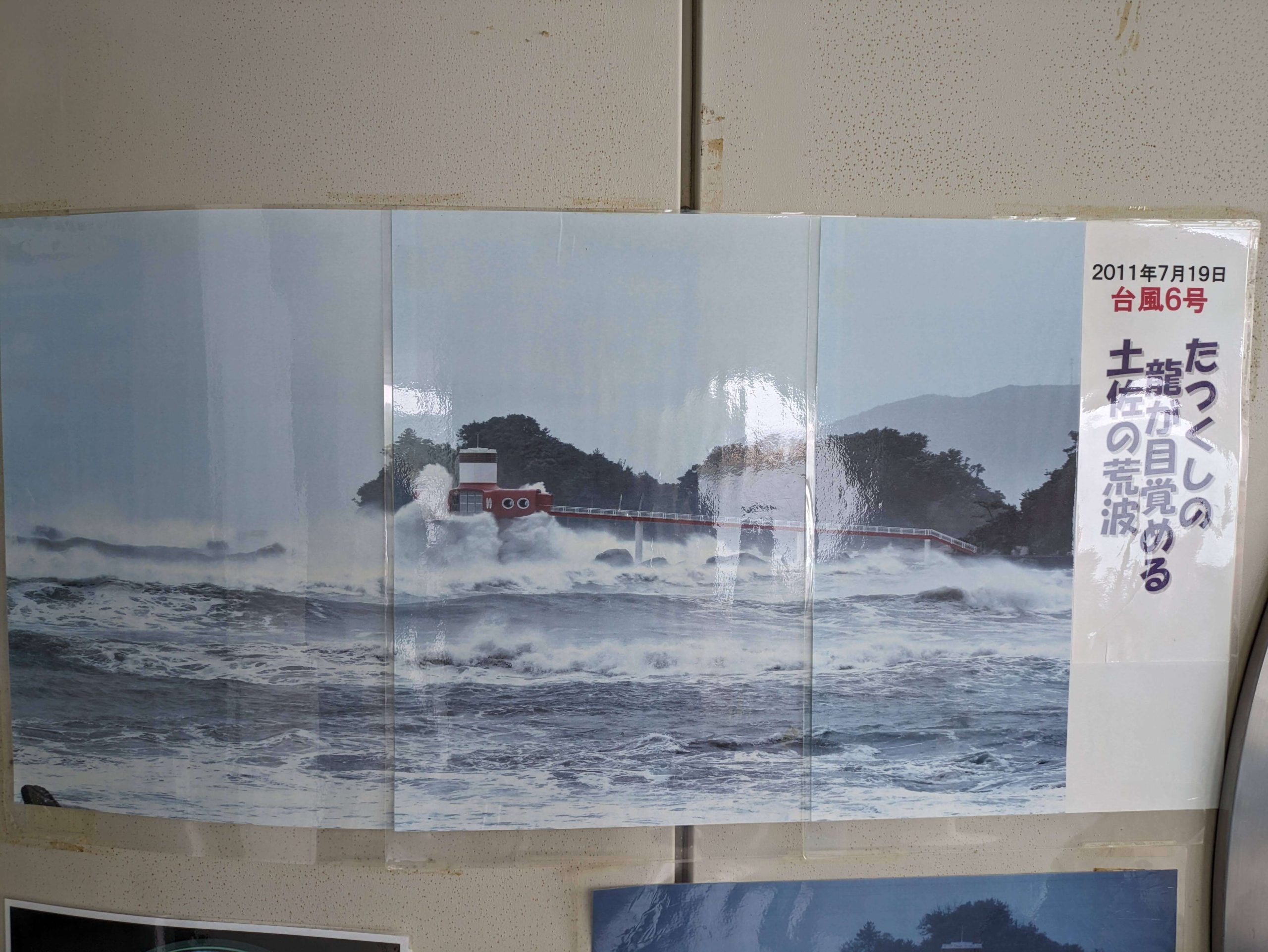
Photos on the walls showed the history of the building, including this one of the aquarium braving the intense waves of Typhoon Ma-on (Typhoon #6) in 2011.
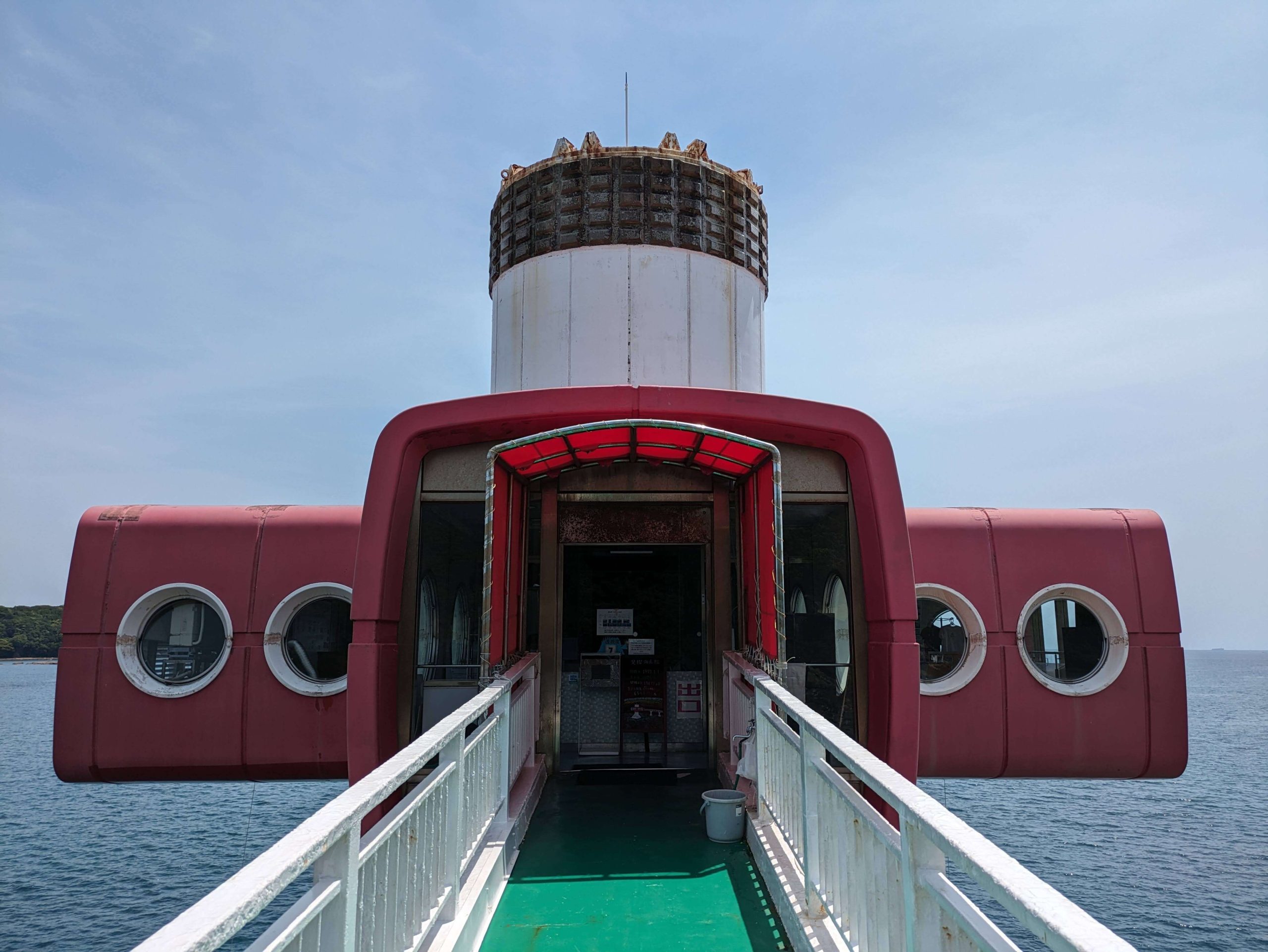
One last look on my way out of the LEGO brick spaceship.
On May 1, 2026, almost exactly one year after my visit, Kaiteikan closed indefinitely due to deterioration of the connecting bridge and for overall structural safety checks. And just a few days ago from now, as I write this in early July, newspapers reported that they’ve abandoned plans to repair the bridge as-is, deeming it unfeasible, and that they need 500 million yen to ever reopen in the future. More decisions coming in September, apparently, but if I had to guess, it’s not looking great. I am so, so lucky to have gone here when I did.
I didn’t have a ton of time remaining at this point – half an hour until my bus came, which was the only bus until past 6 p.m. thanks to the fact it was a weekend (the 3:10 p.m. bus only ran on weekdays) – but better than nothing! Definitely enough for a quick visit to Kochi Prefectural Ashizuri Aquarium SATOUMI, aka Kaiyoukan, the main facility in this area (which I had scurried right past to get to the above, ha…)
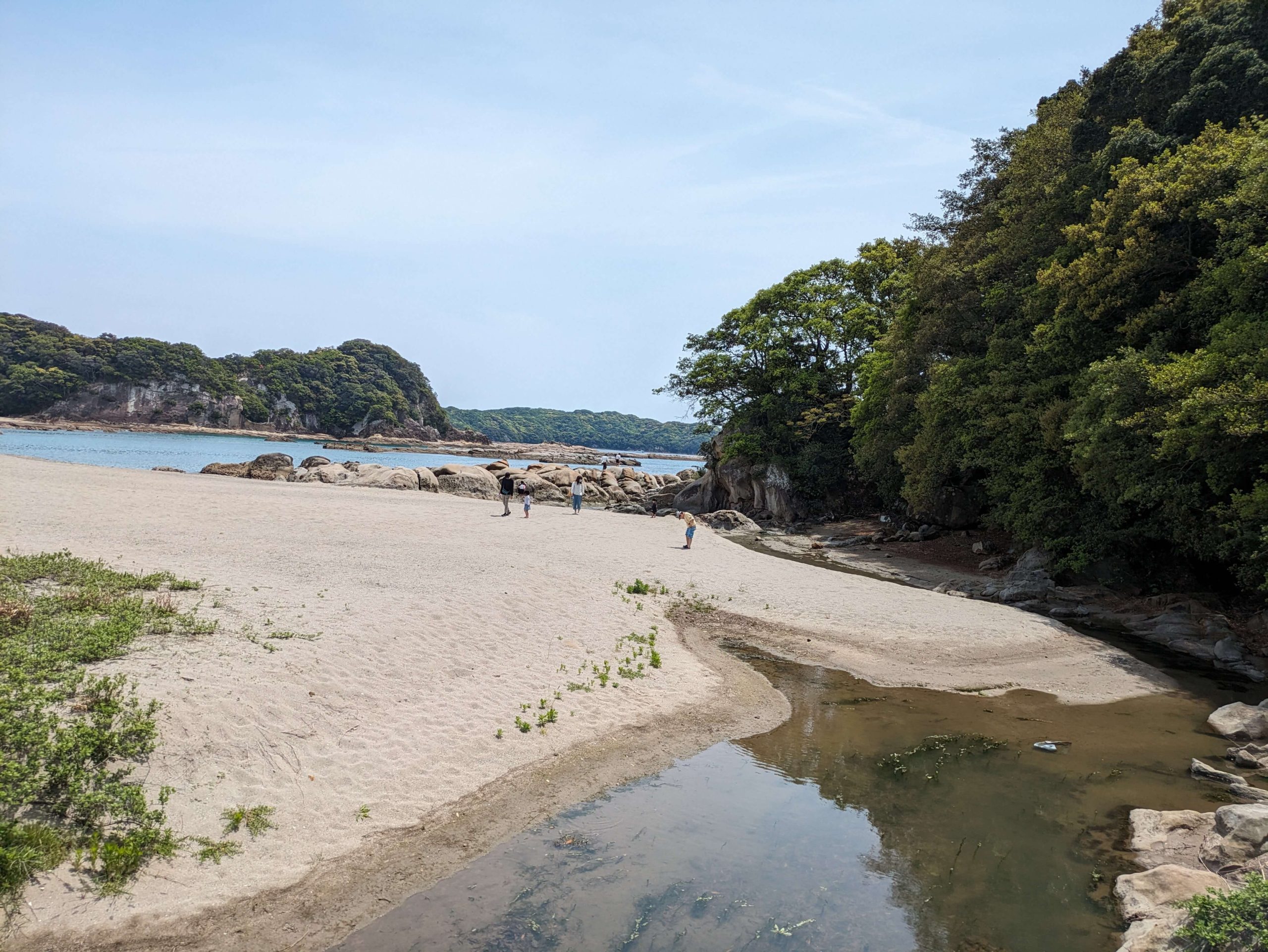
A ten-minute walk along the craggy coast, through a park, and onto a beach led me back toward the main aquarium.
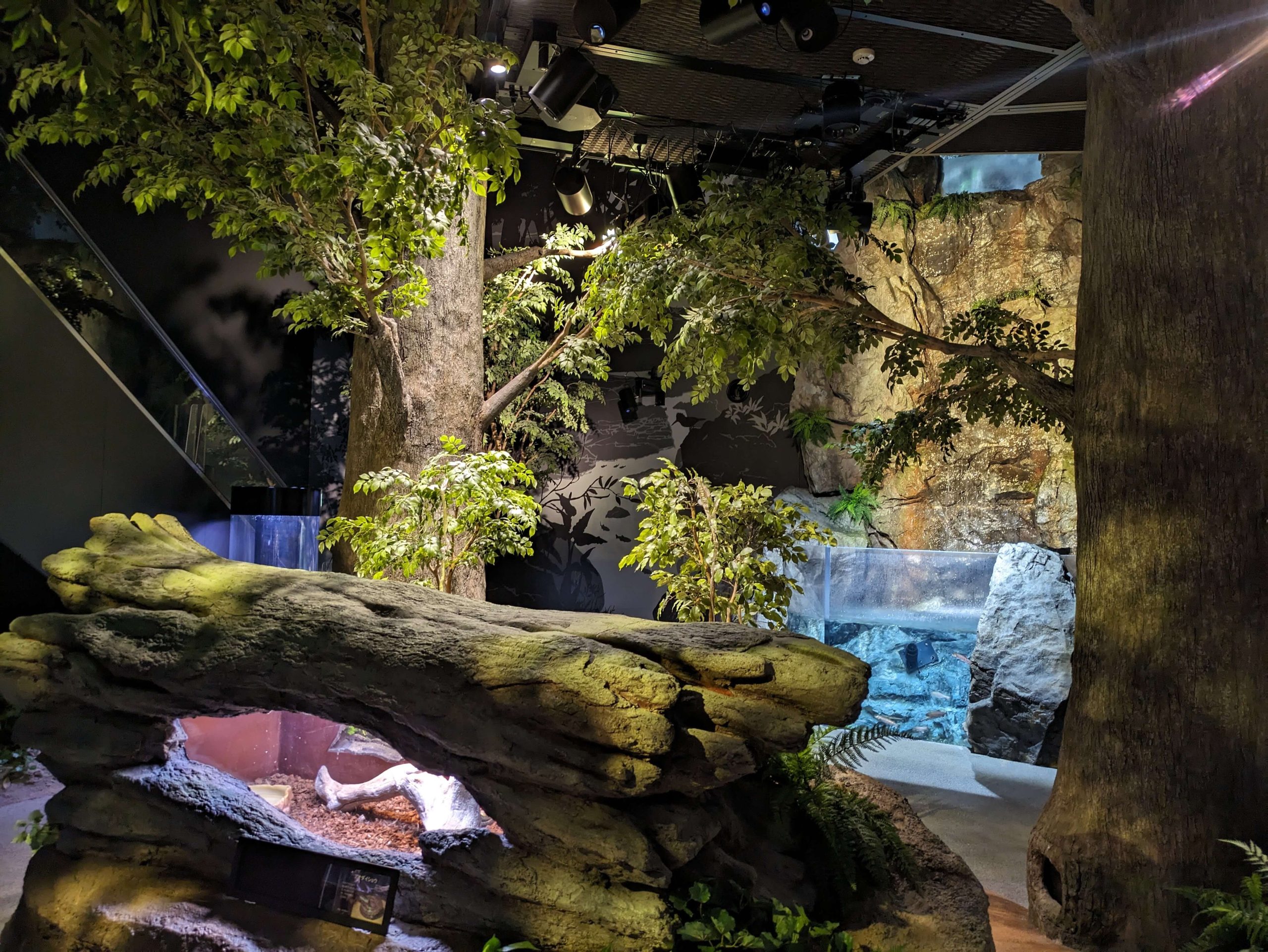
I love aquariums! And wetland habitats!
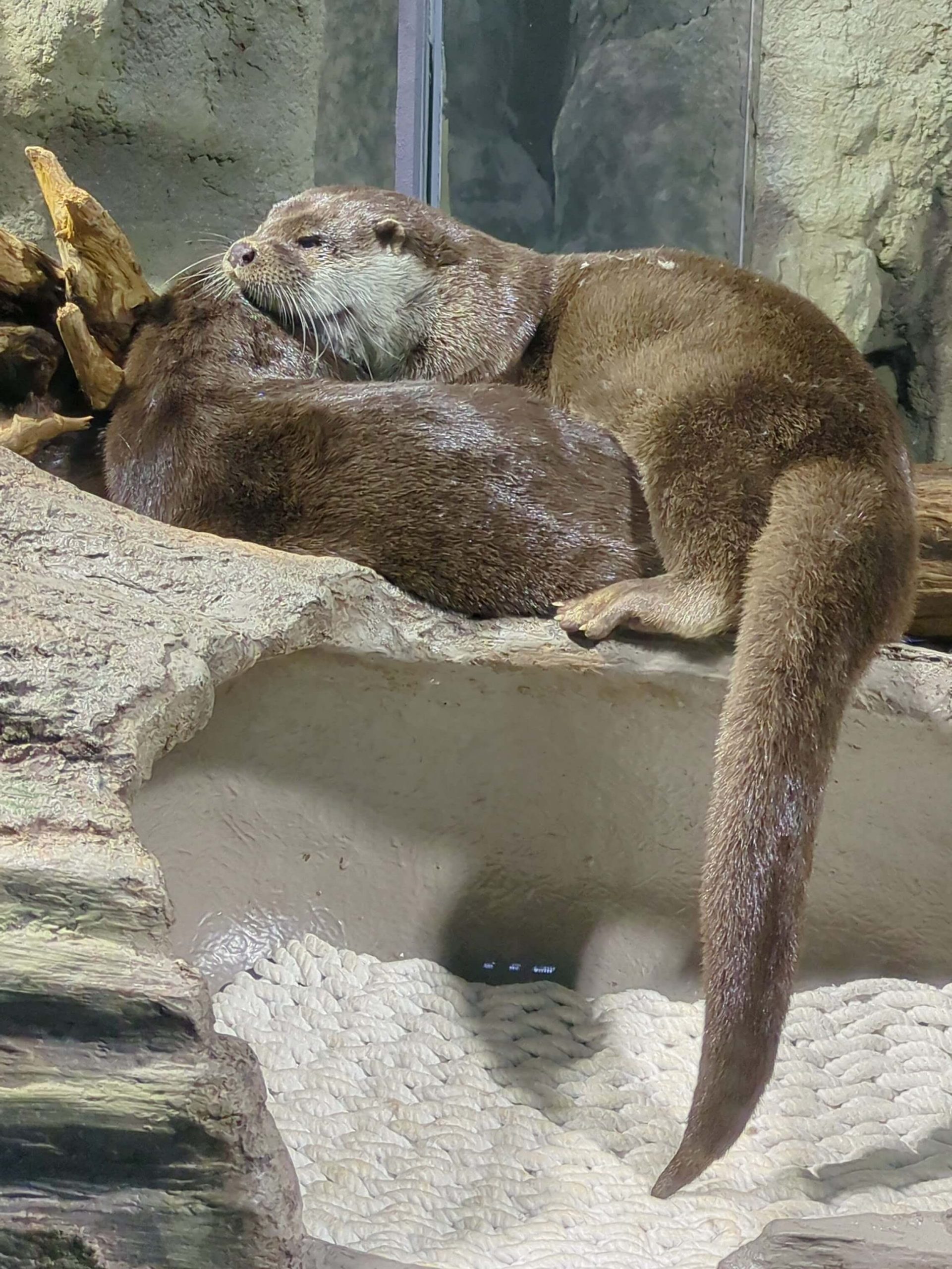
Very cute river otters!!! :) They were play-cuddling for quite a while.
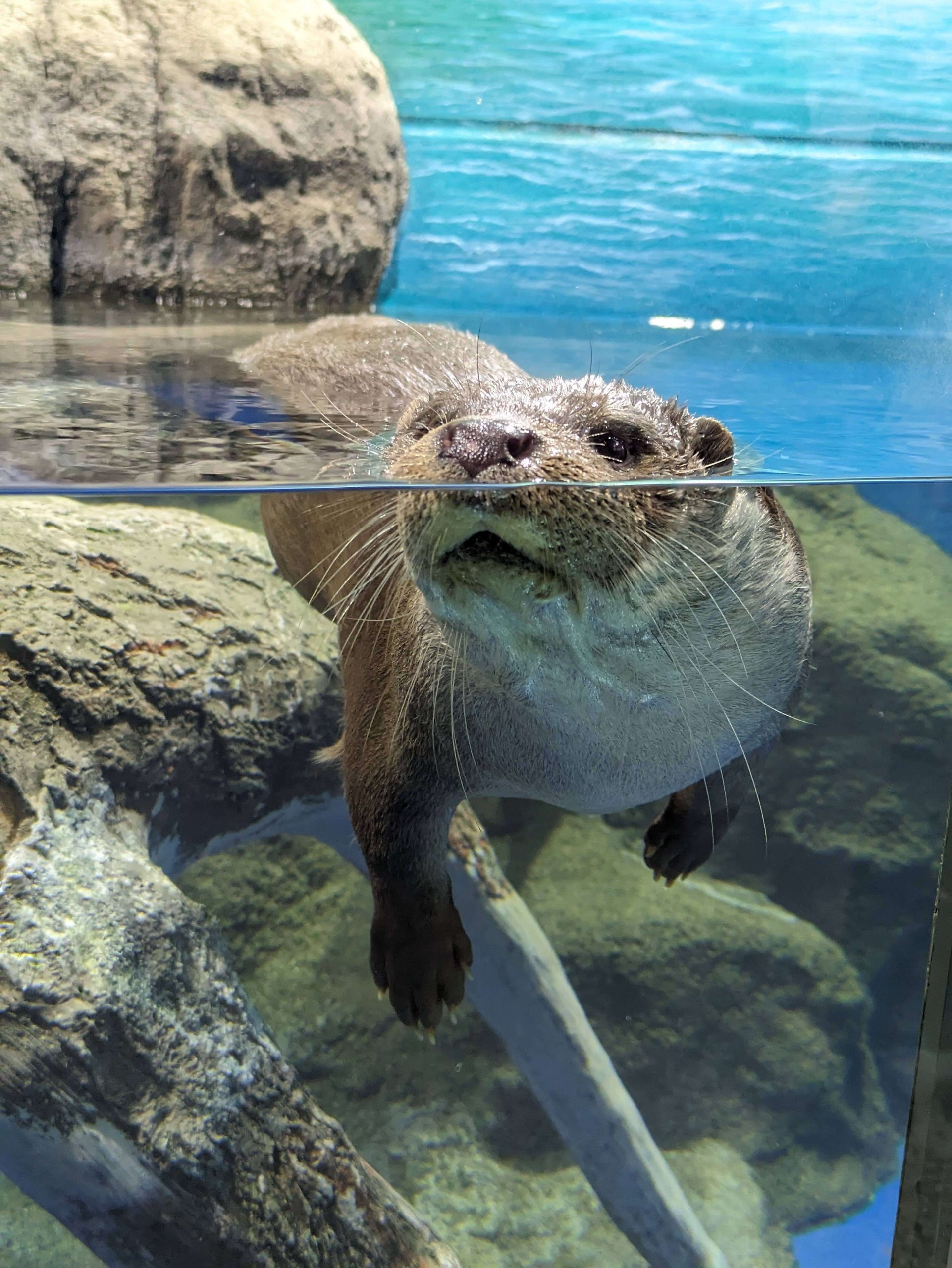
AWWWWWWWWWWW
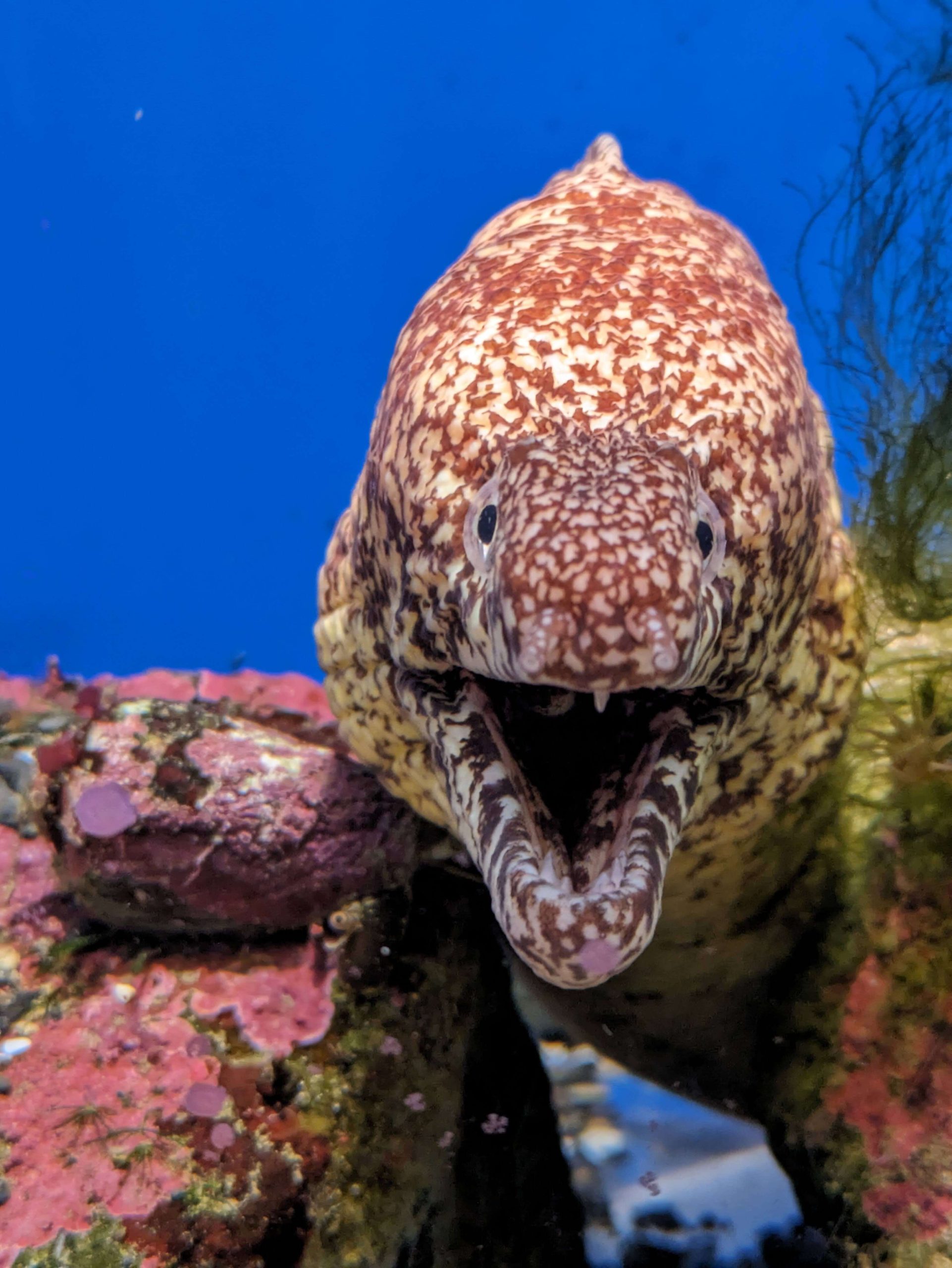
Scary eel!!! (I know my mom, who hates eels, is going to see this, and absolutely freak out. Sorry, Mom.)
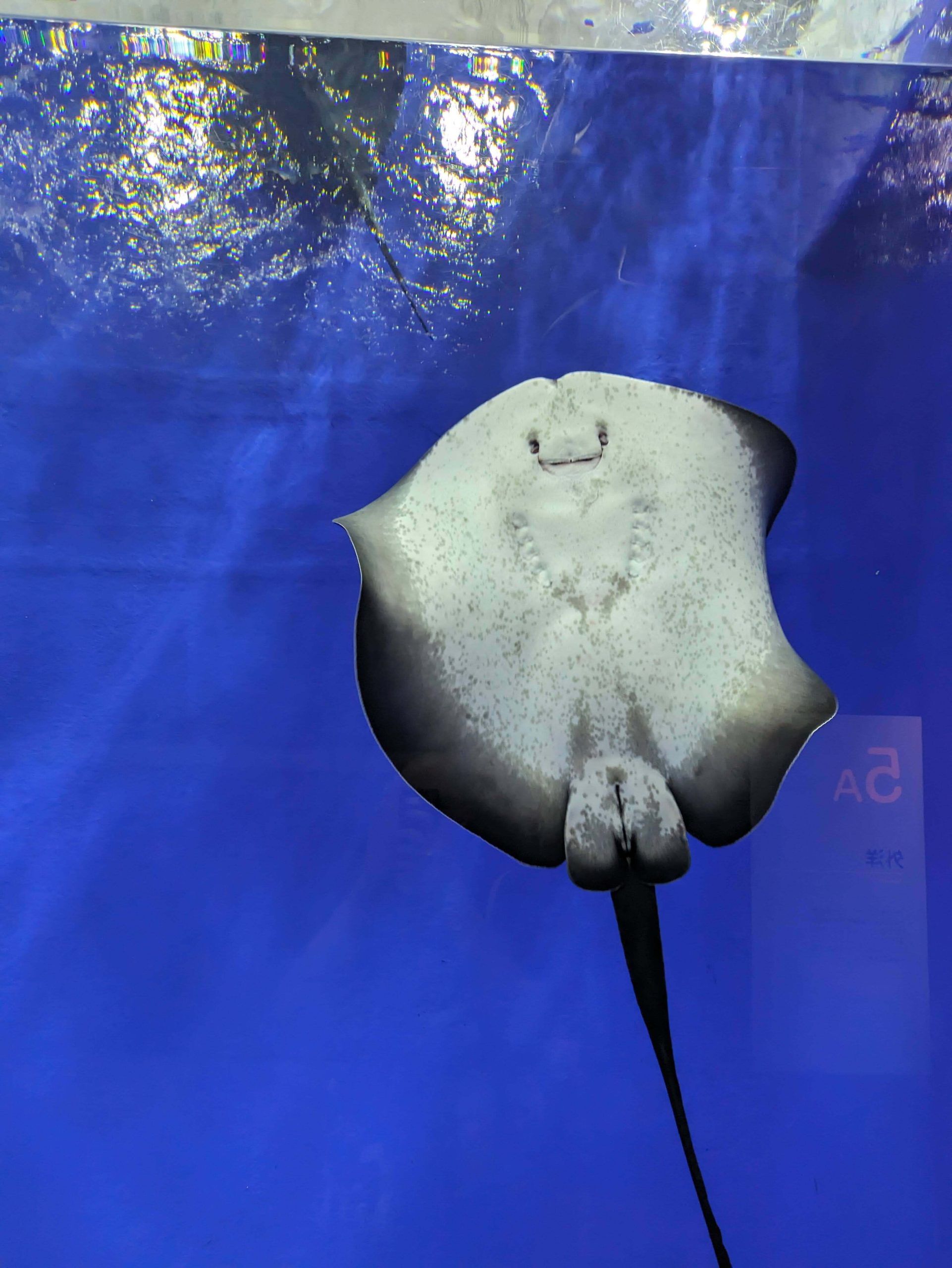
Amazingly cute ray!!! Want to know the Japanese word for ray? Ei! Yes, just えい ei!!
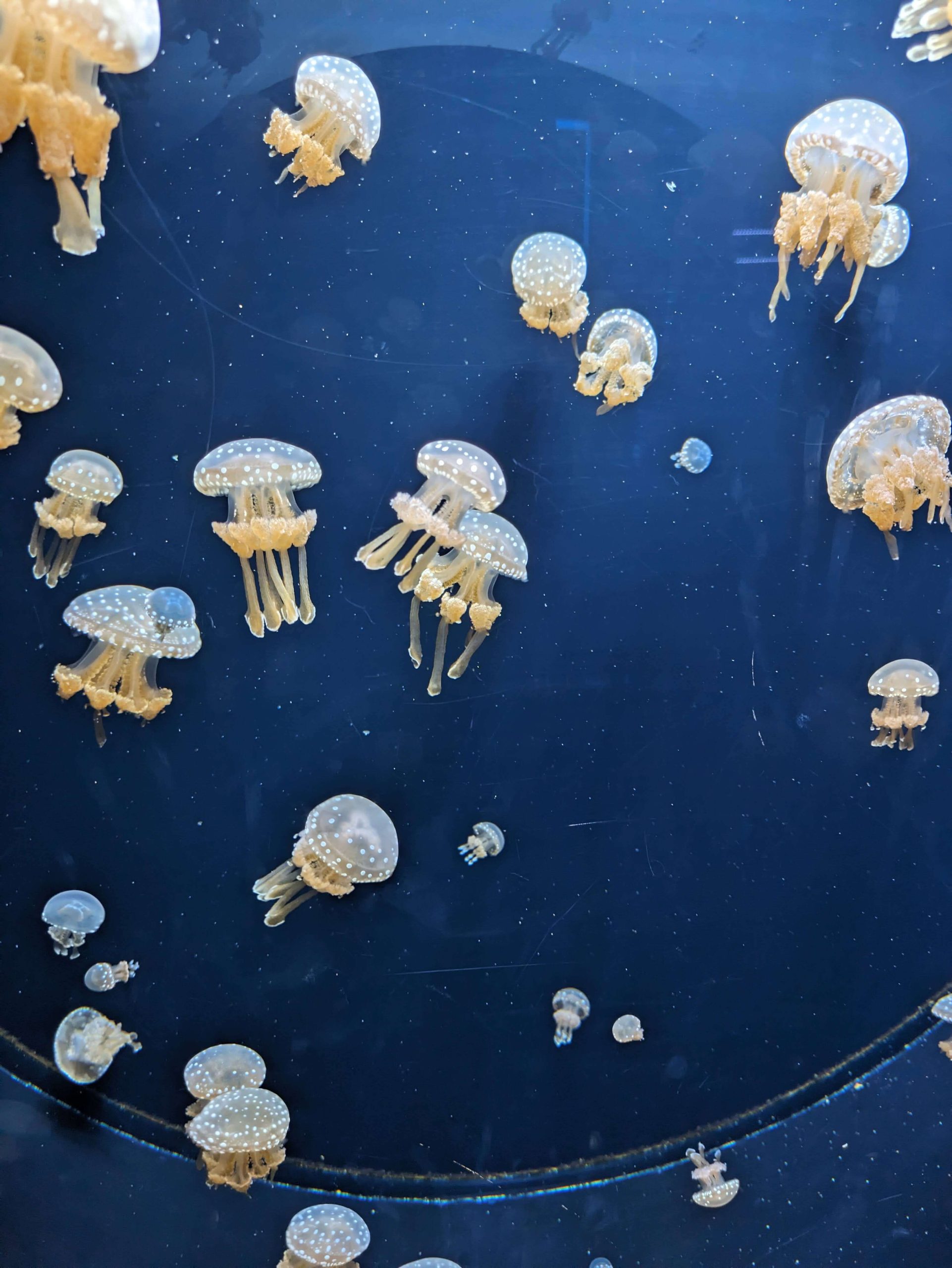
Jellies. Obligatory aquarium visit photo.
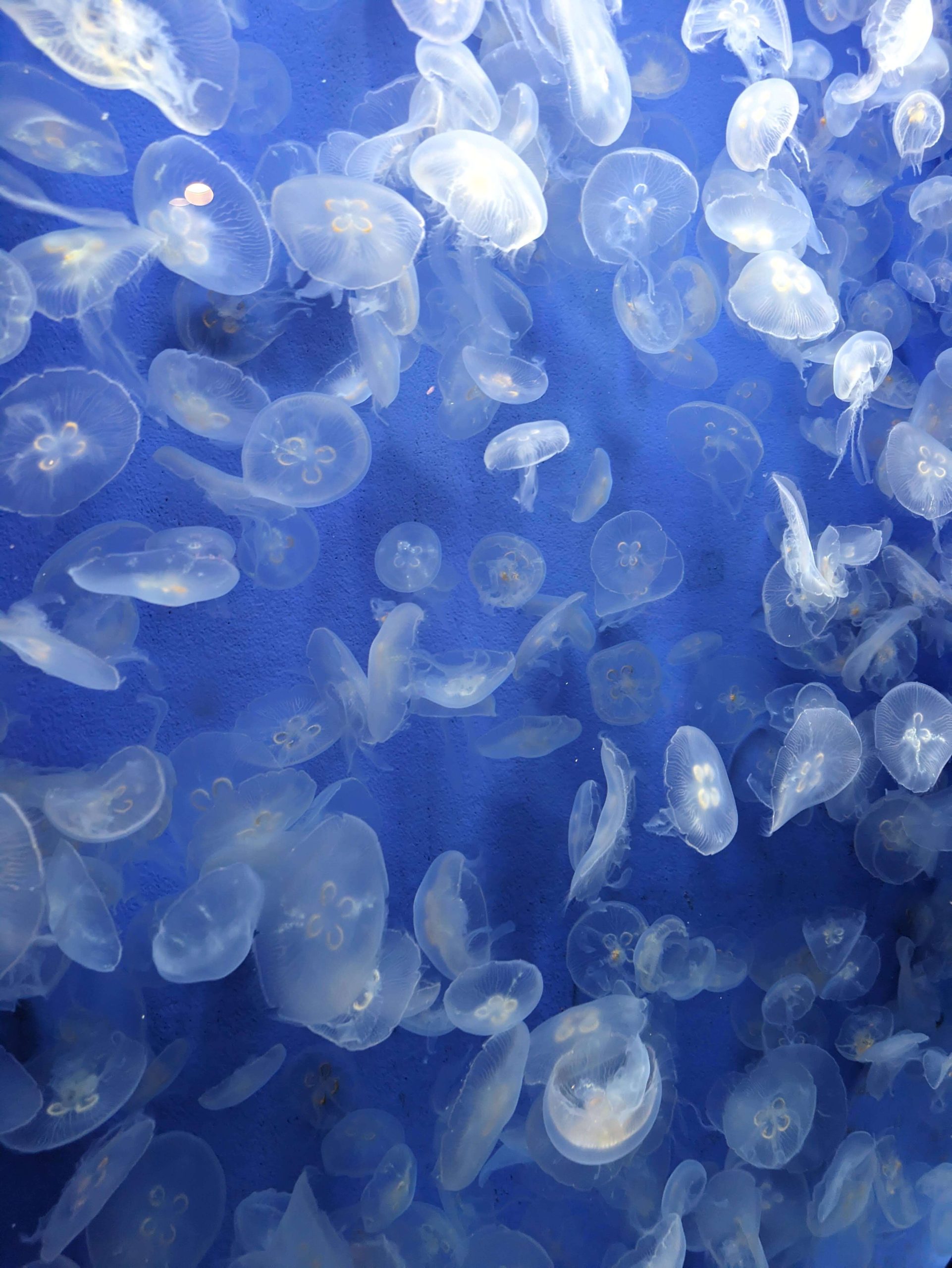
More mesmerizing jellyfish floating along.
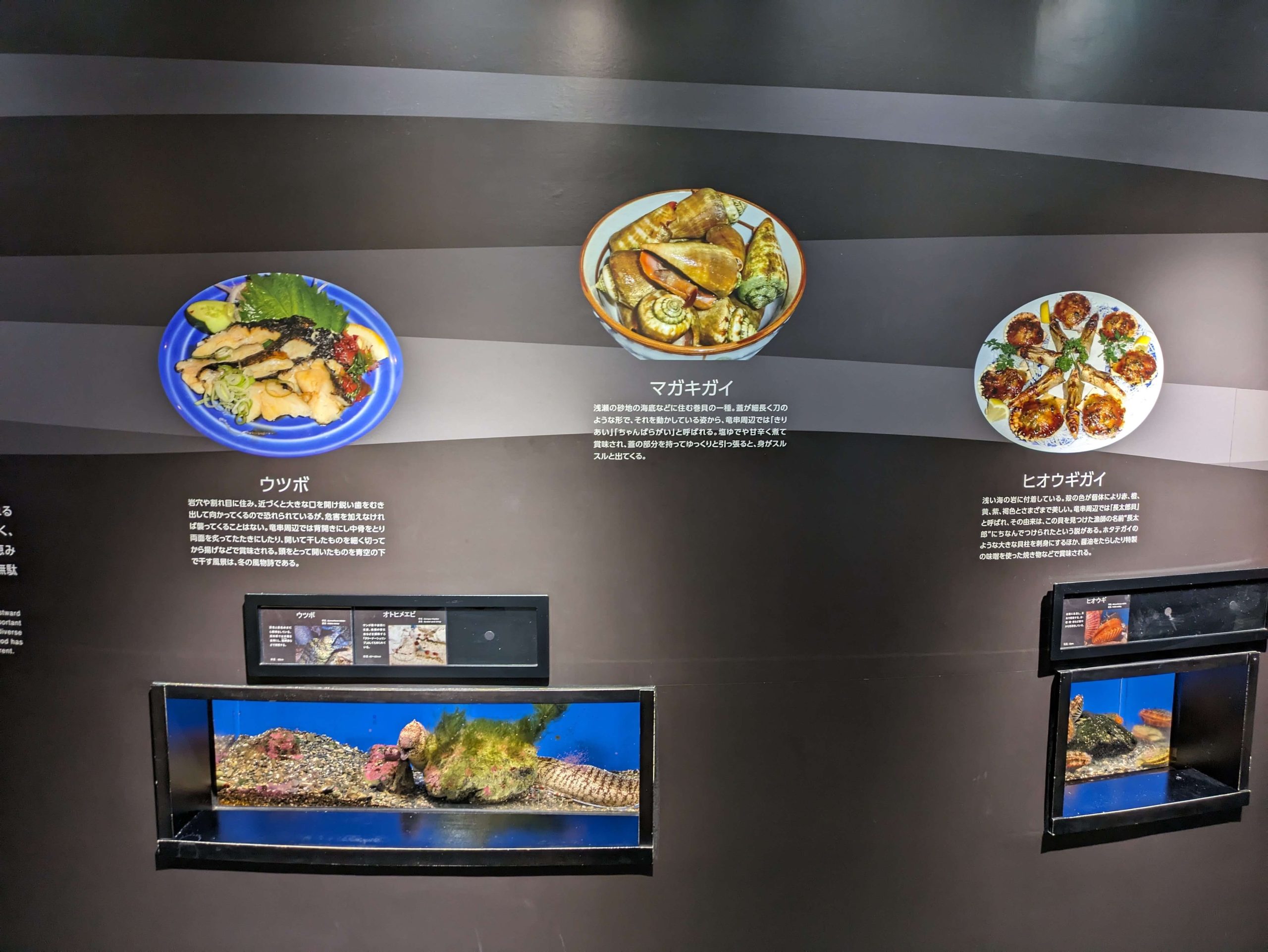
LMAO but also poor eels :(
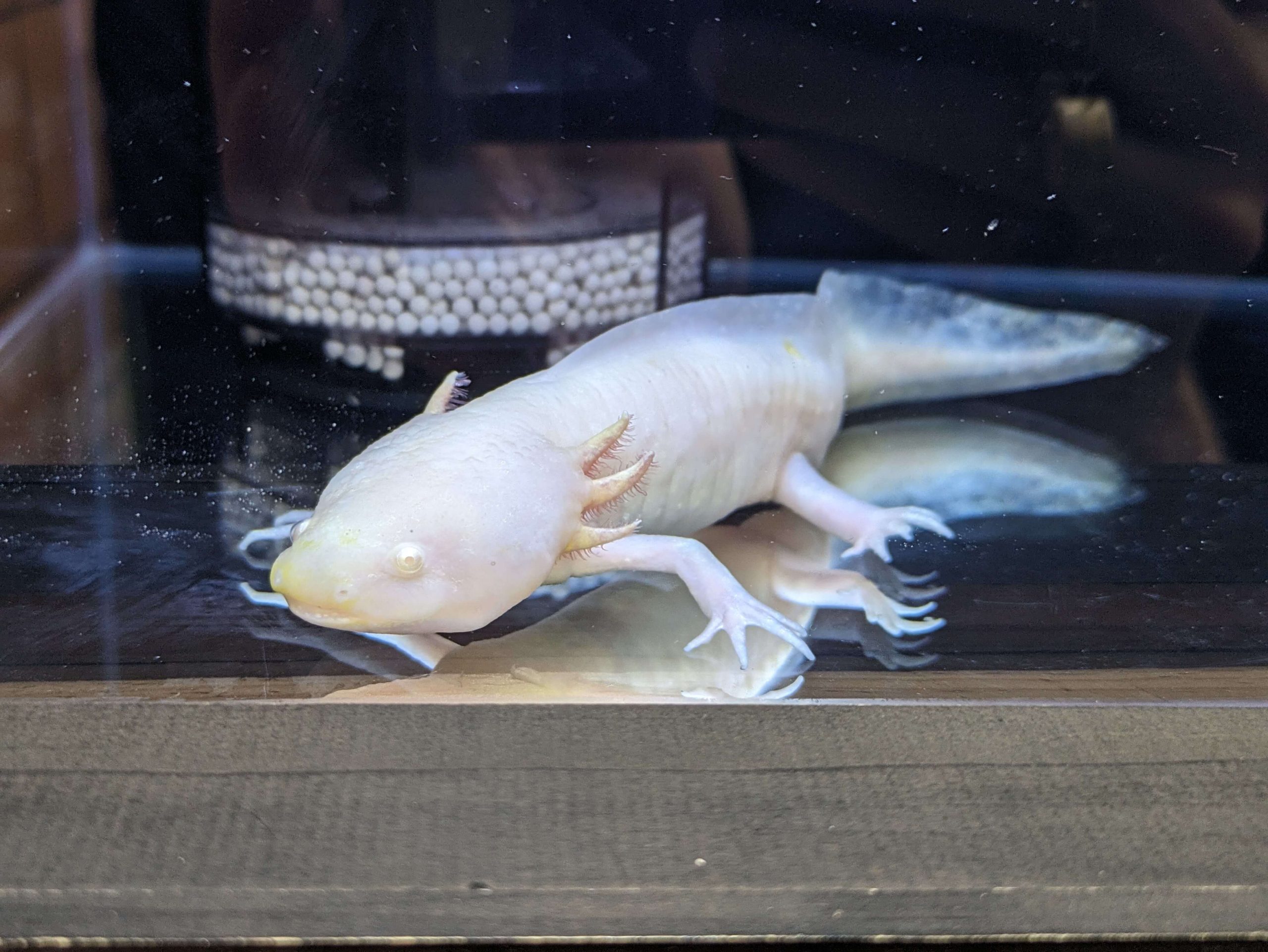
Axolotols in Japanese are called “wooper loopers“, named after weird 80s ad campaign for instant noodles that used them as mascots.
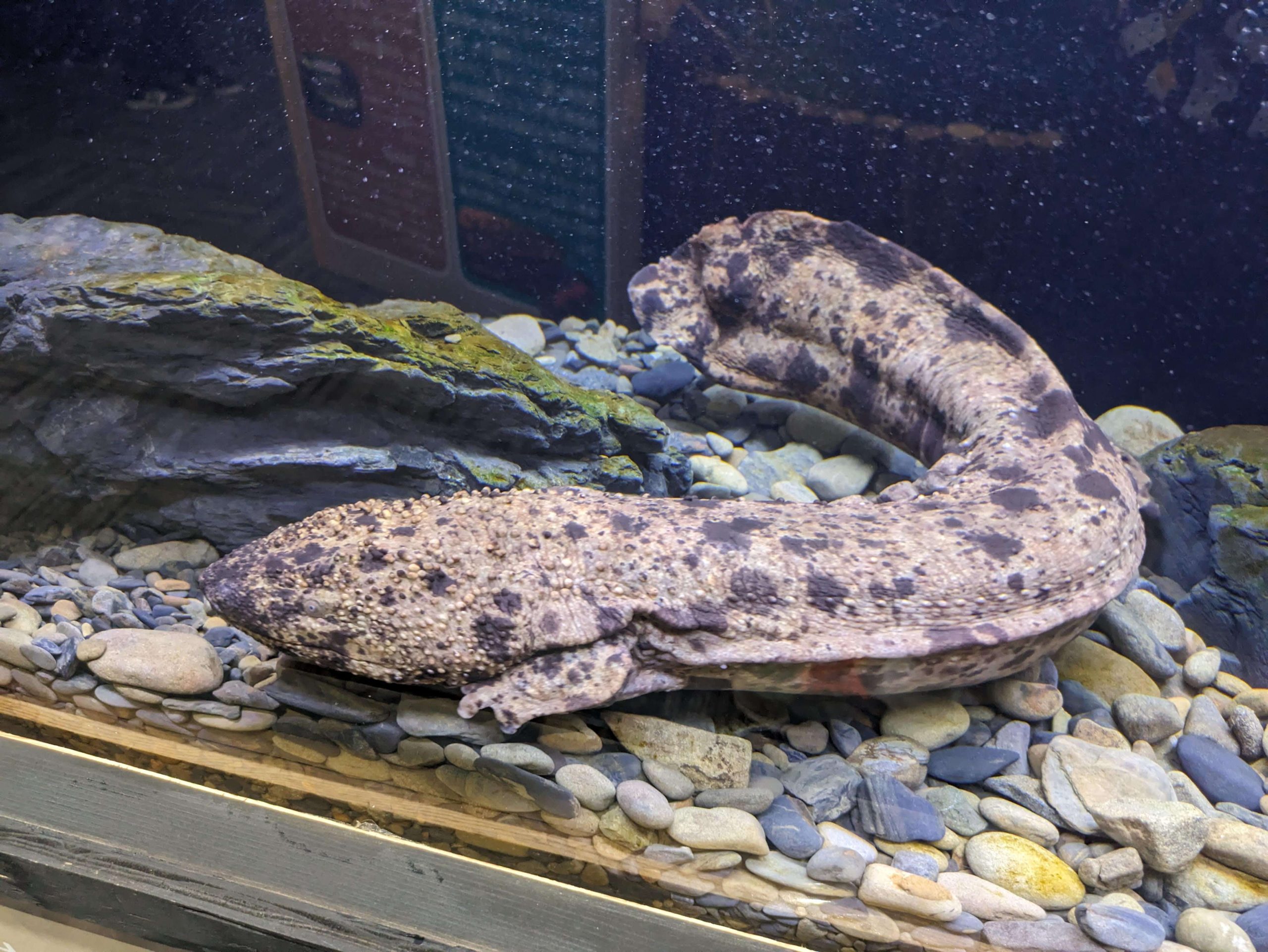
I LOVE JAPANESE GIANT SALAMANDERS!!!!!!!! Oosanshoouo! If you do too, you’ll love my next blogpost.
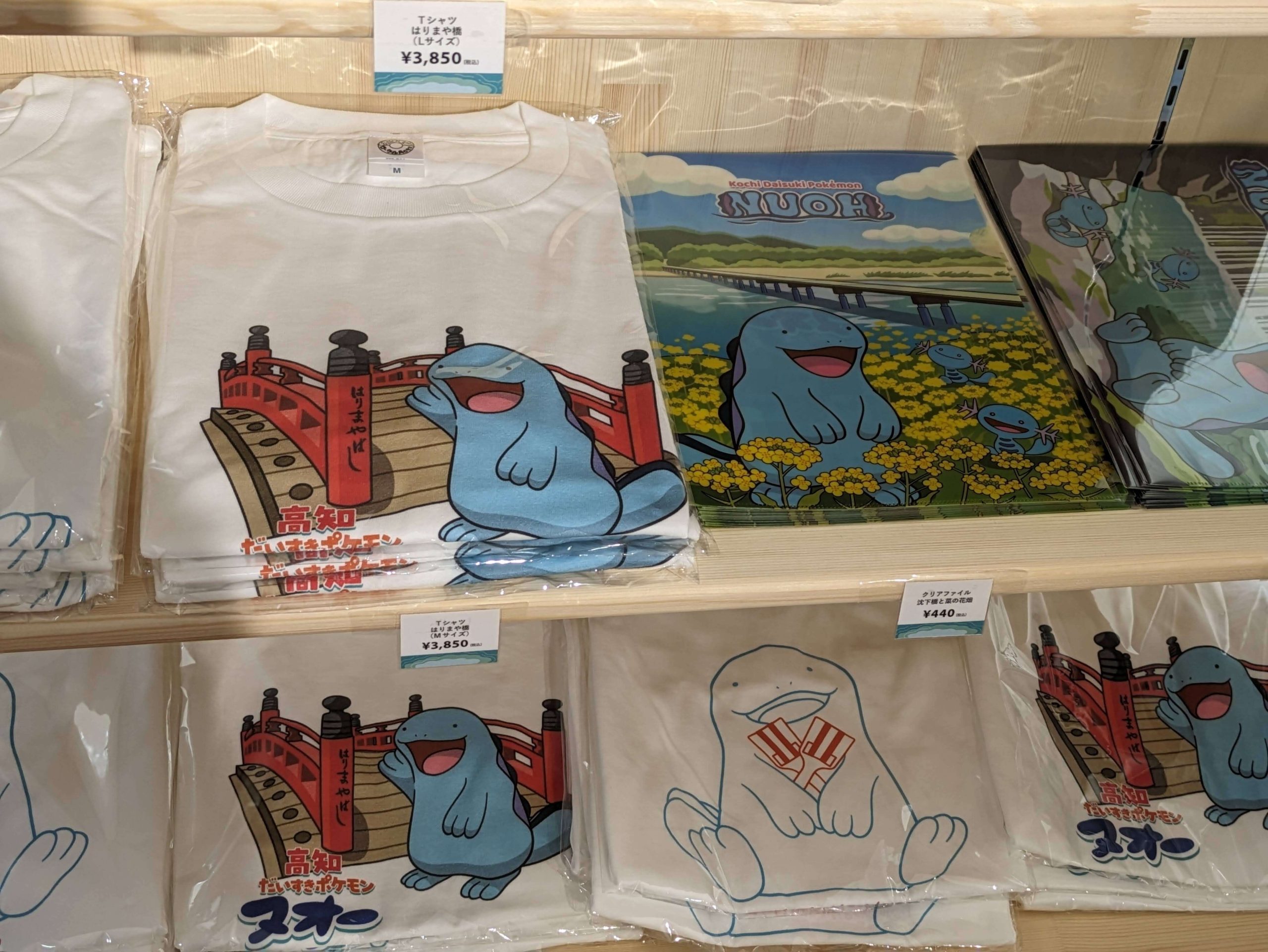
They’re really pushing the Nuoh merch.
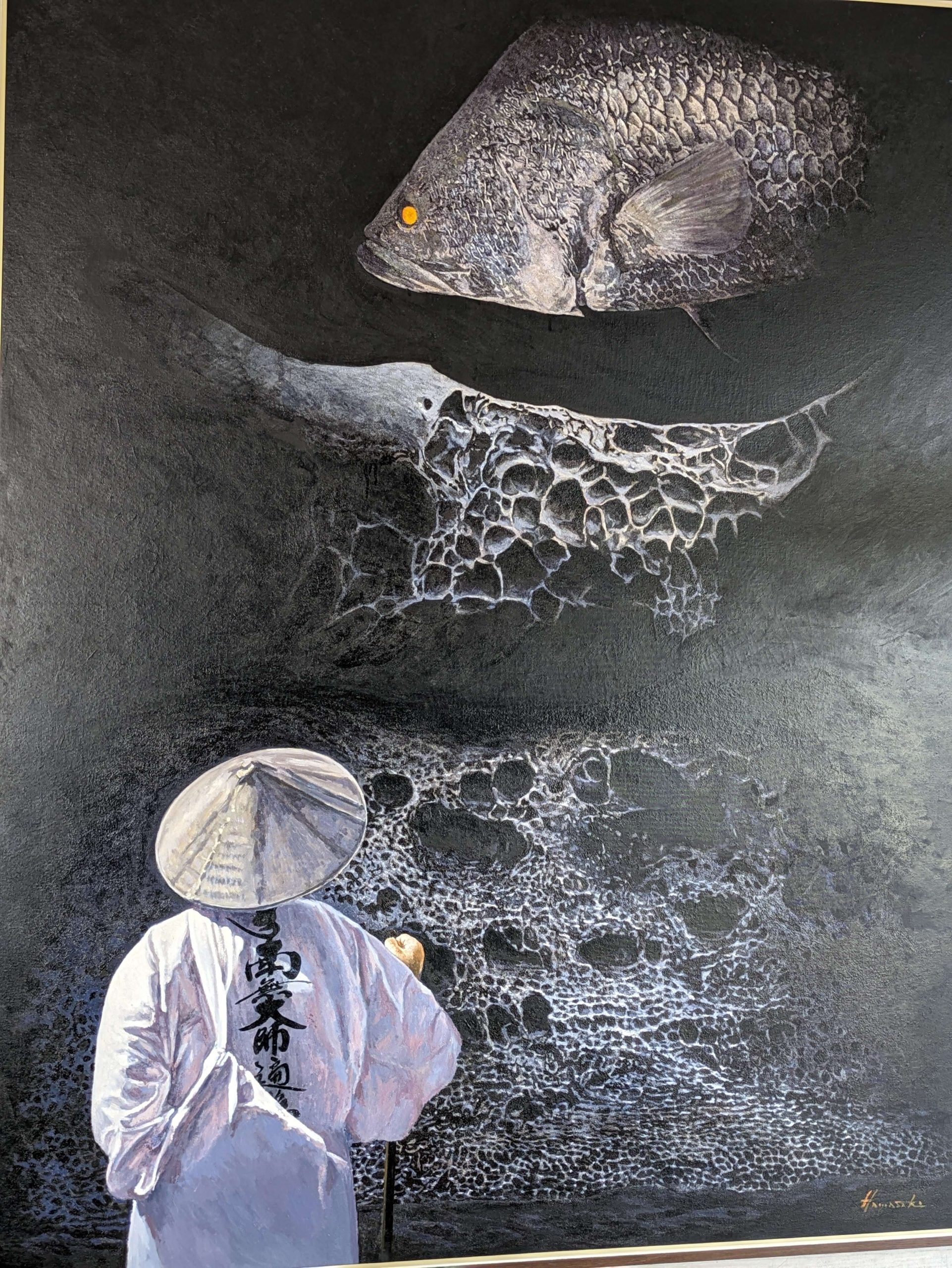
I adored this painting near the exit.
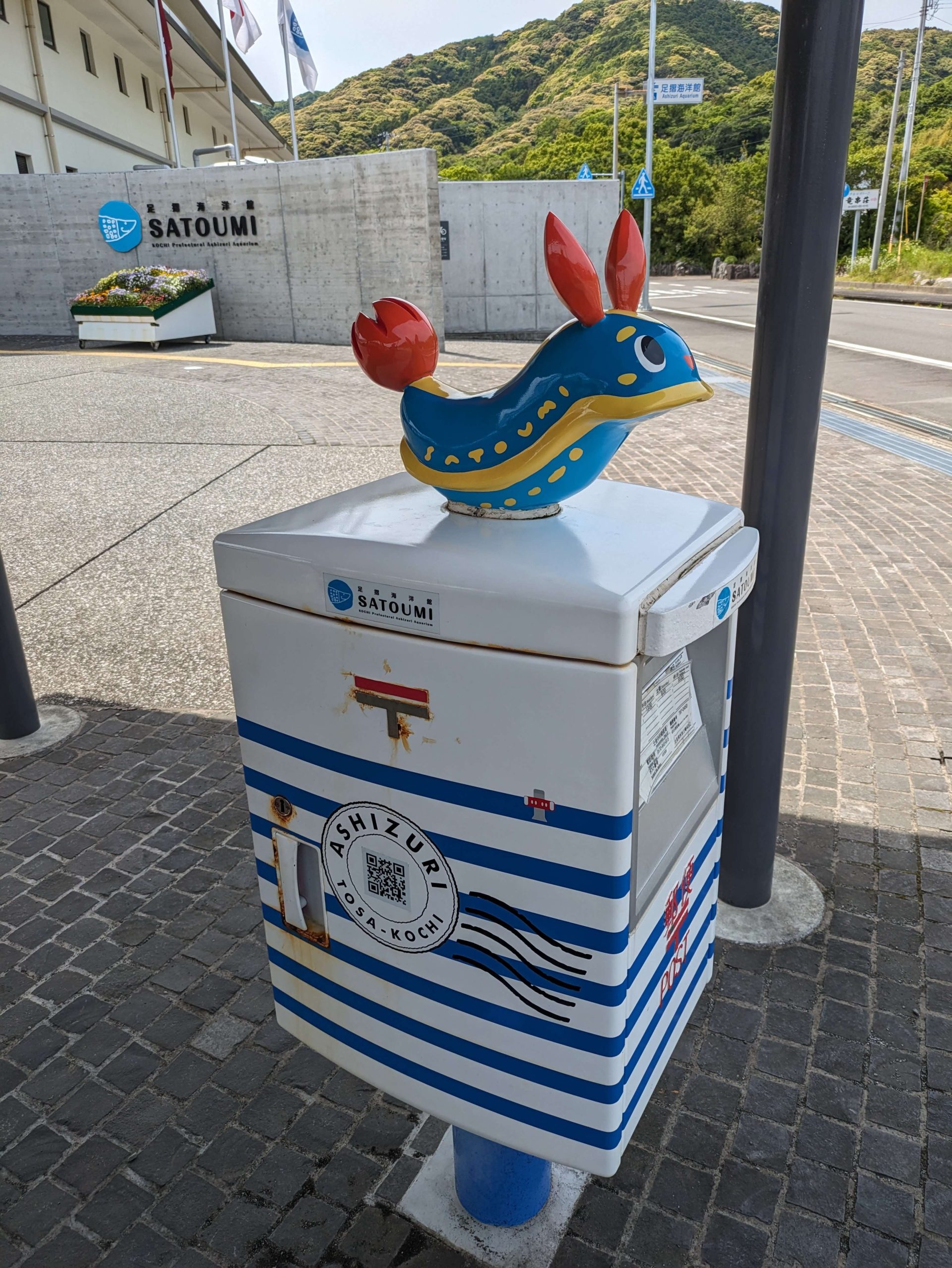
Sea slug mailbox! Sea slug mailbox! Sea slug mailbox!
My bus took me along the last third of my clockwise loop, west and then north to Sukumo Station, the terminus of Tosa Kuroshio Railway’s network. I grabbed some eki-stamps and bought a Tosakuro Odekake Kippu, or “Outing Ticket”, which let me ride local trains on the company’s two western lines for only ¥500, sold exclusively on holiday period weekends. I used this to ride back to Nakamura (where my limited express had dropped me in the morning) and then to Kubokawa, where I could connect with the JR Yodo Line and onto my hotel for the night.
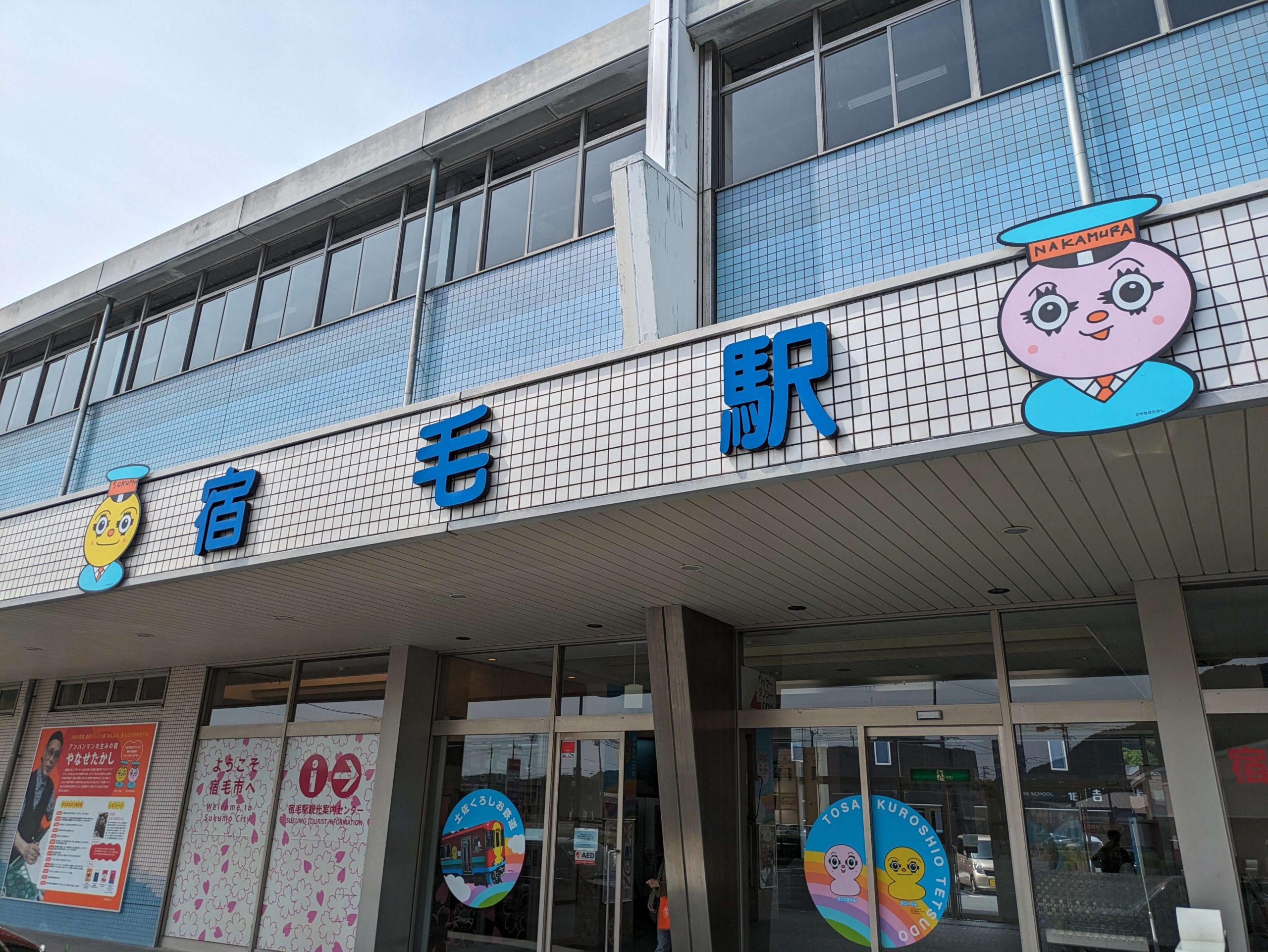
Yeahhhhh I don’t like these two characters. Bring back Takashi Yanase’s cute designs from the Gomen-Nahari Line…
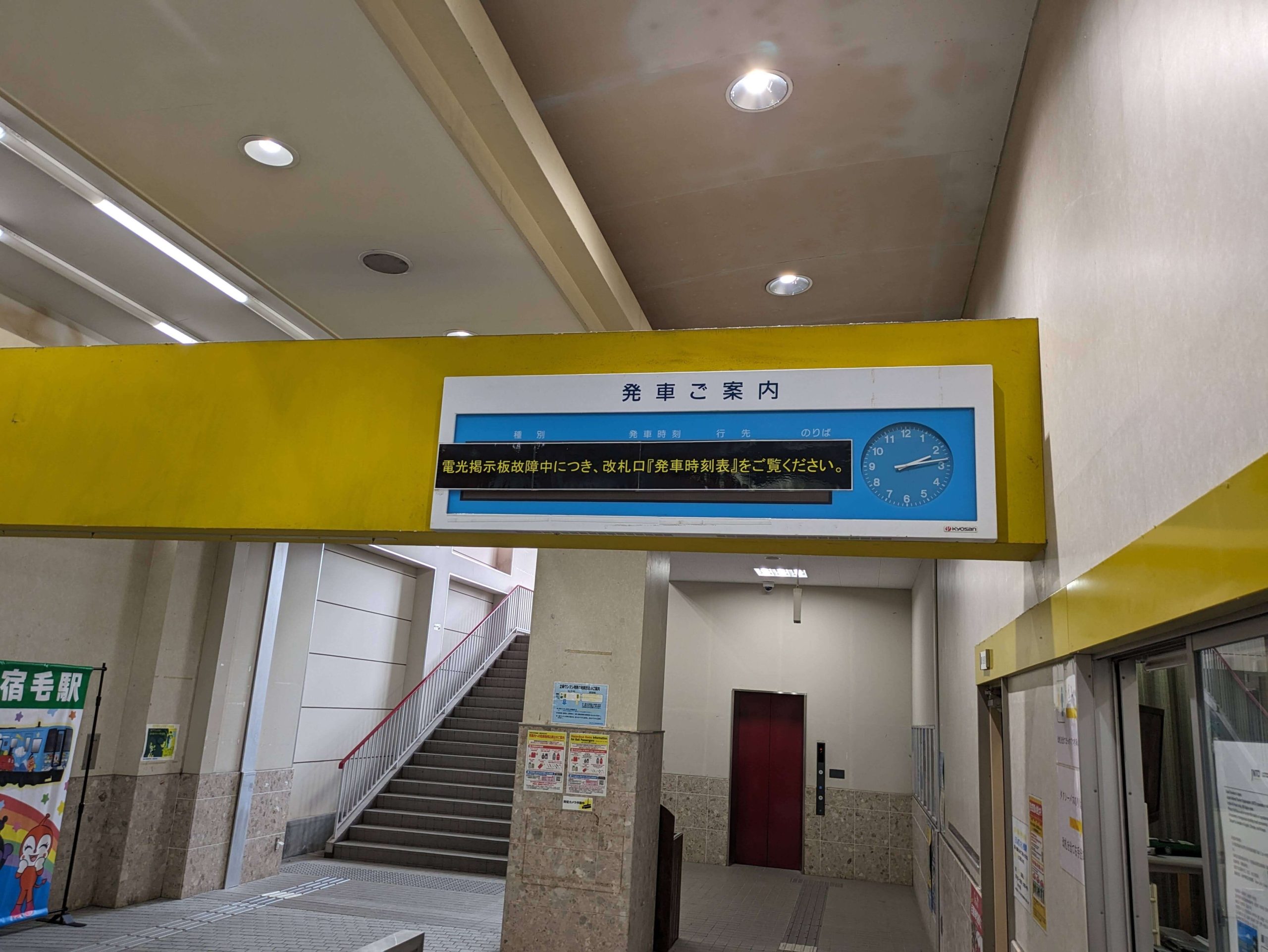
Walked around the station area as I wanted for my train and it was so totally deserted and dead… just like these departure boards, which had apparently broken and aren’t worth fixing. A paper timetable on the wall provided passengers with updated info.
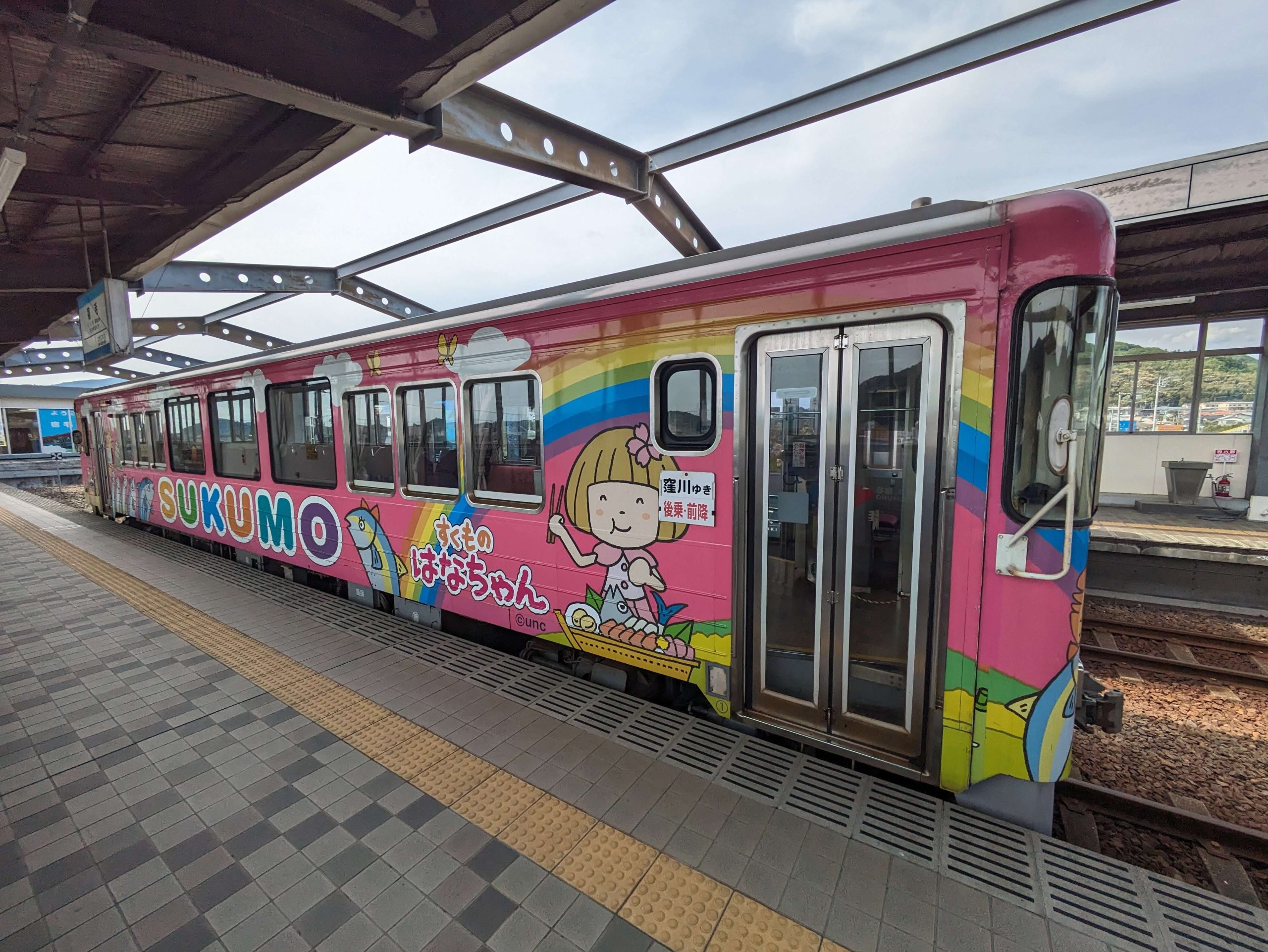
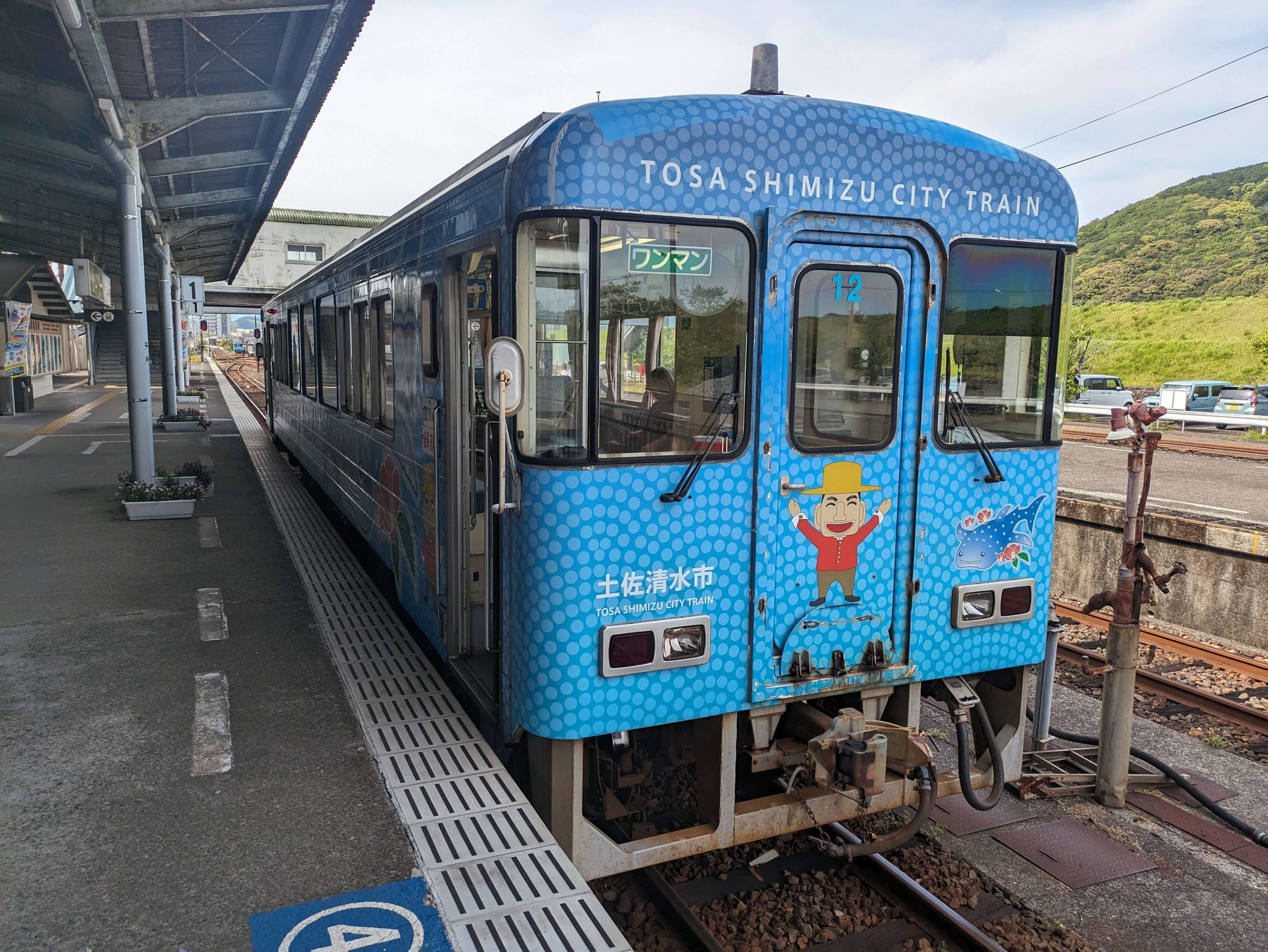
Another view of that pink train I saw in the morning, featuring Hana-chan, the city’s mascot, a seven-year-old girl who loves her hometown.
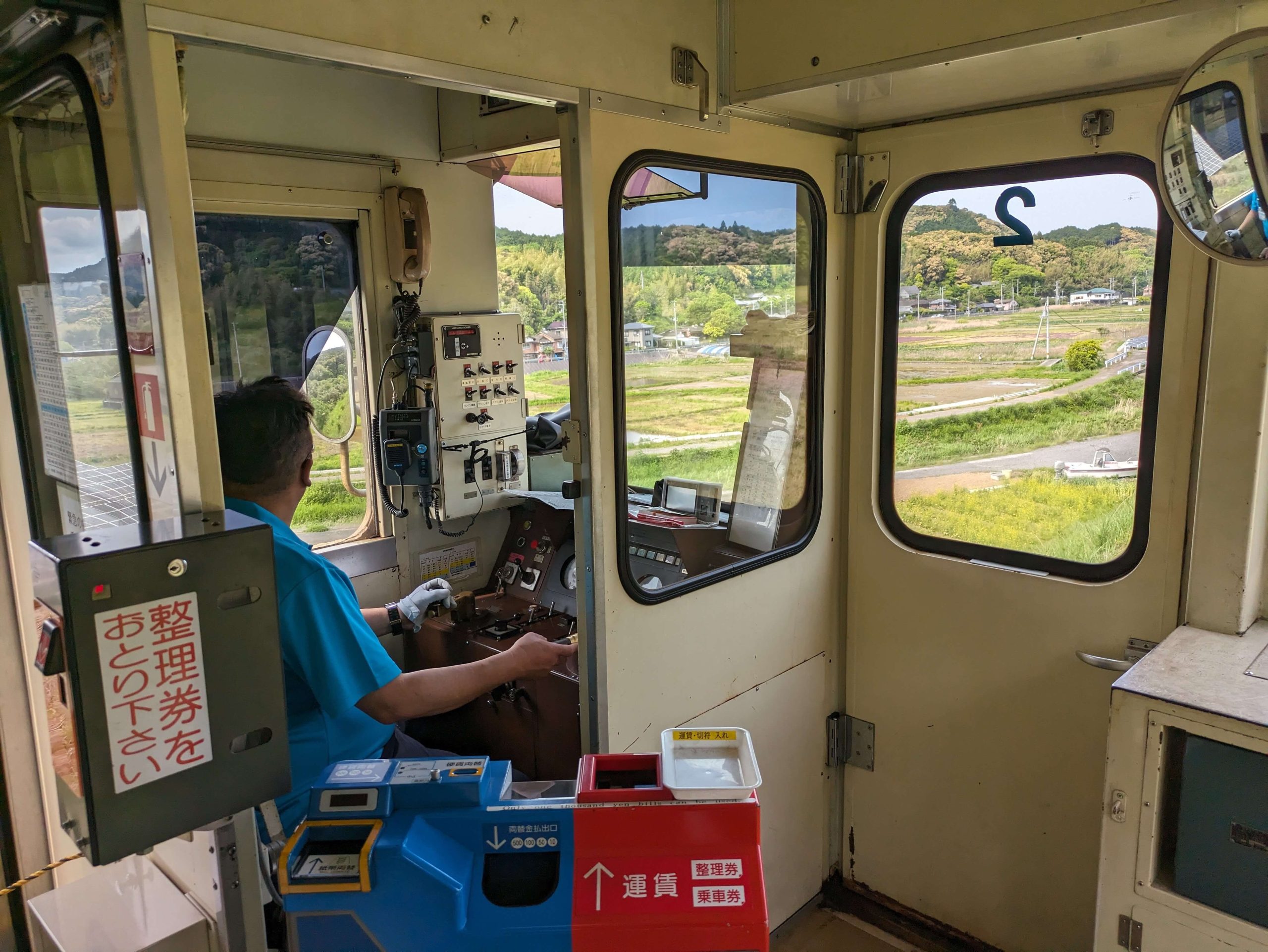
This is the MOST CASUAL ATTIRE I have EVER seen railway company employees wear in Japan, much less train drivers. This looks like he’s a TheBus driver in Hawaiʻi. This is so absolutely insane to me. I mean, it’s great to see, but is this the most chill railway company in Japan or something???
Mostly an uneventful ride, so not many photos from this stretch. It was pretty, but nothing amazing, and same goes for the train. Here was the next one I connected to at Nakamura Station.
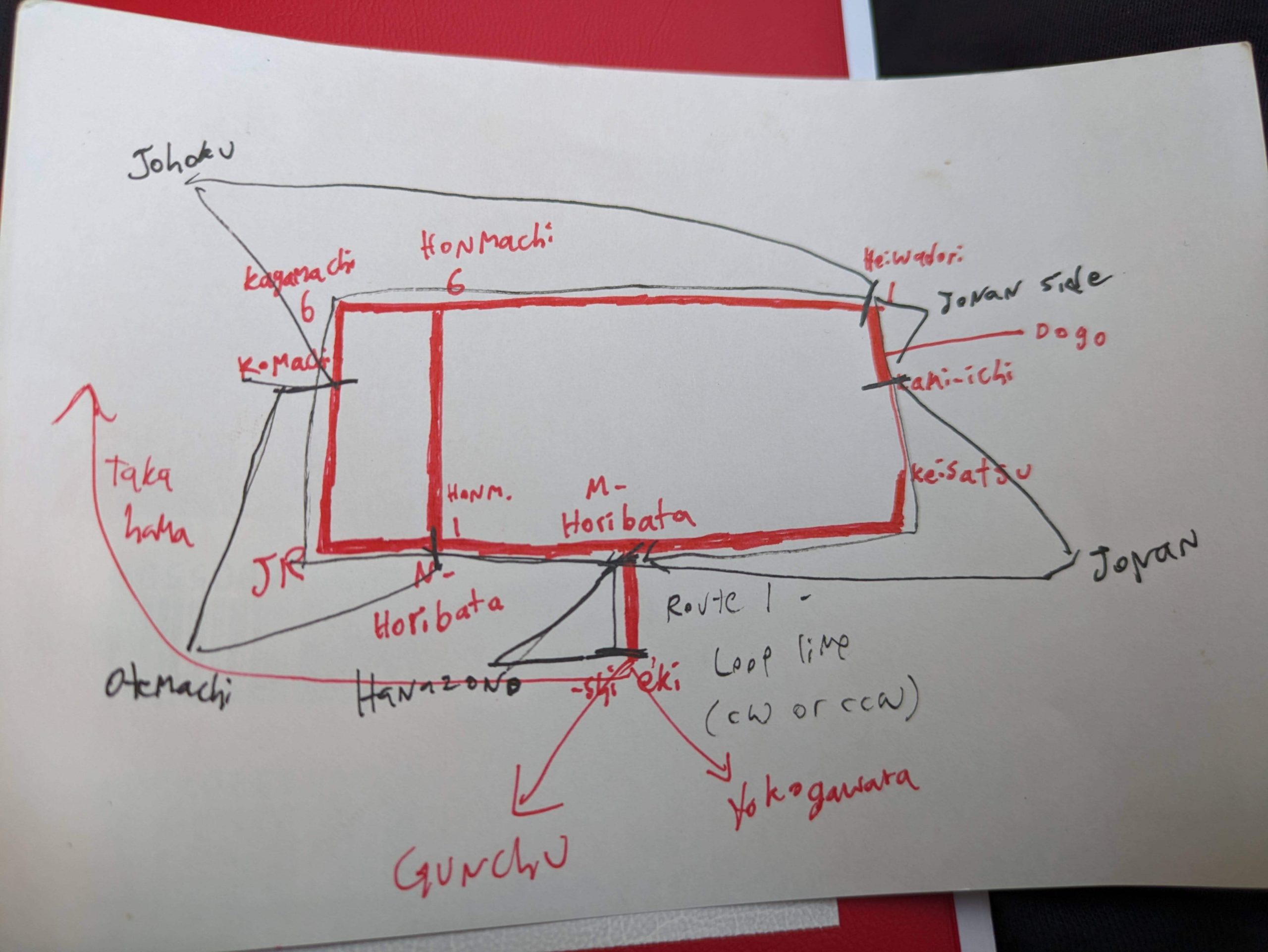
On the train I made some plans about how to finish riding all of Iyotetsu, Matsuyama’s private railway company, both their tram network (part of which I had ridden before) and suburban trains. The tram loop is divided up into a bunch of legally distinct different lines, which is how I need to log it on Noritsubushi, but operates as through-running routes instead (Wikipedia explains it a bit better) so it gets a bit complicated…
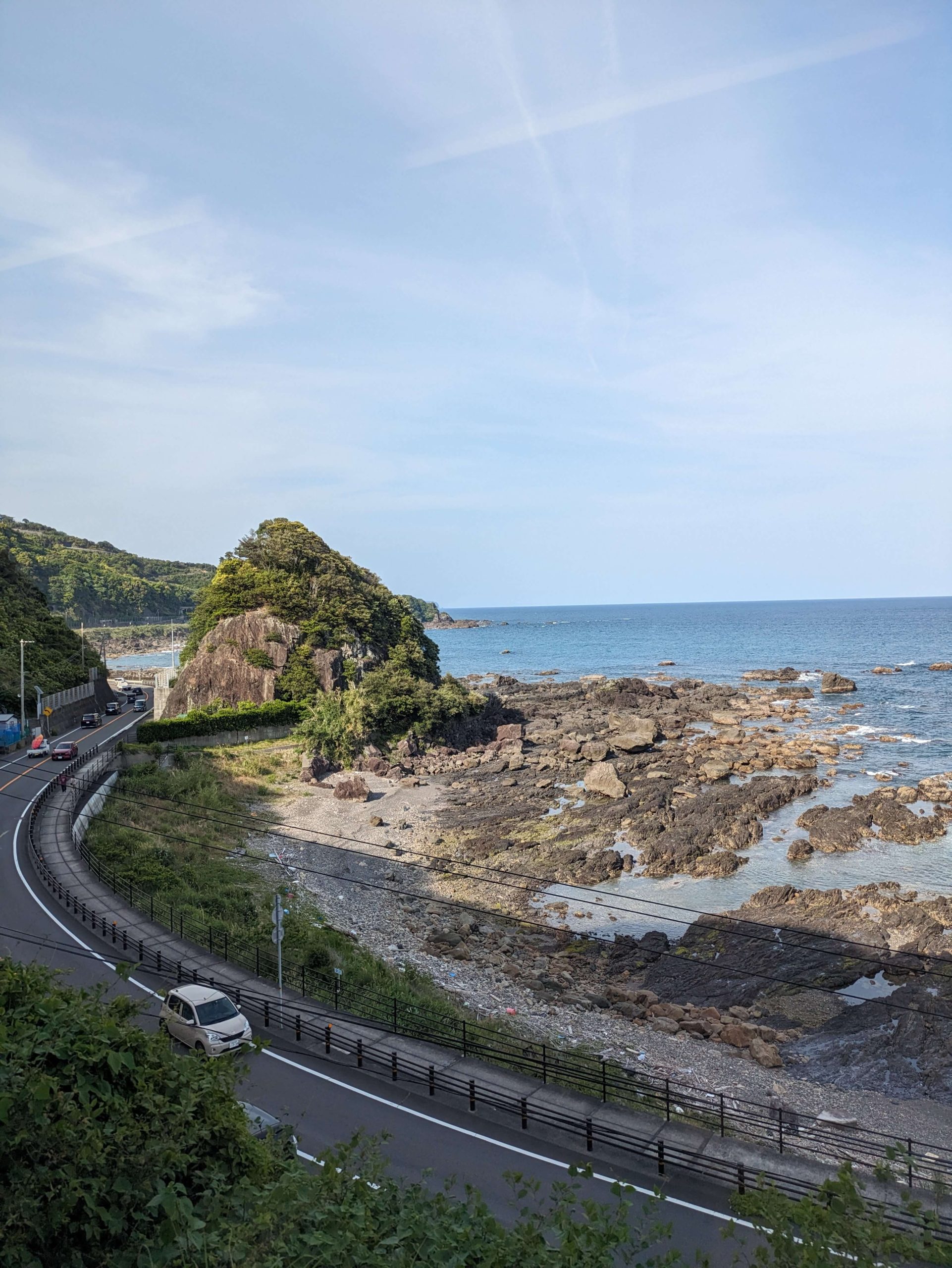
OK, this part of the coastline was pretty enough for me to take a photo of, at least. :)
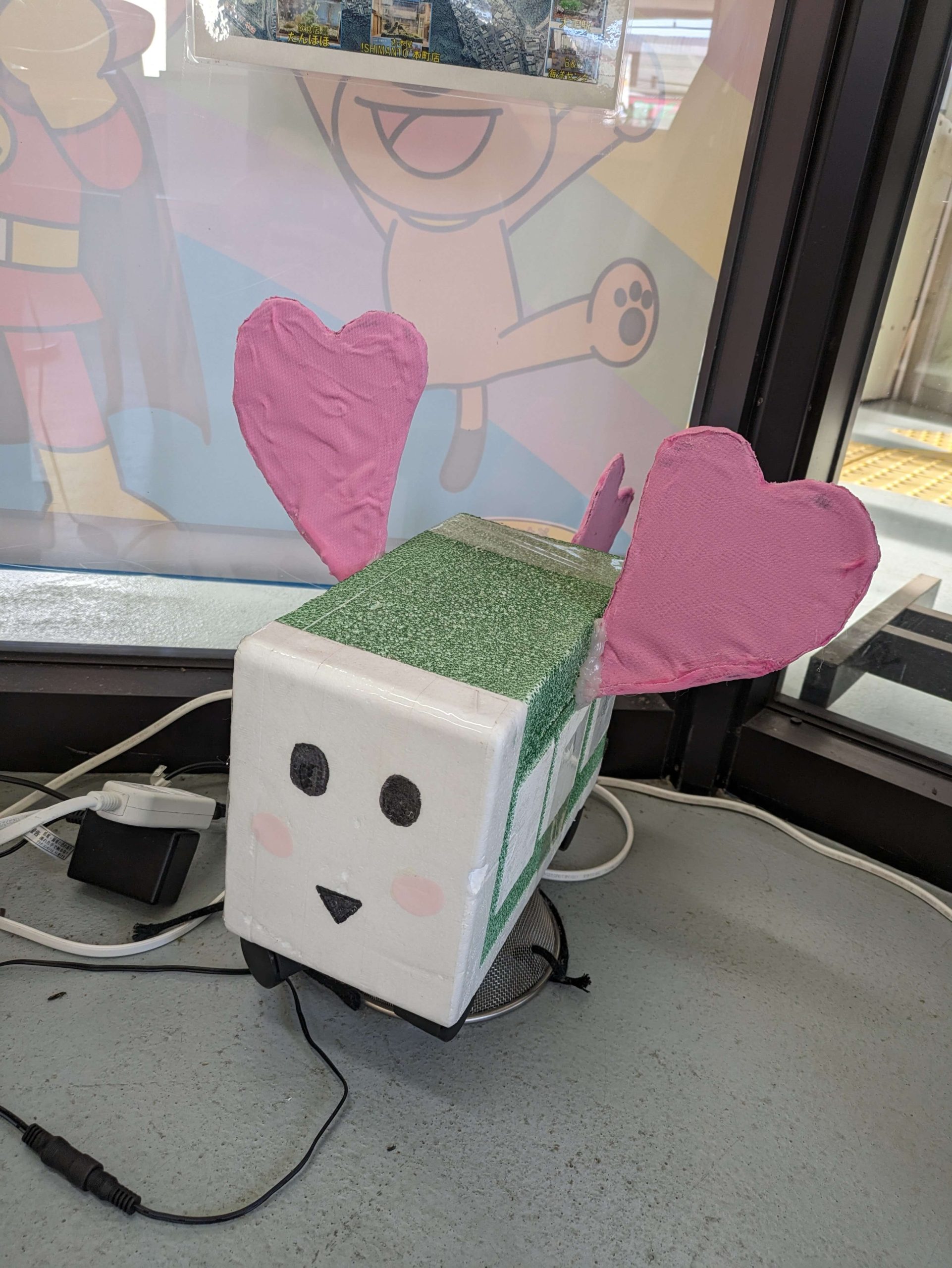
A very boxy Smile Eki-chan.
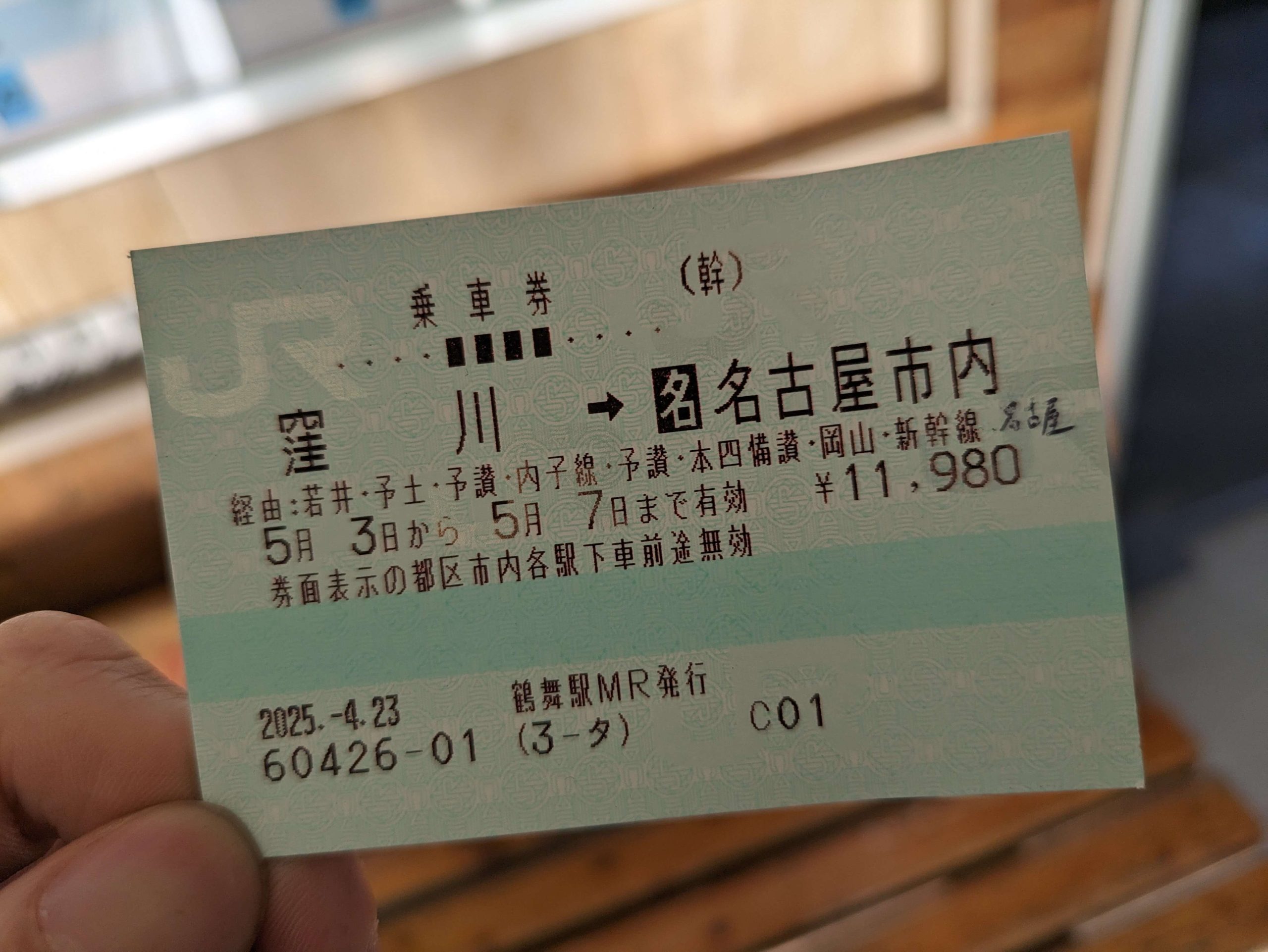
My long, loopy, JR ticket home began here. Kubokawa to Uwajima (or, almost, one station away from it because it’s on a dead end and you can’t double back), along the coast to Matsuyama, then the north shore of Shikoku and across the bridge to Okayama, and finally the shink back home to Nagoya.
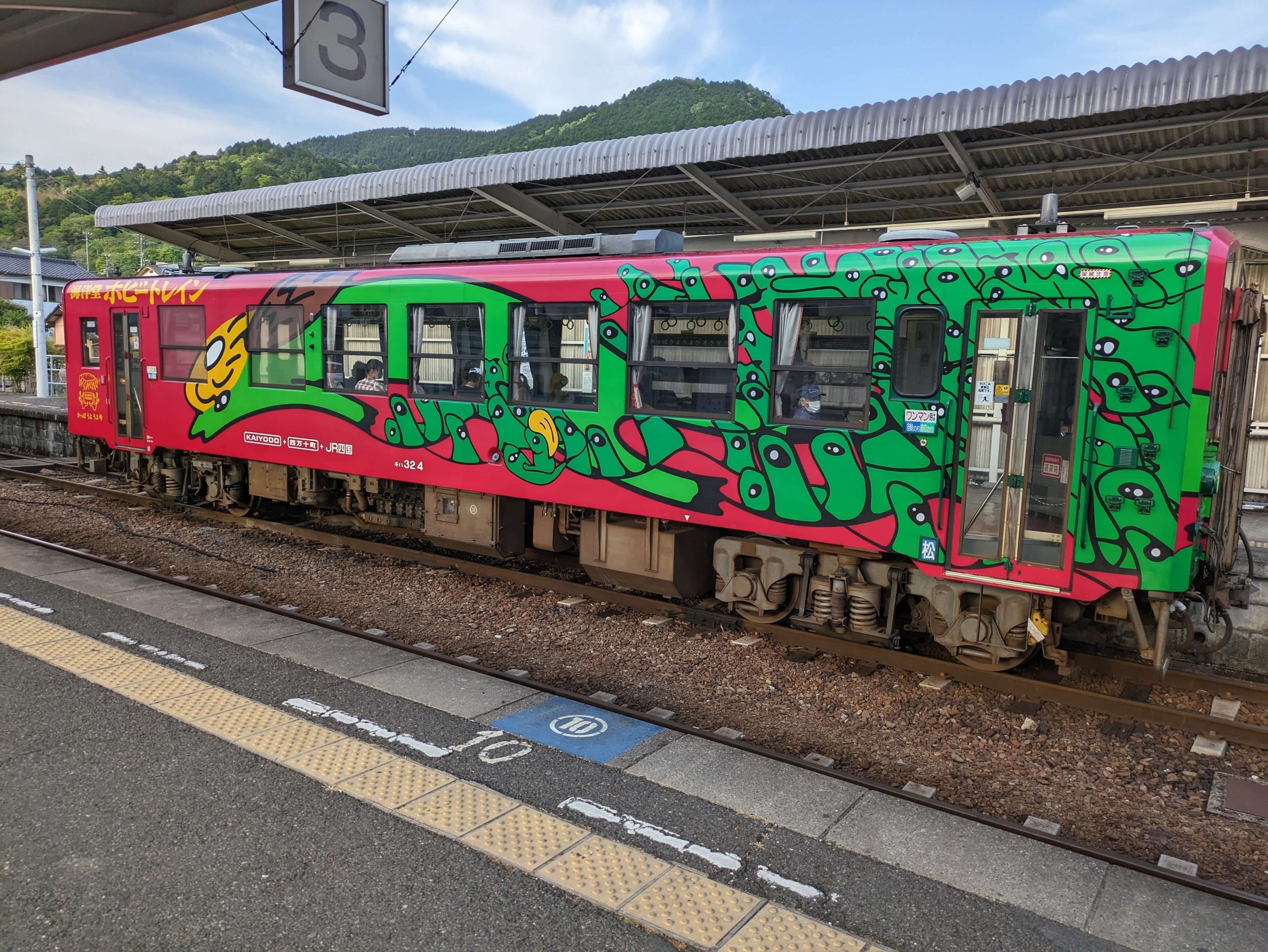
As I waited over an hour for my JR train to leave, this train pulled into the station and I was instantly obsessed.
As I subtly alluded to in the intro to this post, there are a variety of special trains running on JR Shikoku’s Yodo Line to try and attract people to the region, known as “Fun Fun Trains”. One of them has the mascot Smile Eki-chan on it; another has Ehime’s Mican (who I love and have written about before). Yet another has an open-air car, and one’s even affectionally called the “Shikoku Shinkansen” – as Japan’s only major island without a real shinkansen, that train is decorated to look like the original 0 series bullet train from the 1960s, or at least from the front. But the one I stumbled upon here, completely unplanned and unexpectedly, was…
The Kaiyodo Hobby Train, themed around one of my favorite classic yokai, kappa!!! Kaiyodo is that company I mentioned in part one with vending machines at Nahari Station, with a founder from Kochi, famous for making figurines and scale model garage kits. They have two museums, one focused on their company’s products and one focused on kappa, in Shimanto Town (which, by the way, is different than Shimanto City, both located in the same area of Kochi Prefecture but located ~30 km away from each other) near where Yodo Line runs. Kappa are said to enjoy clear water; the Shimanto River is called the “last remaining clear stream” in Japan, thus the train’s theming.
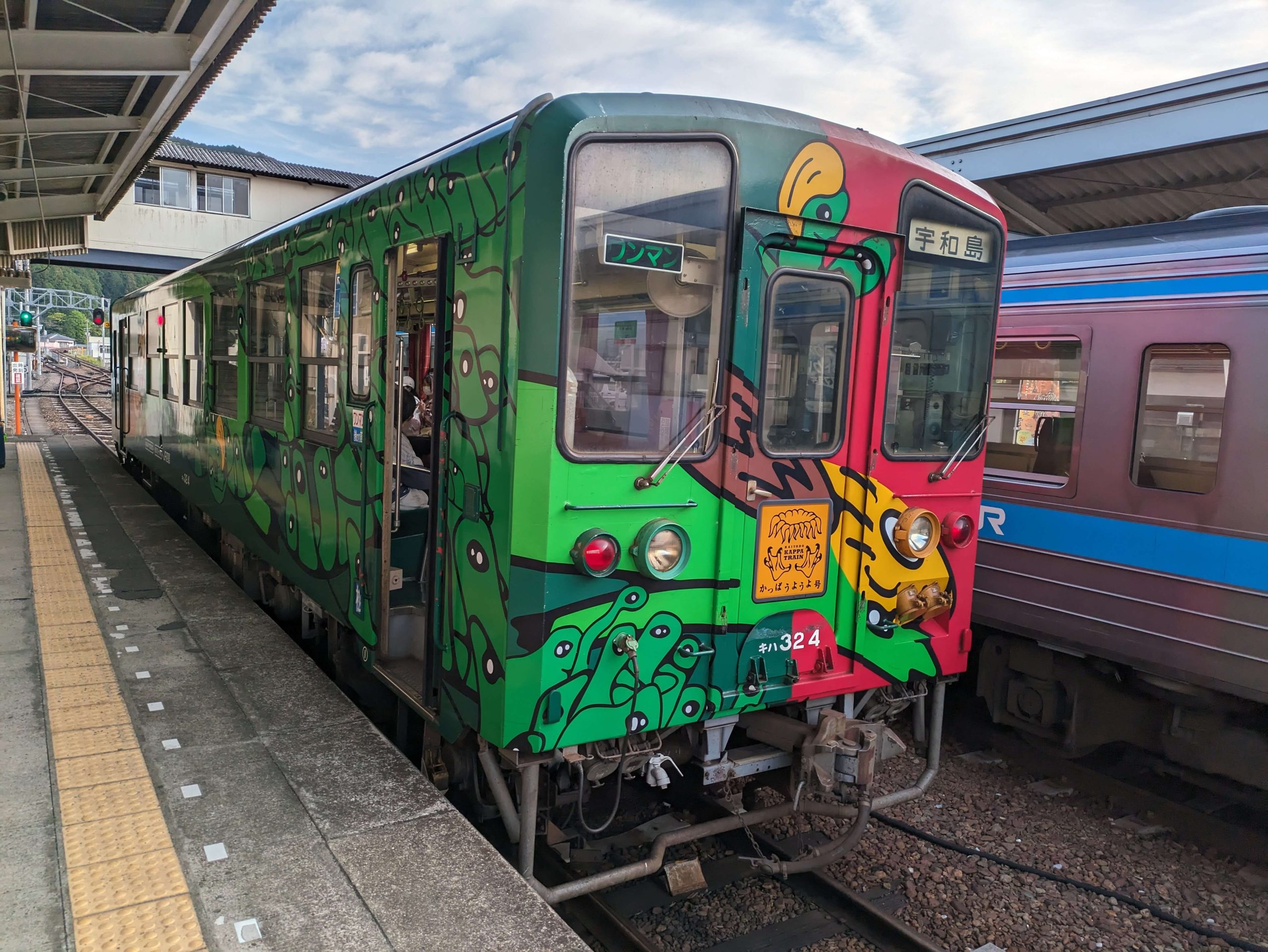
Such a cool, unique livery! Almost looked like the train had been graffitied.
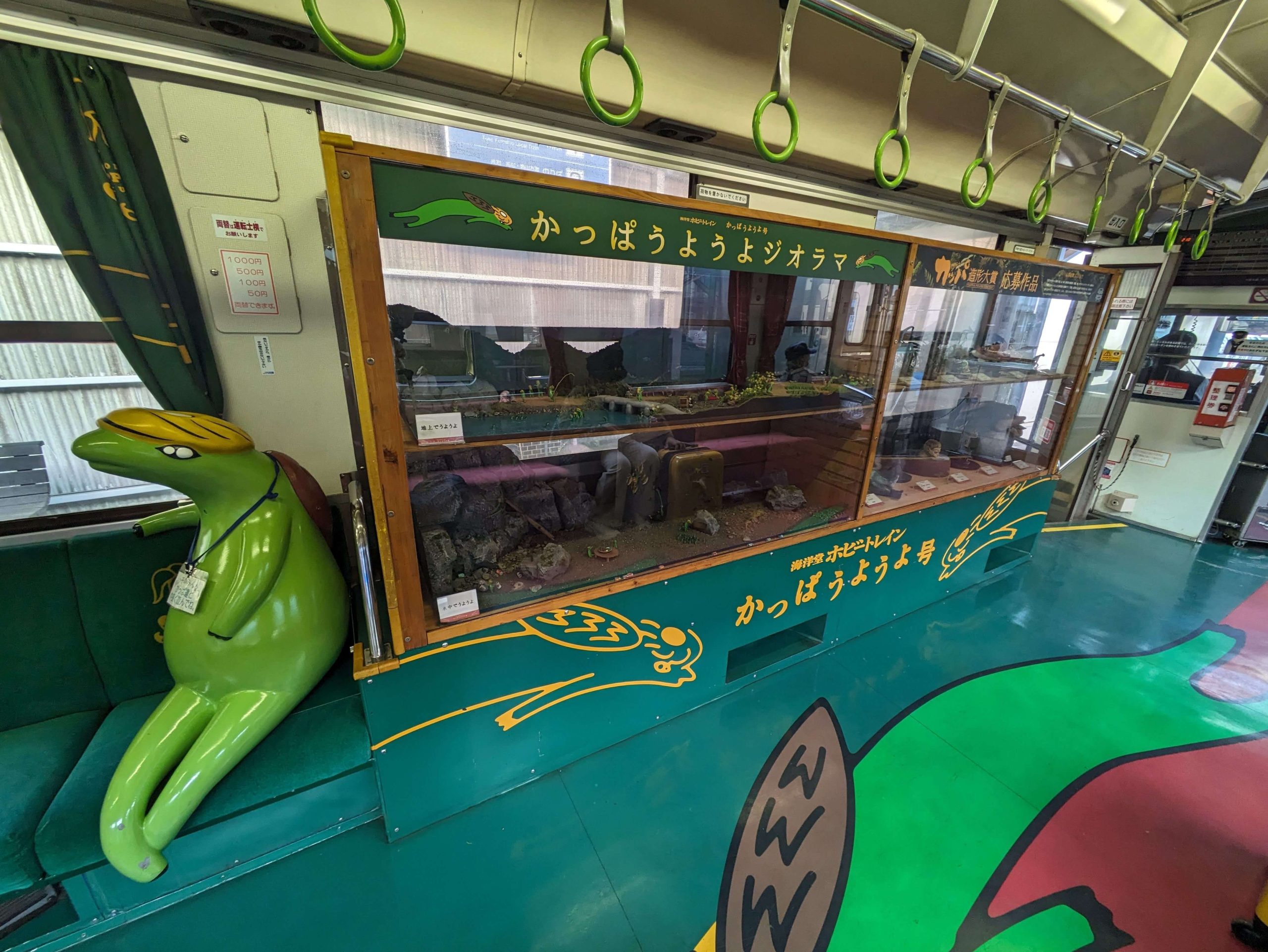
Inside the train was a whole diorama depicting the lives of kappa above and below the water. You can see a 360° view here.
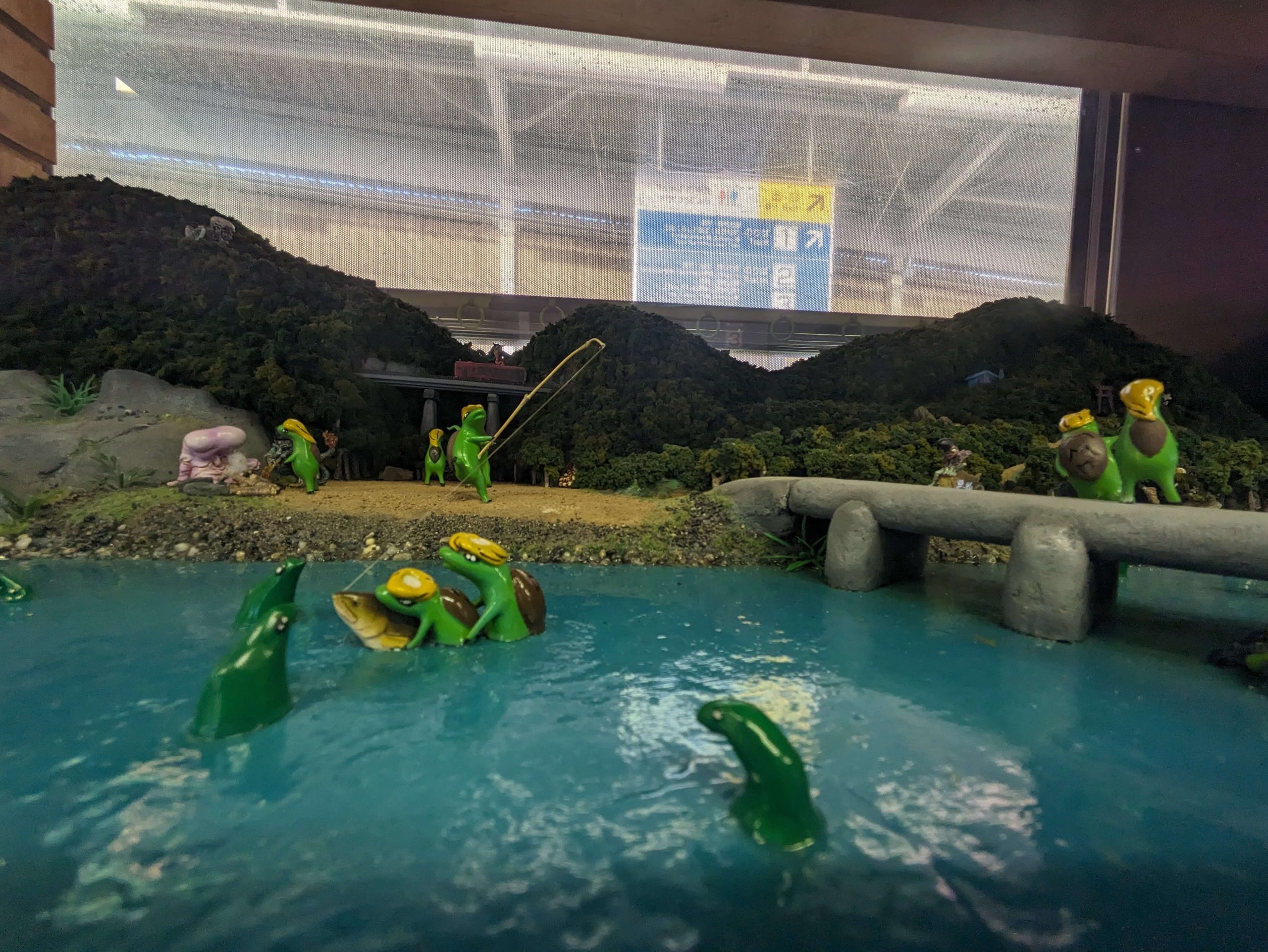
A horde of kappa basking in the clear river. The blue was just a thin layer, and underneath was hollow, with kappa suspended with wires in the “water” as if swimming alongside sea life.
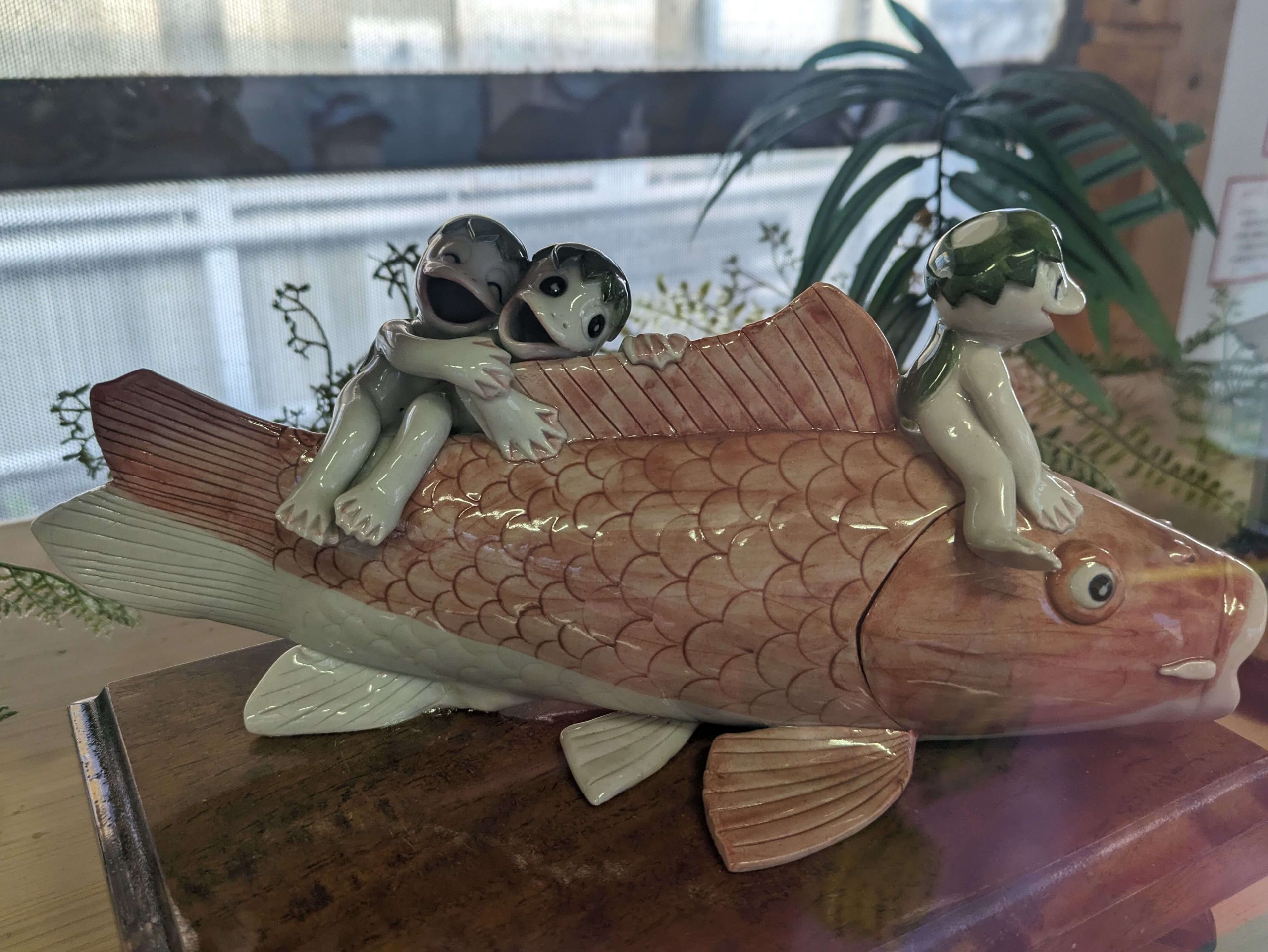
These great ceramic guys were having a lot of fun going for a ride on a big fish.
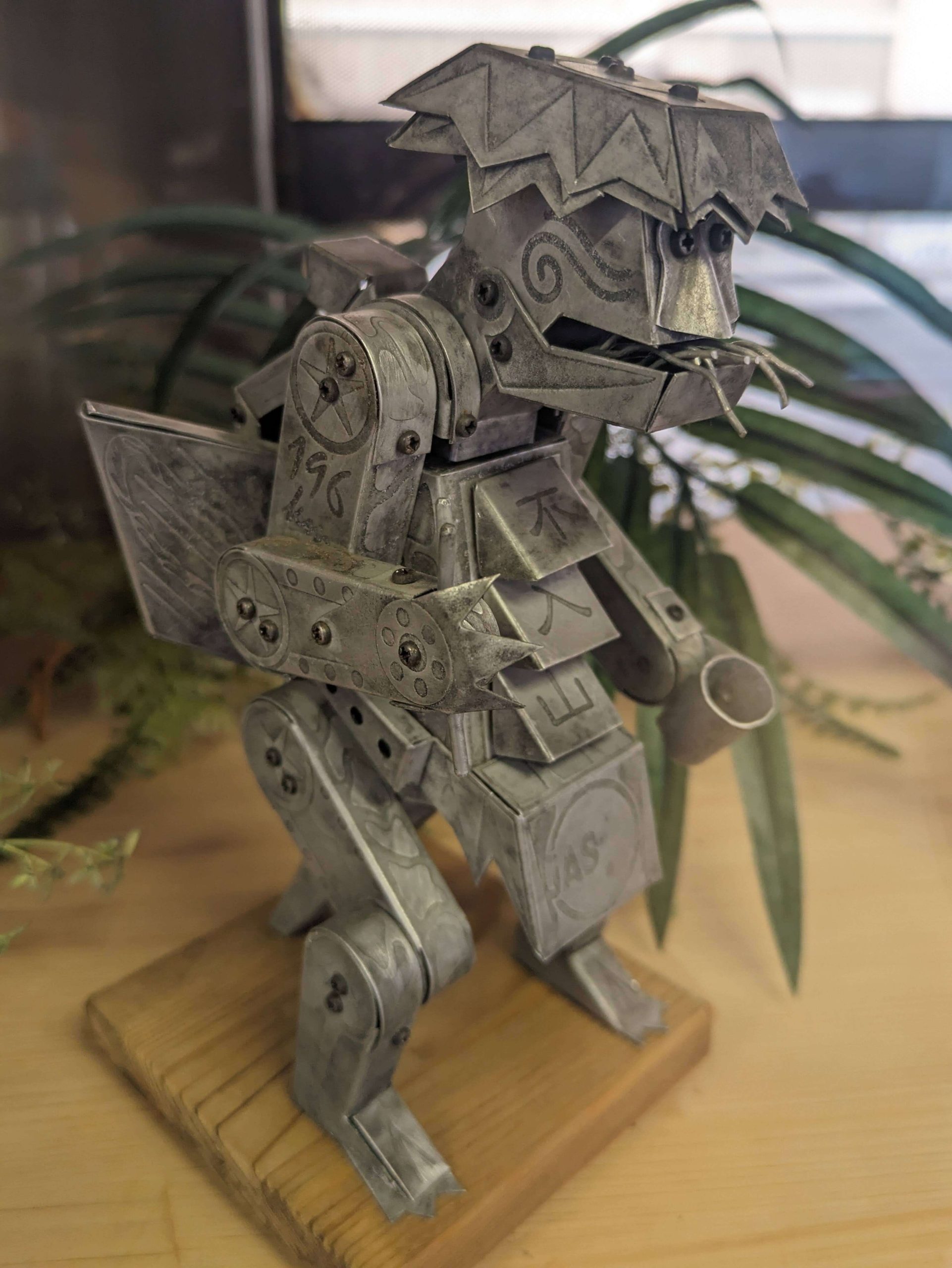
Aztec-inspired kappa?
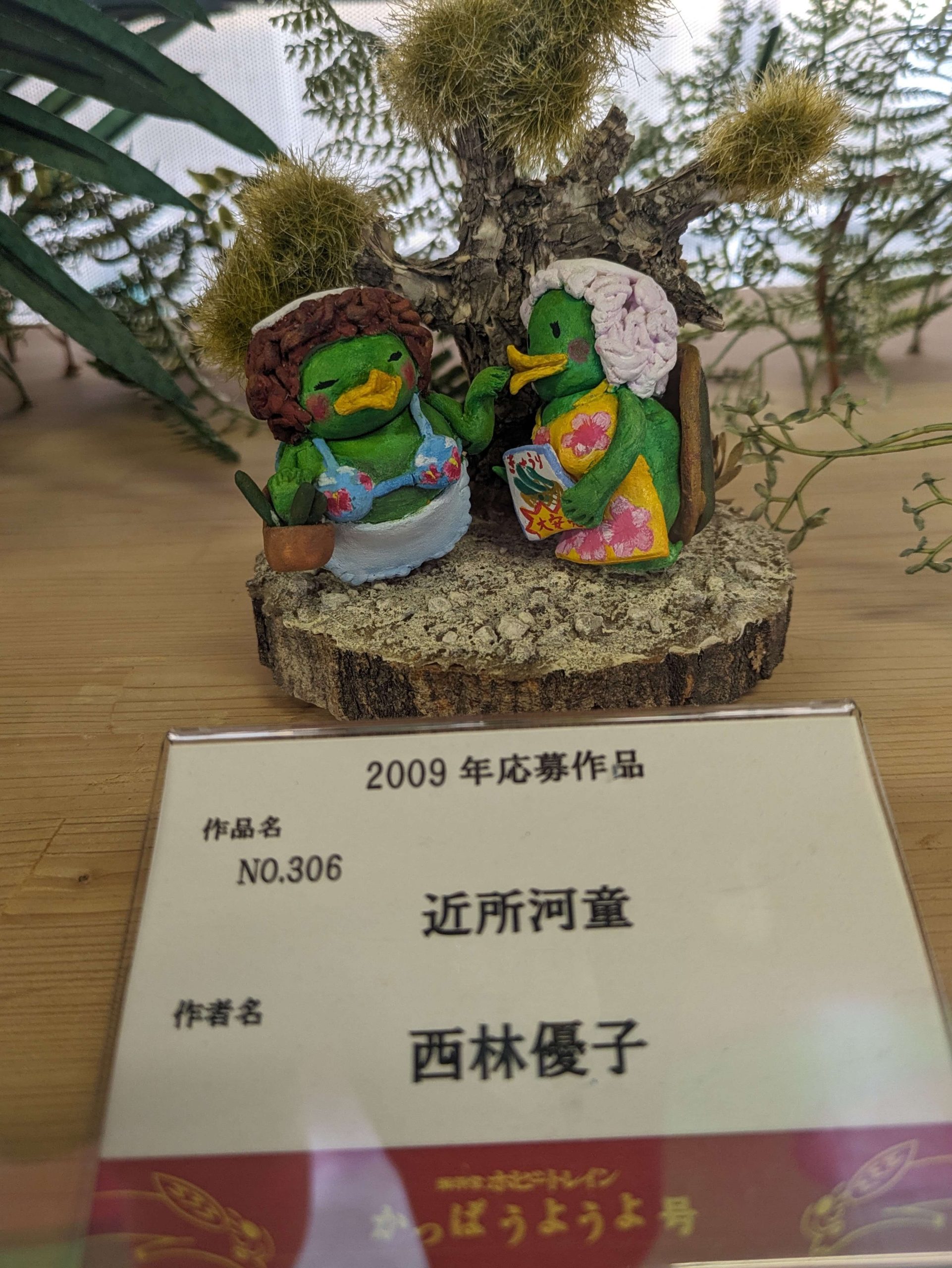
Every piece in the mini gallery had a title and artist name posted.
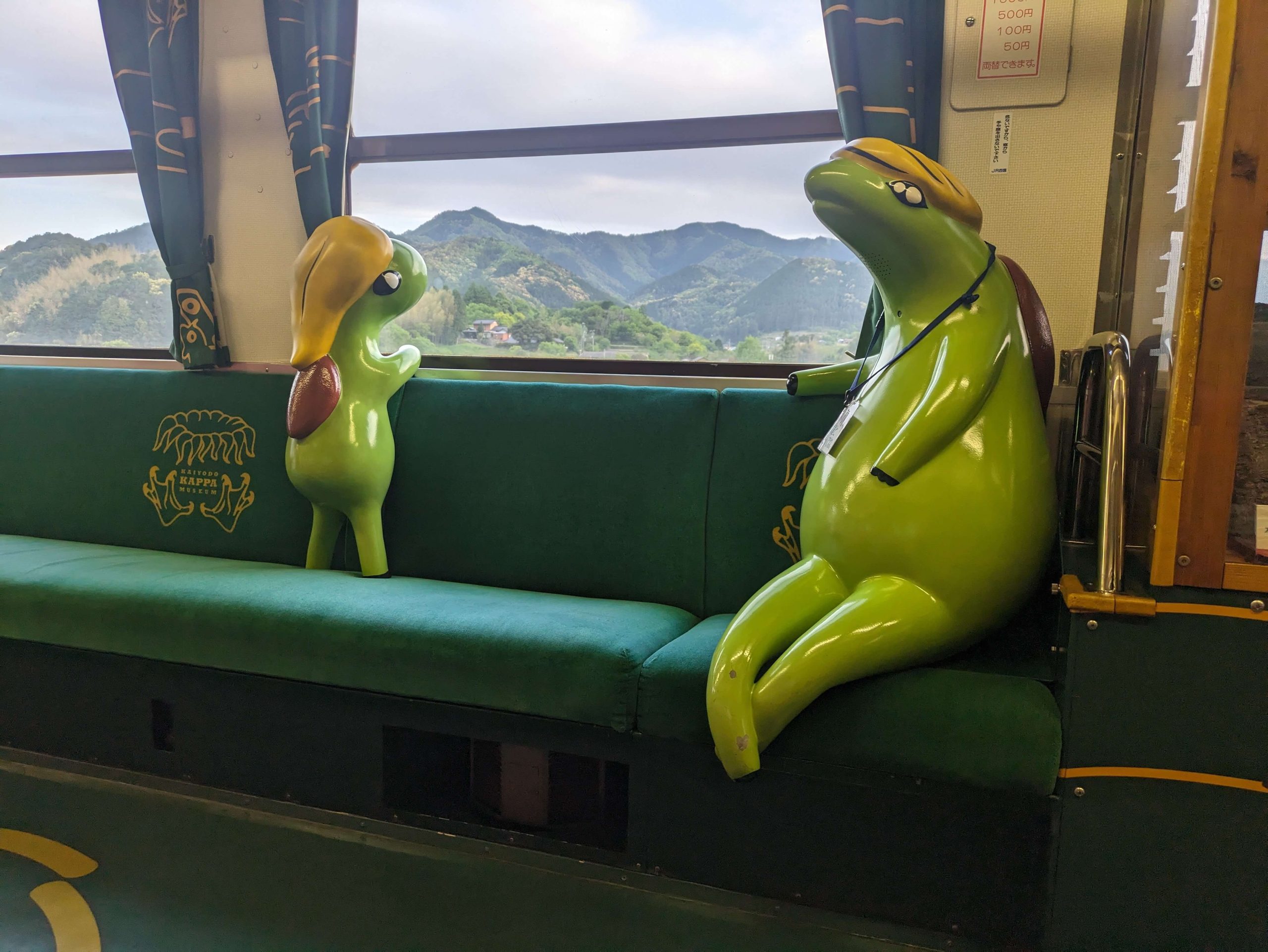
I LOOOOOVED the little kid kappa looking out the window of the train as we rolled along!!!!!!!!!!!! This is how I feel riding trains :’)
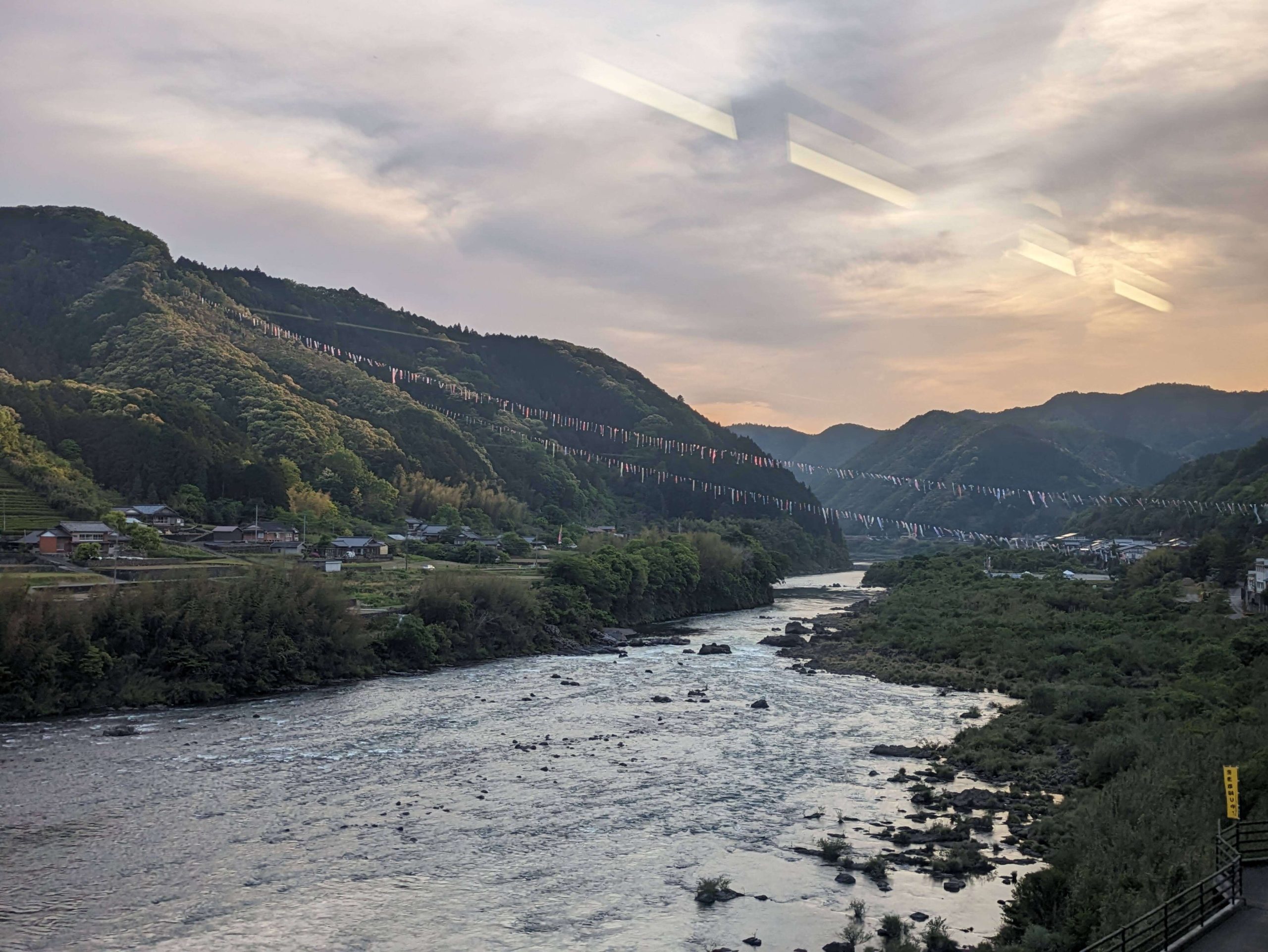
Two gigantic strings of koinobori for Children’s Day stretching the entire width of the Shimanto River, backgrounded by the setting sun.
We unexpectedly passed the so-called Shikoku Shinkansen headed in the other direction! Didn’t have enough notice to get a good shot, but I still managed to slightly blurrily capture its famous face. COME ON SHIKOKU!!
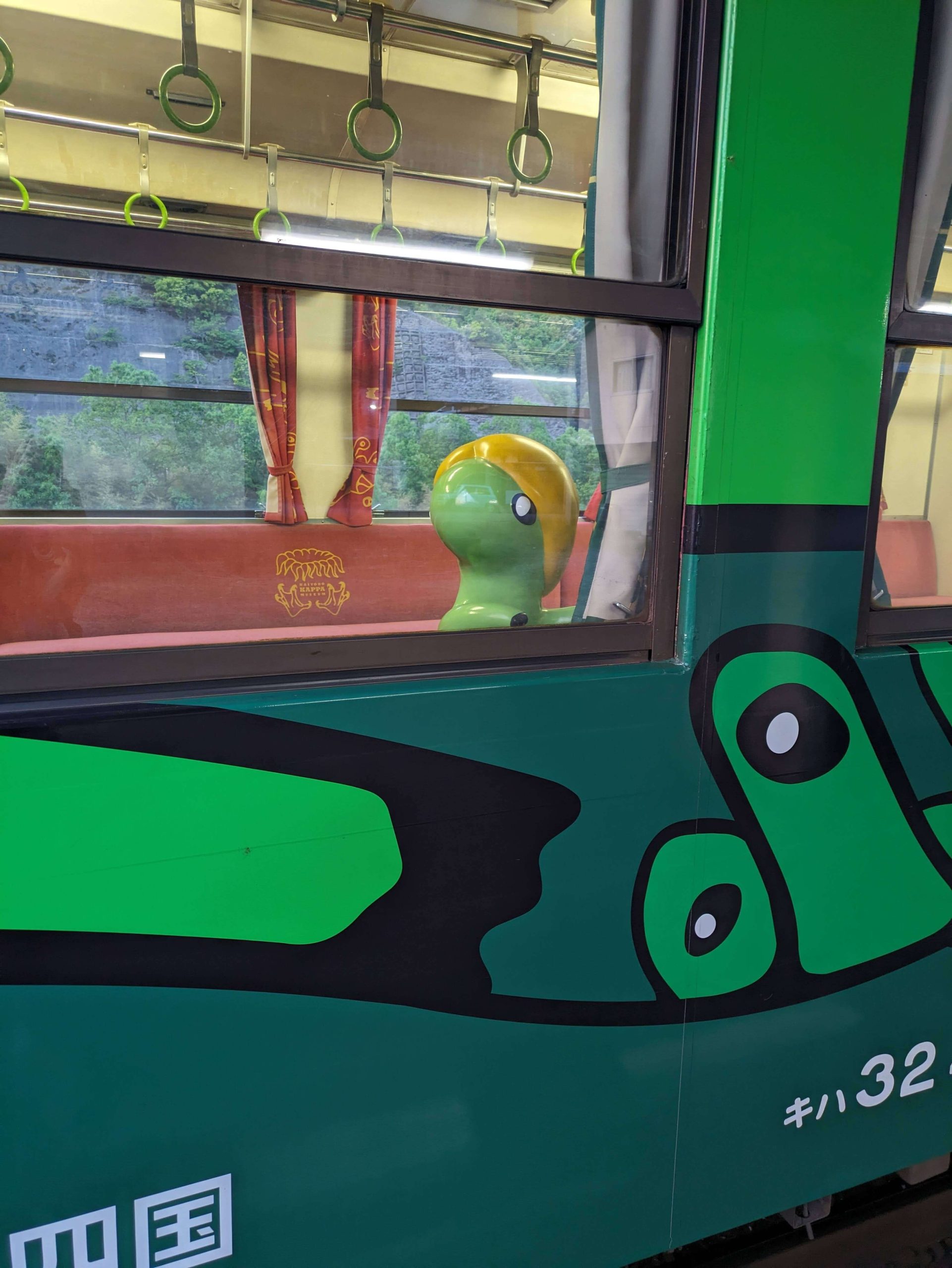
Watching the world go by.
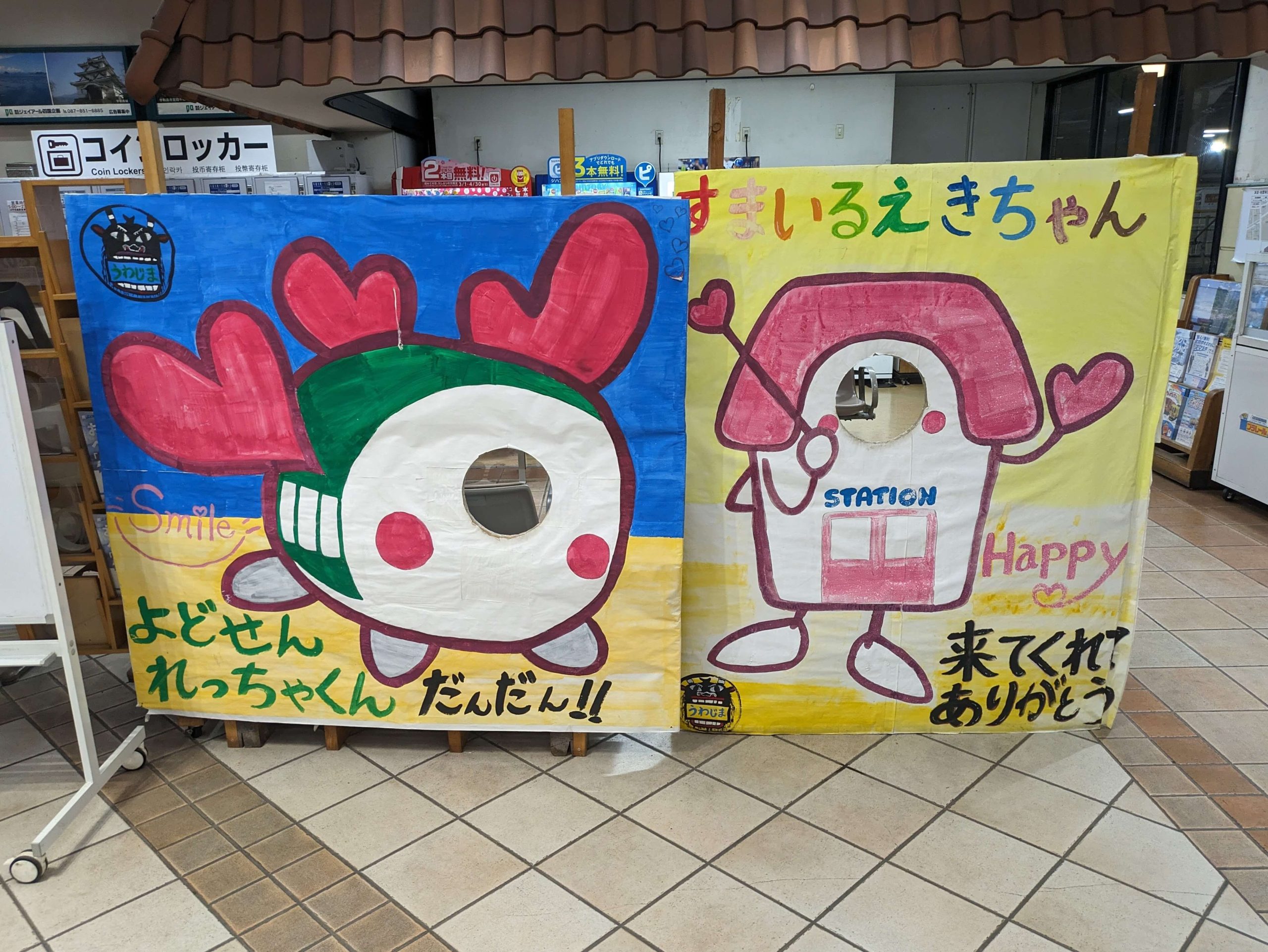
Smile Eki-chan and Reccha-kun were waiting for me when I arrived into in Uwajima Station.
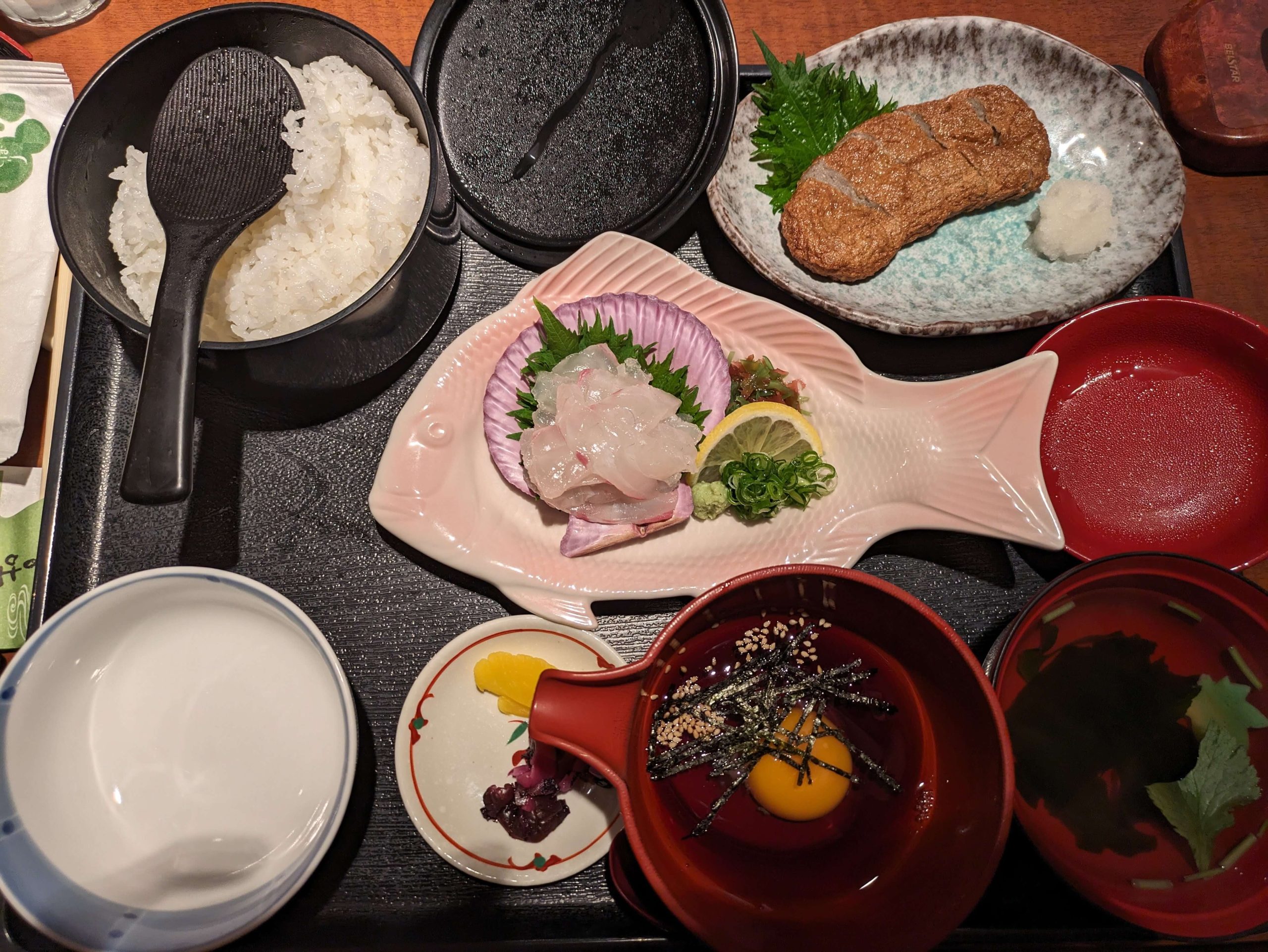
For dinner I of course got Uwajima’s most famous food, tai meshi, or sea bream rice. There are two styles of the dish, one famous here (eaten raw with an egg mixture) and one in Matsuyama (eaten cooked). This was my first time trying Uwajima style and I admit it was not my favorite of the two. 😅
Sunday, May 4, 2025
Today’s transit:
9:46 Uwajima / Uwakai 10 (JR Yosan Line) → 10:35 10:37 Iyo-Ōzu
10:57 Iyo-Ōzu / Iyonada Monogatari Futami-hen (JR Aiaru Iyonada Line + Yosan Line)
→ Shimonada → 13:03 Matsuyama
🚊 Iyotetsu’s city tram & suburban trains (didn’t record times)5OK, actually I was able to reverse engineer a few:
16:15 Matsuyamashi / Takahama Line → 16:36 Takahama
16:43 Takahama / Takahama Line (thru to Yokogawara Line) → 17:08 Ishitegawa Park
17:23 Ishitegawa Park / Yokogawara Line → 17:51 Yokogawara
17:59 Yokogawara / Yokogawara Line → 18:28 Matsuyamashi
Then after that I rode the Gunchu Line and the city tram around in a counterclockwise circle but didn’t write down times or even take any photos since I was tired :)
On this penultimate day of my trip, I took one of the most incredible train rides of my life that I had been wanting to do ever since moving to Japan. It’s also one of the most famous, certainly among railfans, and seats are some of the most sought after nationwide. Especially since I was traveling over Golden Week – a holiday period – in order to get tickets, I did what was known as 10時打ち jū-ji-machi, involving heading to a ticket counter before 10 a.m. a month in advance (when tickets go on sale) and coordinating with employees to buy the tickets you want the second they become available via MARS.
A month before this day of my trip, I was traveling with my mom and was in Kyoto – a very busy place that would be presumably packed with tourists, unlike my local station at home! So what I needed to find was the least busy ticket office near Kyoto, and I narrowed it down to two possibilities, Nagaokakyo to the west or Otsu, just across the prefectural border in Shiga, to the east. While digging for data to help me decide, I came across the great site railway.sidearrow.net (now listed on my trip-planning resources page) and compared passenger numbers at my two candidates – 33,406 per day at Nagaokakyo, per data from a few years ago, and just below that at Otsu, 32,150. Almost equal, but considering Nagaokakyo’s location in the busy Osaka–Kyoto corridor, I went with Otsu instead.
I took the 9:16 a.m. train out of Kyoto toward Yasu and arrived at the station just before 9:30. There was absolutely nobody in the Midori-no-madoguguchi ticket office (which is joint with the staffed gate and fare adjustment office, all-in-one). Outside the station was a big senior citizens walking group taking roll call. I told the employees at the counter that I wanted to buy a ticket for the Iyonada Monogatari, and they laughed, saying yeah, that makes sense why you want to buy it right at 10! They flipped through their big paper timetable book to confirm the details and then gave me an old-school laminated “#1” chip from a keyring they had to dig out of the back (I forgot to take a pic of the instructions written on the back side of it, sadly!) and told me to come back to the desk at 9:55. A few people showed up during the half hour interval to purchase tickets, but it was back to being empty at 10 a.m. Turns out I got lucky and didn’t arrive that early at all, but it was still helpful to have them prepared and ready to issue it.
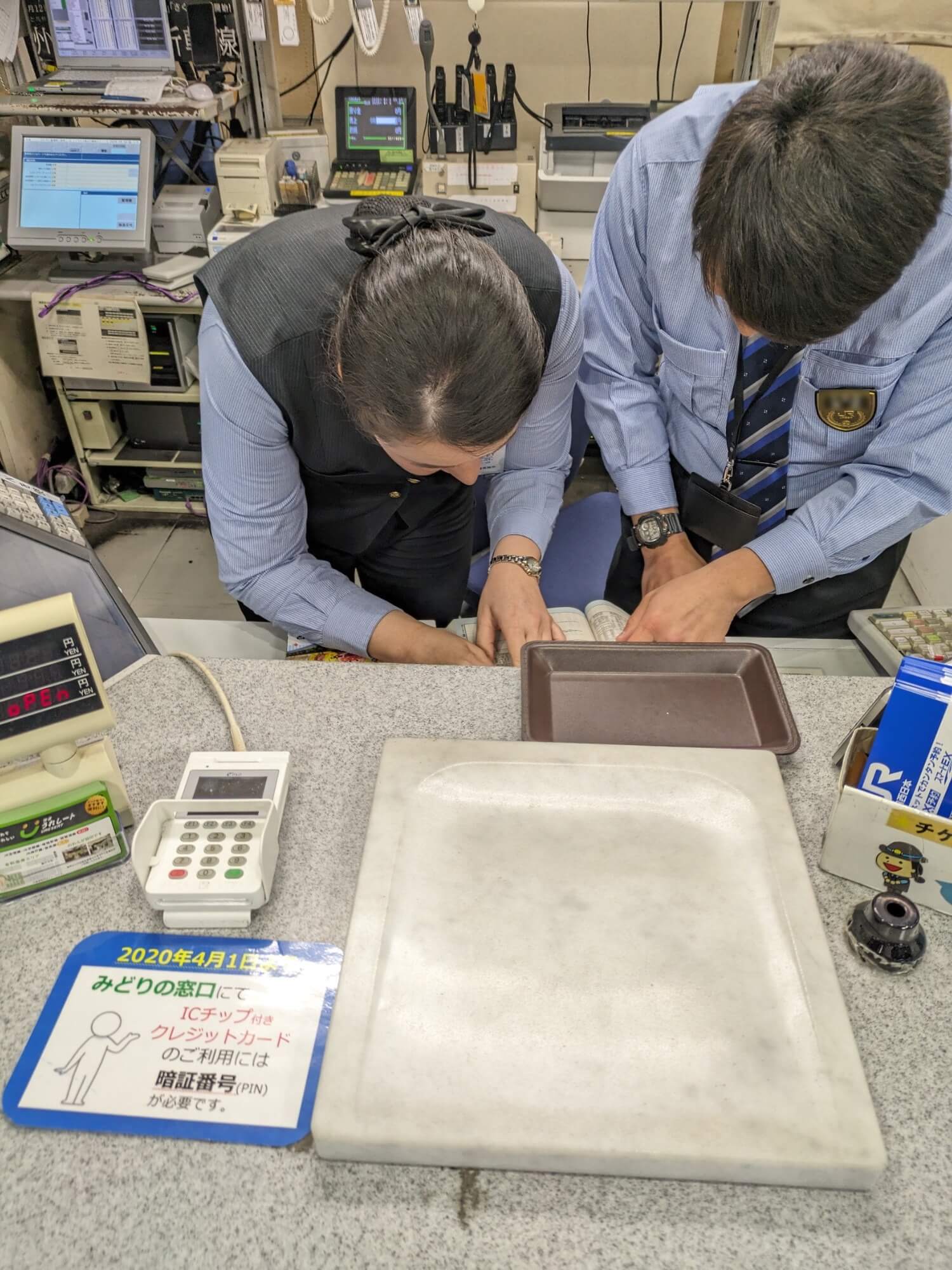
Searching for my train departure time to get it ready in the system.
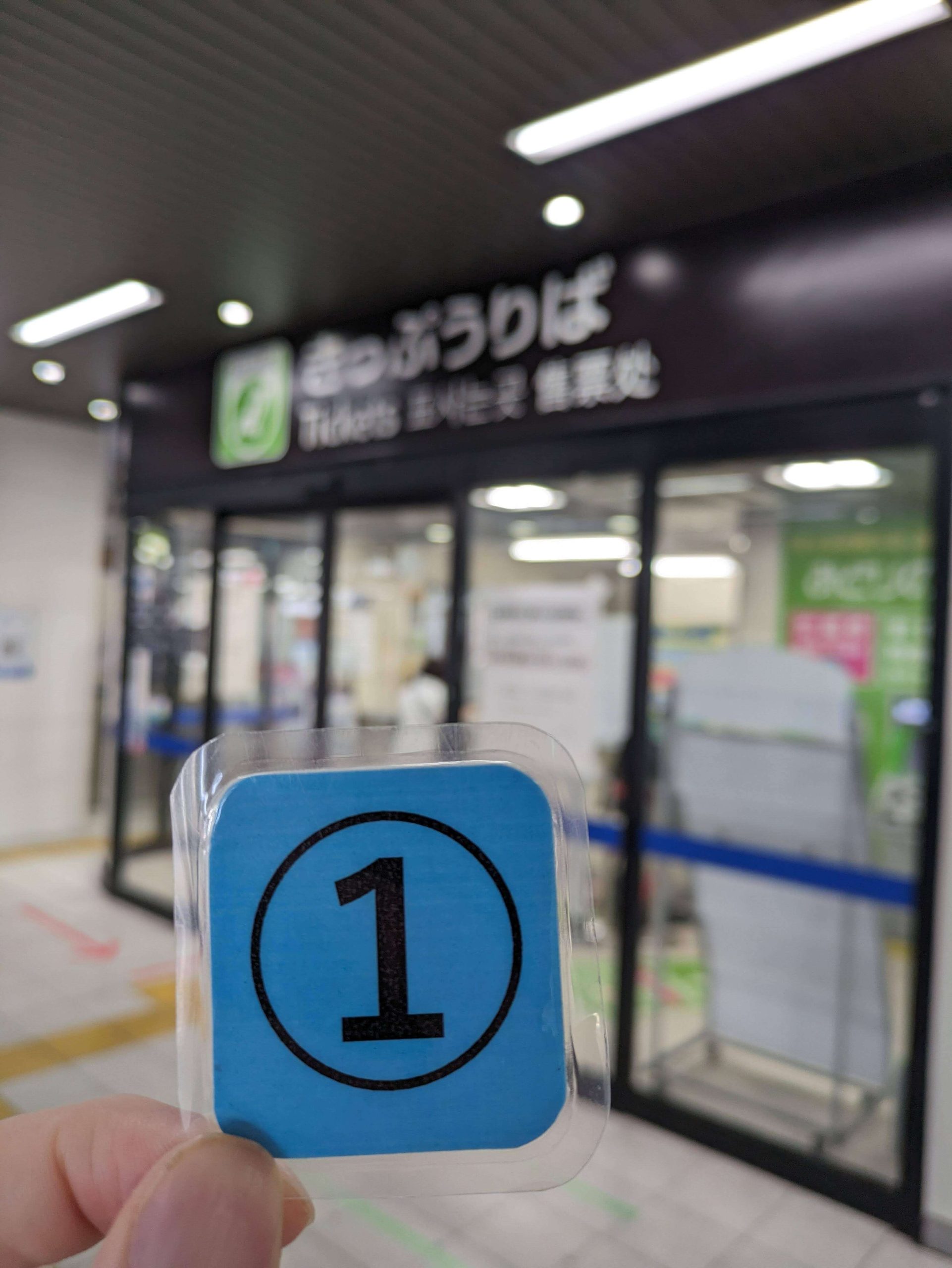
First in line to get tickets at exactly 10:00:00 a.m.
The experience was super fun. And tense! The three staff there were all watching their wristwatches and counting down out loud, and at exactly zero seconds they started furiously mashing buttons on their computer terminal. One of them started saying “yabai, yabai…” about twenty seconds before which stressed me out a bit – but they figured it out in time. The staff got me the exact seat I wanted, ocean-facing, at the end of the car, and were pretty excited they got it for me. And of course I was beyond thankful and excited too! (And then I got to ride the Keihan street-running train to get back into Kyoto, which was something I had wanted to do as well!)
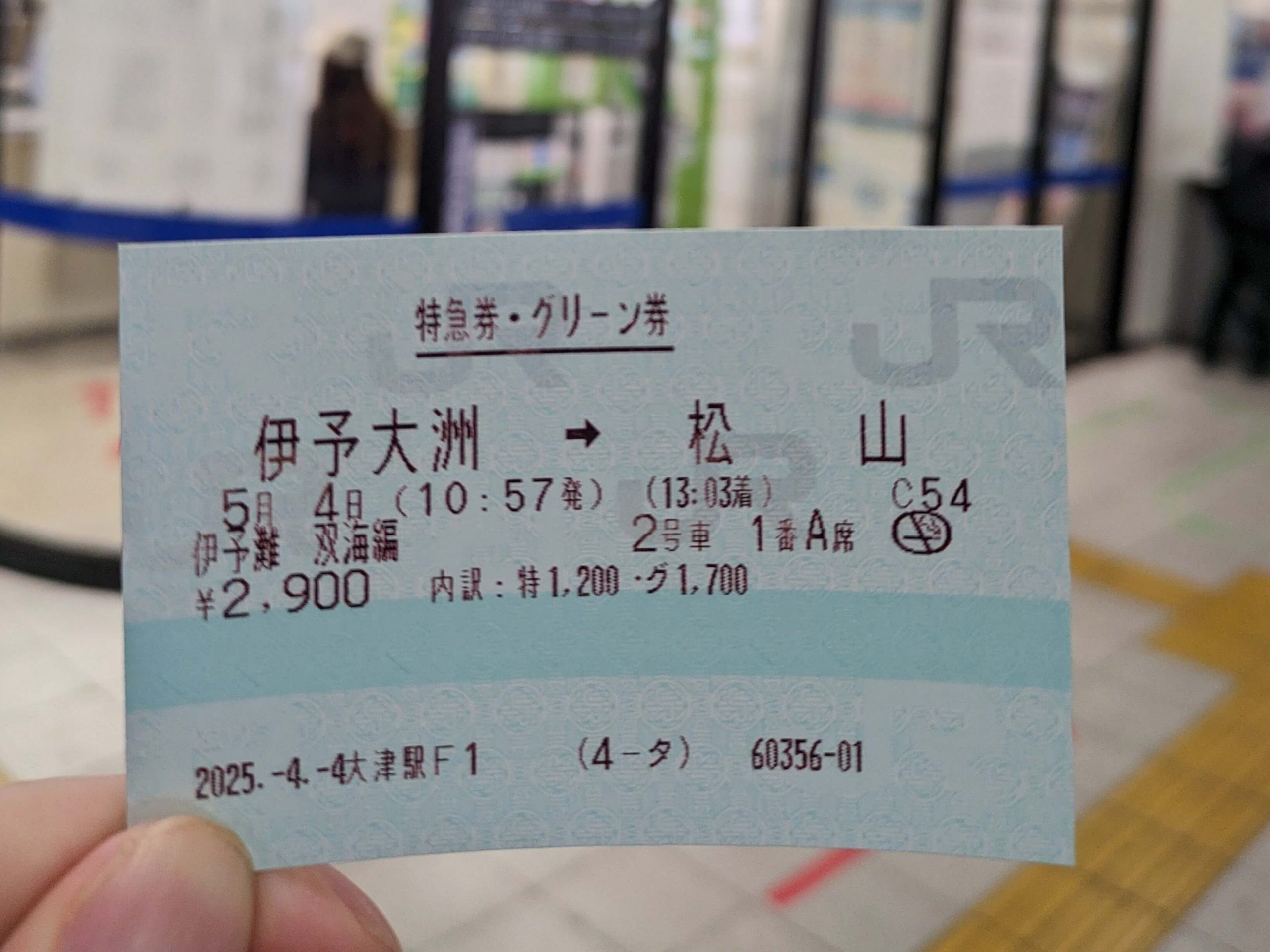
Success!!! My seat on the Iyonada Monogatari!
So, with that ticket in hand a month later, my first limited express train that morning departed from Uwajima toward Iyo-Ōzu Station, heading 50 minutes to the north to let me get to my embarking station in time. And then it was time to board one of the most legendary trains in existence.
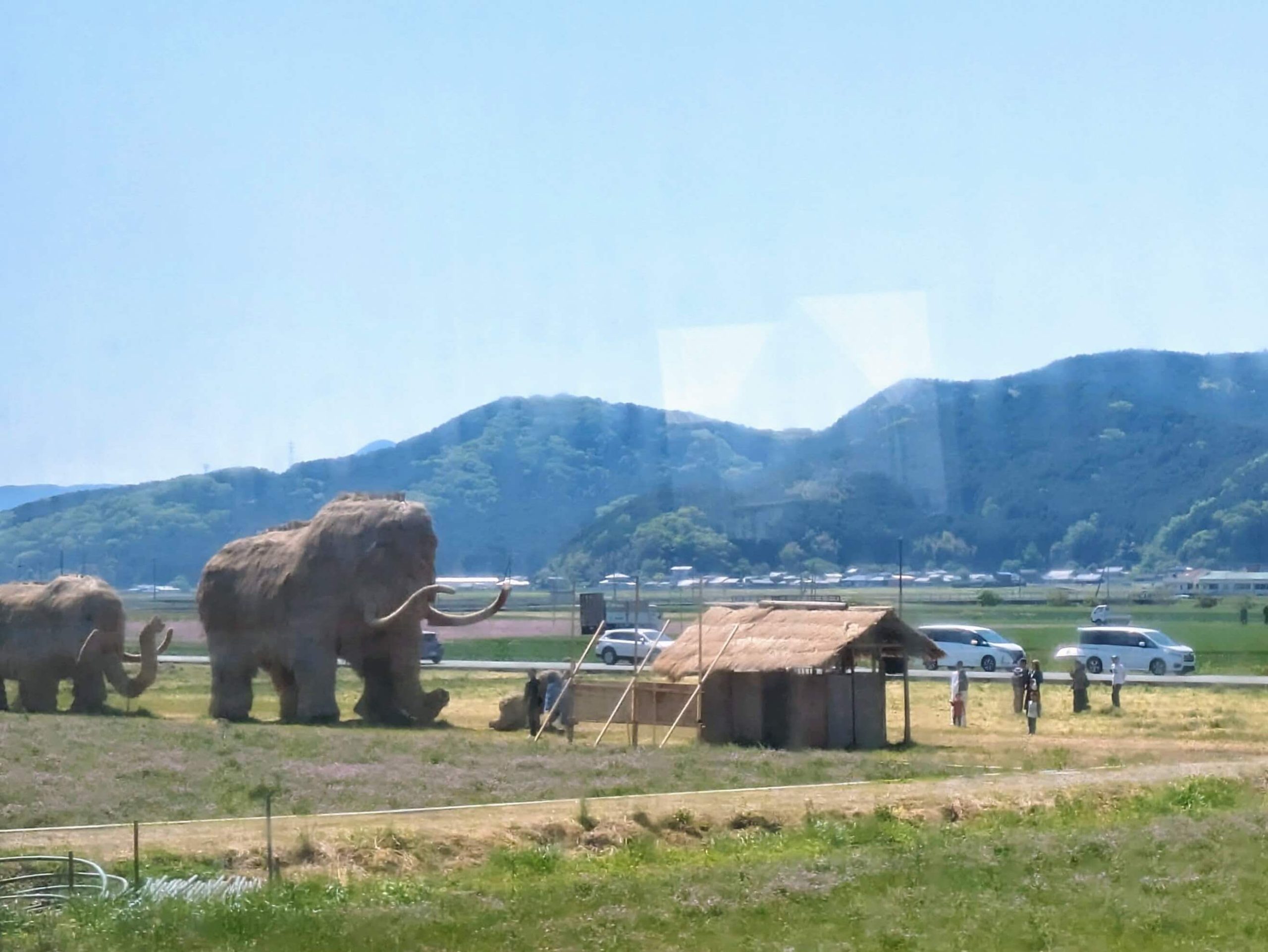
On my way up, my train passed a roadside art exhibit of gigantic straw (wara) mammoths, near Iyo-Iwaki Station. I learned that they were created in 2011 by Musashino Art University in Tokyo along with local volunteers and have since become a symbol of Saijo City. The kid on the left is named Mai, who’s 6 meters long and 3 meters tall – dwarfed by her parent, Warara, who’s 10 x 7 meters large. And if you look closely, there’s also a baby, Ren (partially blocked by people standing in front). Someone tell David Macaulay.
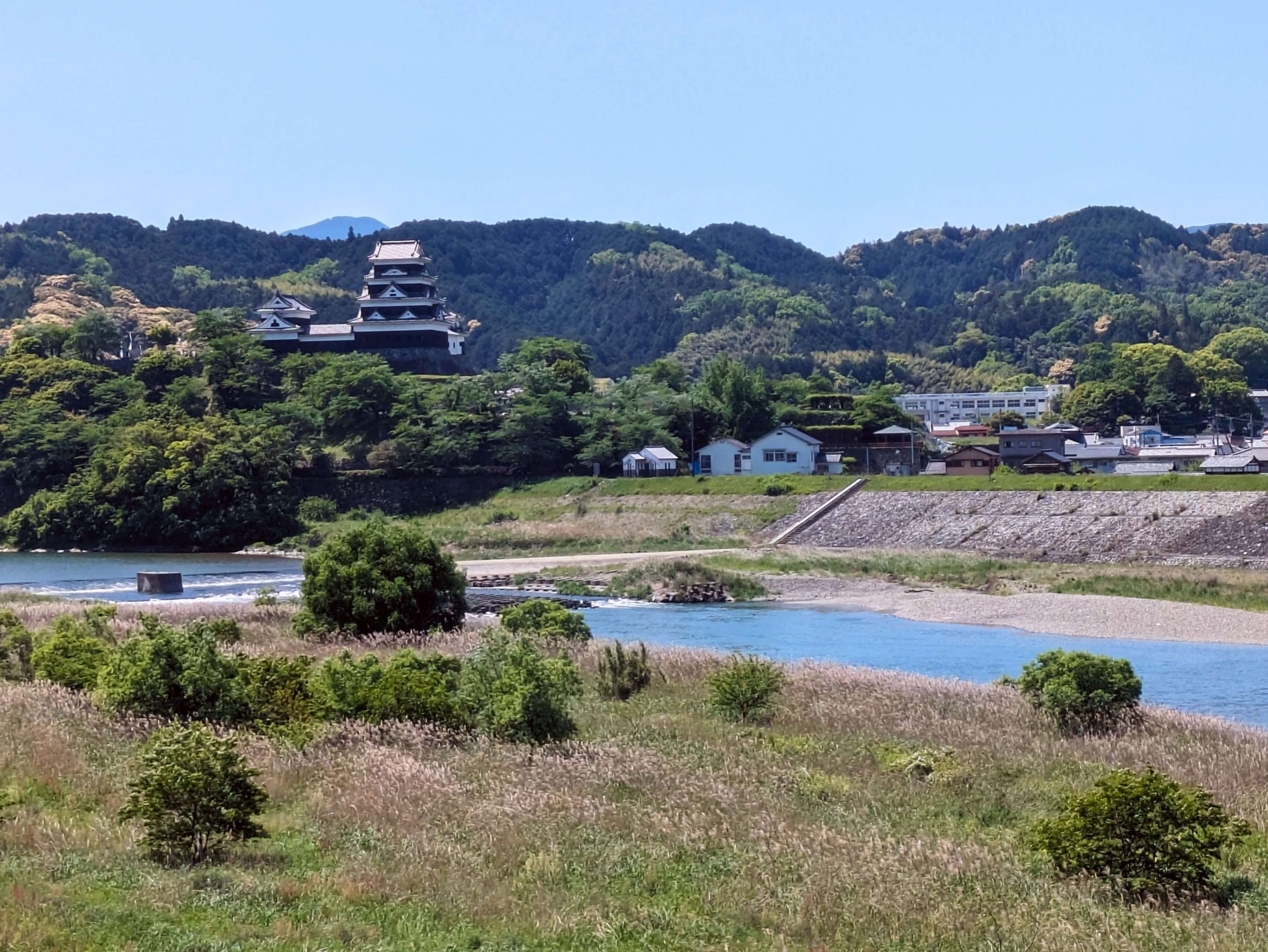
Pulling into Iyo-Ōzu Station. Ozu Castle was visible from the window, along with a lot of colorful flowers on the hills nearby!
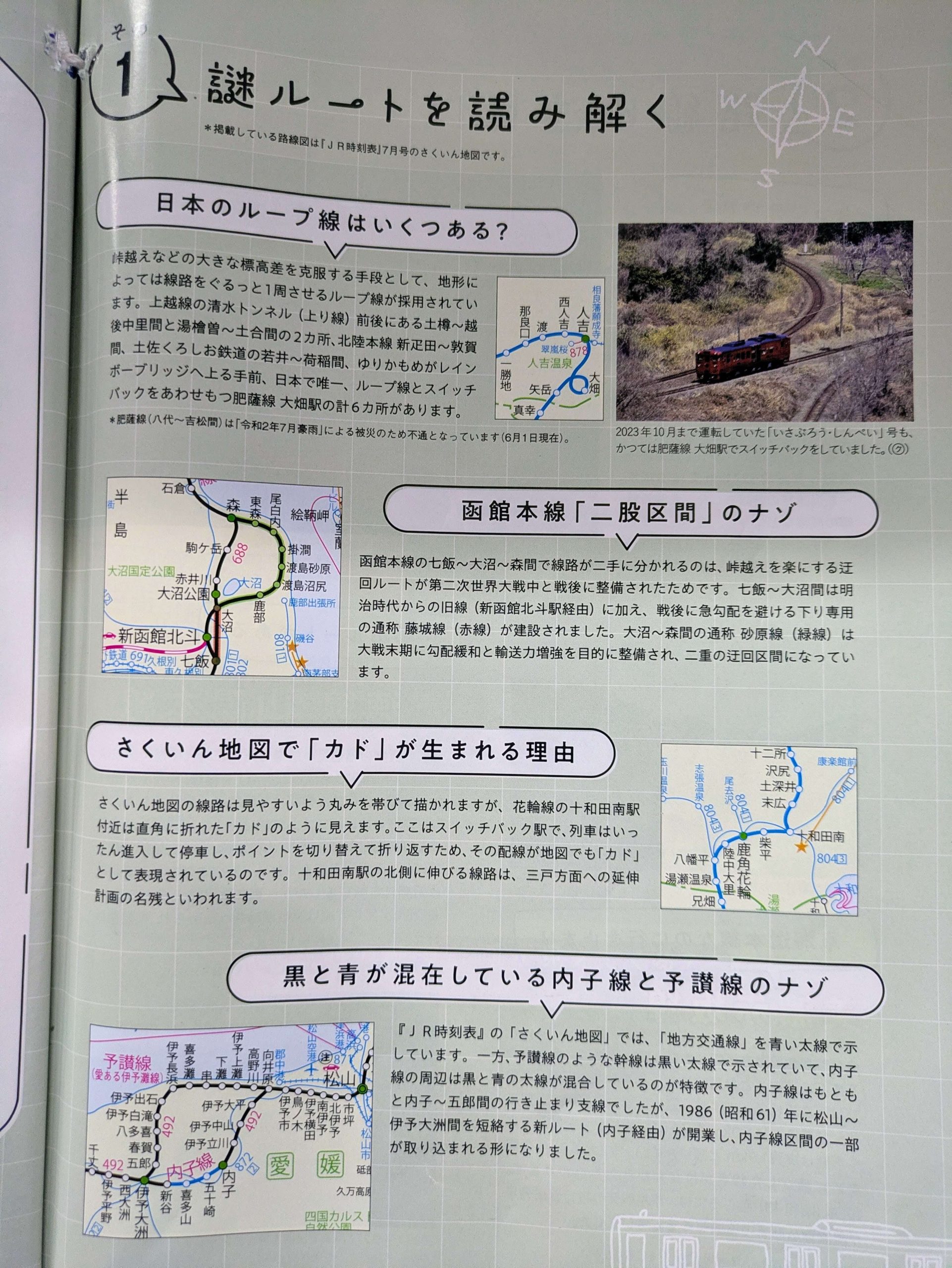
The diagram on the platform, pictured below, explains the two paths of the Yosan Line ahead, which splits and then comes back together. The blue line, running by the ocean, was the original route; after the yellow-colored bypass line – which cuts inland, taking a shorter route through the mountains – was completed in 1986, it became the new route for most operations on the line… but not all of them, including a few local trains a day, along with sightseeing trains like mine, which take the longer but more scenic route. The shorter route was nicknamed the Uchiko Line… which was actually the name of a a former dead-end branch line, extended to serve as the bypass. Meanwhile, the older, scenic route took on the nickname 愛ある伊予灘線 Aiaru Iyonada-sen, “Love-filled Iyonada Line”, in 2014 to coincide with the launch of the Iyonada Monogatari, the first tourist train in Shikoku.
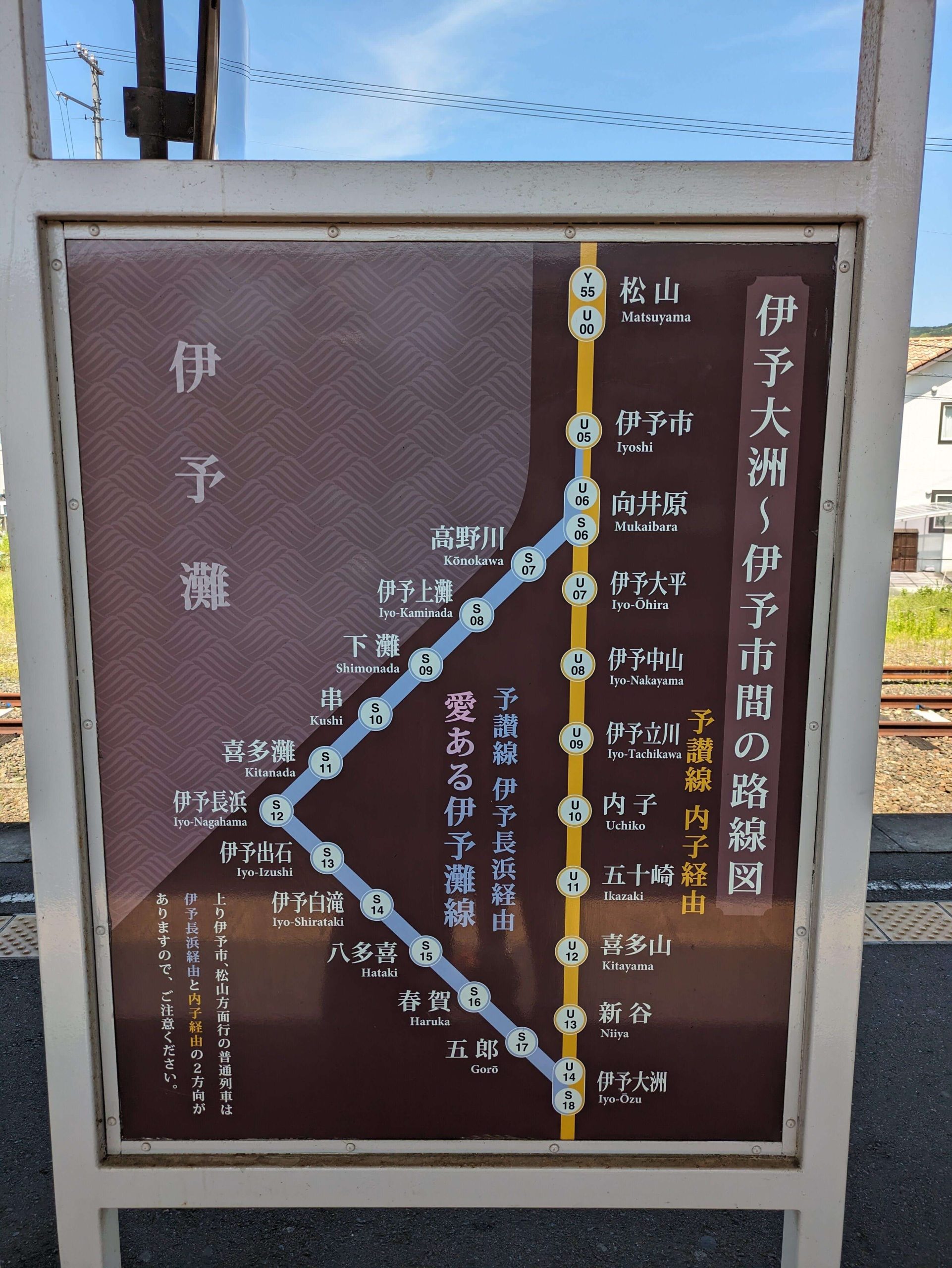
A couple days ago, as I was working on this blogpost, I thumbed through one of my station’s timetable books and saw that the July 2026 issue had, in the first couple pages, happened to include a fun fact (at the bottom) about this line and how it’s a blend of both a local and main line, which is quite unusual.
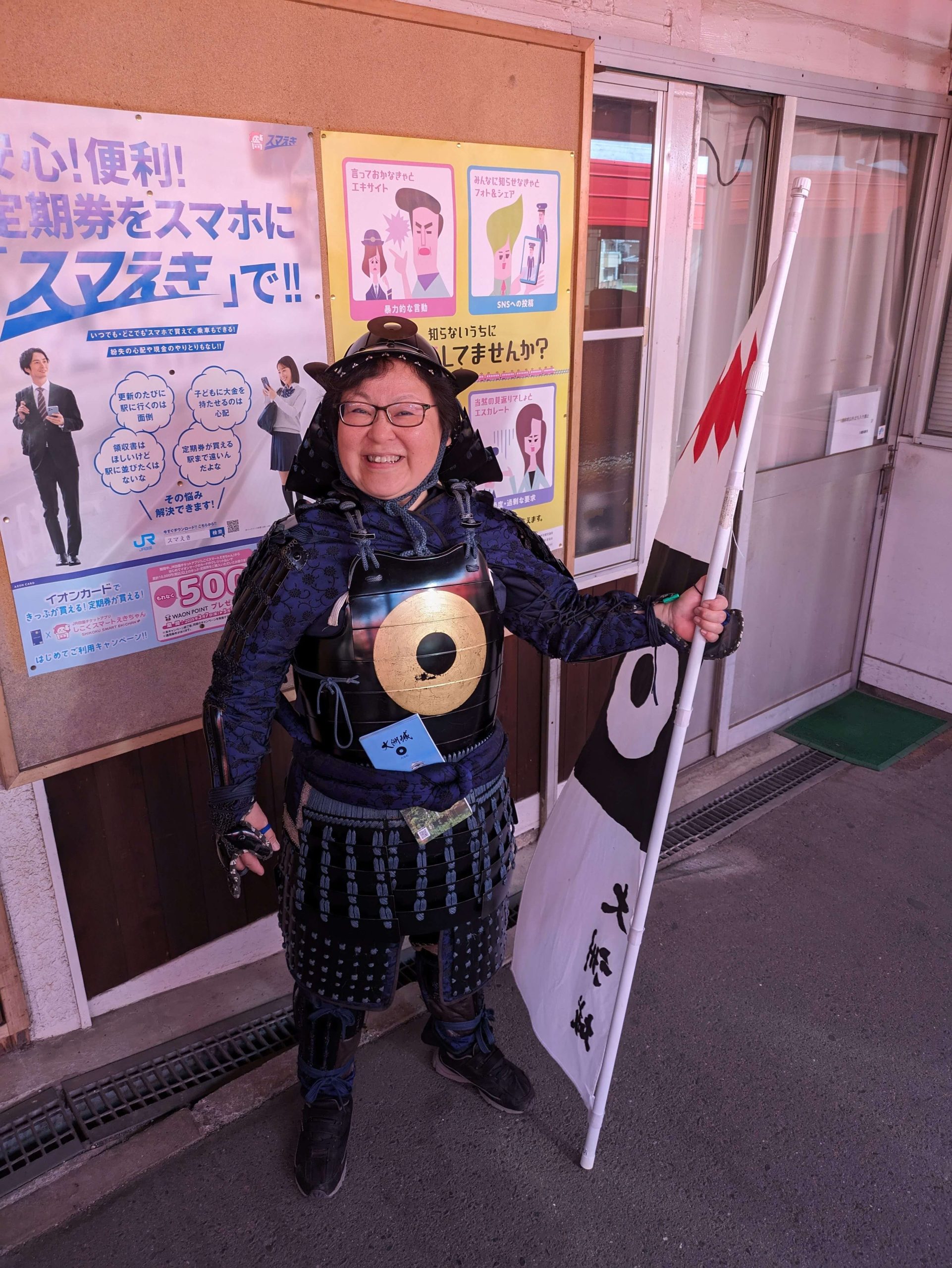
A women dressed as a samurai welcomed us to Ozu City! One cool thing about Ozu is that you can do a “castle stay” here – literally staying and sleeping in Ozu Castle overnight, in lieu of a traditional hotel. I wonder how well this tourism strategy’s working out for them (it’s a pretty cool, unique idea!)
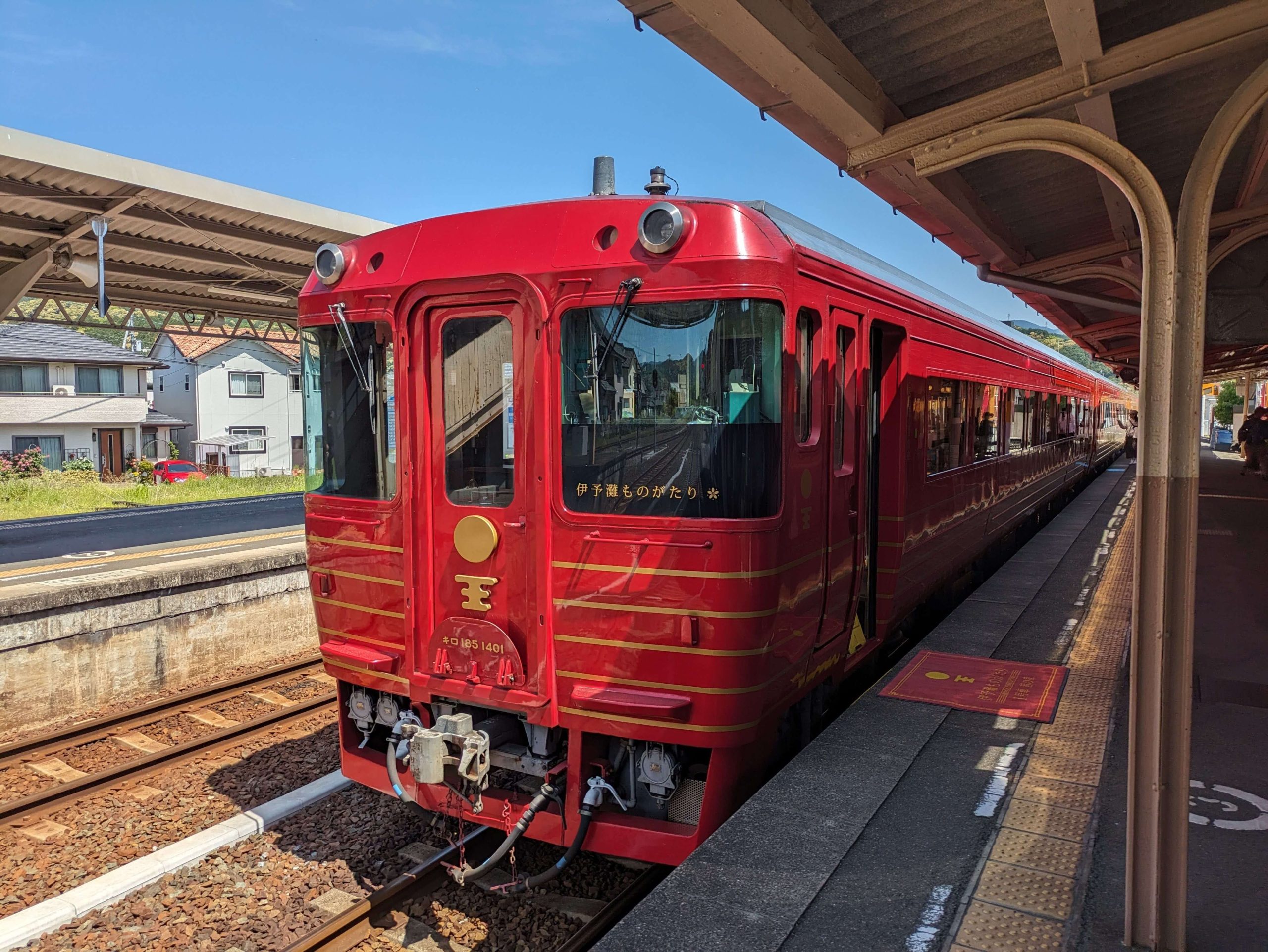
The front of my train!!! So beautiful! The minute-long violin music horn composition that plays as it departs is extremely beautiful.
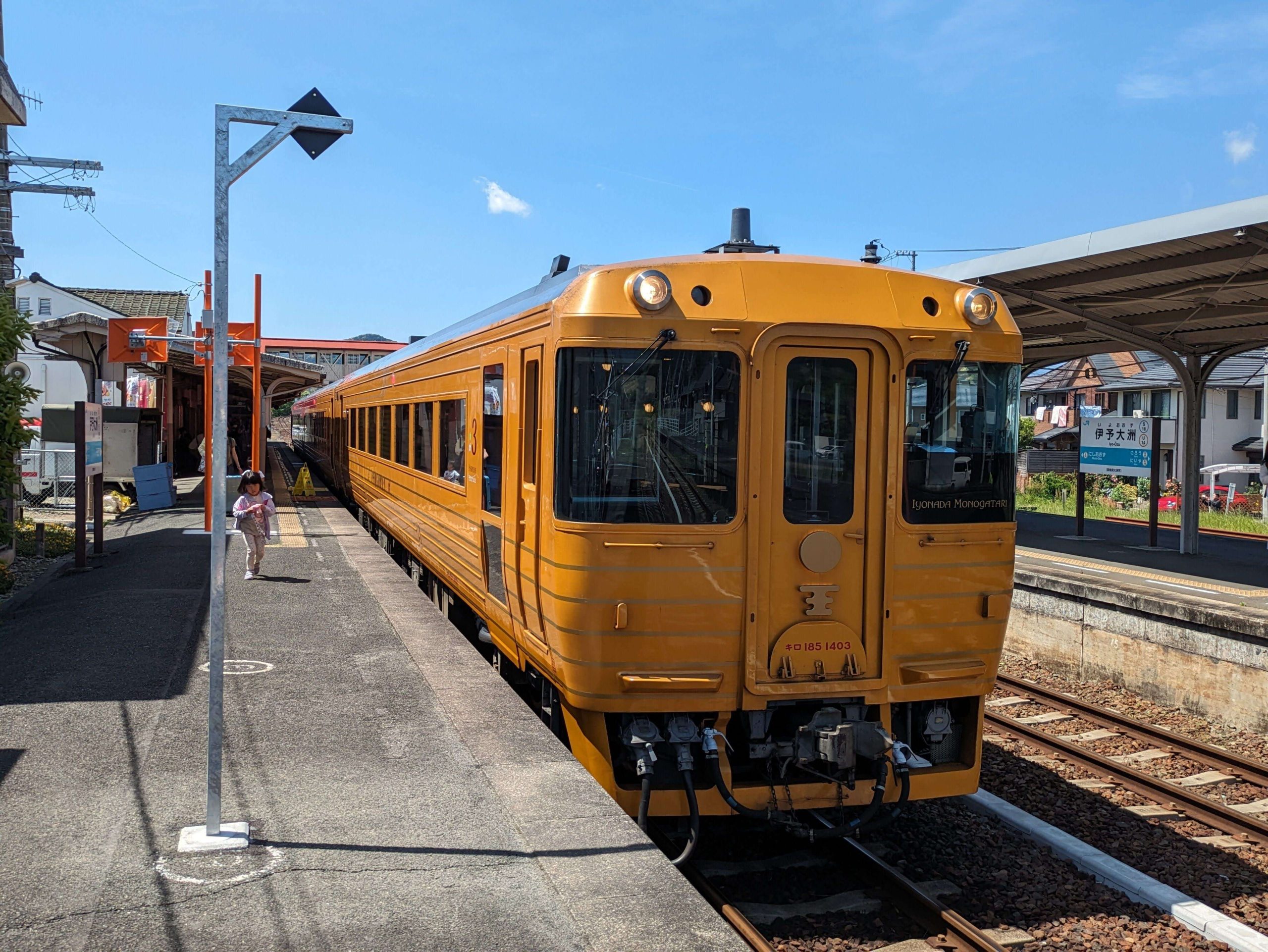
The other front of my train (because that’s how trains work). It was actually traveling with this direction forward, though, but the red is the more iconic color.
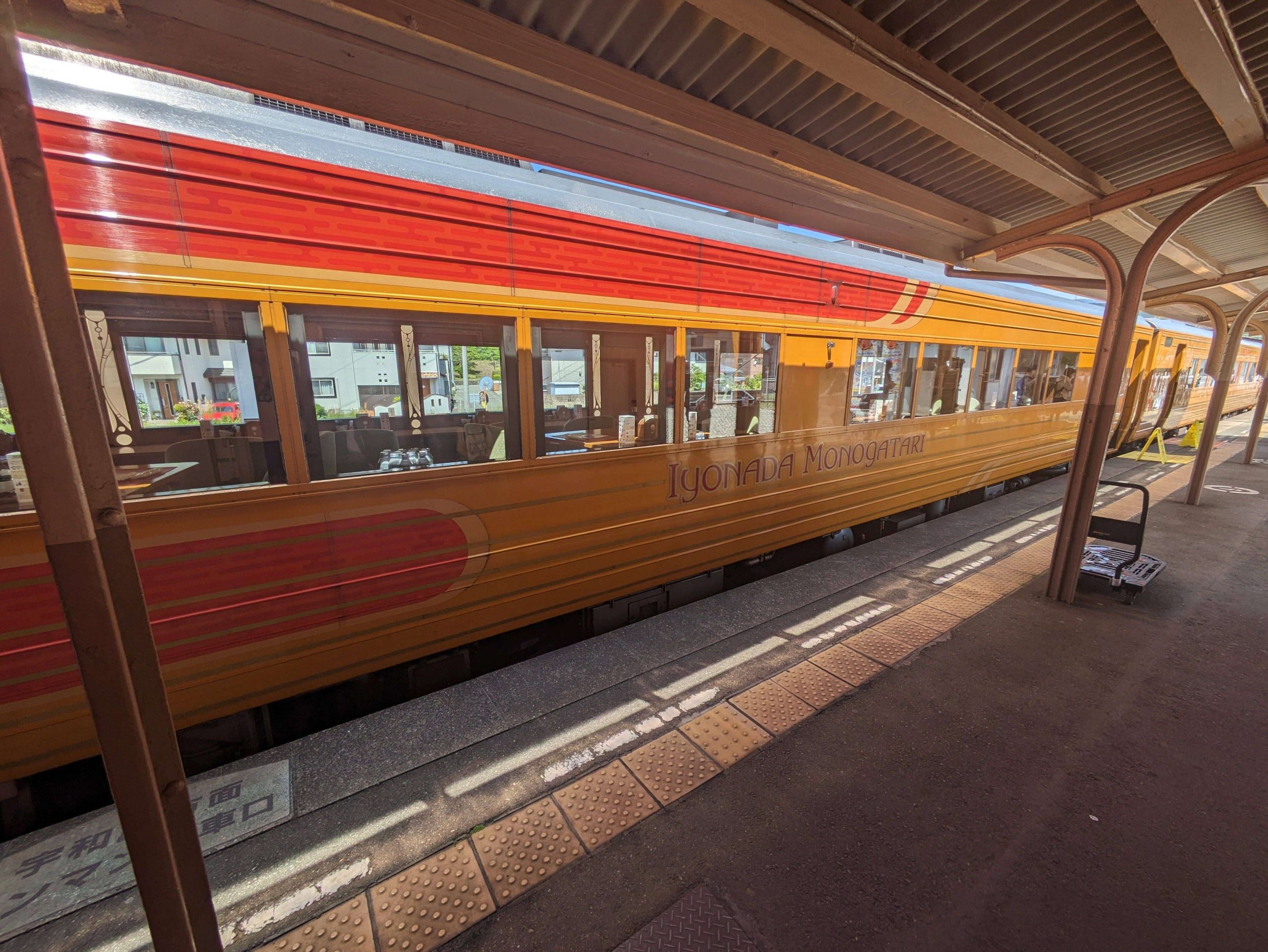
A train like a sunset. Cleaning in progress, so no boarding for a few more minutes…
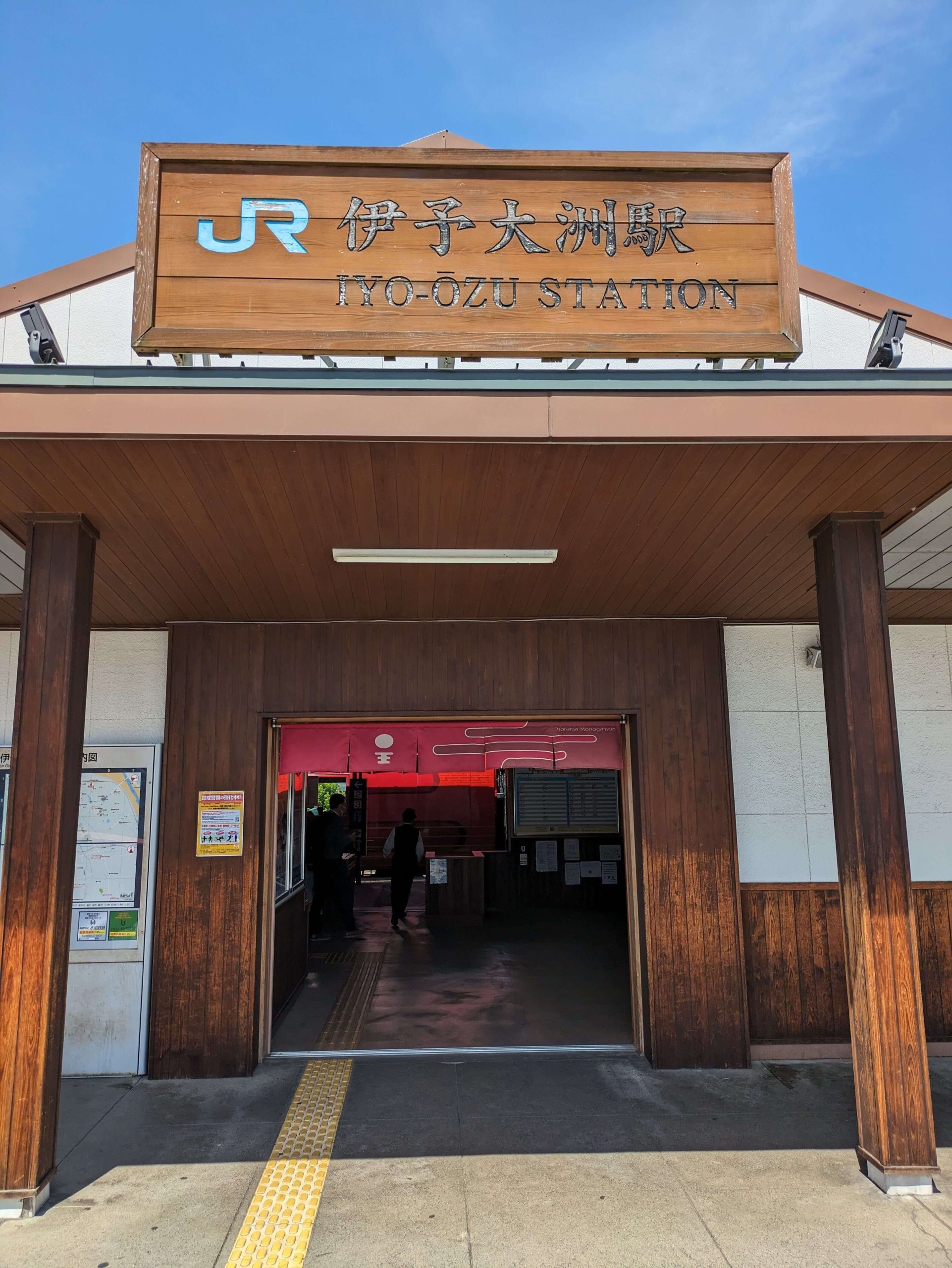
The special noren at the entrance to Iyo-Ōzu Station.
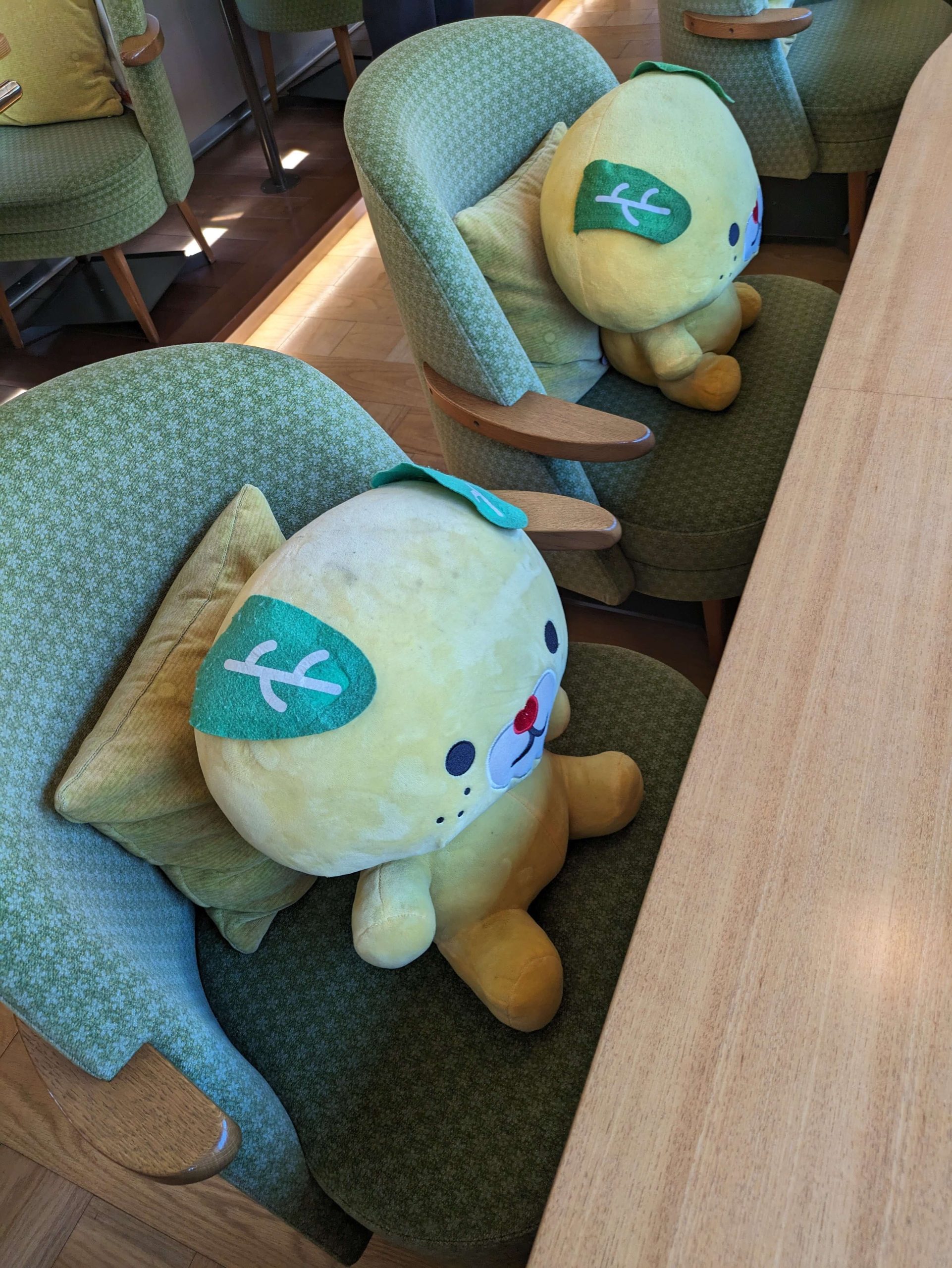
On the train were two Micans sitting in some of the seats!!!!
The woman next to me, Kana, loved JR Shikoku’s mascots Smile Eki-chan and friends, and always brought plushies of them with her (just like me!) for train rides. It turns out she was a local resident along the line and told me she had ridden the Iyonada Monogatari HUNDREDS of times – pretty much just whenever she has a free day, she’ll check to see if there are any last-minute seats, get a ticket, and hop on. All the staff know her, and they actually let her leave her bag on the train after we arrived into Matsuyama, since she was planning to return on a trip the following day. So laid back in Shikoku!
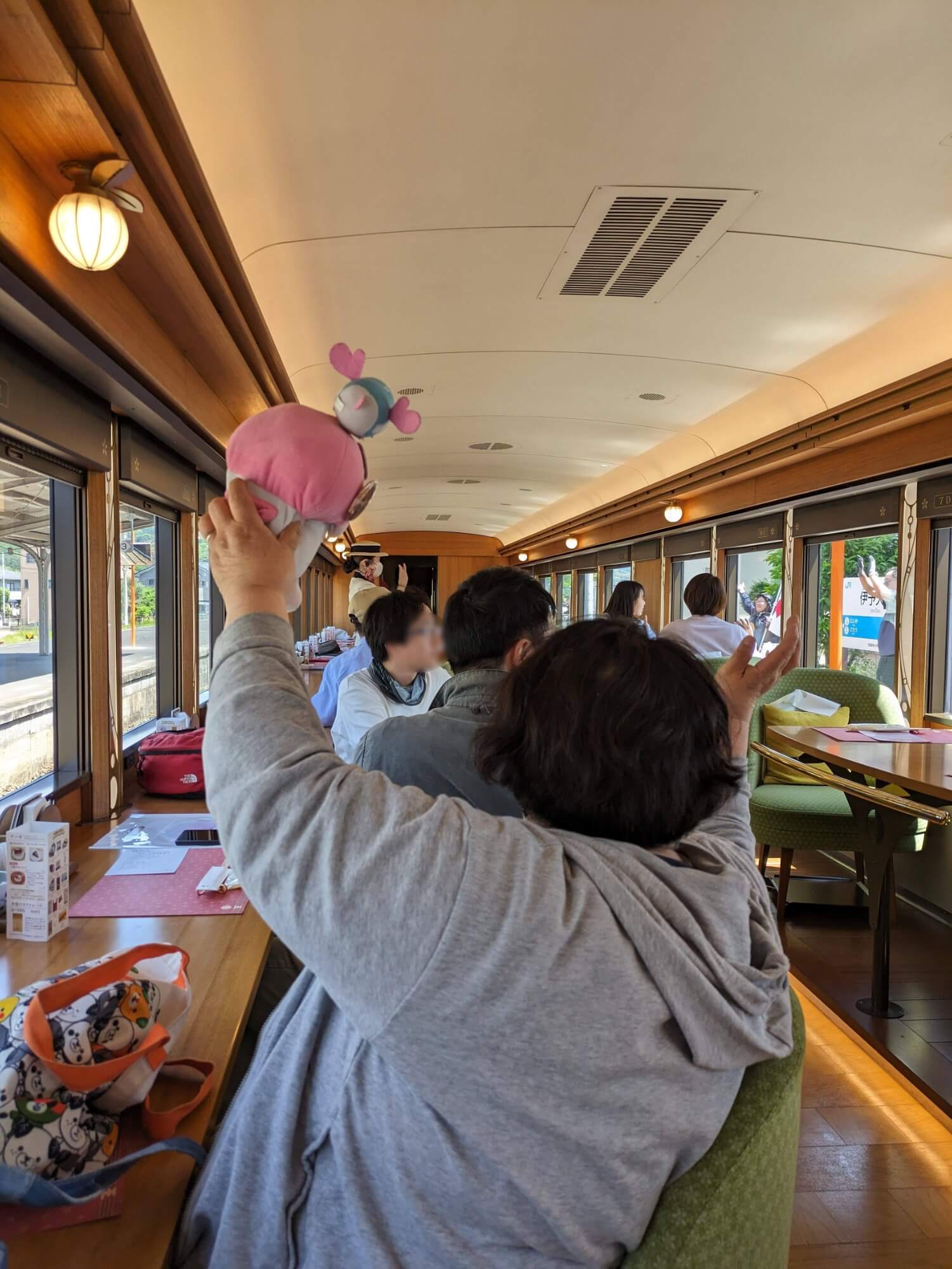
Bye! Everyone waved to the staff and small crowd of people seeing us off at the station.
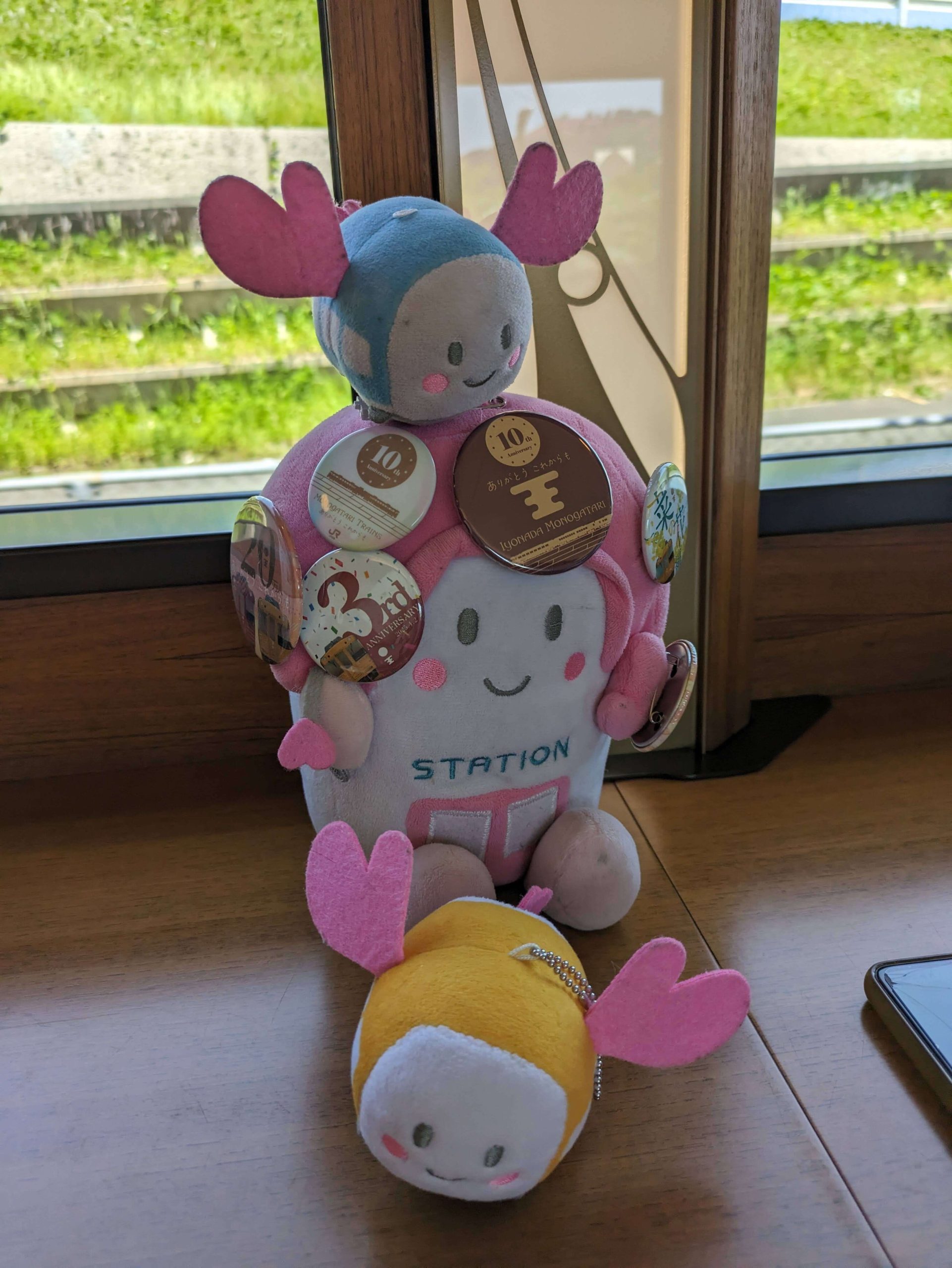
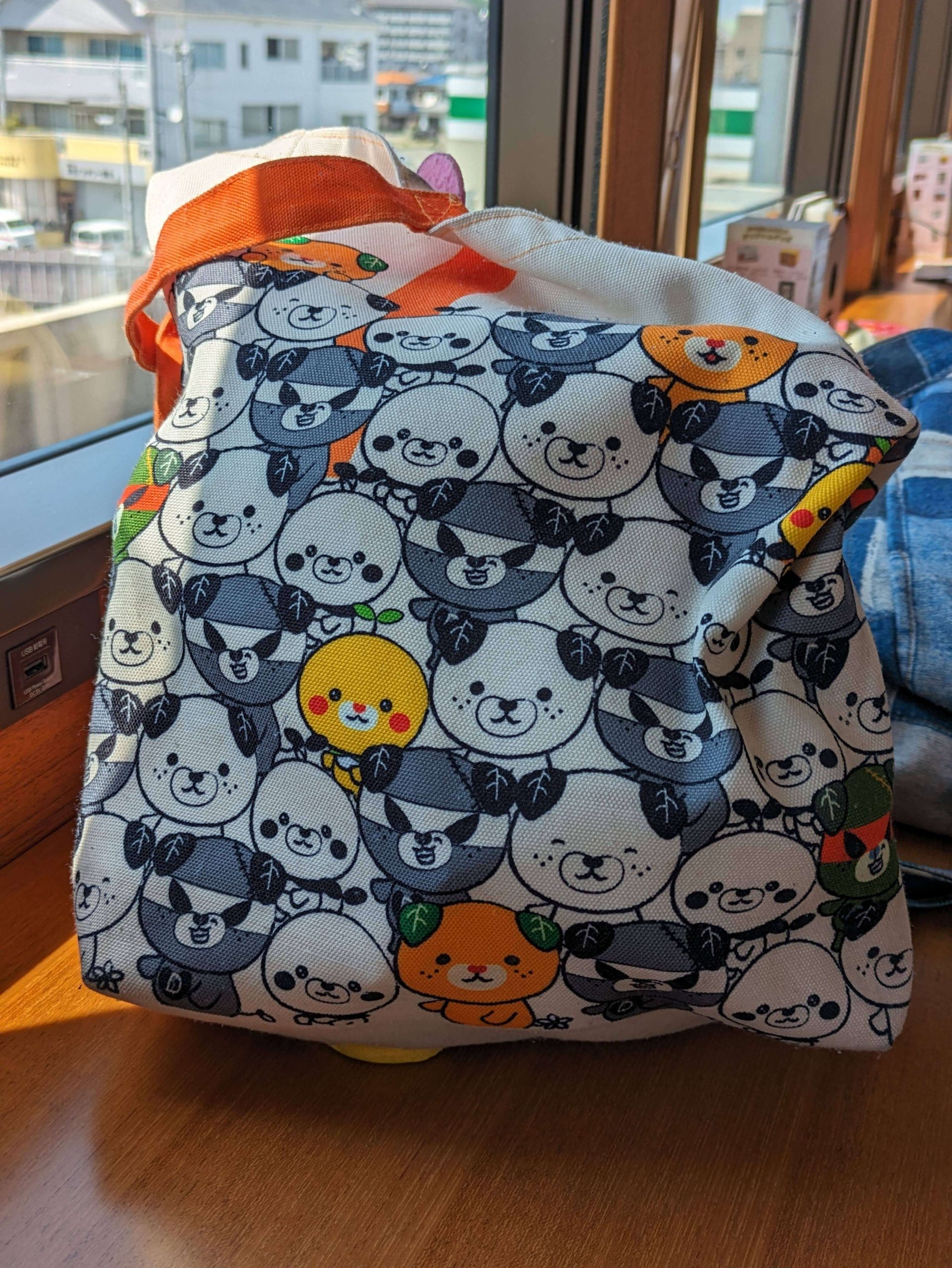
Along with her plushies here, Kana also had a bag featuring Mican, baby Komican, and evil Dark Mican!
Riding the Iyonada Monogatari
The ride that followed left me, simply put, beaming with happiness and joy. The map of the railway line that we were given was unlike anything I’ve ever seen before or since. It didn’t chart natural features of the environment around us, but rather was a map showcasing the human interactions and culture that exists around runs of this train over the past decade, and those who live in the places it travels through. It was a map of stories, and of the communities and people we were passing by, who take time out of their days to make this experience as magical and meaningful as it is. As I’ve written on the “About” page of this site, this is the exact part of public transit I like: the social aspects, how it joins people both physically abstractly in shared public spaces, and the culture, nomenclature, and history that develops as a result. Having this sort of history and culture documented in print, and given to passengers who could follow along during the journey – the old married couples with their beloved dogs, or kids dressed as animals, holding signs saying thank you… even the samurai woman at the platform in the beginning – made this one of the most unforgettable and just special experiences of my life.
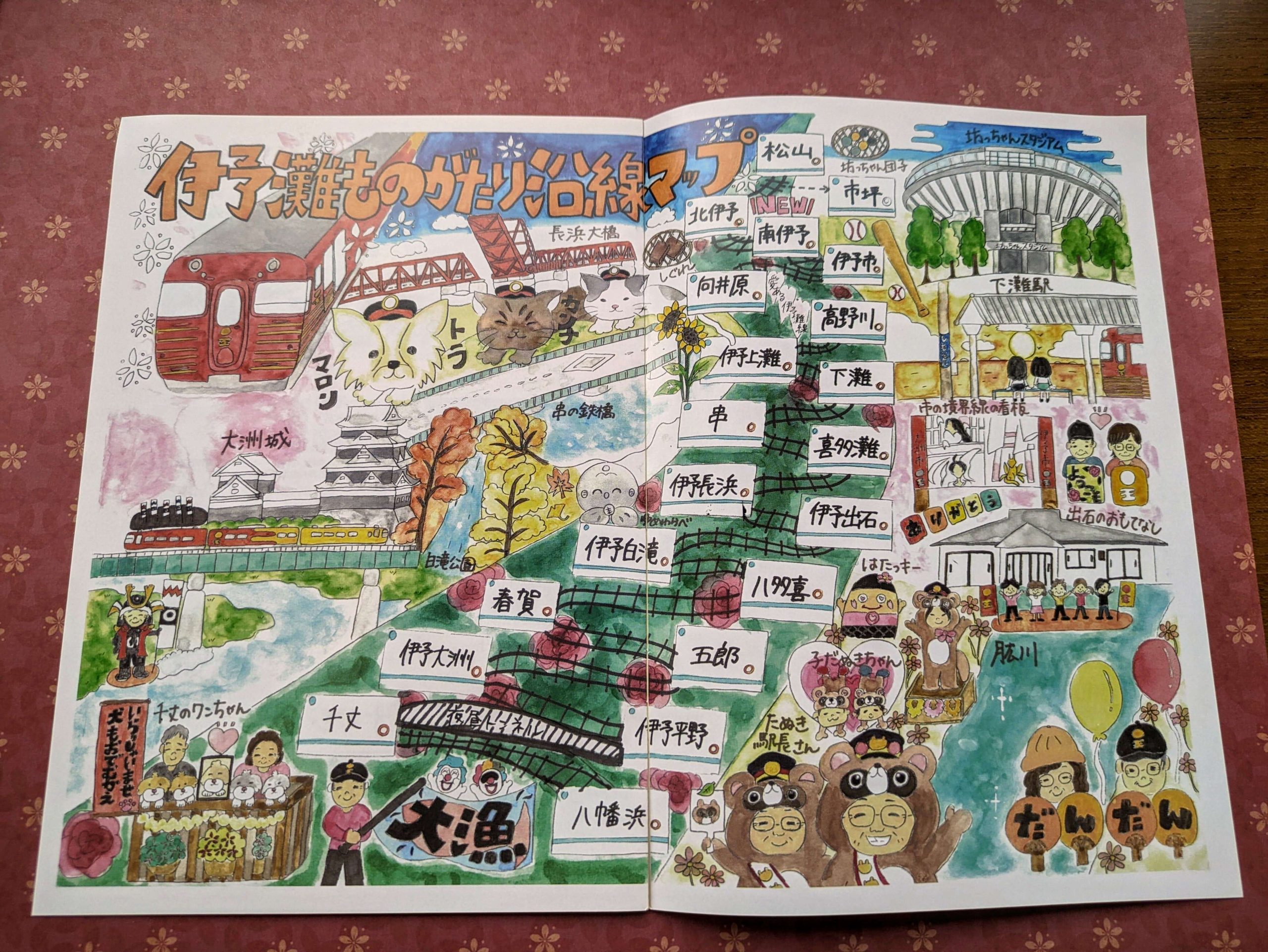
The most unique, most memorable, and most treasured map of a train line to exist in the world.
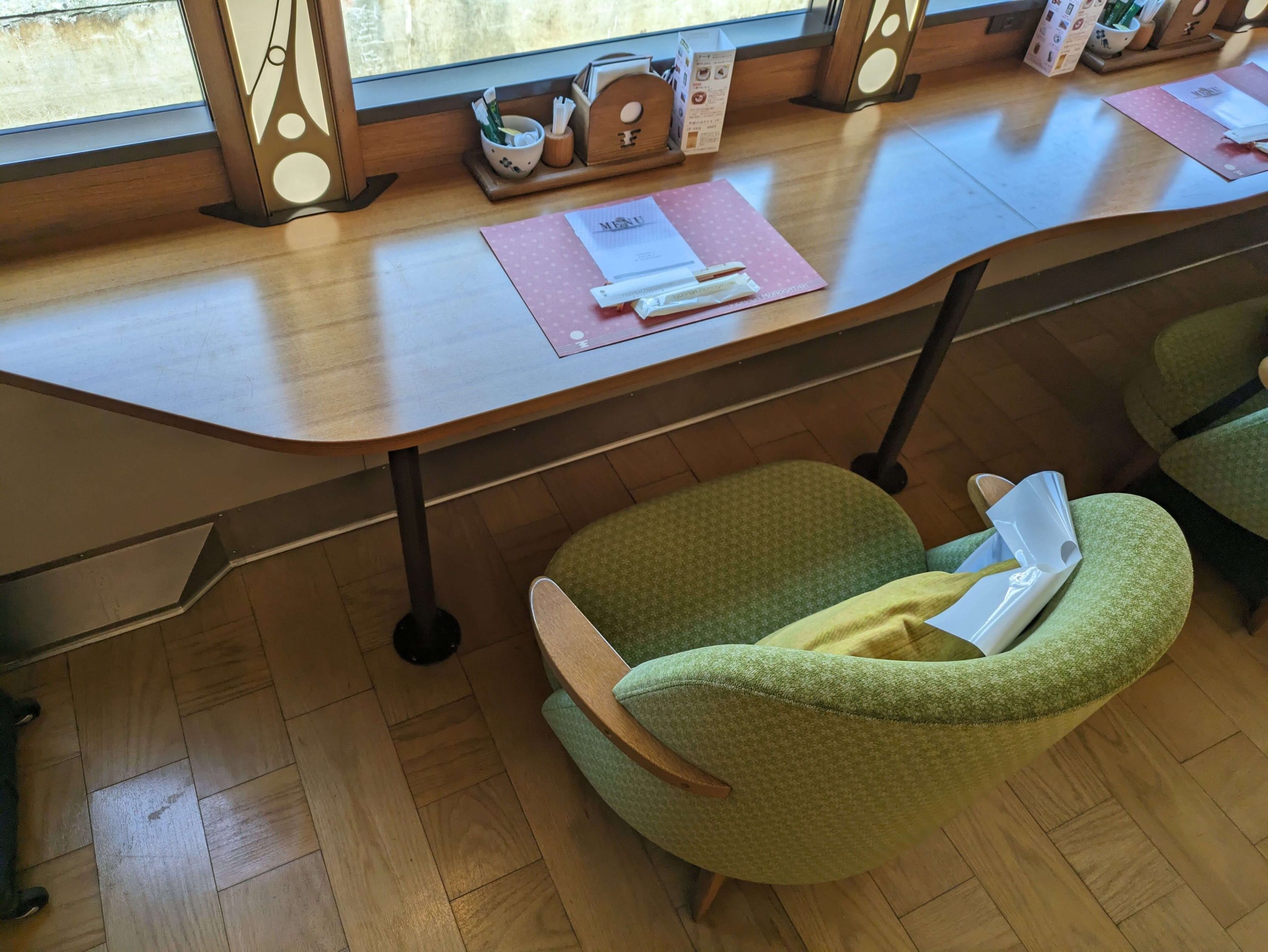
My seat, 1-A in car 2.
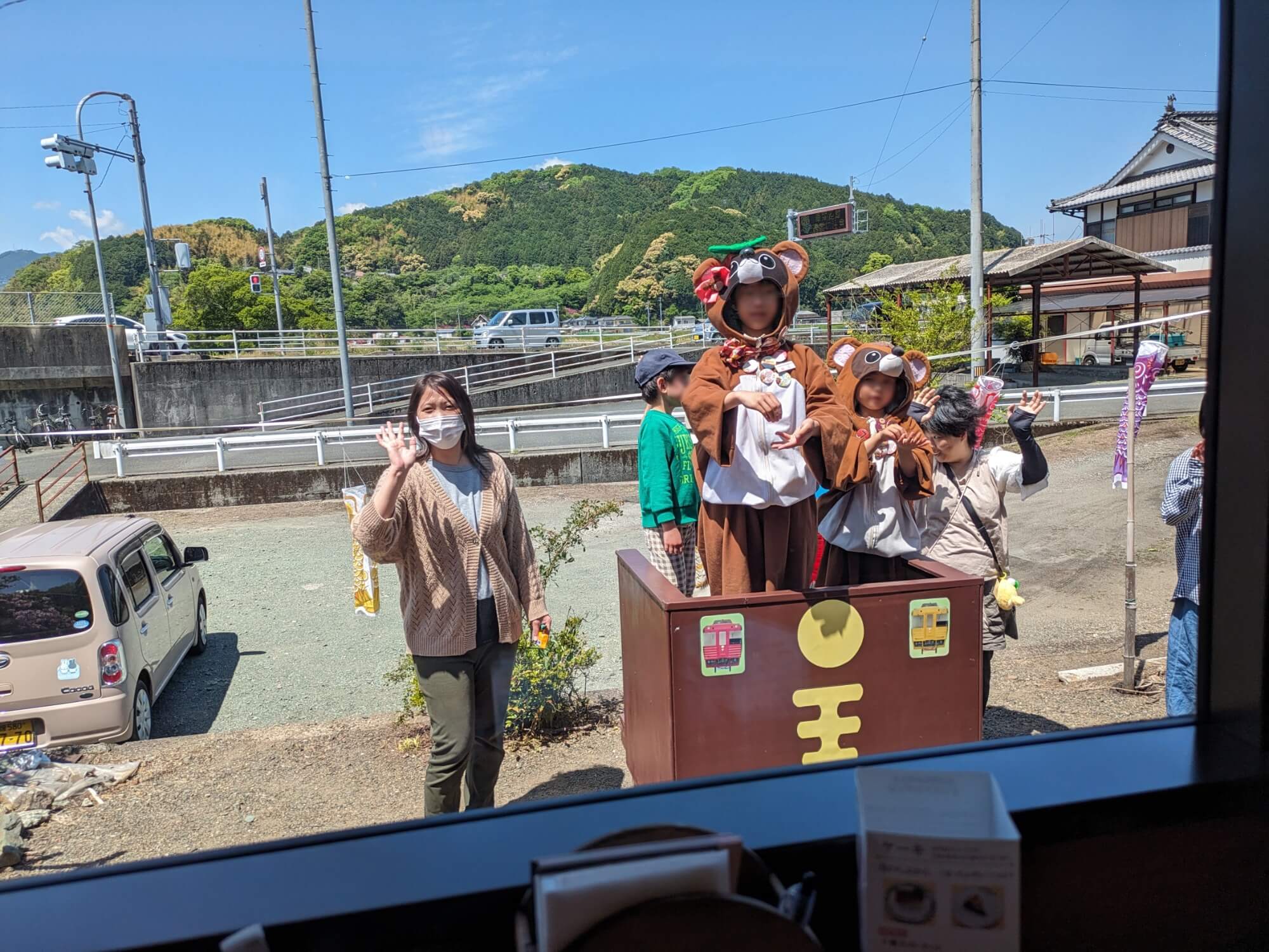
Kids dressed up in tanuki costumes waved to us as we rolled past our first station.
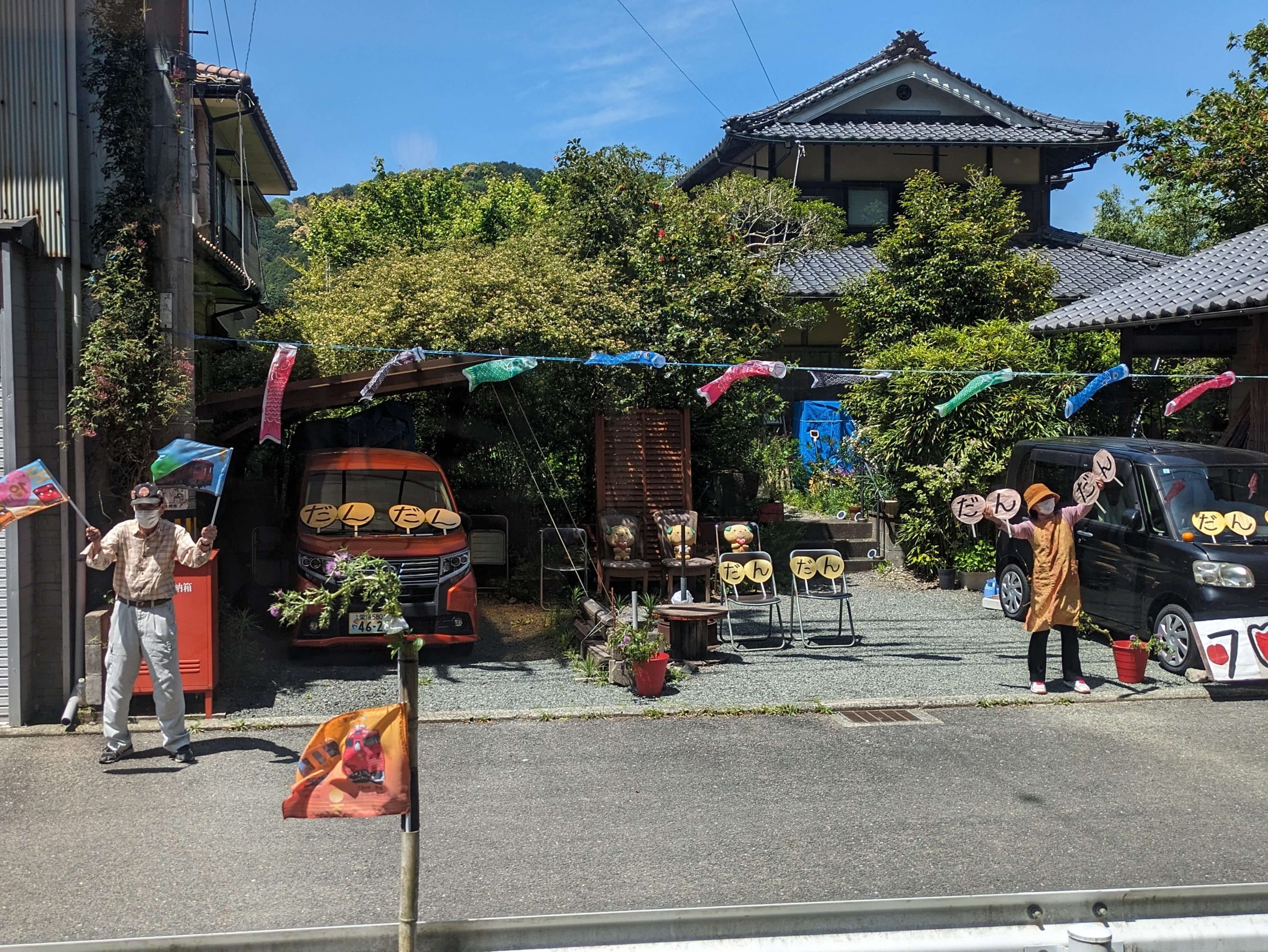
Here’s the couple in the lower right corner of the story map – holding うちわ uchiwa handheld fans reading だんだん dandan, meaning “thank you” in the local Iyo dialect.
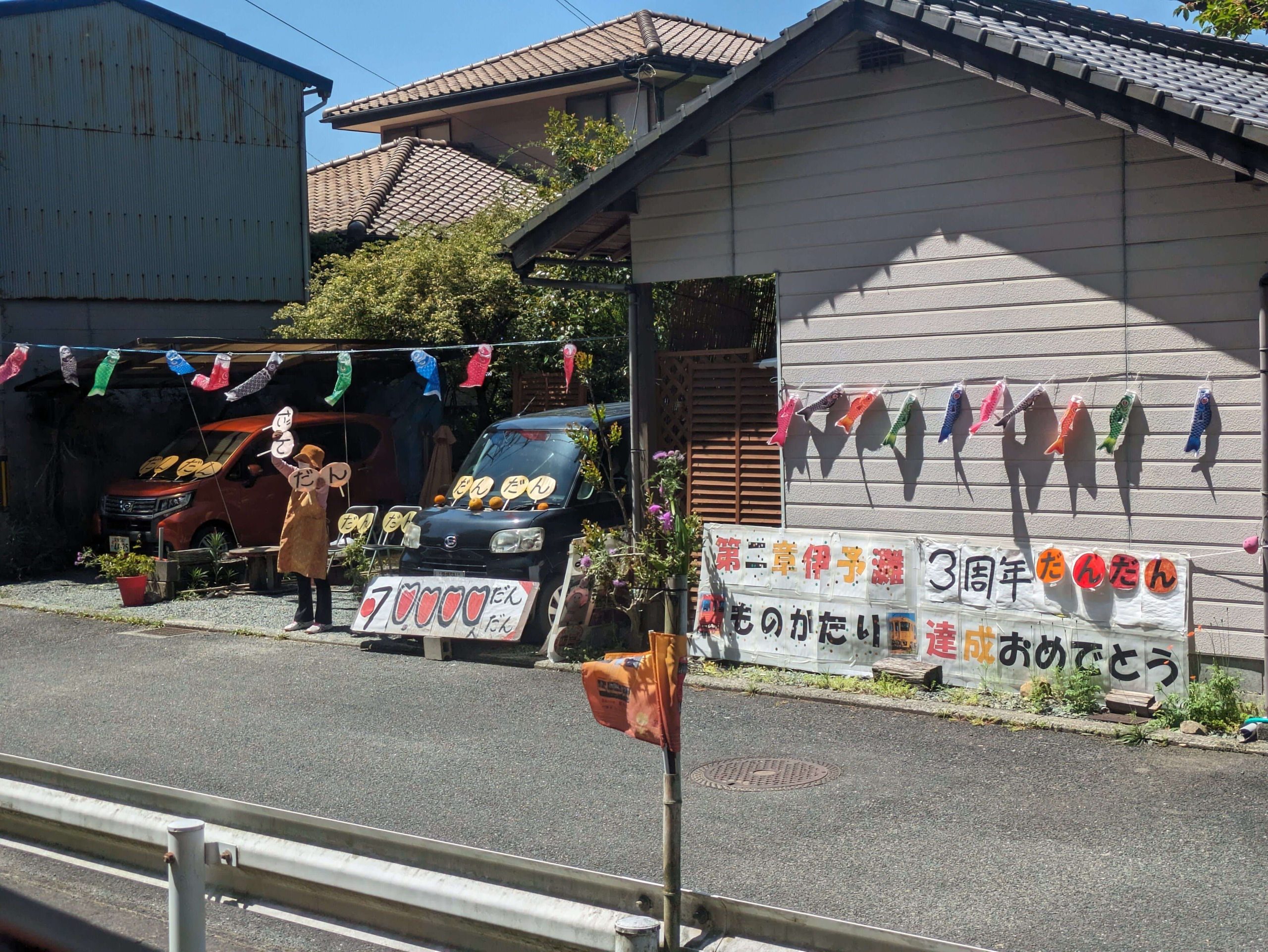
Koinobori for Children’s Day, and a sign celebrating the third anniversary of the second-generation Iyonada Monogatari, which was reborn as a limited express train in 2022.
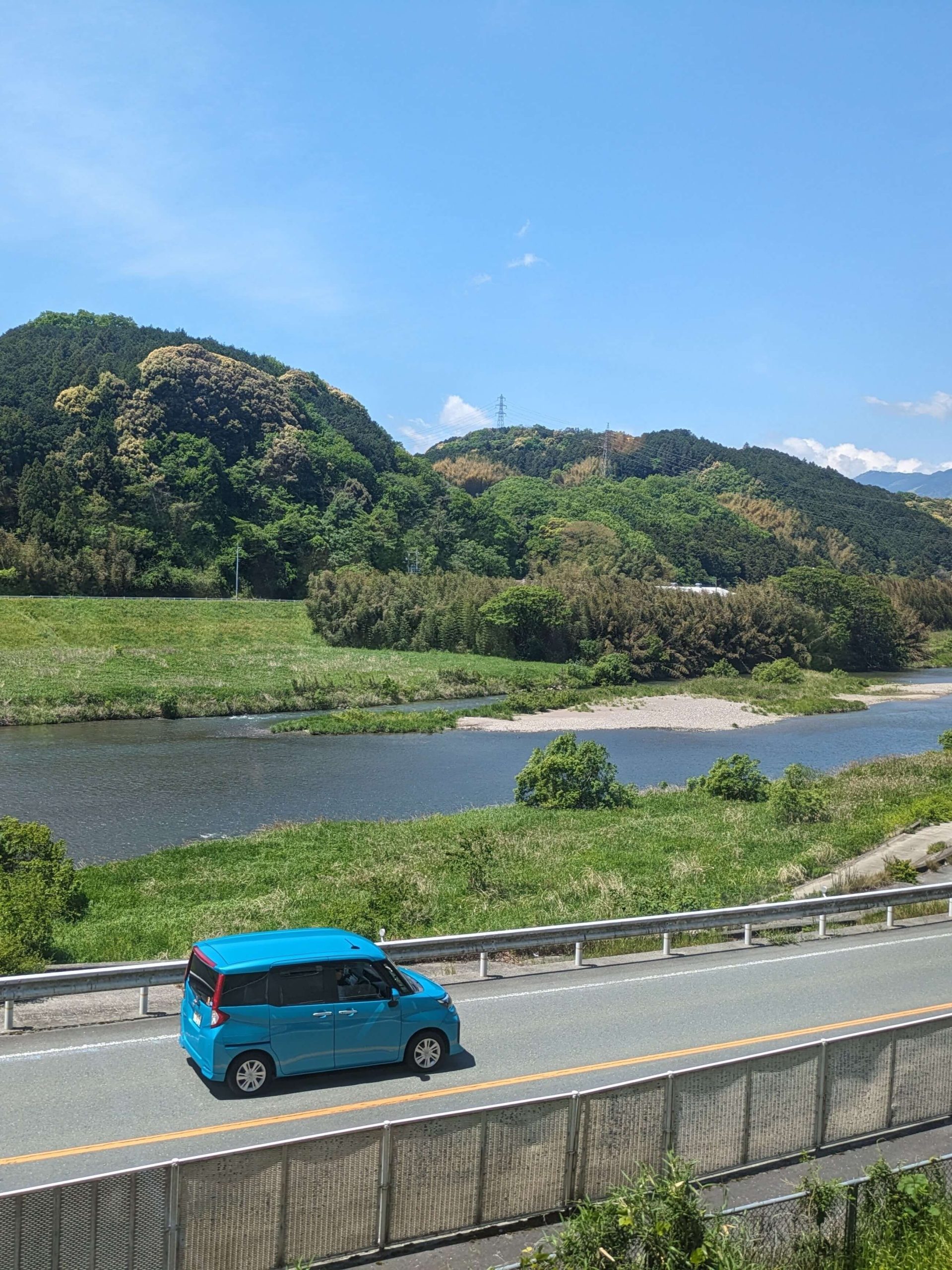
This blue car with a kid and his dad waving out of the window appeared on the highway, following our route on the parallel road. Looking back through my pictures, they had actually parked and been waving to us next to the tanuki kids, then jumped in their car and followed our train to keep pace four minutes later!
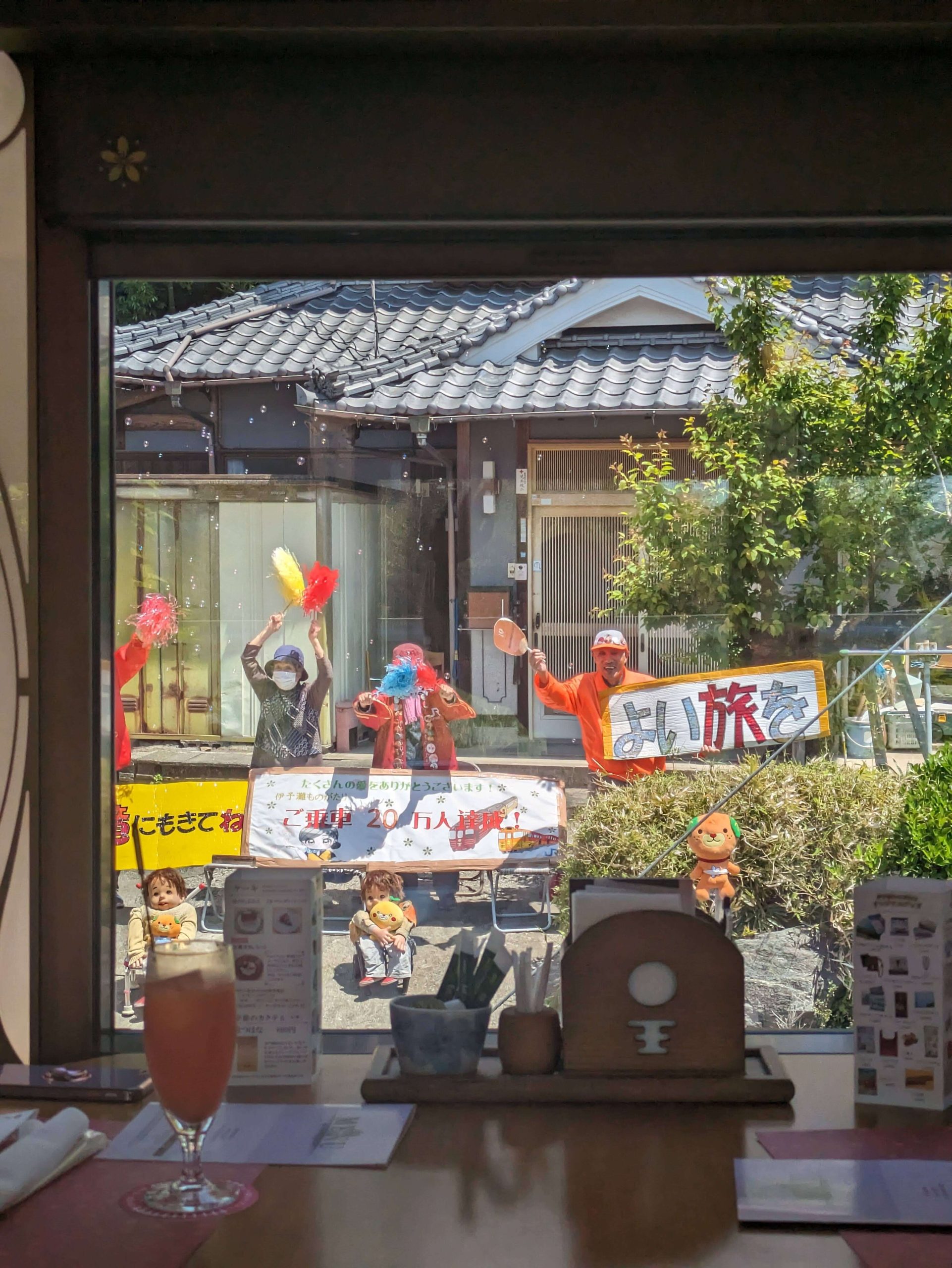
More local residents waving to us. “Have a good trip!”, the sign reads. Another one celebrated the milestone of 200,000 passengers, which had been reached a year prior.
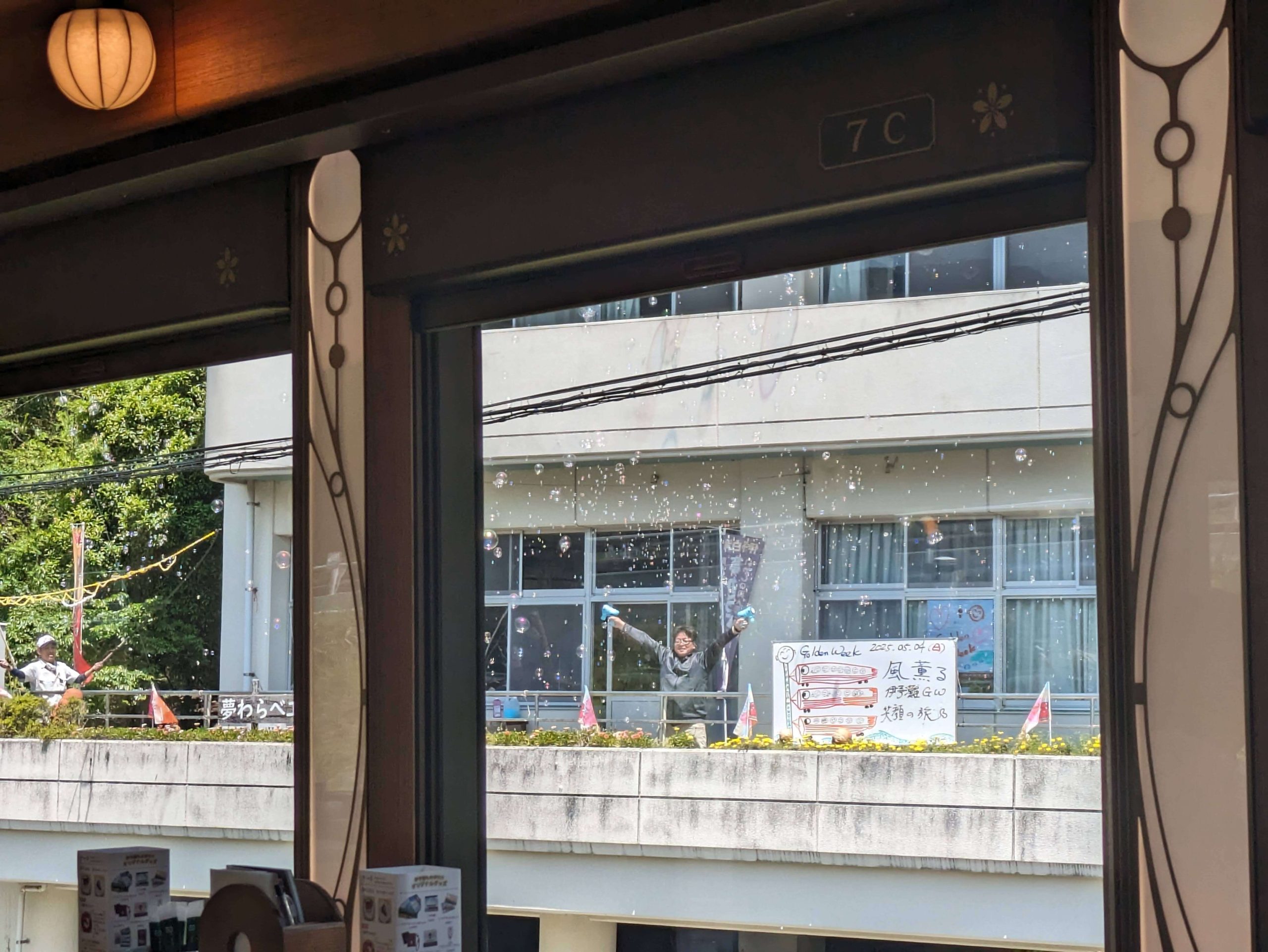
Three men were out on this balcony waving to us with bubble guns a special whiteboard they had prepared, with some cute train–koinobori windsock hybrids drawn on it. I had thought this was an elementary school, so I figured they were staff members or teachers – but when writing this post, I looked it up and it turns out that indeed is what this building was, but it’d been repurposed into a factory that makes small ceramic yumewarabe (“dream children”) dolls and statues. You can see one of them right in the center of the story map, which I noticed in retrospect!
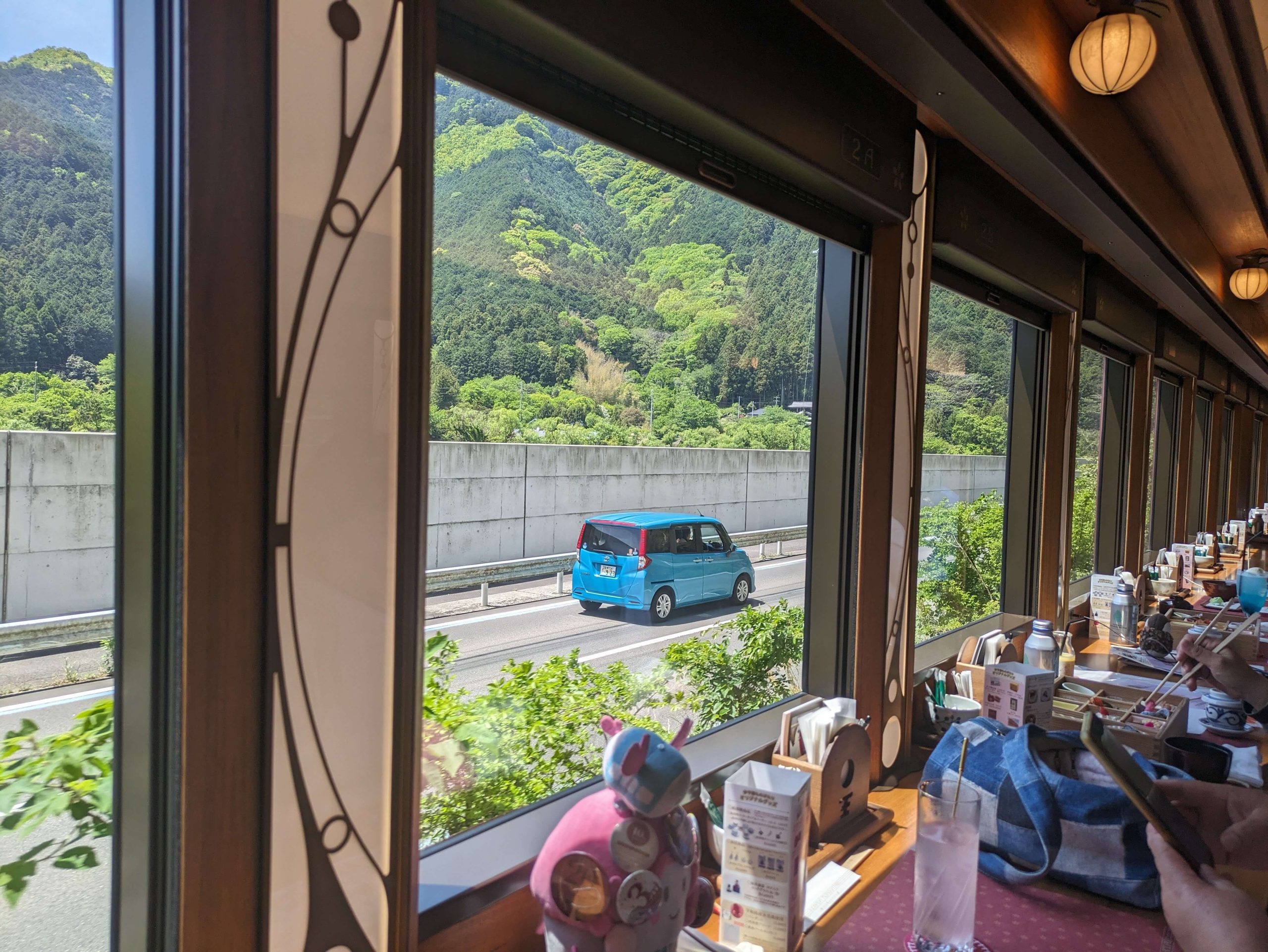
Fourteen minutes since the last sighting, BAM, out of nowhere, was the blue car again!!!!! Everyone in the train absolutely lost it.
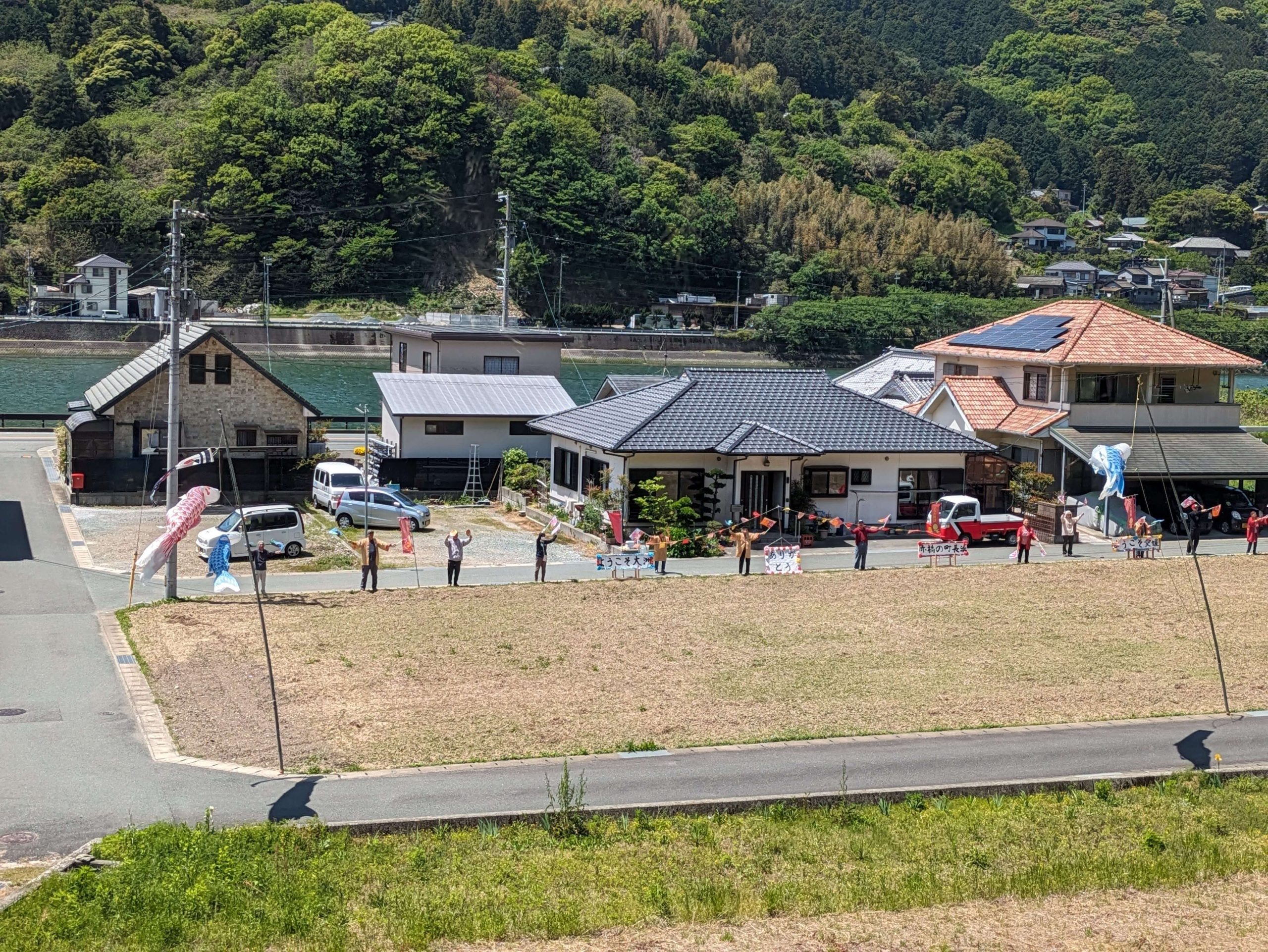
So many people along the route waved to us, even from a distance with small signs, welcoming us to the cities and towns along the route.
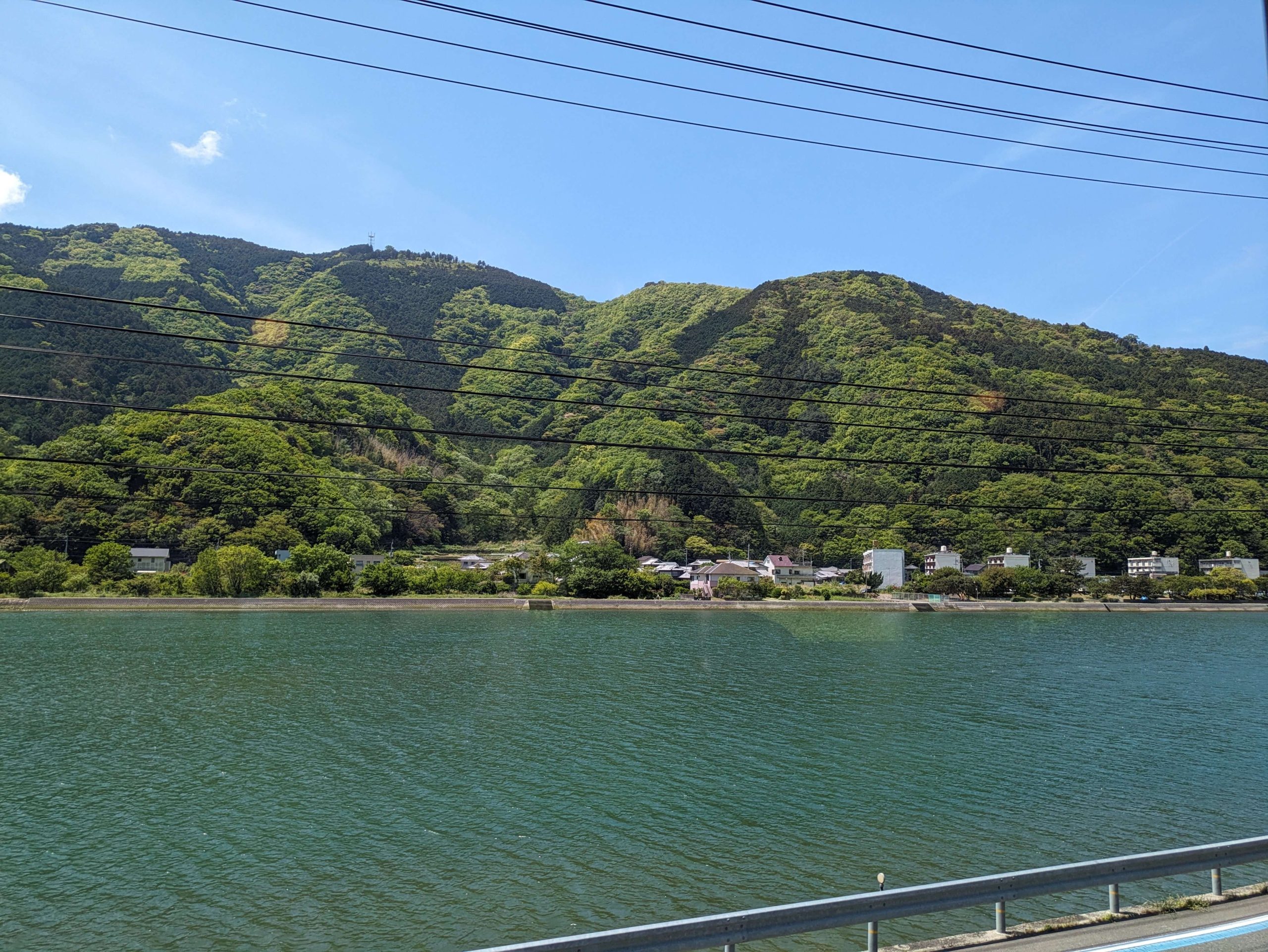
Riding along the Hijikawa River on our way out to the coast.
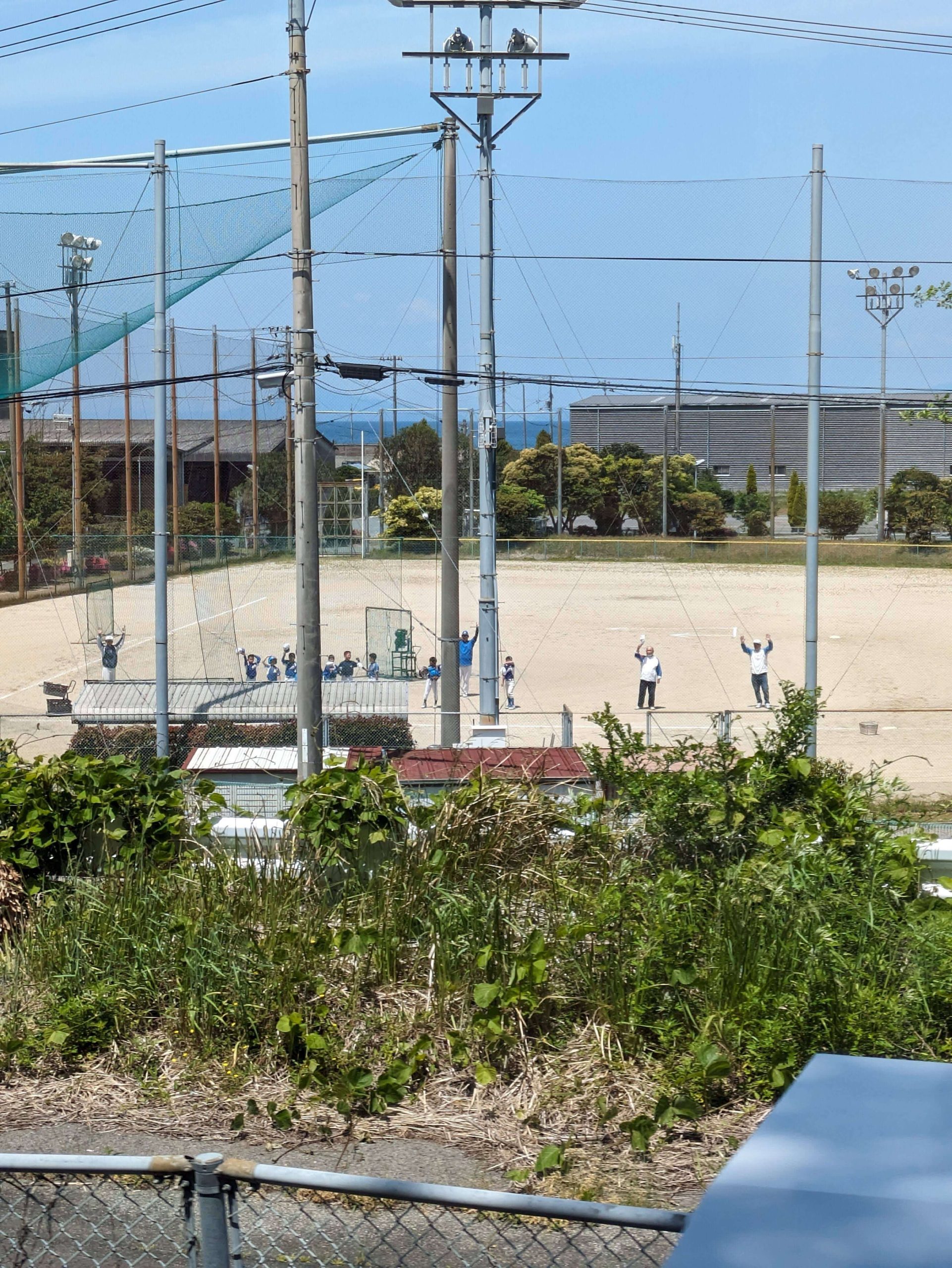
This kids’ baseball team waved to us from practice too!
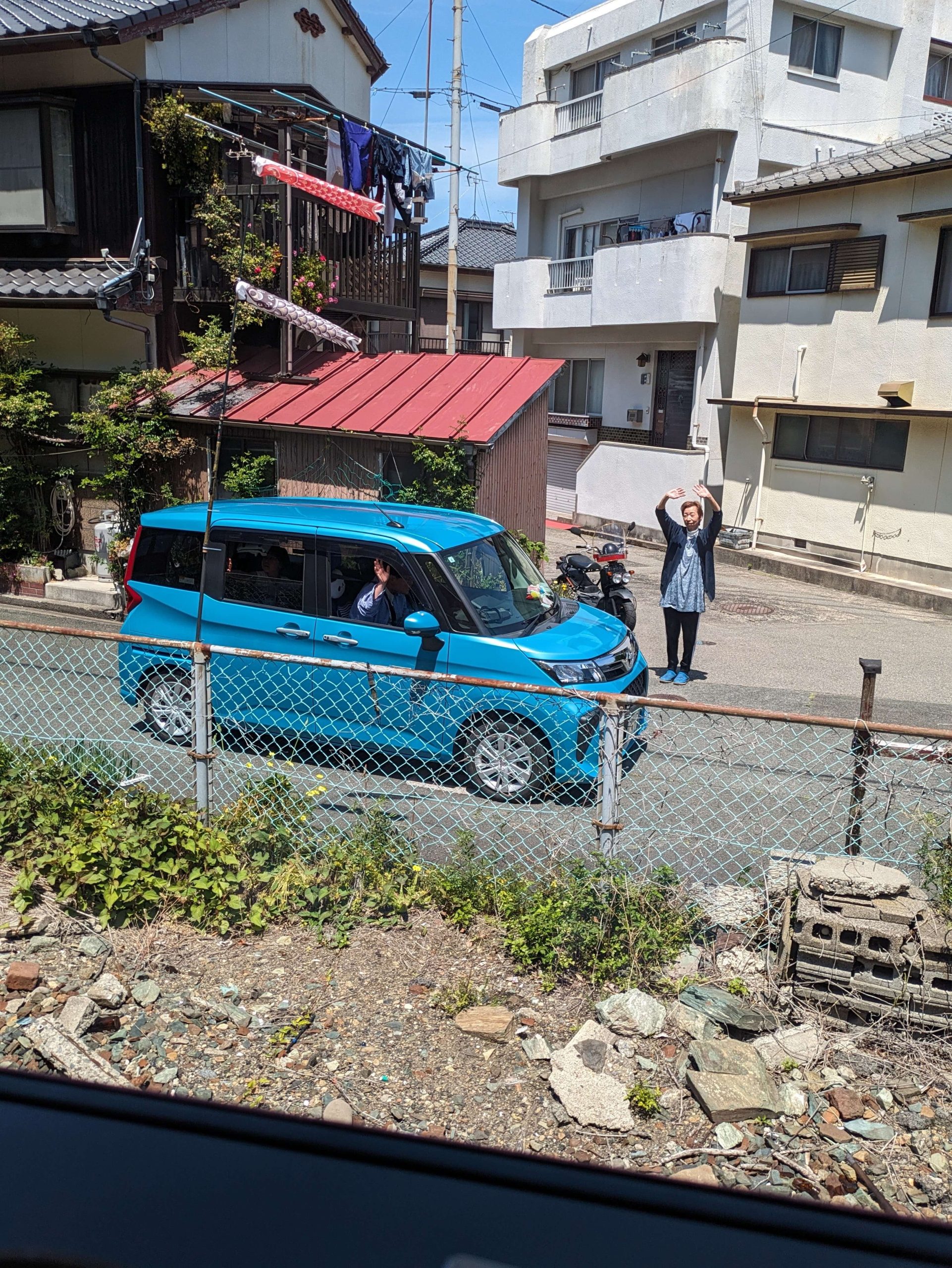
And suddenly twelve more minutes later, the blue car was back AGAIN!!!! They had finally parked and gotten out to wave, so I suspect the road turned off here – they had probably done this drive many times before. :) In total, they kept speed with us for a whole half hour. Wow!
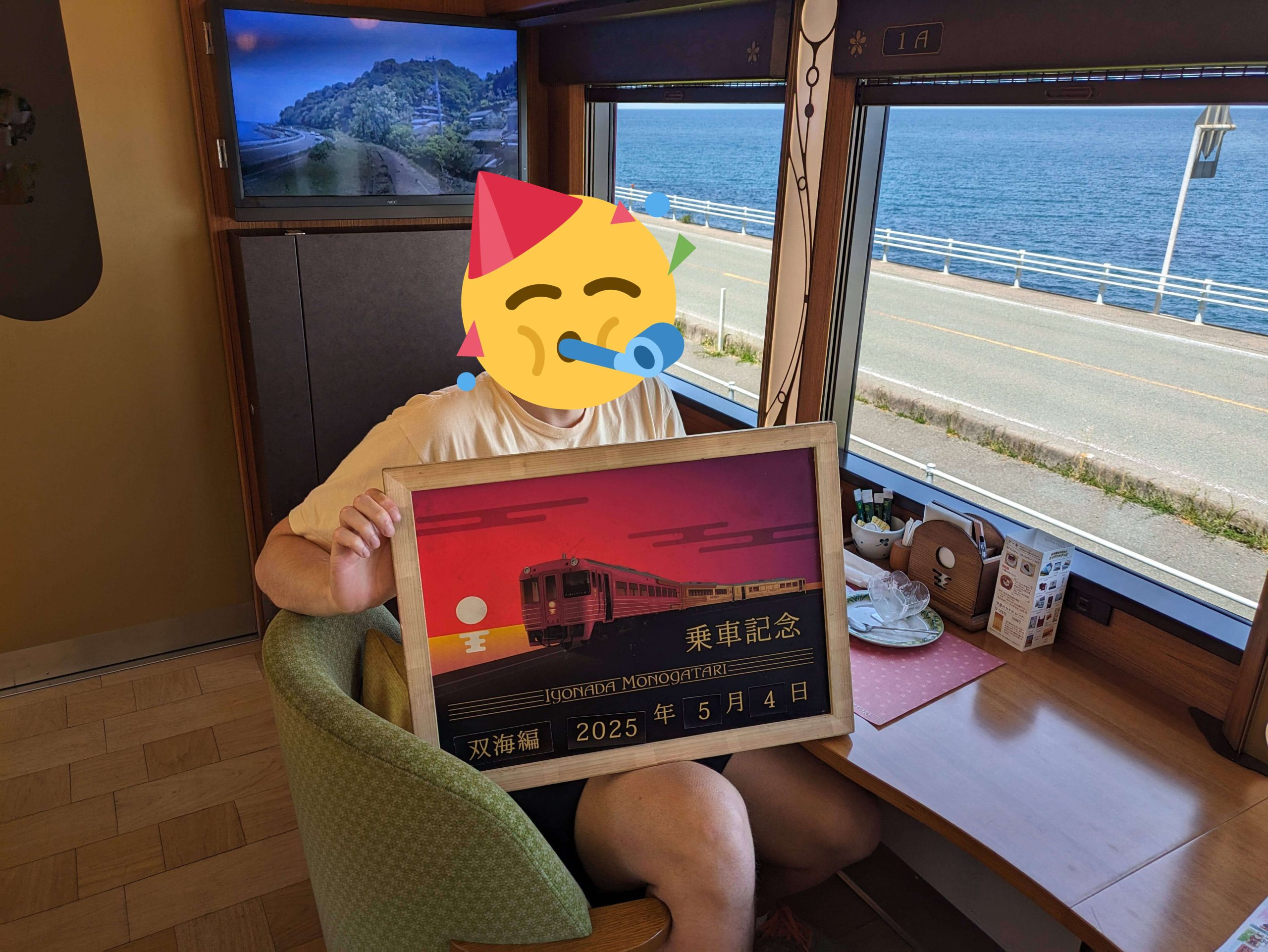
Me holding the commemorative plaque. On sightseeing trains like this, they always offer, so I don’t refuse. :)
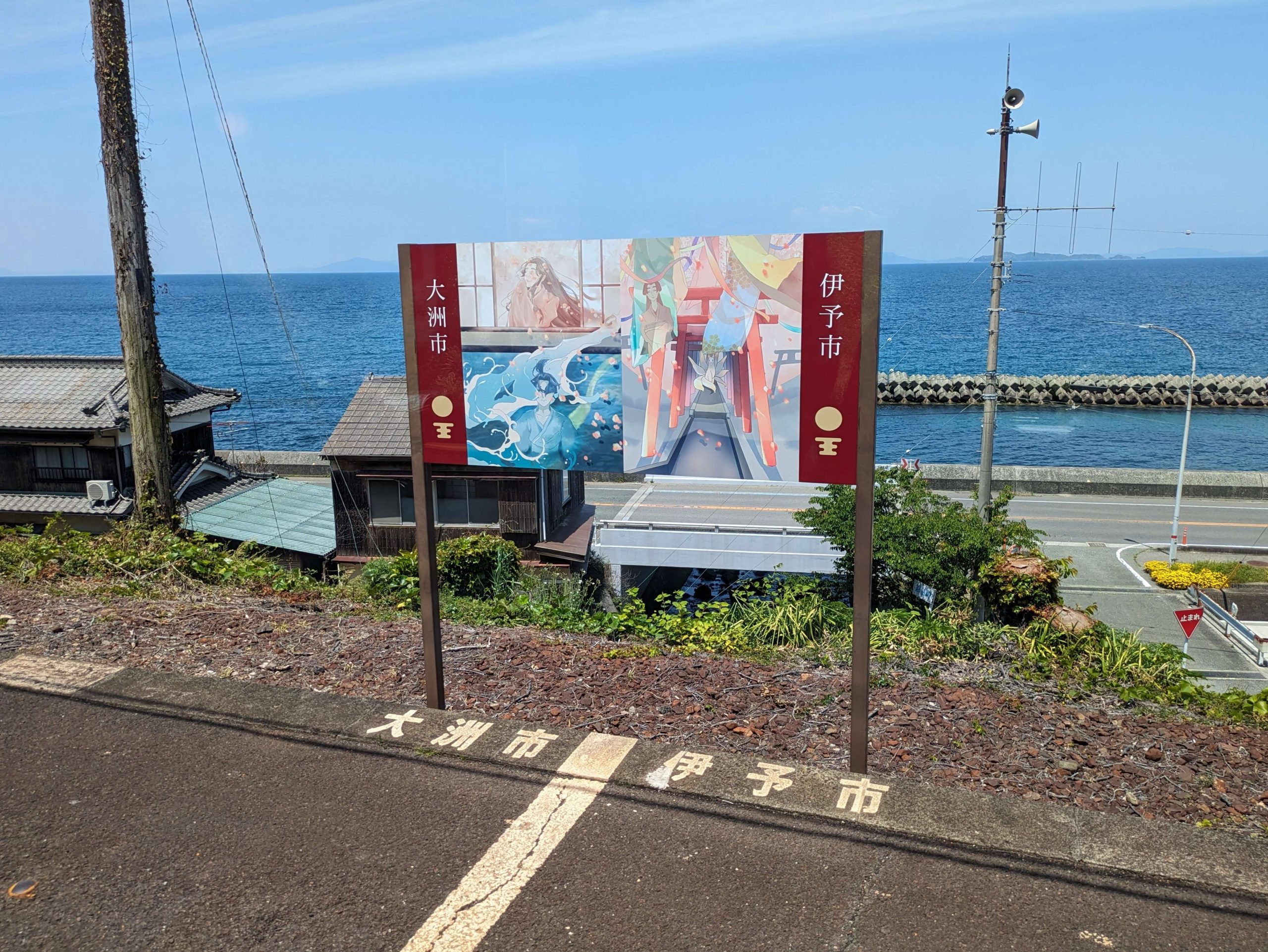
The boundary between Ozu City and Iyo City. “Iyonada” means “Iyo Sea”, with “Iyo” being one of the old province names, home to modern-day Ehime Prefecture.
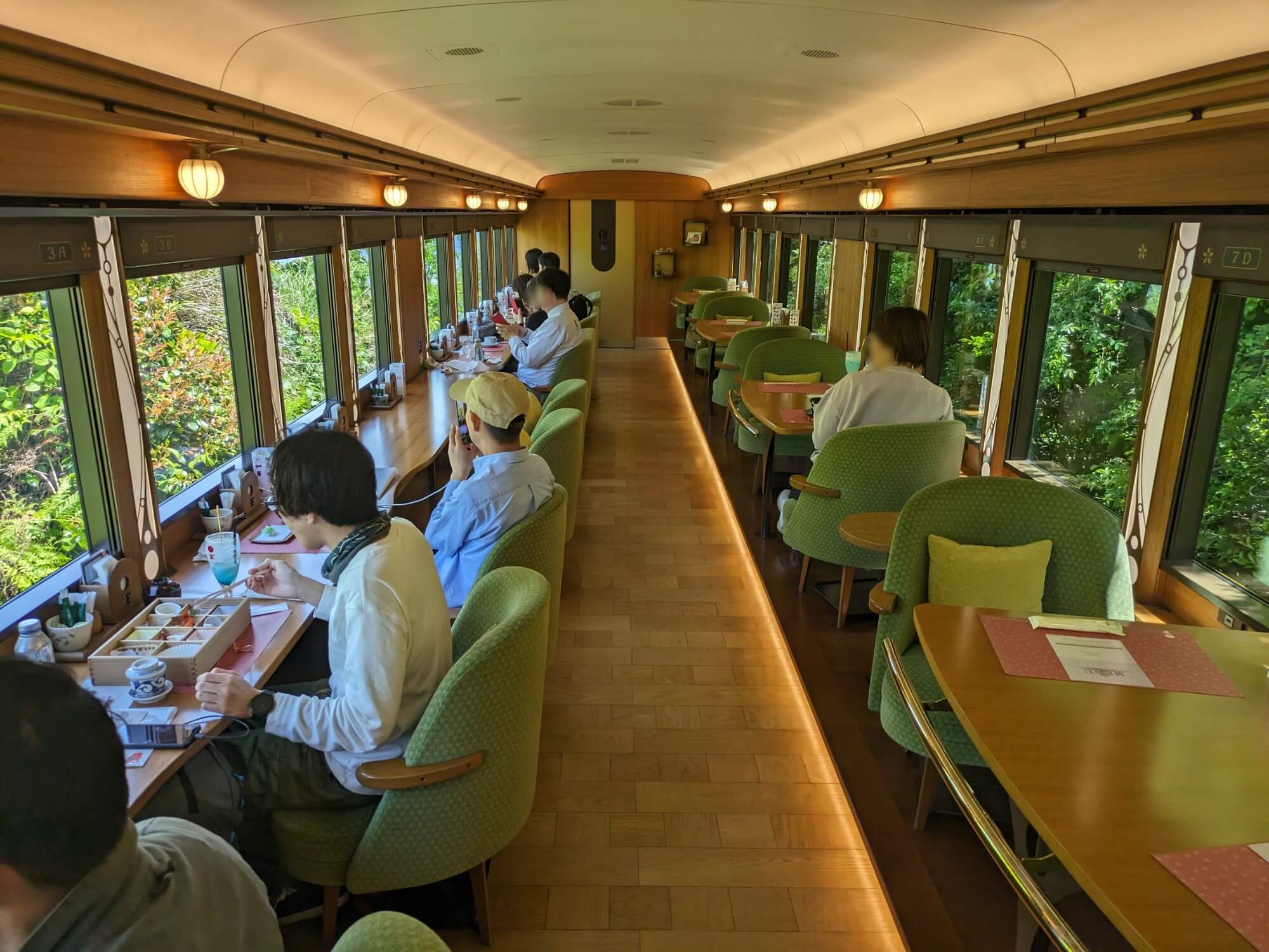
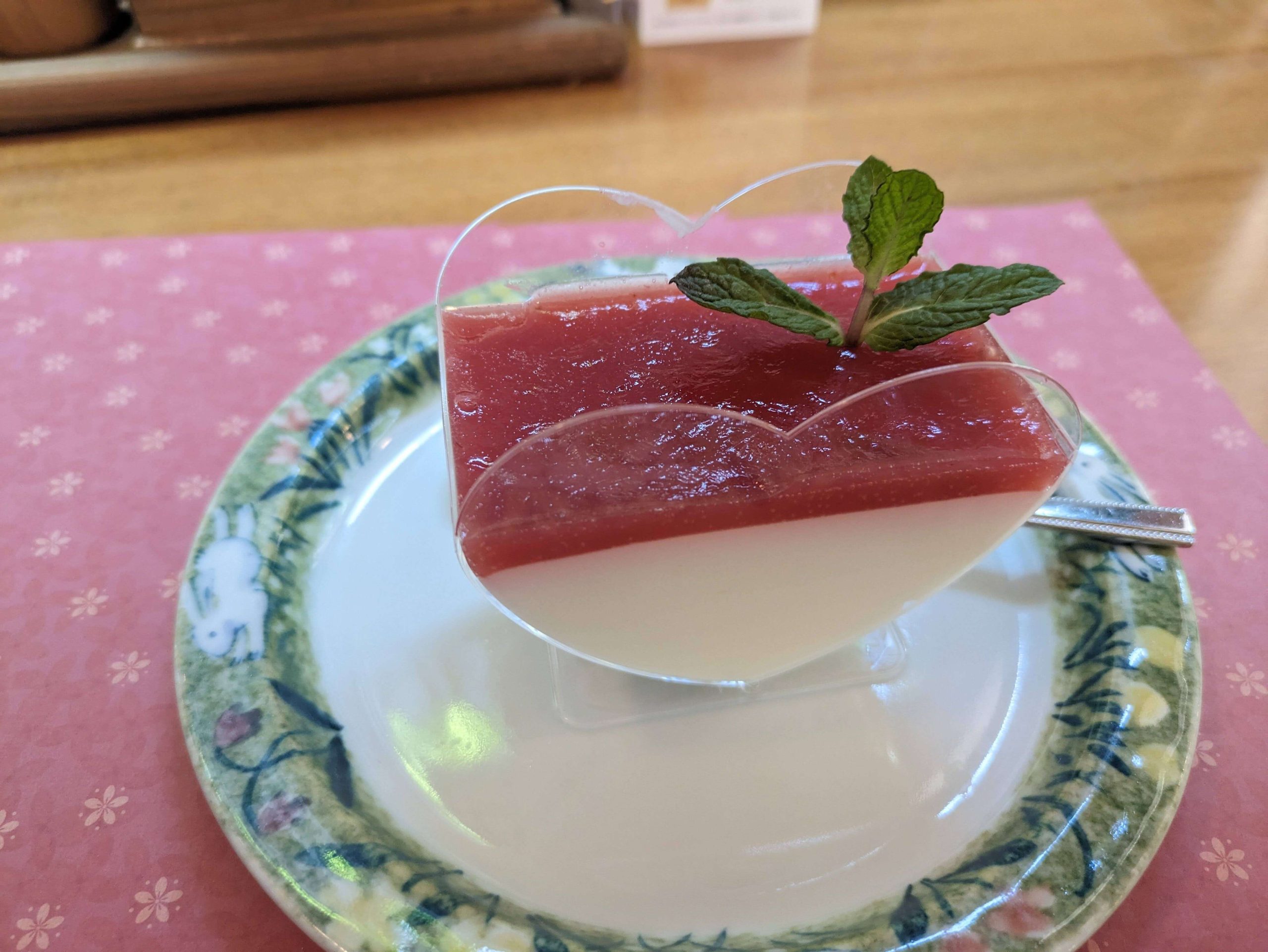
The inside of our train as it passed through a tunnel of green. Some people on board were enjoying meals they had ordered in advance; I bought an interesting cake as some pre-lunch dessert from their rotating seasonal menu.
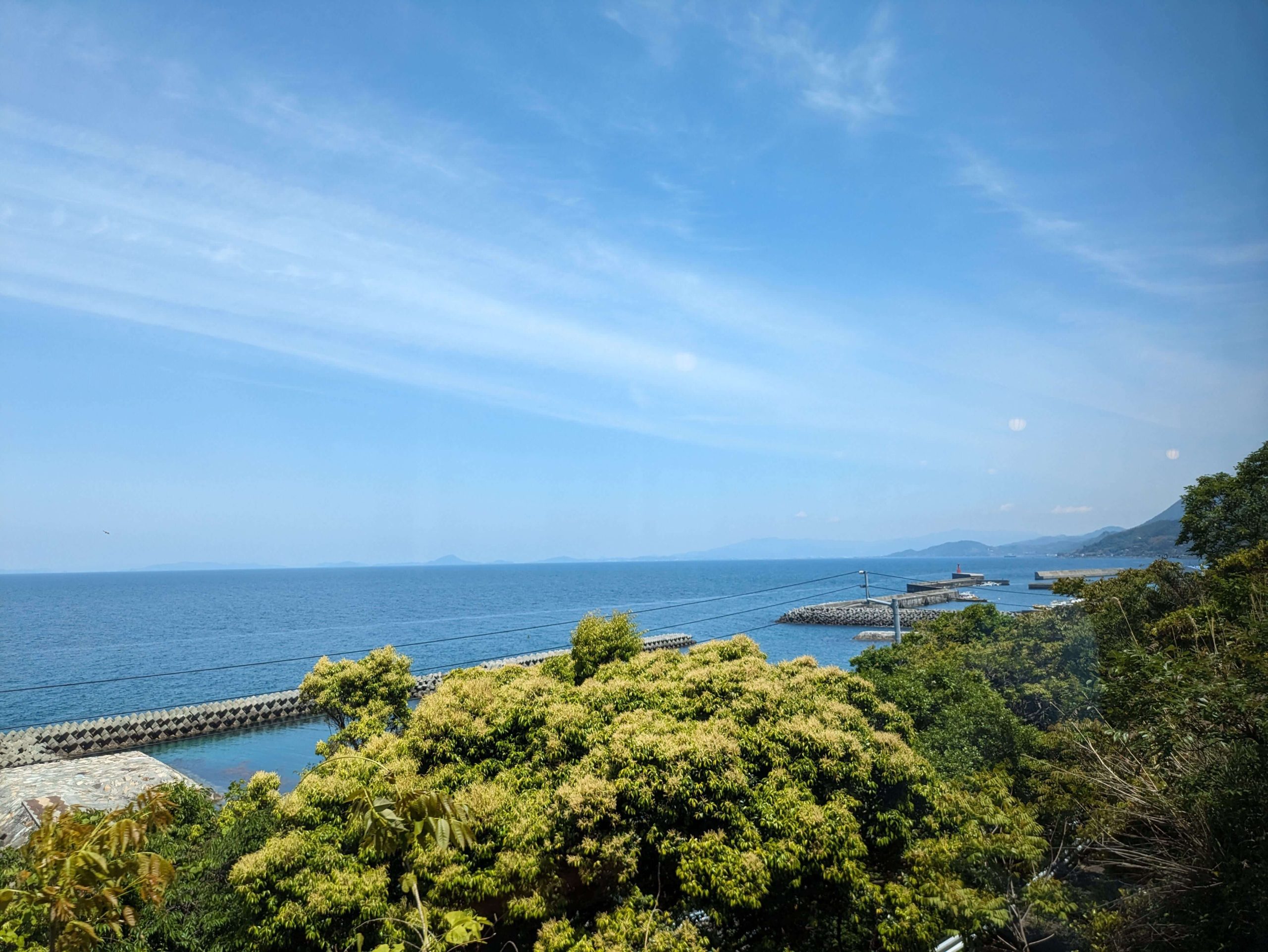
Such beautiful views of the sea – and a wide-open sky.
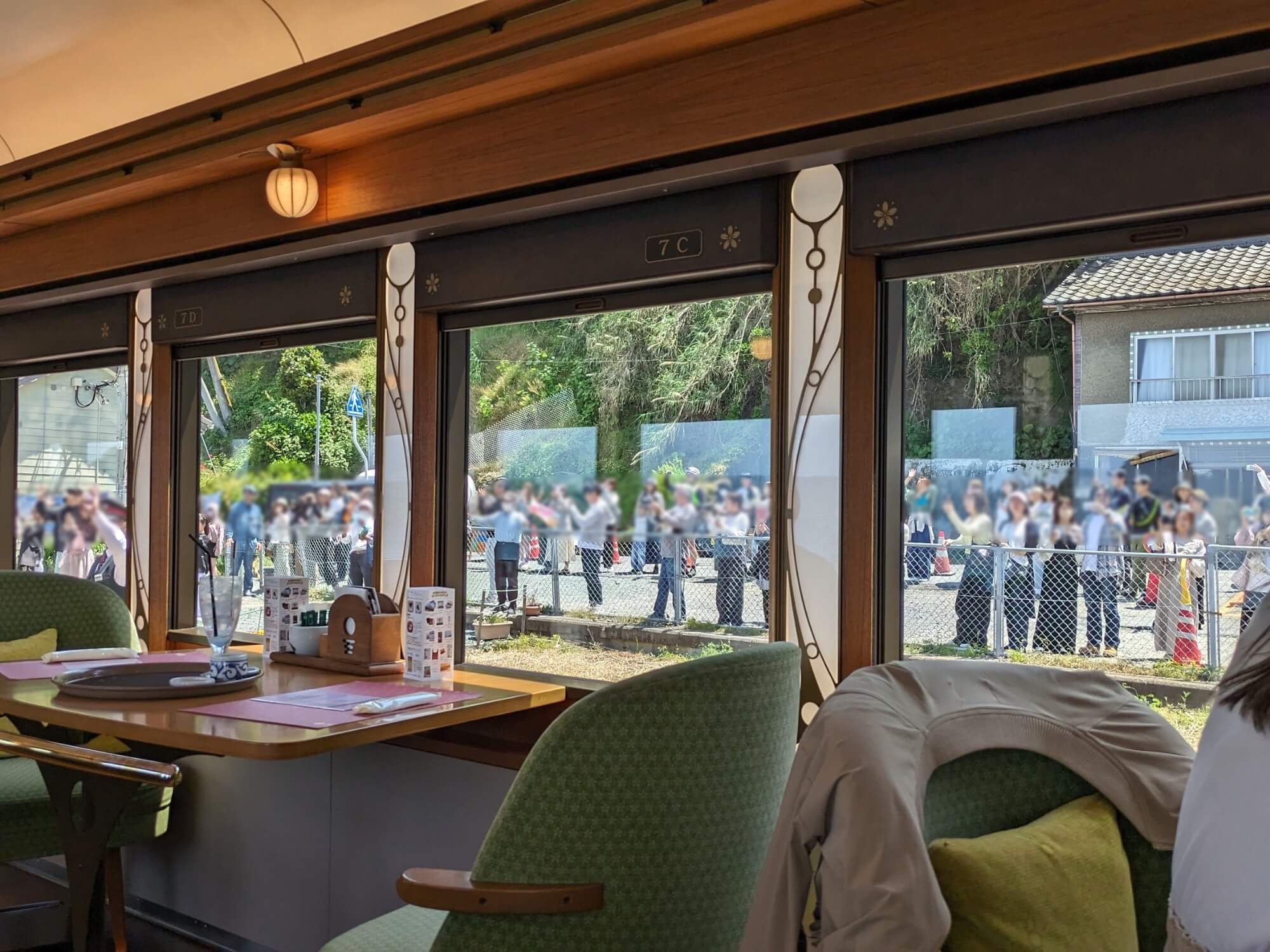
SOOOOO many people were there waiting for us, to take a photo of the train, or just see us off, as we pulled into Shimonada Station.
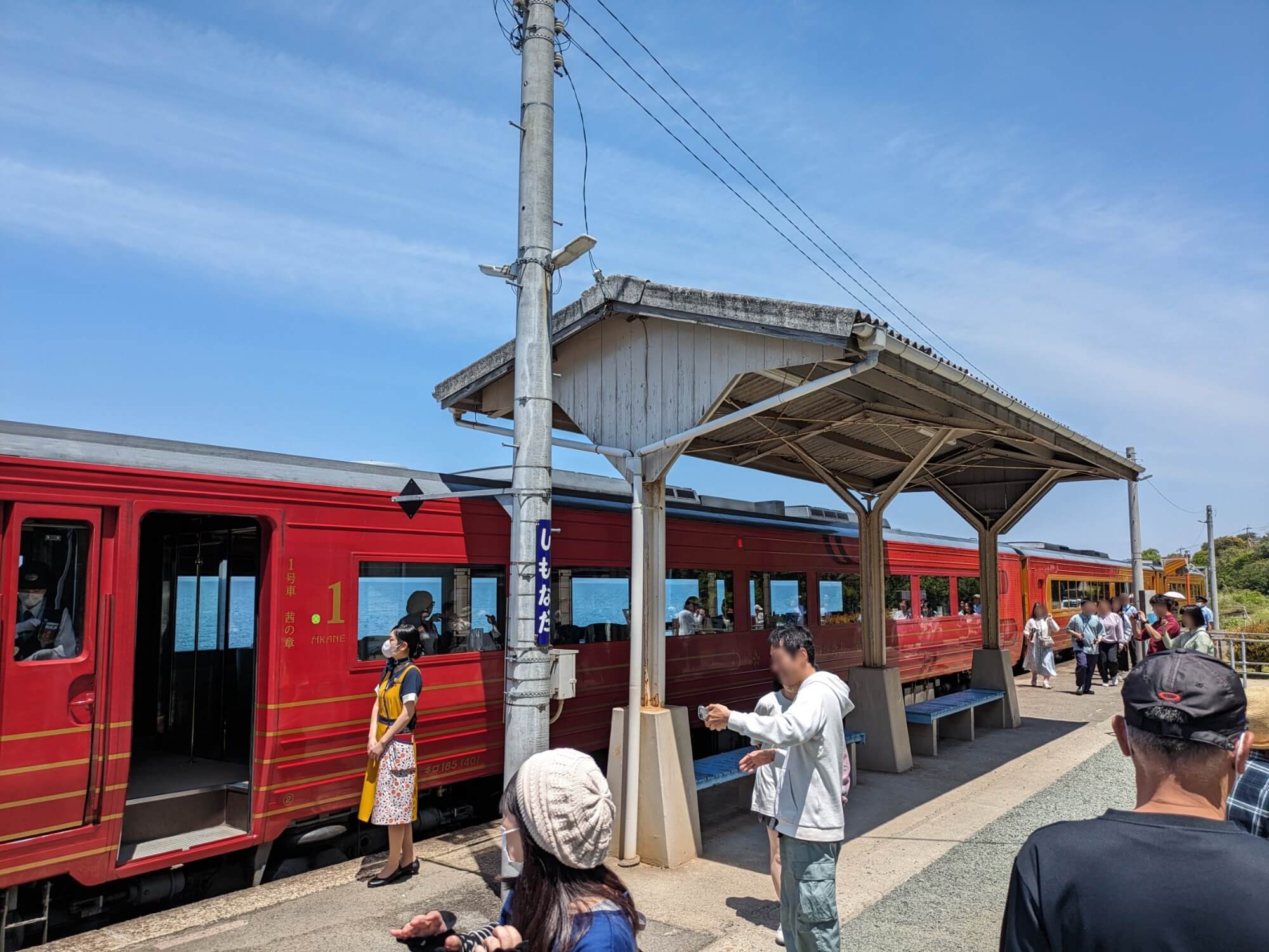
The small platform overhang along with our train. The stop here was around ten minutes long.
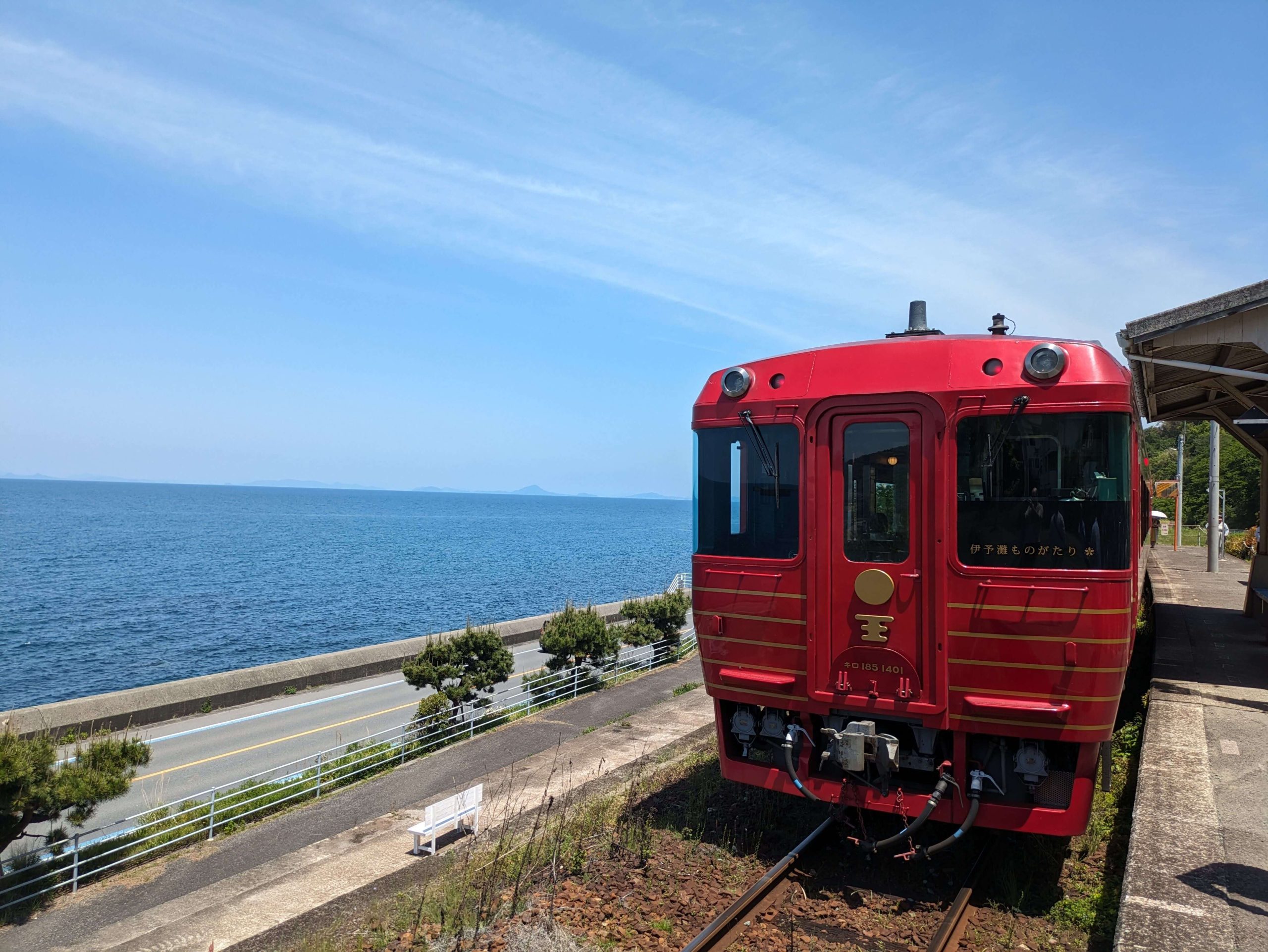
My iconic (if I do say so myself) photo of the Iyonada Monogatari stopped at Shimonada Station, known as Japan’s closest station to the sea until the construction of the coastal “Yuyake-koyake” road (named after an old children’s song about the glow of the sunset) in 1981 on reclaimed land. The station is especially photographed at sunrise and sunset.
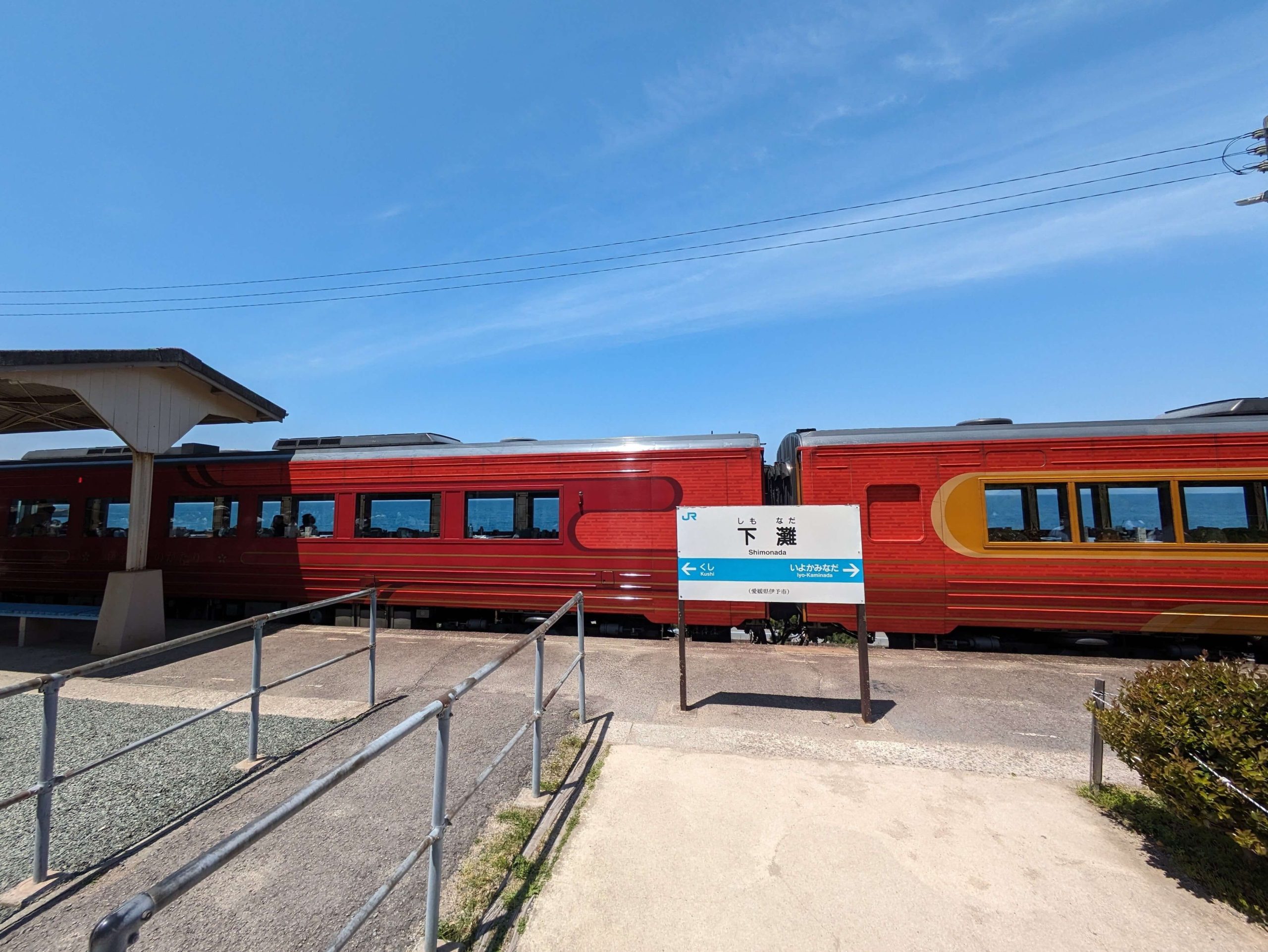
A photo with the famous station sign. If you thought Nishi-Sakawa’s double appearance was impressive, Shimonada Station has been featured on Seishun 18 Kippu poster not twice but three times, in three consecutive years – Winter 1998, 1999, and 2000 – which is what propelled it to fame.
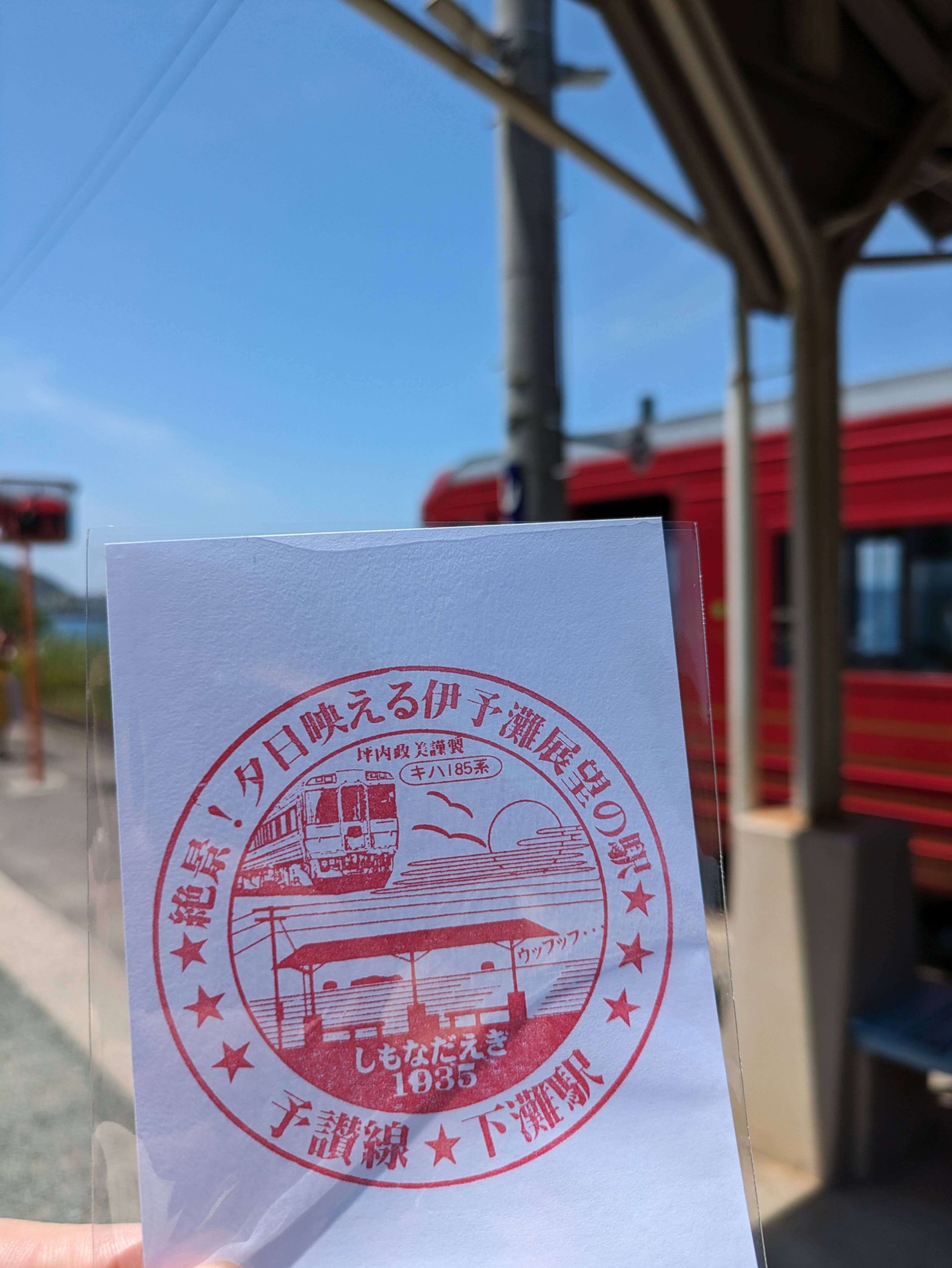
Shimonada Station is unstaffed, but I had heard there were station stamps – as an de facto expert on Iyonada Monogatari, I asked and she pulled one out of her bag to give to me!!
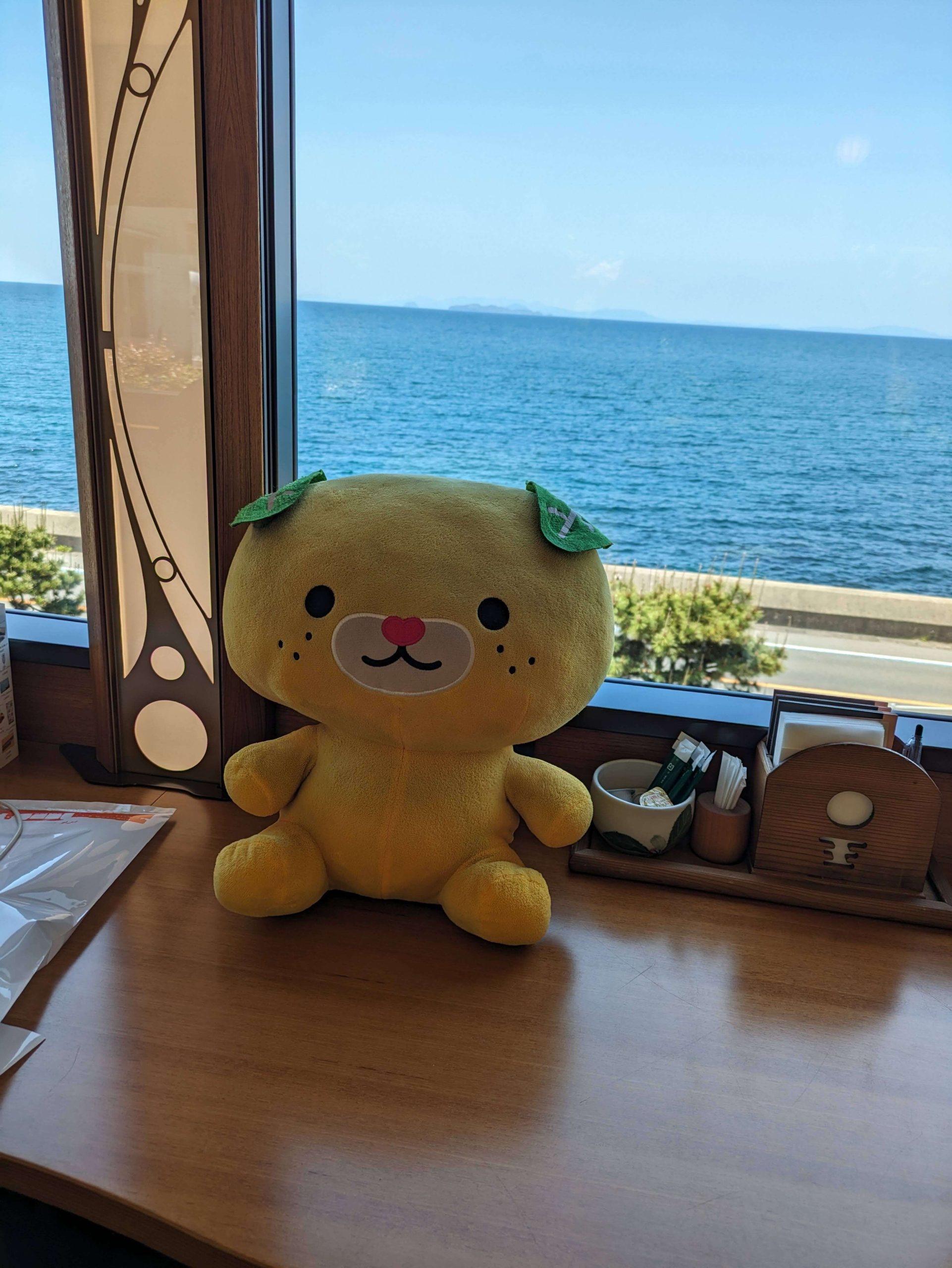
Mican, at the (former) closest station in Japan to the sea.
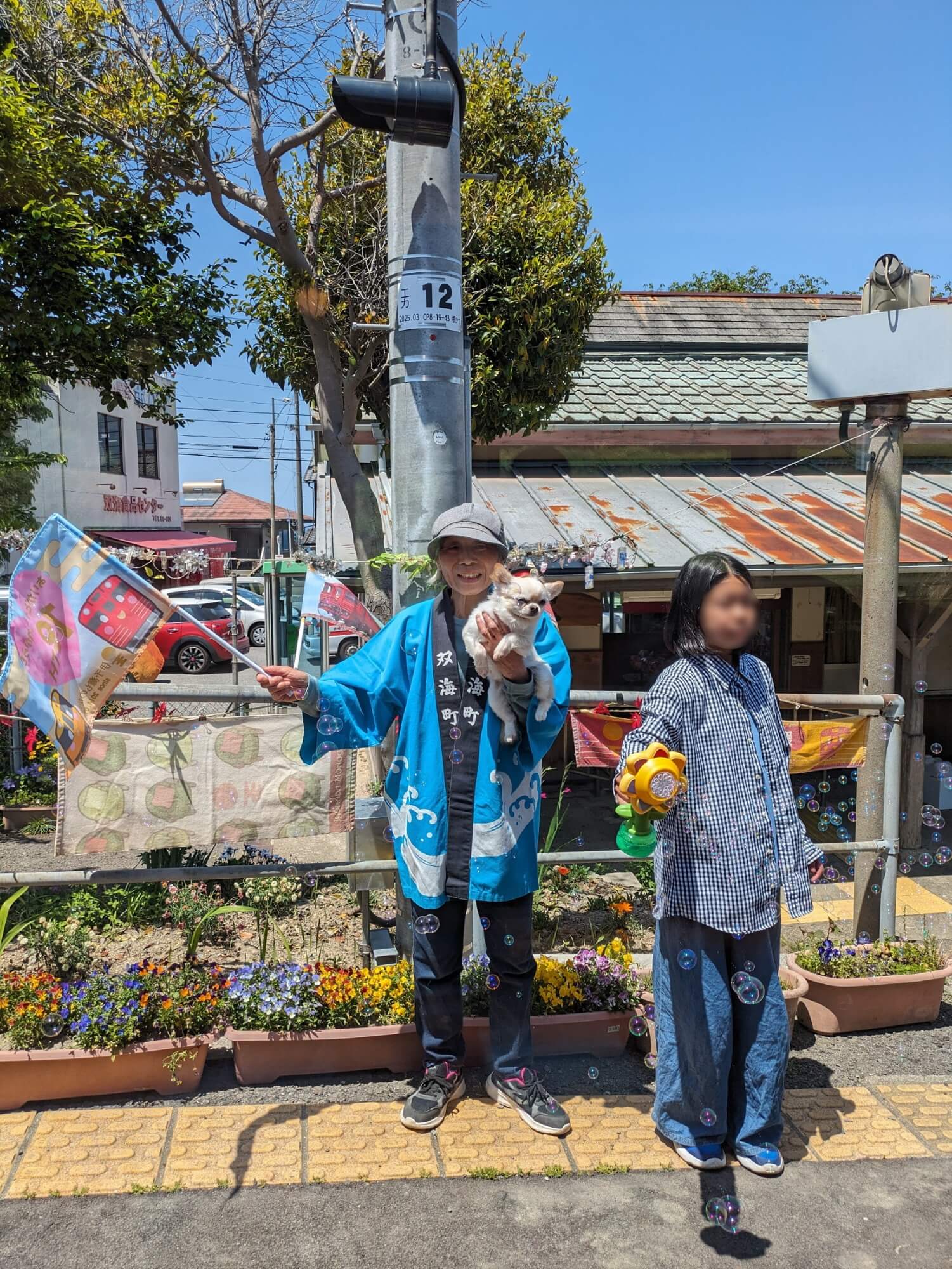
We also had a short stop at Iyo-Kaminada Station where a family – and their dogs and cats – greeted us in the waiting room.
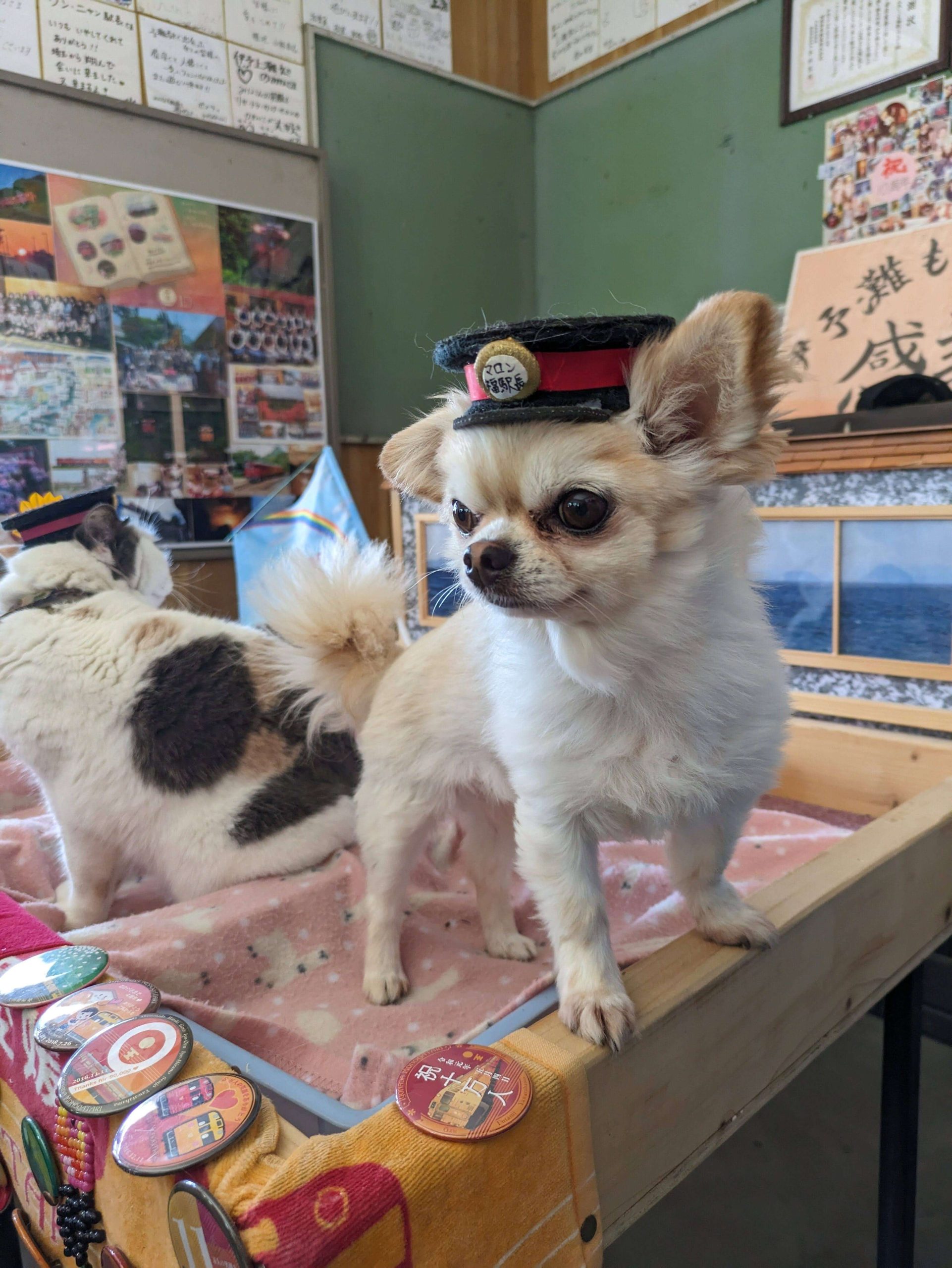
This chihuahua, Maron (meaning “chestnut”), was one of the “lucky stationmasters” – signified, of course, by her cap! She shares the role with two cats, Tora and Kanna, and you can see them in the upper left of the story map.
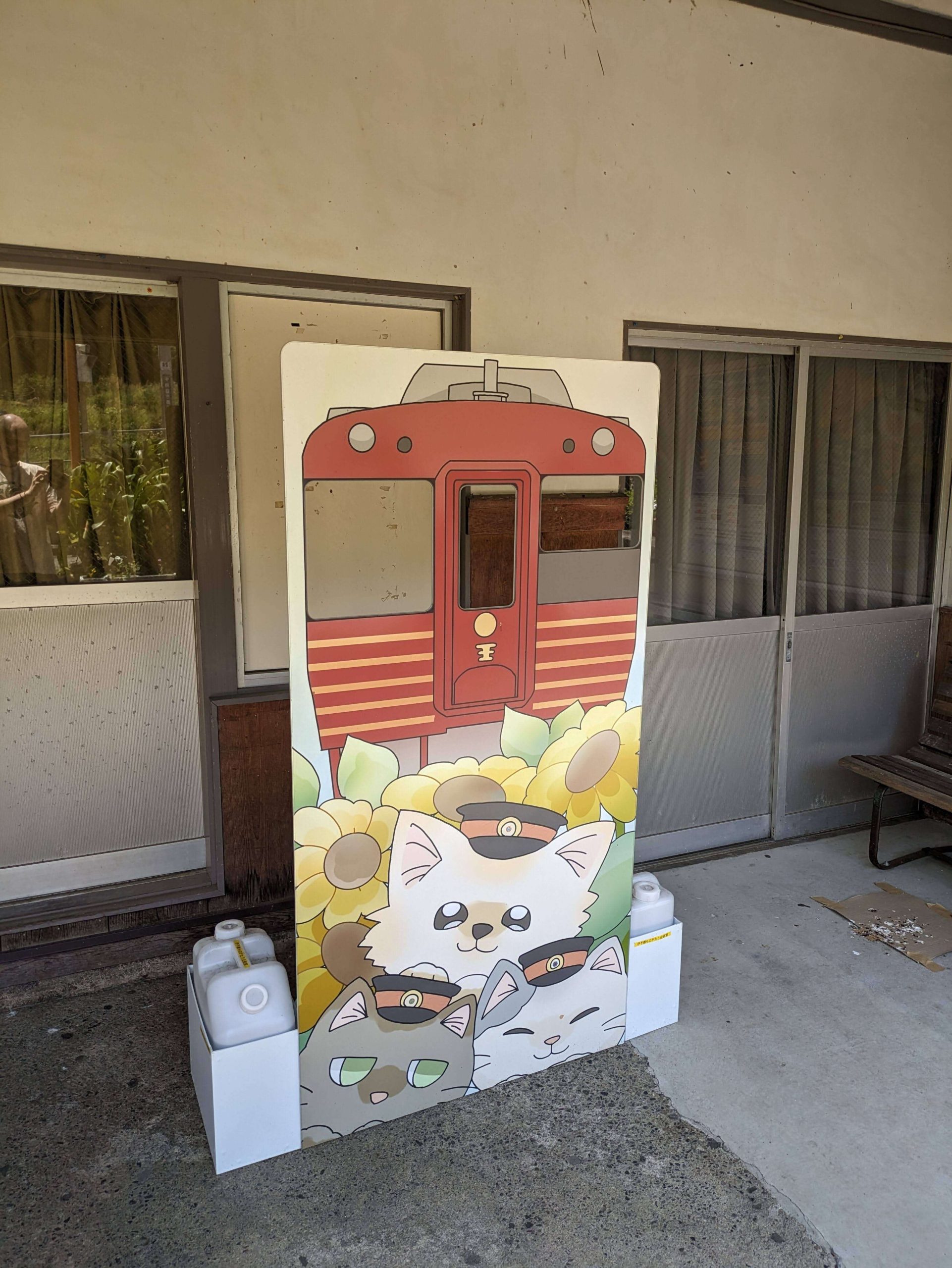
The lucky stationmasters preserved for all history on this commemorative backing poster.
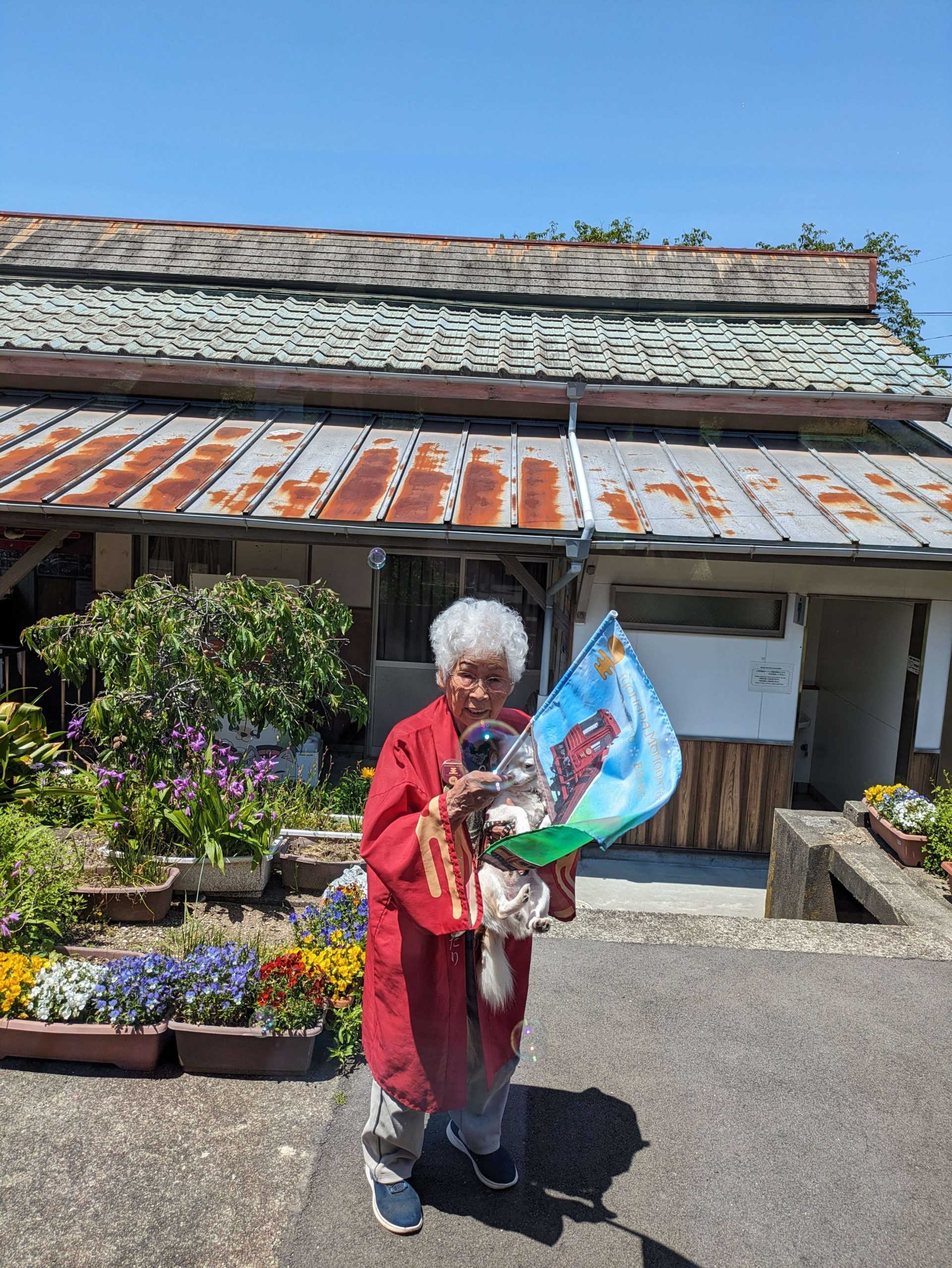
A departure with more bubbles. Bye, Iyo-Kaminada Station and the former Futami Town!
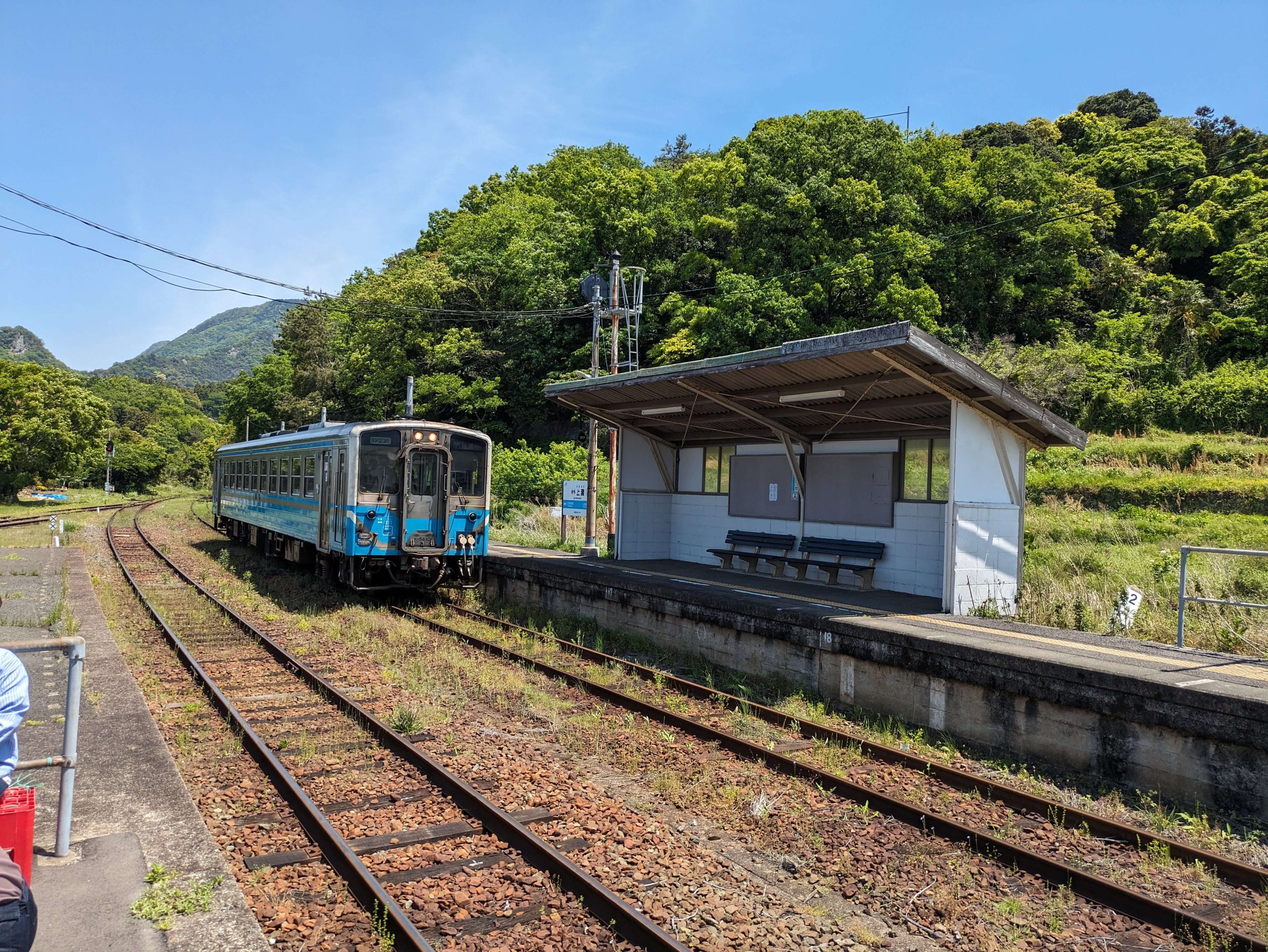
After the local train pulled into the station, the tracks were free for us to proceed on.
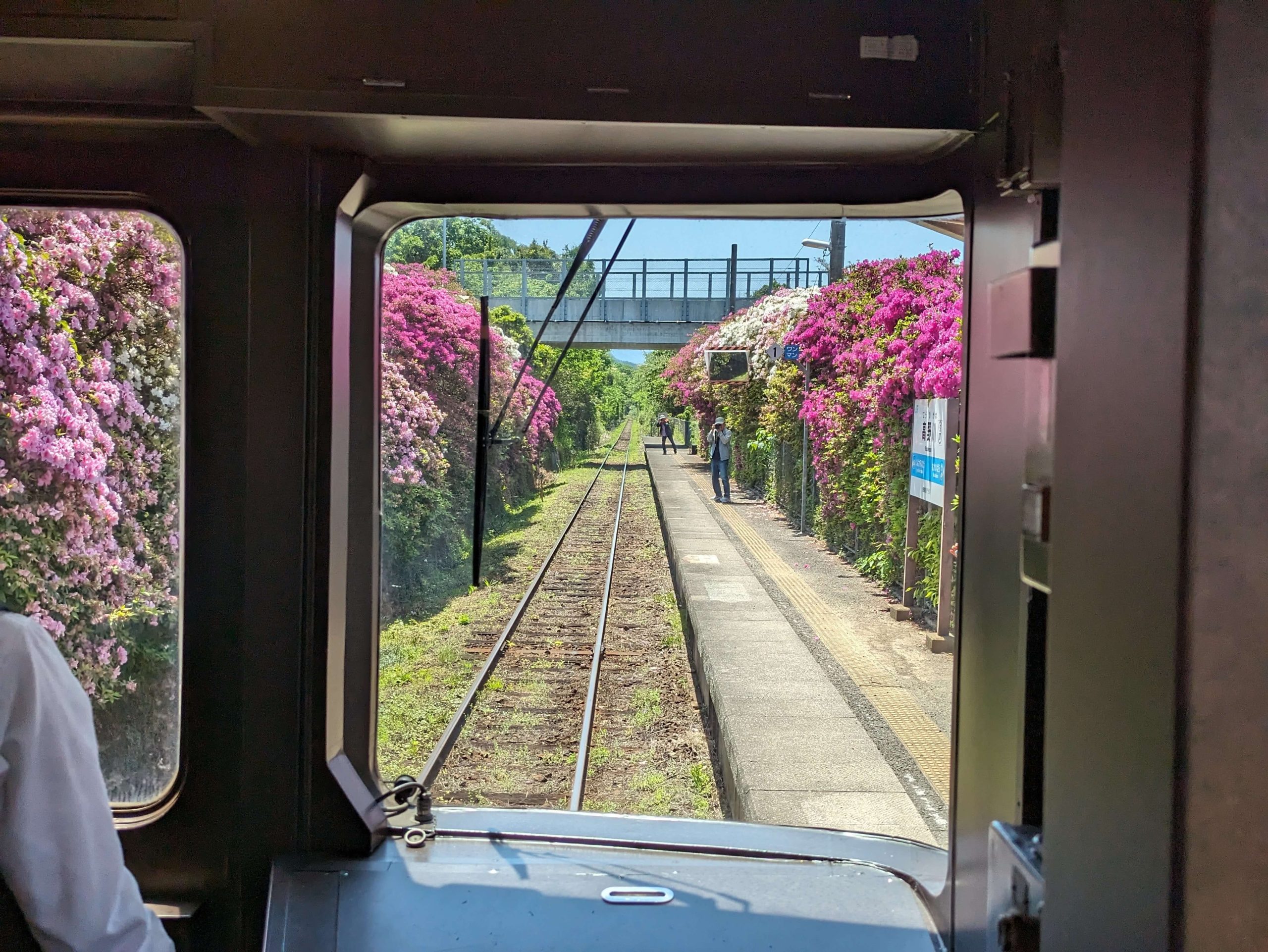
After getting on board, Kana told me “look behind you!!!” I rushed to the back car and took this photo out the window of a whole aisle of azaleas in full bloom.
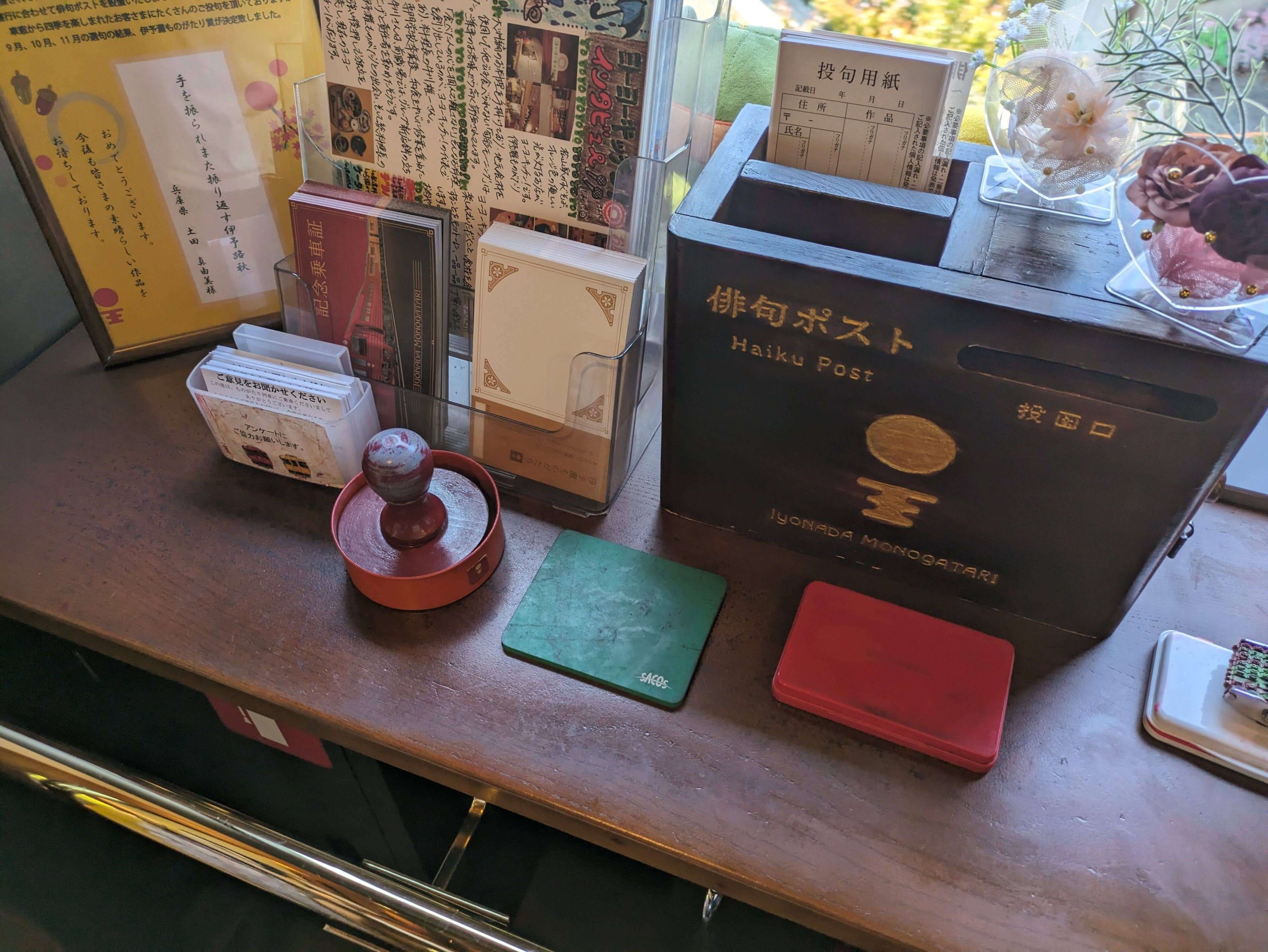
Onboard was a stamp station, all sorts of stationery, and a postbox that encouraged writing and sending haiku. I’m fairly sure this is because Matsuyama, where the train terminates, is a city particularly associated with haiku due to the number of famous haiku poets from there. There’s even a tourism initiative called “Haiku Capital Matsuyama”.
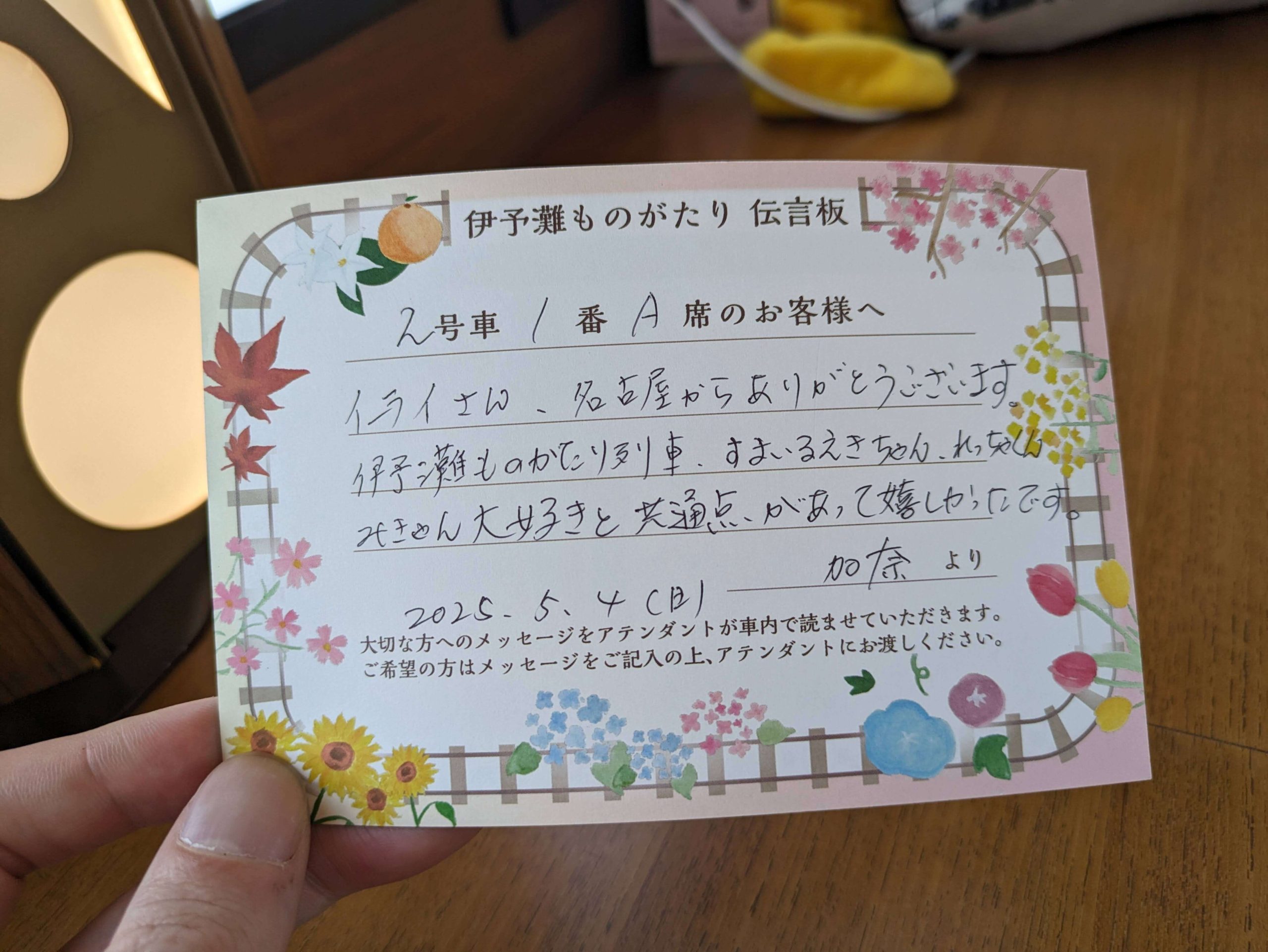
Kana wrote a note to me and gave it to a train attendant to have it delivered to my seat – thanking me for coming all the way from Nagoya, and saying she was happy to have discovered we both love trains and all the various mascot characters she had with her.
Arriving into Matsuyama
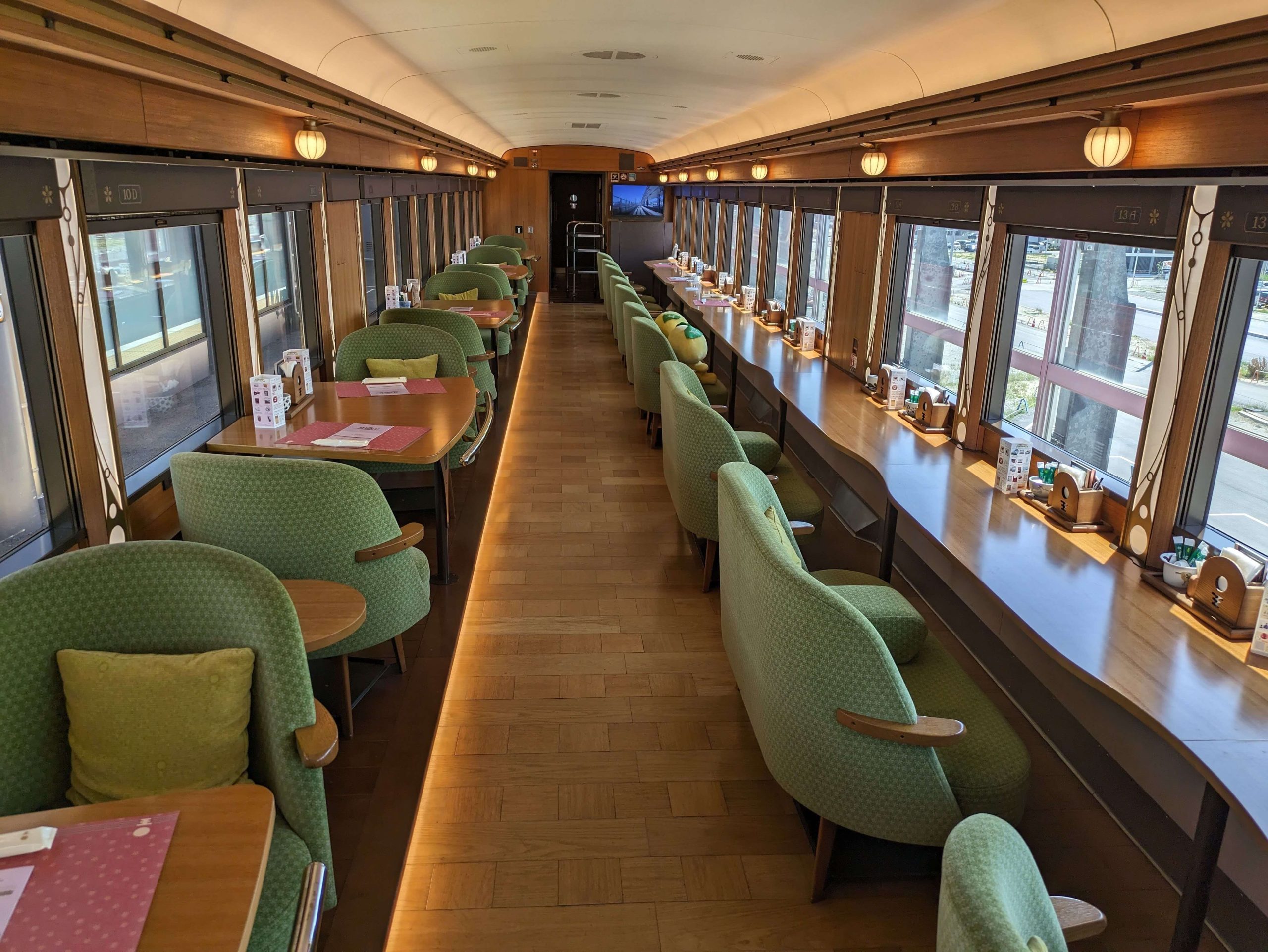
One final look at the train interior once everyone had alighted.
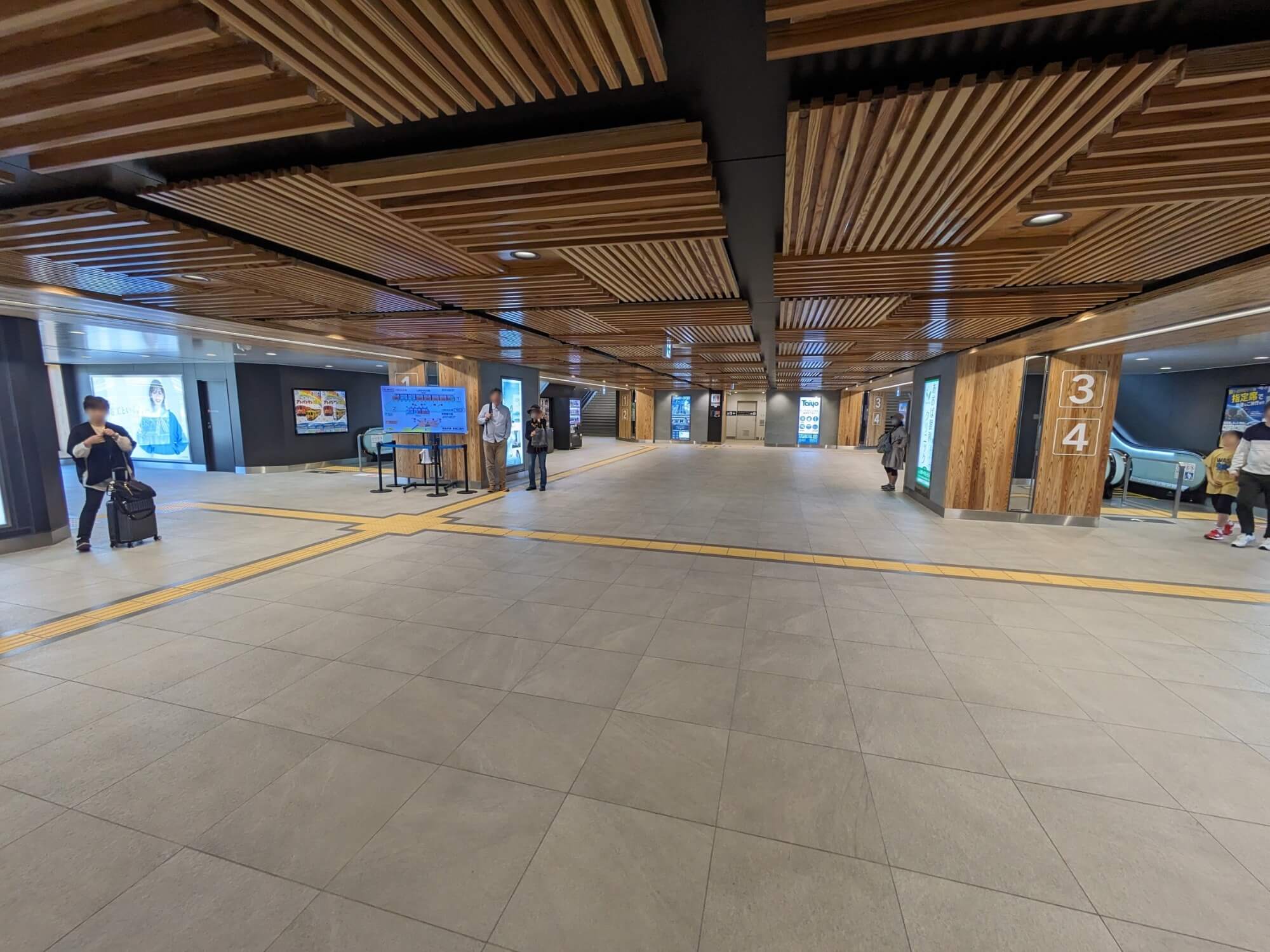
Arriving into Matsuyama – my first time the brand new station building, which just opened in September 2024 along with a “renewal” of the area – and WHOA, this layout and interior design looks a lot like Asahikawa Station, my favorite station in Japan?!?!? I looked it up but, nope, different architect and designer.
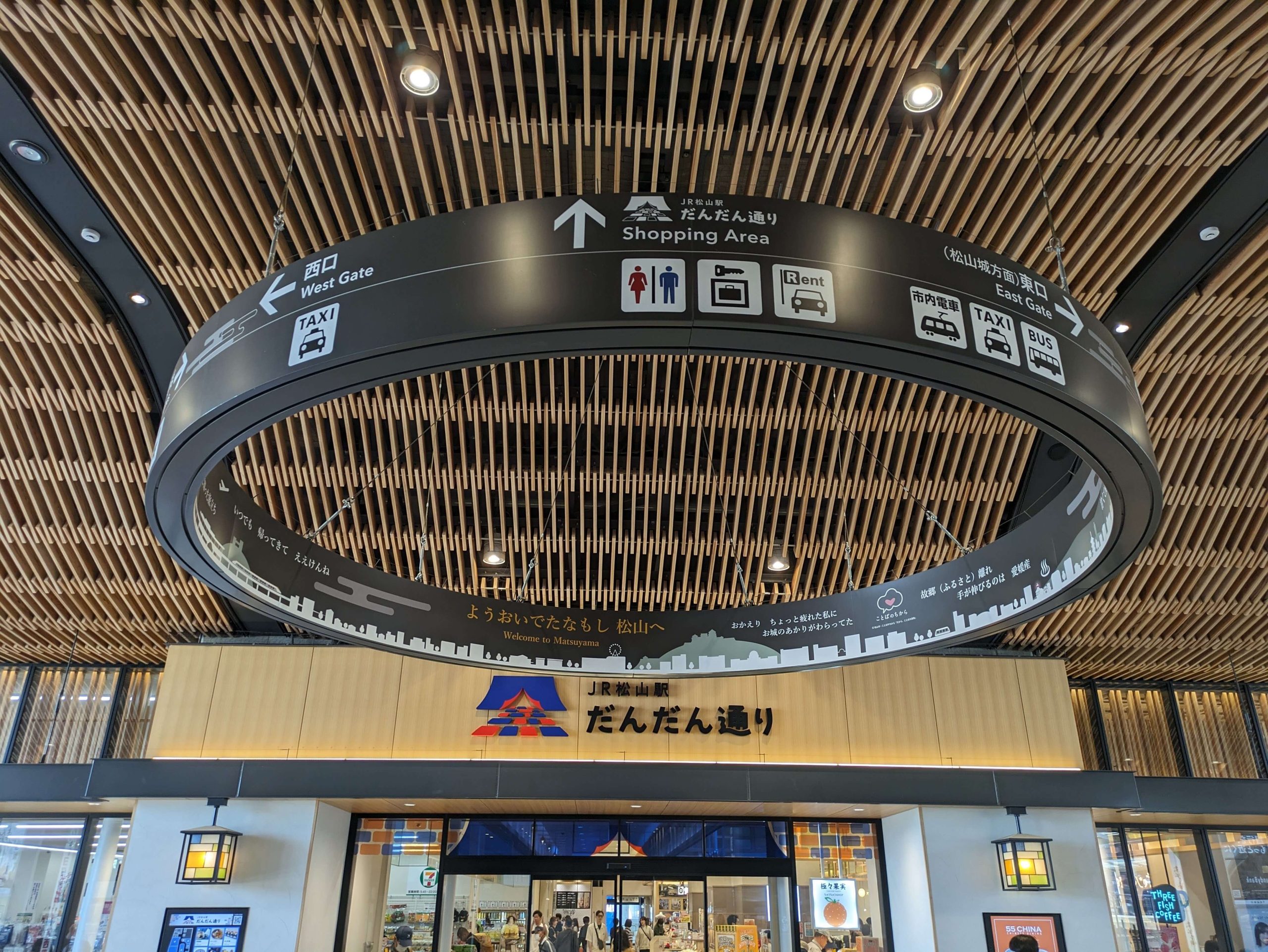
A circular informational sign! I love these. Just like they have in Hirosaki.
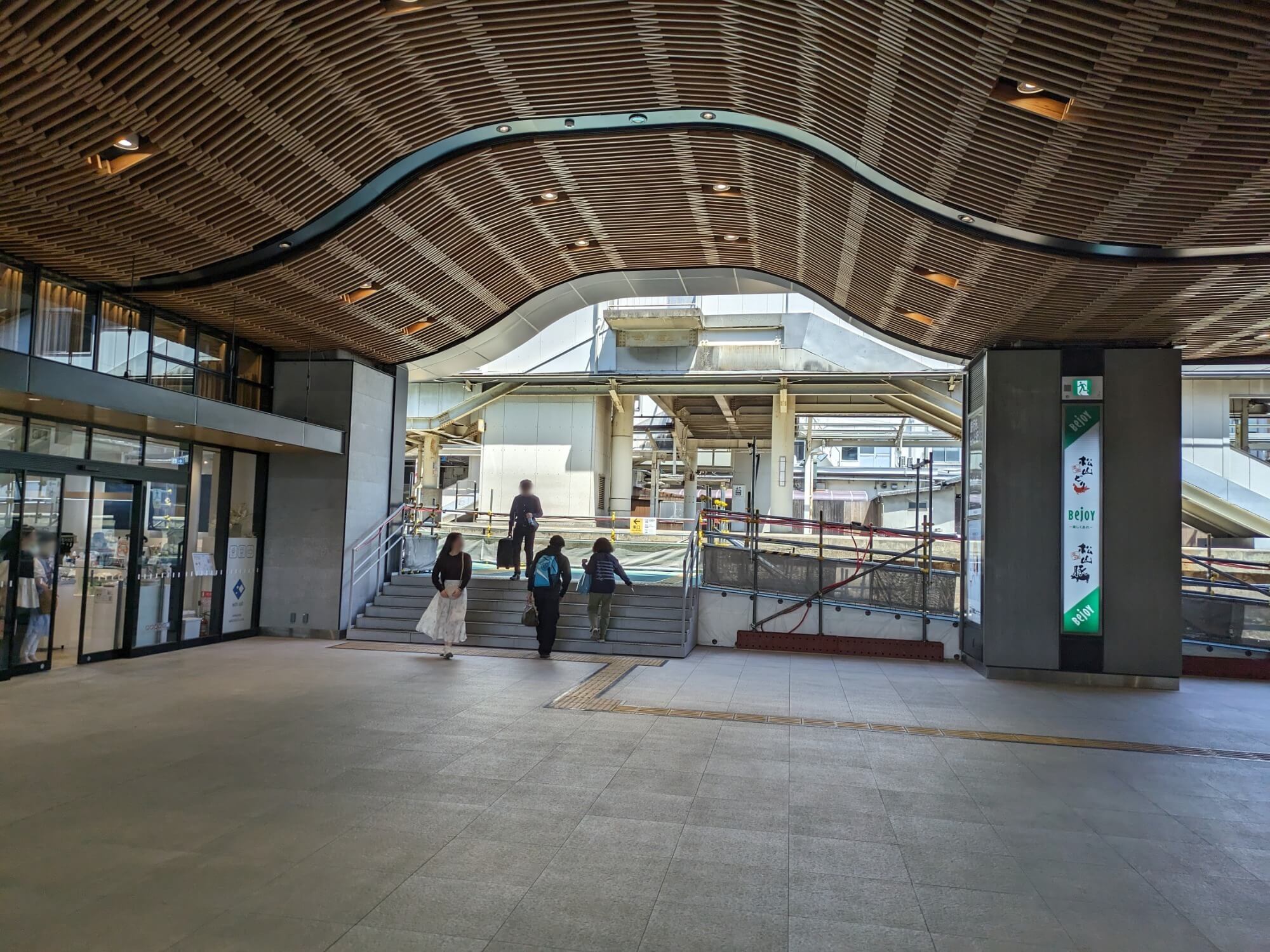
The redesigned, elevated station wasn’t just the old station that underwent construction. Instead, they just built an entirely new building next door.
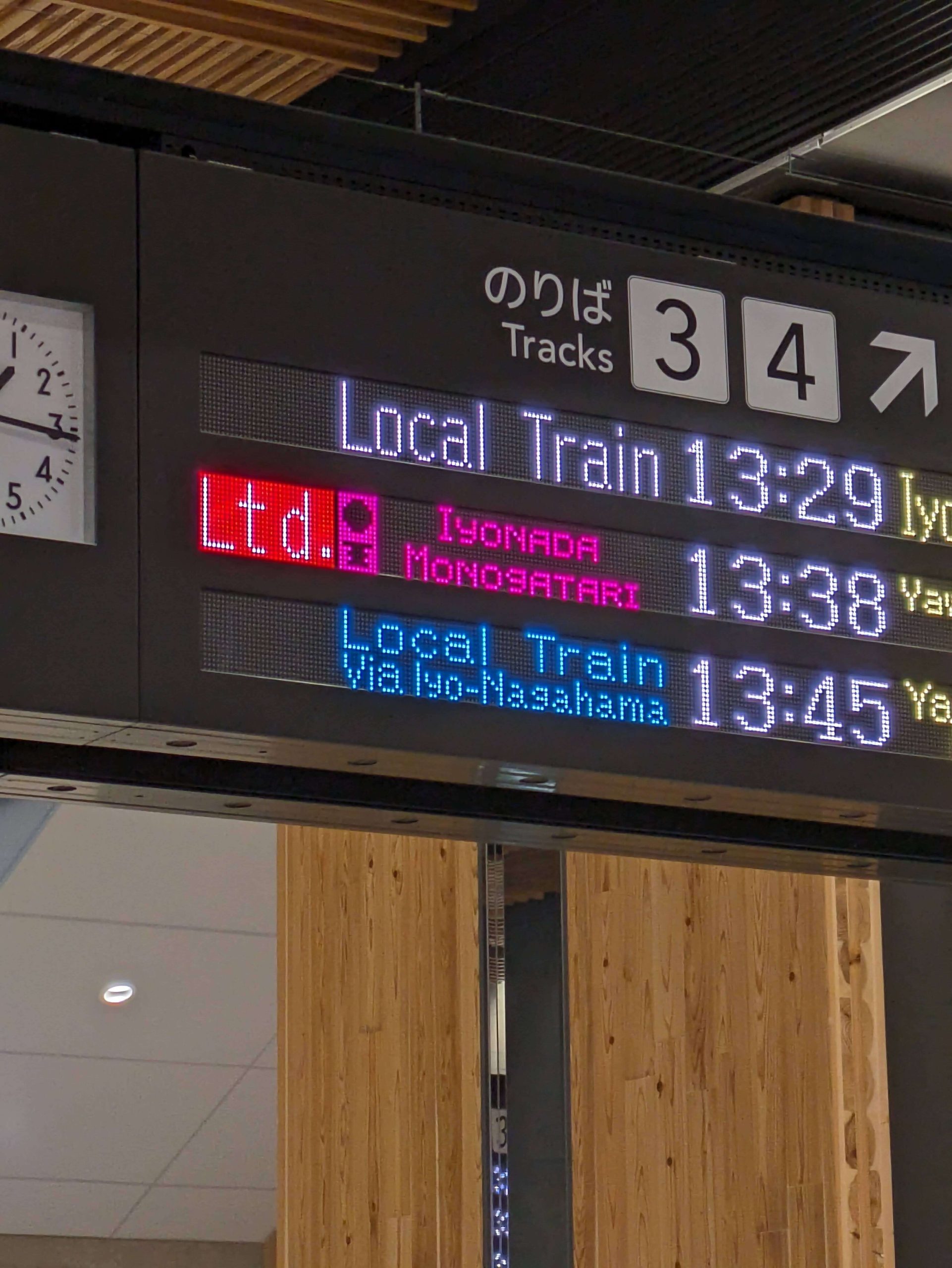
Special signage for the Iyonada Monogatari on the departure board, which was due to head back in the other direction in about twenty minutes’ time.
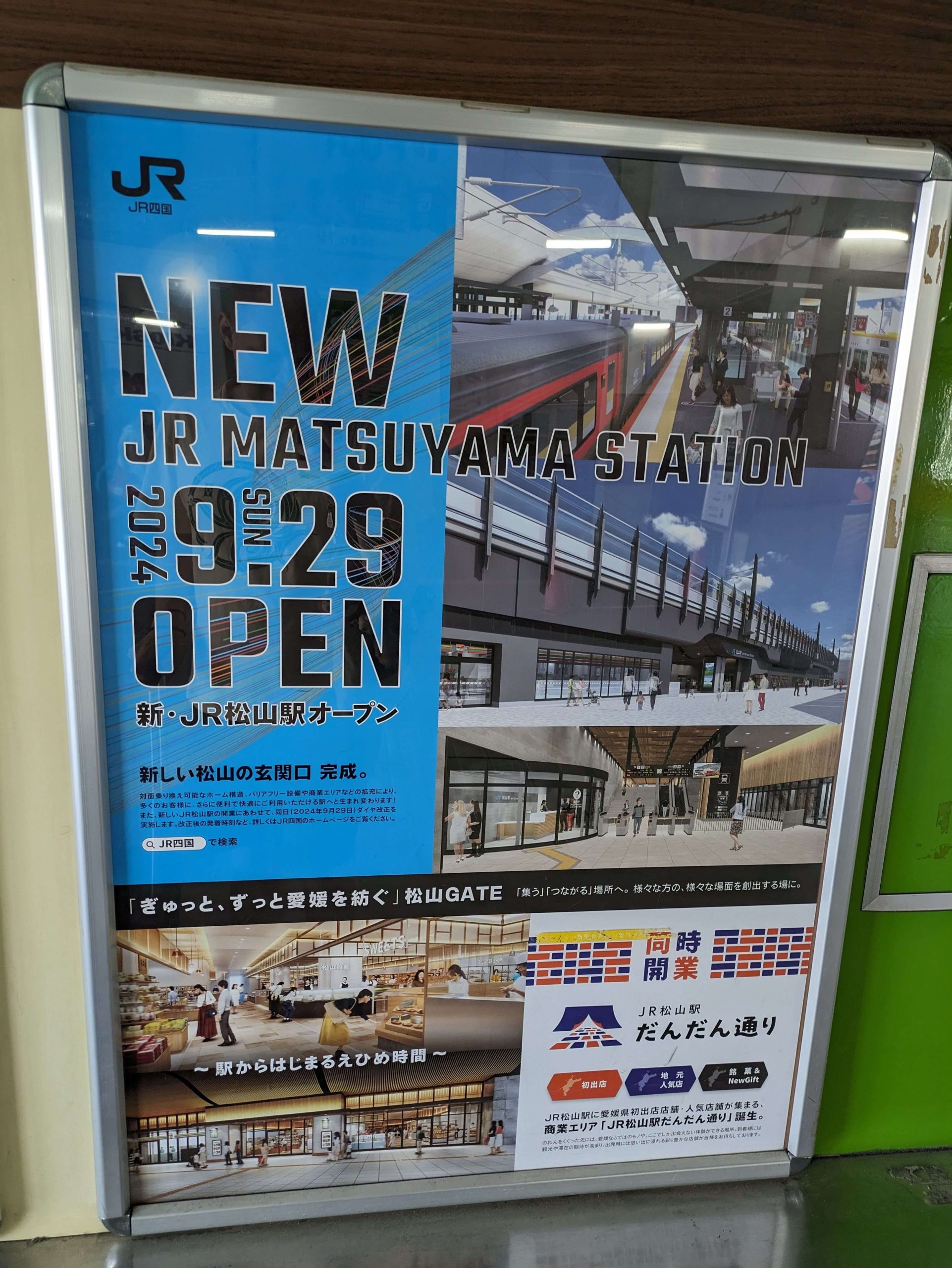
A poster advertising the recent opening of the new station. Ehime had gotten automatic ticket gates for the first time along with the new building, I read… which then proceeded to break due to flooding after heavy rains within, like, the first week of opening. Poor Matsuyama, lol. They had been fixed by when I was there, though.
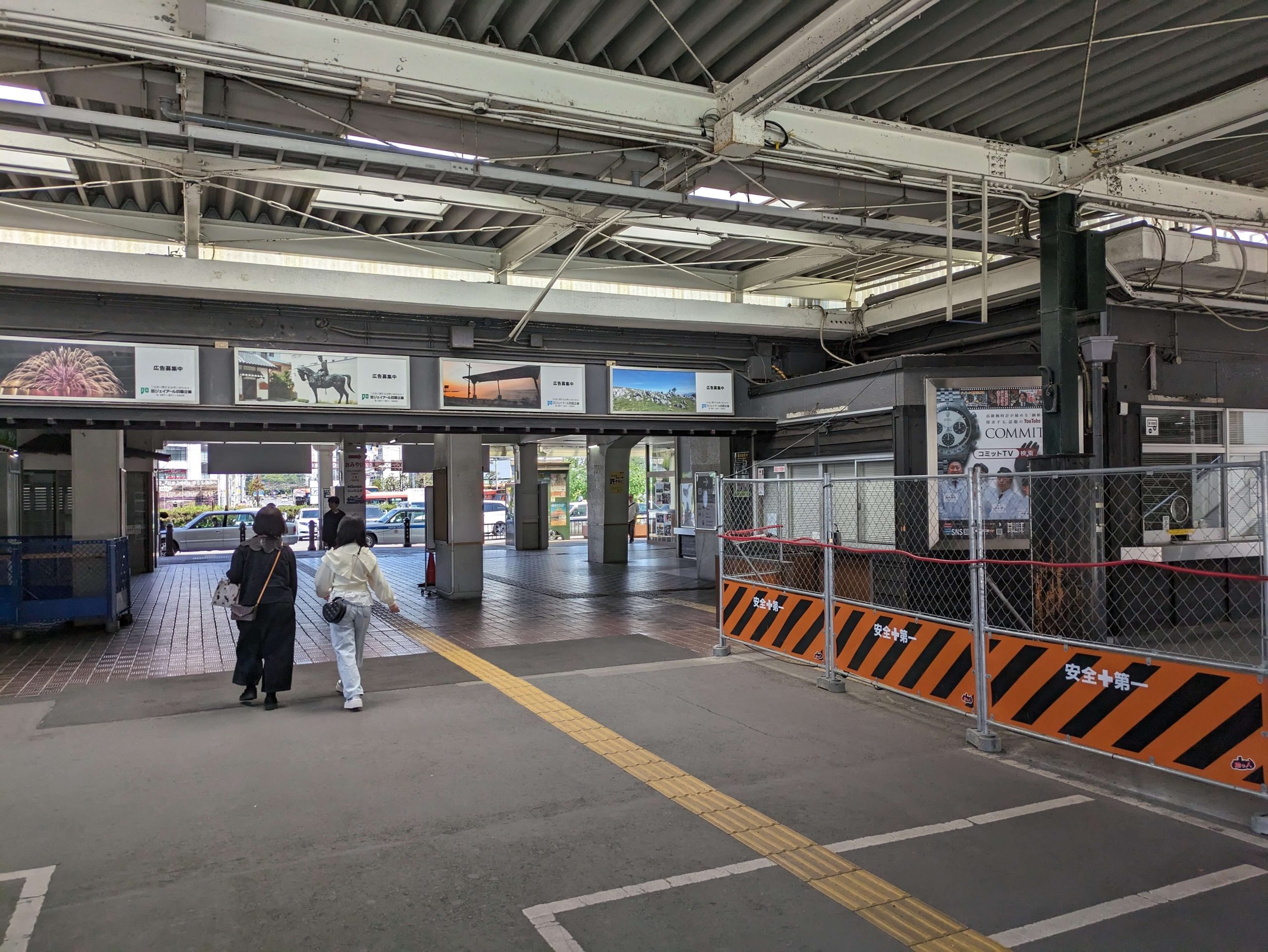
The old station building hadn’t been demolished yet, so you actually had to walk through the old, closed building to get to the street.
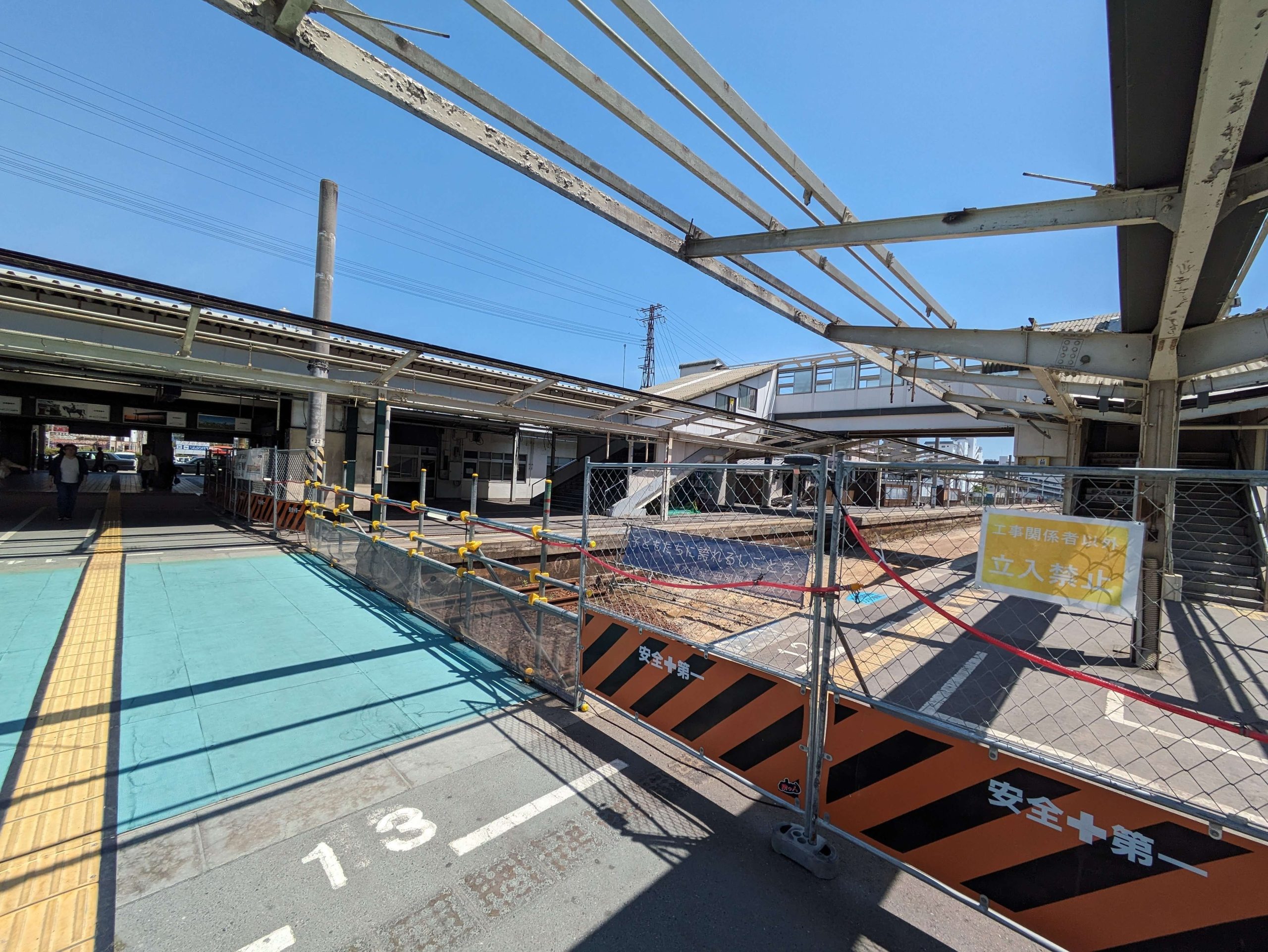
When I re-visited Matsuyama in February 2026, this was all totally gone and cleaned up. So I’m glad I took some photos in the interim, and was able to document the short period of time when both buildings were in existence! You can see the old facilities all gated up here with lights off.
Out of the station, I went to drop my bag off in my hotel, grab some food, and then finish riding Iyotetsu’s trains around.
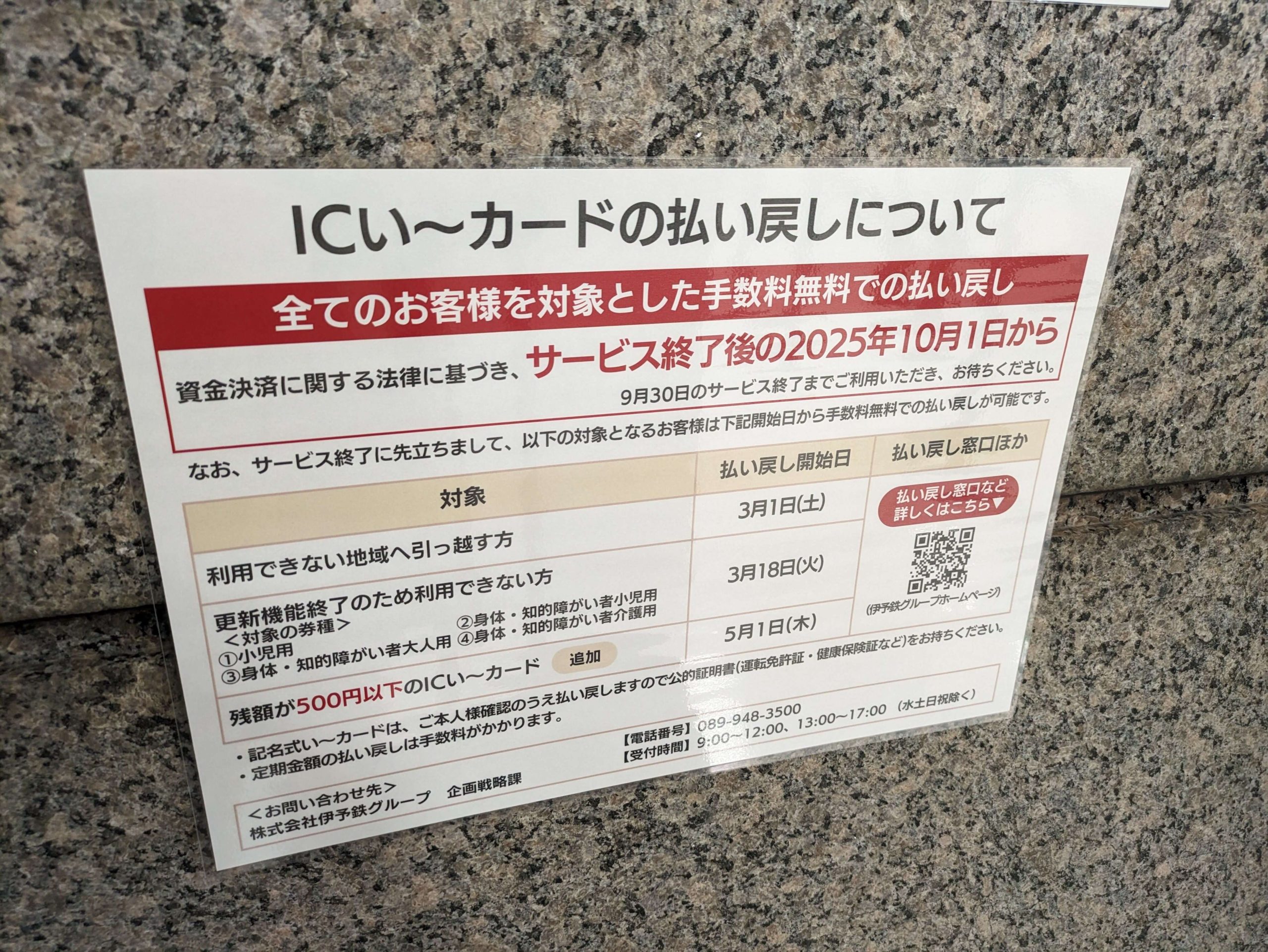
Iyotetsu’s former dedicated IC card, “IC e~card”, was discontinued at the end of last year. So sad. Now they use ICOCA (and especially shill Mobile ICOCA, extra gross.)
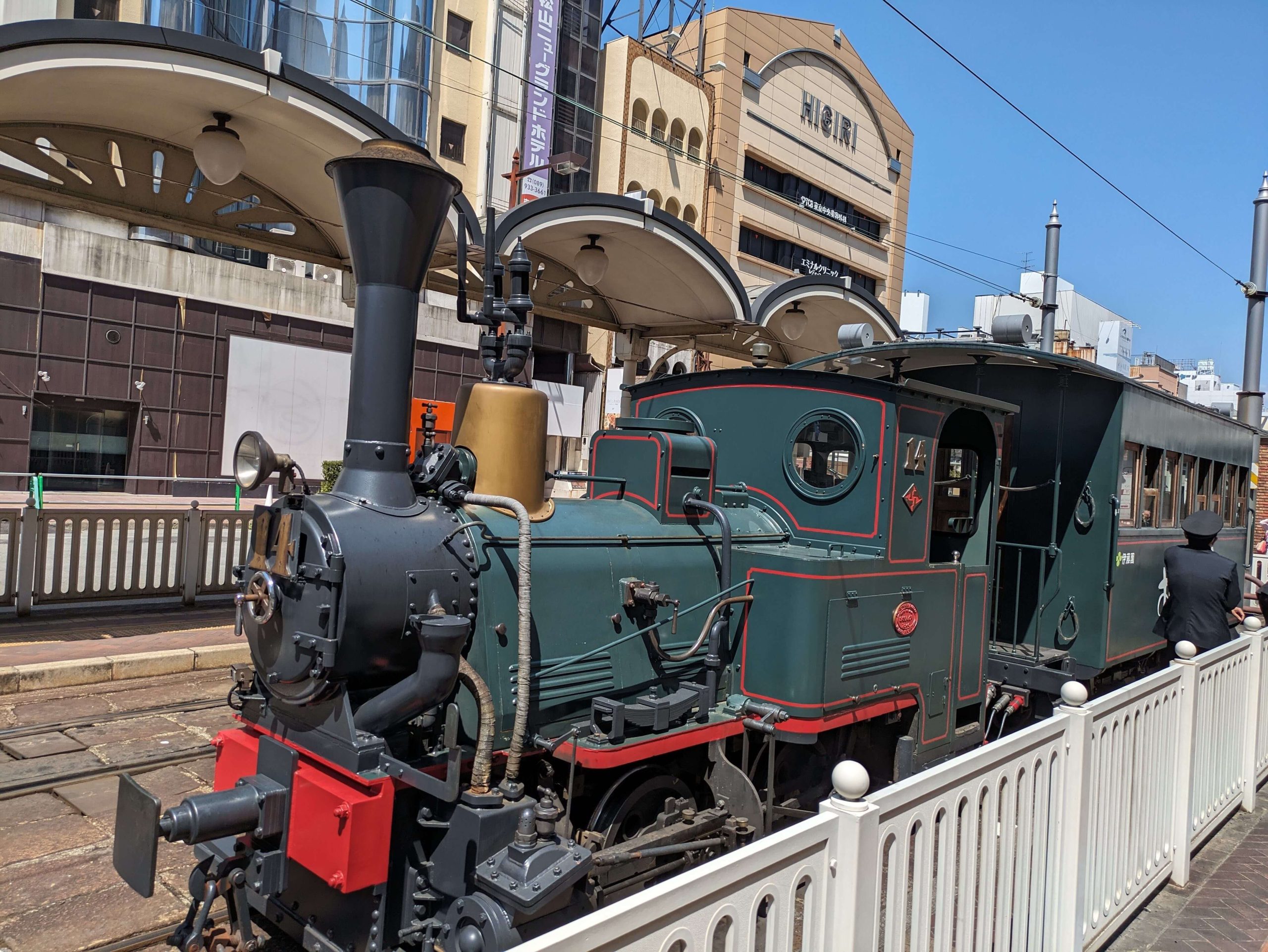
But at least the Botchan Train was around! Like many, many, many things in Matsuyama, this is named after the novel by Natsume Soseki, one of Japan’s most famous authors, if not the most famous. (I read it in school in seventh grade!)
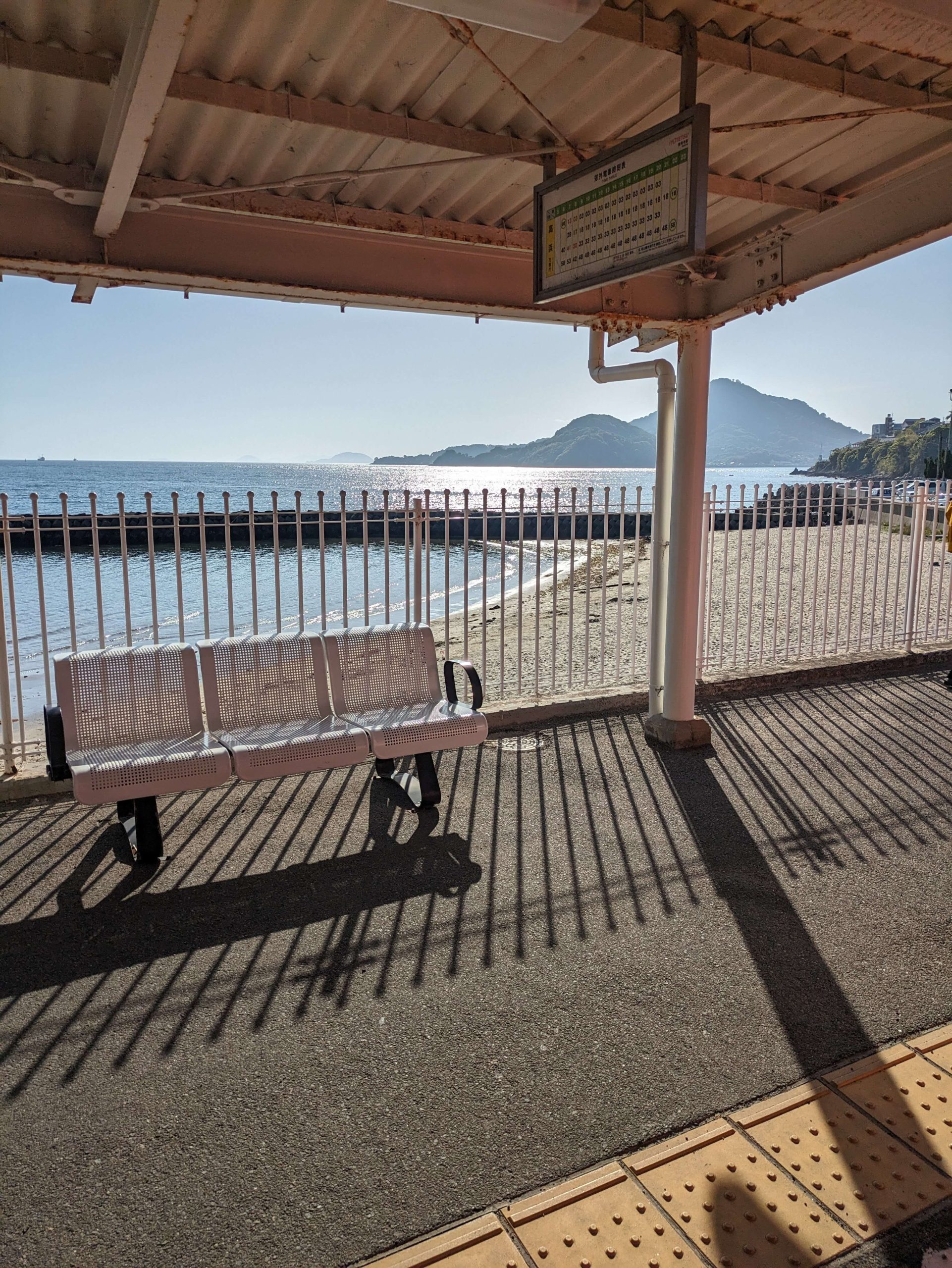
Iyotetsu has their own nice seaside station – Baishinji, on the Takahama Line!
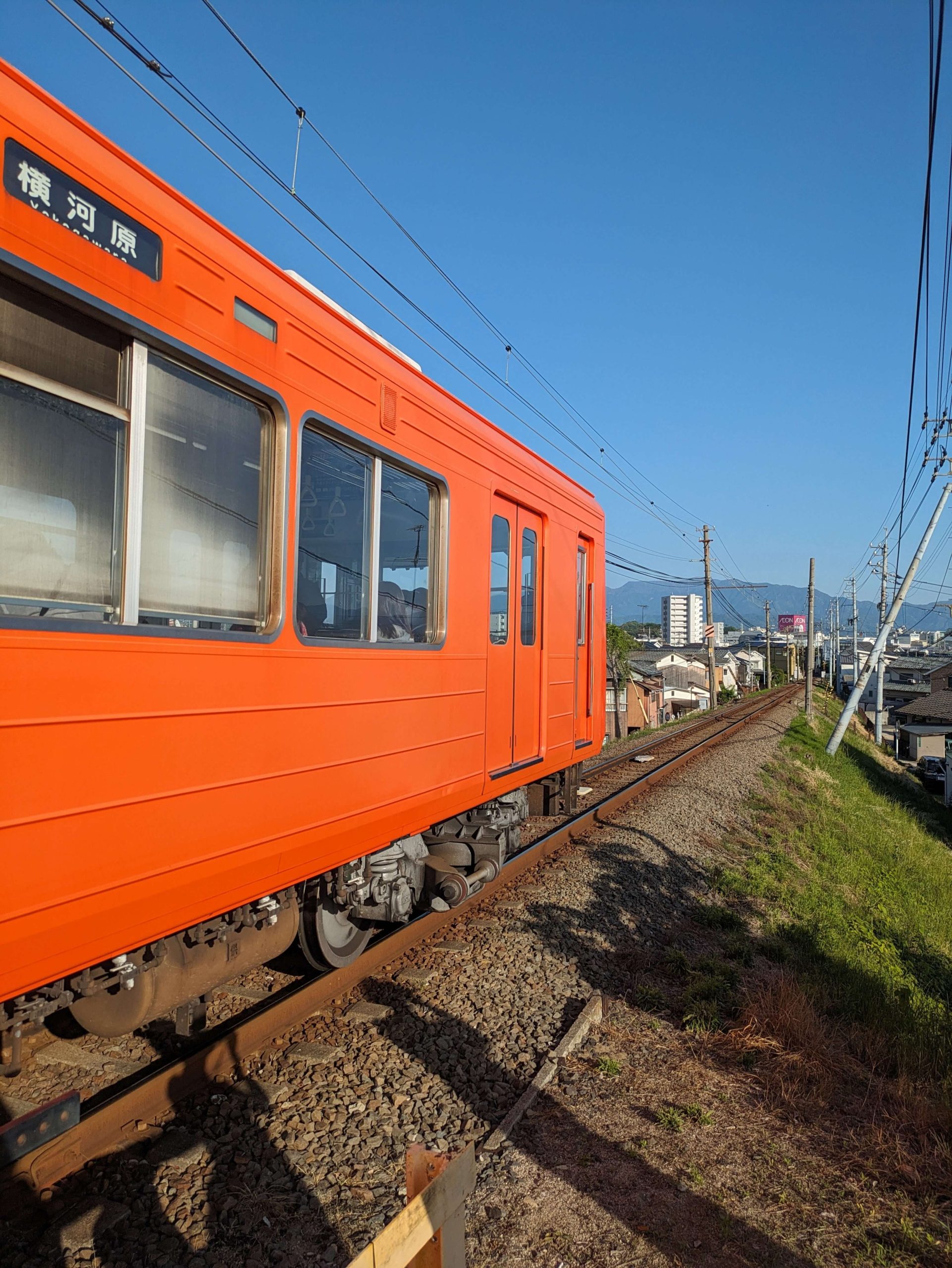
In the other direction, I hopped off at Ishitegawa Park Station on the Yokogawara Line to walk around and enjoy the river and surrounding area for a bit. A great place to take photos of Iyotetu’s classic orange trains right at the level crossing, too!
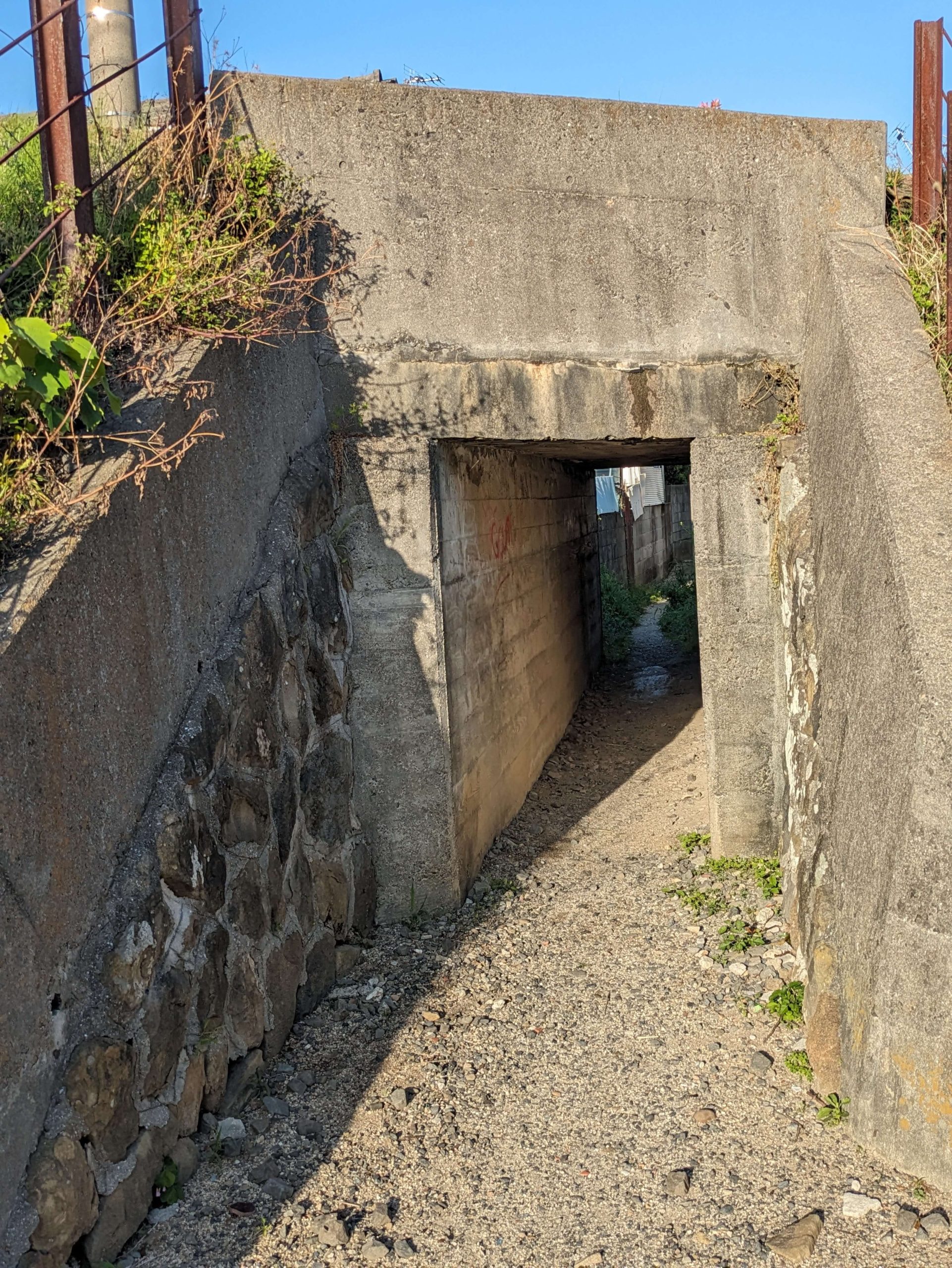
The neighborhood around here was weird, with a lot of small roads, dead ends (I used to collect these when I was little, btw), and this weirdly narrow path underneath the elevated railway track?
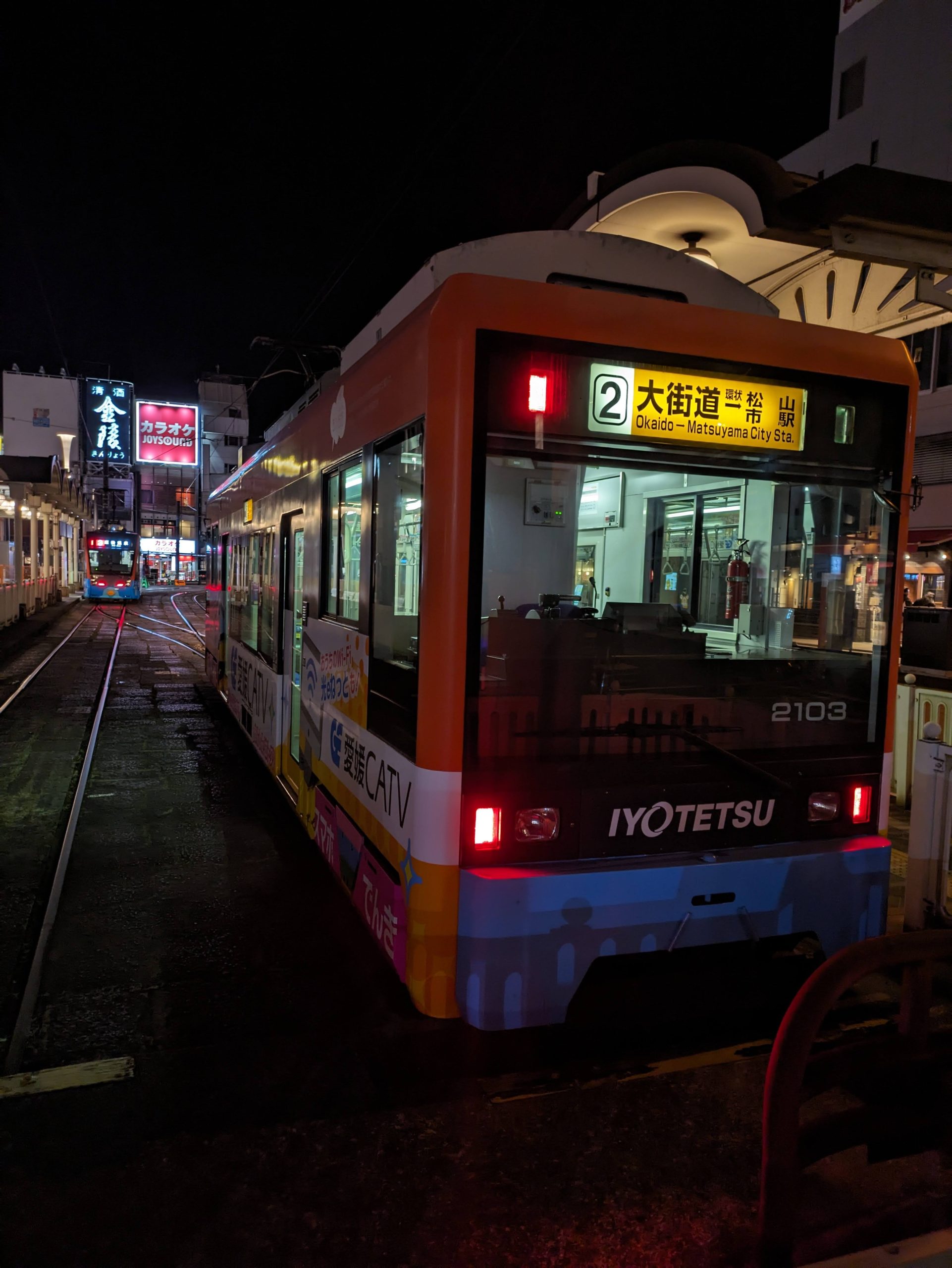
At night, I rode the last parts of the tram’s loop line around the city (following that hand-drawn map I whipped up yesterday to help me record it on Noritsubushi properly).
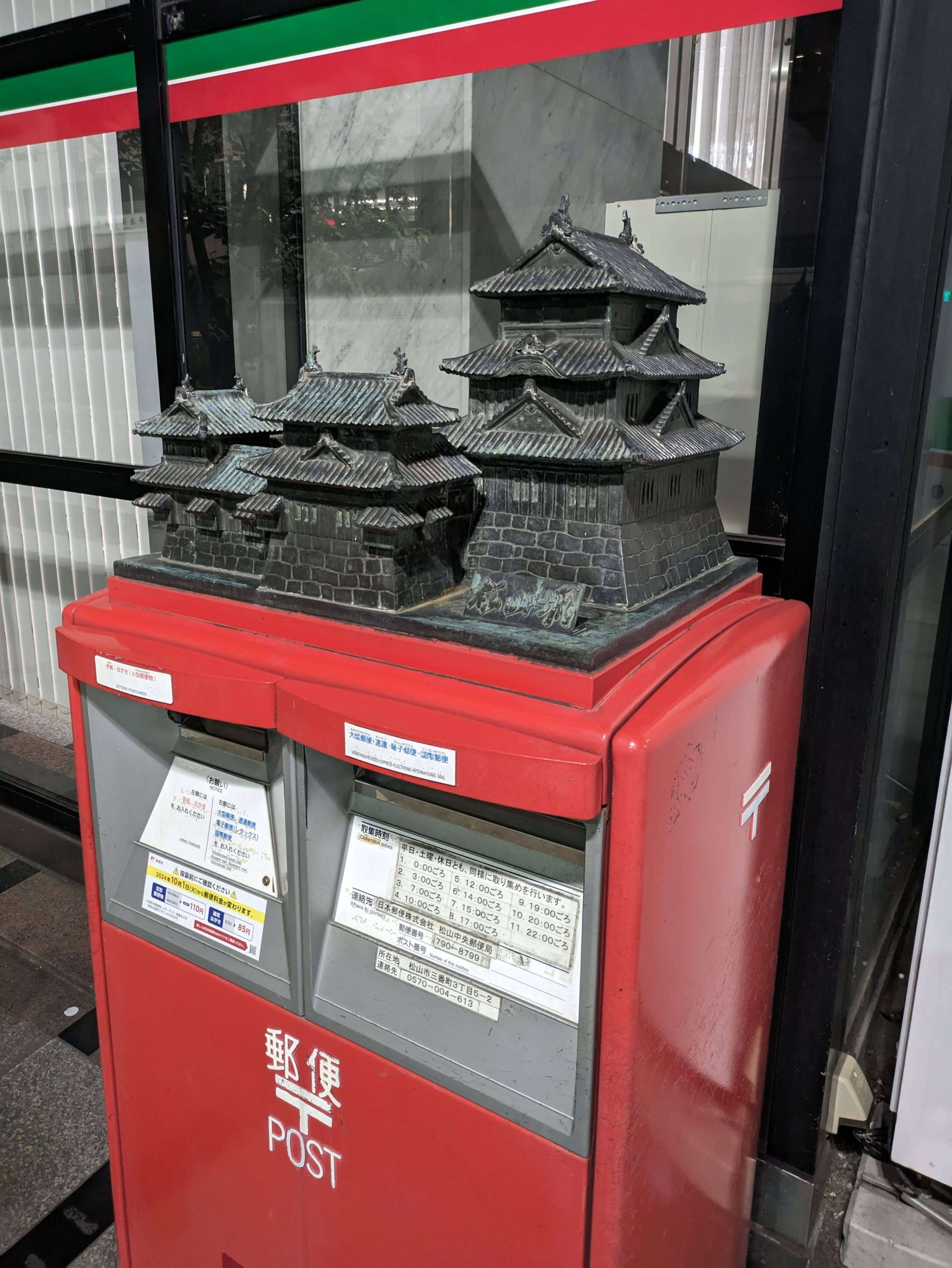
Hmm, Matsuyama Castle is smaller than I last remember it.
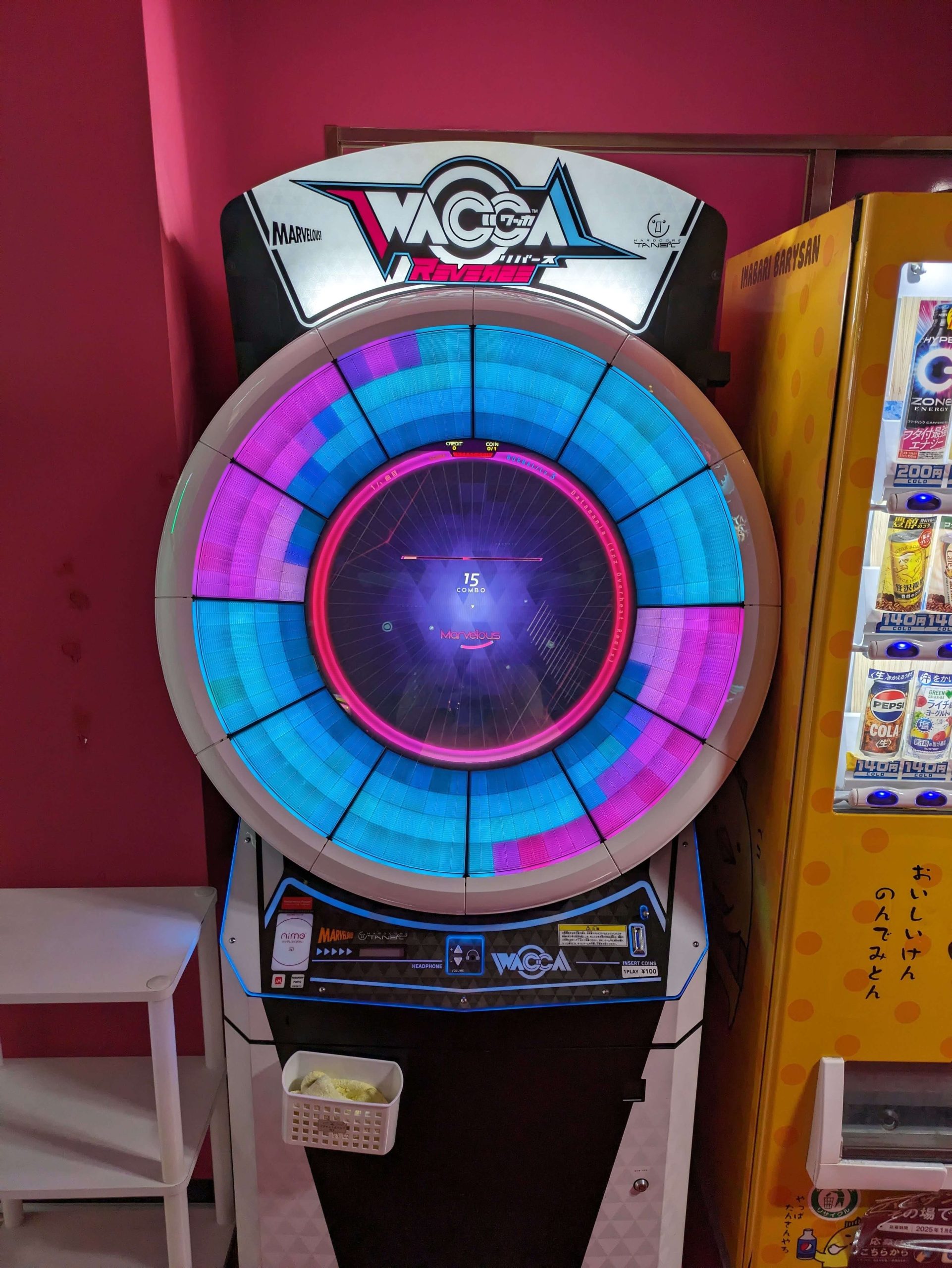
Another reason this city is great: WACCA, right in the city center!
Monday, May 5, 2025
Today’s transit:
12:45 Matsuyama / JR Yosan Line (via Uchiko Line) → 14:01 Iyo-Ōzu
⤾ 14:14 Iyo-Ōzu / 〃 → 15:37 Matsuyama
17:37 17:40 Matsuyama / Shiokaze 28 (Yosan Line + Seto-Ōhashi Line) → 20:12 20:15 Okayama
20:32 20:33 Okayama / JR Momotaro (Kibi) Line → 10:43 Bizen-Ichinomiya
⤾ 20:51 Bizen-Ichinomiya / 〃 → 21:02 Okayama
21:44 21:46 Okayama / Tokaido Shinkansen (Nozomi 272) → 23:20 Nagoya
23:31 Nagoya / JR Chuo Line → 23:xx Closetomyhouse
My last day of the trip took me around Matsuyama – a favorite city of mine, where I had a few obligatory stops, one last train line to ride, and then my train home in the early evening.
My first time in Matsuyama, I walked past one of the most unbelievable sights of my entire life… a quote from my alma mater’s fourth president, James Blaisdell, inscribed on the gates of a random girl’s middle and high school that I was staying a block from: “Let only the eager, thoughtful and reverent enter here.” This is a wholly original quote and, as far as anyone was concerned or knew, the only place in the world where these words of his are etched into concrete are the gates of Pomona College in Claremont, California, where they’ve stood since 1914.
That all changed on the morning of January 2, 2024 when I serendipitously walked past this school on a side street – while wearing a college sweatshirt – and couldn’t believe my eyes. It derailed my entire day. How. Did. This. Happen. (I’m still in absolute and utter disbelief. There’s a whole page about it on their website too!)
I found out that Matsuyama Shinonome Junior and Senior High School’s gates were constructed in 1928, fourteen years after Pomona’s, and I figured it must be tied to Pomona’s history as a formerly Christian institution. I posted to my college’s alumni group, and the best anyone was able to find was a friend who dug up Cornelia Judson (1860–1939) – a female missionary and educator who was sent to Japan and moved to Matsuyama in 1890. She was a Congregationalist, as was Pomona originally. Funnily enough, the school has a Japanese motto, too, located on the opposing gate… it’s also a list of three ideals, but a very different set of three, and is absolutely not a translation at all. I wonder if the school thinks it is? I meant to reach out and contact them at the time (I probably would have just walked in and asked if it hadn’t been winter break!) but never ended up doing it. Now, writing about my second trip to Matsuyama and revisiting the gates, I think I need to finally do that to try and figure out a more concrete answer. But also maybe the mystery is part of what makes it so mind-boggling and inconceivable. The universe is truly something, sometimes.
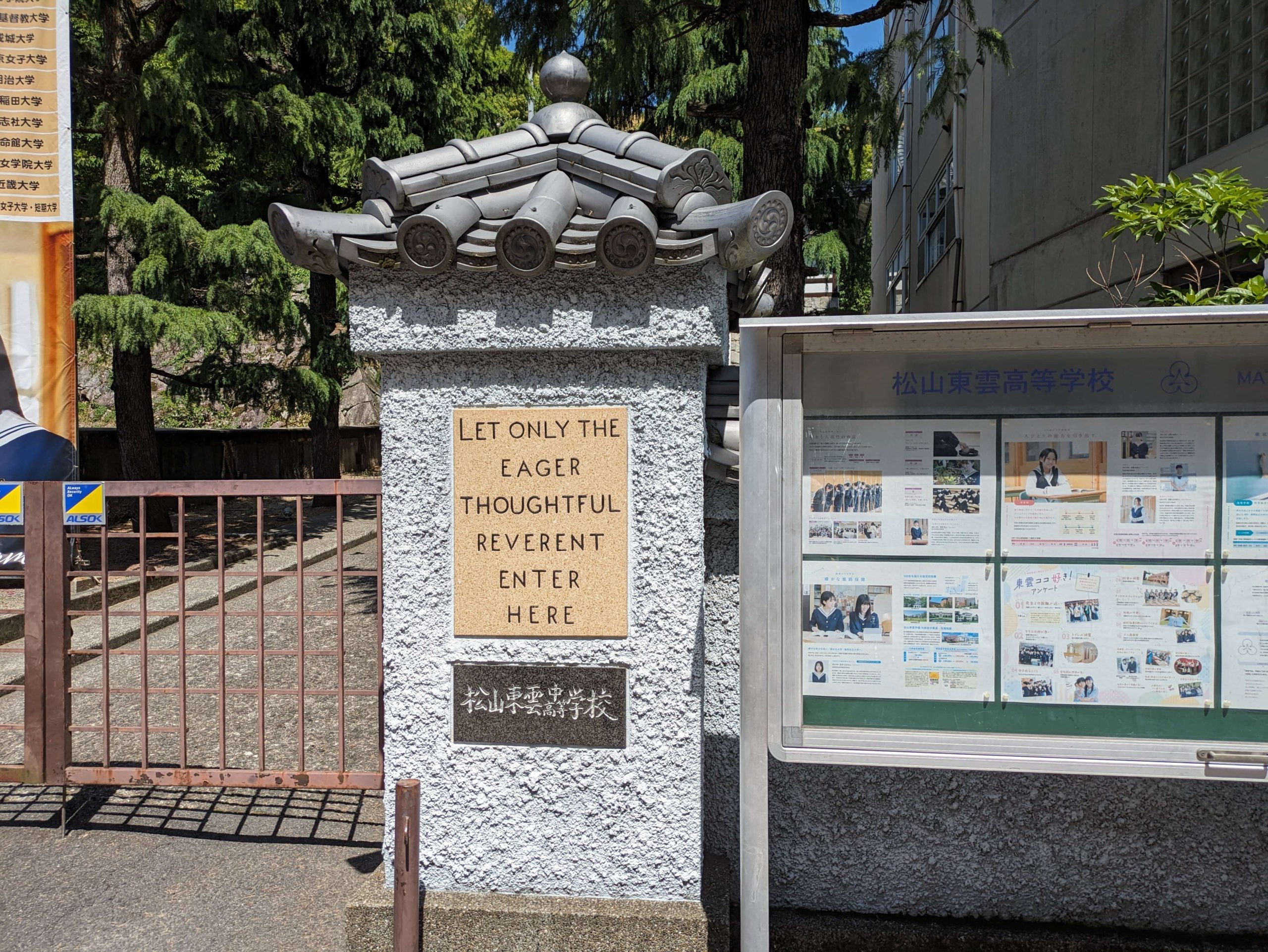
Seriously. Un-believable. I make a detour to go see this every time I’m in Matsuyama now. Just insane.
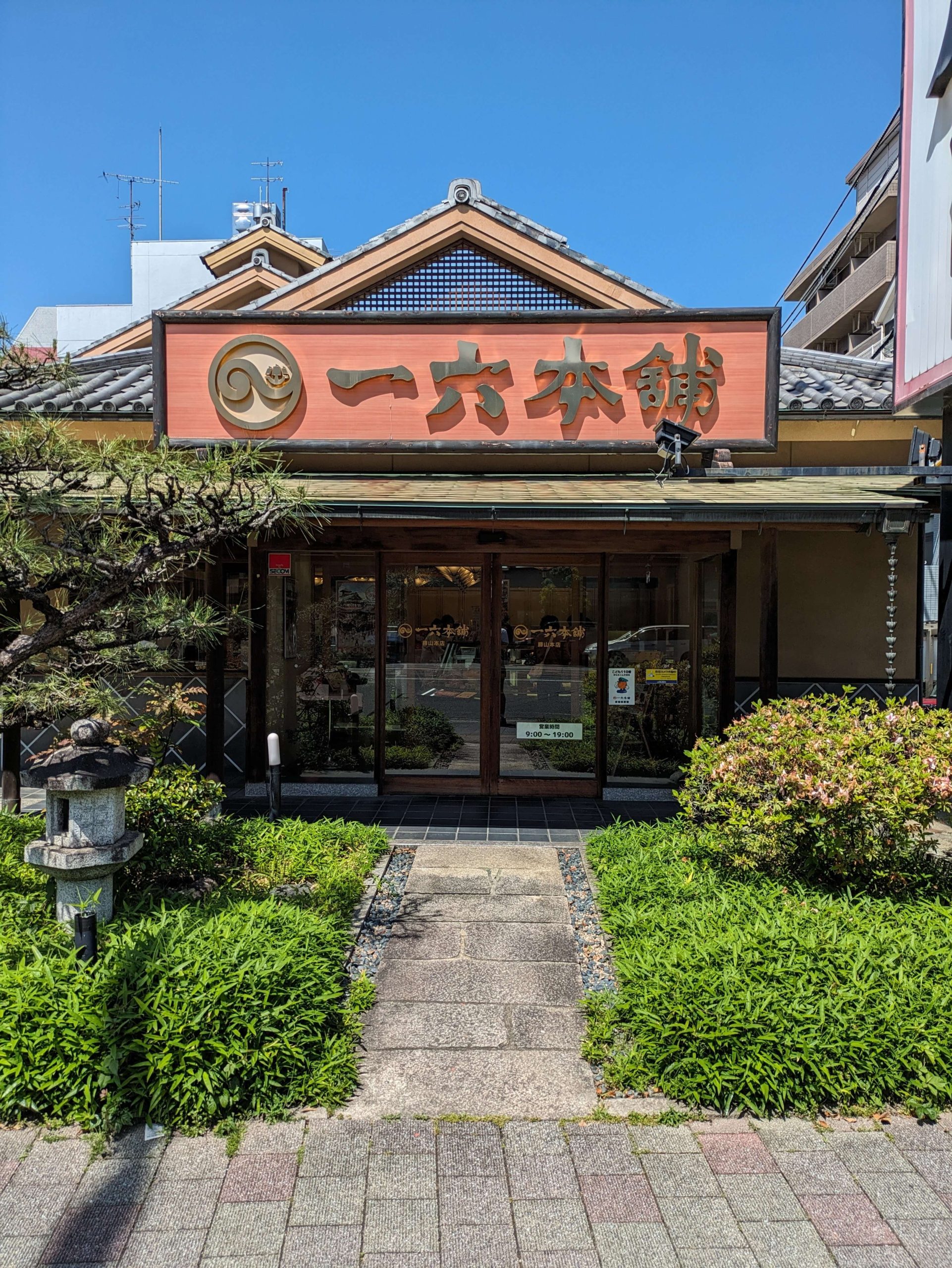
While I didn’t have time to stop by my beloved Itami Juzo Museum, I did – necessarily – stop by Ichiroku Honpo.
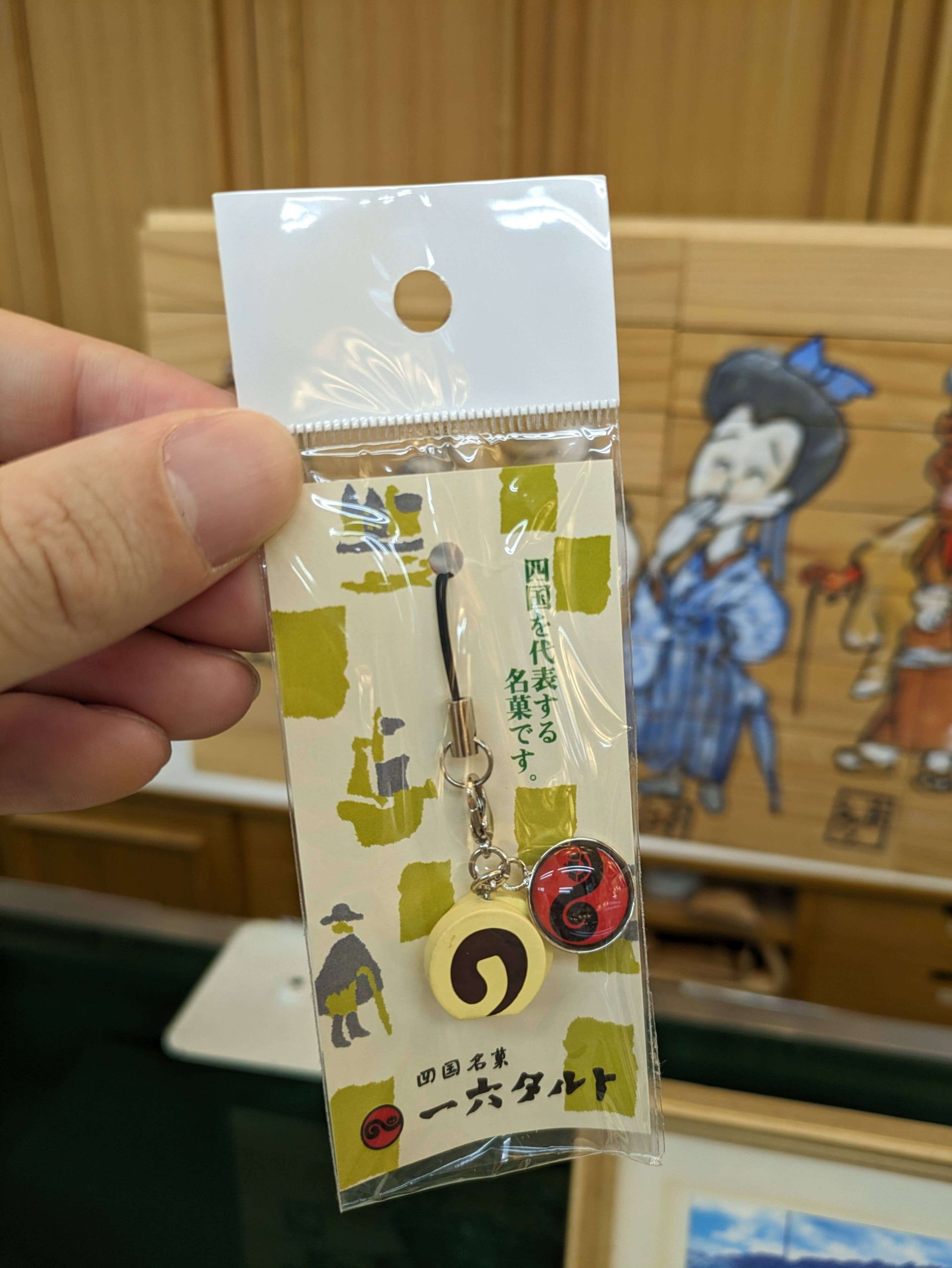
I wanted to buy another phone charm since my last one had the brown color fade completely.
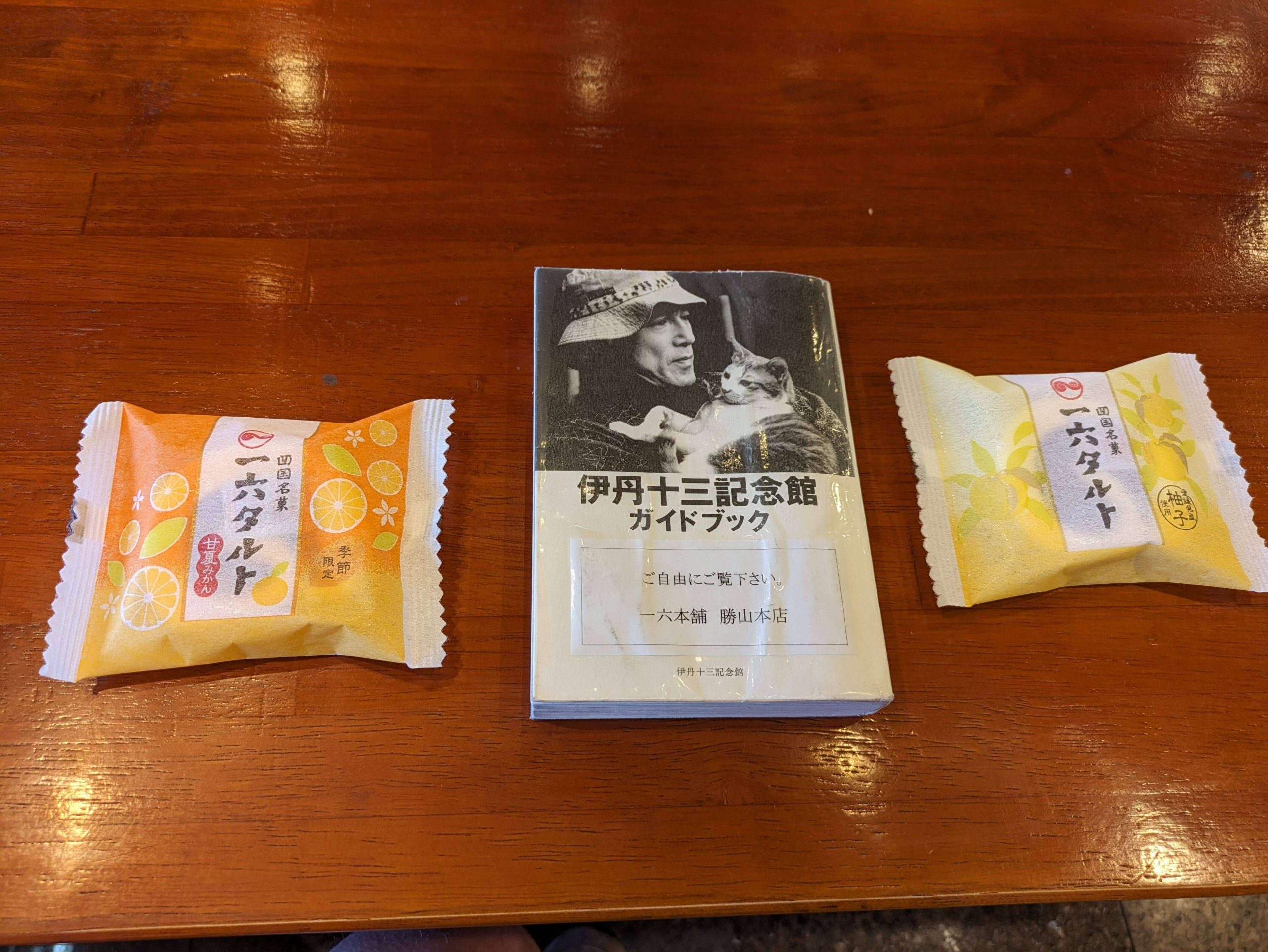
Mikan and yuzu-flavored Ichiroku Tarts, snacks for later, pictured with the shop’s trusty museum guidebook that I made sure was still there and in good condition. I also swung by a nearby Roken Manto store to get some of their famous 蒸しパン mushipan, steamed bread buns.
Was the grink there?
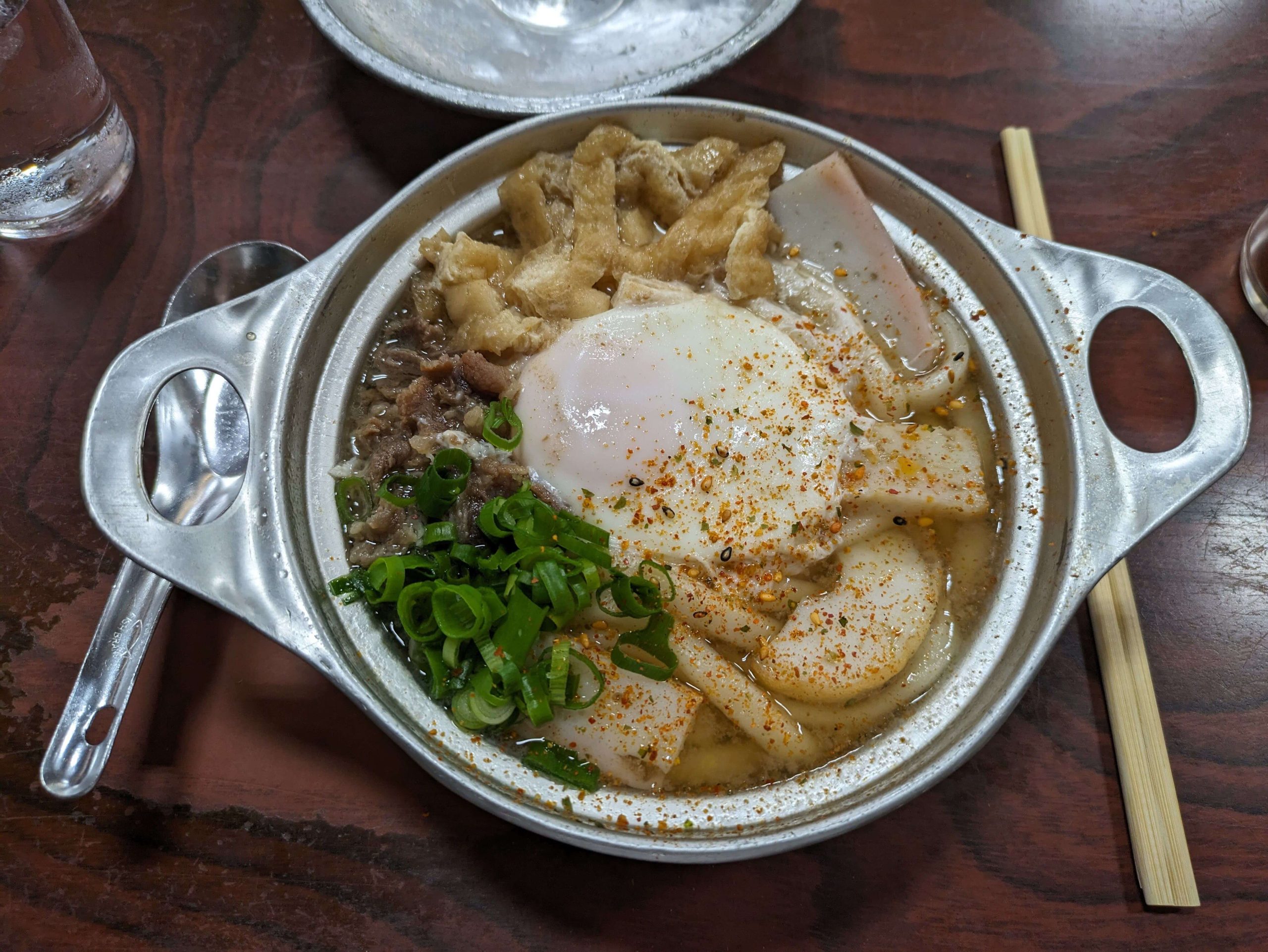
For lunch, I went to try 鍋焼きうどん nabeyaki udon, sometimes called Matsuyama’s soul food, at the long-standing restaurant Asahi. It came about in the post-war era when sweet food was scarce, so the recipe calls for sugar in the broth, and it’s eaten directly out of a small, lightweight aluminum pot, the perfect size for a single serving of noodles.
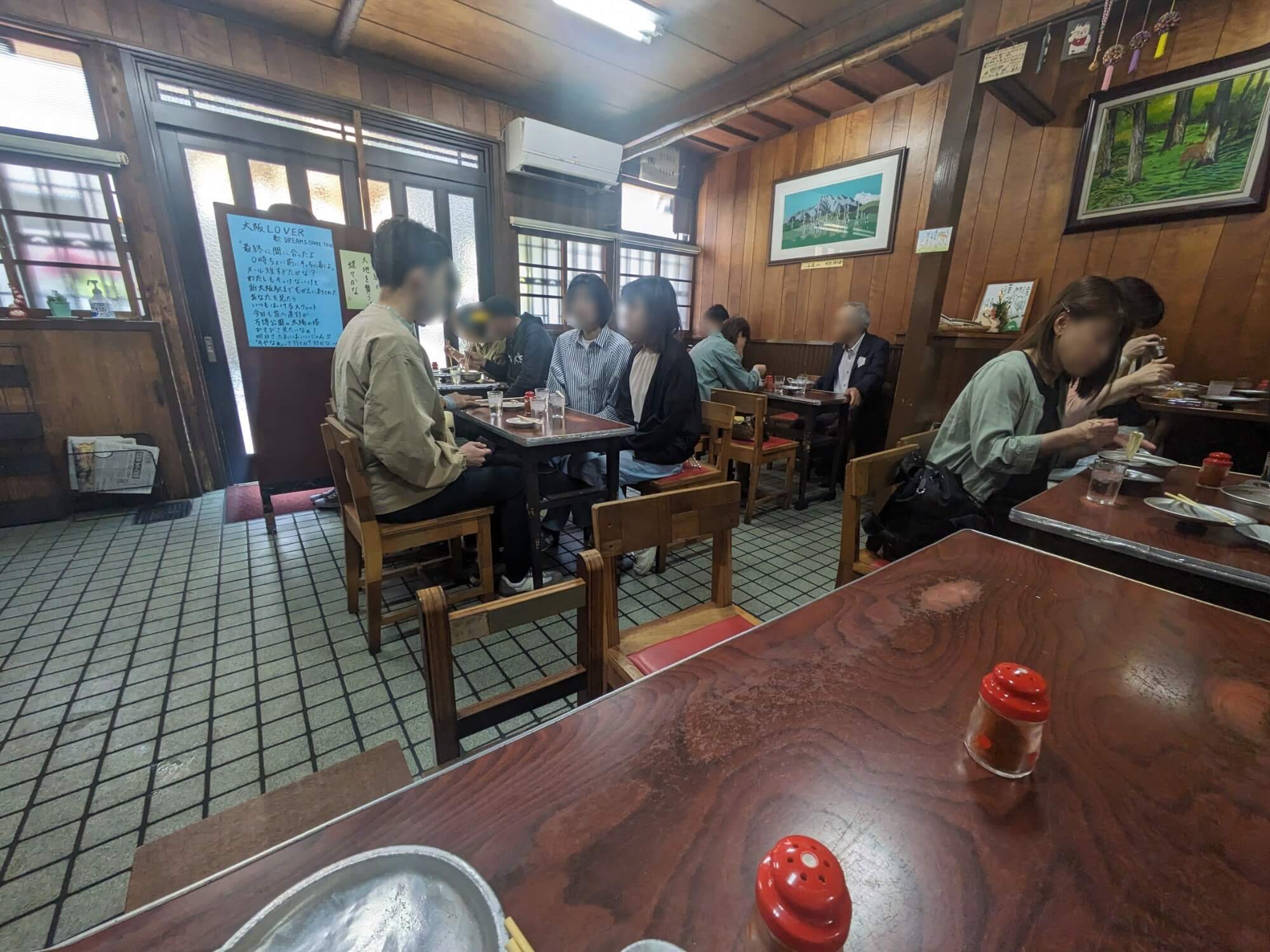
Asahi has been around since 1947 and still has a lot of Showa era charm. I chatted with an old woman and her daughter who shared my table, and she told me about how she remembers growing up eating it all the time. I don’t remember exactly, but I think someone on a train earlier in my trip had given me the recommendation!
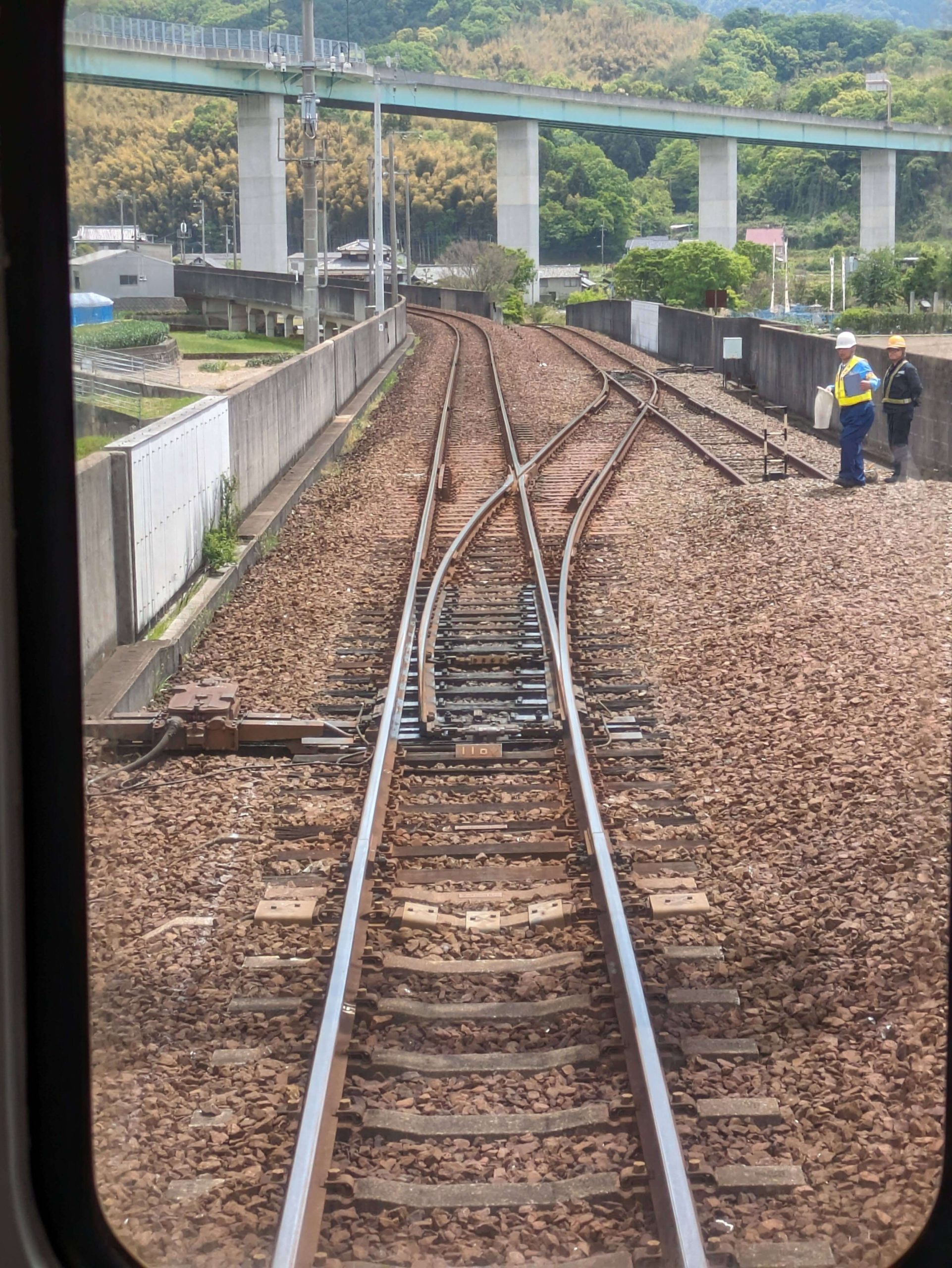
After lunch, I went to ride the other part of the Yosan Line, where the Iyonada Monogatari doesn’t run. Here at Mukaibara Station you can see where the two lines split – the left one is the one that runs inland, and the right one is where I rode on the Iyonada Monogatari yesterday.
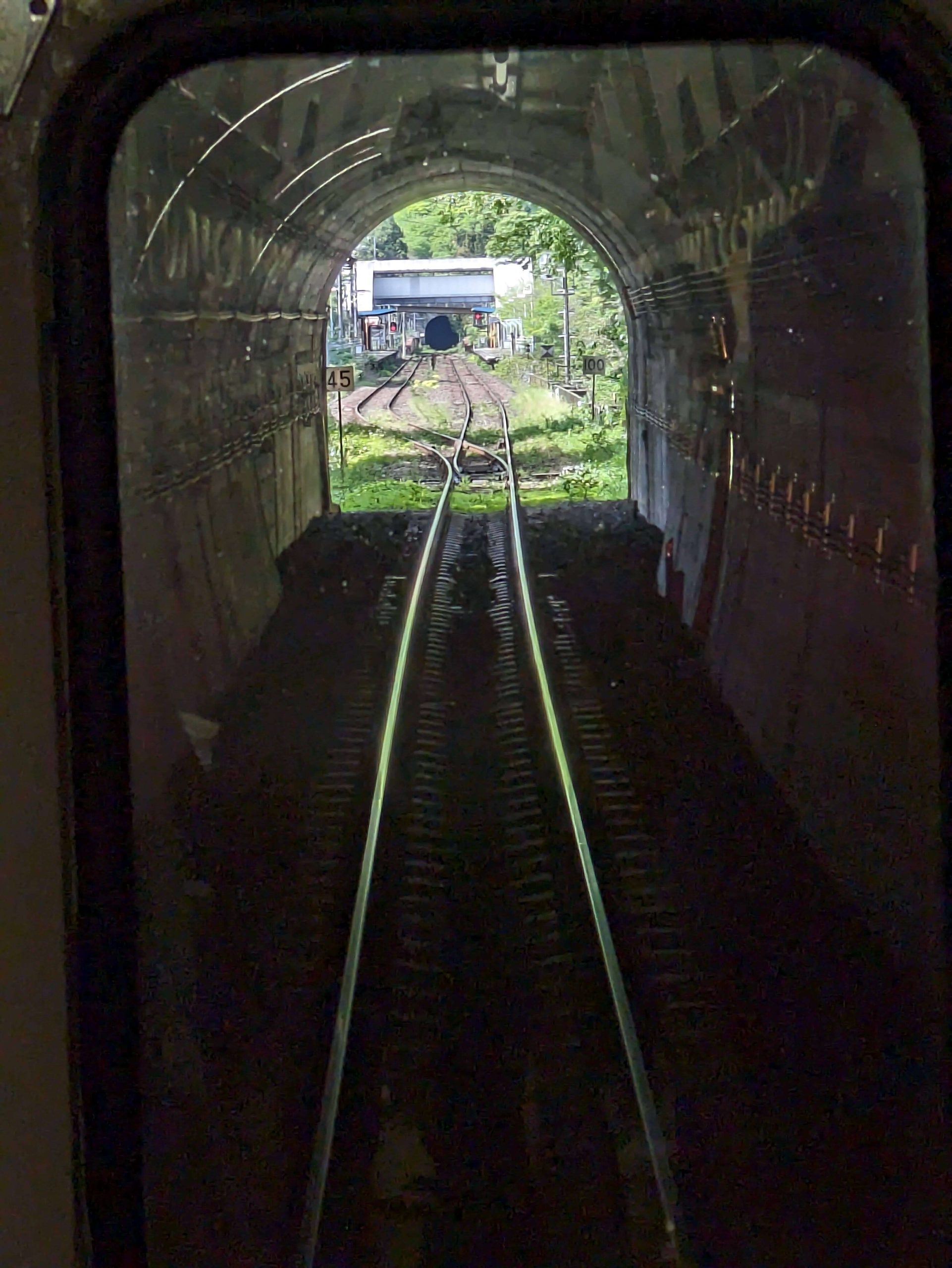
This section of the line was largely in tunnels, and uneventful – and also featured what I think was the longest railway tunnel I’ve ever been in. Ten minutes, over 7 km! And then as we pulled back into the sunshine, right before entering yet another long tunnel (visible in the distance here), we stopped at… Iyo-Nakayama Station, literally meaning “middle-of-the-mountain”. Well, I’m not praising them for their creativity, but full marks for accuracy…
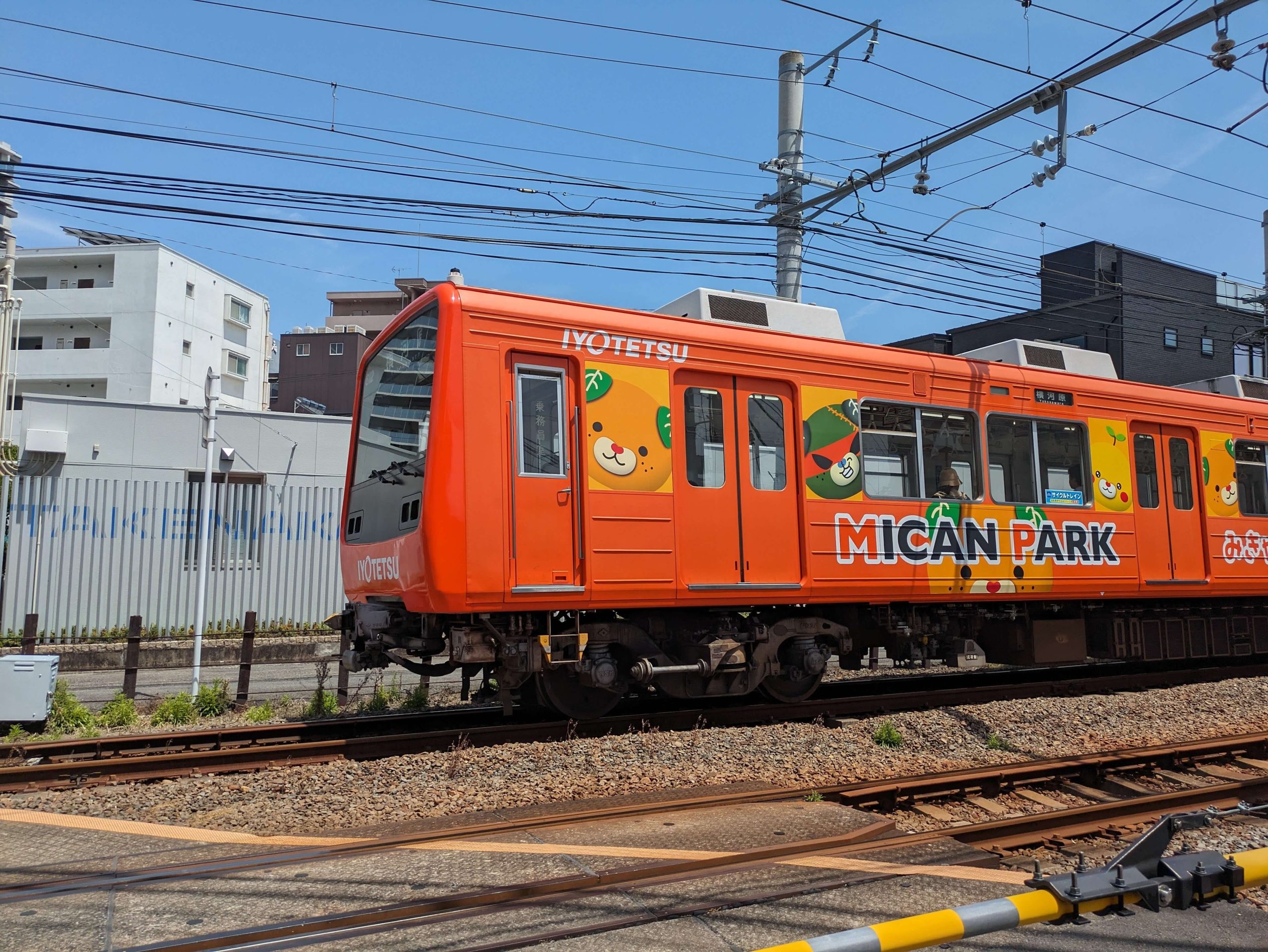
Back in Matsuyama, I walked back to my hotel to get my bag, and saw this Mican tram on the way! So cute! Unfortunately, there was exactly one tram line, the last remaining railway line on the entire island of Shikoku, that I didn’t get to ride – since it only runs on weekday mornings. So another trip to Matsuyama it is, at some point in the future!
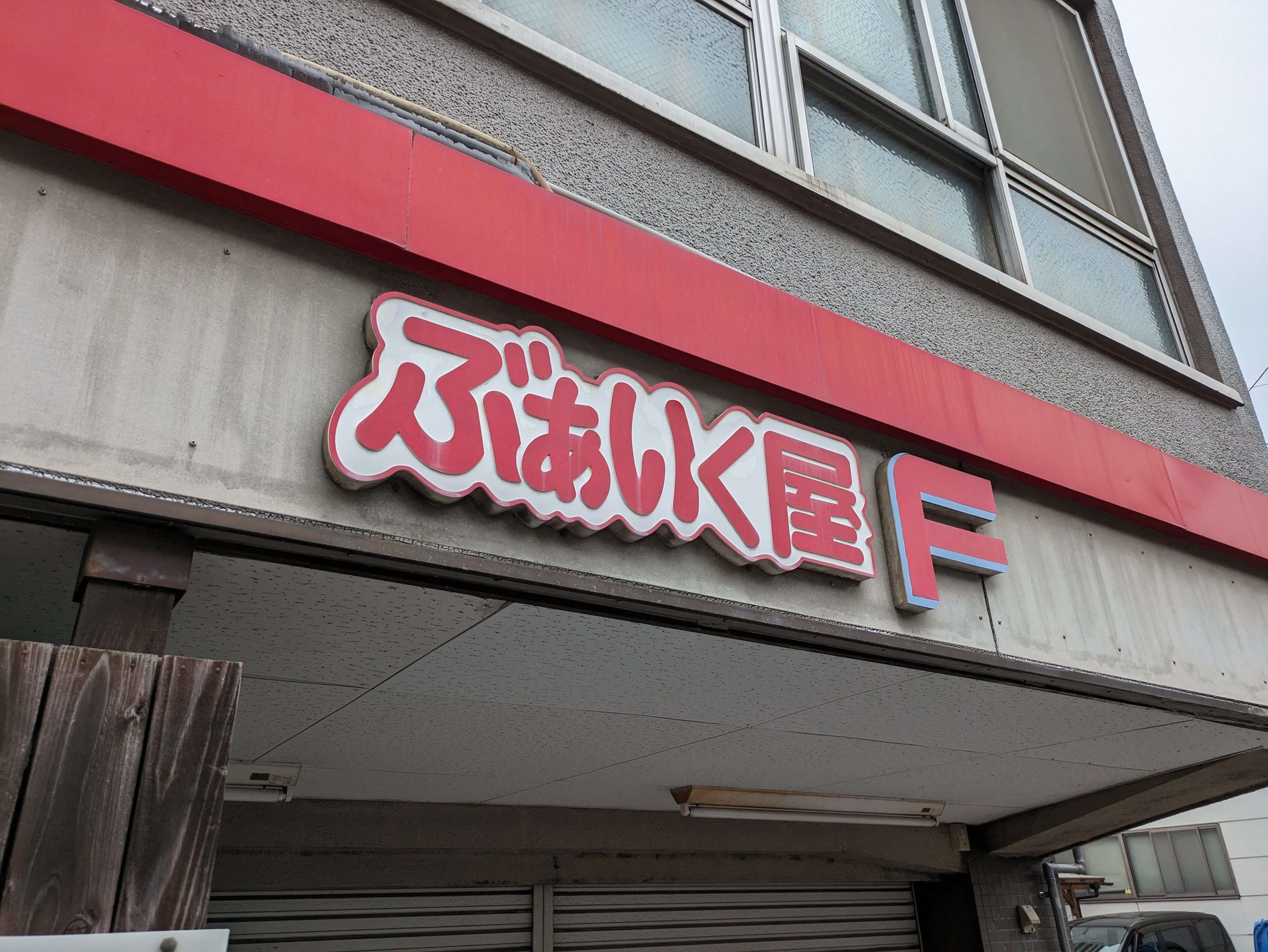
It’s hard to explain just how cursed this orthography is if you don’t speak Japanese but I love it lmao. Insane business name.
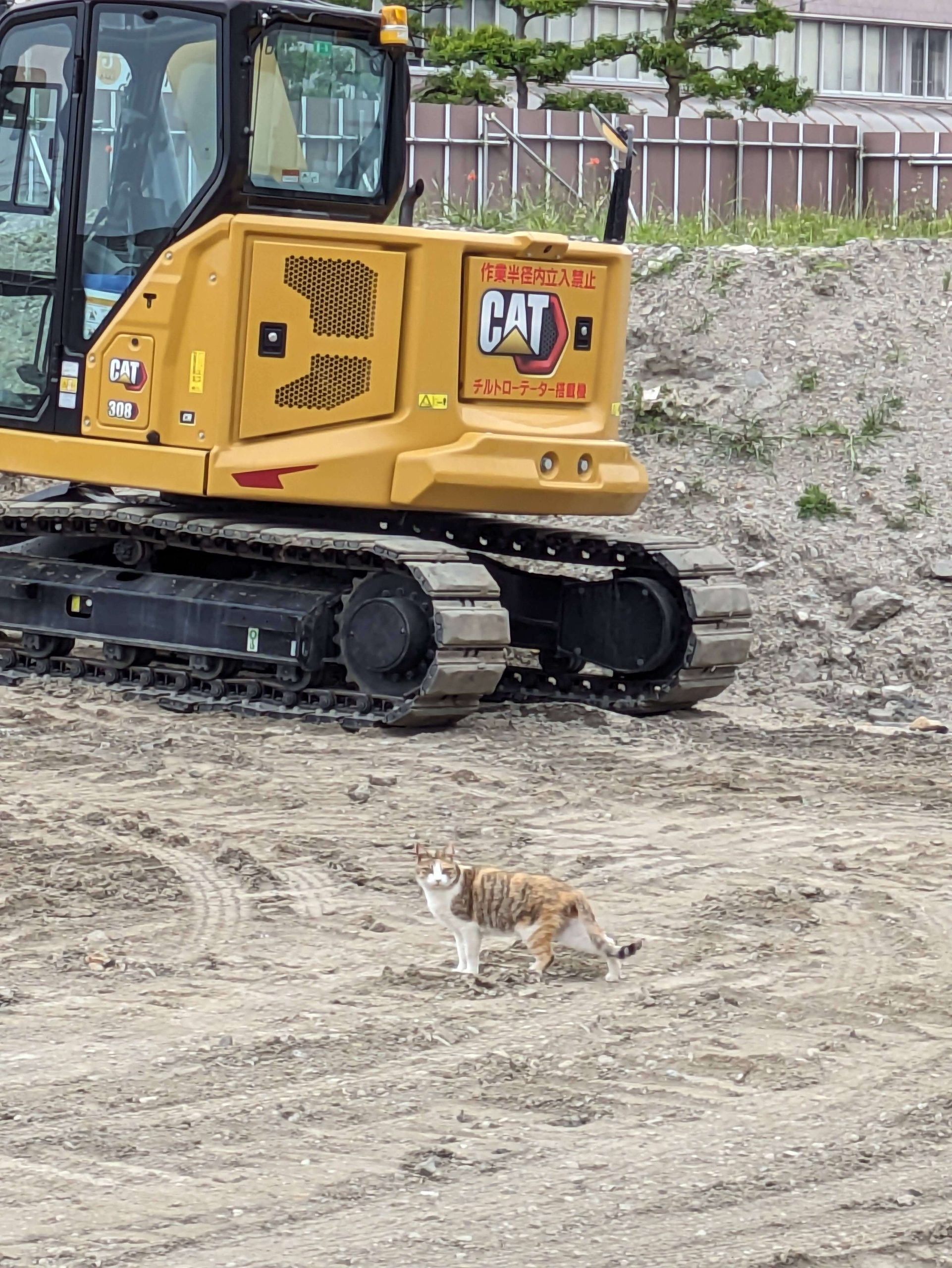
Cat.
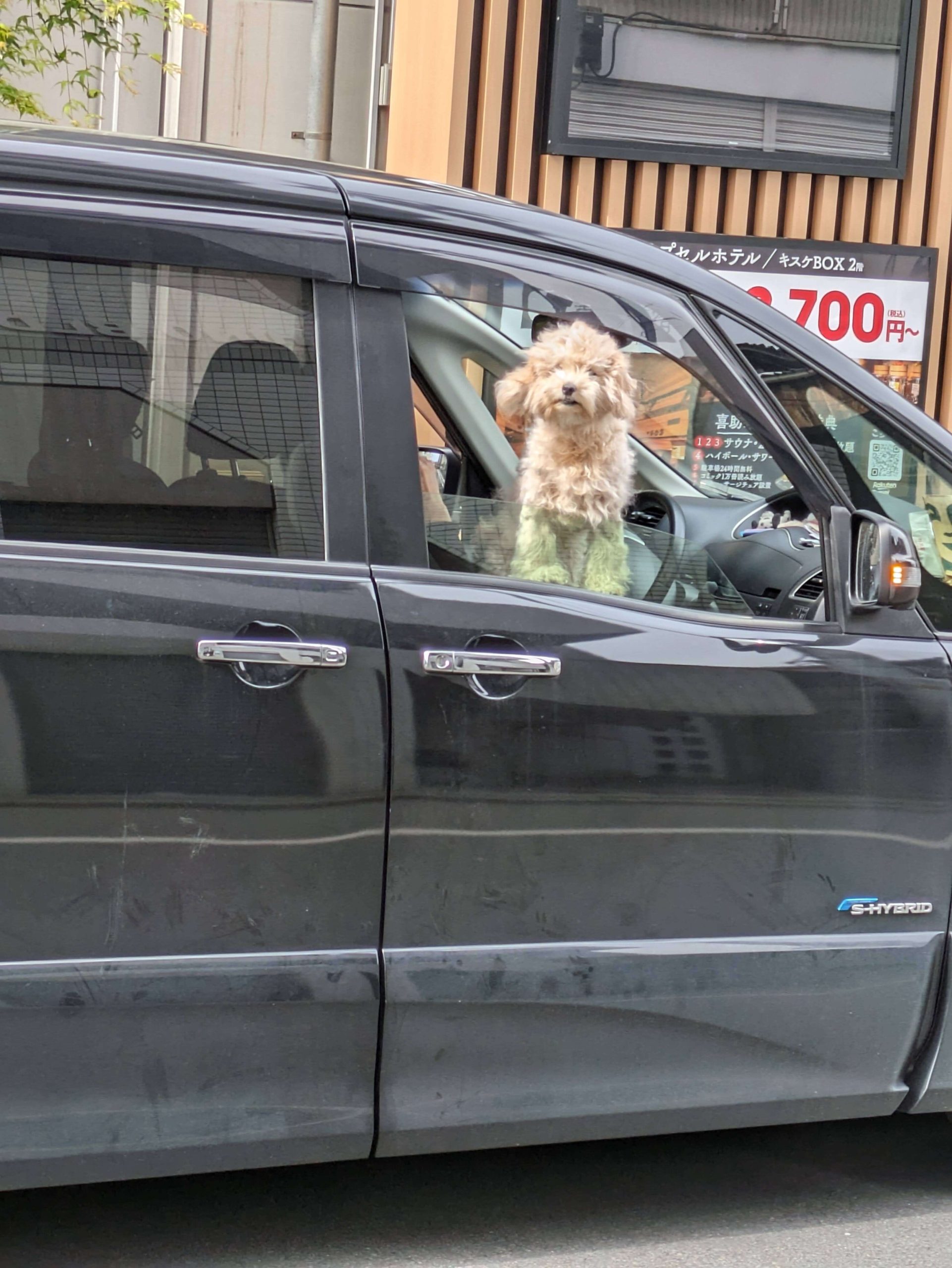
And to balance things out: dog.
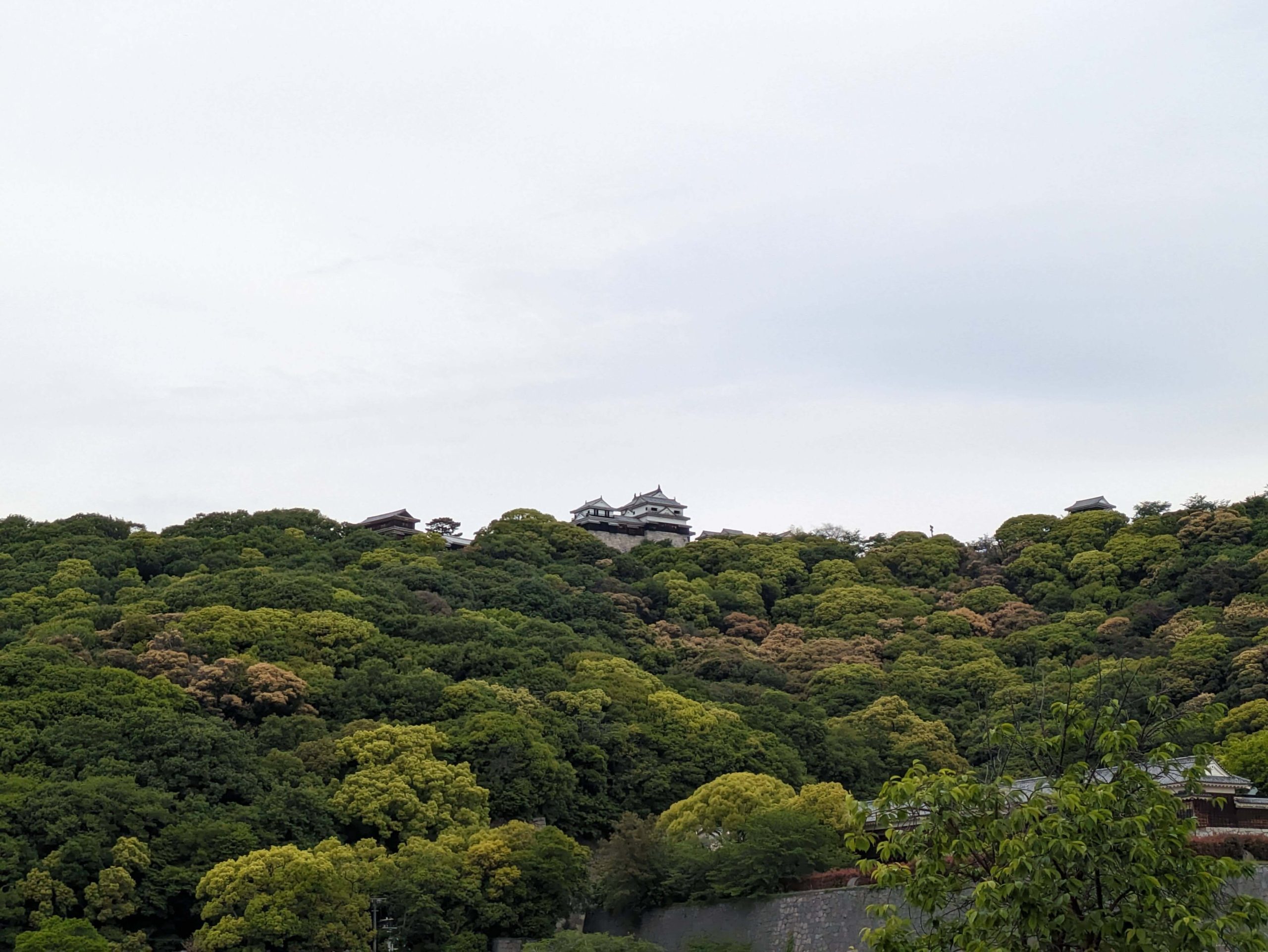
Matsuyama is a really great city.
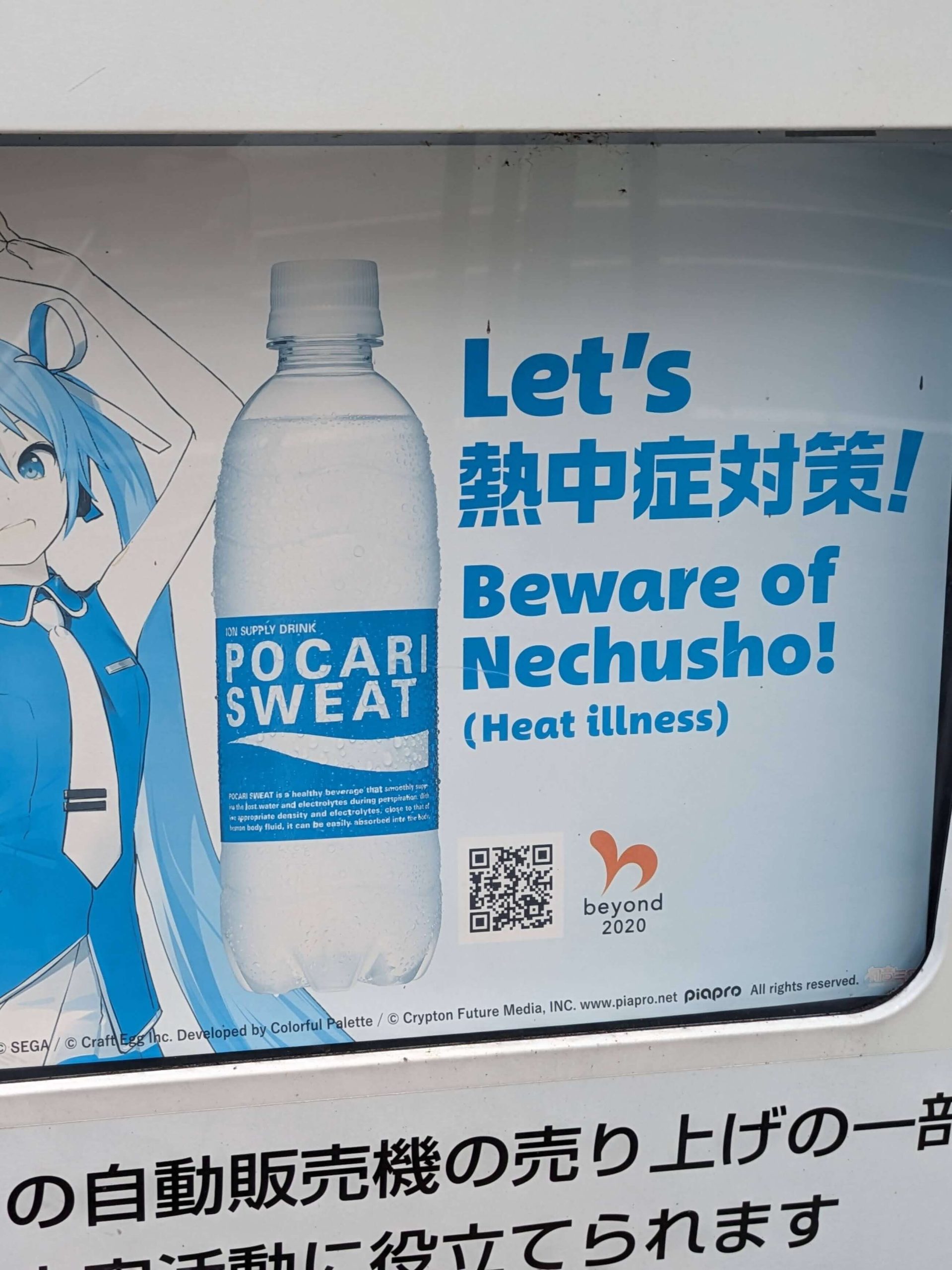
How… exactly did they decide to not translate this word directly…
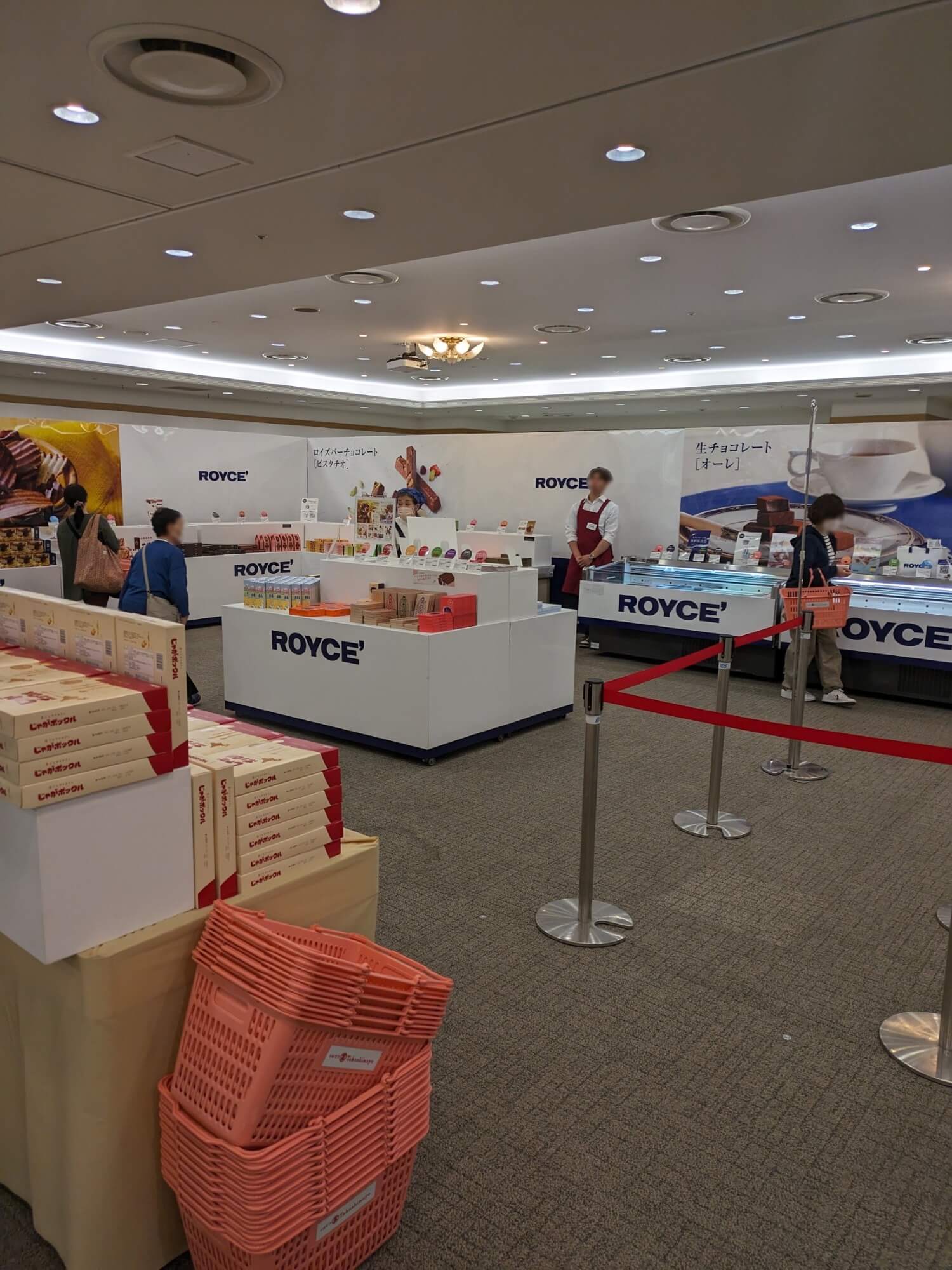
On my way back to the station I saw that, hidden on the top floor of the Iyotetsu department store, there was a ROYCE’ POP-UP SHOP IN MATSUYAMA?!?!?!?! I had very little time to get to my train but I hastily stopped by.
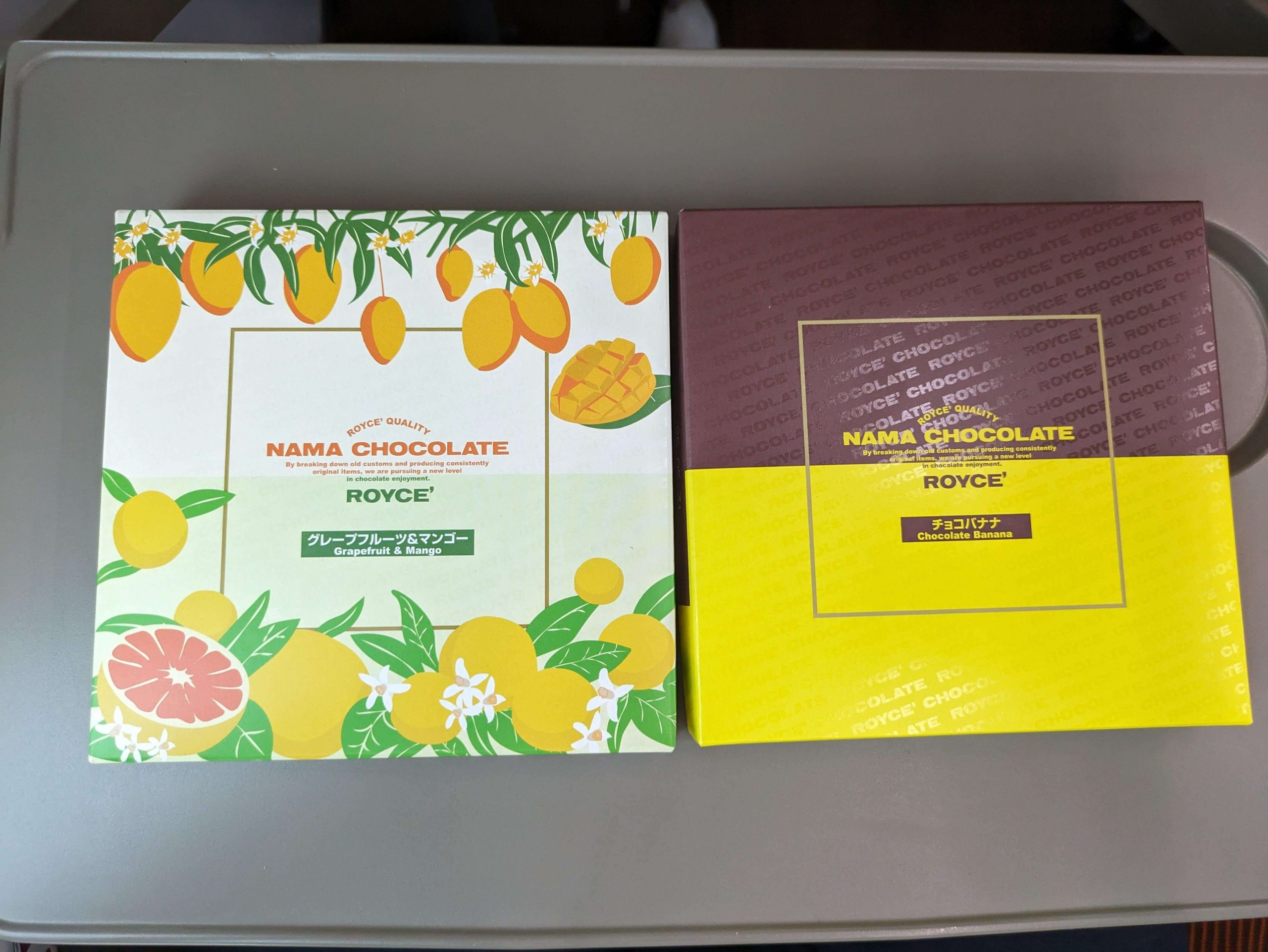
They had two unusual flavors that I’d never seen before – grapefruit-mango and chocolate banana – so these are the two boxes that came home with me.
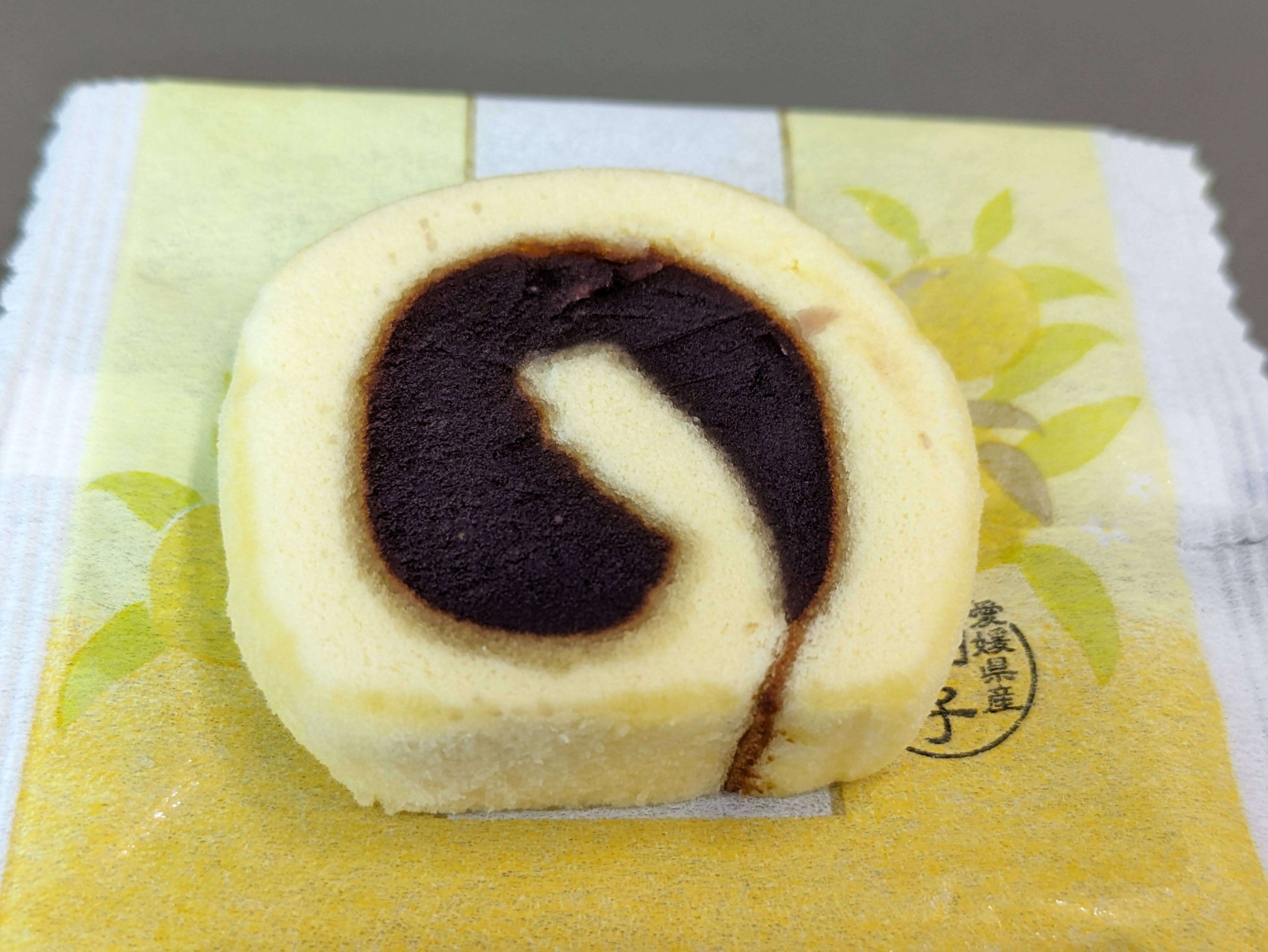
Eating my one of my Ichiroku Tarts from this morning.
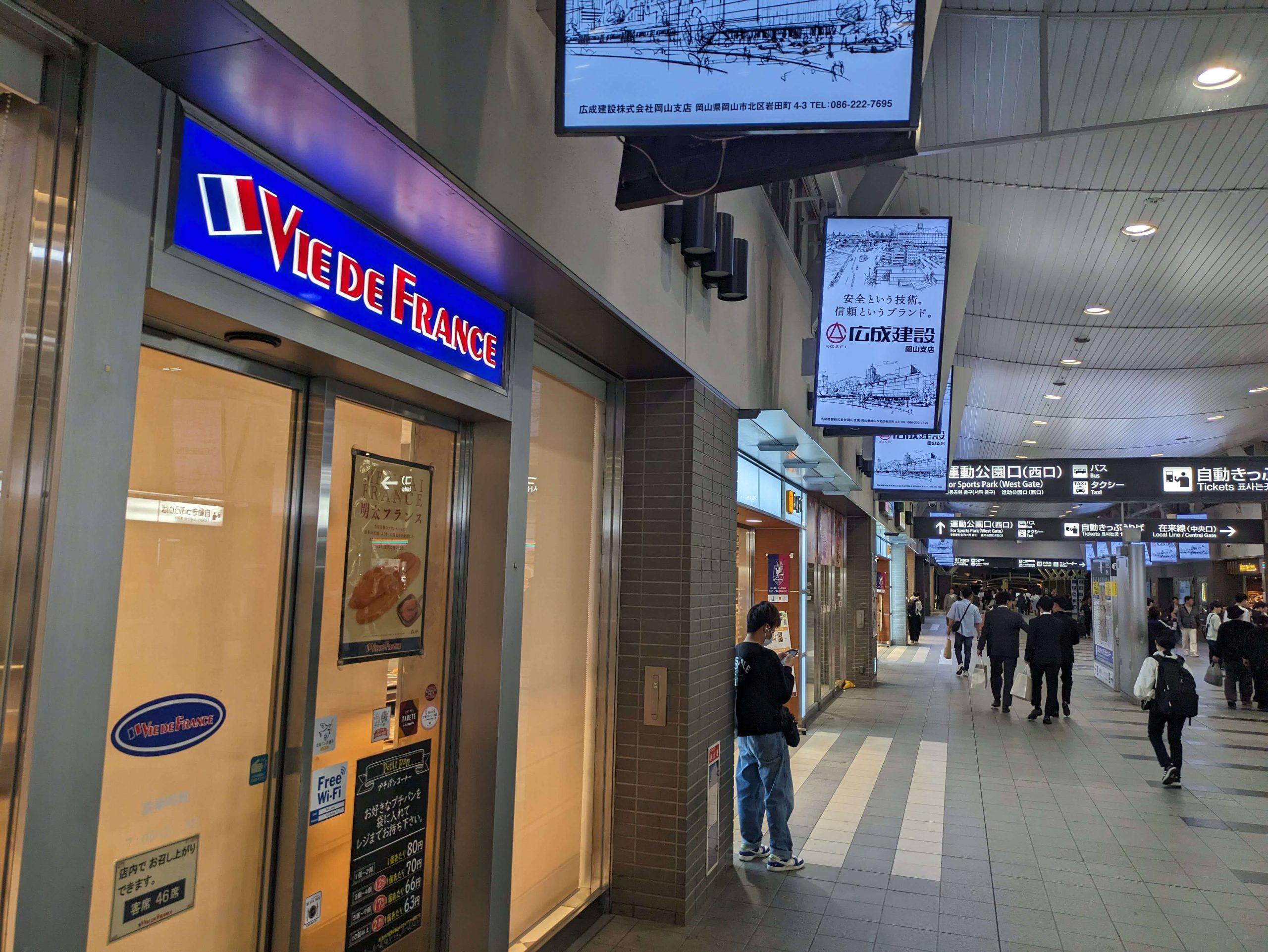
When in Okayama…
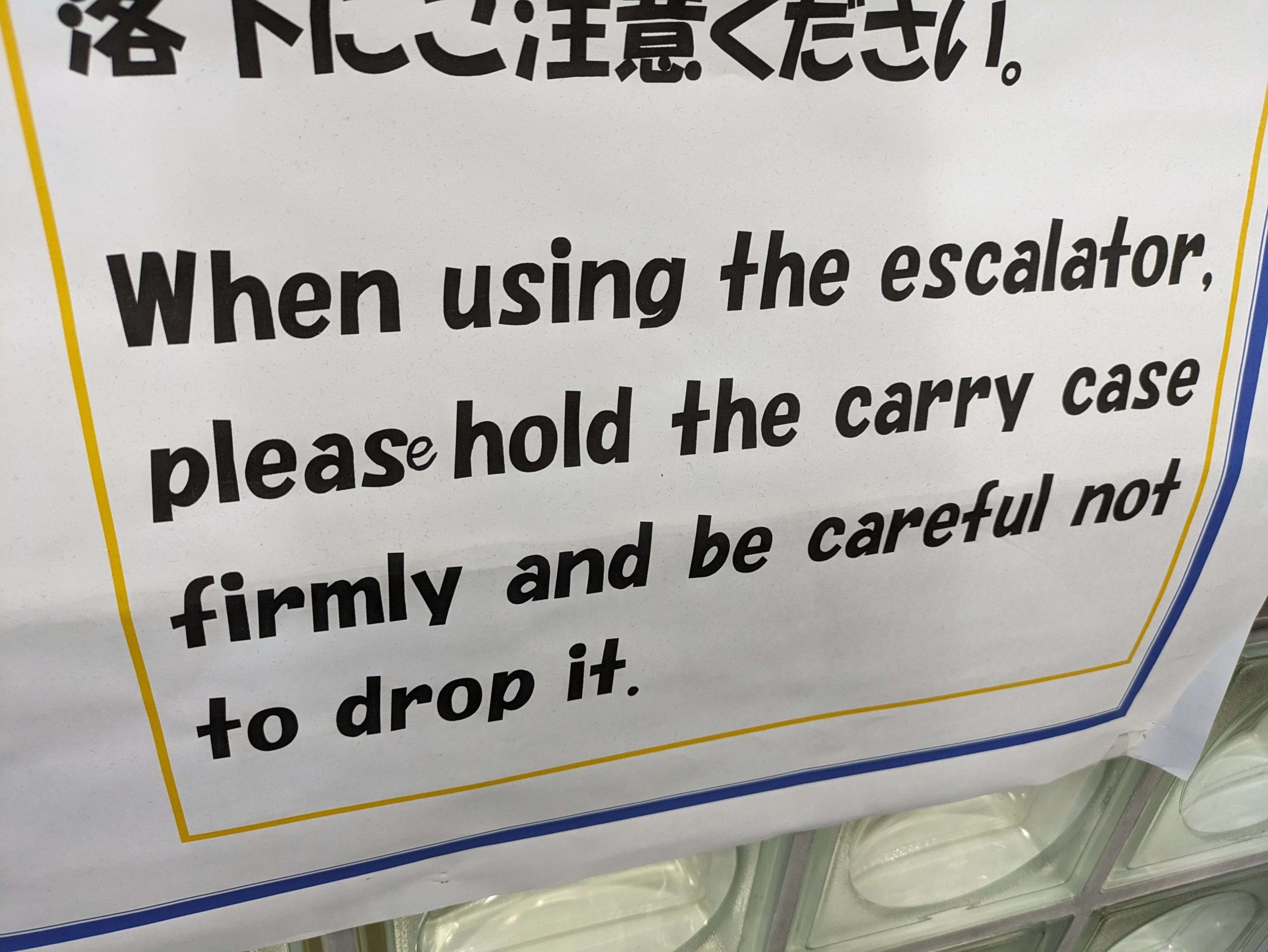
I wonder if this was a guerilla correction or not.
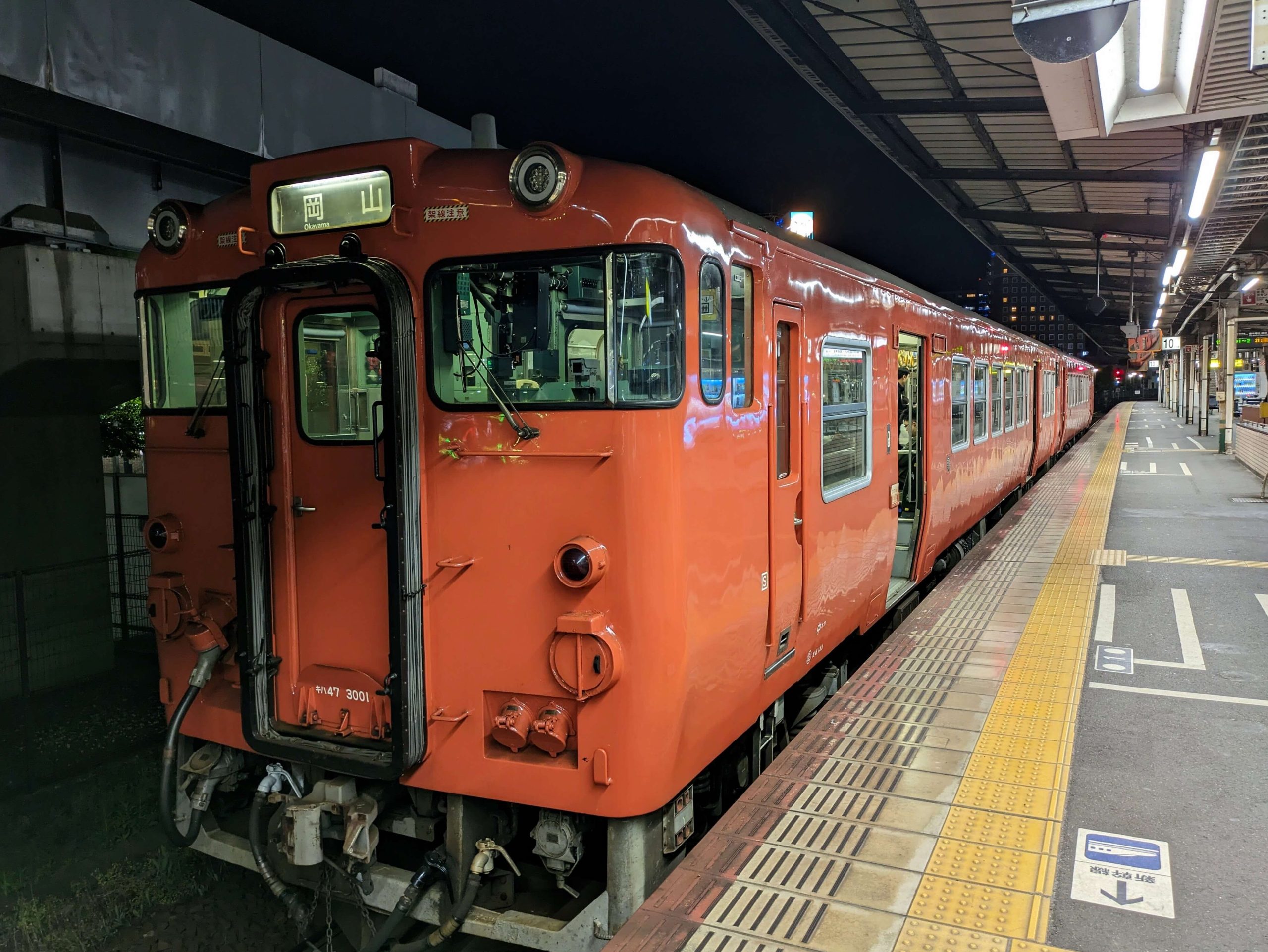
I had an hour and a half at Okayama, so I decided to ride down and back on the Momotaro Line a couple stops.
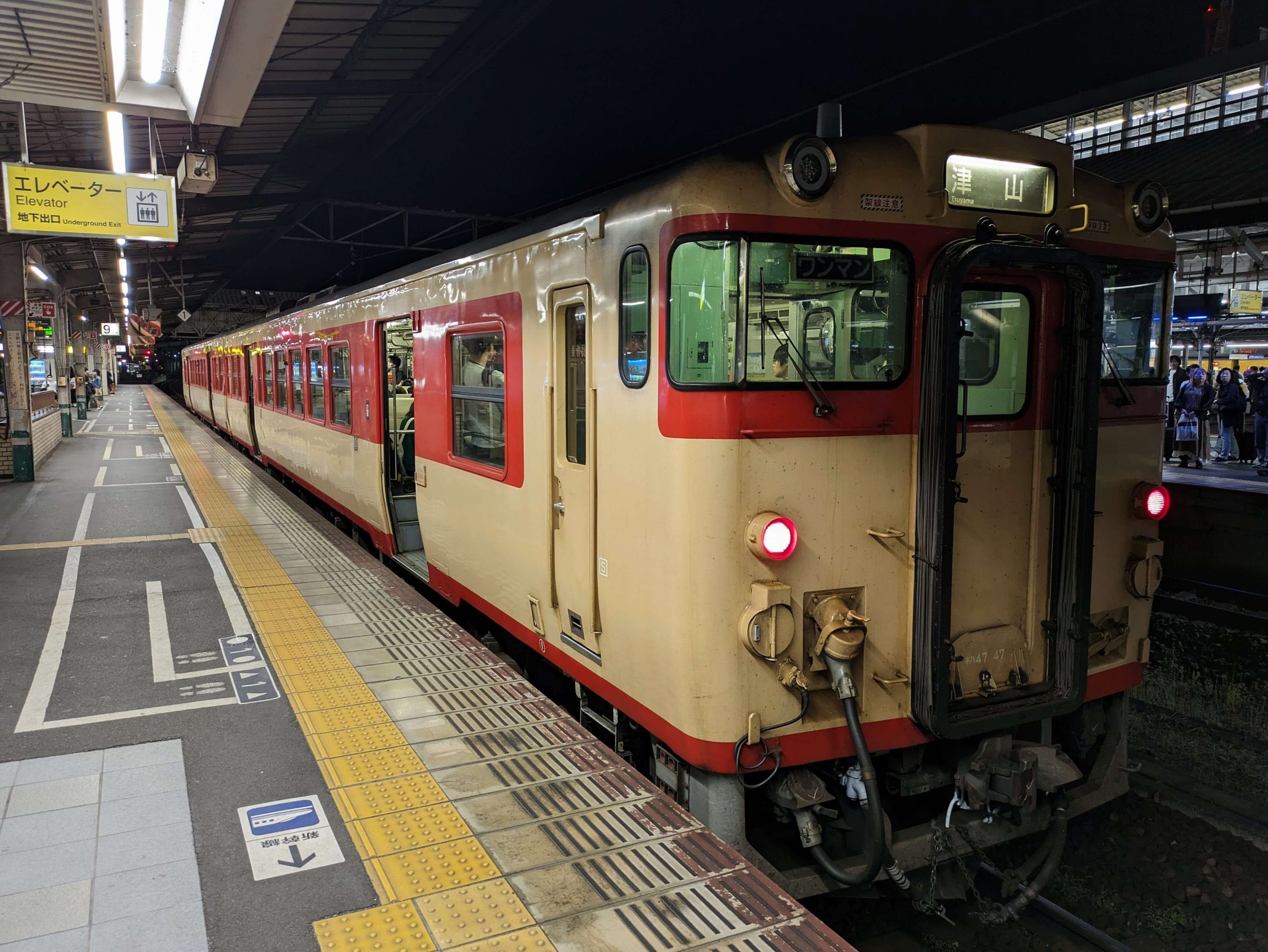
KiHa 47 my beloved. I love these old, loud diesel trains. Such iconic livery too.
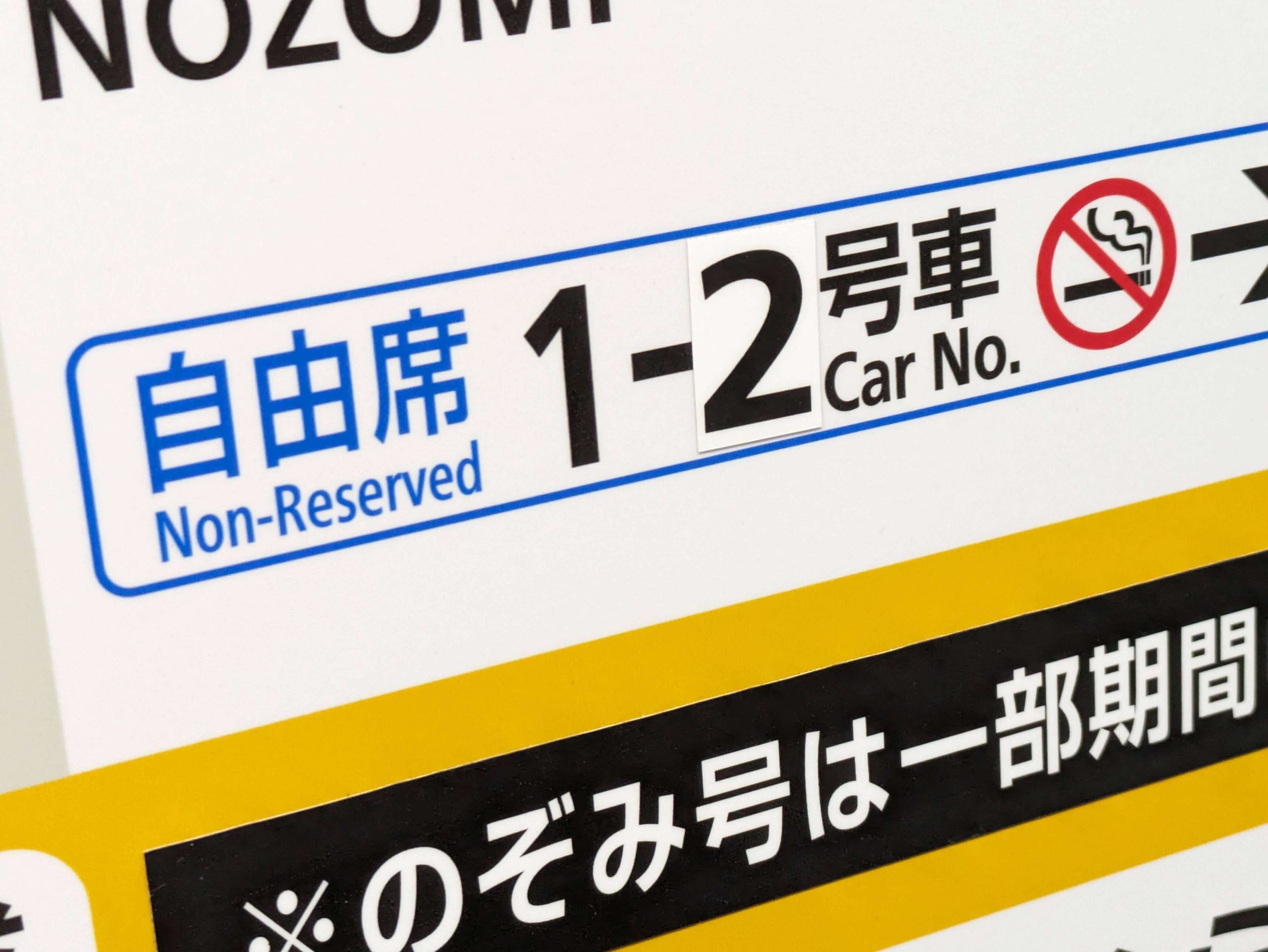
Environmental storytelling – JR Central’s greed in plain view. They had reduced the number of unreserved cars on Nozomi trains from three to two along with the timetable revision in the spring.
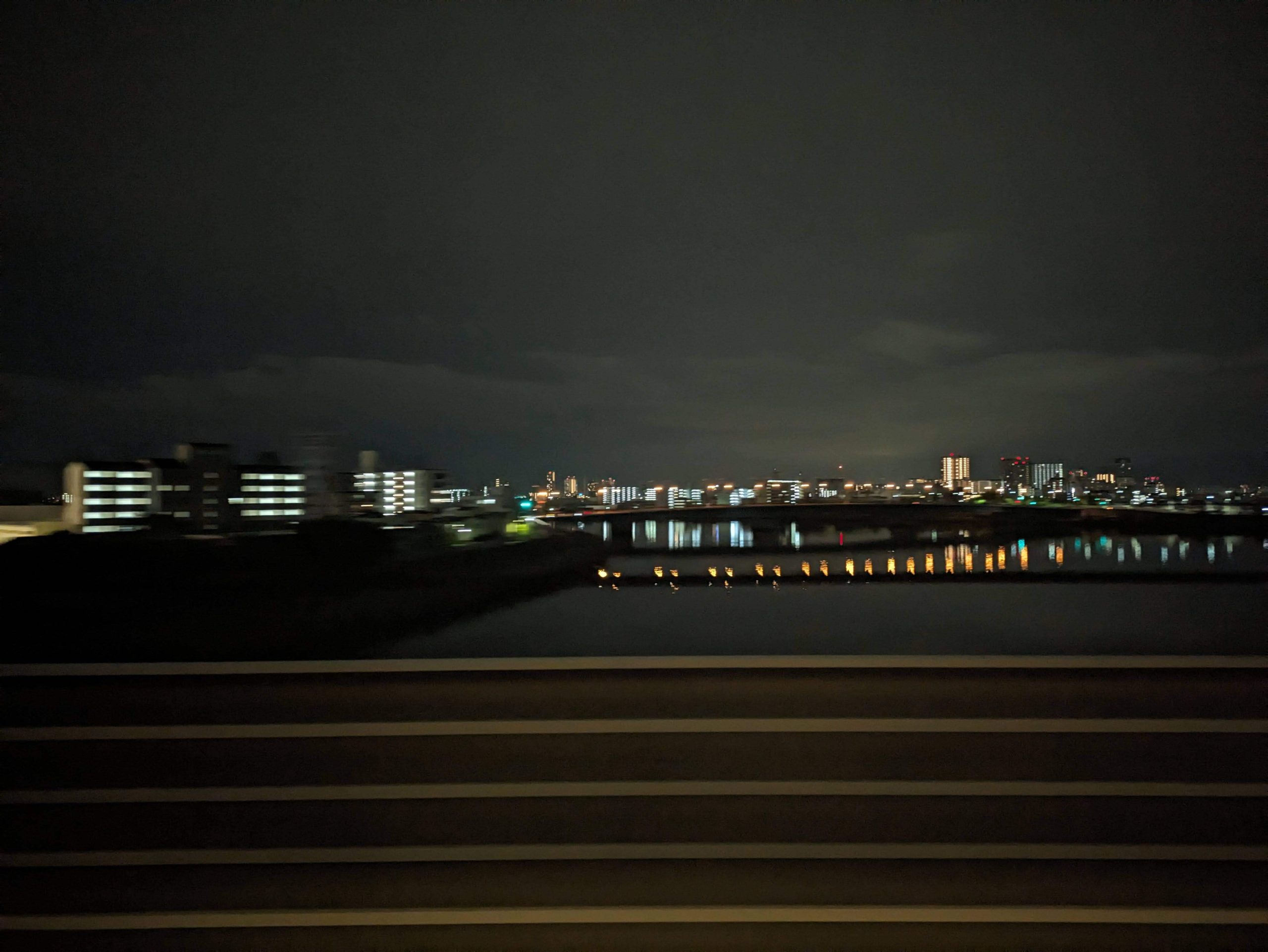
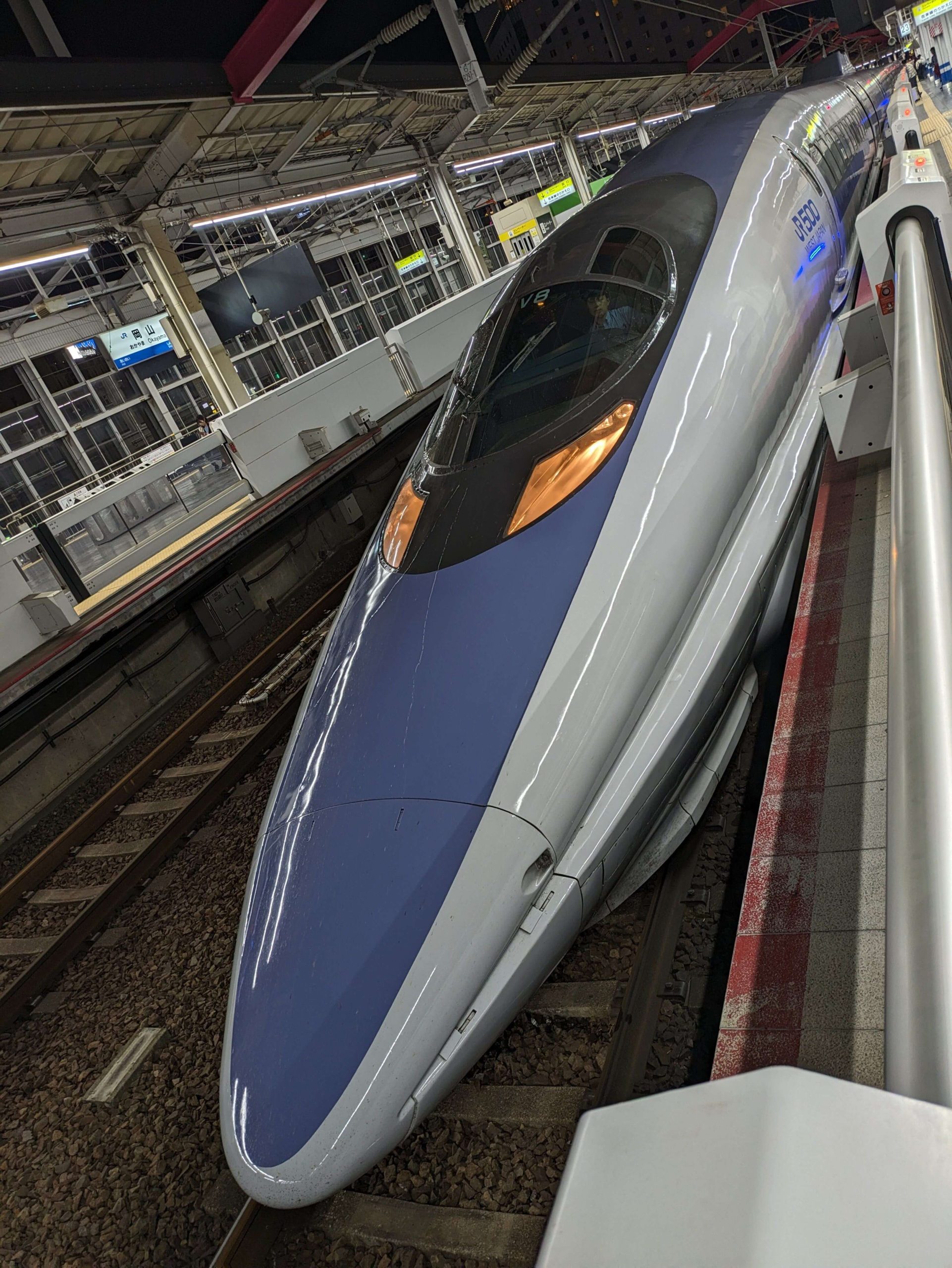
And then, after catching the soon-to-be-scrapped 500 series shinkansen at my platform, I headed home, getting in just before midnight, as usual.
Thanks for reading and following along with my way-too-long adventures in Shikoku. Next time, I head to Tottori and Shimane to get absolutely drenched and HANG WITH SALAMANDERSSSZZZZZ.


This is the first time I’ve come across Ping Pong being described as a story of Buddhist enlightenment! Are there any articles/videos analysing this that you could recommend? :)