First, a quick site update: You can now, finally, subscribe to new posts via email! There’s now a form in the sidebar on the right – or at the bottom of the page if you’re on mobile – where you can enter your email address to get updates. Of course, the old-school RSS feed link is still there too (for use with an RSS reader or browser extension of your choice, or a service like Feedrabbit which can turn these into email updates too). As another alternative, I also manually send updates about posts in my “IC card collecting in Japan” Discord server, for good measure. A couple of people in the comments of past posts had asked me how to sign up to get updates for this blog, so hopefully this now makes things easier. Anyway, now that housekeeping is done, onto a different type of sign…
This post is something new, a type of thing I’m deciding to call “interludes” which, as I’m envisioning them, can come in between longer-form trip reports, helping to bridge the gaps and make posts a little bit more frequent and varied. They’ll be quicker to write (and read), and more focused around a certain theme rather than a time period/destination of a trip.
I take a lot of photos of signage in the world, especially in Japan (where it’s so often great and chaotic) and particularly when traveling via train. Signs I’ve stumbled across in stations have featured in essentially every blogpost to-date – linguistic landscapes is what I focused on in my graduate research, after all – and over the past couple years I’ve found myself mentally clustering these into certain groups and categories.
I’ll be briefly highlighting various aspects of transport-related signage in Japan throughout the series, but first up, for this post: I recently checked and realized that I’ve been to almost all of the stations with the longest station names in the country. Although what counts as the “longest” is a matter of debate… in terms of writing systems, you could go by number of kanji, kana, or romaji – 駅名標 ekimeihyou, station name signs, usually have all three on them (of course, the fact that Japanese uses multiple writing systems is part of why I’ve long been interested in the language). You could also measure in terms of morae, which aren’t technically syllables according to linguists but close enough.
I like orthography, and signs are inherently visual, so I vote to define it based on writing. In terms of number of characters, I passed the train station that’s tied for top spot last month, on a trip up the east coast of Honshu on my way to Hokkaido: Chōjagahama Shiosai Hamanasu Kōen-mae Station (長者ヶ浜潮騒はまなす公園前駅) on the third-sector Kashima Rinkai Railway’s Oarai-Kashima Line. 22 hiragana long! They decided to write it without spaces or any word boundaries on the sign, which only adds to the ridiculousness. The name means, a bit poetically rearranged, “Parkfront of Chōjagahama Beach, of sea roar and rugosa roses”:
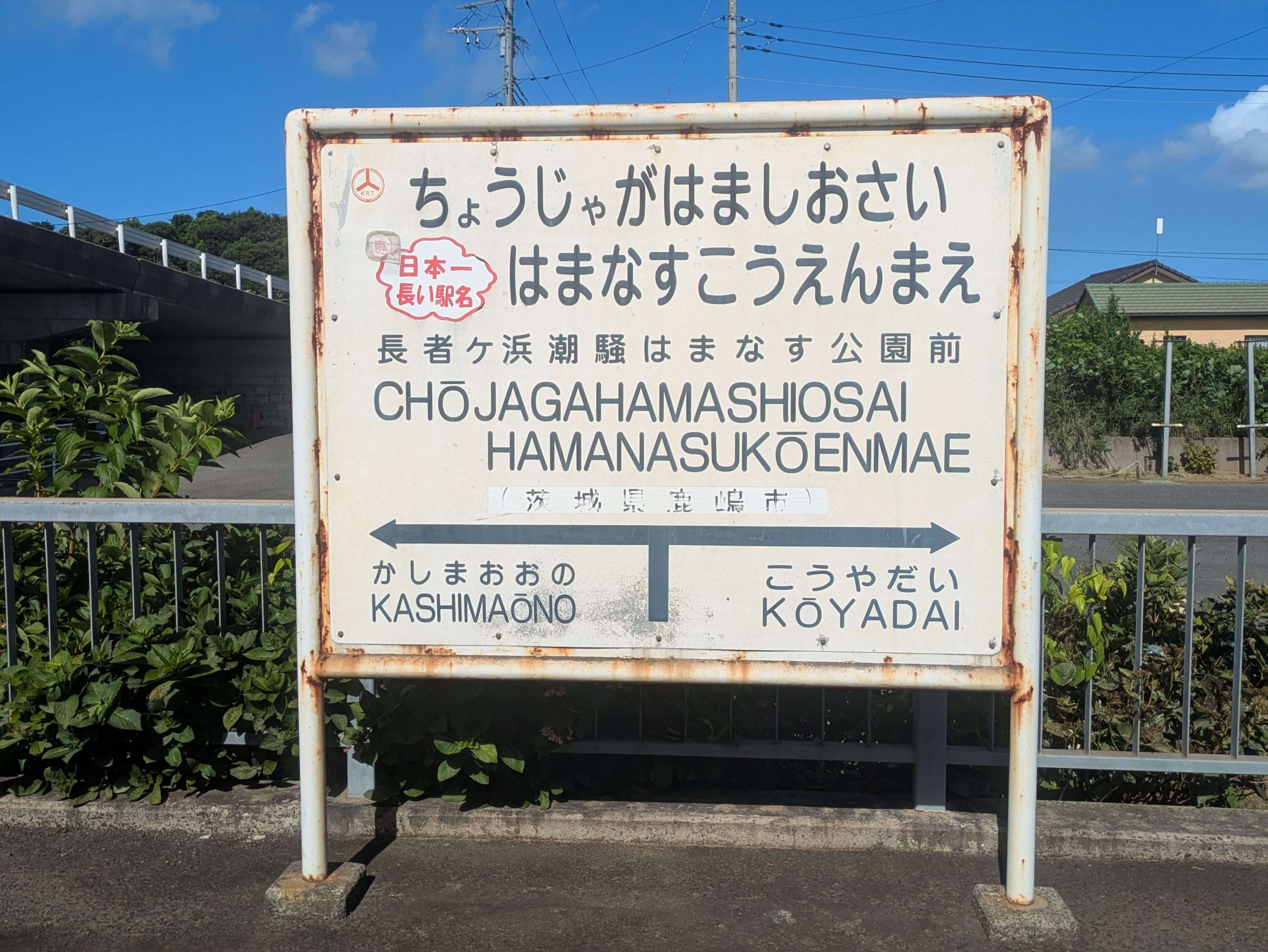
The signboard has a red sticker on it saying that it’s in the #1 spot for Eastern Japan – a rank that it shares with a station on Minami Aso Railway in Kagoshima, which takes the western half of the crown. (I haven’t ridden that line yet but am looking into it for this upcoming winter! It’s also one character longer when written in kanji.) The Kashima Rinkai Railway line actually has more weirdness to it beyond just long station names, which I’ll talk about when I eventually write up the trip report for my recent Obon 2026 trip.
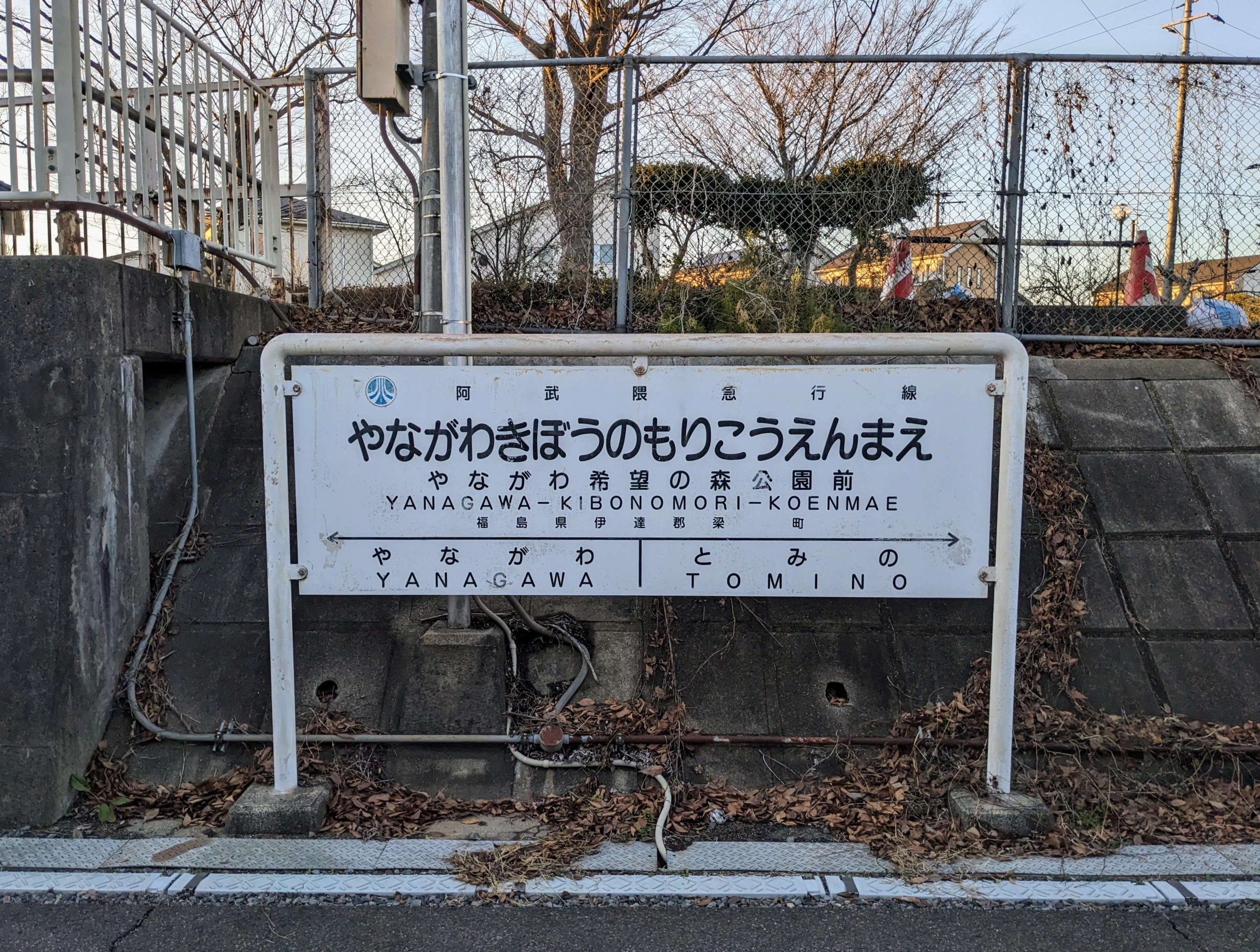
The above station sign is a bit… blocky, for my tastes, though. I prefer the long names to have amusingly long signs, like they deserve, as this one does: Yanagawa Kibōnomori Kōen-mae Station (やながわ希望の森公園前駅) on Abukuma Kyuko’s line. I rode this system in late December 2025, traveling around Tohoku in the winter (blogpost coming later this year). The station is in Date, Fukushima, pretty close to the prefectural border with Miyagi, with a length of 16 kana:
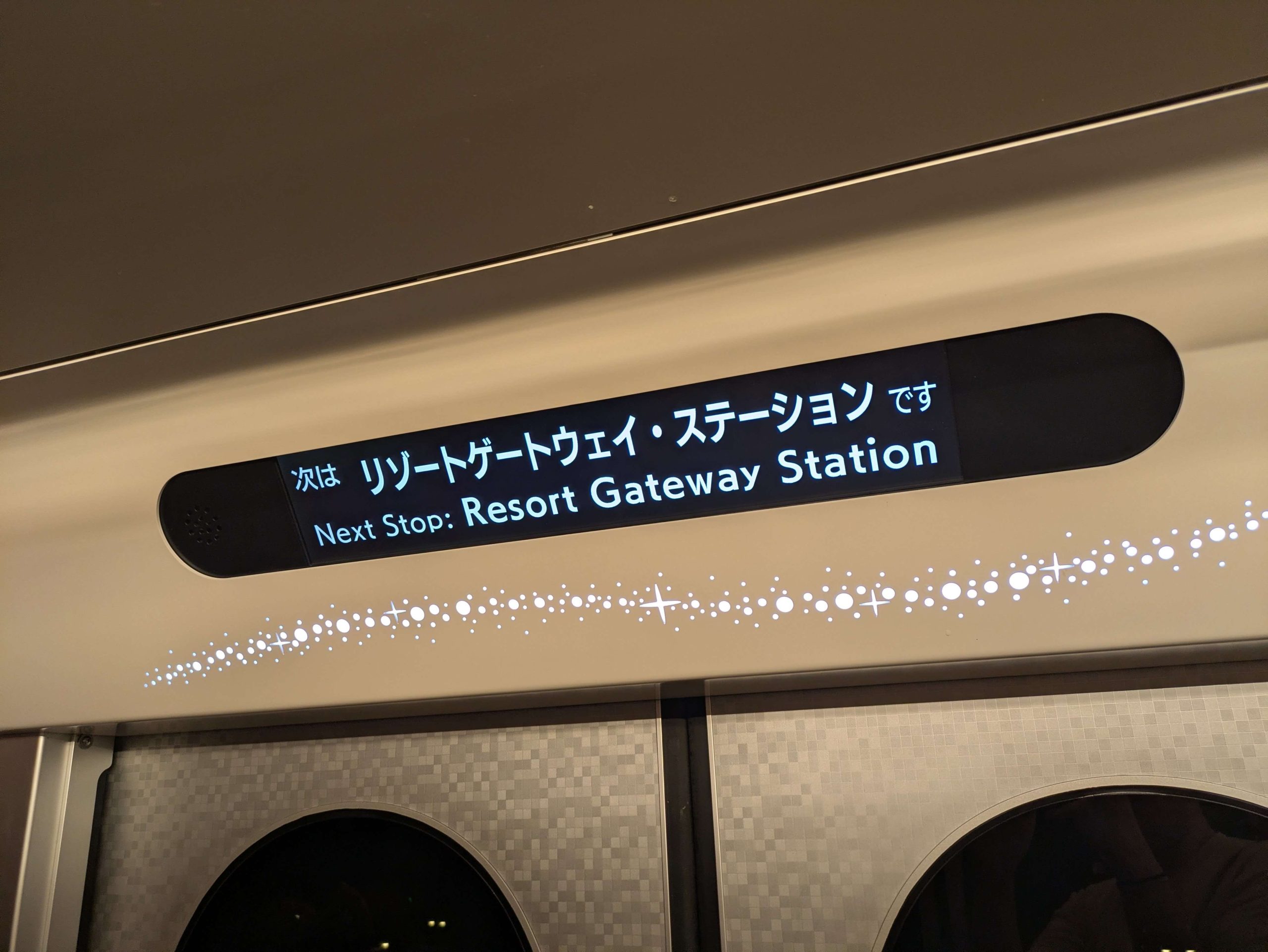
This next one technically beats it in terms of characters… but only because they include the English loanword “station” in the station name. Resort Gateway Station Station (リゾートゲートウェイ・ステーション駅) would be the accurate translation, but they understandably drop one of the two “station”s when they render it in English. It’s 17 characters long, which includes the katakana middle dot… a punctuation mark, not a letter, but still a character part of the official station name on the Disney Resort Line within Tokyo Disney Resort (which is in Chiba, not Tokyo. I feel like they sort of cheated their way up the rankings here in a variety of arenas.) I rode this loop monorail in July 2026 on my way back to Tokyo from a three-day Seishun 18 trip around Chiba Prefecture:
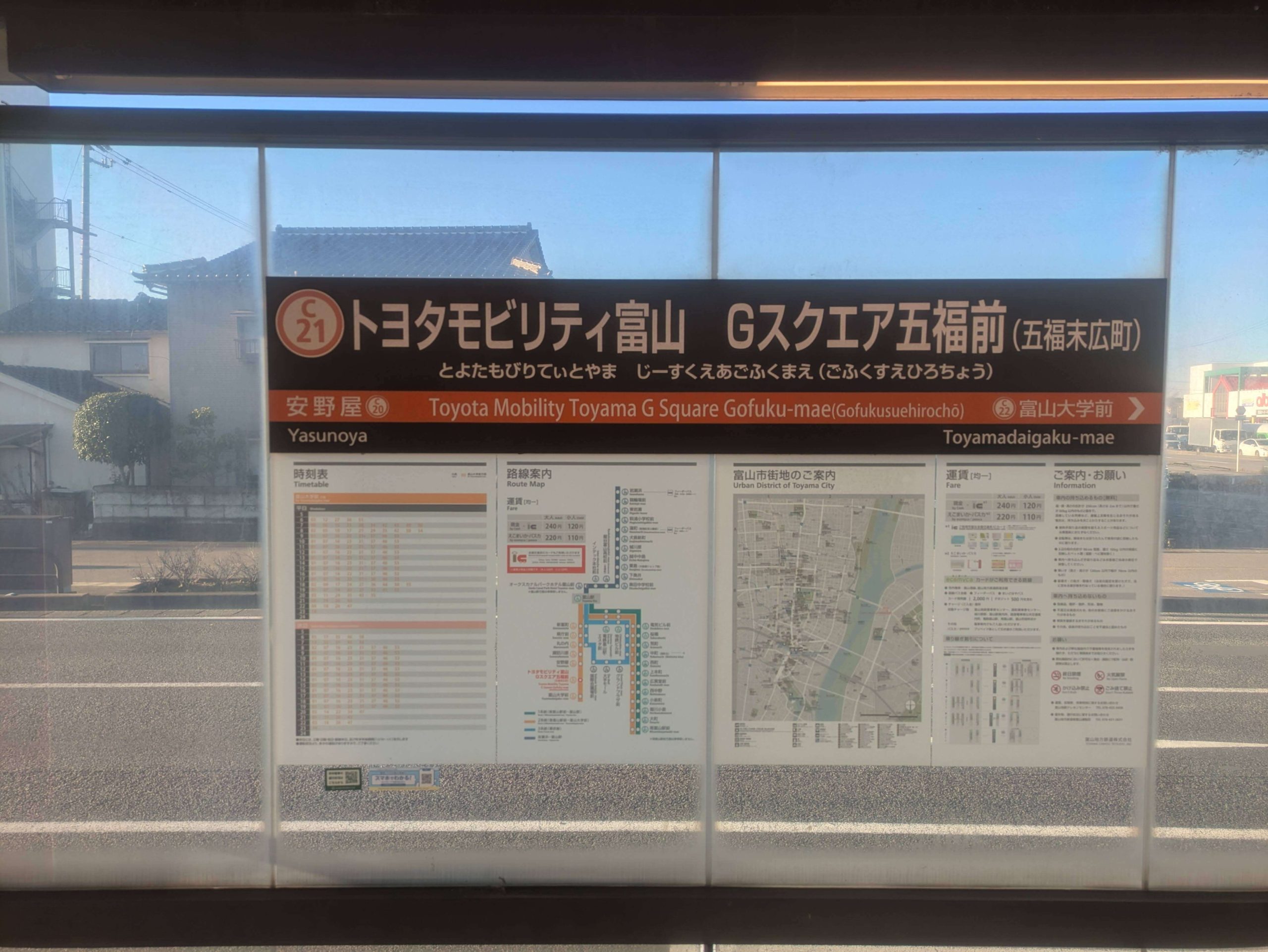
The stations that really take the cake, though, aren’t technically train stations but rather tram stops. Some companies consider them 駅 eki “stations” but others use the 停留場 teiryuujou “stop” nomenclature. First place – no matter whether you measure by written characters or pronunciation – unquestionably goes to Toyama Chihou Railway’s Toyota Mobility Toyama G Square Gofuku-mae (Gofukusuehirochō) (トヨタモビリティ富山 Gスクエア五福前(五福末広町)) stop on the Toyama City tram, legally on the Kureha Line and operationally on routes 2 and 5. I passed through this station in mid-December 2025 when I went up (via overnight highway bus immediately after a Susumu Hirasawa concert in Osaka, not an amazingly pleasant transit experience) to grab a commemorative ecomyca on its release date. How to count this one gets confusing. Do you include the parenthetical? What about the actual parentheses themselves? Surely the fullwidth space doesn’t count, right?? Either way, it’s long.
Spot #2 for trams goes to a stop on Okayama Electric Tramway which I haven’t ridden in full yet, but will in less than a month! (I’ll edit this post to add a photo then.)
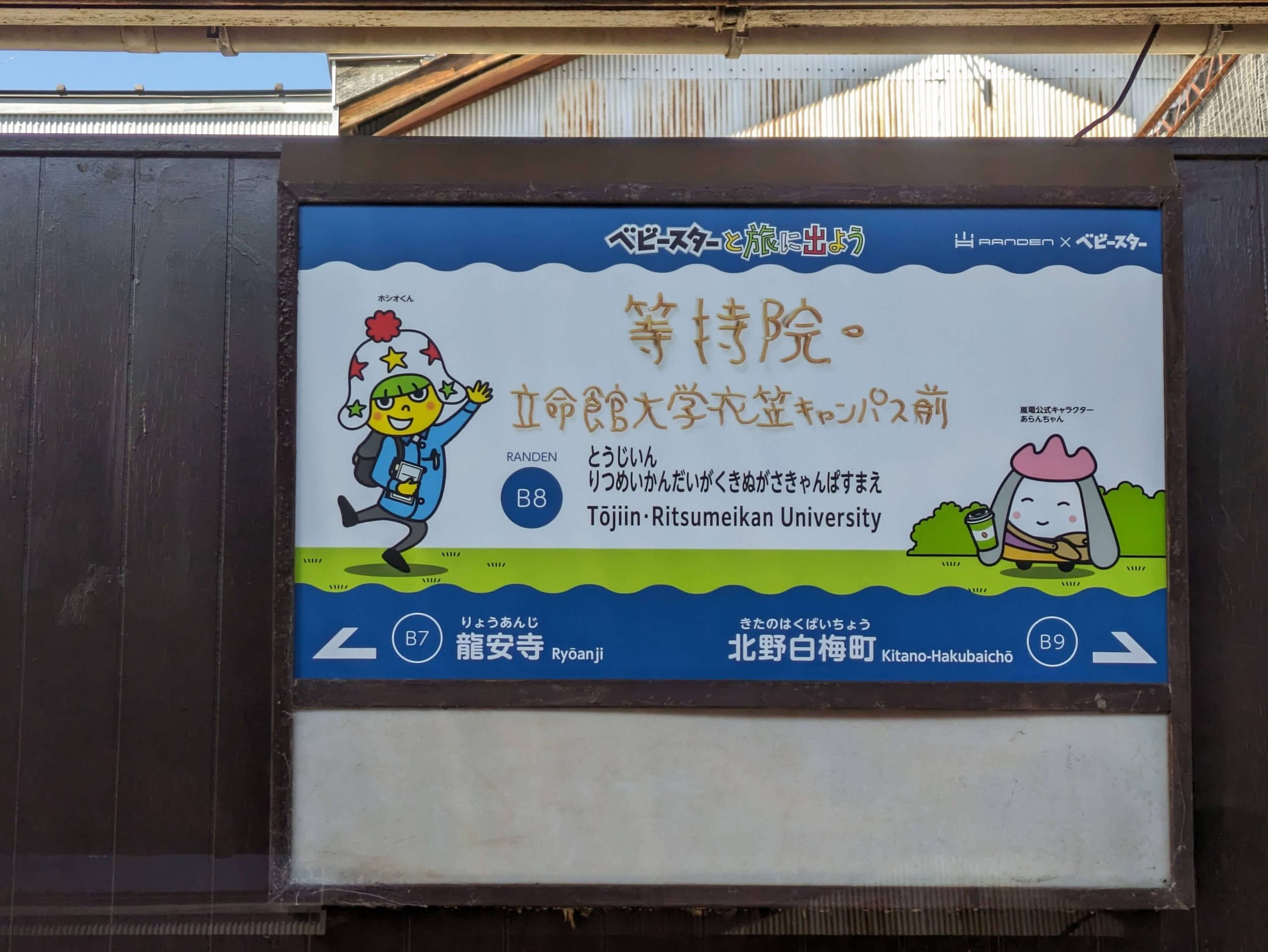
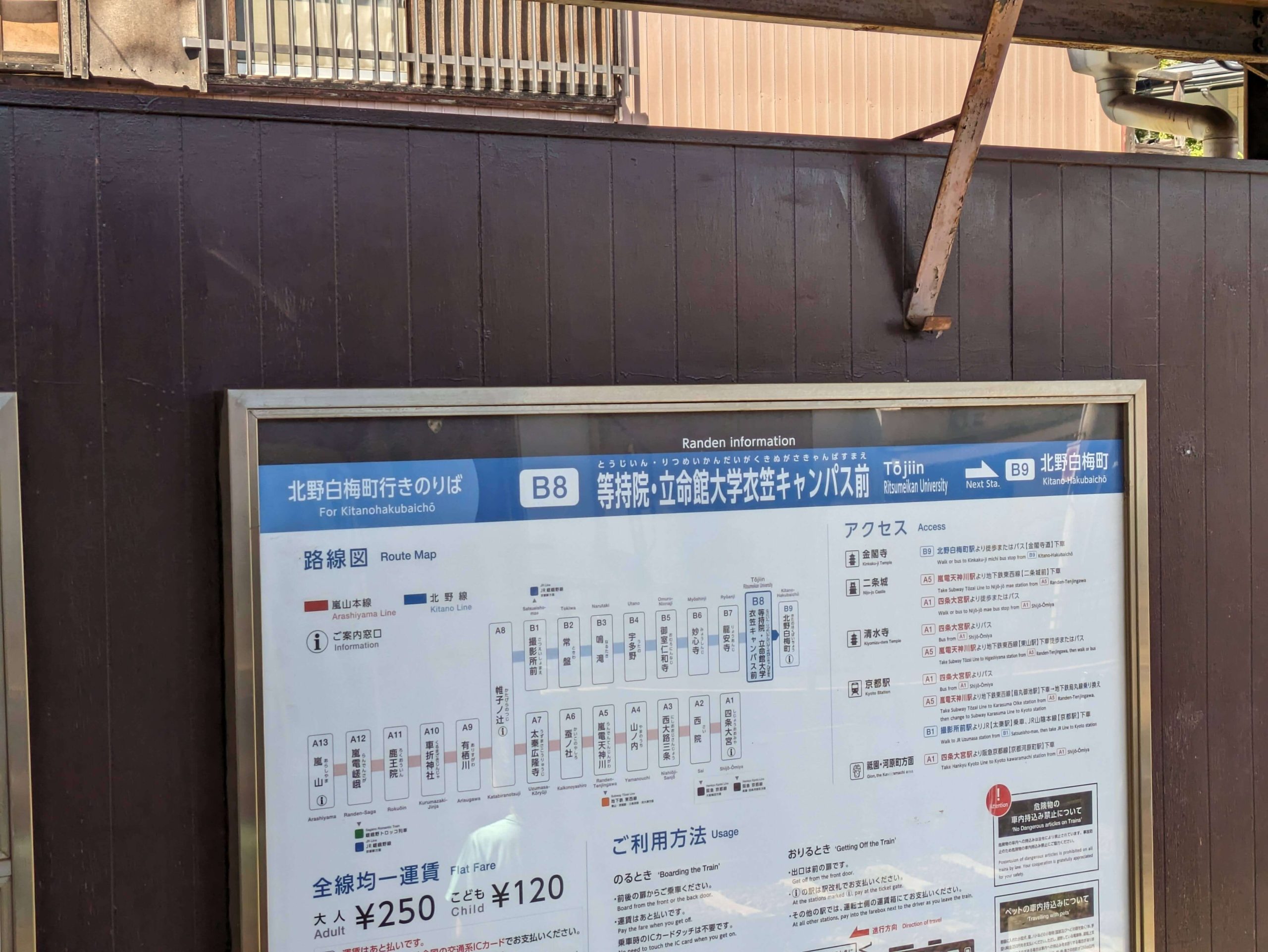
The bronze medal goes to a stop on one of Randen’s tram lines in Kyoto: Tōjiin–Ritsumeikan Daigaku Kinugasa Kyanpasu-mae Station (等持院・立命館大学衣笠キャンパス前駅). Their official English translation written on the station signs is a bit shorter, simply “Tōjiin Ritsumeikan University Station”. I went in September 2025 when the company was doing a collaboration with Baby Star Ramen, so there were special signboards installed featuring the two companies’ mascots, Hoshio and Aran-chan:
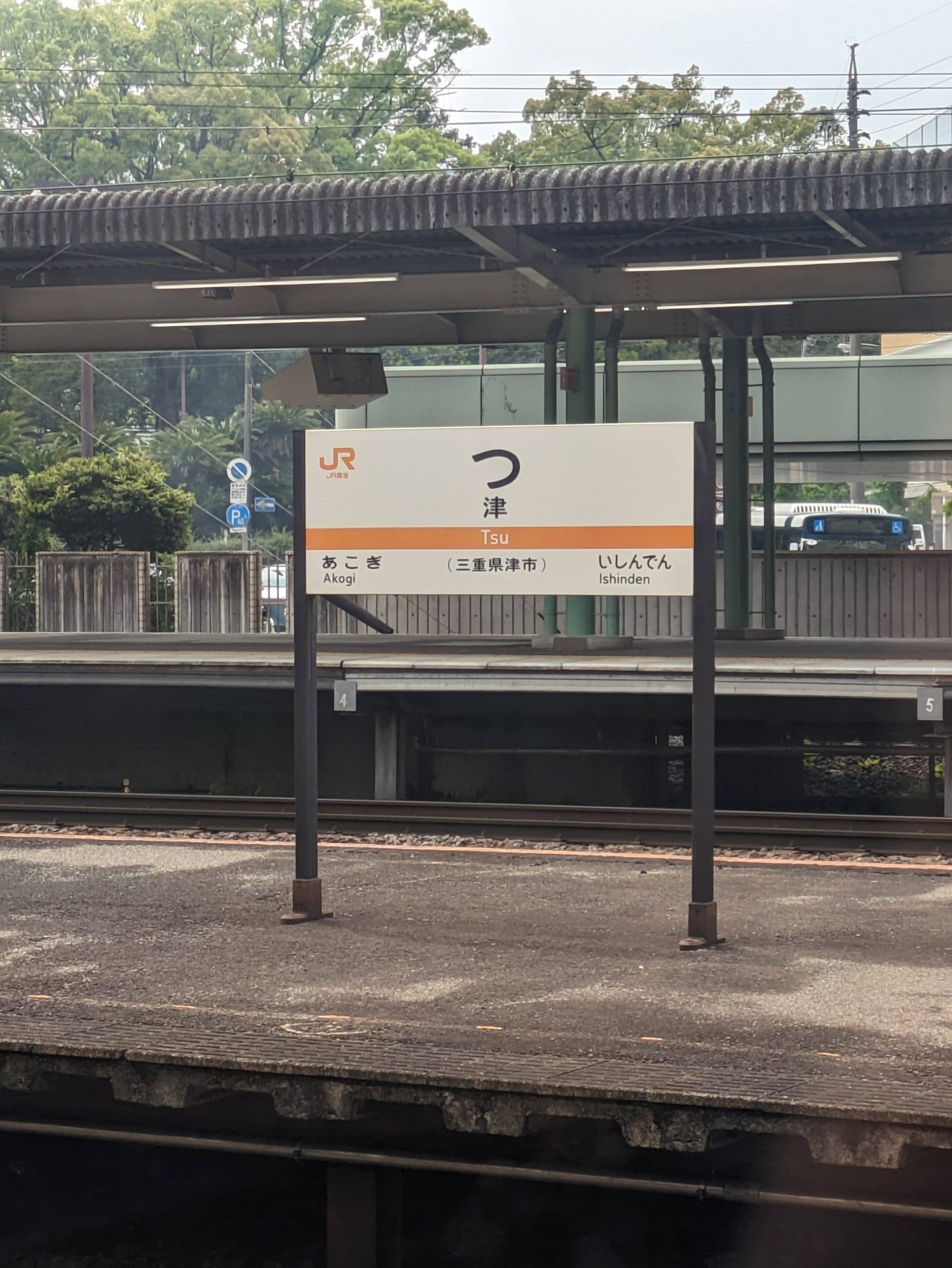
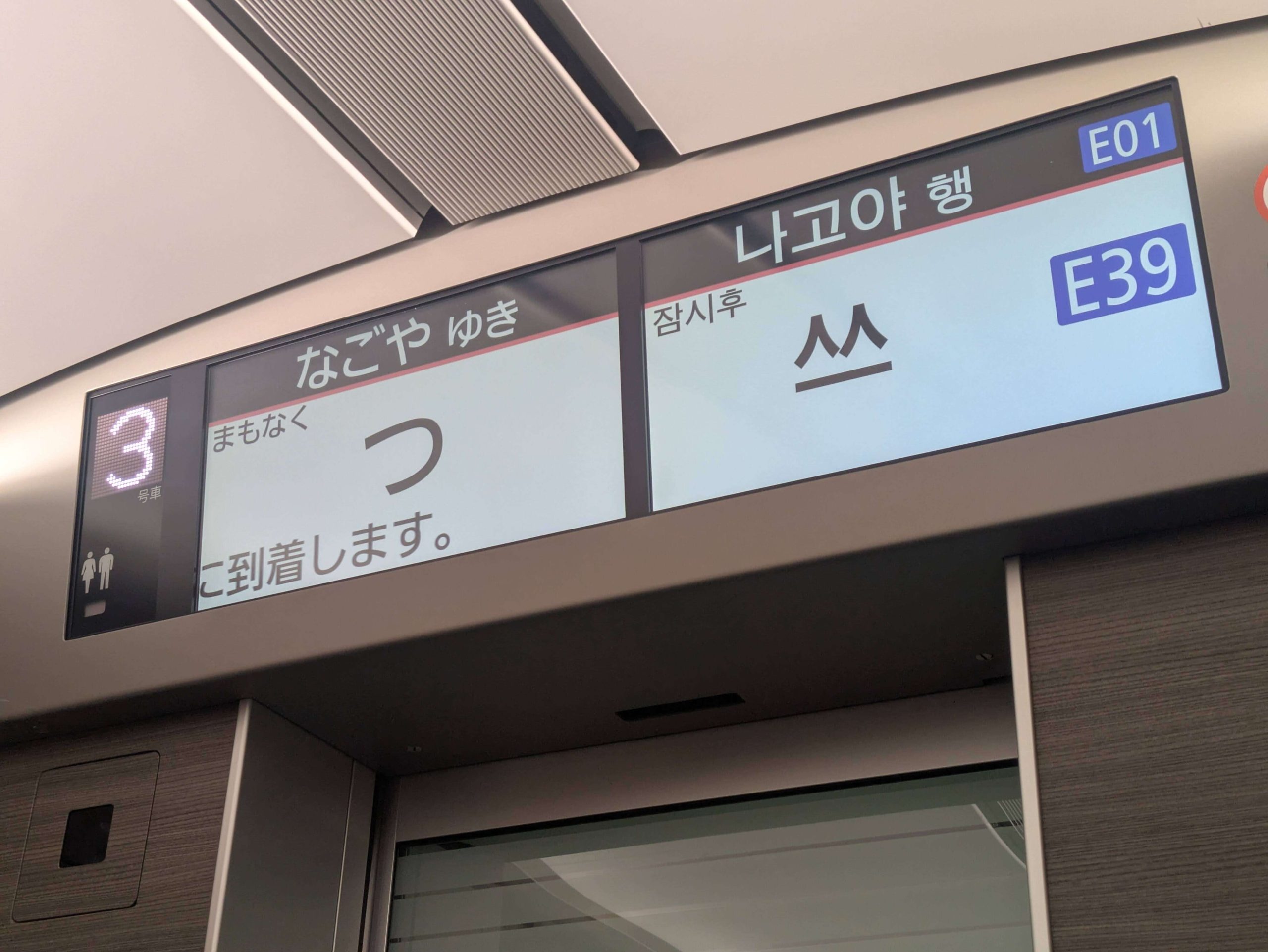
I’ll write some about other aspects of station names and signs in the next couple of posts in this mini-series, but first, on the other end… who’s in last place nationwide? I’ve mentioned the answer in a past blogpost… Why, it’s just in the prefecture next door to me: Tsu Station (津駅), one character long, open since 1891, in the city of Tsu, Mie. If we’re using the superior Kunrei-shiki rather than Hepburn romanization to transliterate the one-character-long station name, you could write it “Tu” which gets it even shorter, if we need to measure in English (which Guinness World Records apparently does, which is why they refused to grant it any official status). Doesn’t feel quite as good as if we had an あ (a), え (e), い (i), お (o), or う (u) station or something, or even an “ei” (which means “manta ray”!) but I’ll take it nonetheless.
I’ve been through Tsu half a dozen times before (since Kintetsu, JR, and Ise Railway all connect there… inside the gates, even!) and linked a photo of the station sign back in my “The Greens and Blues of Southern Shikoku – part one” blogpost, but even better than the station sign is when you’re riding Kintetsu’s Hinotori limited express train and it shows the name in Korean, which looks like a smiley face: 쓰! And the best part about this is that the character for tsu ALSO looks like a smiley face in Japanese, in katakana: ツ.
Next post, coming in a few weeks, will be another one of these interludes, serving as sort of a part two to this one, only because a bunch of photos in that will connect to the big post to follow, about my Obon 2025 trip up across the Sanin Region and ending in Kyushu. Hope that whoever may be reading in real-time is looking forward to that! :)